Archives: Quiz
MicroEconomic 279 Quiz
1) Demand-pull inflation can be restrained by increasing government spending and reducing taxes. 2) Tying agreements are contracts by which retailers agree to charge the prices that manufacturers set on branded goods. Answer: FALSE 3) to achieve its full production […]

Economics 607
1) consumer sovereignty means that legislation now protects the rights of consumers to dispose of their incomes as they see fit. 2) an economic model is an ideal or utopian type of economy that society should strive to obtain through […]
ECB 311
1) DVCs might increase their rates of economic growth through privatization of state industries, encouraging direct foreign investment, controlling population growth, and opening economies to international trade. 2) About 20 percent of the labor force is in agriculture. Answer: FALSE […]

Economics 250 Quiz 3
1) Nearly all modern economists support the idea of a monetary rule. 2) in the long run a pure monopolist must produce at that output where average total cost is at a minimum. Answer: false 3) the increasing wealth of […]

ECON 654 Midterm 2
1) a tax is progressive if the average tax rate rises as income increases. 2) Economists agree that corporations always shift the corporate income tax to consumers by raising product prices. Answer: FALSE 3) the optimal level of immigration occurs […]

ECON E 273
1) over half of the legal immigrants to the united states in 2007 were family-sponsored. 2) government assumes some responsibility for providing a minimum standard of living for all citizens to compensate for the increase in income inequality caused by […]

BUS 650 Test 2
1) Under freely flexible (floating) exchange rates a U.S. trade deficit with Japan will eventually cause the dollar price of yen to rise. 2) Demand is the active and supply the passive determinant of land rent. Answer: TRUE 3) a […]

BUS 840 Quiz 1
1) Between 1990 and 2000, the United States significantly reduced its emissions of greenhouse gases and effectively eliminated the climate-change problem. 2) A rightward and upward shift of the Phillips Curve is consistent with the occurrence of stagflation. Answer: TRUE […]

ECB 614 Final
1) The crowding-out effect of the public debt may be dampened if the investment-demand curve is shifting to the right. 2) Mainstream economists contend that use of stabilization policy has helped increase macro stability in the U.S. economy over the […]
MicroEconomic 386 Test
1) The benefits-received principle of taxation supports the case for highly progressive taxation. 2) in the short run a pure monopolist will maximize profits by producing at that level of output where the difference between price and average total cost […]

MicroEconomic 891 Quiz 1
1) households spend a larger proportion of their incomes for services than for either nondurable goods or durable goods. 2) if market demand increases and market supply decreases, the change in equilibrium price is unpredictable without first knowing the exact […]

ECON E 308
1) money functions as a medium of exchange by eliminating the need for a coincidence of wants. 2) Anticompetitive mergers are illegal under provisions of the Clayton Act (as amended). Answer: TRUE 3) The World Trade Organization (WTO) is an […]

ECON 200 Homework
1) The law of increasing opportunity costs limits international specialization. 2) If the reserve requirement is 10 percent, the monetary multiplier will be 10. Answer: TRUE 3) illegal immigrants displace domestic-born workers on a one-for-one basis. Answer: false 4) As […]

ECON 524 Midterm 2
1) when a consumer shifts purchases from x to y, the marginal utility of x falls and the marginal utility of y rises. 2) Most of the DVCs of the world are located in Western Europe. Answer: FALSE 3) About […]

BUS 425 Midterm
1) A reduction in the collective discrimination coefficients of employers will increase the wage rate of those discriminated against, but reduce their employment. 2) Mainstream macroeconomics has incorporated some aspects of monetarism and rational expectations theory. Answer: FALSE 3) Process […]

ECON 319
1) The Clean Air Act of 1990 established a program for trading emission rights. 2) economic research consistently finds that immigration negatively impacts the average american wage. Answer: false 3) Higher user costs imply that a resource should be extracted […]
ECON E 690 Quiz 1
1) surpluses drive market prices up; shortages drive them down. 2) the production possibilities curve shows various combinations of two products that an economy can produce when achieving full employment. Answer: true 3) Proposed ergonomics regulations are an example of […]
Economics 490 Test 1
1) continued losses in an industry will cause some firms to reduce output or eventually leave the industry. 2) the natural rate of unemployment in the united states is about 4 to 5 percent. Answer: true 3) increases in household […]

BUS 140 1 central planning in the
1) central planning in the soviet union and pre-reform china emphasized the expansion of the production of consumer goods to raise the domestic standard of living. 2) The idea that the economy will ‘self-correct” when confronted with changes in aggregate […]
MicroEconomic 117
1) The benefits-received principle of taxation is used to support corporate and personal income taxes. 2) although sleeping in on a work day or school day has an opportunity cost, sleeping late on the weekend does not. Answer: false 3) […]
ECON 787 Midterm
1) refer to the above diagram. if the firm produced d units of output at price g, it would earn a normal profit. 2) The more elastic the demand for a product the less elastic will be the demand for […]

Economics 774 Midterm 1
1) A restrictive monetary policy may be frustrated if the investment-demand curve shifts to the left. 2) An increase in imports (independent of a change in the U.S. price level) will increase both U.S. aggregate supply and U.S. aggregate demand. […]
ECON E 695 Midterm 2
1) the expenditures and income approaches to gdp are expected to yield identical results because goods that are not sold in one year will be sold in some following year. 2) the marginal tax rate is the tax rate that […]

Economics 253 Midterm
1) a rational consumer will try to achieve the highest indifference curve that his or her income will allow. 2) Other things equal, an expansionary monetary policy will shift the economy’s aggregate demand curve to the right. Answer: TRUE 3) […]
BUS 325 1 health care costs have
1) health care costs have risen absolutely but remained constant as a percentage of gross domestic product. 2) exports are subtracted from imports in calculating u.s. gdp because exports are not available for domestic consumption. Answer: false 3) The principal […]

ECON A 728 Midterm 1
1) Shirking refers to the behavior of workers who provide less-than-expected effort on the job. 2) the business cycle is so named because upswings and downswings in business activity are equal in terms of duration and intensity. Answer: false 3) […]
MicroEconomic 344
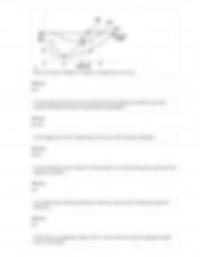
1) refer to the above diagram. at output c average fixed cost is gf. 2) A $10 billion decrease in taxes will increase the equilibrium GDP by more than would a $10 billion increase in government expenditures. Answer: FALSE 3) […]

Economics 581 Homework 1
1) proponents of economic growth claim that growth leads to greater equality of income in an economy. 2) Successful new products enable consumers to increase the total utility they obtain from a specific amount of their total spending. Answer: TRUE […]
ECON 449 Midterm 1
1) the law of diminishing returns explains diseconomies of scale. 2) The present value of $4000 deposited today at 8 percent interest is $5038.85 three years from now. Answer: FALSE 3) Weak property rights encourage faster extraction than would otherwise […]

ECON E 331 Final
1) although individual purely competitive firms can influence the price of their product, these firms as a group cannot influence market price. 2) specialized production and international trade increase a nation’s productivity and increase the availability of goods and services. […]

BUS 347 Final
1) The number of U.S. banks has increased since 1990. 2) only the bondholders of a corporation have the right to vote for a corporation’s directors. Answer: false 3) a firm’s economic profit is usually higher than its accounting profit. […]

ECON A 140
1) Most nations of the world are now IACs, not middle- and low-income DVCs. 2) costs can be defined as total payments made to workers, land owners, and capital suppliers less payments to the entrepreneur for organizing and combining the […]
ECON 628 Final
1) Checkable deposits held in saving and loan institutions, mutual savings banks, and credit unions are part of the M1 definition of the money supply. 2) Actual reserves equal required reserves plus excess reserves. Answer: TRUE 3) if you pay […]
MicroEconomic 630 Midterm
1) about three-fourths of all health care costs are paid out-of-pocket by patients. 2) Changes in the interest rate are more likely to affect investment spending than consumer spending. Answer: TRUE 3) Fisheries have been overexploited relative to forests primarily […]
ECON 172 Quiz 2
1) in the short run a pure monopolist will charge the highest price the market will bear for its product. 2) Since the mid-1950s, union membership has declined as a percentage of employed wage and salary workers. Answer: TRUE 3) […]

ECB 445
1) if the coefficient of income elasticity of demand is positive, the product is an inferior good. 2) After the implementation of TANF, the U.S. welfare rolls fell by more than one-half between 1996 and 2007. Answer: TRUE 3) The […]

MicroEconomic 548 Quiz 3
1) Piece-rates may not be appropriate pay in some situations because they might reduce product quality. 2) graphically, the consumer maximizes total utility where the budget line is tangent to an indifference curve. Answer: true 3) if the nominal interest […]

BUS 541
1) firms in a monopolistically competitive industry have no reason to engage in nonprice competition because their products are uniquely different from other sellers in the market. 2) a vertically integrated firm is a group of plants each operating at […]
ECON A 706 Homework
1) When economist John Maynard Keynes said “In the long run we’re all dead!” he meant that there was no point in the government engaging in stabilization policy. 2) the consumer demand curve for a product is downsloping because marginal […]
ECON A 371 Homework 1 the above
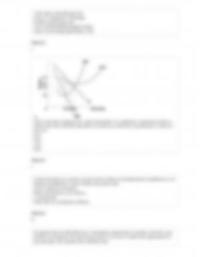
1) the above data illustrate the: a.law of comparative advantage. b.utility-maximizing rule. c.law of diminishing marginal utility. d.law of increasing opportunity costs. 2) refer to the above diagram for a pure monopolist. if a regulatory commission seeks to achieve the […]
MicroEconomic 875
1) Refer to the above diagrams. Curve A: A.is an investment schedule and curve B is a consumption of fixed capital schedule. B.is an investment demand curve and curve B is an investment schedule. C.and B are totally unrelated. D. […]

ECON 351 1 answer the next
1) answer the next question(s) on the basis of the following information for a specific year in a hypothetical economy for which okun’s law is applicable: refer to the above data. the amount of output being forgone by the above […]
MicroEconomic 283 Final
1) The following table shows the total costs and total benefits facing a city of five different potential baseball stadiums of increasing size. All figures are in millions of dollars. Refer to the above table. The marginal cost and marginal […]

Economics 552 Quiz 2
1) A change in the price of an input will usually: A.shift a firm’s cost curves. B.cause the firm to alter the combination of inputs it employs. C.induce the firm to change its level of output. D.do all of these. […]

BUS 192 Homework
1) the period in the u.s. economy from 1995 to 2007 is characterized by: a.a higher trend rate of saving. b.a higher natural rate of unemployment. c.a higher trend rate of productivity growth. d.the end of the business cycle. 2) […]

Economics 337 Quiz 3
1) an effective ceiling price will: a.induce new firms to enter the industry. b.result in a product surplus. c.result in a product shortage. d.clear the market. 2) Other things equal, if the national incomes of the major trading partners of […]
Economics 348 Quiz
1) Refer to the above diagram and assume the economy initially is in equilibrium at point a. Suppose the aggregate demand declines from AD1 to AD2 and the economy moves from a to c. In the mainstream view, the resulting […]
MicroEconomic 475 Quiz
1) which of the following statements is correct? a.the pure monopolist will maximize profit by producing at that point on the demand curve where elasticity is zero. b.in seeking the profit-maximizing output the pure monopolist underallocates resources to its production. […]

Economics 467
1) empirical studies suggest that: a.labor productivity has declined throughout u.s. history. b.technological advances account for about 40 percent of u.s. productivity growth. c.the achieving of economies of scale is the most important factor in u.s. economic growth. d.all u.s. […]
BUS 812 1In the above diagram the
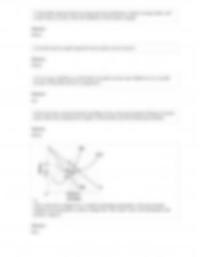
1) In the above diagram, the economy’s short-run AS curve is line ___ and its long-run AS curve is line ___. A.1; 3 B.2; 4 C.3; 4 D.2; 1 2) the gdp gap measures the difference between: a.ndp and gdp. […]