
1) The number of U.S. banks has increased since 1990.
2) only the bondholders of a corporation have the right to vote for a corporation’s
directors.
3) a firm’s economic profit is usually higher than its accounting profit.
4) the limited money income of consumers results in a so-called budget constraint.
5) The monetary multiplier and the income multiplier are two ways of referring to the
same concept.
6) an economy with an average growth rate of 10 percent can expect to see its real gdp
double in approximately 7 years.
7) the most-favored-nation clause in reciprocal trade agreements means that any tariff
reductions the united states negotiates with a specific nation will automatically apply to
many other nations.
8) marginal utility is total utility divided by the number of units consumed.
9) which of the above diagrams illustrate(s) the effect of a governmental subsidy on the
market for aids research?
a.a only.
b.b only.
c.c only.
d.d only.
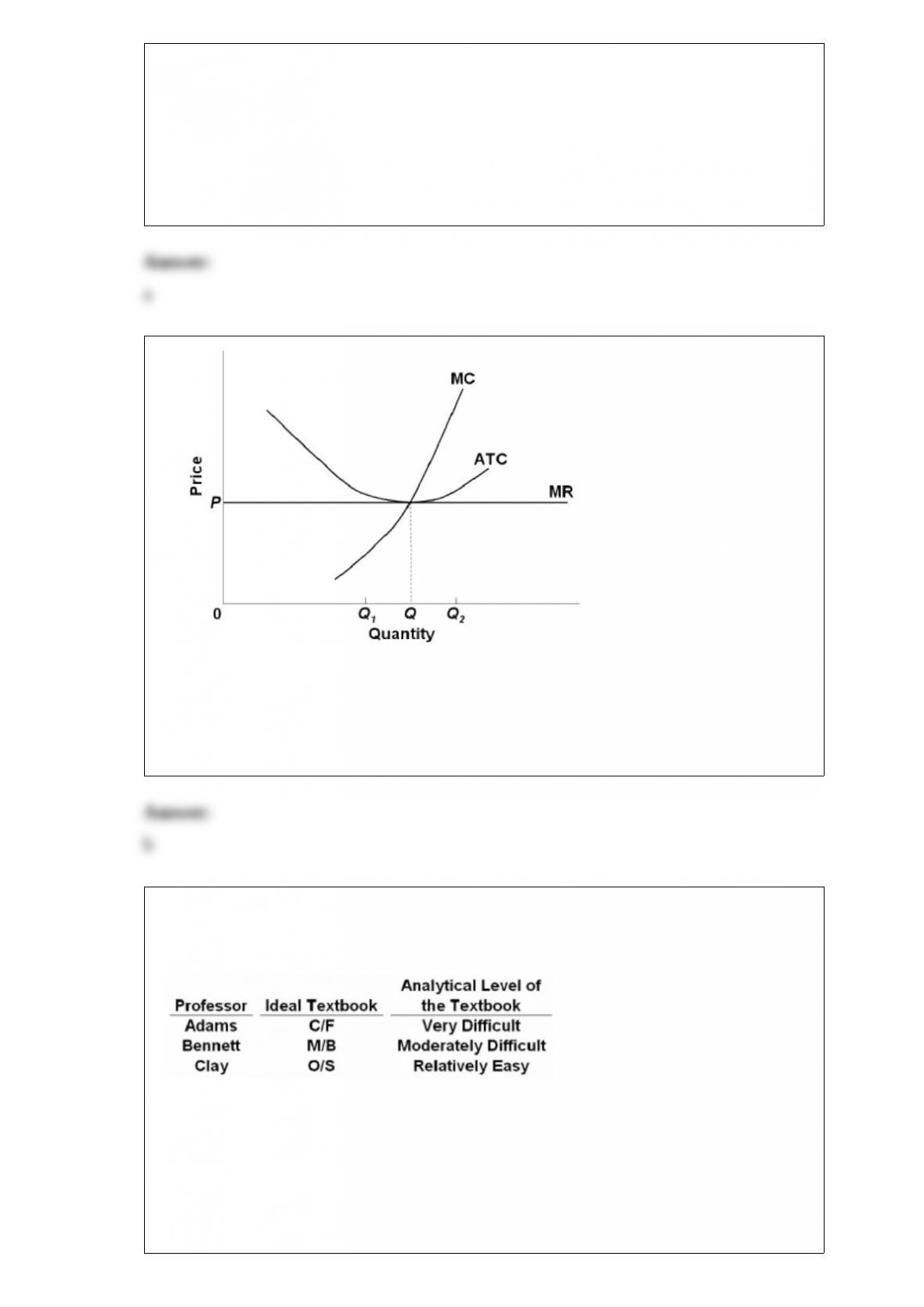
10) the following table applies to a purely competitive industry composed of 100
identical firms.
refer to the above table. if each of the 100 firms in the industry is maximizing its profit,
each must have a marginal cost of:
a.$5.
b.$4.
c.$3.
d.$2.
11) With which of the following countries does the United States have its largest goods
and services deficit?
A.Canada.
B.Germany.
C.Japan.
D.China.

12) Whose An Essay on the Principle of Population argued that human living standards
could only temporarily rise above subsistence?
A.Adam Smith.
B.Thomas Malthus.
C.John Maynard Keynes.
D.Alfred Marshall.
13) when an economist says that the demand for a product has increased, this means
that:
a.consumers are now willing to purchase more of this product at each possible price.
b.the product has become particularly scarce for some reason.
c.product price has fallen and as a consequence consumers are buying a larger quantity
of the product.
d.the demand curve has shifted to the left.
14) setup corporation buys $100,000 of sand, rock, and cement to produce ready-mix
concrete. it sells 10,000 cubic yards of concrete at $30 a cubic yard. the value added by
setup corporation is:
a.$300,000.
b.$100,000.
c.$200,000.
d.zero dollars.
15) import quotas are:
a.maximum limits on the quantity or total value of specific products imported to a
nation.
b.excise taxes or duties placed on imported products.
c.licensing requirements, unreasonable quality standards, and the like designed to
impede imports.
d.government payments to domestic producers to reduce the world prices of exported
goods.
16) consumer surplus:
a.is the difference between the maximum prices consumers are willing to pay for a
product and the lower equilibrium price.
b.the difference between the maximum prices consumers are willing to pay for a
product and the minimum prices producers are willing to accept.
c.the difference between the minimum prices producers are willing to accept for a
product and the higher equilibrium price.
d.rises as equilibrium price rises.
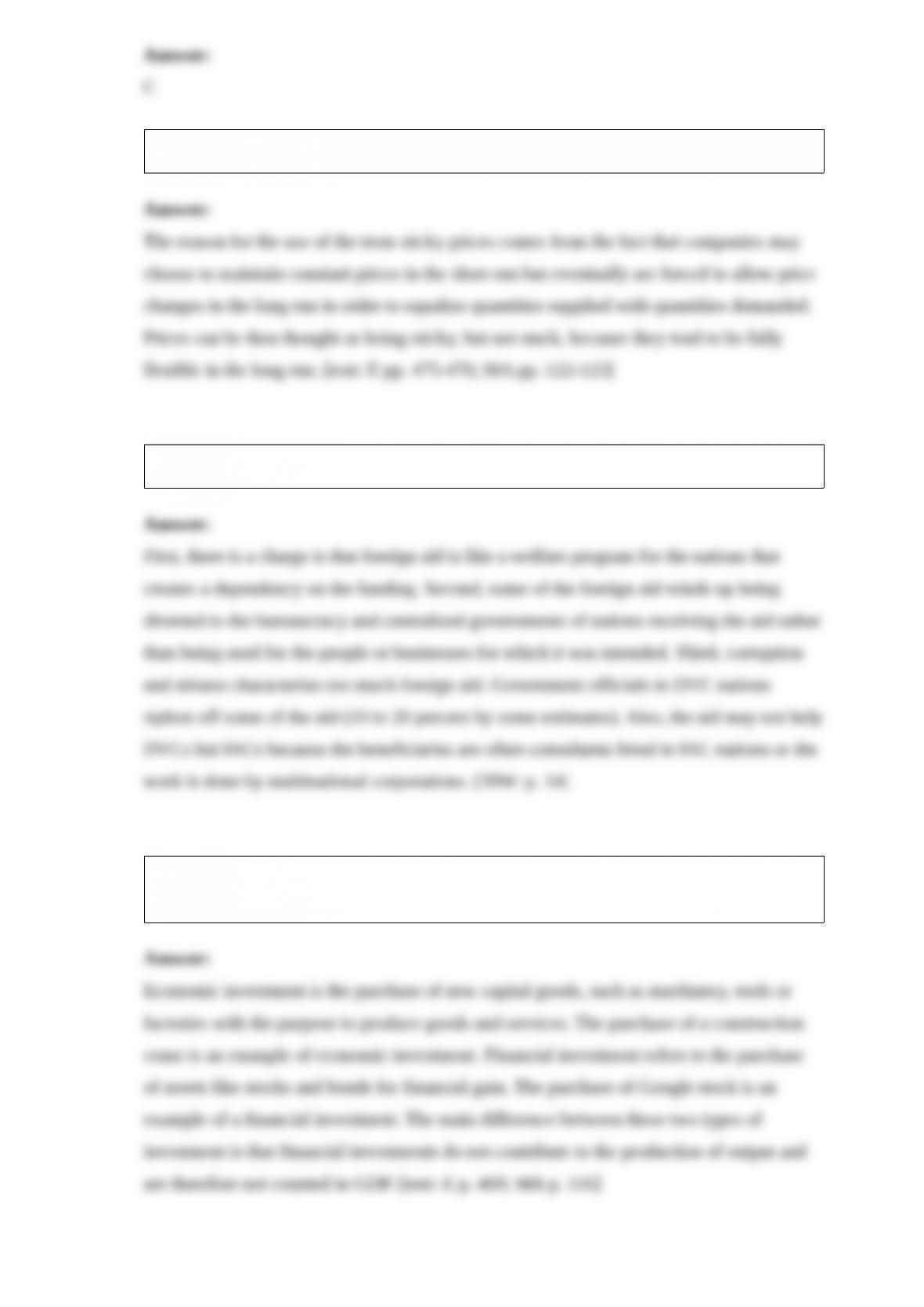
17)
refer to the above diagram. at output level q1:
a.resources are overallocated to this product and productive efficiency is not realized.
b.resources are underallocated to this product and productive efficiency is not realized.
c.productive efficiency is achieved, but resources are underallocated to this product.
d.productive efficiency is achieved, but resources are overallocated to this product.
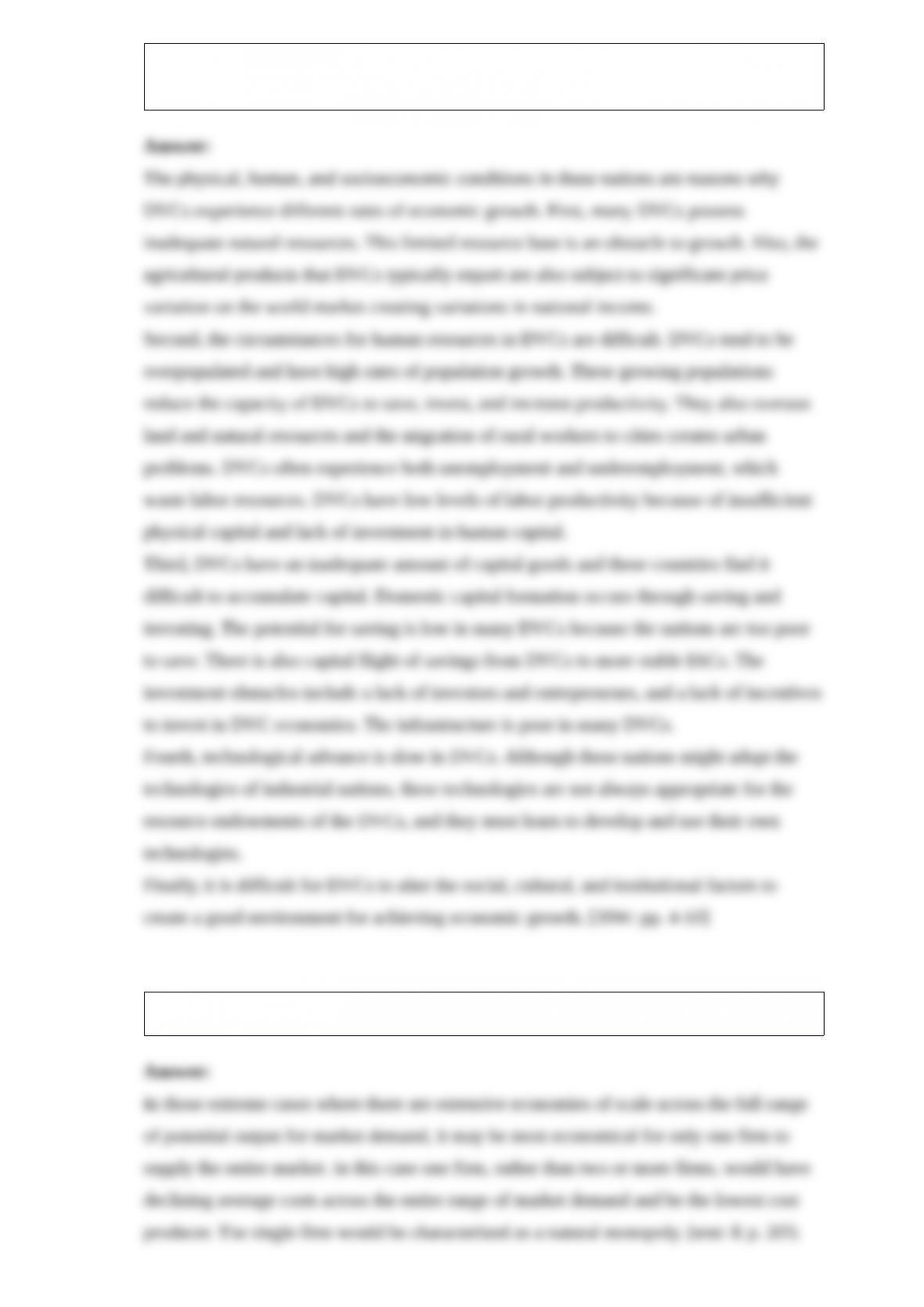
18) Suppose a college economics department decides to use a single economics text for
all sections of principles of economics. Also assume that the three individual members
of the textbook selection committee have the following preferences.
Assuming all other textbook qualities except analytical level are the same,
paired-choice majority voting will result in the committee:
A.being deadlocked and unable to decide on a book.
B.selecting the C/F book.
C.selecting the M/B book.
D.selecting the O/S book.
19) Why do economists refer to prices as sticky rather than stuck?
20) What are the three basic criticisms of foreign aid to DVCs?
21) What is the difference between economic investment and financial investment?
Give an example for each type of investment.
22) Why do DVCs experience different rates of growth? What are some obstacles to
growth?
23) What is the relationship between economies of scale and a natural monopoly?