1) surpluses drive market prices up; shortages drive them down.
2) the production possibilities curve shows various combinations of two products that
an economy can produce when achieving full employment.
3) Proposed ergonomics regulations are an example of industrial regulation (rather than
social regulation).
4) The aggregate supply curve (short-run) becomes steeper as the economy moves
rightward and upward along it.
5) insurance companies use deductibles and copayments to control increases in the
amount of health care demanded.
6)
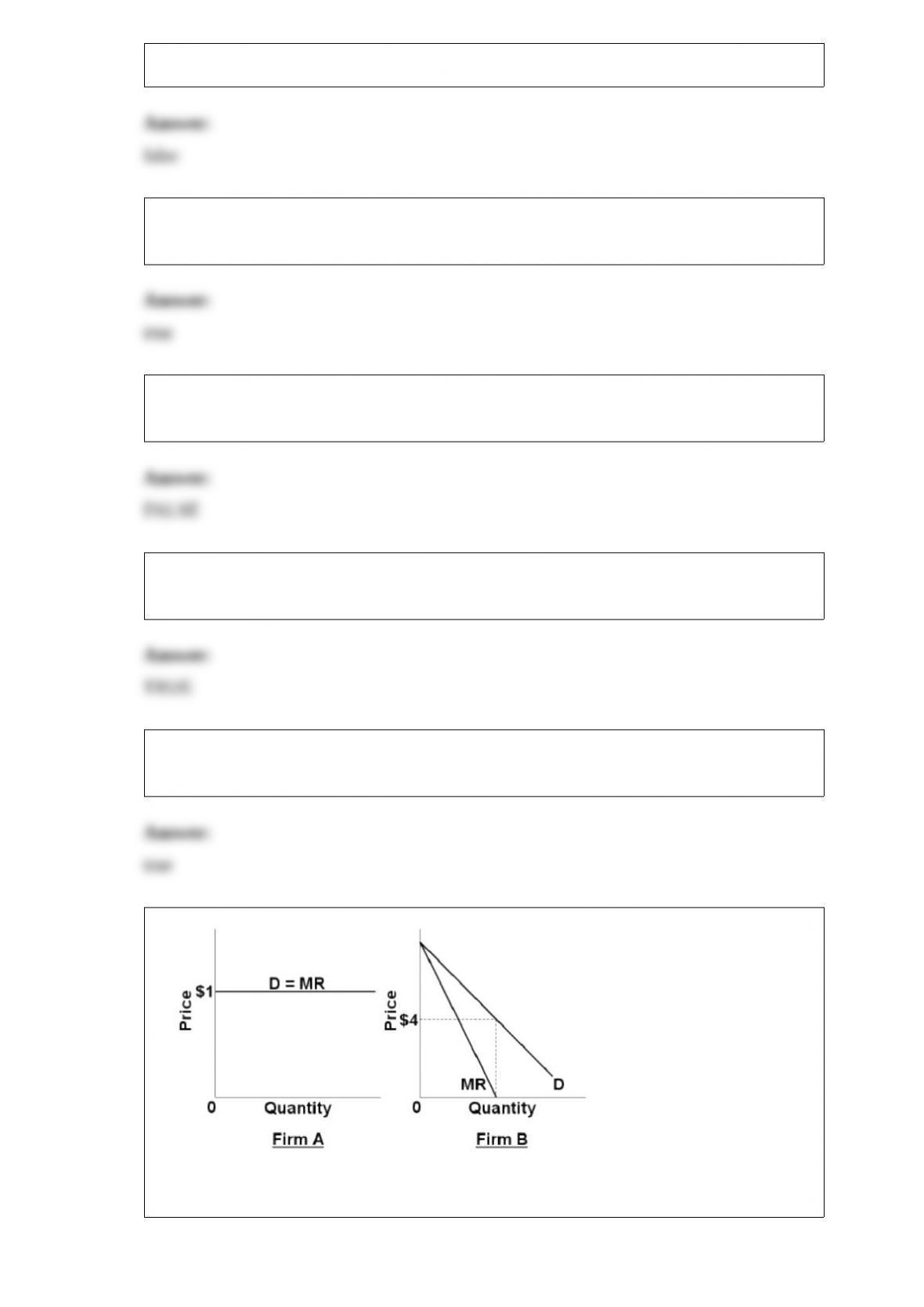
refer to the above diagrams. the demand for firm b’s product is inelastic at all prices
below $4.

7) if the price level doubled in a 23-year period, we can conclude that the average
annual rate of inflation over that period was about 3 percent.
8) If the dollar depreciates, U.S. exports will eventually rise and U.S. imports will
eventually fall.
9) a nation’s infrastructure refers to:
a.its ability to realize economies of scale.
b.its stock of technological knowledge.
c.public capital goods such as highways and sanitation systems.
d.the productivity of its labor force.
10) A lump-sum tax means that:
A.the tax only applies to one time period.
B.the same amount of tax revenue is collected at each level of GDP.
C.tax revenues vary directly with GDP.
D.tax revenues vary inversely with GDP.
11) In the insider-outsider theory:
A.outsiders are workers who retain employment during recession.
B.insiders are managers who have more information about their firms’ performance
than outsiders.
C.insiders are “principals” and outsiders are “agents.”
D.outsiders are laid off workers and other qualified unemployed workers.
12) as it relates to a public good, nonexcludability means that:
a.free riders cannot be barred from receiving the benefits.
b.there is no need or demand for the good.
c.either the public sector or the public sector can produce the good, but not both.
d.one person’s benefit from the good does not reduce the benefit available to others.
13) Assume that the coefficient of elasticity of product demand is 0.5 in industry A and
is 3.2 in industry B. Other things equal, labor demand will be:
A.more elastic in industry A than in B.
B.unit elastic in both industry A and B.
C.more elastic in industry B than in A.
D.relatively inelastic in both industry A and B.
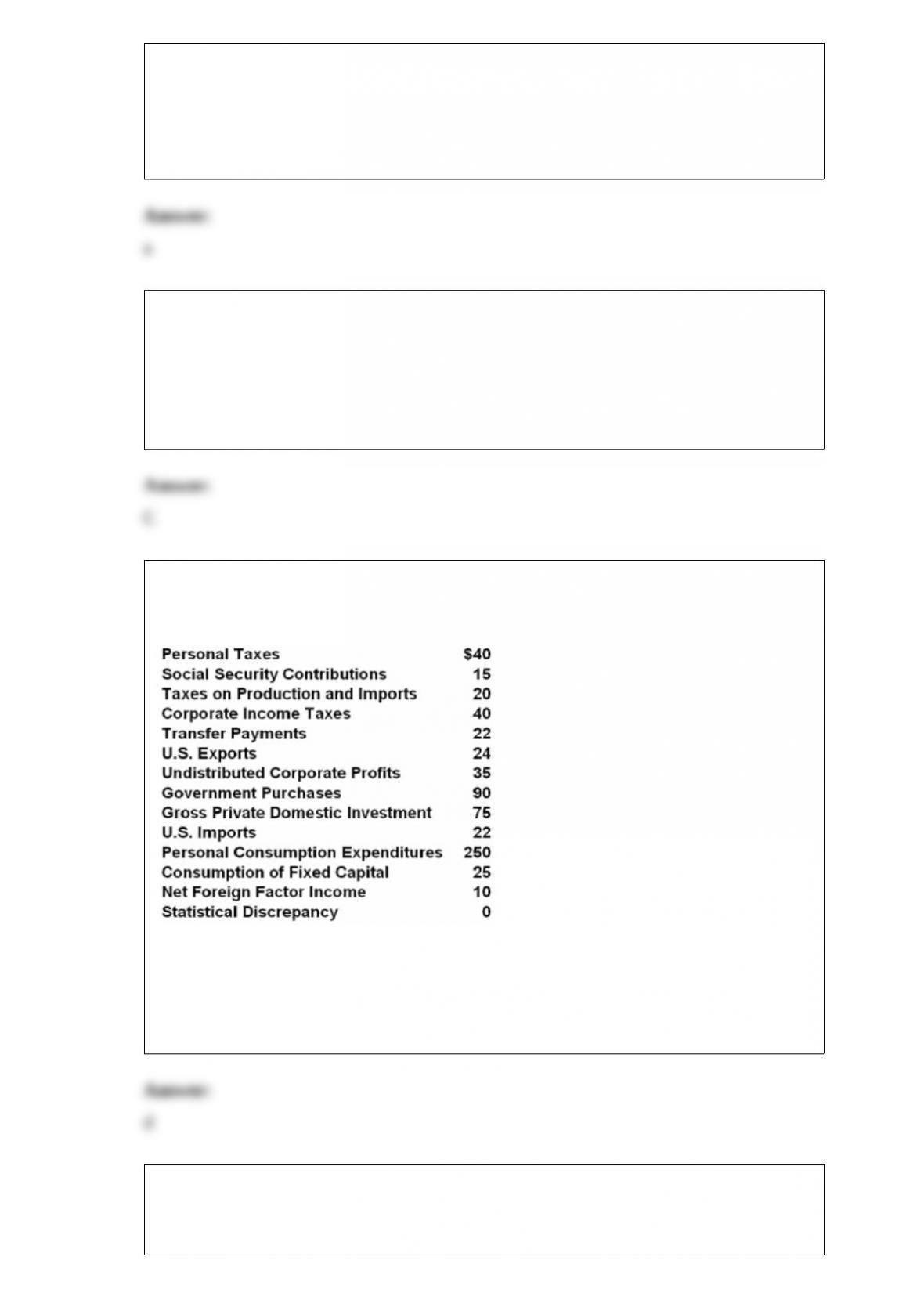
14) answer the next question(s) on the basis of the following data. all figures are in
billions of dollars.
refer to the above data. ni is:
a.$362.
b.$372.
c.$447.
d.$402.
15) The equilibrium level of GDP in a private closed economy is where:
A.MPC = APC.
B.unemployment is about 3 percent of the labor force.
C.consumption equals saving.
D.aggregate expenditures equal GDP.
16) suppose that in each of four successive years producers sell more of their product
and at lower prices. this could be explained:
a.by small annual increases in supply accompanied by large annual increases in
demand.
b.in terms of a stable supply curve and increasing demand.
c.in terms of a stable demand curve and increasing supply.
d.as an exception to the law of supply.
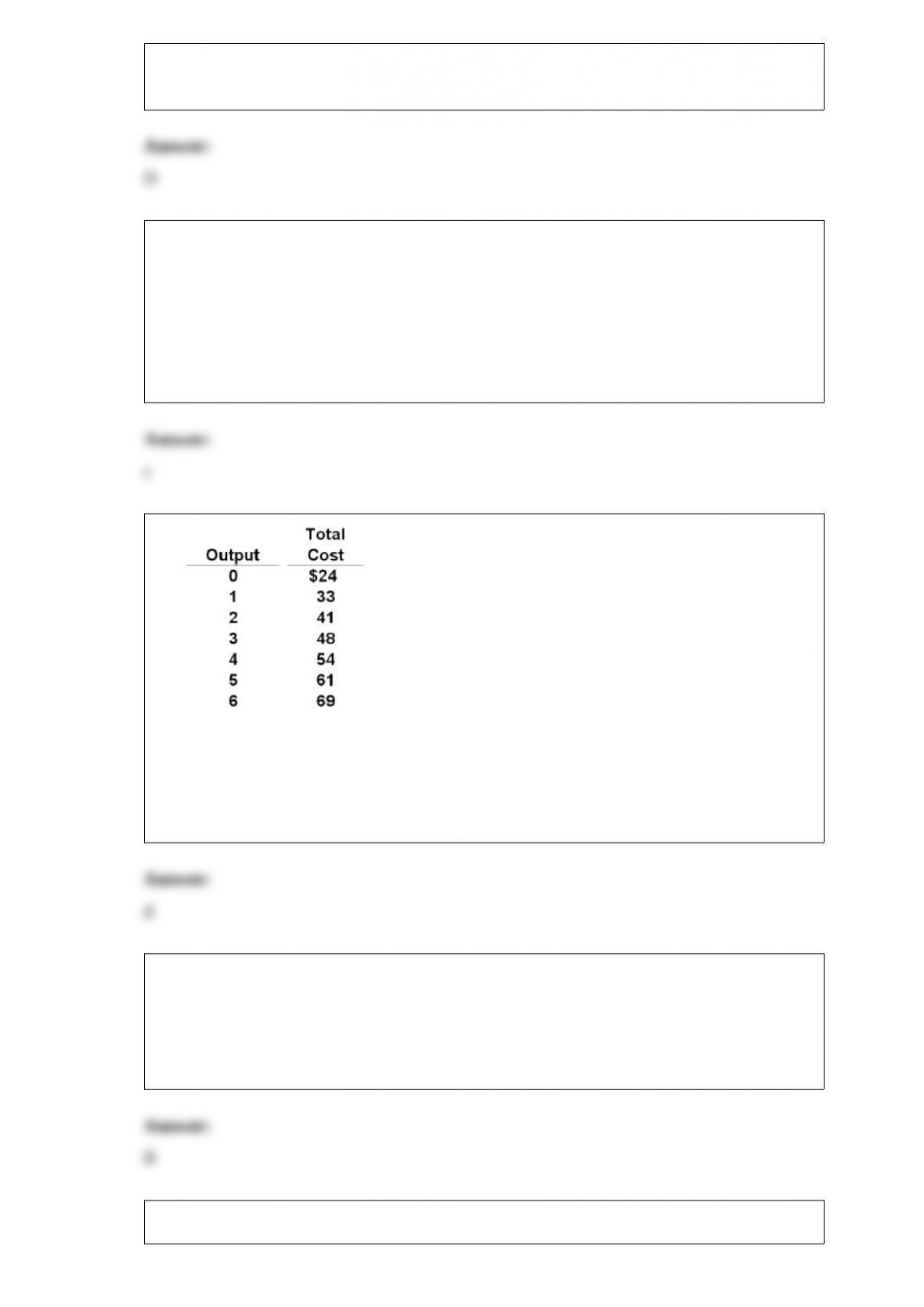
17)
refer to the above data. the profit-maximizing output for this firm:
a.is 3
b.is 4
c.is 5
d.cannot be determined from the information given.
18) Exports have the same effect on the current size of GDP as:
A.imports.
B.investment.
C.taxes.
D.saving.
19) The interest-rate effect suggests that:
A.a decrease in the supply of money will increase interest rates and reduce
interest-sensitive consumption and investment spending.
B.an increase in the price level will increase the demand for money, reduce interest
rates, and decrease consumption and investment spending.
C.an increase in the price level will increase the demand for money, increase interest
rates, and decrease consumption and investment spending.
D.an increase in the price level will decrease the demand for money, reduce interest
rates, and increase consumption and investment spending.
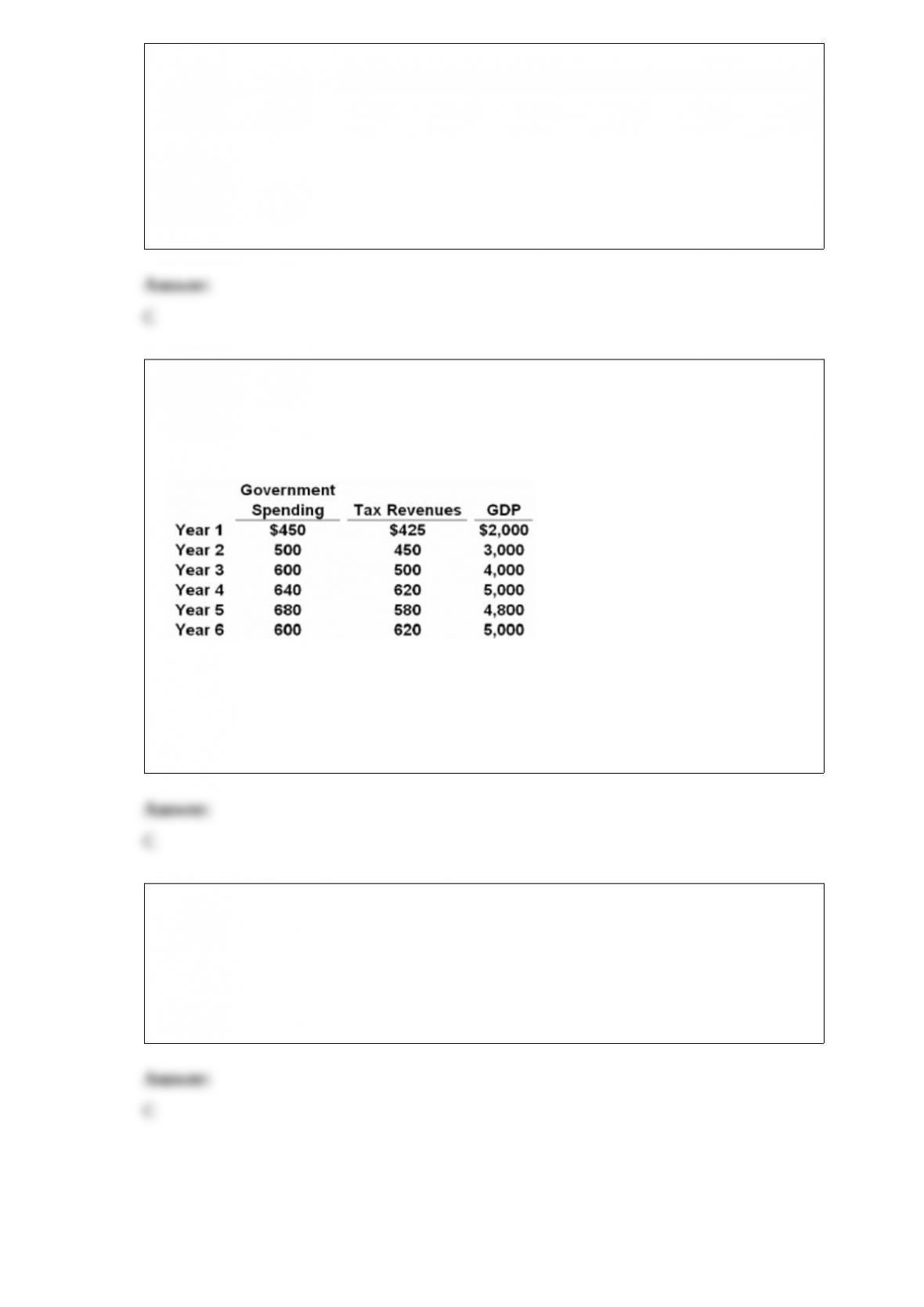
20) Answer the next question(s) using the following budget information for a
hypothetical economy. Assume that all budget surpluses are use to pay down the public
debt.
Refer to the above data. The budget deficit in year 3 is:
A.$175 billion.
B.$3050 billion.
C.$100 billion.
D.$295 billion.
21) The change in a firm’s total revenue that results from hiring an additional worker is
measured by:
A.marginal product.
B.marginal revenue.
C.marginal revenue product.
D.average revenue product.
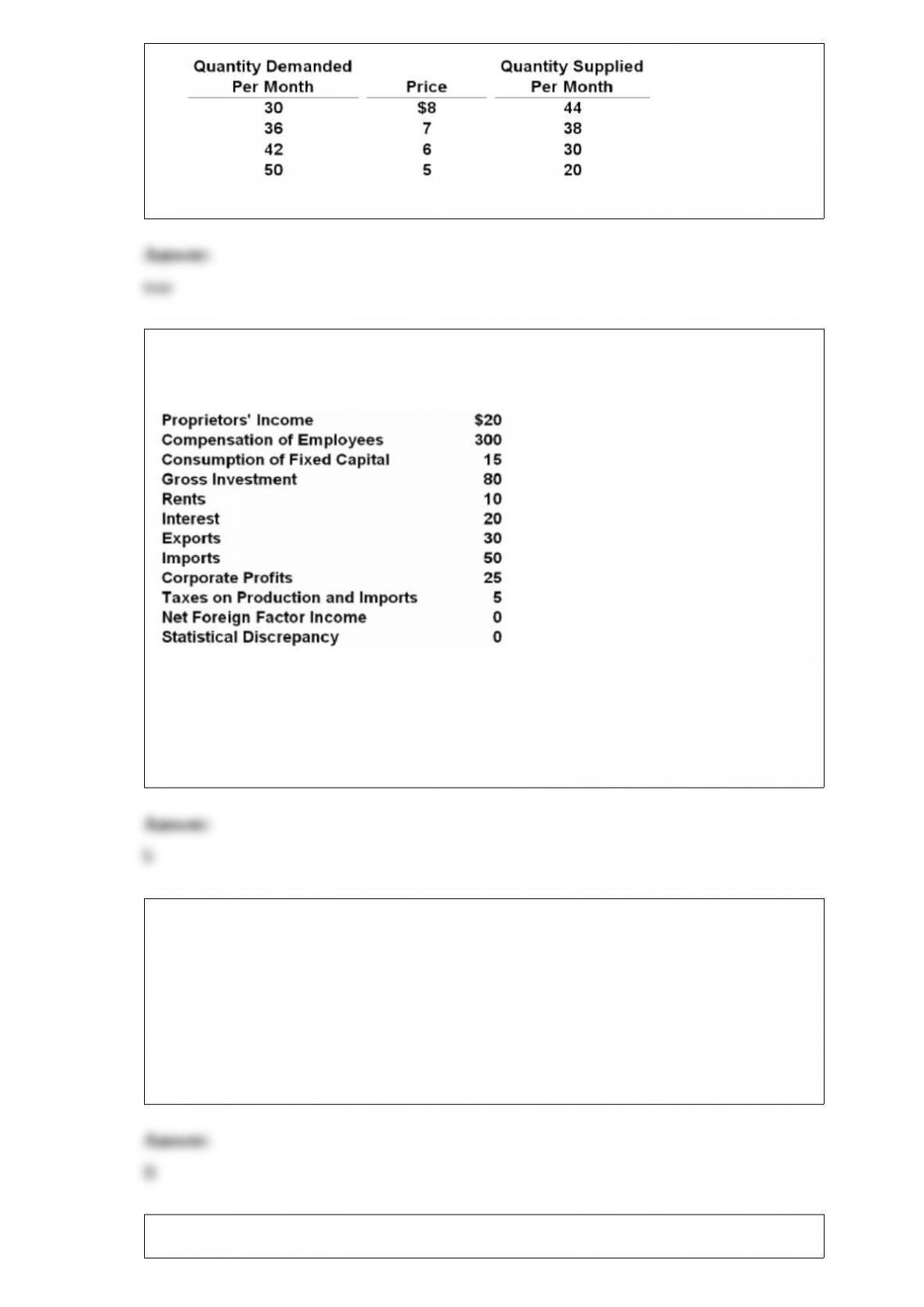
22)
refer to the above data. the demand for this product is elastic in the $8-$7 price range.
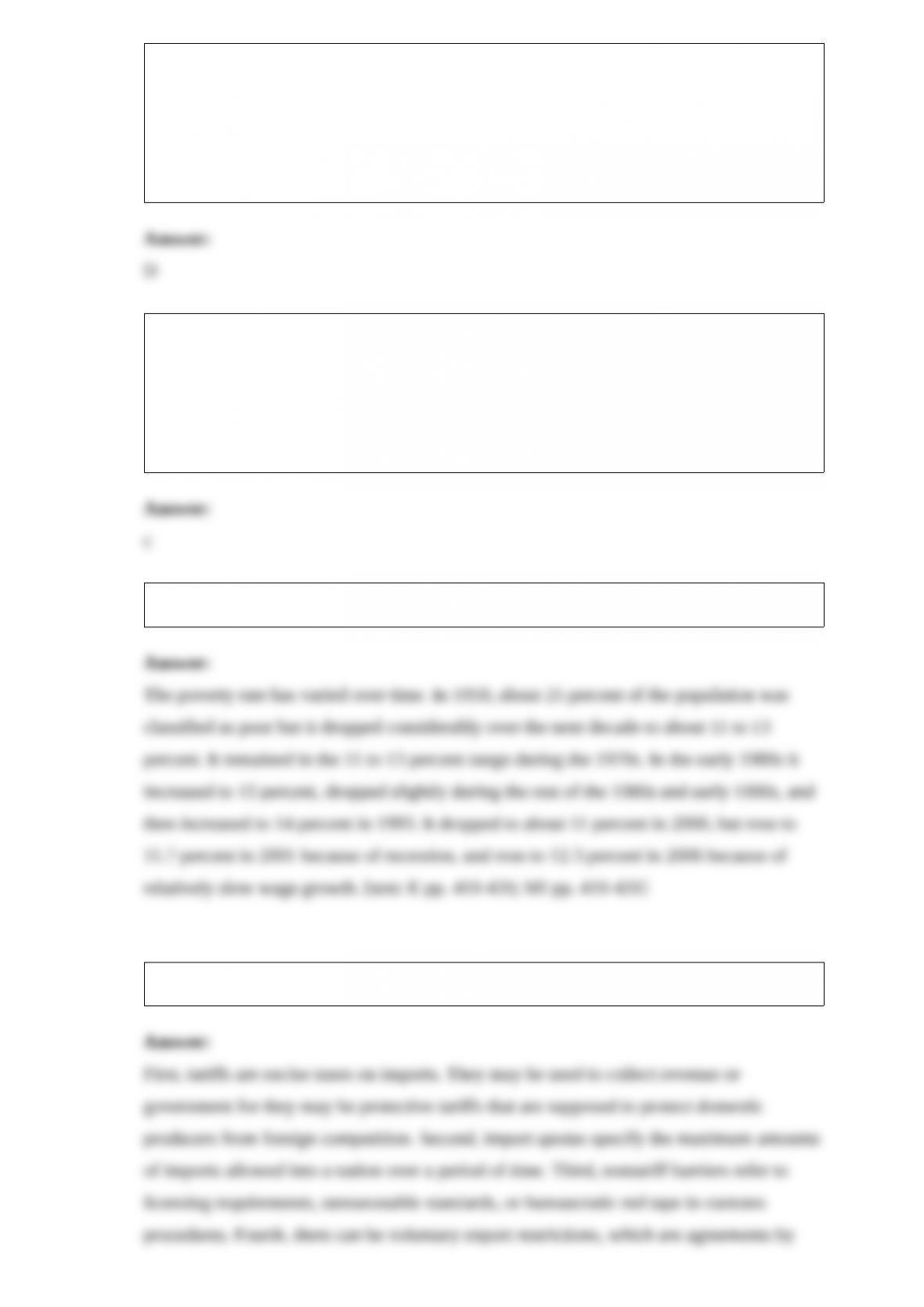
23) answer the next question(s) on the basis of the following data. all figures are in
billions of dollars.
refer to the above data. national income is:
a.$395.
b.$380.
c.$375.
d.$360.
24) (Advanced analysis) Assume that the MPC is .8 in an economy that has an
aggregate supply curve with a slope of 1. Also, suppose that the price level is flexible
downward. A decrease in investment spending of $10 billion will shift the aggregate
demand curve leftward by:
A.$50 billion and decrease real GDP by $50 billion.
B.$50 billion and decrease real GDP by $25 billion.
C.$10 billion and decrease real GDP by $10 billion.
D.$10 billion and decrease real GDP by $25 billion.
25) The basic economic argument for greater income equality is that:
A.an equal distribution of income is the logical outcome of any tax-transfer program.
B.because citizens enjoy political equality, they are also entitled to economic equality.
C.a more equal distribution of income will tend to maximize incentives to work, invest,
and assume risk.
D.a more equal distribution of a given amount of income will increase the total utility
of consumers.
26) assume a firm closes down in the short run and produces no output. under these
conditions:
a.tvc is positive, but tfc and tc are zero.
b.tfc is positive, but tvc and tc are zero.
c.tfc and tc are positive, but tvc is zero.
d.tfc, tvc, and tc will all be positive.
27) What have been the poverty trends in the past forty-five years?
28) Define the four basic types of trade barriers.
29) Why has one Presidential administration enforced the antitrust laws more or less
strictly than another?
30) Describe R&D expenditures in the United States. What percentage of spending goes
for invention, innovation, and diffusion?

31) Explain the role interest rates play in understanding the time value of money.