
1) The benefits-received principle of taxation supports the case for highly progressive
taxation.
2) in the short run a pure monopolist will maximize profits by producing at that level of
output where the difference between price and average total cost is at a maximum.
3) Unlike most demand curves, the demand curve for loanable funds is upsloping.
4) improvements in technology are considered a demand factor in economic growth.
5) The efficiency loss of a tax is the tax revenue collected by government minus the
value of the public goods financed through the tax.
6) the current, on-going round of trade negotiations is called the doha round.
7) if all nations prohibited the international migration of labor, we would expect world
output to decline.
8) the law of diminishing returns explains why short-run marginal cost curves are

upward sloping.
9) The prime interest rate and the Federal funds rate normally change in opposite
directions.
10) Present value is the amount to which some current amount of money will grow as
interest compounds over time.
11) Commodity prices are relatively stable from year to year.
12) hmo stands for holistic medical organization.
13) programs by state governments to keep milk prices higher than market-determined
prices to protect family dairy farms from bankruptcy promote the efficient allocation of
resources.
14) unanticipated inflation benefits some groups in the economy.
15) Most developed countries have fertility rates less than 2.1.

16) which of the following best measures improvements in the standard of living of a
nation?
a.growth of nominal gdp
b.growth of real gdp
c.growth of real gdp per capita
d.growth of national income
17) the law of demand states that:
a.price and quantity demanded are inversely related.
b.the larger the number of buyers in a market, the lower will be product price.
c.price and quantity demanded are directly related.
d.consumers will buy more of a product at high prices than at low prices.
18) suppose that mux/px exceeds muy/py. to maximize utility the consumer who is
spending all her money income should buy:
a.less of x only if its price rises.
b.more of y only if its price rises.
c.more of y and less of x.
d.more of x and less of y.
19) in national income accounting, government purchases include:
a.purchases by federal, state, and local governments.
b.purchases by the federal government only.
c.government transfer payments.
d.purchases of goods for consumption, but not public capital goods.
20) the law of diminishing returns indicates that:
a.as extra units of a variable resource are added to a fixed resource, marginal product
will decline beyond some point.
b.because of economies and diseconomies of scale a competitive firm’s long-run
average total cost curve will be u-shaped.
c.the demand for goods produced by purely competitive industries is downsloping.
d.beyond some point the extra utility derived from additional units of a product will
yield the consumer smaller and smaller extra amounts of satisfaction.
21) In 1985, the exchange rate between the U.S. dollar and the Japanese yen was $1 =
262 yen; in 2003, the rate was $1 = 110 yen.
Refer to the above information. Which one of the following might be a plausible
explanation for the change in the dollar-yen exchange rate from 1985 to 2003?
A.Japan exported much more to the United States during this period than it imported
from the United States.
B.Japan greatly increased its purchases of military equipment from the United States
during this period.
C.Japan’s economy grew far faster than the U.S. economy during this period.
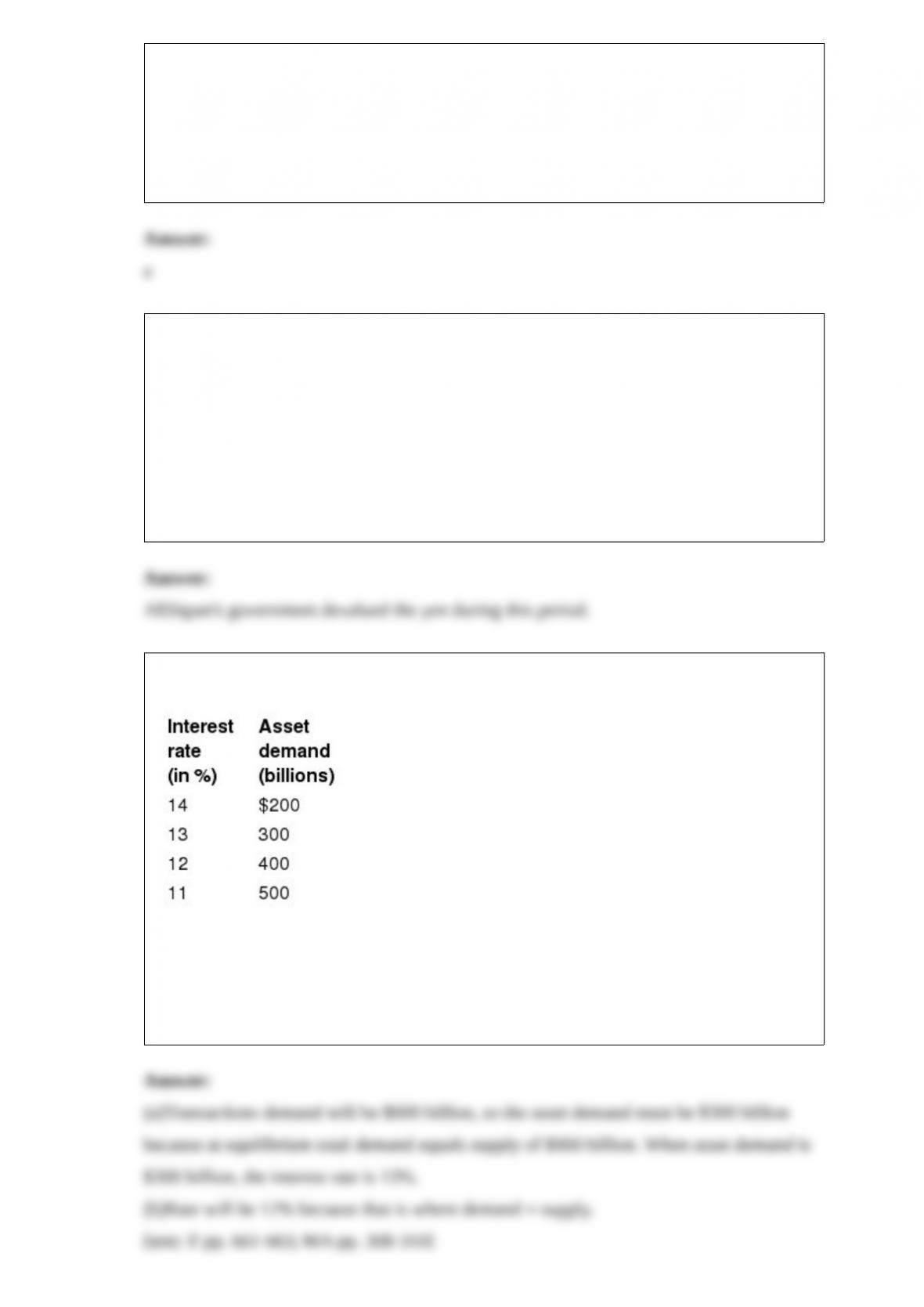
22) Use the table below to answer the questions:
(a)If the transactions demand for money equals 10% of nominal GDP, the nominal GDP
is $6000 billion, and the supply of money is $900 billion, what is the equilibrium
interest rate?
(b)If nominal GDP remains constant, and the money supply is increased from $900 to
$1000 billion, what will the equilibrium rate of interest be?
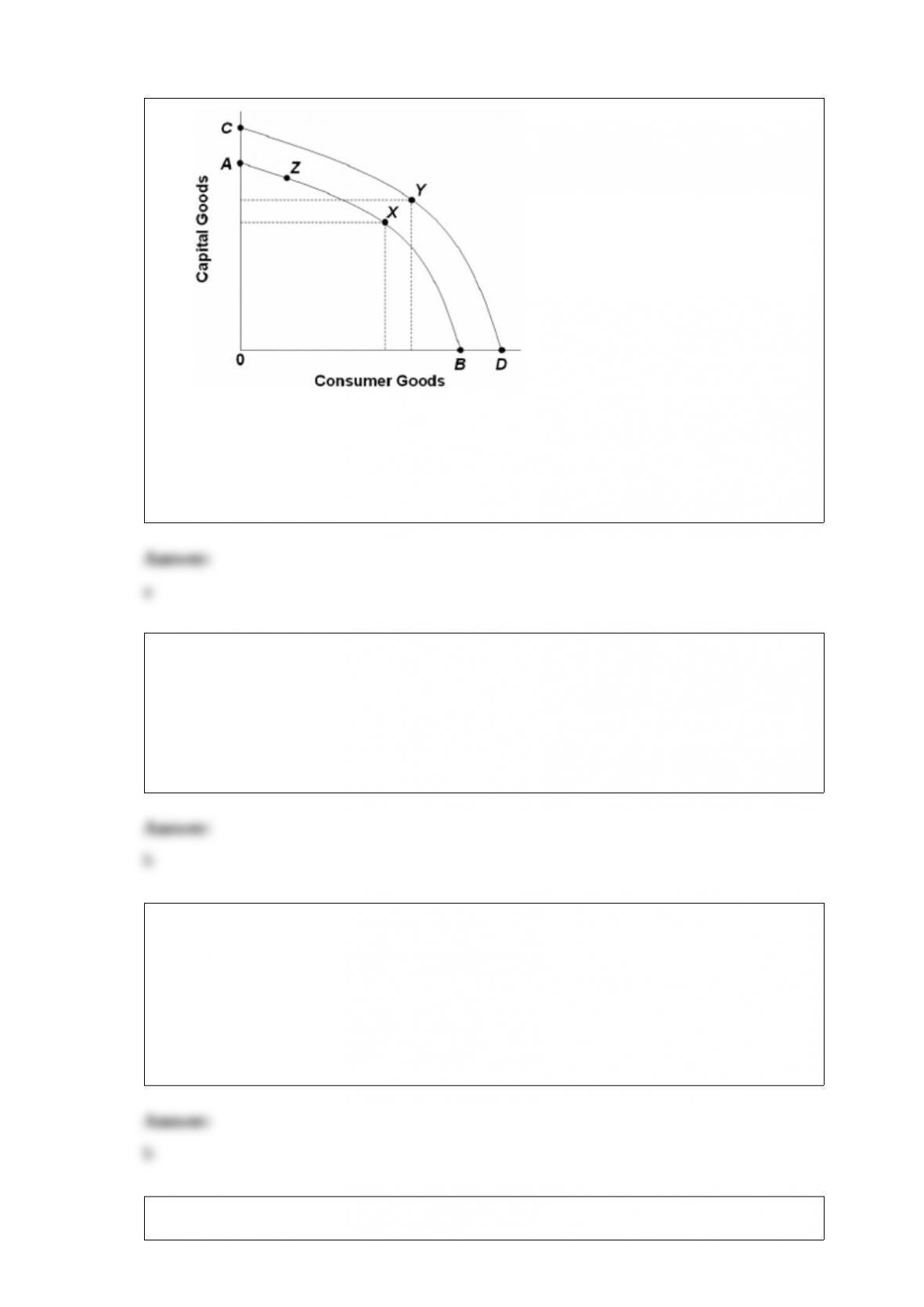
23)
refer to the above diagram. the most likely cause of a shift from ab to cd would be a(n):
a.increase in productivity.
b.increase in the price level.
c.decrease in the size of the labor force.
d.recession.
24) “offshoring:”
a.is the movement of money to foreign bank accounts.
b.is the shifting work previously done by domestic workers to workers located in other
countries.
c.applies only to manufactured goods.
d.hurts all domestic industries in a country.
25) the social security program in the united states faces a long-term funding crisis
because:
a.the social security trust fund was exhausted in 2006
b.the number of retirees receiving benefits is rising more rapidly than the number of
workers paying payroll taxes.
c.recent tax cuts have reduced payroll tax revenues.
d.the war on terrorism has drained funds away from social security.
26) the following cost data for a firm that is selling in a purely competitive market.
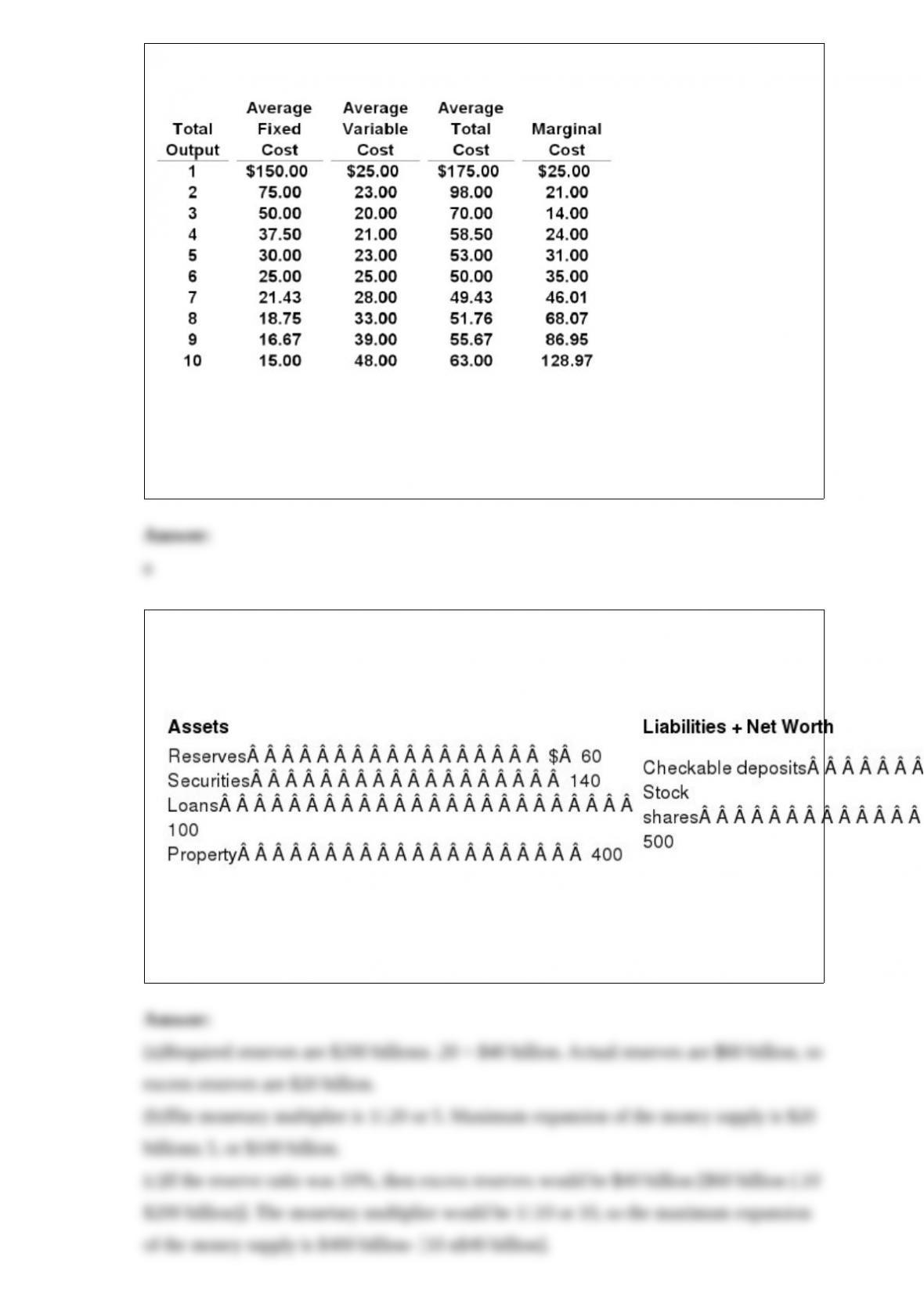
refer to the above data. the firm’s supply schedule is reflected in the:
a.marginal cost data for the fourth through tenth units of output.
b.marginal cost data for the first through tenth units of output.
c.average total cost data for the seventh through tenth units of output.
d.average variable cost data for fifth through tenth units of output.
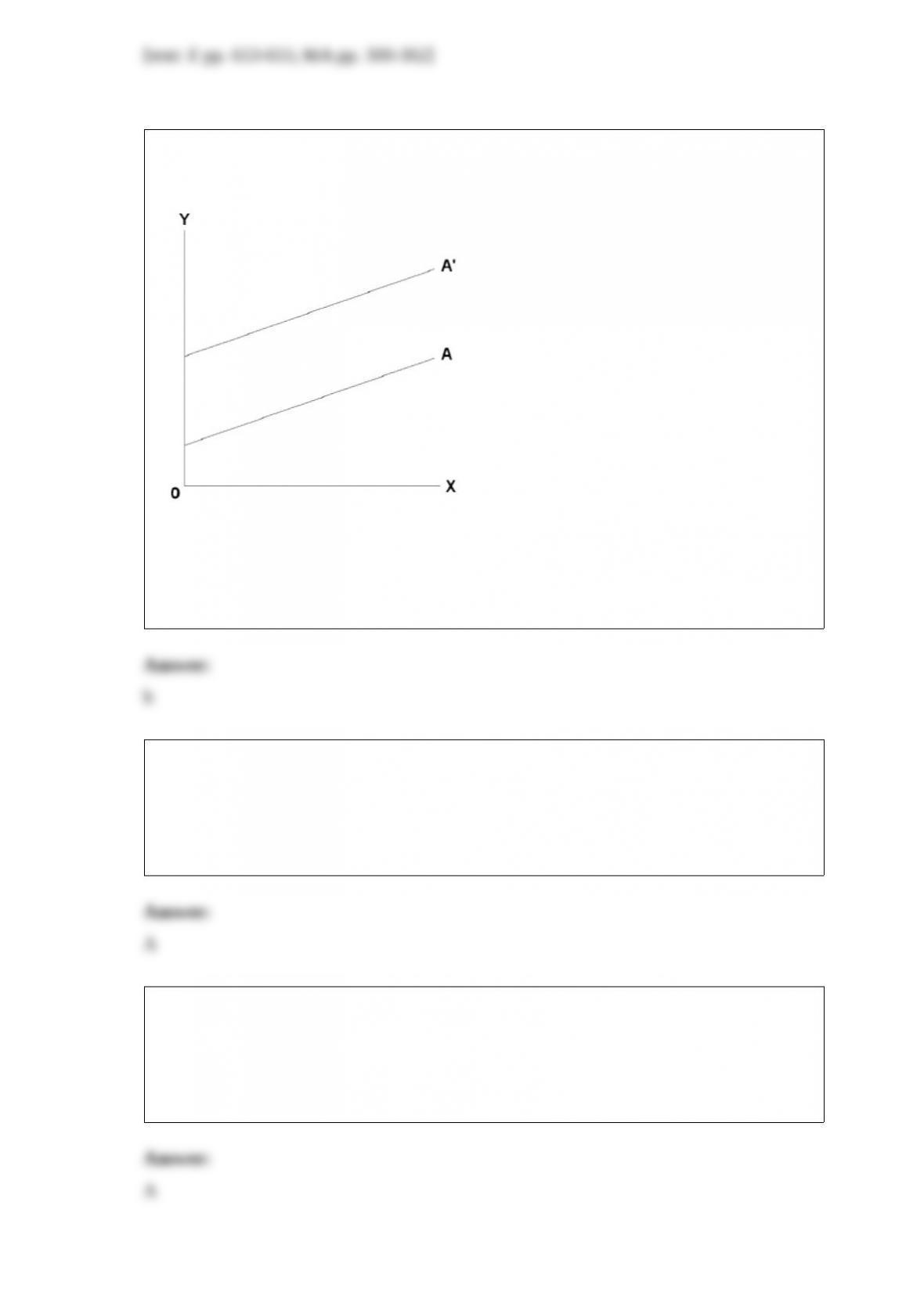
27) Answer the next questions based on the following consolidated balance sheet for the
commercial banking system. Assume the required reserve ratio is 20%. All figures are
in billions of dollars.
(a)What is the amount of excess reserves in this commercial banking system?
(b)What is the maximum amount that the money supply can be expanded?
(c)If the reserve ratio fell to 10%, what is now the maximum amount that the money
supply can be expanded?
28)
the movement from line a to line a’ represents a change in:
a.the slope only.
b.the intercept only.
c.both the slope and the intercept.
d.neither the slope nor the intercept.
29) Individual Transferable Quotas (ITQs):
A.promote efficiency and limit catches.
B.promote efficiency in production but still lead to overfishing.
C.limit catches but encourage production cost increases that are inefficient.
D.have failed to limit catches or promote efficiency.
30) The U.S. economy achieved full employment in 2007:
A.despite negative net exports of $560 billion.
B.thanks to negative net exports of $560 billion.
C.but produced below its potential.
D.with the unemployment rate falling to 3 percent.
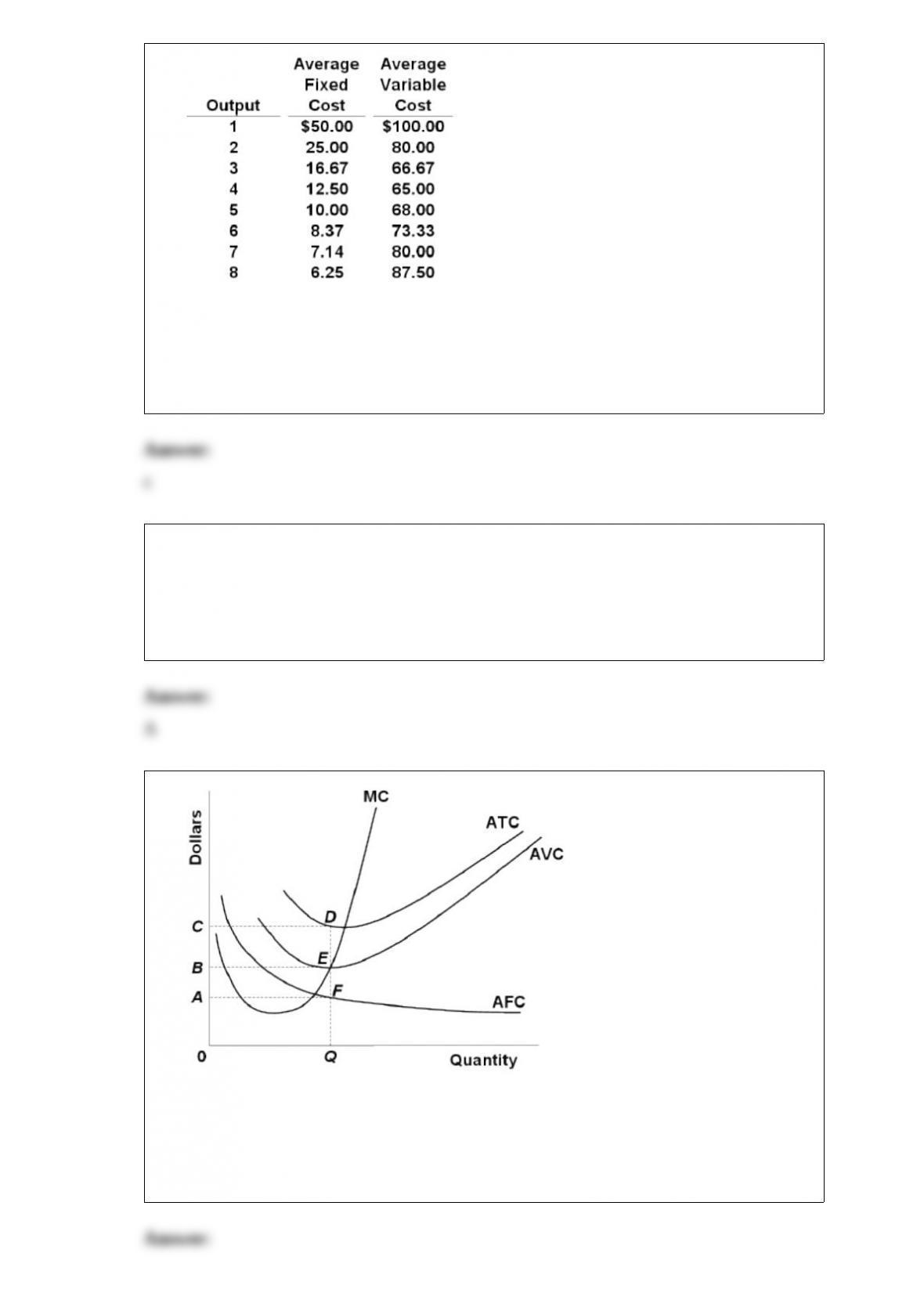
31)
refer to the above data. the total cost of four units of output is:
a.$260.
b.$77.50.
c.$310.
d.$215.
32) Which of the following is (are) characteristic of DVCs?
A.a large percentage of the labor force is in agriculture
B.high levels of saving and investment
C.high labor productivity
D.high levels of training
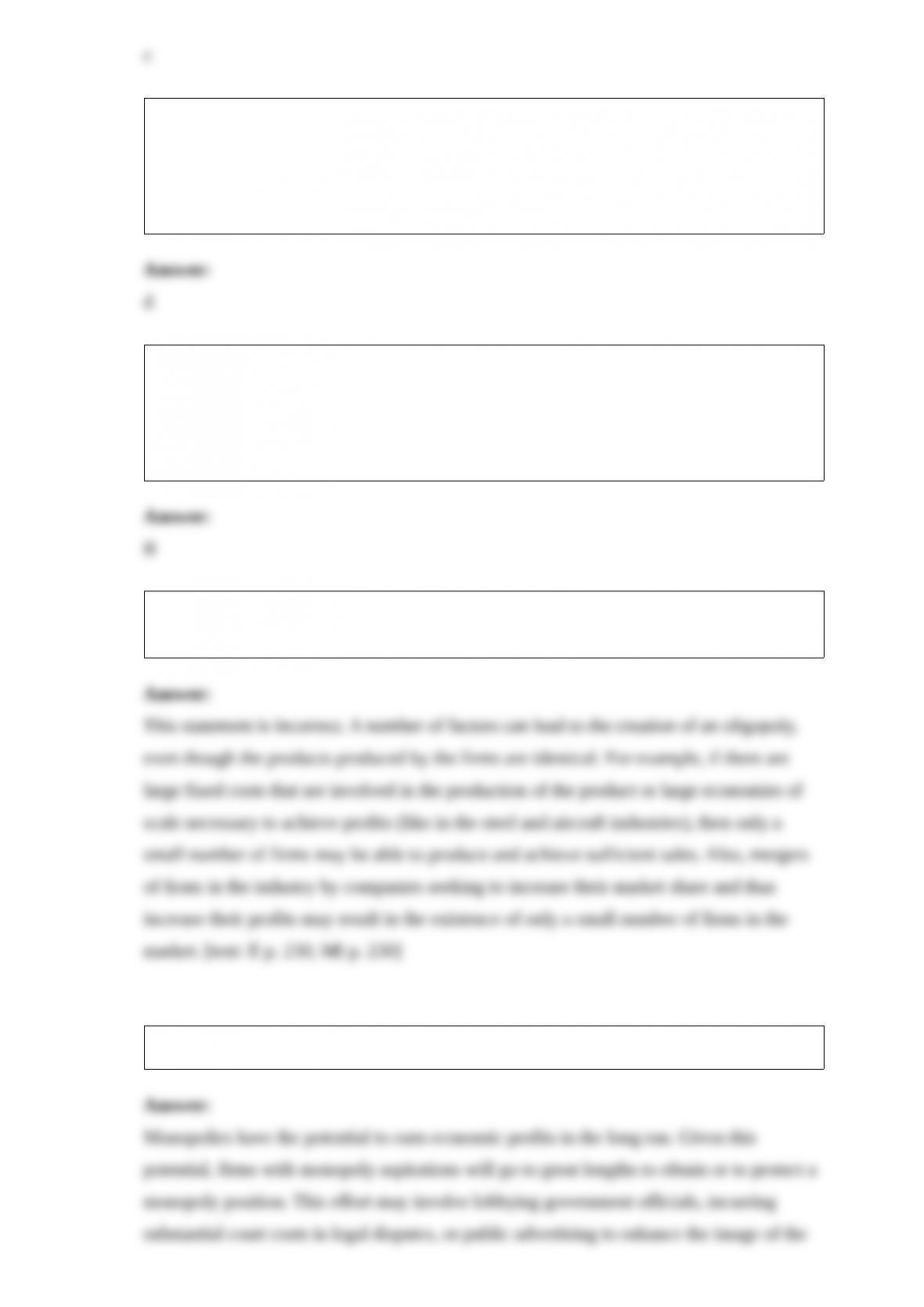
33)
refer to the above diagram. at output level q average fixed cost:
a.is equal to ef
b.is equal to qe
c.is measured by both qf and ed
d.cannot be determined from the information given
34) a normative statement is one that:
a.is based on the law of averages.
b.applies only to microeconomics.
c.applies only to macroeconomics.
d.is based on value judgments.
35) The fear of unwanted price wars may explain why many firms are reluctant to:
A.reduce wages when a decline in aggregate demand occurs.
B.reduce prices when a decline in aggregate demand occurs.
C.expand production capacity when an increase in aggregate demand occurs.
D.provide wage increases when labor productivity rises.
36) Evaluate the statement: A market that produces an identical product cannot be
become an oligopoly.
37) What is the relationship between rent-seeking expenditures and monopoly?
38) What countries rank as the lowest and highest risk countries according to the
international country risk guide? What types of risks are included in this measure?
39) Compare the factors that will cause shifts in the downsloping resource demand and
product demand curves.
40) List six events that could cause a shift in the investment demand curve.
41) Explain the problems giving rise to this statement: You would think the government
would want to do something to improve economic conditions when the economy is in
trouble, but the government is slow to act.
42) Discuss the meaning of the statement: Human history teaches us that economic
growth springs from better recipes, not just more cooking.
43) What can IACs do to foster DVCs economic growth?
44) What are the major components of the current account in the balance of payments?
How is the current account balance determined?