1) which of the following statements is correct?
a.the pure monopolist will maximize profit by producing at that point on the demand
curve where elasticity is zero.
b.in seeking the profit-maximizing output the pure monopolist underallocates resources
to its production.
c.the pure monopolist maximizes profits by producing that output at which the
differential between price and average cost is the greatest.
d.purely monopolistic sellers earn only normal profits in the long run.
2) if the supply of a product is inelastic, the price elasticity coefficient of supply is:
a.zero.
b.greater than one.
c.equal to one.
d.less than one.
3) the addition of government to the circular-flow model illustrates that government:
a.purchases resources in the resource market.
b.provides services to businesses and households.
c.purchases goods in the product market.
d.does all of these.
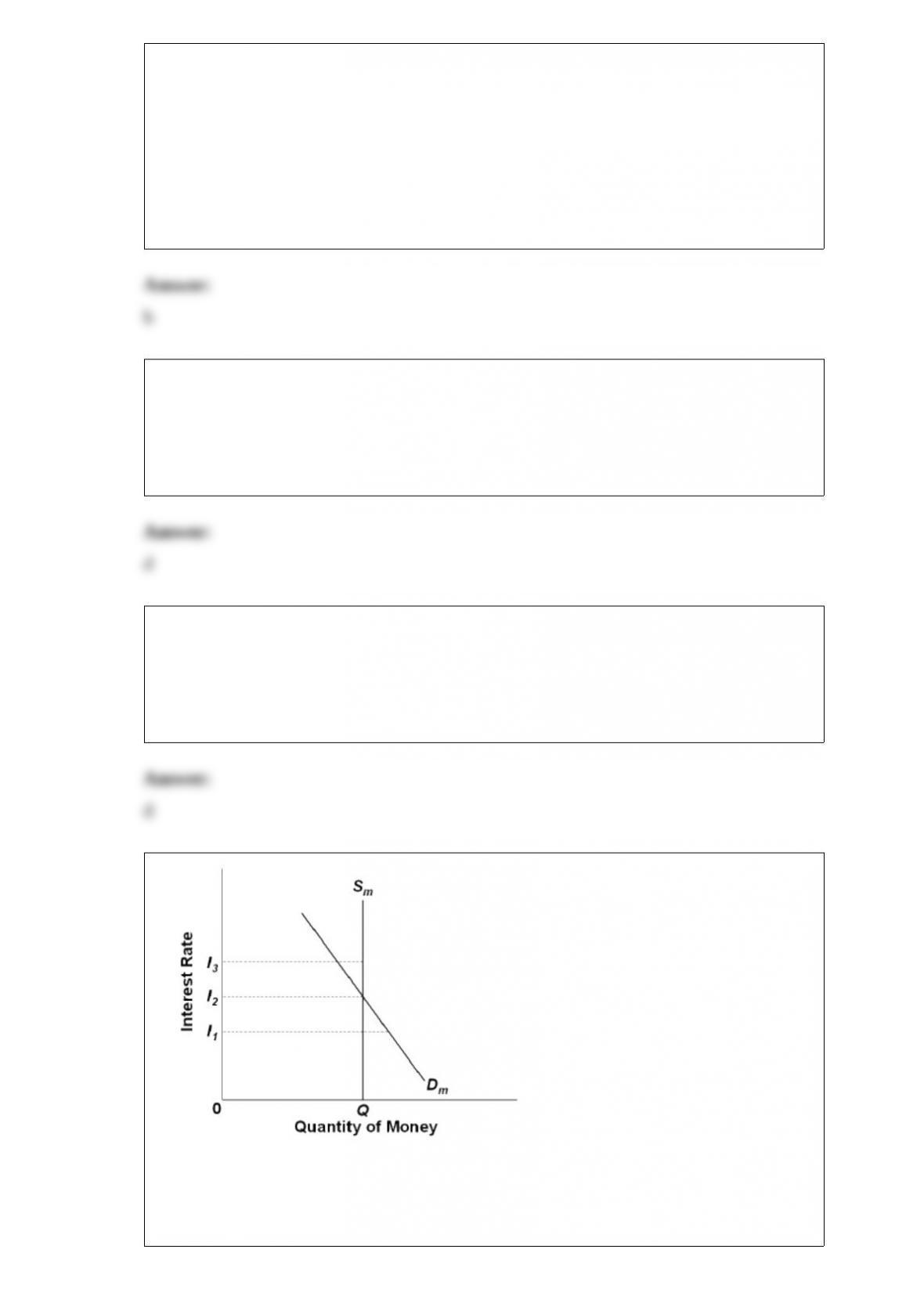
4)
Refer to the above diagram of the market for money. The vertical money supply curve
Sm reflects the fact that:
A.bond prices and interest rates are inversely related.
B.the stock of money is determined by the Federal Reserve System and does not change

when the interest rate changes.
C.the rate at which money is spent is zero.
D.lower interest rates result in lower opportunity costs of supplying money.
5) Suppose Gigantic Health Cooperative doesn’t hire Mandy Morrison solely because
she is a graduate of a particular foreign medical school, which is not known for the high
quality of its graduates. Yet, Mandy is actually more qualified than the average graduate
of American medical schools. This is an example of:
A.monopsony exploitation.
B.human-capital discrimination.
C.statistical discrimination.
D.irrational behavior.
6) the largest contributor to increases in the productivity of american labor is:
a.the reallocation of labor from agriculture to manufacturing.
b.improvements in labor quality.
c.increases in the quantity of capital.
d.technological advance.
7) the building of a production plant in china by an american firm best illustrates a(n):
a.trade flow.
b.resource flow.
c.financial flow.
d.information flow.
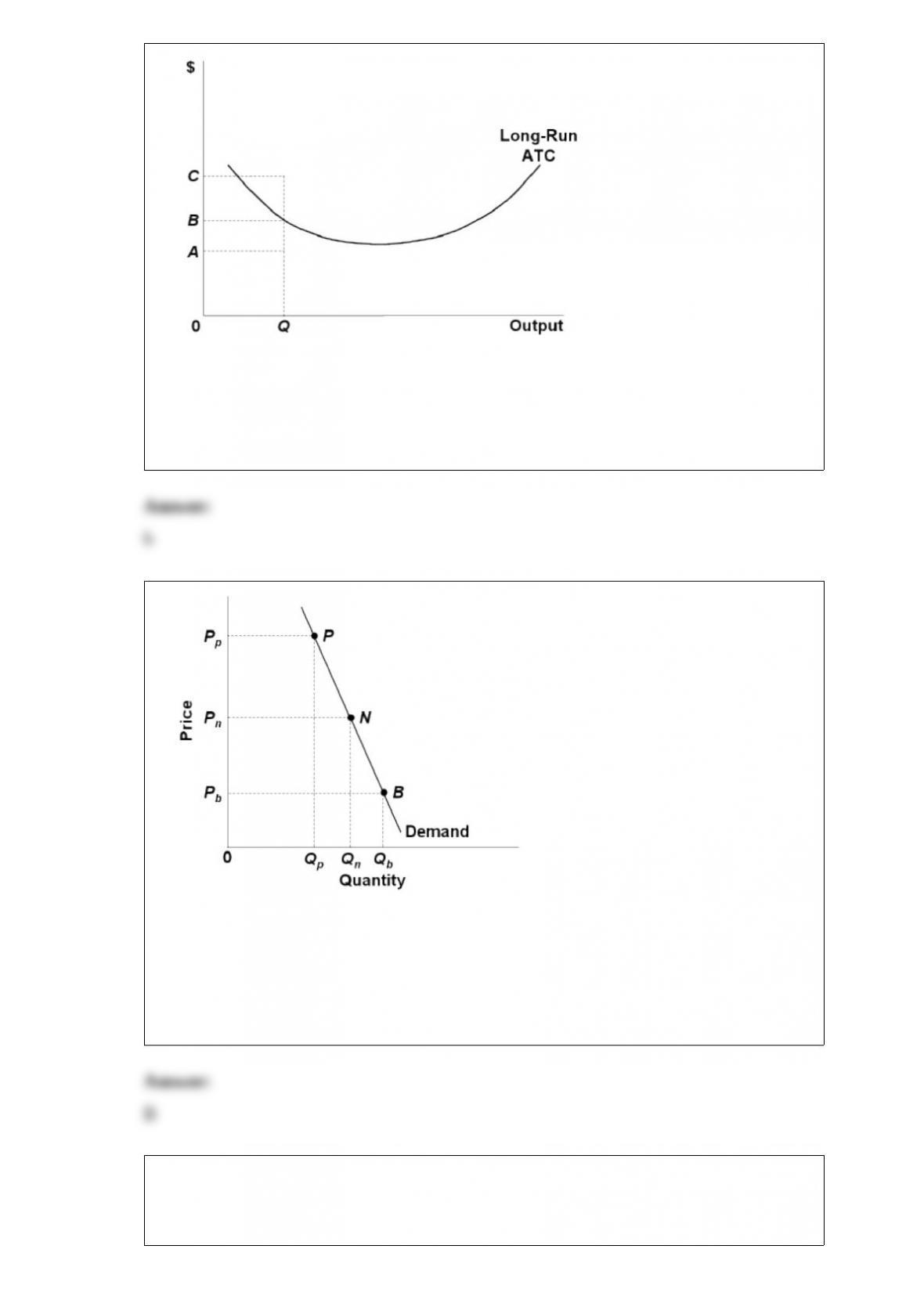
8)
refer to the above diagram. for output level q, per unit costs of a are:
a.unattainable and imply the inefficient use of resources.
b.unattainable, given resource prices and the current state of technology.
c.attainable, but imply the inefficient use of resources.
d.attainable and imply least-cost production of this output.
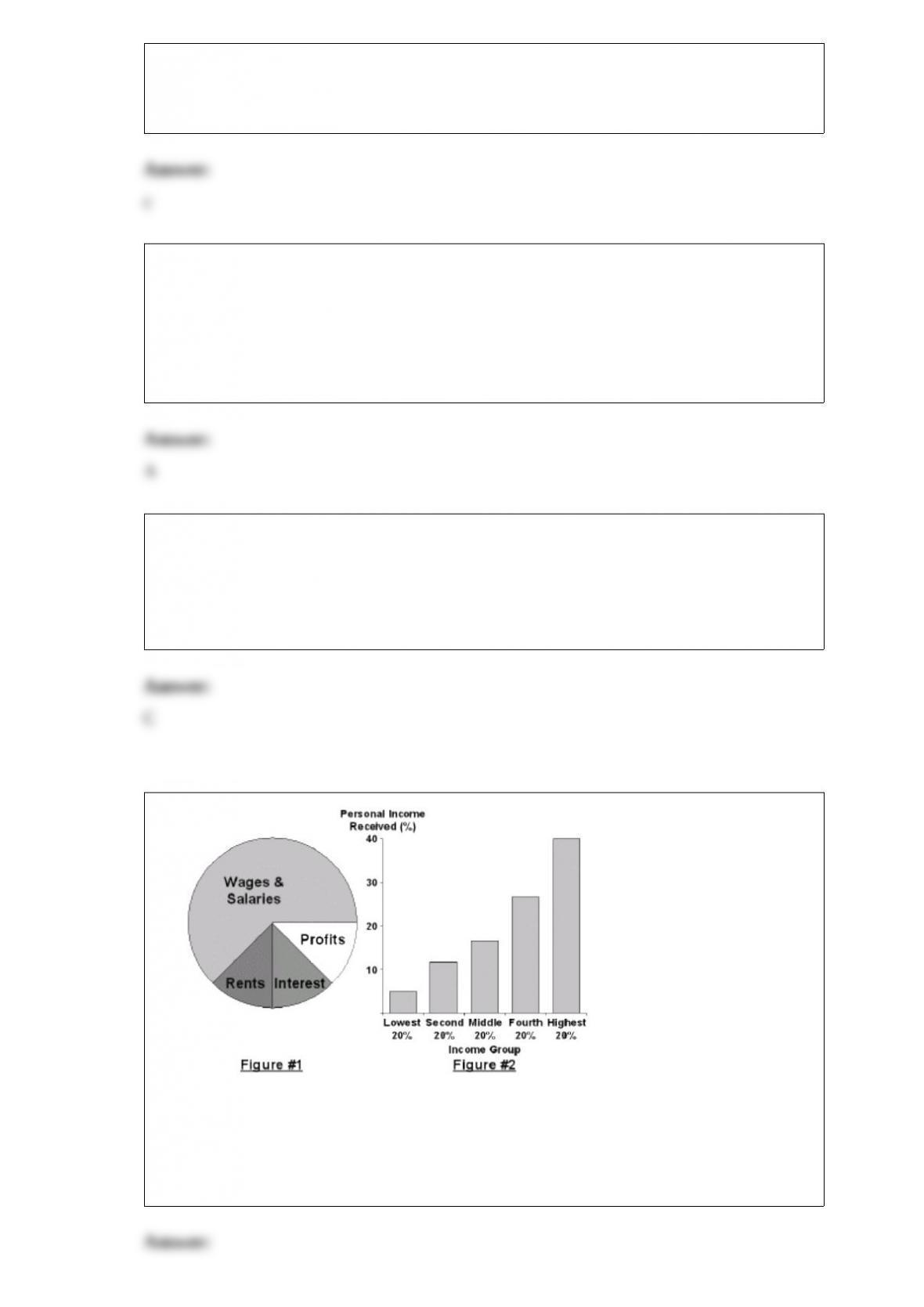
9)
Refer to the above diagram. If farmers produce a bumper crop of Qb, their gross
income:
A.will be 0PpPBQb.
B.will be 0PbBQb.
C.will be Pb Qn.
D.cannot be determined.
10) mary says, “you would have to pay me $50 to attend that pro wrestling event.” for
mary, the marginal utility of the event is:
a.zero.
b.positive, but declines rapidly.
c.negative.
d.positive, but less than the ticket price.
11) Suppose a firm is employing all its inputs so that the MRP per dollar spent on each
is the same. This suggests that the:
A.amount of each resource employed will depend on both its price and its productivity.
B.price of each input must be identical.
C.firm is using the same quantity of each input.
D.total expenditure on each input is identical.
12) When a commercial bank borrows from a Federal Reserve Bank:
A.the supply of money automatically increases.
B.it indicates that the commercial bank is unsound financially.
C.the commercial bank’s lending ability is increased.
D. the commercial bank’s reserves are reduced.
13)
in the above diagrams for a hypothetical economy, figure 1 shows the:
a.personal distribution of income.
b.functional distribution of income.
c.microeconomic distribution of income.
d.international distribution of income.

14) Which of the following is not characteristic of U.S. agriculture?
A.Productivity has been increasing more slowly in agriculture than in the rest of the
economy.
B.The demand for agricultural commodities increases less than proportionate to
increases in income.
C.Resources in agriculture are relatively immobile.
D.Demand is inelastic with respect to price.
15) When aggregate demand declines, many firms may reduce employment rather than
wages because wage reductions may:
A.reduce per unit production costs.
B.reduce worker morale and work effort, and thus lower productivity.
C.increase the firms’ cost of raising financial capital.
D.reduce the demands for their products.