1) Checkable deposits held in saving and loan institutions, mutual savings banks, and
credit unions are part of the M1 definition of the money supply.
2) Actual reserves equal required reserves plus excess reserves.
3) if you pay a $2000 tax on $10,000 of taxable income and a $4000 tax on a taxable
income of $16,000, the tax is progressive.
4) Tax increases and government spending cuts by state governments during recessions
often reduce the expansionary impact of fiscal policy by the Federal government.
5)
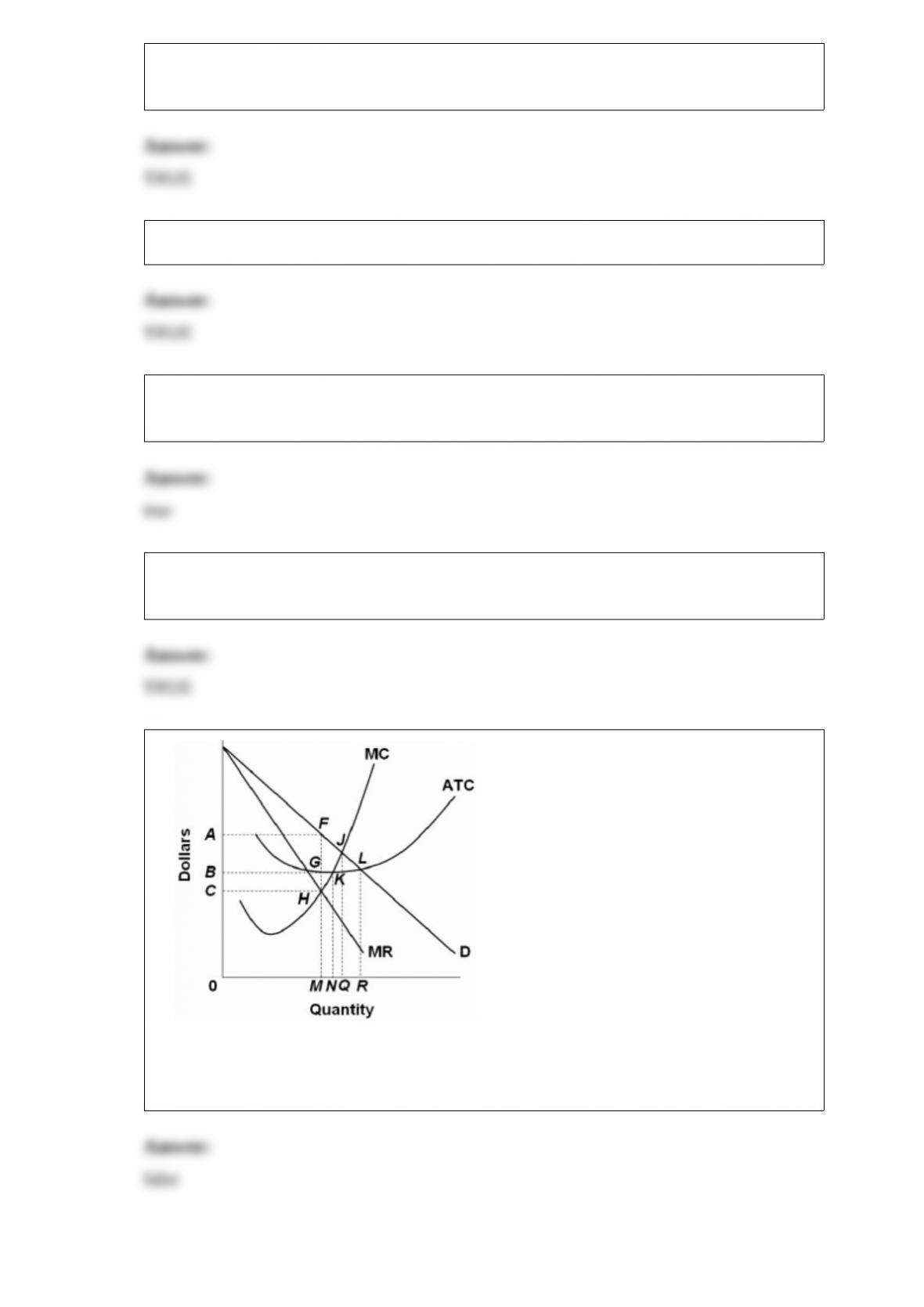
refer to the above diagram for a nondiscriminating monopolist. if the government
regulates the monopolist so that it charges the “fair return” price, the monopolist will
produce output n
6) The asset demand for money varies inversely with the nominal GDP.
7) In the new classical theory, a fully anticipated change in aggregate demand and the
price level will temporarily change real output, but an unanticipated change will not.
8) “tax freedom day” in the united occurs in mid-july.
9)
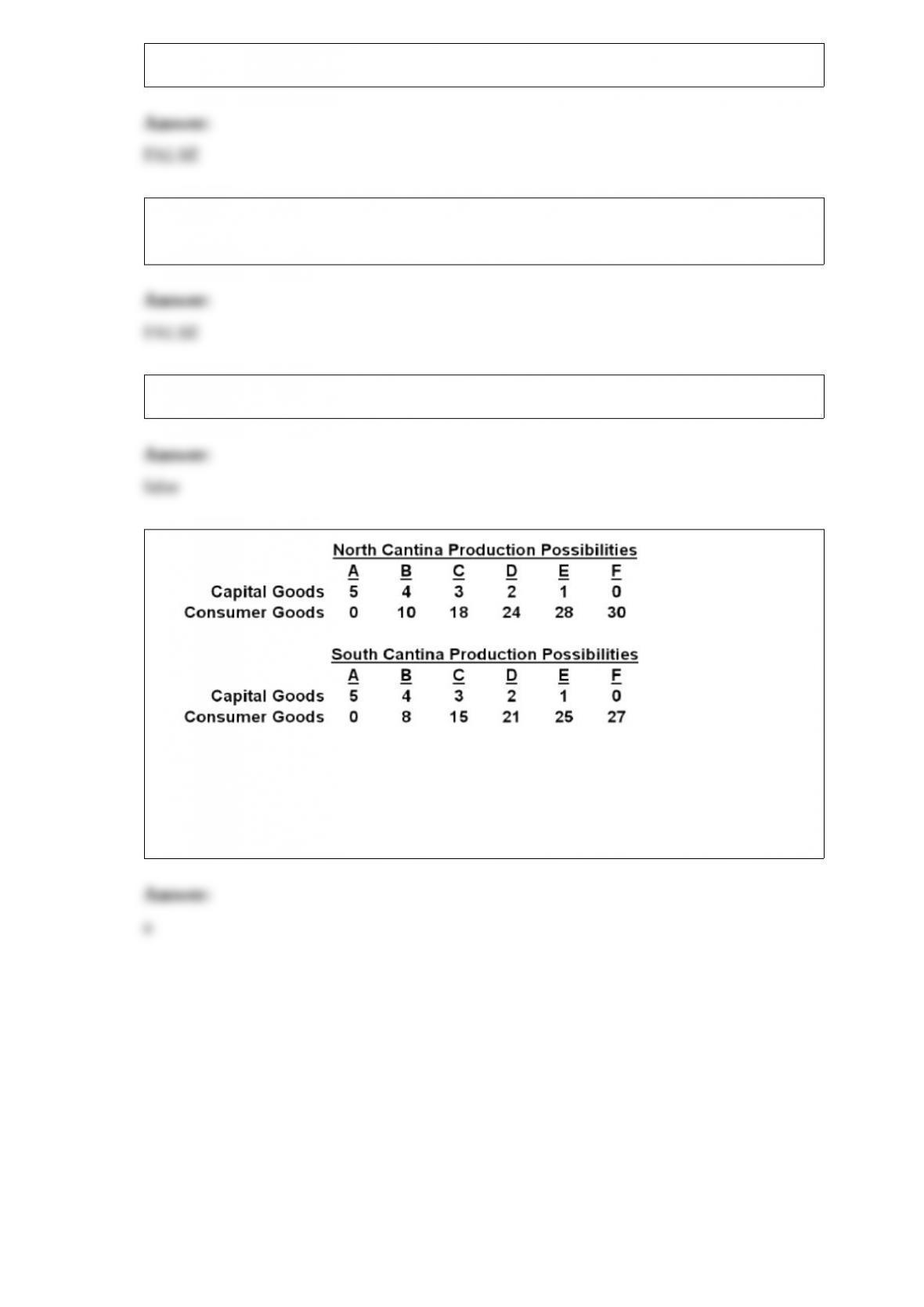
refer to the above tables. the opportunity cost of the fifth unit of capital goods:
a.is higher in north cantina than in south cantina.
b.is the same in north cantina and south cantina.
c.is lower in north cantina than in south cantina.
d.cannot be determined from the information provided.
10)
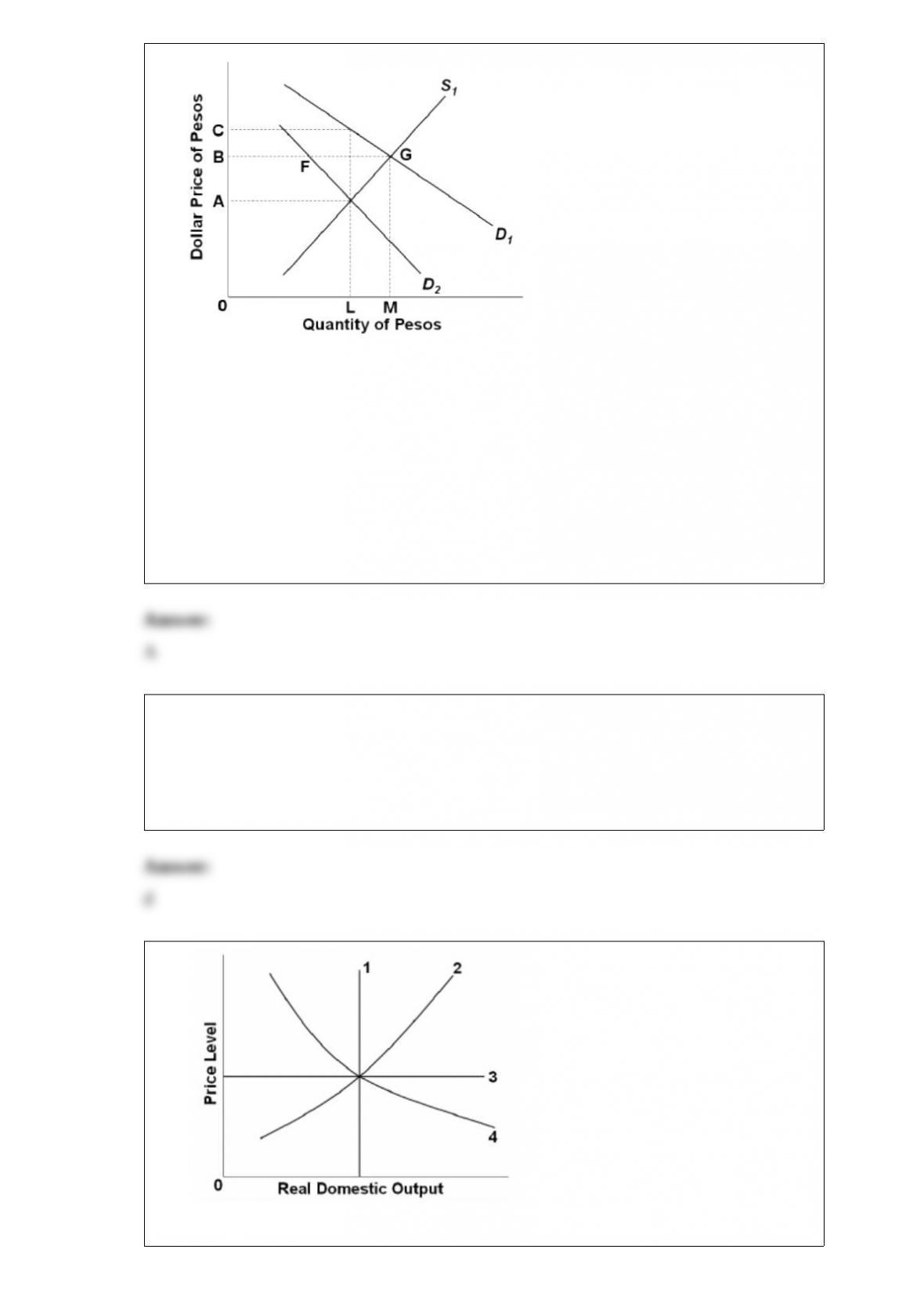
Refer to the above diagram. The initial demand for and supply of pesos are shown by
D1 and S1. Suppose the United States reduces its imports of Mexican goods, shifting its
demand for pesos from D1 to D2. If the United States was operating under a system of
exchange controls, the U.S. government would:
A.find that, at the controlled exchange rate, pesos would be in surplus.
B.be faced with deteriorating terms of trade.
C.be faced with the problem of rationing BG pesos to U.S. importers who want BF
pesos.
D.be faced with the problem of rationing BF pesos to U.S. importers who want BG
pesos.
11) any combination of goods lying outside of the budget line:
a.implies that the consumer is not spending all his income.
b.yields less utility than any point on the budget line.
c.yields less utility than any point inside the budget line.
d.is unattainable, given the consumer’s income.
12)
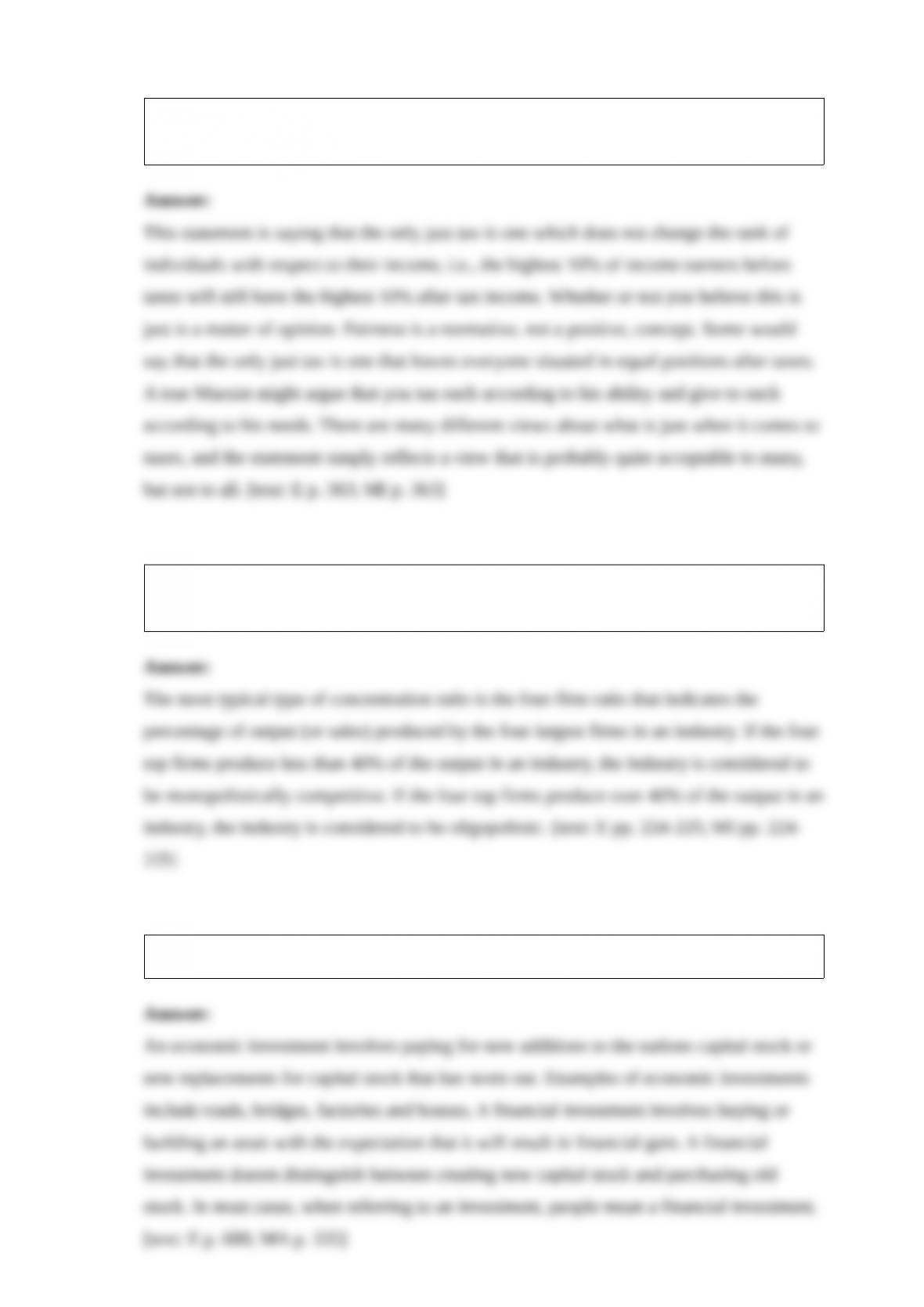
In the above diagram, the economy’s long-run aggregate supply curve is shown by line:

A.1.
B.2.
C.3.
D.4.
13)
refer to the above table. in relation to column (3), a change from column (2) to column
(1) would indicate a(n):
a.increase in demand.
b.decrease in demand.
c.increase in supply.
d.decrease in supply.
14) Other things equal, appreciation of the dollar:
A.increases aggregate demand in the United States and may increase aggregate supply
by reducing the prices of imported resources.
B.increases aggregate demand in the United States and may decrease aggregate supply
by reducing the prices of imported resources.
C.decreases aggregate demand in the United States and may increase aggregate supply
by reducing the prices of imported resources.
D.decreases aggregate demand in the United States and may reduce aggregate supply
by increasing the prices of imported resources.
15) Suppose that under its collective bargaining agreement the ABC Corporation can
hire nonunion workers, but such workers must join the union within 30 days. This
agreement embodies:
A.an open shop.
B.a closed shop.
C.a union shop.
D.an agency shop.

16) the north american free trade agreement (nafta):
a.resulted from gatt negotiations at the uruguay round.
b.established a free trade zone encompassing canada, mexico, and the united states.
c.is also known as the reciprocal trade act.
d.permits the former republics of the soviet union to export goods duty free to north
america.
17) The standardized budget tells us:
A.that in a full-employment economy the Federal budget should be in balance.
B.that tax revenues should vary inversely with GDP.
C.what the size of the Federal budget deficit or surplus would be if the economy was at
full employment.
D.the actual budget deficit or surplus realized in any given year.
18) A company’s upsloping extraction cost curve reflects:
A.that faster extraction requires firms to acquire more equipment.
B.that faster extraction requires firms to hire more workers.
C.that faster extraction requires firms to pay overtime to existing workers.
D.all of these.
19) How do supply-side economists see reducing taxes as a way to improve
productivity?
20) Explain and evaluate this statement: No tax on income can be a just tax unless it
leaves individuals in the same relative condition in which it found them.
21) What are four-firm concentration ratios? How do economists use them to define
monopolistically competitive industries and oligopolistic industries?
22) What is the difference between an economic investment and a financial investment?
23) What are the merits and demerits of unemployment compensation as a built-in
stabilizer? Can you think of any changes in unemployment compensation that might
improve its effectiveness as a stabilizing technique?