1) the law of diminishing returns explains diseconomies of scale.
2) The present value of $4000 deposited today at 8 percent interest is $5038.85 three
years from now.
3) Weak property rights encourage faster extraction than would otherwise maximize the
long-term stream of profits.
4) The optimal (economically-efficient) level of air pollution is zero emissions.
5) positive statements are expressions of value judgments.
6) leader countries tend to have higher growth rates than follower countries.
7) The presence of an agency shop requires all workers to join the union within the first
30 days of employment.
8) Seniority pay is the same as piece rate pay.

9) A current account deficit will reduce U.S. foreign indebtedness.
10) A shift in the Phillips Curve to the left will improve the inflation-unemployment
choices available to society.
11) all expenditures on new construction are included as investment in calculating gdp.
12) The electricians union is a good example of:
A.exclusive unionism.
B.an industrial union.
C.how unions can simultaneously increase wage rates and employment by increasing
the demand for labor.
D.inclusive unionism.
13) Acreage allotment programs were designed to:
A.reduce the supply of agricultural products.
B.make the demand for farm products more price elastic.
C.bolster the demand for agricultural commodities.
D.accelerate the movement of human resources out of farming.
14) alex works in his own home as a homemaker and full-time caretaker of his children.
officially, he is:
a.unemployed.
b.employed.
c.not in the labor force.
d.in the labor force.
15)
assume that if the interest rate that businesses must pay to borrow funds were 20
percent, it would be unprofitable for businesses to invest in new machinery and
equipment so that investment would be zero. but if the interest rate were 16 percent,
businesses will find it profitable to invest $10 billion. if the interest rate were 12
percent, $20 billion would be invested. assume that total investment continues to
increase by $10 billion for each successive 4 percentage point decline in the interest
rate. refer to the above graph. which of the following is the correct graphical
presentation of the indicated relationship?
a.line d
b.line c
c.line b
d.line a
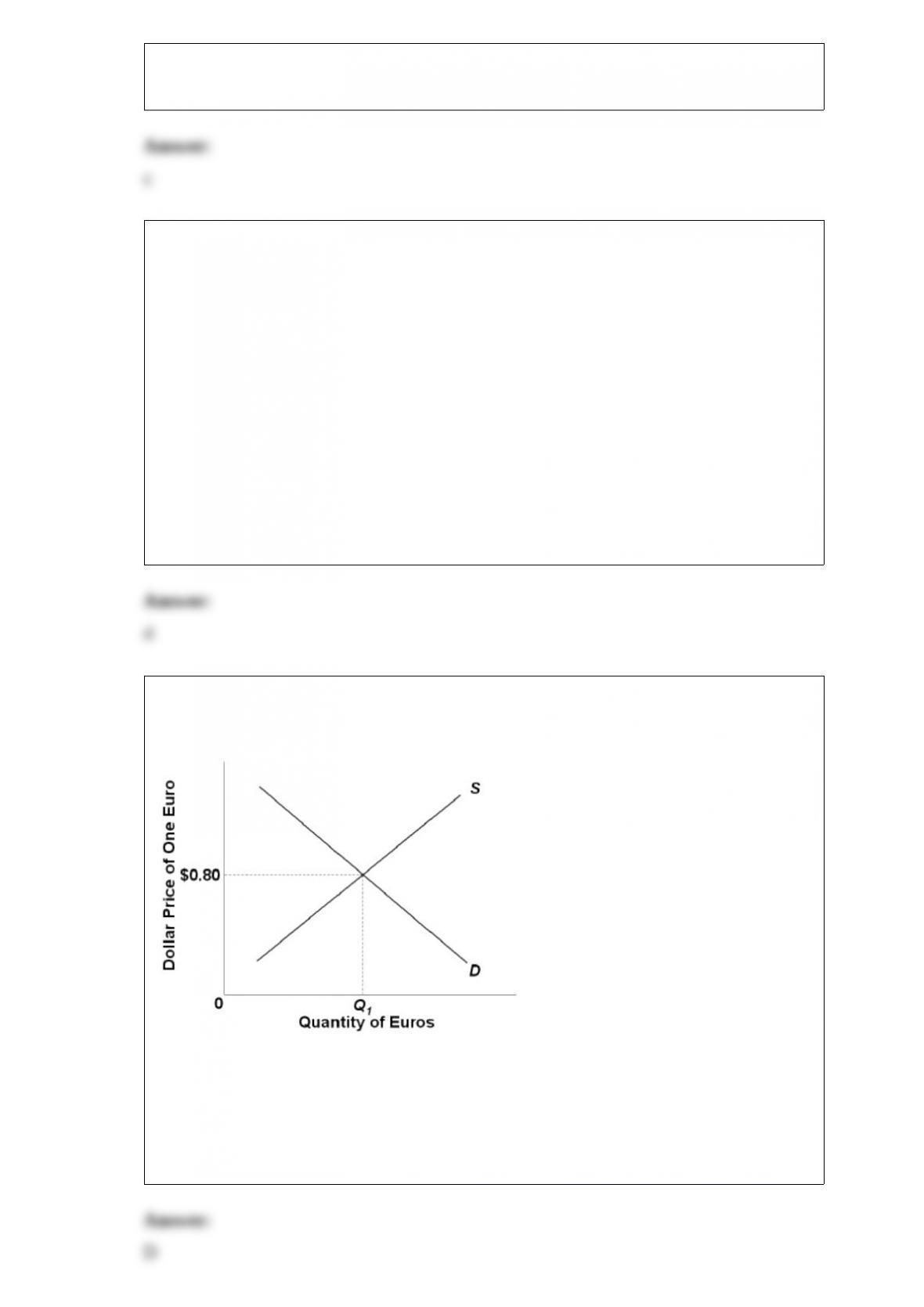
16) The following diagram is a flexible exchange market for foreign currency:
Refer to the above diagram. Other things equal, a rightward shift of the supply curve
would:
A.appreciate the euro.
B.cause a surplus of euros.
C.decrease the equilibrium quantity of euros.
D.appreciate the dollar.
17)
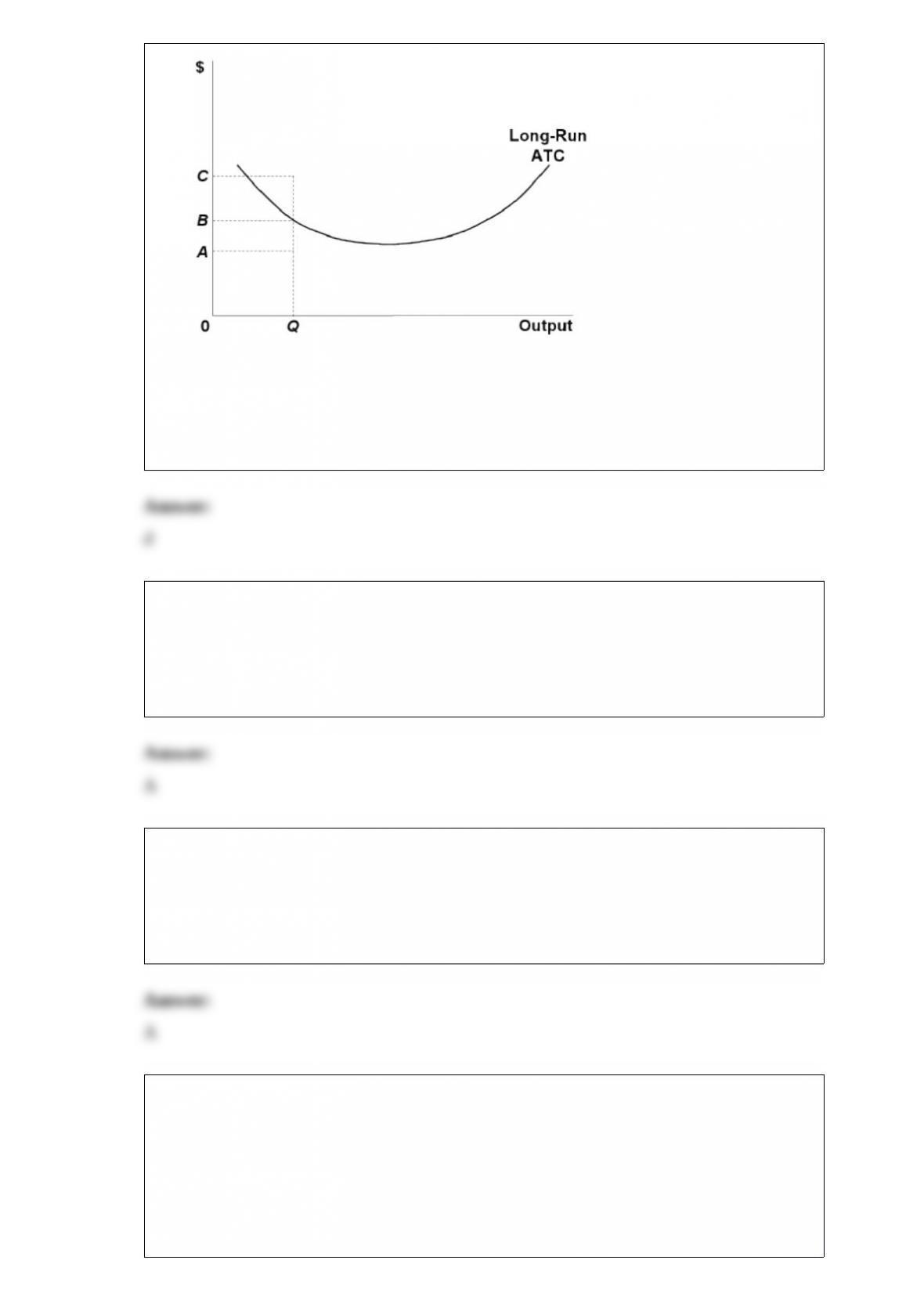
refer to the above diagram. for output level q, per unit costs of b are:
a.unattainable and imply the inefficient use of resources.
b.unattainable, given resource prices and the current state of technology.
c.attainable, but imply the inefficient use of resources.
d.attainable and imply least-cost production of this level of output.
18) The seven members of the Board of Governors of the Federal Reserve System are:
A.appointed by the President with the confirmation of the Senate.
B.elected by Congress from a slate of nominees provided by the President.
C.appointed by the Senate Finance Committee.
D.appointed by the presidents of the twelve Federal Reserve Banks.
19) Adherents of the traditional monetary rule say that the supply of money should be:
A.increased at a constant rate each year.
B.decreased during recession and increased during inflation.
C.held constant over time.
D.increased during recession and decreased during inflation.
20) The following information about a banking system: new currency deposited in the
system = $40 billion; legal reserve ratio = 0.20; excess reserves prior to the currency
deposit = $0.
Refer to the above information. The $40 billion deposit of currency into checking
accounts will create excess reserves of:
A.$20 billion.
B.$32 billion.
C.$40 billion.
D.$0.
21)
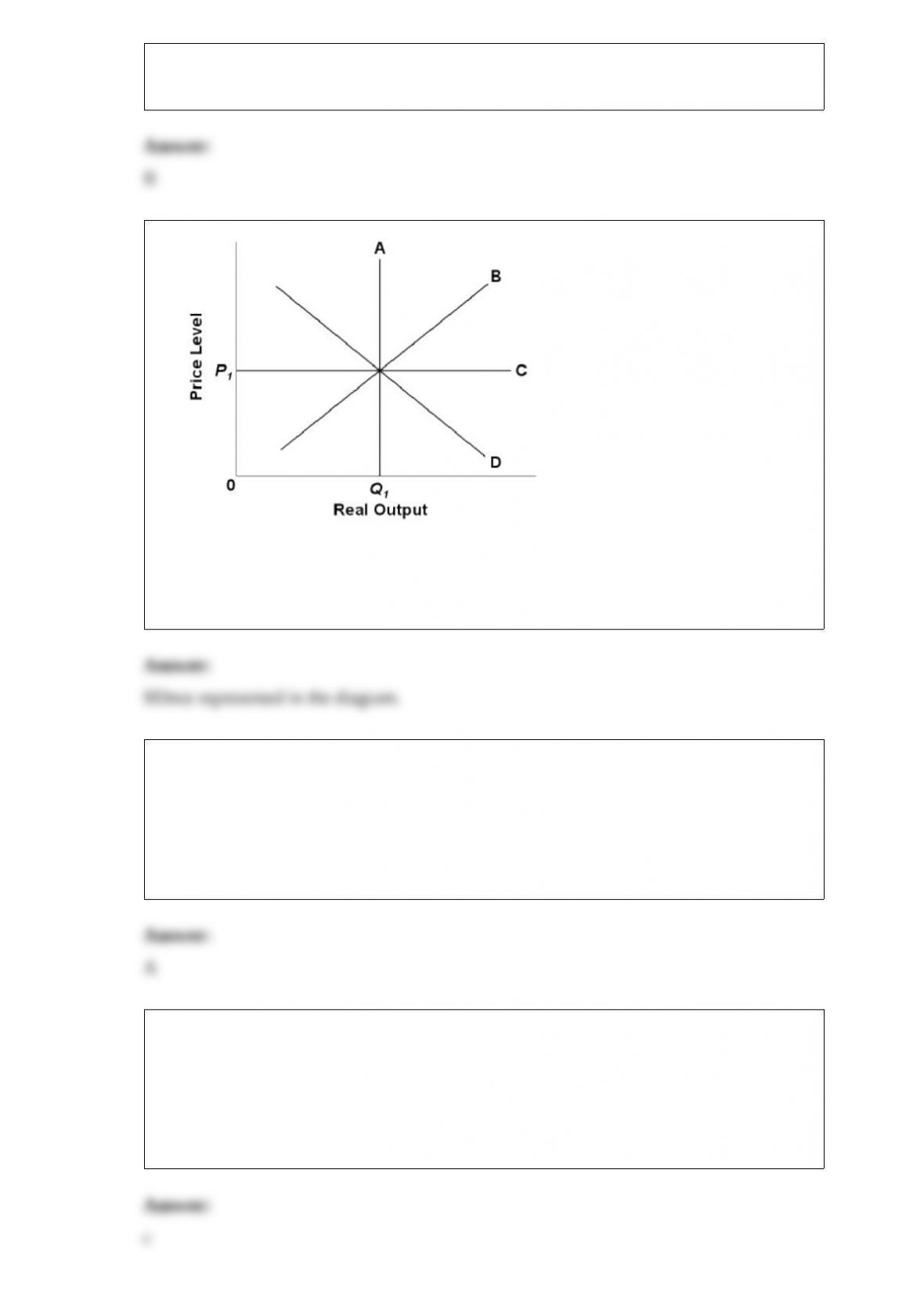
Refer to the above diagram. The short-run aggregate supply is:
A.A.
B.B.
C.D.
22) In which of the following situations for a private closed economy will the level of
GDP expand?
A.when planned investment exceeds saving
B.when planned investment exceeds consumption
C.when saving exceeds consumption
D.when consumption exceeds investment
23) if the consumer price index falls from 120 to 116 in a particular year, the economy
has experienced:
a.inflation of 4 percent.
b.inflation of 3.33 percent.
c.deflation of 3.33 percent.
d.deflation of 4 percent.
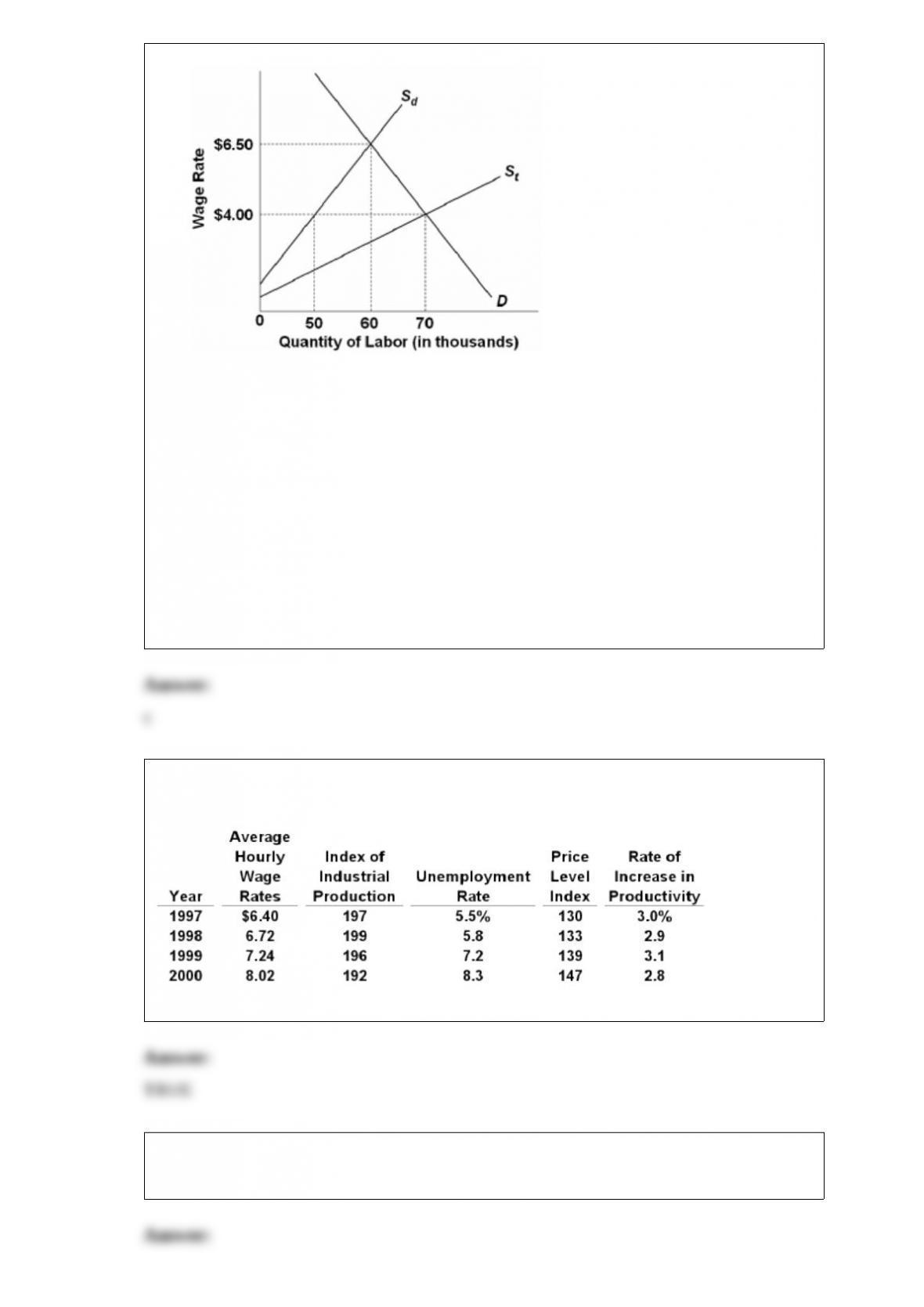
24)
assumptions: 1) employers in this market are willing and able to ignore minimum wage
laws; 2) sd represents the supply of domestically-born (and legal immigrant) workers;
3) st represents the total supply of workers in this labor market (sd plus illegal
immigrants); and 4) unless otherwise stated, illegal immigration is not effectively
blocked by the government.
refer to the above figure. the equilibrium wage and level of employment are,
respectively:
a.$4.00 and 50,000
b.$4.00 and 60,000
c.$4.00 and 70,000
d.$6.50 and 60,000
25) The following economic data for a hypothetical economy:
Refer to the above data. This economy has encountered stagflation.
26) Contrast planned and unplanned inventory changes. What effect do these changes
have on the investment demand curve?
27) What market forces made DeBeers change its monopoly behavior and end its
attempts to control the diamond market?
28) Define the monetary multiplier.
29) What are the prospects for domestic capital formation in DVCs?
30) What has been the recent view of antitrust laws?
31) Define savings.
32) Discuss the problem of population in developing nations using the rule of 70.
33) What were four major provisions of the Temporary Assistance to Needy Families
(TANF) reform of the welfare system?
34) Net investment can be positive, negative, or zero, but gross investment can never be
less than zero. Explain.
35) Why cant the substitution and income effects be used to explain the downward
slope of the aggregate demand curve?