1) the above data illustrate the:
a.law of comparative advantage.
b.utility-maximizing rule.
c.law of diminishing marginal utility.
d.law of increasing opportunity costs.
2)
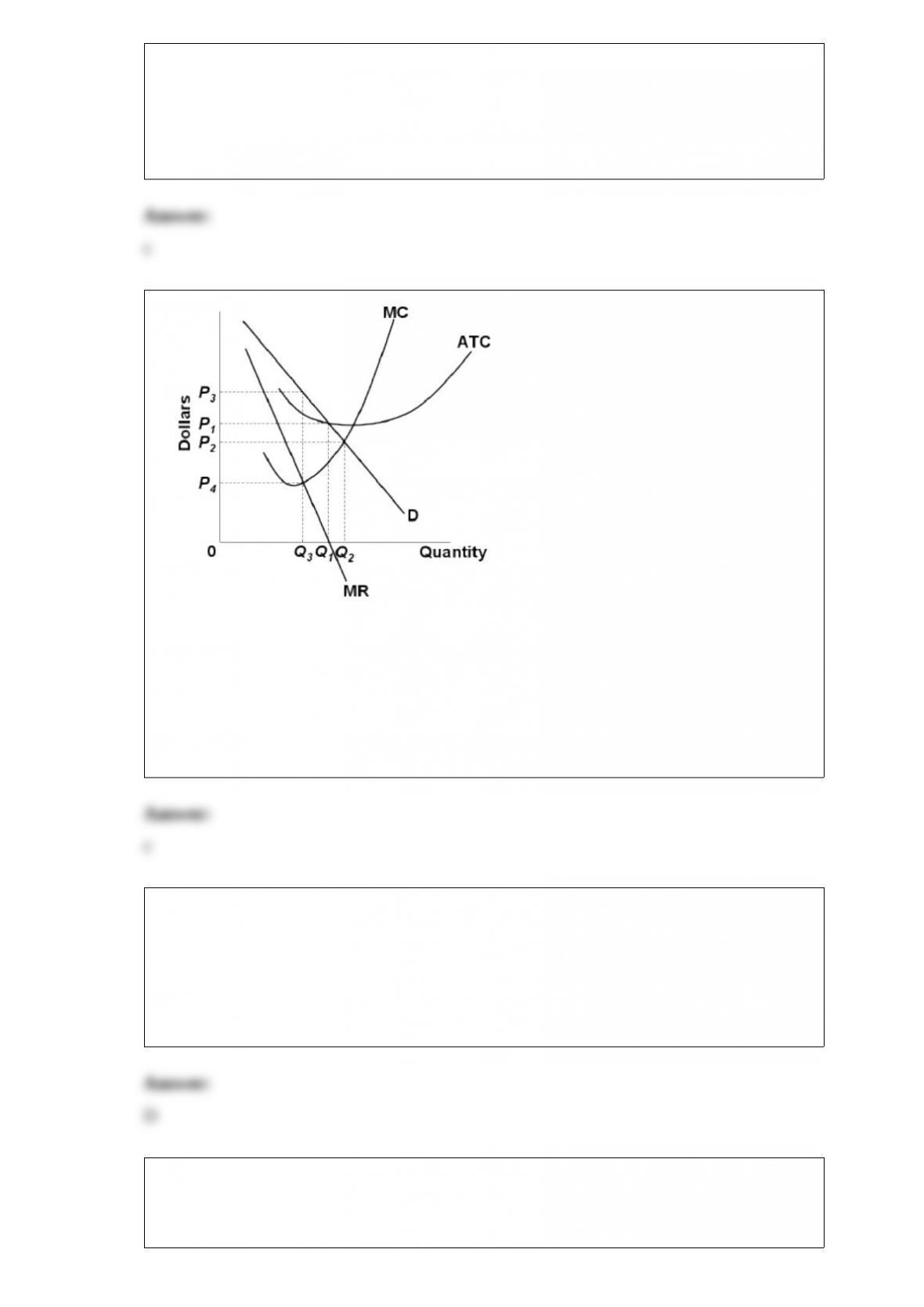
refer to the above diagram for a pure monopolist. if a regulatory commission seeks to
achieve the most efficient allocation of resources to this line of production, it will set a
price of:
a.p1.
b.p3.
c.p2.
d.p4.
3) The idea that an economy can get stuck in either an unemployment equilibrium or an
inflation equilibrium is most closely associated with:
A.new classical economics.
B.the real-business-cycle theory.
C.monetarism.
D.the idea of coordination failures.
4) suppose that an individual sees a tremendous opportunity to produce and sell a new
product, but dismisses the idea because there is no way to exploit this opportunity for
personal gain. this situation best identifies the:
a.coordination problem under communist central planning.
b.self-sufficiency dilemma under communism.
c.asymmetric information problem under communism.
d.incentive problem under communist central planning.
5) The multiplier associated with a change in government purchases is:
A.always equal to 1.
B.smaller than that associated with an equal change in taxes.
C.the same as that associated with a change in investment.
D.less than that associated with a change in investment.
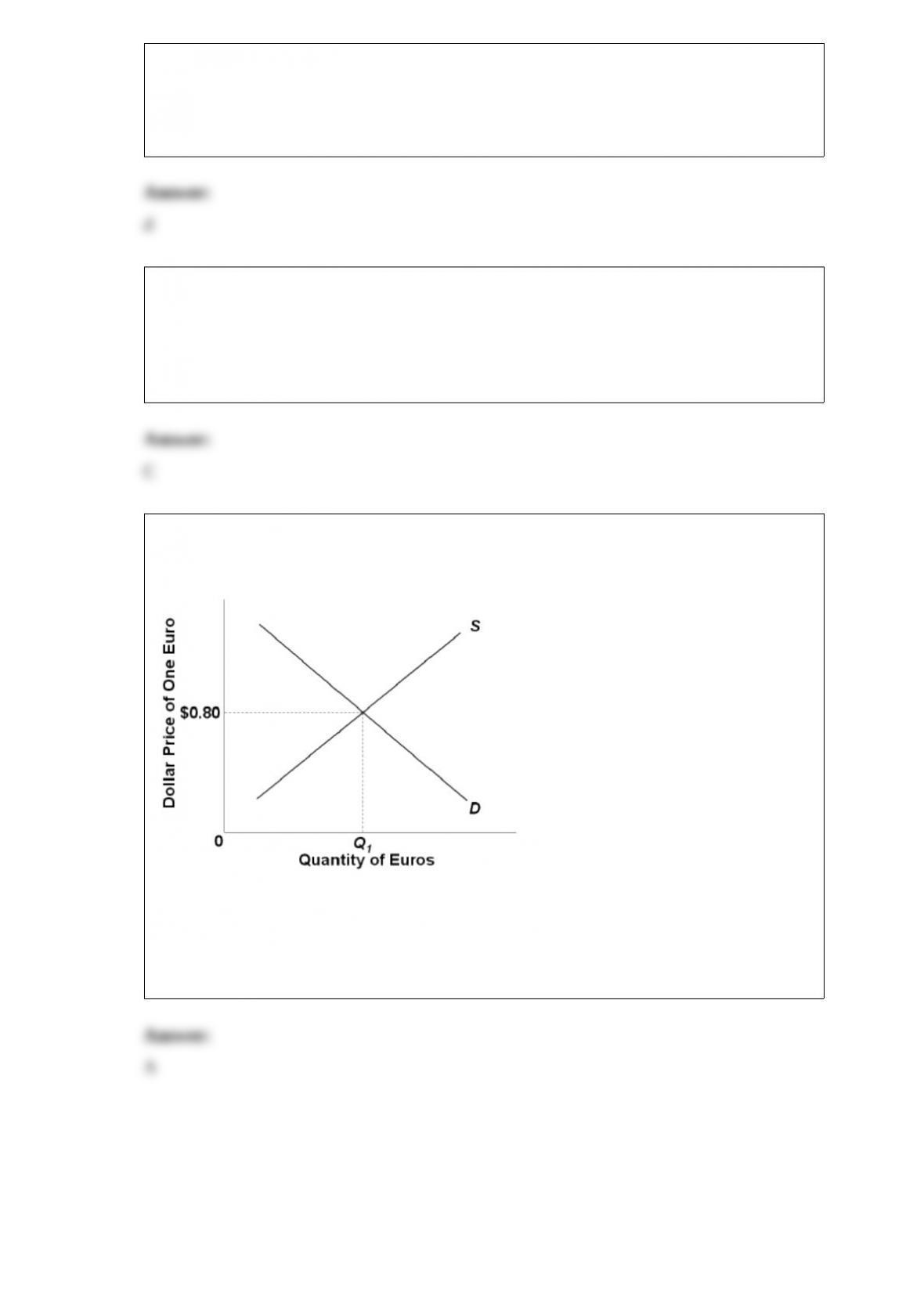
6) The following diagram is a flexible exchange market for foreign currency:
Refer to the above diagram. At the price $.80 for 1 euro:
A.the quantity of euros demanded equals the quantity supplied.
B.the dollar-euro exchange rate is unstable.
C.the dollar price of 1 euro equals the euro price of 1 dollar.
D.there will be a surplus of euros in the foreign exchange market.
7)
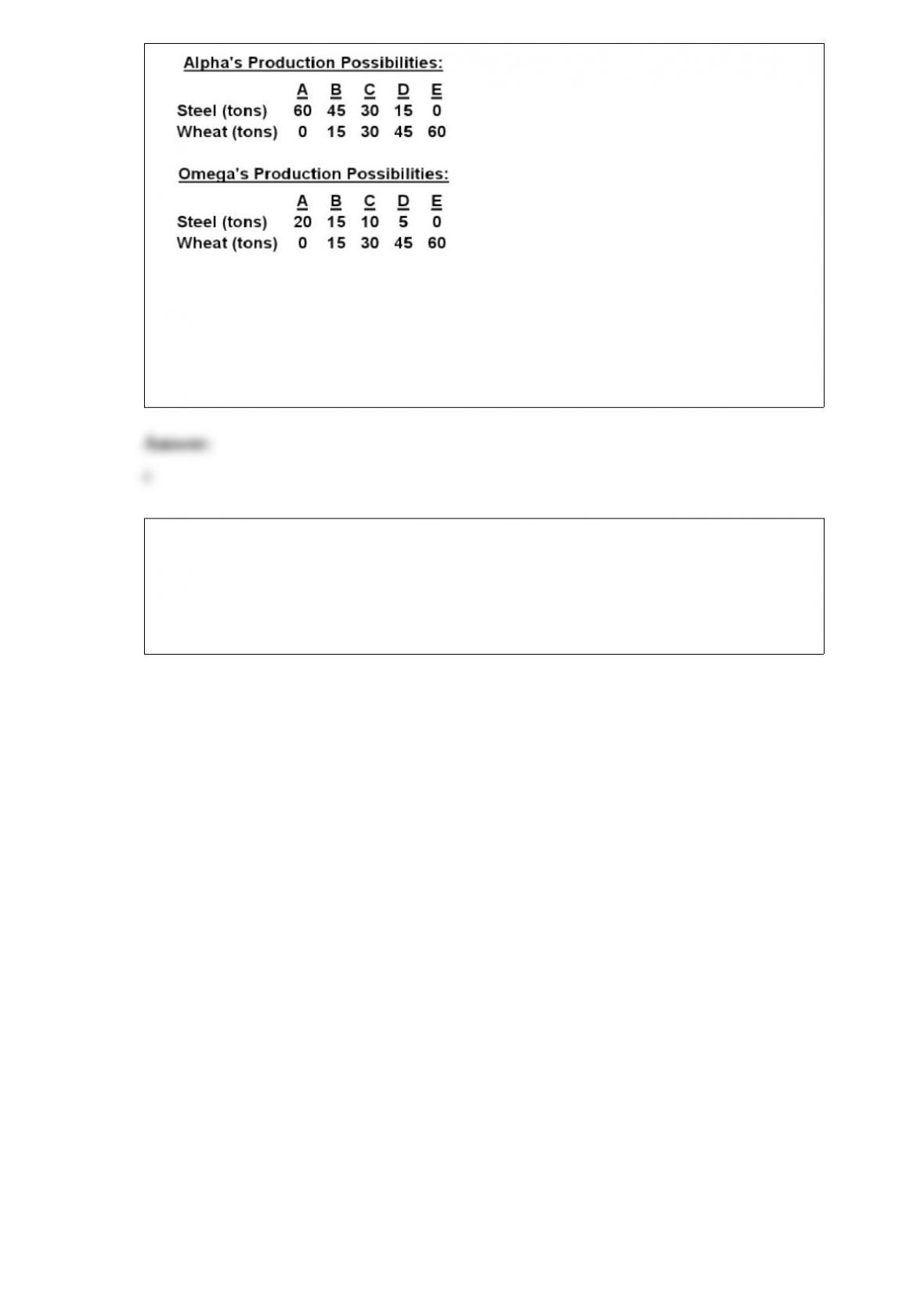
refer to the above data. if alpha was producing at alternative b and omega was at
alternative c before trade, the gain from specialization and trade would be:
a.30 tons of wheat.
b.5 tons of steel.
c.5 tons of steel and 15 tons of wheat.
d.15 tons of steel and 5 tons of wheat.
8) Following are the consolidated balance sheets of the commercial banks. Assume that
the reserve ratio for banks is 10%. The figures in column 1 show the balance sheets
condition prior to each of the following five transactions. Place the new balance-sheet
figures in the appropriate columns and complete A, B, C, D, and E for each column.
Start each part (26) with the figures in column 1. All figures are in billions of dollars.
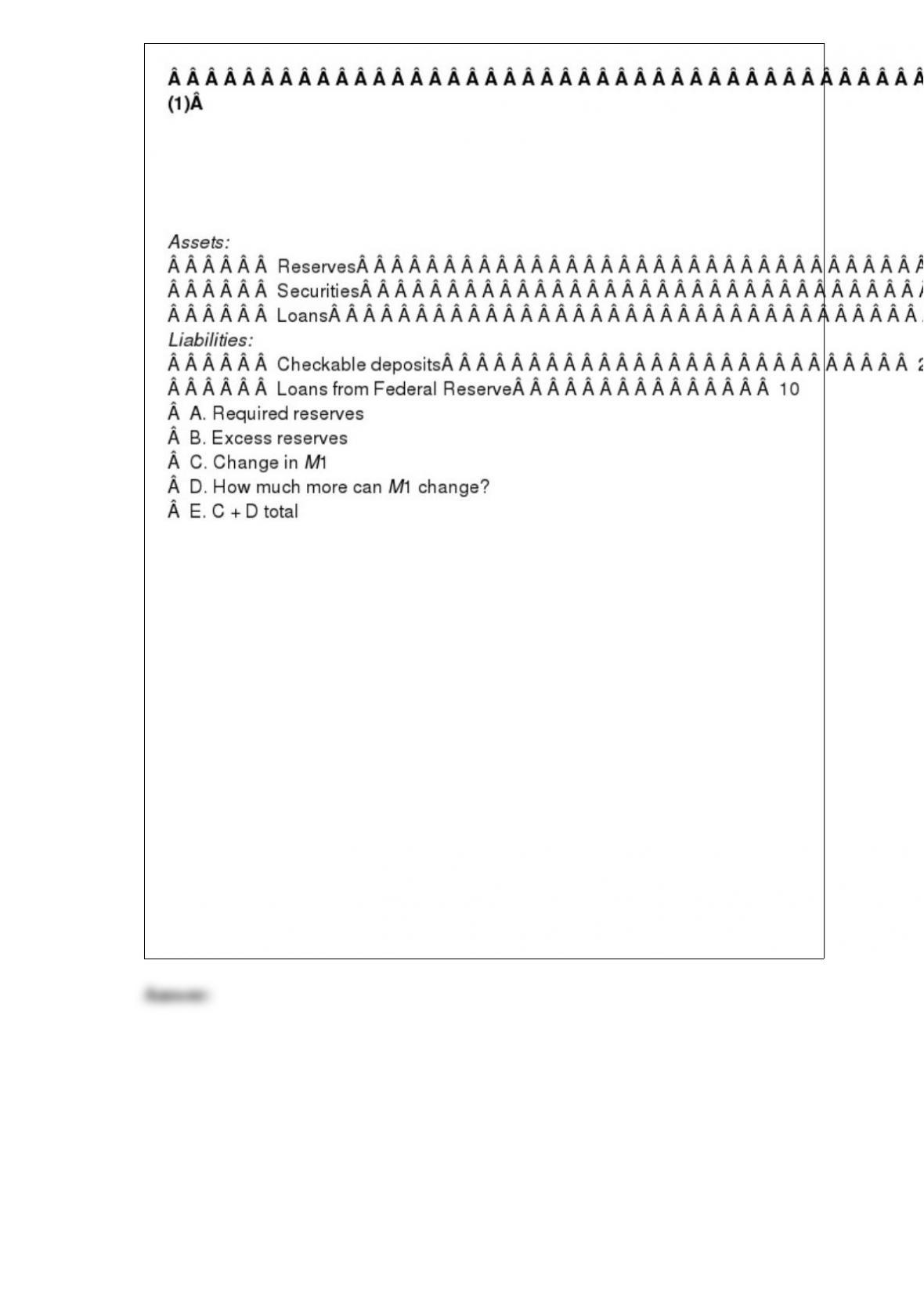
(a)Show in column 2 the initial results of the Federal Reserve selling $3 billion in
securities to the public which pays by checks.
(b)Show in column 3 the initial results of the Federal Reserve buying $4 billion in
securities from the commercial banks.
(c)Show in column 4 the initial results of the Federal Reserve raising the reserve ratio to
20%.
(d)Show in column 5 the initial results when the U.S. Government buys $5 billion
worth of goods from American businesses with checks from the U.S. Treasury account
at the Federal Reserve Banks and the businesses immediately deposit these checks in
their commercial banks.
(e)Show in column 6 the initial results when the Federal Reserve raises the discount
rate which causes commercial banks to repay $6 billion in loans owed to the Federal
Reserve.
9) if an individual is less inclined to avoid accidents or illness because she has health
insurance, this is an example of:
a.the free-rider problem.
b.the moral hazard problem.
c.the adverse selection problem.
d.the coase theorem.
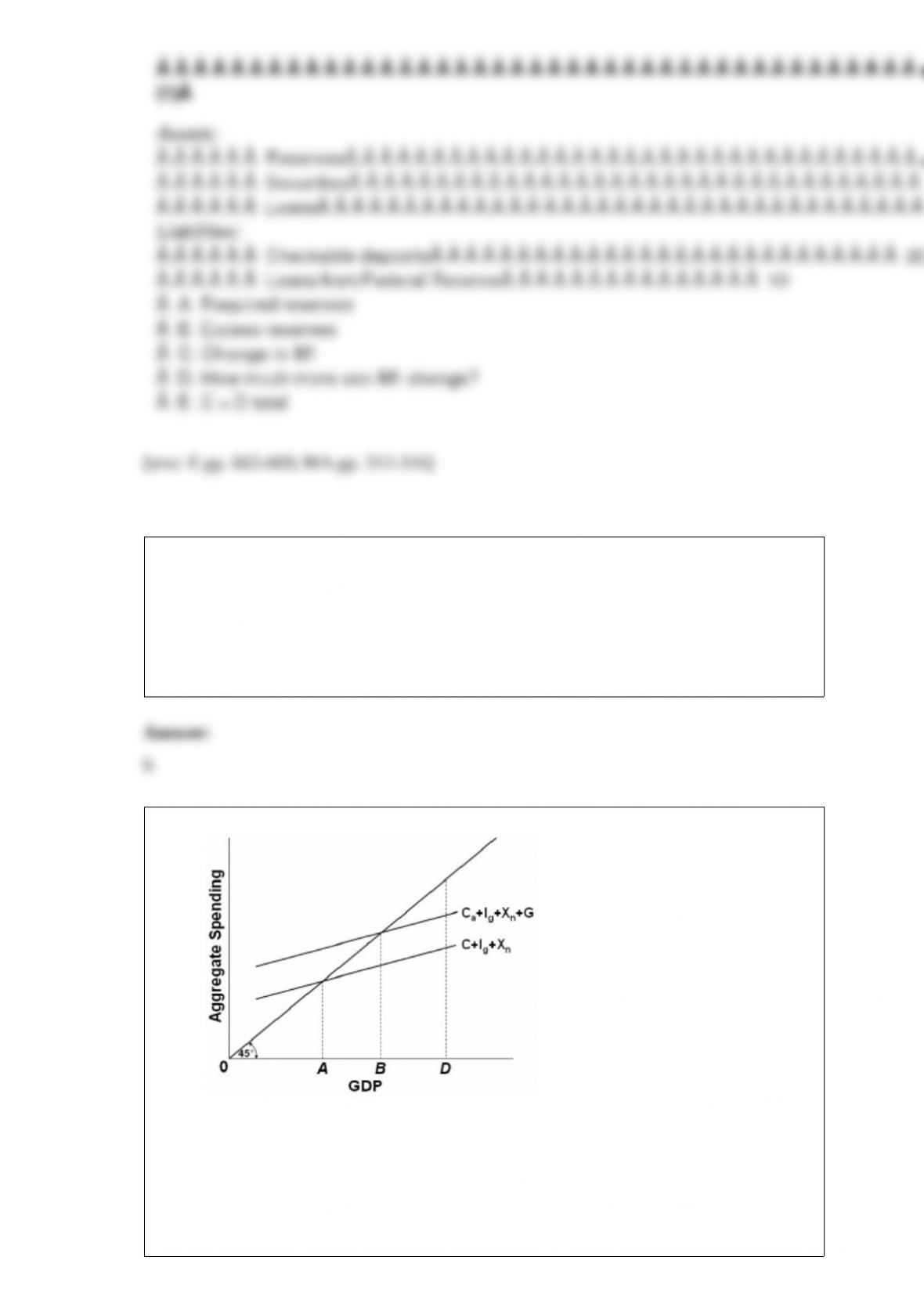
10)
Refer to the above diagram. If the full-employment level of GDP is D, then it would be
appropriate fiscal policy for government to:
A.decrease spending and increase taxes.
B.decrease spending and decrease taxes.
C.increase spending and increase taxes.
D.increase spending and decrease taxes.

11) The legal reserve ratio applies to checkable deposits at:
A.national banks.
B.credit unions.
C.savings and loans.
D.institutions of all of these types.