
1) households spend a larger proportion of their incomes for services than for either
nondurable goods or durable goods.
2) if market demand increases and market supply decreases, the change in equilibrium
price is unpredictable without first knowing the exact magnitudes of the demand and
supply changes.
3) Federal deposit insurance discourages but does not prevent bank runs.
4) because economic generalizations are simplifications from reality, they are
impractical and useless.
5) the law of diminishing returns explains why the long-run average total cost curve is
u-shaped.
6) increasing taxes and reducing government expenditures might be helpful in
constraining inflation.
7) interest on the public debt is included as a part of government purchases in
determining gdp by the expenditures method.

8) because employer payments for health insurance are not subject to income or payroll
taxes, government in effect provides a subsidy to health care.
9) Social Security is financed by payroll taxes levied on both employers and employees.
10) (Consider This) Countries like Russia and France have implemented policies to
discourage population growth.
11) the demand curve for a purely competitive industry is perfectly elastic, but the
demand curves faced by individual firms in such an industry are downsloping.
12) A change in the price of an input will usually:
A.shift a firm’s cost curves.
B.cause the firm to alter the combination of inputs it employs.
C.induce the firm to change its level of output.
D.do all of these.
13) if a technological advance reduces the amount of variable resources needed to
produce any level of output, then the:
a.avc curve will shift upward.
b.mc curve will shift downward.
c.atc curve will shift upward.
d.afc curve will shift downward.
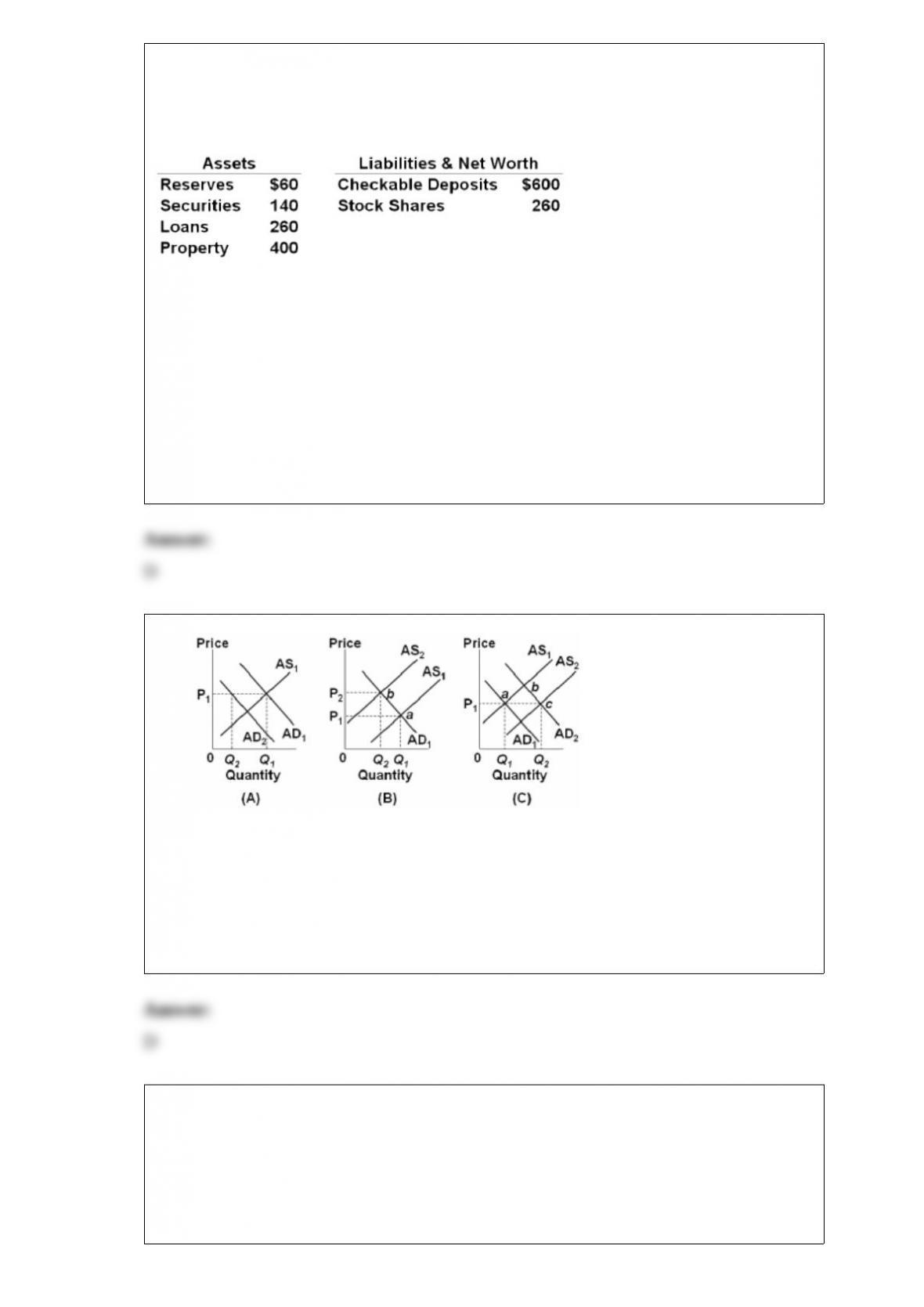
14) The following consolidated balance sheet of the commercial banking system.
Assume that the reserve requirement is 10 percent. All figures are in billions and each
question should be answered independently of changes specified in any preceding ones.
Refer to the above data. Suppose the Fed sold $10 billion of U.S. securities to the
banks. This would:
A.increase bank reserves to $70 billion, reduce bank-held securities to $130 billion, and
ultimately increase the money supply (checkable deposits) by $100 billion.
B.increase bank reserves to $70 billion, reduce bank-held securities to $130 billion, and
ultimately decrease the money supply (checkable deposits) by $100 billion.
C.reduce bank reserves to $50 billion, increase bank-held securities to $150 billion, and
ultimately increase the money supply (checkable deposits) by $100 billion.
D.reduce bank reserves to $50 billion, increase bank-held securities to $150 billion, and
ultimately decrease the money supply (checkable deposits) by $100 billion.
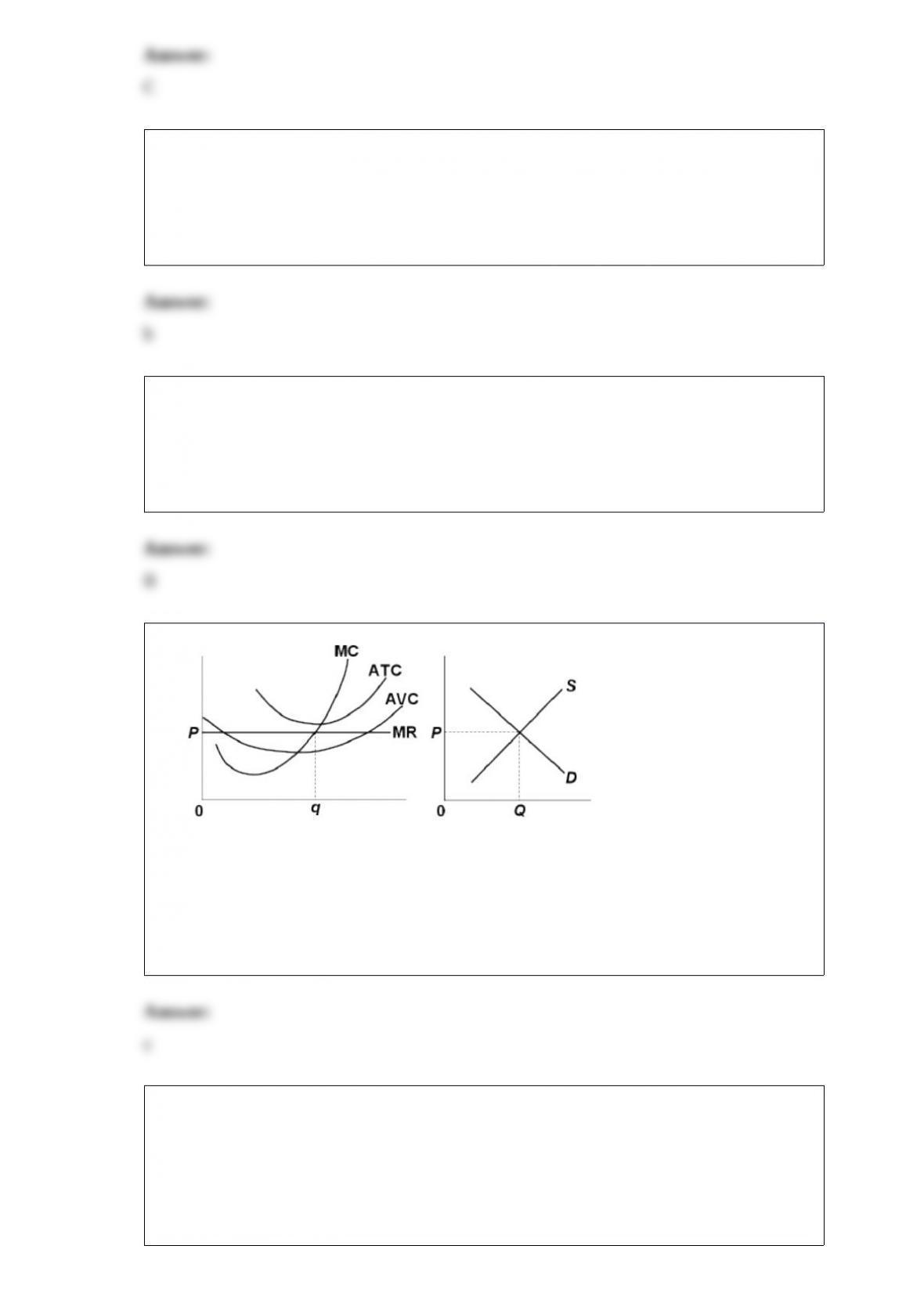
15)
Refer to the above diagrams, in which AD1 and AS1 are the “before” curves and AD2
and AS2 are the “after” curves. Other things equal, inflation is absent in:
A.panel (A) only.
B.panel (B) only.
C.panel (C) only.
D.panels (A) and (C).
16) The traditional Phillips Curve suggests that, if government uses an expansionary
fiscal policy to stimulate output and employment:
A.unemployment may actually increase because of the crowding-out effect.
B.tax revenues may increase even though tax rates have been reduced.
C.inflation may result.
D.the natural rate of unemployment may fall.
17) how did apple overcome consumers’ diminishing marginal utility for ipods?
a.apple lowered the price of ipods so that previous buyers would purchase another unit.
b.apple introduced new features to entice previous buyers to purchase new models.
c.apple ignored the problem and focused solely on attracting new buyers.
d.apple was unable to overcome the problem and has faced steadily declining sales.
18) According to the equation of exchange, changes in the money supply can affect:
A.only the velocity of money.
B.both the price level and real output.
C.only real output and employment.
D.only the price level.
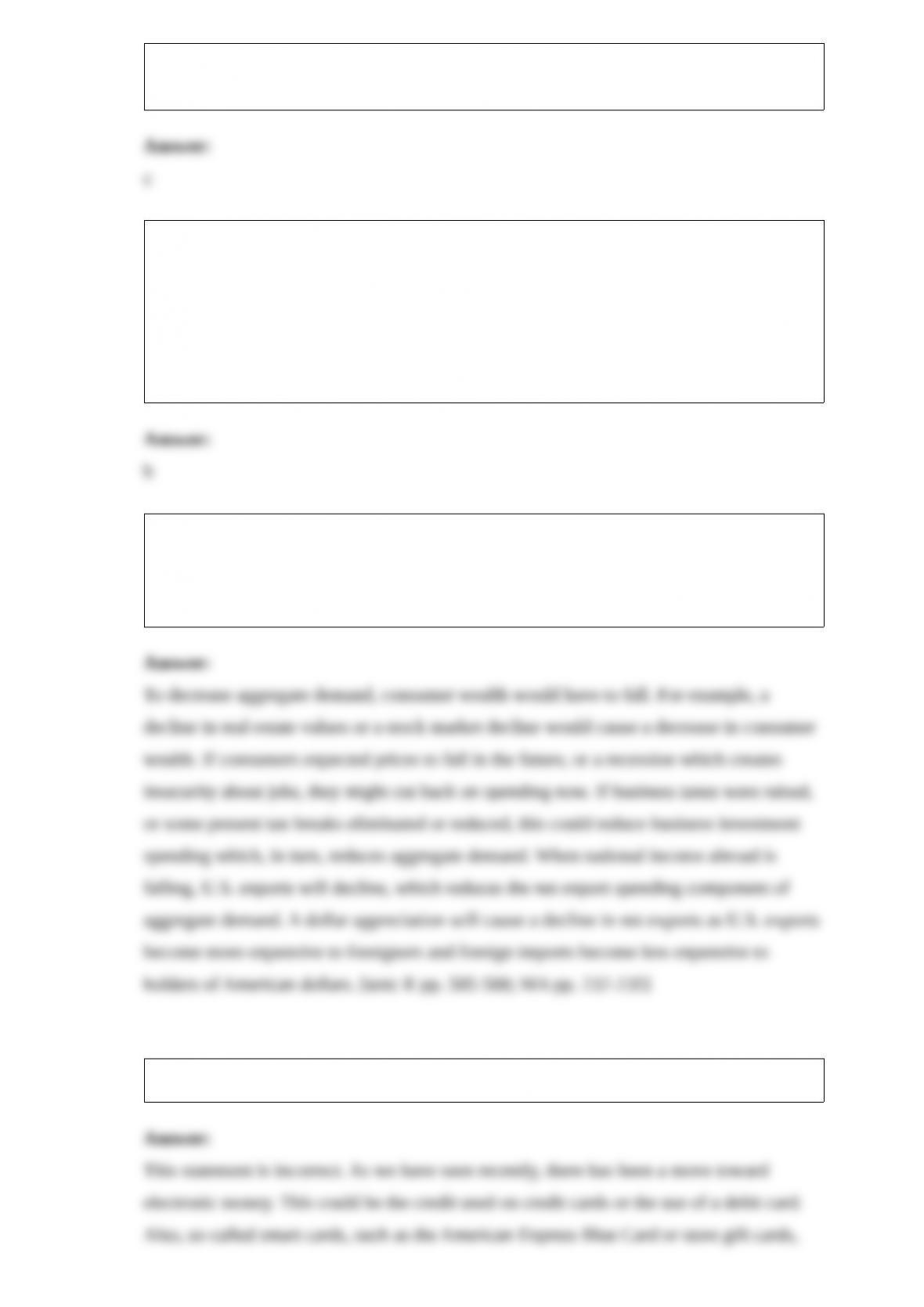
19)
refer to the above diagrams, which pertain to a purely competitive firm producing
output q and the industry in which it operates. in the long run we should expect:
a.firms to enter the industry, market supply to rise, and product price to fall.
b.firms to leave the industry, market supply to rise, and product price to fall.
c.firms to leave the industry, market supply to fall, and product price to rise.
d.no change in the number of firms in this industry.
20) for a pure monopolist the relationship between total revenue and marginal revenue
is such that:
a.marginal revenue is positive when total revenue is at a maximum.
b.total revenue is positive when marginal revenue is increasing, but total revenue
becomes negative when marginal revenue is decreasing.
c.marginal revenue is positive when total revenue is increasing, but marginal revenue
becomes negative when total revenue is decreasing.
d.marginal revenue is positive so long as total revenue is positive.
21) the state legislature has cut gigantic state university’s appropriations. gsu’s board of
regents decides to increase tuition and fees to compensate for the loss of revenue. the
board is assuming that the:
a.demand for education at gsu is elastic.
b.demand for education at gsu is inelastic.
c.coefficient of price elasticity of demand for education at gsu is unity.
d.coefficient of price elasticity of demand for education at gsu is greater than unity.
22) Identify the ways in which each of the following determinants would have to
change if each was causing a decrease in aggregate demand: consumer wealth,
consumer expectations, business taxes, national income in countries abroad, exchange
rates.
23) Money will always be a physical entity. Evaluate this statement.
24) What are the problems encountered in any strict application of benefits-received
and ability-to-pay principles of taxation?
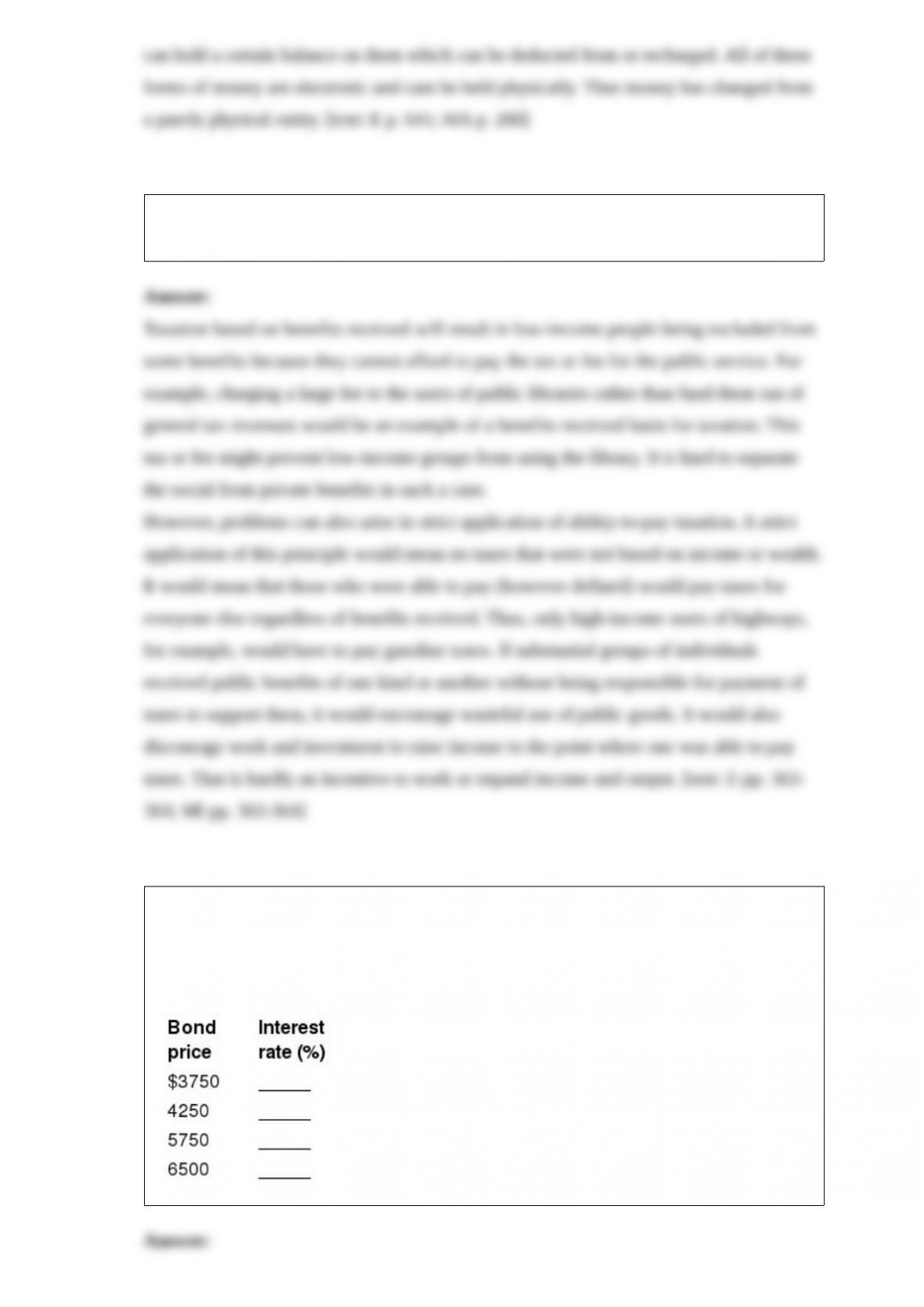
25) Suppose that a bond having no expiration date has a face value of $5000 and pays a
fixed amount of interest of $500 annually. Compute and enter in the spaces provided the
effective interest rate (to one decimal place) that a bond buyer could receive at the new
bond price.
26) What are some examples of the four different market structures?
27) Do changes in relative price-levels affect the value of a nations currency?