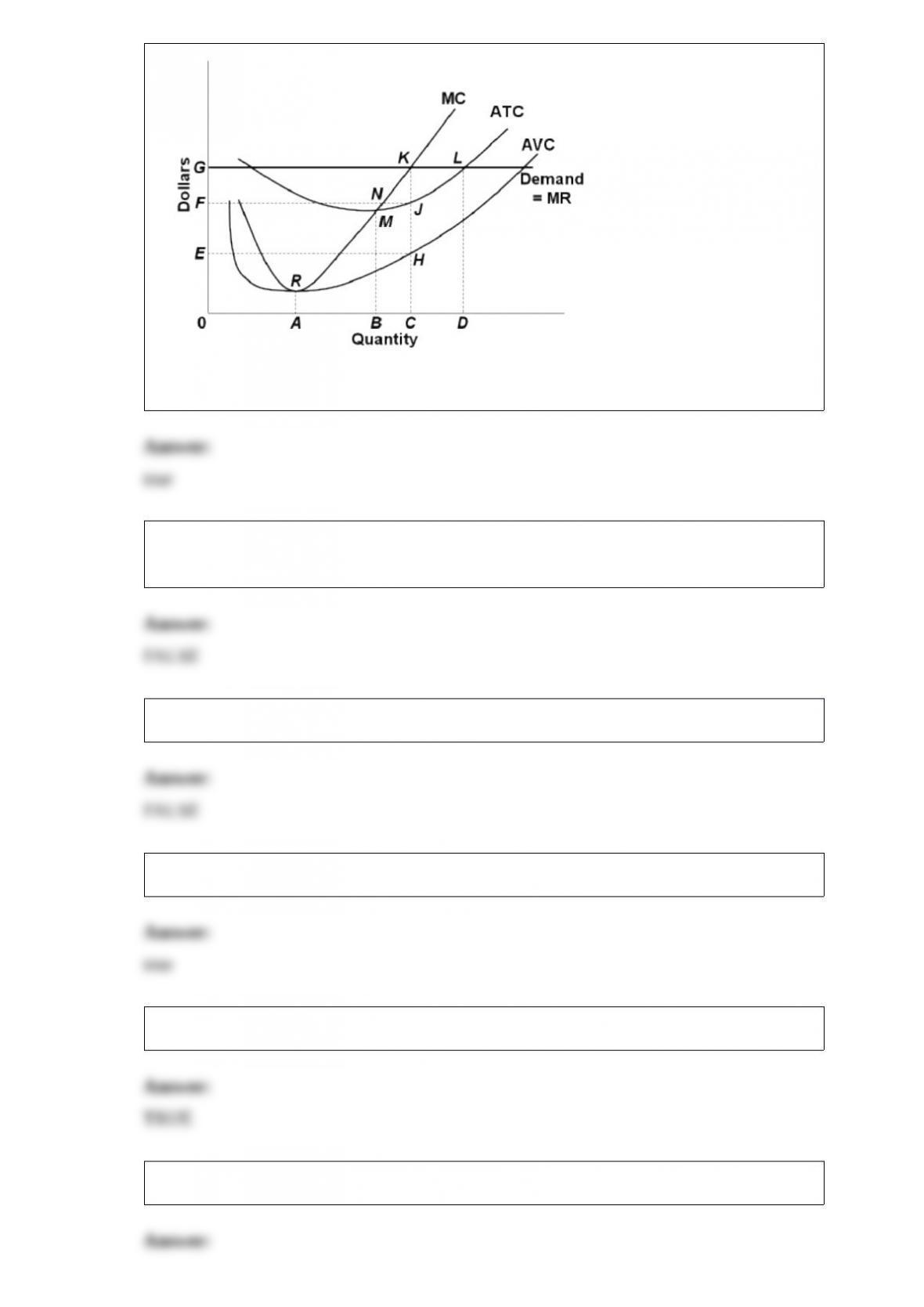
1)
refer to the above diagram. if the firm produced d units of output at price g, it would
earn a normal profit.
2) The more elastic the demand for a product the less elastic will be the demand for the
resources employed in producing it.
3) Increases in U.S. living standards have matched increases in per capita energy use.
4) if demand increases and supply simultaneously decreases, equilibrium price will rise.
5) Pollution has its roots in the law of conservation of matter and energy.
6) Per capita energy use in the United States has remained fairly constant since 1980.
7) public goods are characterized by nonrivalry and nonexcludability.
8) the term imperfect competition refers to every market structure besides pure
competition.
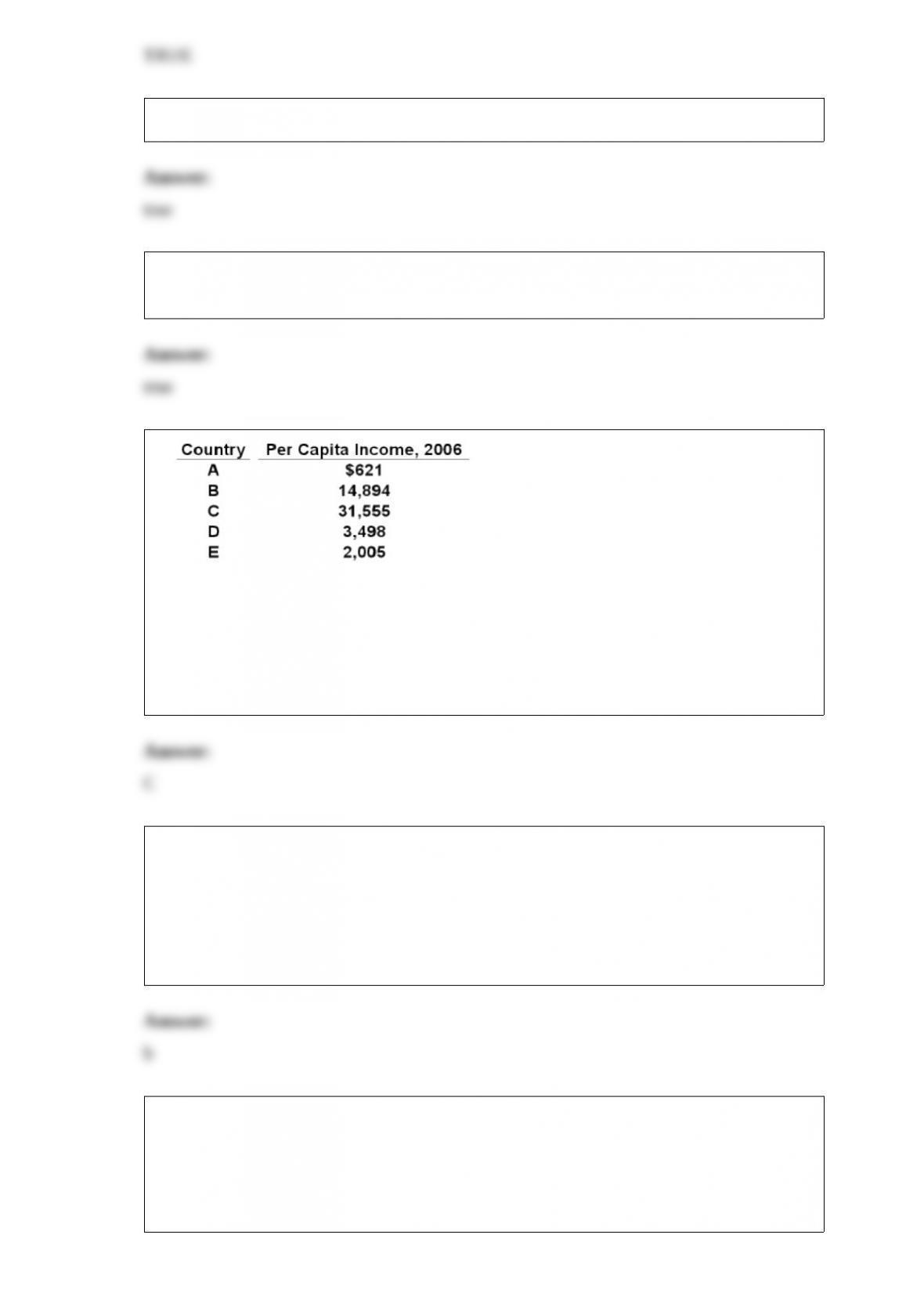
9)
Refer to the above table. Which of the following might reduce the per capita income
gap between countries A and E?
A.faster population growth in country A than in country E.
B.greater investment relative to GDP in country E than in country A.
C.more rapid improvement in literacy and education in country A than in E.
D.increased capital flight from country A relative to that from country E.
10) the u.s. food stamp program, which provides coupons that allow low-income
individuals to buy food, is an illustration of:
a.public provision of a suitable legal framework for the market system.
b.the redistributional function of government.
c.a government action designed to enhance competition.
d.the stabilization function of government.
11) Which of the following taxes reflects the benefits-received principle of taxation?
A.cigarette taxes
B.gasoline taxes
C.sales taxes
D.Federal personal income taxes
12) The market for immediately available reserve balances at the Federal Reserve is
known as the:
A.money market.
B.long-term bond market.
C.short-term bond market.
D.Federal funds market.
13) Which of the following is the best example of a fishery?
A.all marine life along the Great Barrier Reef.
B.Pacific Halibut.
C.U.S. Department of Fish and Game.
D.Crab.
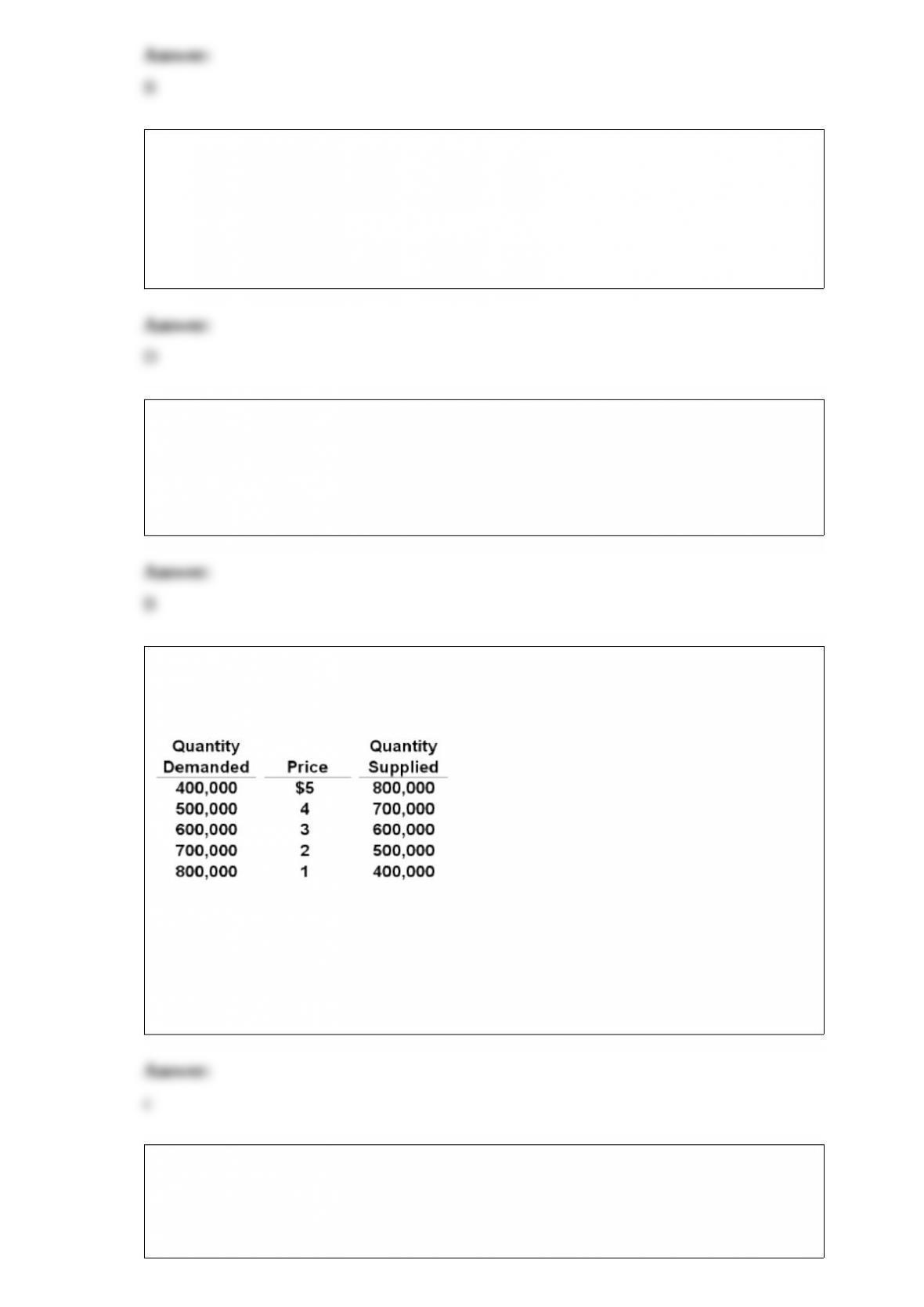
14) the following table applies to a purely competitive industry composed of 100
identical firms.
refer to the above table. at the equilibrium price, each of the 100 firms in this industry
will produce:
a.600,000 units of output.
b.60,000 units of output.
c.6,000 units of output.
d.600 units of output.
15) Large agricultural subsidies for food and fiber in IACs hurt the economies of the
DVCs by:
A.causing higher prices for imported food products.
B.lowering saving rates in the DVCs.
C.encouraging “brain drains” from the DVCs.
D.reducing world agricultural prices and thus export income of the DVCs.
16) determine, other things equal, the effects of a given change in a determinant of
demand or supply for product x upon (1) the demand (d) for, or supply (s) of, x, (2) the
equilibrium price (p) of x and (3) the equilibrium quantity (q) of x.
refer to the above. a decrease in the number of consumers of product x will:
a.decrease s, decrease p, and decrease q.
b.increase d, increase p, and increase q.
c.decrease d, decrease p, and decrease q.
d.decrease d, decrease p, and increase q.
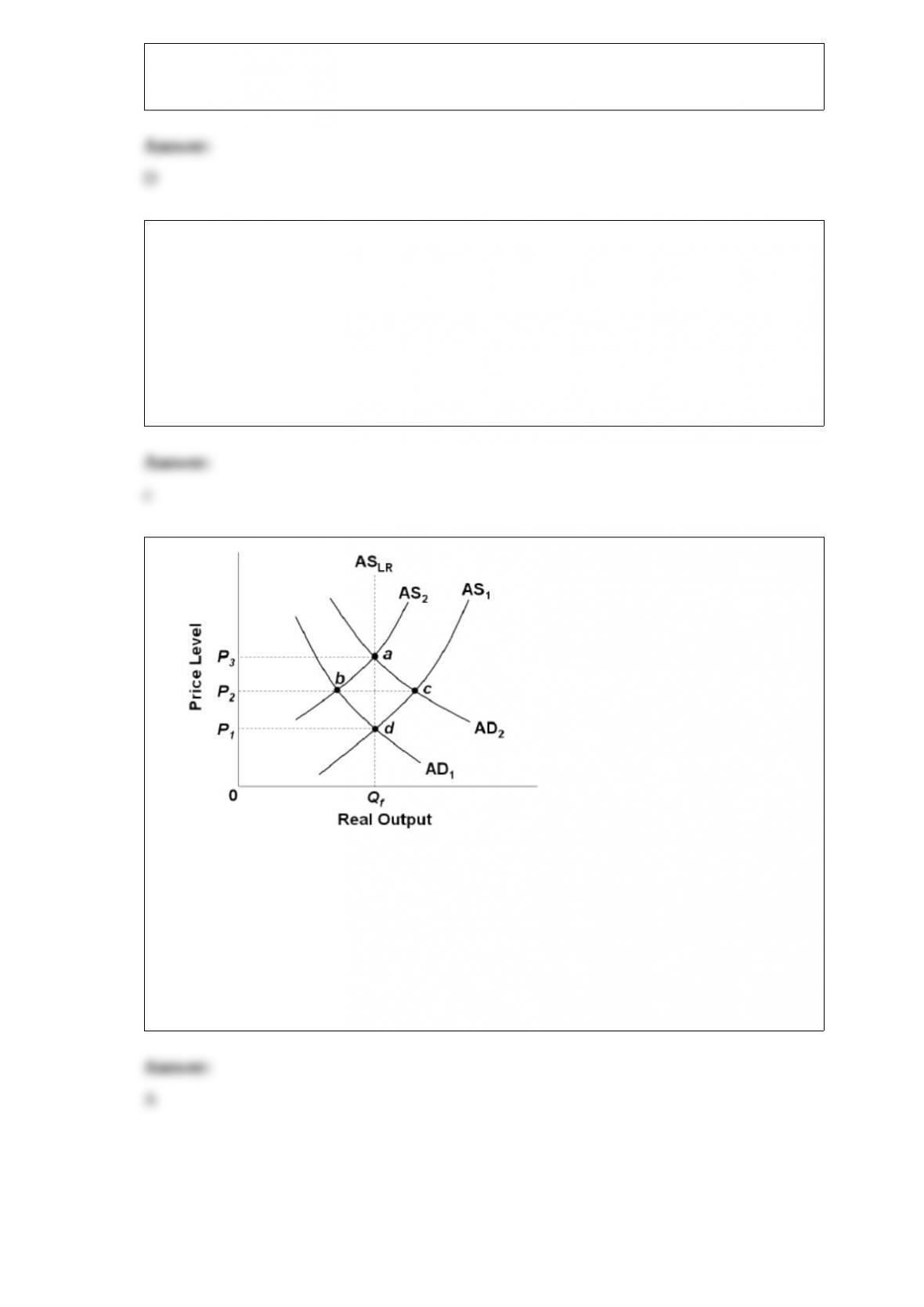
17)
Refer to the above diagram. The initial aggregate demand curve is AD1 and the initial
aggregate supply curve is AS1. In the long run, demand-pull inflation is best shown as:
A.a shift of aggregate demand from AD1 to AD2 followed by a shift of aggregate
supply from AS1 to AS2.
B.a move from d to b to a
C.a shift of aggregate supply from AS1 to AS2 followed by a shift of aggregate demand
from AD1 to AD2.
D.a move from a to d
18)
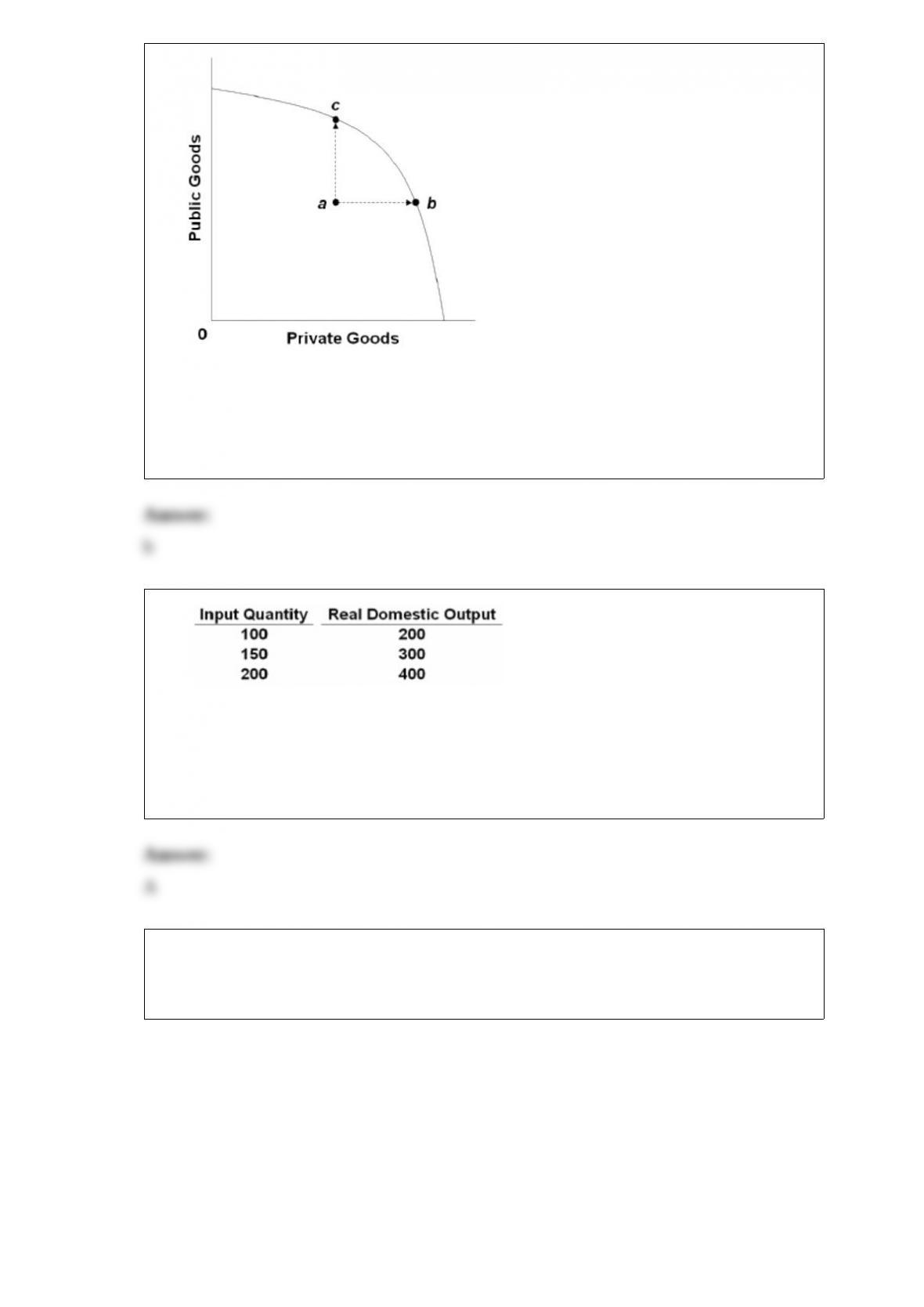
refer to the above diagram. the movement from point b to point c suggests that more:
a.private goods are being produced at the expense of fewer public goods.
b.public goods are being produced at the expense of fewer private goods.
c.public goods are being produced by employing currently idle resources.
d.private goods are being produced by employing currently idle resources.
19)
The level of productivity in the above economy is:
A.2.
B..5.
C.4.
D.200.
20) Assume a state government levies a 5% sales tax on all consumption expenditures.
Consumption expenditures at six income levels are shown in the table below. Compute
the sales tax paid and the average tax rate at these incomes in the table.
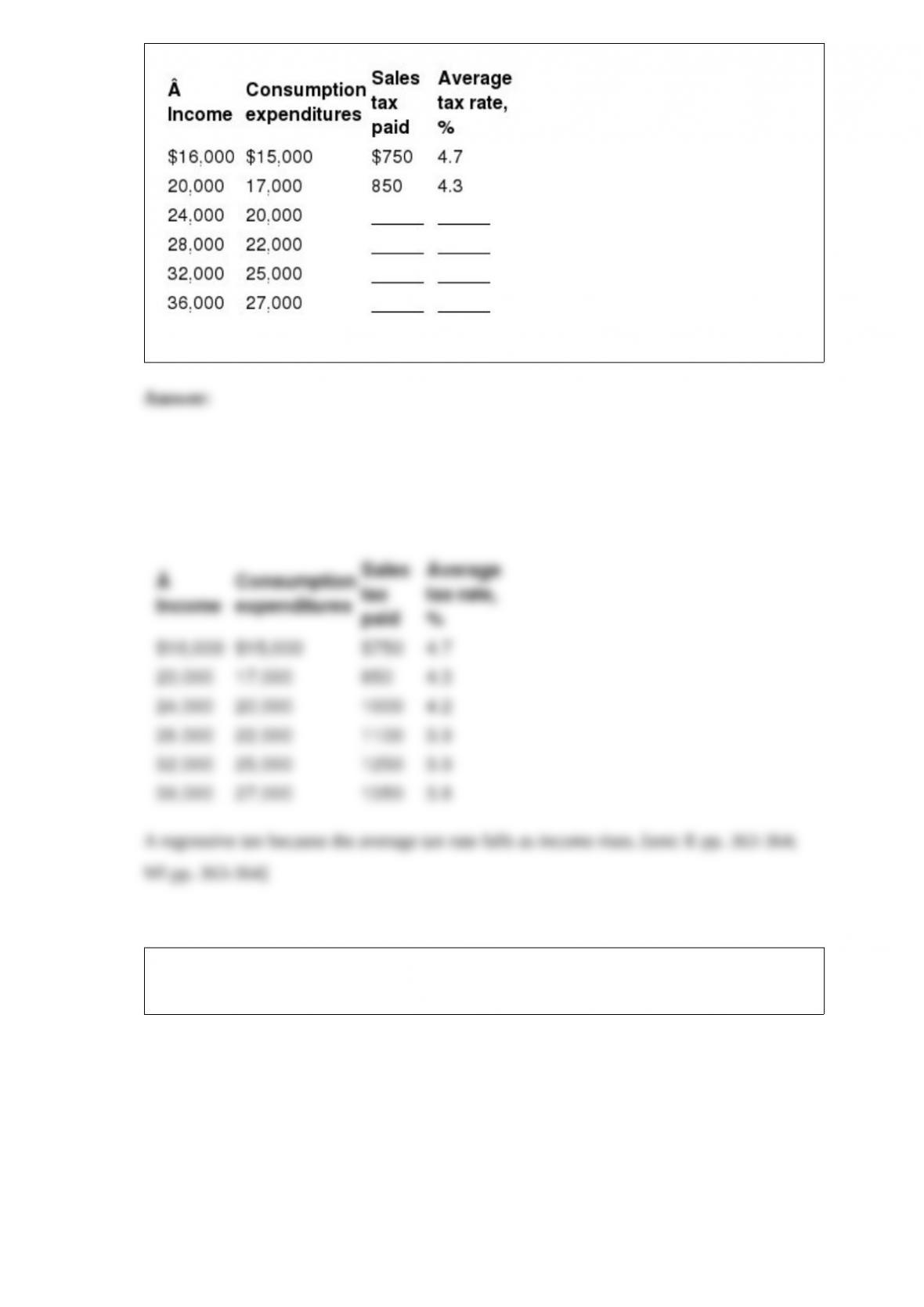
What type of tax is the sales tax in this case? Why?
21) Assume that a purely competitive firm has the schedule of costs given in the table
below.
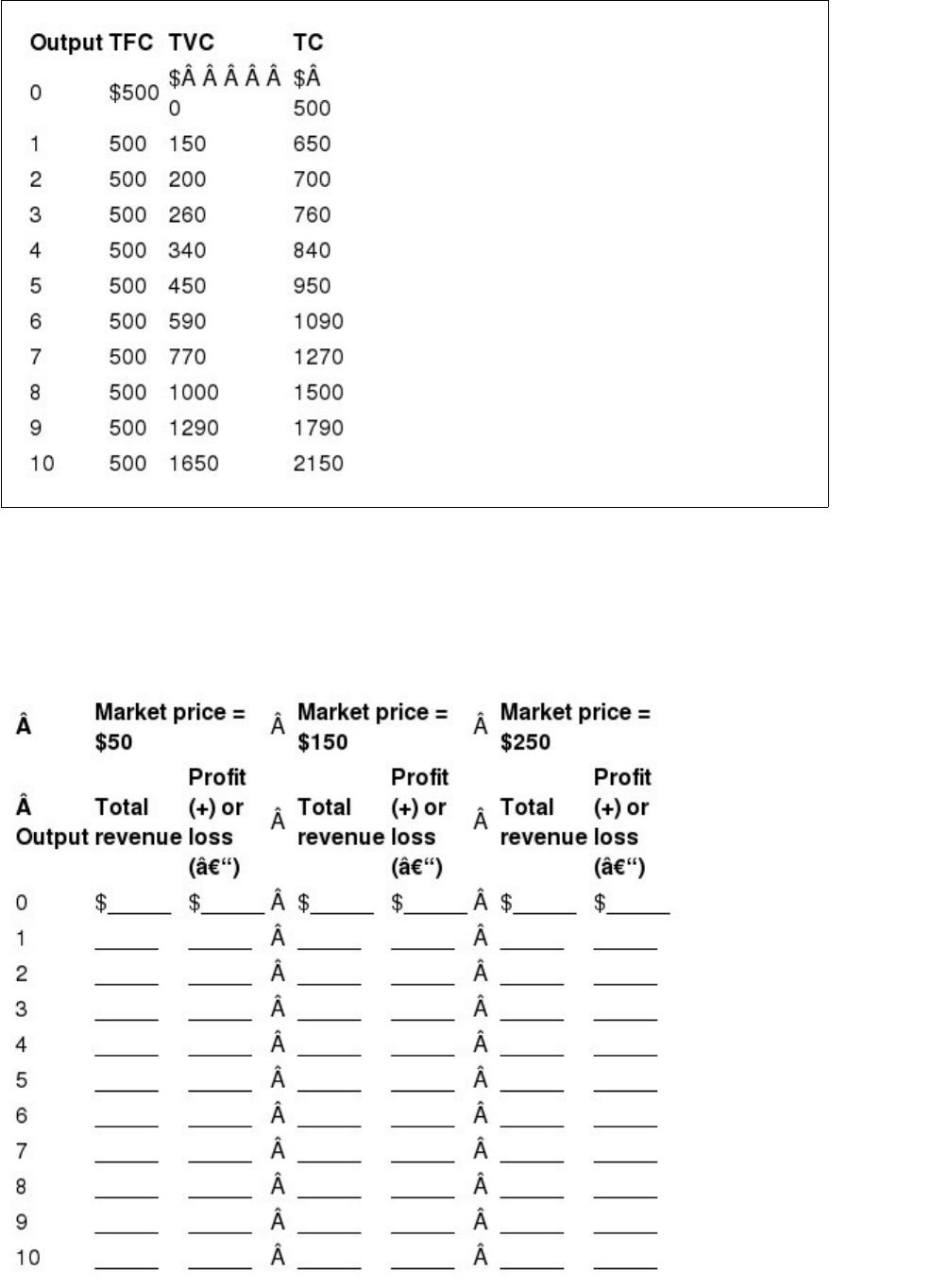
•Complete the table below to show the total revenue and total profit of the firm at
each level of output the firm might produce. Assume market prices of $50, $150,
and $250.
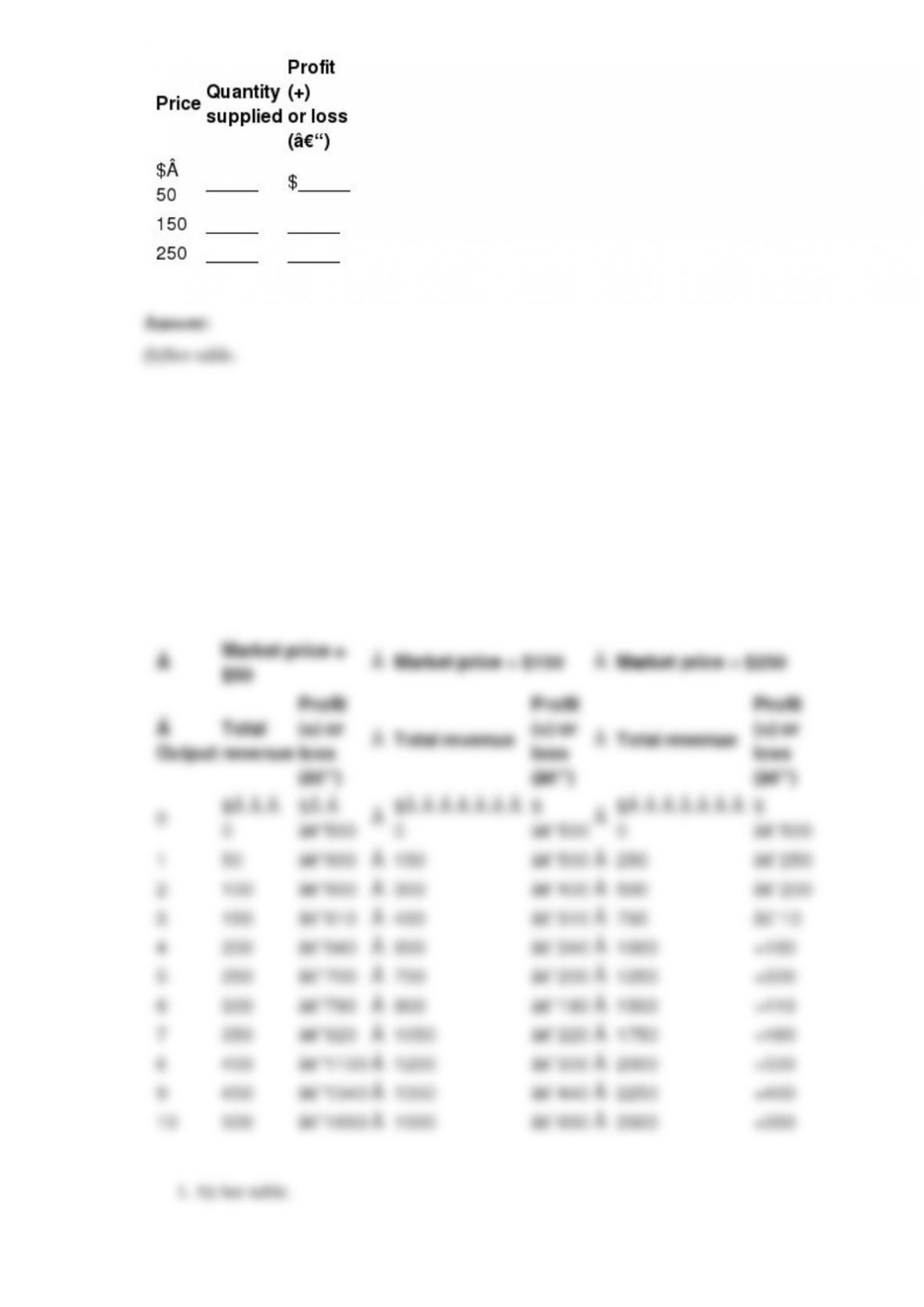
•Indicate what output the firm would produce and its profits in the following table.
22) What is the relationship between the multiplier and the marginal propensities?
23) What are the differences among positive-sum, negative-sum, and zero-sum games?
24) What are likely factors that have contributed the rapid increase in population from

1800 to today?
25) Describe the process that occurs with demand-pull inflation in the extended
aggregate demand and aggregate supply model.
26) Discuss probable incidence of a local tax on business property.

27) In the last four months, GDP has been declining and many sectors have shown a
contraction in business activity. Still, employment has remained constant. We are
currently in a recession. Evaluate this statement.
28) Explain what critics see as the problem with social regulation.