
1) The Clean Air Act of 1990 established a program for trading emission rights.
2) economic research consistently finds that immigration negatively impacts the
average american wage.
3) Higher user costs imply that a resource should be extracted more quickly.
4) A British Thermal Unit is the amount of energy required to raise the temperature of
one litre of water by one degree Celsius.
5) That government that has the smallest budget is the most efficient in the economic
sense.
6) if nominal gdp is 150 and the gdp price index is 200, real gdp is 75.
7) The future value of $3000 deposited today at 5 percent interest is $3646.52 four
years from now.
8) The optimal quantity of a public good occurs where the marginal benefit of the

citizen who has the highest preference for the good just equals the good’s marginal cost.
9) Credit cards are treated as money because they facilitate transactions.
10) Sales taxes on consumer goods are regressive because poor people consume a larger
proportion of their incomes than do rich people.
11) Under freely flexible (floating) exchange rates, if the dollar price of pounds rises,
the pound price of dollars will fall.
12) The idea of coordination failures suggests the possibility of less-than-desirable
price-level and real-output equilibriums in the economy.
13) a competitive firm will produce in the short run so long as its price exceeds its
average fixed cost.
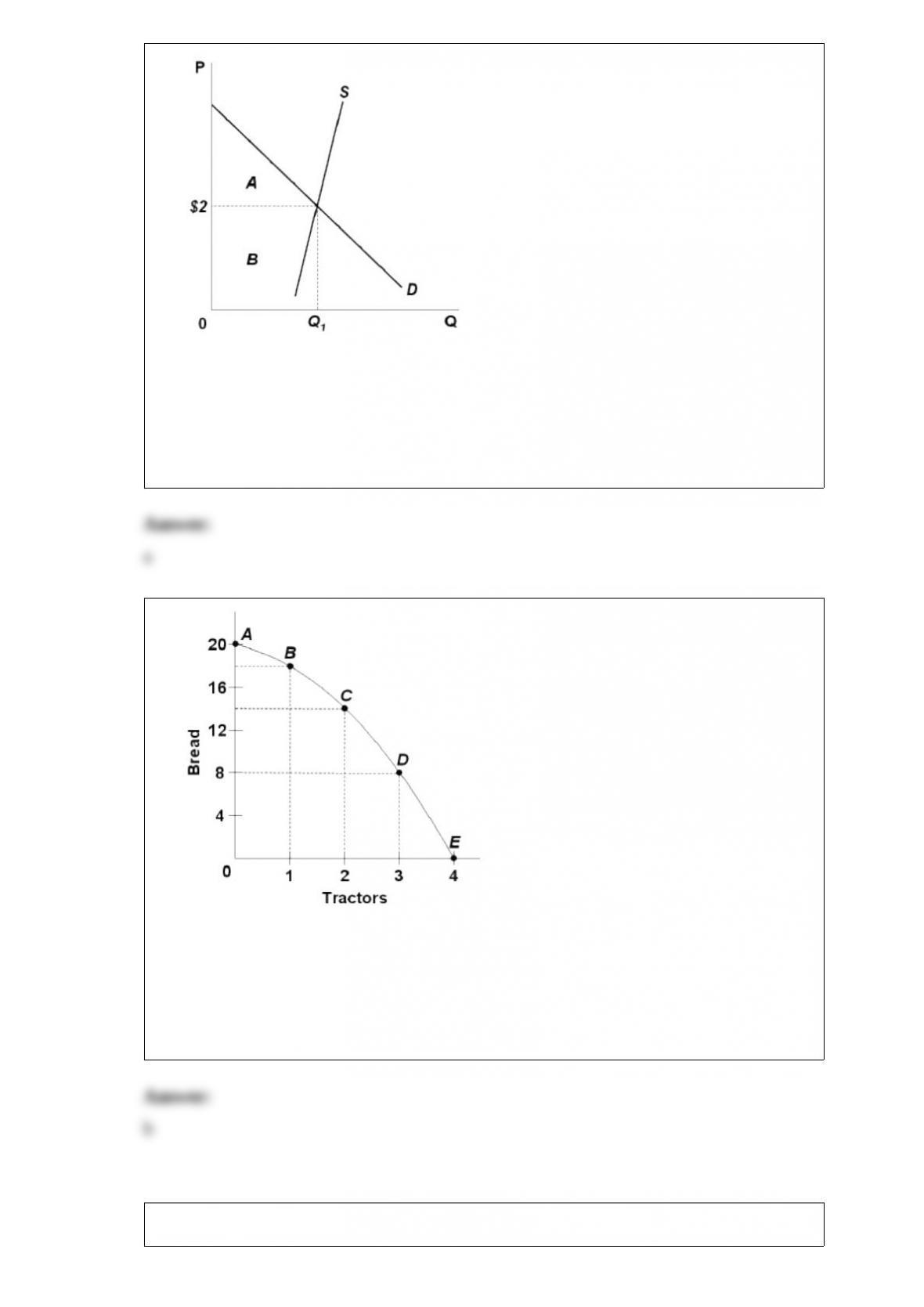
14)
refer to the above graph of the market for asparagus. at the market price of $2, area a +
b represents:
a.total consumer utility.
b.total revenue to sellers.
c.consumer surplus.
d.returns to capital and to labor.
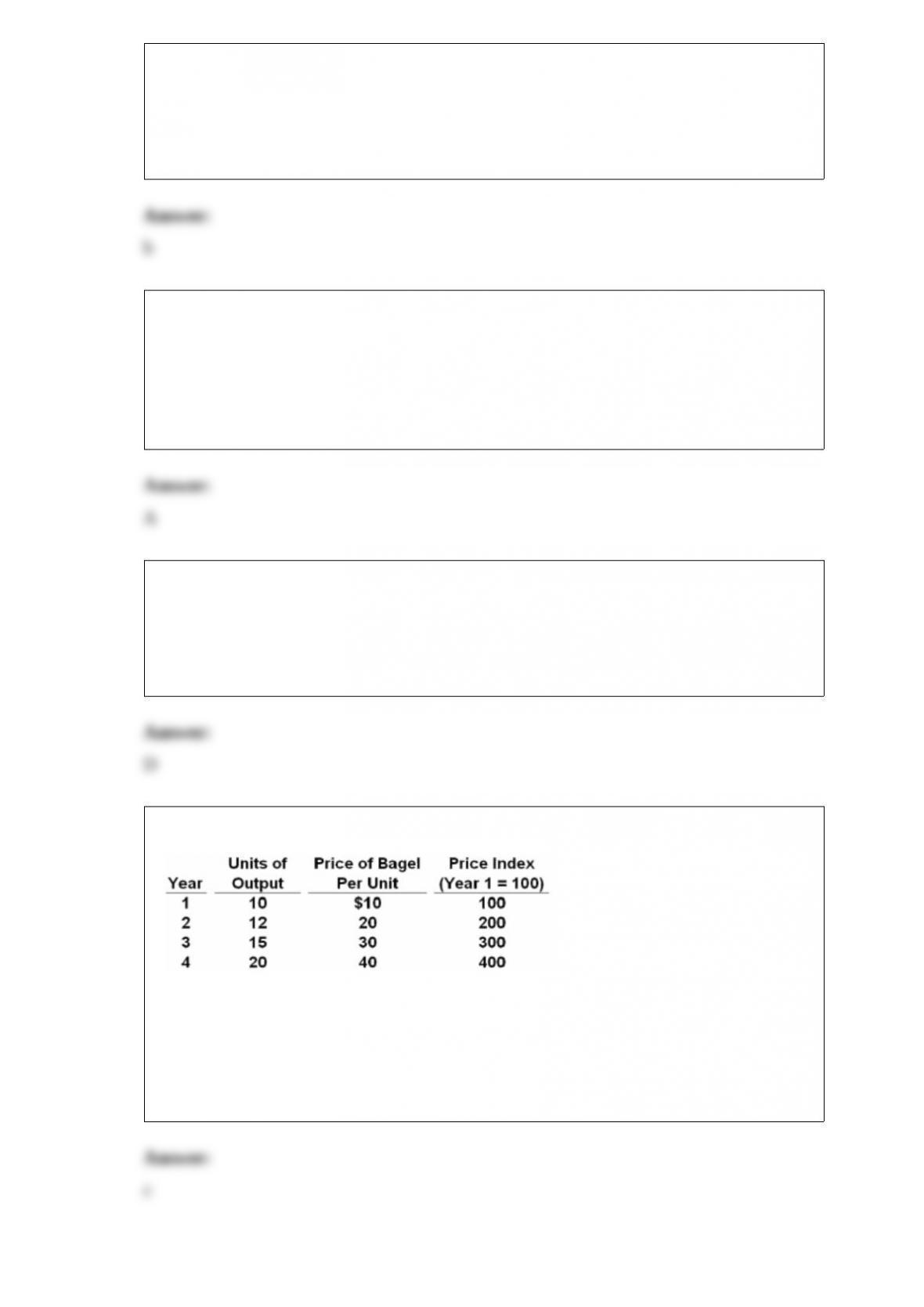
15)
refer to the above diagram. starting at point a, the opportunity cost of producing each
successive unit of tractors is:
a.a constant 2 units of bread.
b.2, 4, 6, and 8 units of bread.
c.8, 6, 4, and 2 units of bread.
d.the reciprocal of the output of tractors.
16) value added can be determined by:
a.summing the profits of all enterprises in the economy.
b.subtracting the purchase of intermediate products from the value of the sales of final
products.
c.calculating the year-to-year changes in real gdp.
d.deflating nominal gdp.
17) (Last Word) Between 1995 and 2004:
A.the distribution of U.S. household wealth became more unequal.
B.the distribution of U.S. household wealth become less unequal.
C.median U.S. household wealth, adjusted for inflation, surpassed average household
wealth.
D.median U.S. household wealth, adjusted for inflation, declined.
18) In the aggregate expenditures model, it is assumed that investment:
A.automatically changes in response to changes in real GDP.
B.changes by less in percentage terms than changes in real GDP.
C.does not respond to changes in interest rates.
D.does not change when real GDP changes.
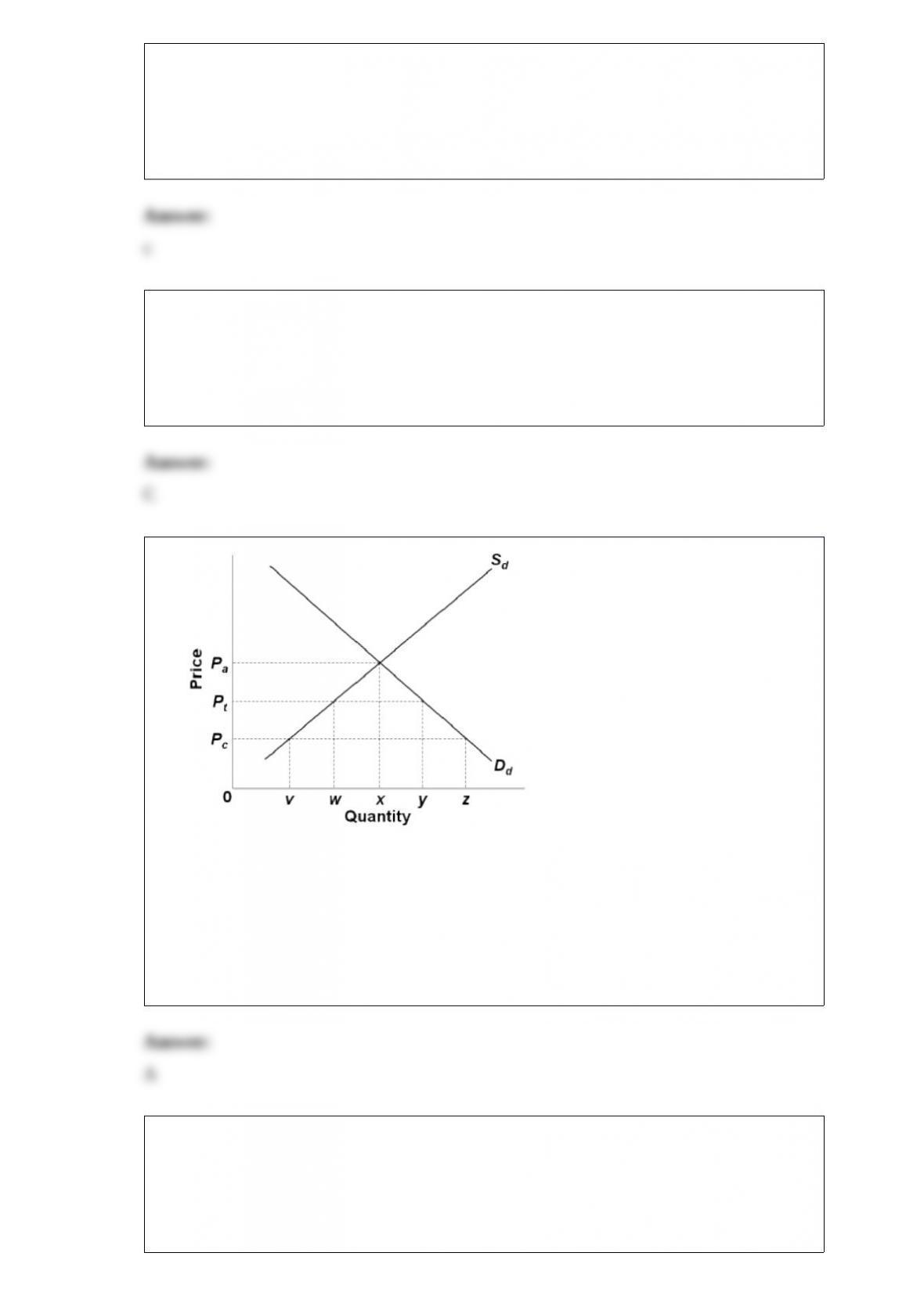
19) use the following table for a hypothetical single-product economy.
refer to the above data. real gdp in year 4 is:
a.$320.
b.$450.
c.$200.
d.$800.
20) unlike a private good, a public good:
a.produces no external benefits or external costs.
b.has no opportunity costs.
c.has benefits that are available to all, regardless of payment.
d.is characterized by rivalry and excludability.
21) In 2006, a household with an annual income of $20,000 would find itself in the:
A.highest quintile of the household income distribution.
B.lowest quintile of the household income distribution.
C.second lowest quintile of the household income distribution.
D.second highest quintile of the household income distribution.
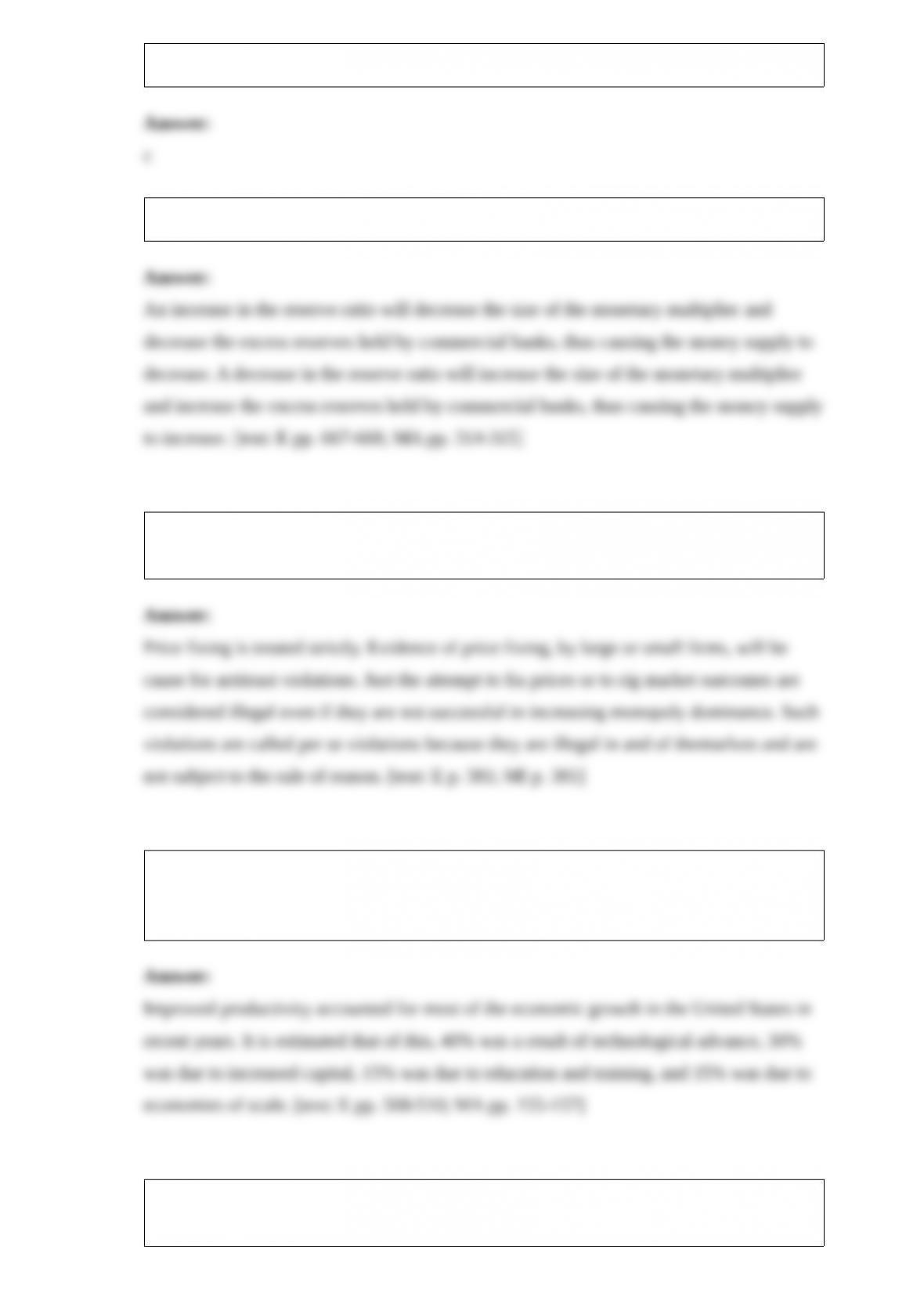
22)
Refer to the above diagram, where Sd and Dd are the domestic supply and demand for a
product and Pc is the world price of that product. With free trade, that is, assuming no
tariff, the outputs produced by domestic and foreign producers respectively would be:
A.v and vz
B.w and wy
C.w and wz
D.vx and xz
23) in 2007, “tax-freedom day” (the day average workers have earned enough to pay
their tax bills) was:
a.march 21
b.april 15
c.april 30
d.july 7
24) Explain how a change in the reserve ratio affects the money supply.
25) How is price fixing among firms treated under antitrust policy? Give two examples
of legal actions against price fixing.
26) Give the approximate importance of productivity as a source of economic growth in
the United States and list the various sources which account for this productivity growth
and their relative importance.
27) Suppose Mark has the option of investing in two different investments that cost
$200 each. One promises to earn 5% in compounded interest over the next 5 years. The
other promises to earn $255.26 in 5 years. Assume the interest rate is 5%. Which asset
will he choose?
28) How does pure competition differ from other basic market models?
29) Explain the two different ways of looking at GDP.
30) Summarize the historical growth record of the United States over the past 50 years
in terms of real GDP growth and in terms of real GDP per capita growth. What three
qualifications should be made about these growth rates?
31) Suppose that real interest rates increase. What would be the likely effect on
household consumption and saving?
32) In terms of economic and social conditions, how do industrially advanced countries
and developing countries differ?
33) Why is the overall world population still increasing? What are the expectations for
population growth in the future?