
1) Most nations of the world are now IACs, not middle- and low-income DVCs.
2) costs can be defined as total payments made to workers, land owners, and capital
suppliers less payments to the entrepreneur for organizing and combining the other
resources used to produce a good.
3) the rationing function of prices refers to the fact that government must distribute any
surplus goods that may be left in a competitive market.
4) critics of economic growth say studies show that people are not interested in
achieving higher standards of living.
5) The Laffer Curve underlies the contention that lower tax rates need not reduce tax
revenues.
6) there is a consensus among economists that the amount of resources allocated to the
health care industry is optimal.
7) Modernizing economies that have declining birthrates may still experience
population growth because of rapidly declining death rates.
8) According to the Taylor rule, if real GDP falls by 1 percent below potential GDP, the
Fed should lower the Federal funds rate by one-half a percentage point.
9) Which of the following supports of the contention that pure competitors have a weak
incentive to engage in R&D?
A.Entry to purely competitive industries is easy and thus profit from innovation is
quickly competed away.
B.In pure competition, products are already highly differentiated.
C.Most purely competitive industries are increasing-cost industries.
D.Pure competitors are happy to earn only a normal profit.
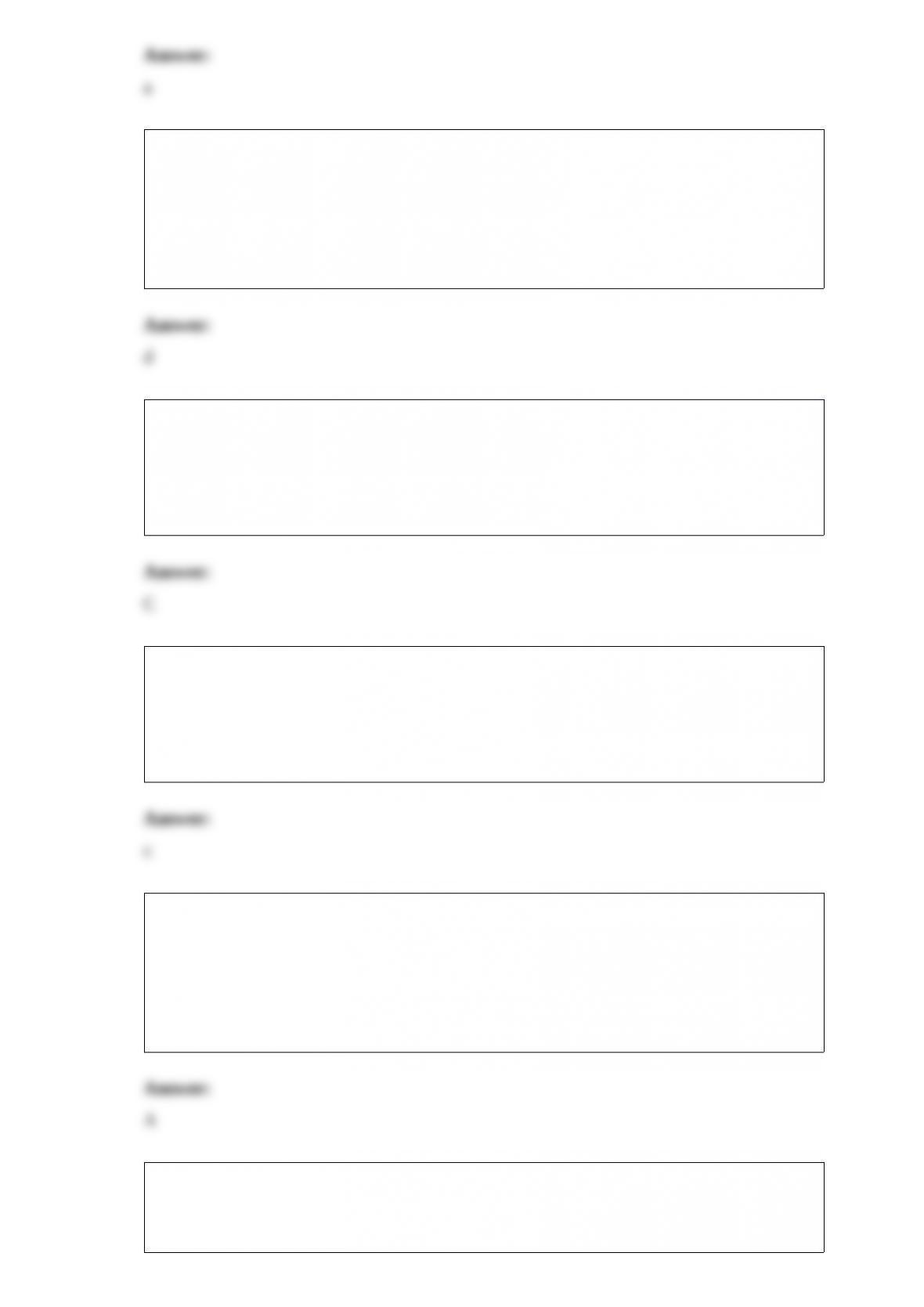
10)
refer to the above graph of the market for asparagus. at the market price of $2, area a
represents:
a.total consumer utility.
b.total revenue to sellers.
c.consumer surplus.
d.economic profit.
11) which of the following statements is correct?
a.economic profits induce firms to enter an industry; losses encourage firms to leave.
b.economic profits induce firms to leave an industry; profits encourage firms to leave.
c.economic profits and losses have no significant impact on the growth or decline of an
industry.
d.normal profits will cause an industry to expand.
12) the economic policies and programs of government affect all of the following
except:
a.the distribution of income.
b.the allocation of resources.
c.the composition of output.
d.the underlying motives of consumers, workers, and firms.
13) The asset demand for money is most closely related to money functioning as a:
A.unit of account.
B.medium of exchange.
C.store of value.
D.measure of value.
14) which of the following is not a characteristic of the market system?
a.private property.
b.freedom of enterprise.
c.government ownership of the major industries.
d.competition in product and resource markets.
15) When aggregate demand declines, the price level may remain constant, at lease for
a time, because:
A.firms individually may fear that their price cut may set off a price war.
B.menu costs rise.
C.price cuts tend to increase efficiency wages.
D.product markets are highly competitive.
16) The organization created to oversee the provisions of multilateral trade agreements,
resolve disputes under the international trade rules, and meet periodically to consider
further trade liberalization is called the:
A.International Monetary Fund (IMF).
B.World Trade Organization (WTO).
C.Common Market Organization (CMO).
D.International Trade Commission (ITC).
17) (Consider This) The story about economist Irving Fisher’s conversation with his
masseuse illustrates that interest payments arise because of:
A.the possibility of inflation.
B.the reality of credit risk.
C.imperfect information about the future.
D.the time-value of money.
18) an increase in demand will increase equilibrium price to a greater extent:
a.if the product is a normal good.
b.if the product is an inferior good.
c.the less elastic the supply curve.
d.the more elastic the supply curve.
19) if products were in short or surplus supply in the soviet union:
a.price and profit signals eliminated those shortages and surpluses.
b.price and profit signals intensified those shortages and surpluses.
c.producers would not react because no price or profit signals occurred.
d.the planners would immediately adjust production to achieve equilibrium.
20) Which of the following would cause the present optimal extraction level of a
non-renewable resource to fall?
A.An increase in the present value of expected future profits.
B.A decrease in extraction costs.
C.A decrease in user costs.
D.An increase in the current price of the resource.
21) Explain what policies are used to stabilize the value of money.
22) In the long run, what would happen if the demand for agricultural products
suddenly became elastic? Explain.
23) Define a simultaneous one-time game.
24) What are the major assets and the major claims (liabilities) on a commercial banks
balance sheet?
25) Explain the difference between a movement along the consumption schedule and a
shift in the consumption schedule.
26) How does monetary policy affect equilibrium GDP? How can it address the
problem of recession or slow growth? Inflation?
27) The following data show nominal GDP and the appropriate price index for several
years. Compute real GDP for each year and indicate whether you have inflated or
deflated nominal GDP in finding real GDP. All GDP are in billions.
28) How are producer and consumer surpluses maximized in a competitive market?
29) How does the aggregate expenditures analysis differ from the aggregate
demandaggregate supply analysis?
30) What are the marginal propensity to consume (MPC) and marginal propensity to
save (MPS)? How are the two concepts related? How are the two concepts related to the
consumption and saving functions?