Archives: Quiz
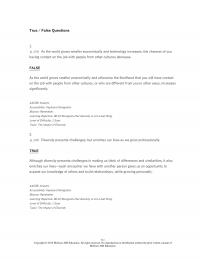
978-0073545462 Test Bank Chapter 8 Part 1
True / False Questions 1. (p. 274) As the world grows smaller economically and technology increases, the chances of you having contact on the job with people from other cultures decrease. FALSE As the world grows smaller economically and otherwise […]
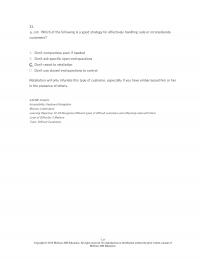
978-0073545462 Test Bank Chapter 7 Part 2
33. (p. 243) Which of the following is a good strategy for effectively handling rude or inconsiderate customers? A. Don’t compromise even if needed B. Don’t ask specific open-end questions C. Don’t resort to retaliation D. Don’t use closed-end questions […]
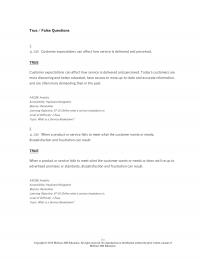
978-0073545462 Test Bank Chapter 7 Part 1
True / False Questions 1. (p. 232) Customer expectations can affect how service is delivered and perceived. TRUE Customer expectations can affect how service is delivered and perceived. Today’s customers are more discerning and better educated, have access to more […]
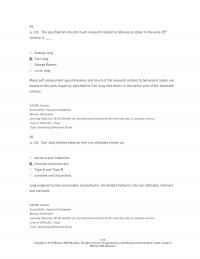
978-0073545462 Test Bank Chapter 6 Part 2
29. (p. 203) The psychiatrist who did much research related to behavioral styles in the early 20th century is ____. A. Andrea Jung B. Carl Jung C. George Boerec D. Lovie Jung Many self-assessment questionnaires and much of the research […]
978-0073545462 Test Bank Chapter 6 Part 1
True / False Questions 1. (p. 202) Behavioral styles are observable tendencies that you and others exhibit when dealing with tasks or people. TRUE Behavioral styles are observable tendencies (actions that you can see or experience) that you and other […]
978-0073545462 Test Bank Chapter 5 Part 2
32. (p. 169) _____ refers to sending back verbal and nonverbal messages to a message originator. A. Responding B. Answering C. Memorizing D. Hearing The last phase of the listening process is responding. Responding refers to sending back verbal and […]
978-0073545462 Test Bank Chapter 5 Part 1
True / False Questions 1. (p. 166) Listening effectively is the primary means that many customer service professionals use to determine the needs of their customers. TRUE Listening effectively is the primary means that many customer service professionals use to […]
978-0073545462 Test Bank Chapter 4 Part 2
31. (p. 134) Which of the following is an example of a negative nonverbal behavior? A. Nodding affirmatively B. Casual unkempt appearance C. Open body stance D. Remaining silent as customer speaks Maintaining professional appearance has a positive influence, whereas […]
978-0073545462 Test Bank Chapter 4 Part 1
True / False Questions 1. (p. 129) Verbal messages consist of such things as movements, gestures, body positions, vocal qualities, and a variety of unspoken signals sent by people. FALSE Nonverbal messages consist of such things as movements, gestures, body […]
978-0073545462 Test Bank Chapter 3 Part 2
30. (p. 92) Which of the following statements is true of the problems associated with channels of communication? A. The nonverbal cues that accompany words are unidentifiable in telephonic conversations. B. Face-to-face conversation denies the opportunity to supplement the words […]
978-0073545462 Test Bank Chapter 3 Part 1
True / False Questions 1. (p. 88) The variable over which service providers have little control is the emotional state of their customers. TRUE One variable over which you have little control as a service provider is the emotional state […]
978-0073545462 Test Bank Chapter 2 Part 2
33. (p. 55) Retail and service organizations should: A. focus on attracting new customers instead of trying to retain current customers. B. communicate their internal problems to customers. C. establish policies and procedures that are flexible. D. respond to customer […]
978-0073545462 Test Bank Chapter 2 Part 1
True / False Questions 1. (p. 45) The service culture in every organization is identical. FALSE The service culture is different for each organization. No two organizations operate in the same manner, have the same focus, or provide management that […]
978-0073545462 Test Bank Chapter 1 Part 2
29. (p. 8) During the early days of business growth, many sold or bartered products from their homes in what became known as ____. A. outsourcing organizations B. cottage industries C. service industries D. customer-focused organizations In the past, many […]
978-0073545462 Test Bank Chapter 1 Part 1
True / False Questions 1. (p. 6) The goals of providing customer service are similar despite the differences between organizations in their focus. FALSE The goals of providing customer service may vary depending on an organization’s focus. AACSB: Analytic Accessibility: […]
978-0073530406 Test Bank Chapter 14 Part 4
65. Creating short-term wins is a recurring method for success. Justify. Creating short-term wins is a recurring method for success, and one emphasized by every popular model of change. Short-term wins nourish faith in the change effort, emotionally reward the […]
978-0073530406 Test Bank Chapter 14 Part 3
54. Which of the following is true about burning platforms as a technique for reducing resistance to change? A. It automatically creates a positive urgency. B. Fear is not the best sustaining force for change. C. It builds trust in […]
978-0073530406 Test Bank Chapter 14 Part 2
34. According to Bridges, what is the largest problem with most change initiatives? A. Framing the problem inaccurately B. Unfreezing the wrong system components C. Making change in increments that are too small D. Failing to take into account the […]
978-0073530406 Test Bank Chapter 14 Part 1
True / False Questions 1. Fear is the best motivator of change. FALSE It is too easy for people to go into denial over the bad things that might happen to them. Compelling, positive visions of the future are a […]
978-0073530406 Test Bank Chapter 13 Part 4
66. Flo & Lo Co. groups its activities based on its products and services offered to customers. Explain the organizational form adopted by the company. Grouping activities based on products, services, customers, or geography gives rise to a self-contained unit. […]
978-0073530406 Test Bank Chapter 13 Part 3
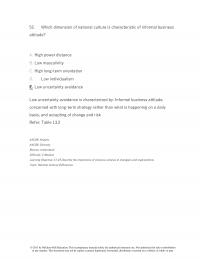
52. Which dimension of national culture is characteristic of informal business attitude? A. High power distance B. Low masculinity C. High long-term orientation D. Low individualism E. Low uncertainty avoidance Low uncertainty avoidance is characterized by: Informal business attitude, concerned […]
978-0073530406 Test Bank Chapter 13 Part 2
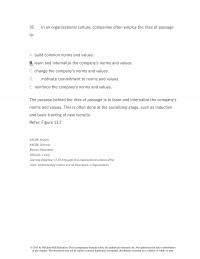
32. In an organizational culture, companies often employ the rites of passage to: A. build common norms and values. B. learn and internalize the company’s norms and values. C. change the company’s norms and values. D. motivate commitment to norms […]
978-0073530406 Test Bank Chapter 13 Part 1
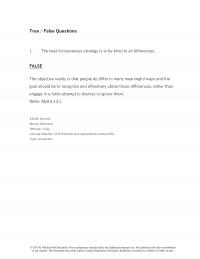
True / False Questions 1. The best inclusiveness strategy is to be blind to all differences. FALSE The objective reality is that people do differ in many meaningful ways and the goal should be to recognize and effectively utilize those […]
978-0073530406 Test Bank Chapter 12 Part 4
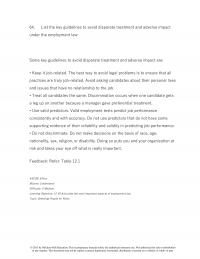
64. List the key guidelines to avoid disparate treatment and adverse impact under the employment law. Some key guidelines to avoid disparate treatment and adverse impact are: • Keep it job-related. The best way to avoid legal problems is to […]
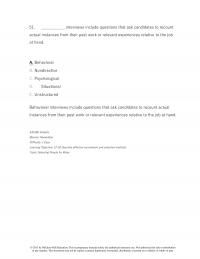
978-0073530406 Test Bank Chapter 12 Part 3
51. ____________ interviews include questions that ask candidates to recount actual instances from their past work or relevant experiences relative to the job at hand. A. Behavioral B. Nondirective C. Psychological D. Situational E. Unstructured Behavioral interviews include questions that […]
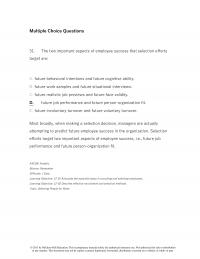
978-0073530406 Test Bank Chapter 12 Part 2
Multiple Choice Questions 31. The two important aspects of employee success that selection efforts target are: A. future behavioral intentions and future cognitive ability. B. future work samples and future situational interviews. C. future realistic job previews and future face […]
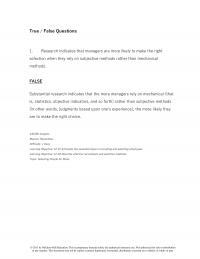
978-0073530406 Test Bank Chapter 12 Part 1
True / False Questions 1. Research indicates that managers are more likely to make the right selection when they rely on subjective methods rather than mechanical methods. FALSE Substantial research indicates that the more managers rely on mechanical (that is, […]
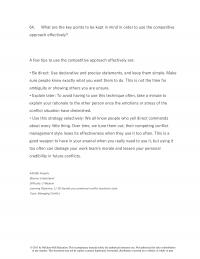
978-0073530406 Test Bank Chapter 11 Part 4
64. What are the key points to be kept in mind in order to use the competitive approach effectively? A few tips to use the competitive approach effectively are: • Be direct: Use declarative and precise statements, and keep them […]
978-0073530406 Test Bank Chapter 11 Part 3
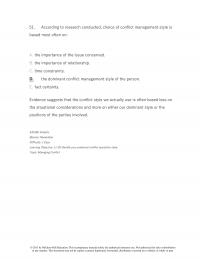
51. According to research conducted, choice of conflict management style is based most often on: A. the importance of the issue concerned. B. the importance of relationship. C. time constraints. D. the dominant conflict management style of the person. E. […]
978-0073530406 Test Bank Chapter 11 Part 2
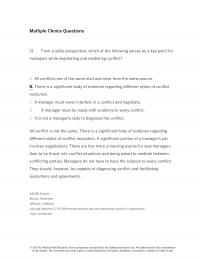
Multiple Choice Questions 31. From a skills perspective, which of the following serves as a key point for managers while negotiating and mediating conflict? A. All conflicts are of the same kind and arise from the same source. B. There […]
978-0073530406 Test Bank Chapter 11 Part 1
True / False Questions 1. Conflict is always a destructive force in a work environment. FALSE Conflict can be destructive; however, in the right form and managed well, it can also stimulate innovation and improve group decision making. Refer: Myths […]
978-0073530406 Test Bank Chapter 10 Part 5
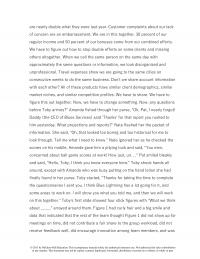
are nearly double what they were last year. Customer complaints about our lack of concern are an embarrassment. We are in this together. 30 percent of our regular income and 50 percent of our bonuses come from our combined efforts. […]
978-0073530406 Test Bank Chapter 10 Part 4
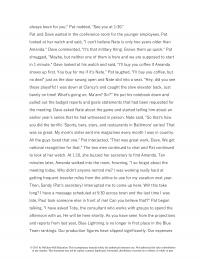
always been for you.” Pat nodded, “See you at 1:30.” Pat and Dave waited in the conference room for the younger employees. Pat looked at her watch and said, “I can’t believe Nate is only two years older than Amanda.” […]
978-0073530406 Test Bank Chapter 10 Part 3
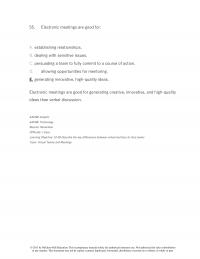
55. Electronic meetings are good for: A. establishing relationships. B. dealing with sensitive issues. C. persuading a team to fully commit to a course of action. D. allowing opportunities for mentoring. E. generating innovative, high-quality ideas. Electronic meetings are good […]
978-0073530406 Test Bank Chapter 10 Part 2
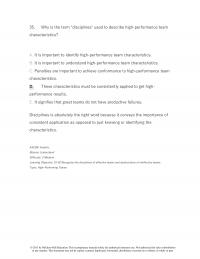
35. Why is the term “disciplines” used to describe high-performance team characteristics? A. It is important to identify high-performance team characteristics. B. It is important to understand high-performance team characteristics. C. Penalties are important to achieve conformance to high-performance team […]
978-0073530406 Test Bank Chapter 10 Part 1
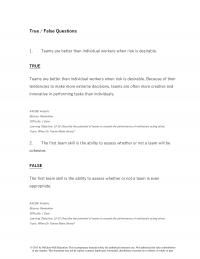
True / False Questions 1. Teams are better than individual workers when risk is desirable. TRUE Teams are better than individual workers when risk is desirable. Because of their tendencies to make more extreme decisions, teams are often more creative […]
978-0073530406 Test Bank Chapter 9 Part 5
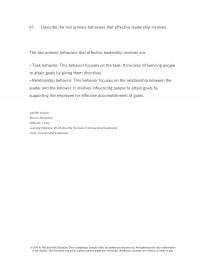
67. Describe the two primary behaviors that effective leadership involves. The two primary behaviors that effective leadership involves are: • Task behavior: This behavior focuses on the task. It involves influencing people to attain goals by giving them directives. • […]
978-0073530406 Test Bank Chapter 9 Part 4
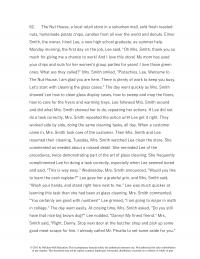
62. The Nut House, a local retail store in a suburban mall, sold fresh roasted nuts, homemade potato chips, candies from all over the world and donuts. Elinor Smith, the owner, hired Lee, a new high school graduate, as summer […]
978-0073530406 Test Bank Chapter 9 Part 3
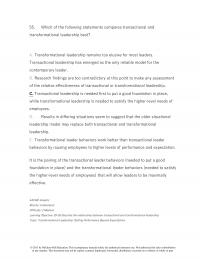
55. Which of the following statements compares transactional and transformational leadership best? A. Transformational leadership remains too elusive for most leaders. Transactional leadership has emerged as the only reliable model for the contemporary leader. B. Research findings are too contradictory […]
978-0073530406 Test Bank Chapter 9 Part 2
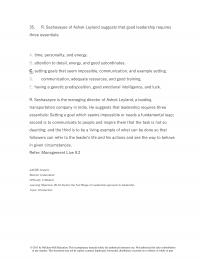
35. R. Seshasayee of Ashok Leyland suggests that good leadership requires three essentials: A. time, personality, and energy. B. attention to detail, energy, and good subordinates. C. setting goals that seem impossible, communication, and example setting. D. communication, adequate resources, […]
978-0073530406 Test Bank Chapter 9 Part 1
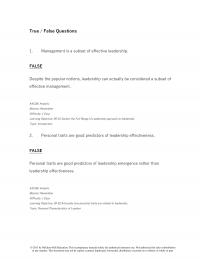
True / False Questions 1. Management is a subset of effective leadership. FALSE Despite the popular notions, leadership can actually be considered a subset of effective management. AACSB: Analytic Blooms: Remember Difficulty: 1 Easy Learning Objective: 09-01 Explain the Full […]
978-0073530406 Test Bank Chapter 8 Part 4
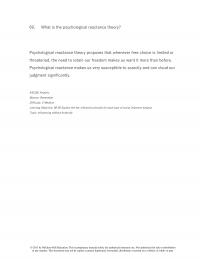
69. What is the psychological reactance theory? Psychological reactance theory proposes that whenever free choice is limited or threatened, the need to retain our freedom makes us want it more than before. Psychological reactance makes us very susceptible to scarcity […]
978-0073530406 Test Bank Chapter 8 Part 3
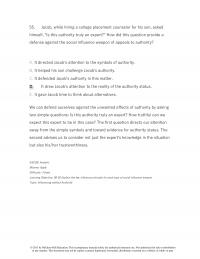
55. Jacob, while hiring a college placement counselor for his son, asked himself, “Is this authority truly an expert?” How did this question provide a defense against the social influence weapon of appeals to authority? A. It directed Jacob’s attention […]
978-0073530406 Test Bank Chapter 8 Part 2
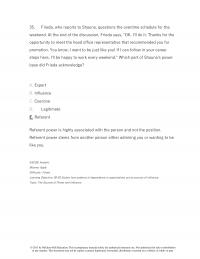
35. Frieda, who reports to Shauna, questions the overtime schedule for the weekend. At the end of the discussion, Frieda says, “OK. I’ll do it. Thanks for the opportunity to meet the head office representative that recommended you for promotion. […]
978-0073530406 Test Bank Chapter 8 Part 1
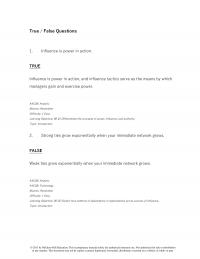
True / False Questions 1. Influence is power in action. TRUE Influence is power in action, and influence tactics serve as the means by which managers gain and exercise power. AACSB: Analytic Blooms: Remember Difficulty: 1 Easy Learning Objective: 08-01 […]
978-0073530406 Test Bank Chapter 7 Part 4
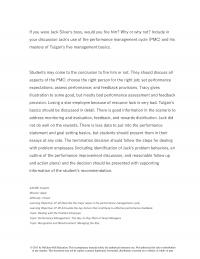
If you were Jack Silver’s boss, would you fire him? Why or why not? Include in your discussion Jack’s use of the performance management cycle (PMC) and his mastery of Tulgan’s five management basics. Students may come to the conclusion […]
978-0073530406 Test Bank Chapter 7 Part 3
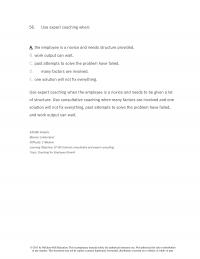
56. Use expert coaching when: A. the employee is a novice and needs structure provided. B. work output can wait. C. past attempts to solve the problem have failed. D. many factors are involved. E. one solution will not fix […]
978-0073530406 Test Bank Chapter 7 Part 2
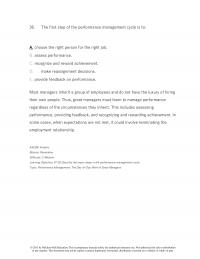
36. The first step of the performance management cycle is to: A. choose the right person for the right job. B. assess performance. C. recognize and reward achievement. D. make reassignment decisions. E. provide feedback on performance. Most managers inherit […]
978-0073530406 Test Bank Chapter 7 Part 1
True / False Questions 1. The best managers know that they get rewarded for what their employees do, not for what managers do. TRUE The best managers know that they get rewarded for what their employees do, not for what […]

978-0073530406 Test Bank Chapter 6 Part 4
© 2013 by McGraw-Hill Education. This is proprietary material solely for authorized instructor use. Not authorized for sale or distribution in any manner. This document may not be copied, scanned, duplicated, forwarded, distributed, or posted on a website, in whole […]