Archives
978-0134129938 Case Section1 Investigating Niches with SHOE FIEND
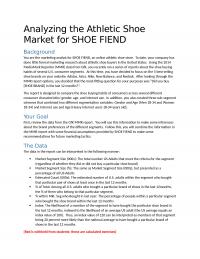
Analyzing the Athletic Shoe Market for SHOE FIEND Background You are the marketing analyst for SHOE FIEND, an online athletic shoe store. To date, your company has done li”le formal marketing research about athletic shoe buyers in the United States. […]
978-0134129938 Case Section2 Evolving Trends in Fitness and French Fries
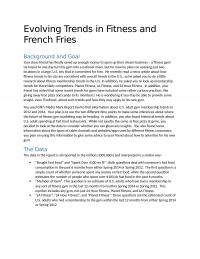
Evolving Trends in Fitness and French Fries Background and Goal Your close friend has finally saved up enough money to open up their dream business – a fitness gym! He hopes to one day turn his gym into a national […]
978-0134129938 Case Section3 PetLovers
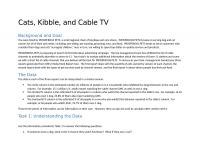
Cats, Kibble, and Cable TV Background and Goal You were hired by PROSPEROUS PETS, a small regional chain of boutique pet care stores. PROSPEROUS PETS focuses on serving dog and cat owners for all of their pet needs, including: pet […]

978-0134129938 Case Section4 Going Global with CAPABLE JUICE
Going Global with CAPABLE JUICE Background You are the CMO (Chief Marketing Ocer) for CAPABLE JUICE. CAPABLE JUICE is a company that sells a line of premium, all-natural juices. CAPABLE JUICE is marketed as a tasty beverage particularly well-suited for […]
978-0134129938 Chapter 1 Lecture Note
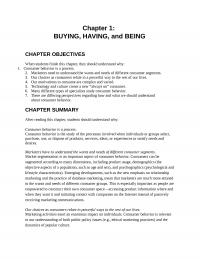
Chapter 1: BUYING, HAVING, and BEING CHAPTER OBJECTIVES When students finish this chapter, they should understand why: 1. Consumer behavior is a process. 2. Marketers need to understand the wants and needs of different consumer segments. 3. Our choices as […]
978-0134129938 Chapter 1 Solution Manual
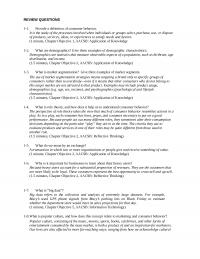
REVIEW QUESTIONS 1-1. Provide a definition of consumer behavior. (1 minute, Chapter Objective 1, AACSB: Application of Knowledge 1-2. What are demographics? Give three examples of demographic characteristics. Demographics are statistics that measure observable aspects of a population, such as […]
978-0134129938 Chapter 10 Lecture Note
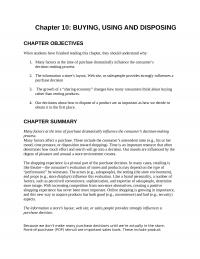
Chapter 10: BUYING, USING AND DISPOSING CHAPTER OBJECTIVES When students have finished reading this chapter, they should understand why: 1. Many factors at the time of purchase dramatically influence the consumer’s decision-making process. 2. The information a store’s layout, Web […]
978-0134129938 Chapter 10 Solution Manual
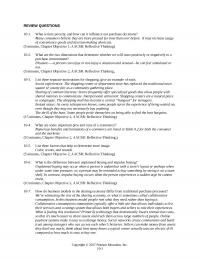
REVIEW QUESTIONS 10-1. What is time poverty, and how can it influence our purchase decisions? Many consumers believe they are more pressed for time than ever before. It may increase usage (5 minutes, Chapter Objective 1, AACSB: Reflective Thinking) 10-2. […]
978-0134129938 Chapter 11 Lecture Note
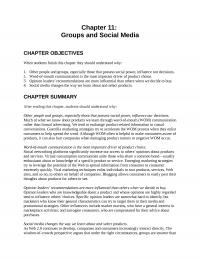
Chapter 11: Groups and Social Media CHAPTER OBJECTIVES When students finish this chapter they should understand why: 1. Other people and groups, especially those that possess social power, influence our decisions. 2. Word-of-mouth communication is the most imporant driver of […]
978-0134129938 Chapter 11 Solution Manual
Chapter 11: Groups and Social Media REVIEW QUESTIONS 11-1. What is word-of-mouth, and why is it more powerful than advertising? Word-of-mouth (WOM) is product information transmitted by individuals to individuals. (5 minutes, Chapter Objective 1, AACSB: Reflective Thinking) 11-2. Which […]
978-0134129938 Chapter 12 Lecture Note
Chapter 12: Income and Social Class CHAPTER OBJECTIVES When students finish this chapter they should understand why: 1. Our confidence in our future, as well as in the overall economy, determines how freely we spend and the types of products […]
978-0134129938 Chapter 12 Solution Manual
REVIEW QUESTIONS 12-1. How have women contributed to the overall rise in income in our society? One reason for this increase in income is that there also have been a larger proportion of people of working age participating in the […]
978-0134129938 Chapter 13 Lecture Note Part 1
CHAPTER 13: SUBCULTURES CHAPTER OBJECTIVES When students finish this chapter they should understand why: 1. Consumer identity derives from “we” as well as “I”. 2. Our memberships in ethnic, racial, and religious subcultures often guide our consumption choices. 3. Marketers […]
978-0134129938 Chapter 13 Lecture Note Part 2
III. The Family Unit and Age Subcultures Discussion Opportunity—Ask: Describe your family structure. Would you say that it is traditional? What impact does your family structure have on purchasing? How could an advertiser design an ad to appeal to your […]
978-0134129938 Chapter 13 Solution Manual Part 1
REVIEW QUESTIONS 13-1. What is a subculture? Consumers’ lifestyles are affected by group memberships within the society-at-large. We call these groups subcultures, whose members share beliefs and common experiences (5 minutes, Chapter Objective 1, AACSB: Reflective Thinking) 13-2. What is […]
978-0134129938 Chapter 13 Solution Manual Part 2
13-1. One study asked young people in the United States and the Netherlands to write essays about what is “cool” and “uncool” and to create visual collages that represent what it means to be cool. The researchers found that cool […]
978-0134129938 Chapter 14 Lecture Note Part 1
CHAPTER 14: CULTURE CHAPTER OBJECTIVES When students finish this chapter they should understand why: 1. A culture is a society’s personality. 2. We distinguish between high culture and low culture. 3. Myths are stories that express a culture’s values, and […]
978-0134129938 Chapter 14 Lecture Note Part 2
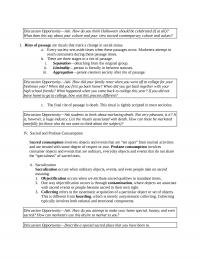
Discussion Opportunity—Ask: How do you think Halloween should be celebrated (if at all)? What does this say about your culture and your view toward contemporary culture and values? 1. Rites of passage are rituals that mark a change in social […]
978-0134129938 Chapter 14 Solution Manual Part 1
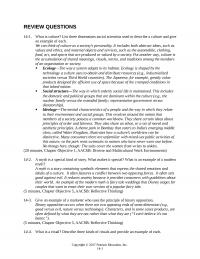
REVIEW QUESTIONS 14-1. What is culture? List three dimensions social scientists used to describe a culture and give an example of each. We can think of culture as a society’s personality. It includes both abstract ideas, such as values and […]
978-0134129938 Chapter 14 Solution Manual Part 2
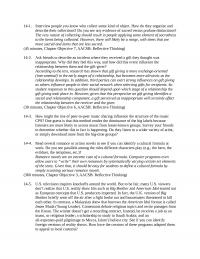
14-1. Interview people you know who collect some kind of object. How do they organize and describe their collections? Do you see any evidence of sacred versus profane distinctions? The very nature of collecting should result in people applying some […]
978-0134129938 Chapter 15 Lecture Note
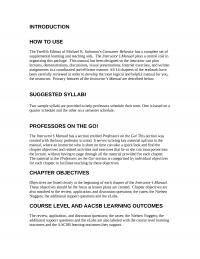
INTRODUCTION HOW TO USE The Twelfth Edition of Michael R. Solomon’s Consumer Behavior has a complete set of supplemental learning and teaching aids. The Instructor’s Manual plays a central role in organizing this package. This manual has been designed so […]
978-0134129938 Chapter 2 Lecture Note
Chapter 2: CONSUMER AND SOCIAL WELL-BEING CHAPTER OBJECTIVES When students finish this chapter, students should understand why: 1. Ethical business is good business. 2. Marketers have an obligation to provide safe and functional products as part of their business activities. […]
978-0134129938 Chapter 2 Solution Manual
REVIEW 2-1. What are business ethics, and why is this an important topic? Business ethics are rules of conduct that guide actions in the marketplace. These are the (2 minutes, Chapter Objective 1, AACSB: Reflective Thinking) 2-2. The economics of […]
978-0134129938 Chapter 3 Lecture Note
Chapter 3: PERCEPTION CHAPTER OBJECTIVES After reading this chapter, students should understand why: 1. The design of a product today is a key driver of its success or failure. 2. Products and commercial messages often appeal to our senses, but […]
978-0134129938 Chapter 3 Solution Manual
REVIEW 3-1. Define hedonic consumption and provide an example. Hedonic consumption is the multi-sensory, fantasy, and emotional aspects of consumers’ interactions with products. The Owens-Corning Fiberglass Corporation was the first company to (3 minutes, Chapter Objective 1, AACSB: Application of […]
978-0134129938 Chapter 4 Lecture Note Part 1
Chapter 4: LEARNING AND MEMORY CHAPTER OBJECTIVES When students finish this chapter, they should understand why: 1. It is important to understand how consumers learn about products and services. 2. Conditioning results in learning. 3. Learned associations with brands generalize […]
978-0134129938 Chapter 4 Lecture Note Part 2
A. How Our Memories Store Information 1. The traditional view (multiple-store) is that the short-term memory and long-term memory are separate systems. 2. Recent work says they may be interdependent (activation models of memory) so it takes more effort (deep […]
978-0134129938 Chapter 4 Solution Manual Part 1
REVIEW QUESTIONS 4-1. What is the difference between an unconditioned stimulus and a conditioned stimulus? Ivan Pavlov, a Russian physiologist doing research on digestion in animals, first demonstrated this phenomenon in dogs. Pavlov induced classically conditioned learning by pairing a […]
978-0134129938 Chapter 4 Solution Manual Part 2
CS 4-1. Do consumers build associative networks from their avatar’s experience? If so, the associations from their avatar experience by any different from other shopping experiences? How would these networks impact the consumer’s ability to organize and retrieve information that […]
978-0134129938 Chapter 5 Lecture Note
Chapter 5: MOTIVATION AND AFFECT CHAPTER OBJECTIVES When students finish this chapter, students should understand why: 1. Products can satisfy a range of consumer needs. 2. Consumers experience different kinds of motivational conflicts that can impact their purchase decisions. 3. […]
978-0134129938 Chapter 5 Solution Manual
REVIEW QUESTIONS 5-1. What is motivation and why is this idea so important to marketers? Motivation refers to the processes that lead people to behave as they do. It occurs when a need is aroused that the consumer wishes to […]
978-0134129938 Chapter 6 Lecture Note Part 1
Chapter 6: THE SELF CHAPTER OBJECTIVES When students finish this chapter, they should understand why: 1. The self-concept strongly influences consumer behavior. 2. Products often define a person’s self-concept. 3. Gender identity is an important component of a consumer’s self-concept. […]
978-0134129938 Chapter 6 Lecture Note Part 2
Discussion Opportunities—Give an illustration of the four different forms of extended self. How might marketers or advertisers use these forms? II. Sex Roles Sexual identity is a very important component of a consumer’s self-concept. We tend to conform to culture’s […]
978-0134129938 Chapter 6 Solution Manual Part 1
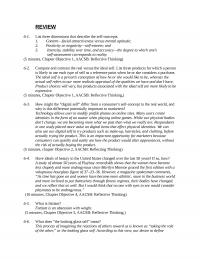
REVIEW 6-1. List three dimensions that describe the self-concepts. 1. Content—facial attractiveness versus mental aptitude; 3. Intensity, stability over time, and accuracy—the degree to which one’s self-assessment corresponds to reality. (5 minutes, Chapter Objective 1, AACSB: Reflective Thinking) 6-2. Compare […]
978-0134129938 Chapter 6 Solution Manual Part 2
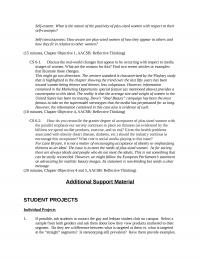
Self-esteem: What is the nature of the positivity of plus-sized women with respect to their Self-consciousness: How aware are plus-sized women of how they appear to others and how they fit in relative to other women? (15 minutes, Chapter Objective […]
978-0134129938 Chapter 7 Lecture Note
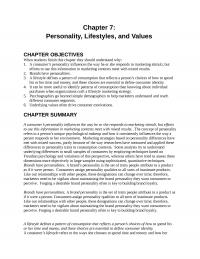
Chapter 7: Personality, Lifestyles, and Values CHAPTER OBJECTIVES When students finish this chapter they should understand why: 1. A consumer’s personality influences the way he or she responds to marketing stimuli, but efforts to use this information in marketing contexts […]
978-0134129938 Chapter 7 Solution Manual
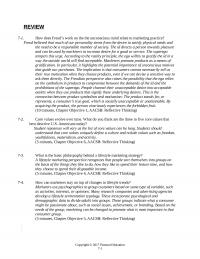
REVIEW 7-1. How does Freud’s work on the the unconscious mind relate to marketing practice? Freud believed that much of our personality stems from the desire to satisfy physical needs and the need to be a responsible member of society. […]
978-0134129938 Chapter 8 Lecture Note Part 1
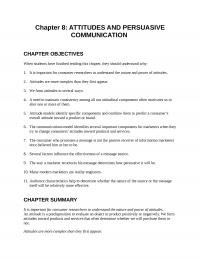
Chapter 8: ATTITUDES AND PERSUASIVE COMMUNICATION CHAPTER OBJECTIVES When students have finished reading this chapter, they should understand why: 1. It is important for consumer researchers to understand the nature and power of attitudes. 2. Attitudes are more complex than […]
978-0134129938 Chapter 8 Lecture Note Part 2
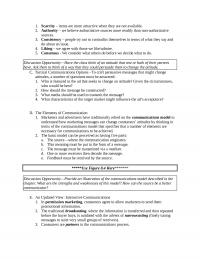
1. Scarcity – items are more attractive when they are not available. 2. Authority – we believe authoritative sources more readily than non-authoritative sources. 3. Consistency – people try not to contradict themselves in terms of what they say and […]
978-0134129938 Chapter 8 Solution Manual Part 1
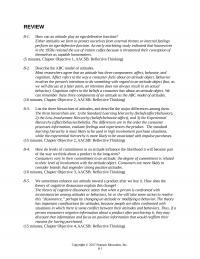
REVIEW 8-1. How can an attitude play an ego-defensive function? Either attitudes we form to protect ourselves from external threats or internal feelings perform an ego-defensive function. An early marketing study indicated that housewives (5 minutes, Chapter Objective 1, AACSB: […]
978-0134129938 Chapter 8 Solution Manual Part 2
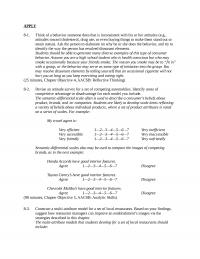
APPLY 8-1. Think of a behavior someone does that is inconsistent with his or her attitudes (e.g., attitudes toward cholesterol, drug use, or even buying things to make them stand out or attain status). Ask the person to elaborate on […]
978-0134129938 Chapter 9 Lecture Note
Chapter 9: DECISION MAKING CHAPTER OBJECTIVES When students have finished reading this chapter, they should understand why: 1. The three categories of consumer decision-making are cognitive, habitual, and affective. 2. A cognitive purchase decision is the outcome of a series […]
978-0134129938 Chapter 9 Solution Manual Part 1
REVIEW QUESTIONS 9-1. Why can “mindless” decision making actually be more efficient than devoting a lot of thought to what we buy? Sometimes the decision-making process is almost automatic; we seem to make snap judgments based on very little information. […]
978-0134129938 Chapter 9 Solution Manual Part 2
APPLY 9-36 Find examples of electronic recommendation agents on the Web. Evaluate these. Are they helpful? What characteristics of the sites you locate are likely to make you buy products you would not have bought on your own? Amazon.com and […]
BUSMKT 51631
Researchers have added to the original Fishbein multiattribute model. The name of this extended-Fishbein model is the ________. A) linked Fishbein model B) theory of reasoned action C) Phillips approach D) subjective norm model Answer: Which of the following theories […]
BUSMKT 77302
Classical conditioning occurs when a stimulus that elicits a response is paired with another stimulus that initially does not elicit a response on its own. Answer: John Deere established a reputation for building dependable farm tractors. When the company began […]
BUSMT 35098
________ occurs when an individual may have reason to believe that the group will apply sanctions to punish nonconforming behavior. A) Fear of deviance B) Fear of commitment C) The principle of least interest D) Interpersonal influence Answer: According to […]
BUSMT 40416
In general, when the source of a message is perceived as attractive, the message will be more effectively communicated. Answer: The communications model requires a source and a message, but receivers of the message are not part of the model. […]
BUSMT 40470
A point-of-purchase stimuli is part of the purchase environment. Answer: Most cultures in the world encourage the same degree of conformity. Answer: FALSE A person’s actual self is a person’s conception of how he/she would like to be. Answer: FALSE […]
BUSMT 75010
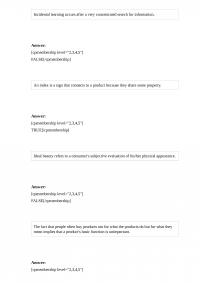
Incidental learning occurs after a very concentrated search for information. Answer: An index is a sign that connects to a product because they share some property. Answer: TRUE Ideal beauty refers to a consumer’s subjective evaluation of his/her physical appearance. […]
BUSMT 92744
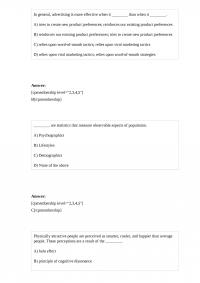
In general, advertising is more effective when it ________ than when it ________. A) tries to create new product preferences; reinforces our existing product preferences B) reinforces our existing product preferences; tries to create new product preferences C) relies upon […]
Marketing 75134
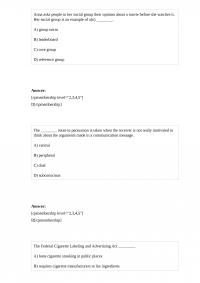
Anna asks people in her social group their opinion about a movie before she watches it. Her social group is an example of a(n) ________. A) group norm B) leaderboard C) core group D) reference group Answer: The ________ route […]
MET 66932
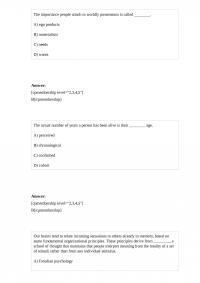
The importance people attach to worldly possessions is called ________. A) ego products B) materialism C) needs D) wants Answer: The actual number of years a person has been alive is their ________ age. A) perceived B) chronological C) confirmed […]
MET AD 11550
When Sophie hums a McDonald’s jingle, it is an example of ________. A) brain worm B) incidental learning C) behavior D) consumer attention Answer: Another term for positivism is ________. A) interpretivism B) pluralism C) modernism D) postmodernism Answer: C […]
MET AD 34276
According to the definition of consumer behavior, how a consumer disposes of an idea and accepts another is part of consumer behavior. Answer: A sophisticated form of conspicuous consumption is called parody display. Answer: TRUE Green marketing refers to the […]
MET AD 36755
When Campbell’s markets many products under the same brand name it is called family branding. Answer: Anna’s best friend, Aubrey ,was getting married. Anna spent a lot of time thinking of the perfect gift and was so excited about the […]
MGMT 17534
Perceived age is how old a person feels. Answer: The body is adorned or altered in some way in every culture. One of the chief purposes for doing this is to place the individual in the social organization. Answer: TRUE […]
MK 58820
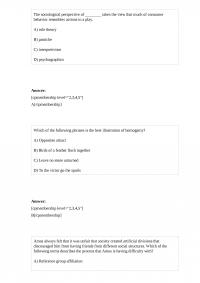
The sociological perspective of ________ takes the view that much of consumer behavior resembles actions in a play. A) role theory B) pastiche C) interpretivism D) psychographics Answer: Which of the following phrases is the best illustration of homogamy? A) […]
MK 68439
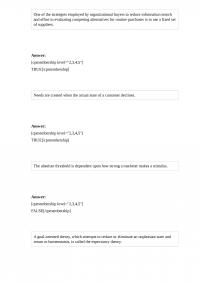
One of the strategies employed by organizational buyers to reduce information search and effort in evaluating competing alternatives for routine purchases is to use a fixed set of suppliers. Answer: Needs are created when the actual state of a customer […]
MK 75821
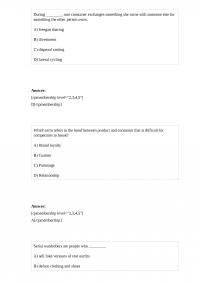
During ________, one consumer exchanges something she owns with someone else for something the other person owns. A) freegan sharing B) divestment C) disposal casting D) lateral cycling Answer: Which term refers to the bond between product and consumer that […]
MK 79136
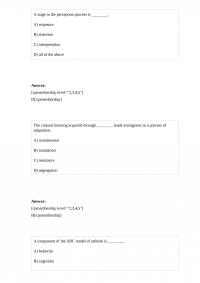
A stage in the perception process is ________. A) exposure B) attention C) interpretation D) all of the above Answer: The cultural learning acquired through ________ leads immigrants to a process of adaptation. A) maintenance B) translation C) resistance D) […]
MKT 45053
Recent research on opinion leadership has called into question the traditional view that there are ________ opinion leaders, whose recommendations people see for all purchases. A) heterophilous B) generalized C) polymorphic D) monomorphic Answer: Which of the following is not […]
MKT 57911
Claudia Norman, a marketing consultant, recommended that brand equity for a new environmentally-friendly product could be established by giving initial customers free memberships in the Sierra Club organization. Claudia used which of the following in her recommendation? A) Promotional consideration […]
MT 31419
Janice feels that she makes many of her decisions based on the fact that she is an introvert. Introversion seems to affect her taste in clothes, outside activities, and even her independence. Janice is making consumption decisions based on a […]
MT 89710
Studies suggest that men and women who are exposed to beautiful models in advertisements are likely to alter their perceptions of their own body shapes. Answer: Ideals of male beauty are based on facial features, musculature, and facial hair. Answer: […]
MT 93349
According to the elaboration likelihood model, marketers of a low-involvement product must first change attitudes before customers are likely to purchase their product. Answer: A pop-up store is purposefully designed to come and go very rapidly. Answer: TRUE Consumers who […]