Archives
978-0134103983 Chapter 1 Lecture Note Part 1
CHAPTER 1 What Is Organizational Behavior? LEARNING OBJECTIVES After studying this chapter, students should be able to: 1-1. Demonstrate the importance of interpersonal skills in the workplace. 1-2. Define organizational behavior (OB). 1-3. Show the value to OB of systematic […]
978-0134103983 Chapter 1 Lecture Note Part 2
A. Management Functions 1. All managers perform five management functions: planning, organizing, commanding, coordinating, and controlling. Modern management scholars have condensed these functions to four: planning, organizing, leading, and controlling. 2. Planning requires a manager to: a. Define goals (organizational, […]
978-0134103983 Chapter 1 Lecture Note Part 3
1. among themselves in terms of what they want to achieve and have little loyalty to one another, the group is not cohesive. 2. There is ample evidence showing that cohesive groups are more effective. a. These results are found […]
978-0134103983 Chapter 1 Solution Manual
Questions for Review 1-1. What is the importance of interpersonal skills in the workplace? Answer: Understanding human behavior is critical for managerial effectiveness today. To attract and retain high-performing employees, managers must possess interpersonal skills in order to Learning Objective: […]
978-0134103983 Chapter 10 Lecture Note Part 1
Chapter 10 Understanding Work Teams LEARNING OBJECTIVES After studying this chapter, students should be able to: 10-1. Analyze the continued popularity of teams in organizations. 10-2. Contrast groups and teams. 10-3. Contrast the five types of teams. 10-4. Identify the […]
978-0134103983 Chapter 10 Lecture Note Part 2
1. L’Oréal found that successful sales teams required much more than being staffed with high-ability salespeople: management had to focus much of its efforts on team building. 2. Developing an effective team doesn’t happen overnight—it takes time. B. Rewarding: Providing […]
978-0134103983 Chapter 10 Lecture Note Part 3
1. If team members have different ideas about how to do things, the team will fight over how to do things rather than focus on what needs to be done. B. Conflict Levels 1. Conflict on a team isn’t necessarily […]
978-0134103983 Chapter 10 Solution Manual
Questions for Review 10-1. How do you explain the growing popularity of teams in organizations? Answer: Although teams are not always effective they have become popular. Some of the reasons include: a. Teams are a great way to use employee […]
978-0134103983 Chapter 11 Lecture Note Part 1
Chapter 11 Communication LEARNING OBJECTIVES After studying this chapter, students should be able to: 11-1. Describe the functions and process of communication. 11-2. Contrast downward, upward, and lateral communication through small-group networks and the grapevine. 11-3. Contrast oral, written, and […]
978-0134103983 Chapter 11 Lecture Note Part 2
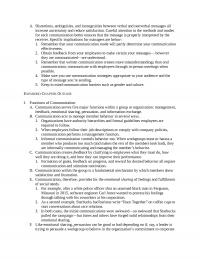
A. Distortions, ambiguities, and incongruities between verbal and nonverbal messages all increase uncertainty and reduce satisfaction. Careful attention to the methods and modes for each communication better ensures that the message is properly interpreted by the receiver. Specific implications for […]
978-0134103983 Chapter 11 Lecture Note Part 3
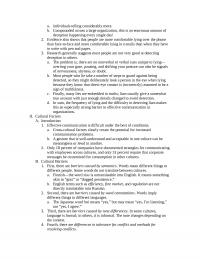
a. individuals telling considerably more. b. Compounded across a large organization, this is an enormous amount of deception happening every single day! 2. Evidence also shows that people are more comfortable lying over the phone than face-to-face and more comfortable […]
978-0134103983 Chapter 11 Solution Manual
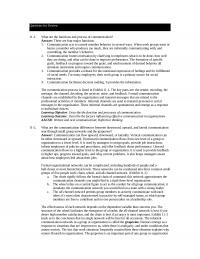
Questions for Review 11-1. What are the functions and process of communication? Answer: There are four major functions. 1. Communication acts to control member behavior in several ways. When work groups tease or 2. Communication fosters motivation by clarifying to […]
978-0134103983 Chapter 12 Lecture Note Part 1
CHAPTER12 Leadership LEARNING OBJECTIVES After studying this chapter, students should be able to: 12-1. Summarize the conclusions of trait theories of leadership. 12-2. Identify the central tenets and main limitations of behavioral theories. 12-3. Contrast contingency theories of leadership. 12-4. […]
978-0134103983 Chapter 12 Lecture Note Part 2
a. In electronic communication, writing skills are likely to become an extension of interpersonal skills. B. Selecting Leaders 1. The entire process that organizations go through to fill management positions is essentially an exercise in trying to identify individuals who […]
978-0134103983 Chapter 12 Lecture Note Part 3
a. You have to trust that the extra work you’ve been doing will be recognized in your performance appraisal. b. In contemporary organizations, where less work is closely documented and specified, voluntary employee contribution based on trust is absolutely necessary. […]
978-0134103983 Chapter 13 Lecture Note Part 1
Chapter 13 Power and Politics LEARNING OBJECTIVES After studying this chapter, students should be able to: 13-1. Contrast leadership and power. 13-2. Explain the three bases of formal power and the two bases of personal power. 13-3. Explain the role […]
978-0134103983 Chapter 13 Lecture Note Part 2
A. To decide not to play is deciding not to be effective. B. Better to be explicit about it with a political map than to proceed as if power and politics didn’t matter. II. Summary and Implications for Managers A. […]
978-0134103983 Chapter 13 Lecture Note Part 3
A. How Do People Respond to Organizational Politics? 1. For most people—who have modest political skills or are unwilling to play the politics game—outcomes tend to be predominantly negative. a. Exhibit 13-4 summarizes the extensive research on the relationship between […]
978-0134103983 Chapter 13 Solution Manual
Questions for Review 13-1. How is leadership different from power? Answer: Power refers to a capacity that A has to influence the behavior of B, so that B acts in accordance with A’s wishes. Power may exist but not be […]
978-0134103983 Chapter 14 Lecture Note Part 1
Chapter 14 Conflict and Negotiation LEARNING OBJECTIVES) After studying this chapter, students should be able to: 14-1. Describe the three types of conflict and the three loci of conflict. 14-2. Outline the conflict process. 14-3. Contrast distributive and integrative bargaining. […]
978-0134103983 Chapter 14 Lecture Note Part 2
a. They are seen as more likely to keep their promises and present information accurately, so others are more willing to accept their promises as part of a bargain. 2. Finally, individuals who have higher reputations are better liked and […]
978-0134103983 Chapter 14 Lecture Note Part 3
i. It appears that negotiators in a position of power or equal status who show anger negotiate better outcomes because their anger induces concessions from their opponents. b. Another factor is how genuine your anger is—“faked” anger, or anger produced […]
978-0134103983 Chapter 14 Solution Manual
Questions for Review 14-1. What are the three types of conflict and the three loci of conflict? Answer: The three types of conflict are: 1. Task conflict: conflict over content and goals of the work. The three loci of conflict […]
978-0134103983 Chapter 15 Lecture Note Part 1
Chapter 15 Foundations of Organization Structure LEARNING OBJECTIVES After studying this chapter, students should be able to: 15-1.Identify seven elements of an organization’s structure. 15-2.Identify the characteristics of the functional structure, the divisional structure, and the matrix structure. 15-3.Identify the […]
978-0134103983 Chapter 15 Lecture Note Part 2
A. Technology 1. Technology refers to how an organization transfers its inputs into outputs. a. Every organization has at least one technology for converting financial, human, and physical resources into products or services. b. The Chinese consumer electronics company Haier […]
978-0134103983 Chapter 15 Lecture Note Part 3
1. Exhibit 15-6 shows a virtual organization in which management outsources all of the primary functions of the business. a. The dotted lines in this exhibit represent those relationships typically maintained under contracts. b. In essence, managers in virtual structures […]
978-0134103983 Chapter 15 Lecture Note Part 4
1. Downsize your organization to realize major cost savings, and focus the company around core competencies—but only if necessary, because downsizing can have a significant negative impact on employee affect. 2. Consider the scarcity, dynamism, and complexity of the environment, […]
978-0134103983 Chapter 15 Solution Manual
Questions for Review 15-1. What are seven key elements to define an organization’s structure? Answer: The seven key elements that define an organization’s structure are: Work specialization Departmentalization Learning Objective: Identify seven elements of an organization’s structure Learning Outcome: Discuss […]
978-0134103983 Chapter 16 Lecture Note Part 1
Chapter 16 Organizational Culture LEARNING OBJECTIVES After studying this chapter, students should be able to: 16-1. Describe the common characteristics of organizational culture. 16-2. Compare the functional and dysfunctional effects of organizational culture on people and the organization. 16-3. Identify […]
978-0134103983 Chapter 16 Lecture Note Part 2
1. However, the culture of many U.S. airlines does not reflect the same degree of informality. 2. If U.S. airlines were to merge with AirAsia, they would need to take these cultural differences into account. B. One of the primary […]
978-0134103983 Chapter 16 Lecture Note Part 3
I. Influencing an Organizational Culture A. An Ethical Culture 1. How can management create a more ethical culture? a. Be a visible role model. i. Employees look to top management behavior as a benchmark. b. Communicate ethical expectations. i. Code […]
978-0134103983 Chapter 16 Solution Manual
Questions for Review 16-1. What is organizational culture, and what are its common characteristics? Answer: Organizational culture is a common perception held by the characteristics are: a. Innovation and risk taking b. Attention to detail c. Outcome orientation d. People […]
978-0134103983 Chapter 17 Lecture Note Part 1
Chapter 17 Human Resource Policies and Practices LEARNING OBJECTIVES After studying this chapter, students should be able to: 17-1. Describe the value of recruitment methods. 17-2. Specify initial selection methods. 17-3. Identify the most useful substantive selection methods. 17-4. Compare […]
978-0134103983 Chapter 17 Lecture Note Part 2
(a) schools. ii. The individual ranking approach rank-orders employees from best to worst. (a) This approach assumes that the difference between the first and second employee is the same as that between the twenty-first and twenty-second. (b) This approach allows […]
978-0134103983 Chapter 17 Lecture Note Part 3
a. They can conduct medical exams after making a contingent offer, to determine whether an applicant is physically or mentally able to do the job. II. Training and Development Programs A. Introduction 1. Skills deteriorate and can become obsolete. 2. […]
978-0134103983 Chapter 17 Lecture Note Part 4
1. culture, reflect the values of the organization, demonstrate economic feasibility, and be sustainable in the long term. a. Such benefits will likely improve employees’ psychological well-being and therefore increase organizational performance. B. Drafting and Enforcing Employment Policies 1. Employment […]
978-0134103983 Chapter 17 Solution Manual
Questions for Review 17-1. What is the value of various recruitment methods? Answer: Strategic recruiting has become a cornerstone for many companies. Some of the most effective recruiting techniques include internal referrals, Learning Objective: Describe the value of recruitment methods […]
978-0134103983 Chapter 18 Lecture Note Part 1
Chapter 18 Organizational Change and Stress Management LEARNING OBJECTIVES After studying this chapter, students should be able to: 18-1. Contrast the forces for change and planned change. 18-2. Describe ways to overcome resistance to change. 18-3. Compare the four main […]
978-0134103983 Chapter 18 Lecture Note Part 2
1. Organizational factors a. Pressures to avoid errors or complete tasks in a limited time period, work overload, a demanding and insensitive boss, and unpleasant coworkers are a few examples. b. Task demands are factors related to a person’s job. […]
978-0134103983 Chapter 18 Lecture Note Part 3
a. Process Consultation i. An outside consultant works with clients to understand the process events managers must deal with. ii. This is similar to sensitivity training in its assumption that interpersonal involvement is important to highlight. iii. The consultant coaches […]
978-0134103983 Chapter 18 Lecture Note Part 4
i. These time-management skills can help minimize procrastination by focusing efforts on immediate goals and boosting motivation even in the face of tasks that are less desirable. b. Physicians have recommended noncompetitive physical exercise, such as aerobics, walking, jogging, swimming, […]
978-0134103983 Chapter 18 Solution Manual
Questions for Review 18-1. What is the difference between the forces for change and planned change? Answer: Planned changes are the activities that are proactive and purposeful: an intentional, goal-oriented activity. The goals of planned change are improving the Learning […]
978-0134103983 Chapter 19 Lecture Note
Introduction Welcome to the Instructor’s Manual for the seventeenth edition of Organizational Behavior! Long considered the standard for all organizational behavior textbooks, this edition continues its tradition of making current, relevant research come alive for students. While maintaining its hallmark […]
978-0134103983 Chapter 2 Lecture Note Part 1
CHAPTER 2 Diversity in Organizations LEARNING OBJECTIVES After studying this chapter, students should be able to: 2-1. Describe the two major forms of workplace diversity. 2-2. Demonstrate how workplace discrimination undermines organizational effectiveness. 2-3. Describe how the key biographical characteristics […]
978-0134103983 Chapter 2 Lecture Note Part 2
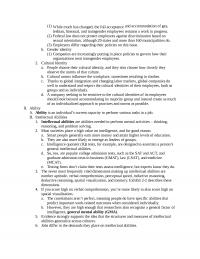
(1) While much has changed, the full acceptance and accommodation of gay, lesbian, bisexual, and transgender employees remains a work in progress. (2) Federal law does not protect employees against discrimination based on sexual orientation, although 29 states and more […]
978-0134103983 Chapter 2 Solution Manual
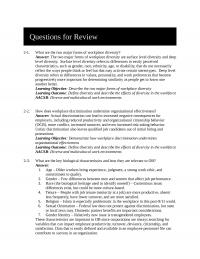
Questions for Review 2-1. What are the two major forms of workplace diversity? Answer: The two major forms of workplace diversity are surface level diversity and deep level diversity. Surface level diversity refers to differences in easily perceived diversity refers […]
978-0134103983 Chapter 20 Lecture Note
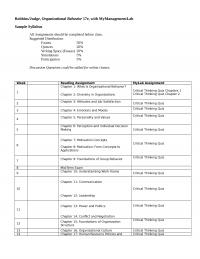
Robbins/Judge, Organizational Behavior 17e, with MyManagementLab Sample Syllabus All Assignments should be completed before class. Suggested Distribution: Exams 50% Quizzes 20% Writing Space (Essays) 20% Simulations 5% Participation 5% Discussion Questions could be added for online classes. Week Reading Assignment […]
978-0134103983 Chapter 3 Lecture Note Part 1
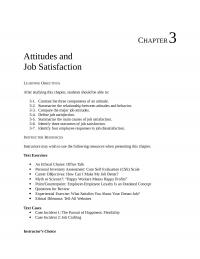
CHAPTER 3 Attitudes and Job Satisfaction LEARNING OBJECTIVES After studying this chapter, students should be able to: 3-1. Contrast the three components of an attitude. 3-2. Summarize the relationship between attitudes and behavior. 3-3. Compare the major job attitudes. 3-4. […]
978-0134103983 Chapter 3 Lecture Note Part 2
a. Those who believe their coworkers support them are more likely to engage in helpful behaviors, whereas those who have antagonistic relationships with coworkers are less likely to do so. b. Individuals with certain personality traits are also more satisfied […]
978-0134103983 Chapter 4 Lecture Note Part 1
CHAPTER 4 Emotions and Moods LEARNING OBJECTIVES After studying this chapter, students should be able to: 4-1. Differentiate between emotions and moods. 4-2. Identify the sources of emotions and moods. 4-3. Show the impact emotional labor has on employees. 4-4. […]
978-0134103983 Chapter 4 Lecture Note Part 2
a. Researchers analyzed millions of Twitter messages from individuals across the globe. 1) Exhibit 4-3 shows positive affect increased after sunrise, tended to peak at midmorning, remained stable until roughly 7 p.m., and then tended to increase again until the […]
978-0134103983 Chapter 4 Lecture Note Part 3
Myth or Science? “Smile, and the Work World Smiles with You” This exercise contributes to: Learning Objective: Differentiate between emotions and moods Learning Outcome: Discuss the importance of individual moods and emotions in the workplace AACSB: Written and oral communications; […]
978-0134103983 Chapter 4 Solution Manual
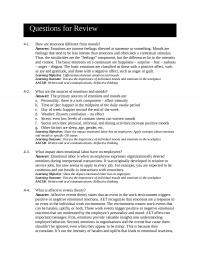
Questions for Review 4-1. How are emotions different from moods? Answer: Emotions are intense feelings directed at someone or something. Moods are feelings that tend to be less intense than emotions and often lack a contextual stimulus. Learning Objective: Differentiate […]
978-0134103983 Chapter 5 Lecture Note Part 1
CHAPTER 5 Personality and Values LEARNING OBJECTIVES After studying this chapter, students should be able to: 5-1. Describe personality, the way it is measured, and the factors that shape it. 5-2. Describe the strengths and weaknesses of the Myers-Briggs Type […]
978-0134103983 Chapter 5 Lecture Note Part 2
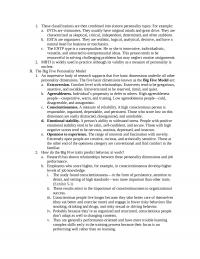
1. These classifications are then combined into sixteen personality types. For example: a. INTJs are visionaries. They usually have original minds and great drive. They are characterized as skeptical, critical, independent, determined, and often stubborn. b. ESTJs are organizers. They […]
978-0134103983 Chapter 5 Lecture Note Part 3
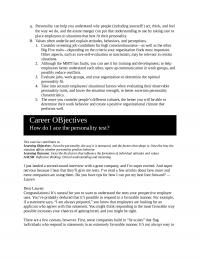
A. Personality can help you understand why people (including yourself!) act, think, and feel the way we do, and the astute manger can put that understanding to use by taking care to place employees in situations that best fit their […]
978-0134103983 Chapter 5 Solution Manual
Questions for Review 5-1. What is personality? How do we typically measure it? What factors determine personality? Answer: Personality is the sum total of ways in which an individual reacts and interacts with others, the measurable traits a person exhibits. […]
978-0134103983 Chapter 6 Lecture Note Part 1
CHAPTER 6 Perception and Individual Decision Making LEARNING OBJECTIVES After studying this chapter, your students should be able to: 6-1. Explain the factors that influence perception. 6-2. Describe attribution theory. 6-3. Explain the link between perception and decision making. 6-4. […]
978-0134103983 Chapter 6 Lecture Note Part 2
a. Idea generation: once we have collected the relevant information, it is time to translate that knowledge into ideas. i. Idea generation: the process of creative behavior in which we develop possible solutions to a problem from relevant information and […]
978-0134103983 Chapter 6 Lecture Note Part 3
a. An emphasis on rights in decision making means respecting and protecting the basic rights of individuals, such as the right to privacy, free speech, and due process. b. Focus on justice—requires individuals to impose and enforce rules fairly and […]
978-0134103983 Chapter 6 Solution Manual
Questions for Review 6-1. What are the factors that influence our perception? Answer: Perception is a process by which individuals organize and interpret their sensory impressions in order to give meaning to their environment. What one perceives Learning Objective: Explain […]
978-0134103983 Chapter 7 Lecture Note Part 1
Chapter 7 Motivation Concepts LEARNING OBJECTIVES After studying this chapter, students should be able to: 7-1. Describe the three key elements of motivation. 7-2. Compare the early theories of motivation. 7-3. Contrast the elements of self-determination theory and goal-setting theory. […]
978-0134103983 Chapter 7 Lecture Note Part 2
I. Integrating Contemporary Motivation Theories A. Exhibit 7-9 integrates much of what we know about motivation. Its basic foundation is the expectancy model. B. Expectancy theory predicts that an employee will exert a high level of effort if he/she perceives […]
978-0134103983 Chapter 7 Lecture Note Part 3
i. If outcomes are favorable and individuals get what they want, they care less about the process, so procedural justice doesn’t matter as much when distributions are perceived to be fair. b. Informational Justice. Research has shown that employees care […]
978-0134103983 Chapter 7 Solution Manual
Questions for Review 7-1. What are the three key elements of motivation? Answer: Motivation is the processes that account for an individual’s intensity, direction, and persistence of effort toward attaining a goal – specifically, an Learning Objective: Describe the three […]
978-0134103983 Chapter 8 Lecture Note Part 1
Chapter 8 Motivation: From Concepts to Applications LEARNING OBJECTIVES After studying this chapter, students should be able to: 8-1. Describe how the job characteristics model motivates by changing the work environment. 8-2. Compare the main ways jobs can be redesigned. […]
978-0134103983 Chapter 8 Lecture Note Part 2
1. Employee involvement programs differ among countries. a. A study of four countries, including the United States and India, confirmed the importance of modifying practices to reflect national culture. i. While U.S. employees readily accepted employee involvement programs, managers in […]
978-0134103983 Chapter 8 Lecture Note Part 3
For experiences, what did you think of your greatest vacation when you were on it, and what do you think of it now? Both the experience at the time and the recollection now may bring a smile to your face. […]
978-0134103983 Chapter 8 Solution Manual
Questions For Review 8-1. How does the job characteristics model motivate employees? Answer: The job characteristics model is the Hackman and Oldham’s concept that any job can be described through five core job dimensions: skill variety – requirements for Learning […]
978-0134103983 Chapter 9 Lecture Note Part 1
CHAPTER 9 Foundations of Group Behavior LEARNING OBJECTIVES After studying this chapter, students should be able to: 9-1. Distinguish between the different types of groups. 9-2. Describe the punctuated-equilibrium model of group development. 9-3. Show how role requirements change in […]
978-0134103983 Chapter 9 Lecture Note Part 2
a. Groups that are more focused on performance than learning are especially likely to fall victim to groupthink and to suppress the opinions of those who do not agree with the majority. b. Does groupthink attack all groups? No. It […]
978-0134103983 Chapter 9 Lecture Note Part 3
a. Research on faultlines has shown that splits such as these are generally detrimental to group functioning and performance. b. Overall, although research on faultlines suggests that diversity in groups is a potential double-edged sword, recent work indicates they can […]
978-0134103983 Chapter 9 Solution Manual Part 1
Teaching Notes When students have finished, select a group to share the results of their discussion. Ask other groups how their results compare or contrast to that group’s. This exercise is applicable to face-to-face classes or synchronous online classes such […]
978-0134103983 Chapter 9 Solution Manual Part 2
Questions for Review 9-1. What are the different types of groups? Answer: A group is defined as two or more individuals, interacting and interdependent, who have come together to achieve particular objectives. Groups can be either formal or informal. It […]

Human Resources Chapter 1 1 Jessica Was Unable Communicate Clearly Why She
Copyright © 2017 Pearson Education, Inc. Organizational Behavior, 17e (Robbins) Chapter 1 What Is Organizational Behavior? 1) A survey of over 2,100 CFOs across 20 industries indicated that a lack of interpersonal skills is the top reason why some employees […]

Human Resources Chapter 1 2 Identify Managers Challenges And Opportunities Applying Concepts difficulty
Copyright © 2017 Pearson Education, Inc. 55) You are bringing together faculty from different behavioral disciplines to author a new textbook in organizational behavior. Represented are professors from psychology, sociology, social psychology, anthropology, political science, and industrial engineering. Which faculty […]

Human Resources Chapter 10 1 For Virtual Teams Effective Management Should
Copyright © 2017 Pearson Education, Inc. Organizational Behavior, 17e (Robbins) Chapter 10 Understanding Work Teams 1) The current popularity of teams can be attributed to the fact that ________. A) they enable quicker accomplishment of goals than individuals B) they […]

Human Resources Chapter 10 2 Identify The Characteristics Effective Teams Analytical Thinking difficulty
Copyright © 2017 Pearson Education, Inc. 54) Which of the following statements is true regarding size of teams? A) The most effective teams have twelve to fifteen members. B) When teams have excess members, cohesiveness declines. C) As team size […]

Human Resources Chapter 10 3 The four contextual factors most significantly
Copyright © 2017 Pearson Education, Inc. 76) Jason Jones has been asked to assemble an eight-member self-managed work team of experienced employees to work on a project that combines the functional areas of research, production, marketing, and distribution. Jason is […]

Human Resources Chapter 11 1 Concept 28 Reuben Williams The Marketing Manager For
Copyright © 2017 Pearson Education, Inc. Organizational Behavior, 17e (Robbins) Chapter 11 Communication 1) Which of the following statements is true with regard to communication? A) Communication cannot be used to motivate and control employees in an organization. B) Communication […]

Human Resources Chapter 11 2 Should Use Social Media Promote The
Copyright © 2017 Pearson Education, Inc. 48) Peter is working on a project. He feels that the parameters need to be changed to meet client specifications. First, he must talk to his immediate supervisor, who will then discuss the issue […]

Human Resources Chapter 11 3 What Can Managers Make Sure That Important
Copyright © 2017 Pearson Education, Inc. 82) Treesa Mayering recently began her first job at a PR firm called Pro as a copywriter. Her job involves creating scripts for press releases, advertisements, and other media events. She has been working […]

Human Resources Chapter 12 1 Consideration Described The
Copyright © 2017 Pearson Education, Inc. Organizational Behavior, 17e (Robbins) Chapter 12 Leadership 1) Leadership is best defined as ________. A) the ability to merely project one’s abilities in the lack of actual accomplishments B) the ability to reduce the […]

Human Resources Chapter 12 2 Samuel Himself Does Carol Turner Began Care
Copyright © 2017 Pearson Education, Inc. 43) Leslie is a middle-level production manager at the California branch of ALT Corp. ALT Corp. is an automobile manufacturing company that specializes in the manufacture of heavy motor vehicles. Leslie’s job is to […]

Human Resources Chapter 12 3 Discuss The Roles Leaders Creating Ethical Organizations difficulty
Copyright © 2017 Pearson Education, Inc. 74) Describe the full range of leadership model. Answer: According to the full range of leadership model, laissez-faire is the most passive and therefore least effective of leader behaviors. Management by exception—active or passive—is […]

Human Resources Chapter 13 1 Which The following True Would Best Explain This
Copyright © 2017 Pearson Education, Inc. Organizational Behavior, 17e (Robbins) Chapter 13 Power and Politics 1) Power is a function of ________. A) goal congruency B) realization C) inheritance D) dependence E) altruism Answer: D Explanation: D) Power is a […]

Human Resources Chapter 13 2 If these fail, you can move to “harder” tactics
Copyright © 2017 Pearson Education, Inc. 54) Discuss the effectiveness of various influence tactics. Answer: The effectiveness of some influence tactics depends on the direction of influence. Rational persuasion is the only tactic effective across organizational levels. Inspirational appeals work […]

Human Resources Chapter 13 3 Concept 96 Placing The Blame For Negative Outcome
Copyright © 2017 Pearson Education, Inc. 83) Employees exhibiting which of the following features are more likely to engage in political behavior? A) lack of organizational investment B) external locus of control C) low need for power D) Machiavellian personality […]

Human Resources Chapter 14 1 Outline The Conflict Process difficulty Easy quest Category Concept9copyright
Copyright © 2017 Pearson Education, Inc. Organizational Behavior, 17e (Robbins) Chapter 14 Conflict and Negotiation 1) ________ is defined as a process that begins when one party perceives another party has or is about to negatively affect something the first […]

Human Resources Chapter 14 2 he Most Widely Cited Example Distributive
Copyright © 2017 Pearson Education, Inc. 55) A review that examined the effects of the four sets of behaviors across multiple studies found that openness and collaborating were both associated with superior group performance. Answer: TRUE Explanation: A review that […]

Human Resources Chapter 14 3 Utopia Industries Recently Set New Manufacturing Facility
Copyright © 2017 Pearson Education, Inc. 84) In a negotiation process, which of the following activities is most likely to be included in the preparation and planning step? A) justifying your original demands B) determining your best alternative to a […]

Human Resources Chapter 15 1 Therefore Increase Workers Job Satisfaction Boris Production manager
Copyright © 2017 Pearson Education, Inc. Organizational Behavior, 17e (Robbins) Chapter 15 Foundations of Organization Structure 1) The term used to describe the degree to which tasks in an organization are subdivided into separate jobs is called ________. A) social […]

Human Resources Chapter 15 2 Spain And Another China And Marketing Strategy
Copyright © 2017 Pearson Education, Inc. 47) The simple structure is most widely practiced in small businesses in which ________. A) the manager and owner are one and the same B) the number of employees is between 100 to 150 […]

Human Resources Chapter 15 3 Some Degree Mechanistic Structure Can Actually Benefit
Copyright © 2017 Pearson Education, Inc. 79) In structural terms, a virtual organization is highly centralized, with little or no departmentalization. Answer: TRUE Explanation: Virtual organizations are typically small, core organizations that outsource major business functions. In structural terms, the […]

Human Resources Chapter 16 1 Compare And Contrast Dominant
Copyright © 2017 Pearson Education, Inc. Organizational Behavior, 17e (Robbins) Chapter 16 Organizational Culture 1) Manuel is a manager for a manufacturing company in which managers are expected to fully document all decisions and in which it is important to […]

Human Resources Chapter 16 2 The Information That You
Copyright © 2017 Pearson Education, Inc. 51) The ultimate source of an organization’s culture is ________. A) its top management B) its environment C) the country in which the organization operates D) its founders E) the sociocultural backgrounds of its […]

Human Resources Chapter 16 3 Workplace Spirituality Not About Organized Religious
Copyright © 2017 Pearson Education, Inc. 88) Company chants are examples of ________. A) rituals B) material symbols C) stories D) company policies E) business strategies Answer: A Explanation: A) Company chants are examples of rituals. Rituals are repetitive sequences […]

Human Resources Chapter 17 1 False explanation Ethical Problems Have Increased Organizations Integrity
Copyright © 2017 Pearson Education, Inc. Organizational Behavior, 17e (Robbins) Chapter 17 Human Resource Policies and Practices 1) Which of the following is most likely to be used for preliminary “rough cuts” to decide whether an applicant meets the basic […]

Human Resources Chapter 17 2 List The Methods Performance Evaluation difficulty Easy quest Category
Copyright © 2017 Pearson Education, Inc. 55) Provide a workplace example of informal training for technical skills and another for problem-solving skills. Answer: Informal training is unstructured, unplanned training that takes place at the workplace. Most informal training is nothing […]

Human Resources Chapter 17 3 She Has Recently Become Stagnant Her Position
Copyright © 2017 Pearson Education, Inc. 82) Formal performance appraisals are used more frequently in countries that ________. A) value status quo and rigidity B) are low in assertiveness C) are low in uncertainty avoidance D) are low in in-group […]

Human Resources Chapter 18 1 But That Not The Case The Company
Copyright © 2017 Pearson Education, Inc. Organizational Behavior, 17e (Robbins) Chapter 18 Organizational Change and Stress Management 1) An example of change in the nature of the workforce is an increase in ________. A) college attendance B) mergers and consolidations […]

Human Resources Chapter 18 2 Which The Following Organizational
Copyright © 2017 Pearson Education, Inc. 45) What are the various organizational sources of resistance to change? 21 Answer: The various organizational sources of resistance to change are: a) Structural inertia: Organizations have built-in mechanisms—like their selection processes and formalized […]

Human Resources Chapter 18 3 Which of the following actions can extinguish risk
Copyright © 2017 Pearson Education, Inc. 81) Which of the following types of changes involves a new idea being applied to initiating or improving a product, process, or service? A) continuous improvement B) double-loop learning C) innovation D) process reengineering […]

Human Resources Chapter 2 1 Have Been Asked Work Whether
Copyright © 2017 Pearson Education, Inc. Organizational Behavior, 17e (Robbins) Chapter 2 Diversity in Organizations 1) Kimberly Ortiz strongly believes in working for a company that promotes diversity. She believes that such organizations are respectful of differences and allow employees […]

Human Resources Chapter 2 2 California His Job Often Requires Him
Copyright © 2017 Pearson Education, Inc. 50) Green Planet, an environmental organization, recently opened an office in Indonesia. The organization is currently looking for employees to staff a deforestation project in the country. They need to recruit individuals who understand […]

Human Resources Chapter 3 1 Which The following Questions Would Best Help Anderson
Copyright © 2017 Pearson Education, Inc. Organizational Behavior, 17e (Robbins) Chapter 3 Attitudes and Job Satisfaction 1) ________ refers to evaluative statements or judgments concerning objects, people, or events. A) Attitude B) Behavior C) Appearance D) Demeanor E) Performance Answer: […]

Human Resources Chapter 3 2 False explanation The Summation Job Facets Identifies Key
Copyright © 2017 Pearson Education, Inc. 54) ________ is the degree to which employees believe the organization values their contribution and cares about their well-being. A) Psychological empowerment B) Employee engagement C) Perceived organizational support D) Organizational commitment E) Job […]

Human Resources Chapter 3 3 The Management Considering various Options Curb These Counterproductive
Copyright © 2017 Pearson Education, Inc. 88) Henry Hutchins is discontent with his job but believes that his supervisor is a good man who will do whatever is necessary to reduce his dissatisfaction with the job. He has decided to […]

Human Resources Chapter 4 1 Positive Affect Mood Dimension Consisting Positive
Copyright © 2017 Pearson Education, Inc. Organizational Behavior, 17e (Robbins) Chapter 4 Emotions and Moods 1) Which of the following is a generic term that covers a broad range of feelings that people experience? A) affect B) knowledge C) insight […]

Human Resources Chapter 4 2 Under Which The Following Conditions True
Copyright © 2017 Pearson Education, Inc. 51) Under which of the following conditions, if true, would the manager’s suggestion least likely be accepted? A) The company conducts one-day offsite events on an annual basis to allow employees some time to […]

Human Resources Chapter 4 3 Galvans Manager Has Noticed That Ever Since
Copyright © 2017 Pearson Education, Inc. 86) Whether a candidate has high emotional intelligence would be a significant factor when considering a candidate for the job of a(n) ________. A) event planner who needs to coordinate with several people B) […]

Human Resources Chapter 5 1 Type Indicator Classification People With personality
Copyright © 2017 Pearson Education, Inc. Organizational Behavior, 17e (Robbins) Chapter 5 Personality and Values 1) According to Gordon Allport, ________ is defined as the dynamic organization within the individual of those psychophysical systems that determine a person’s unique adjustments […]

Human Resources Chapter 5 2 Kate Is gregarious And Comfortable Ambiguous Situations And
Copyright © 2017 Pearson Education, Inc. 53) Briefly describe the five key traits in the Big Five model. Answer: The five key traits in the Big Five personality model are as follows: a) Extraversion: The extraversion dimension captures an individual‘s […]

Human Resources Chapter 5 3 Us Private Companies And Percent All Large
Copyright © 2017 Pearson Education, Inc. 84) Describe the typical characteristics associated with a proactive personality. Answer: People with a proactive personality identify opportunities, show initiative, take action, and persevere until meaningful change occurs, compared to others who passively react […]

Human Resources Chapter 6 1 Internally Caused Behaviors Are Those Believe
Copyright © 2017 Pearson Education, Inc. Organizational Behavior, 17e (Robbins) Chapter 6 Perception and Individual Decision Making 1) ________ is the process by which individuals organize and interpret their sensory impressions in order to give meaning to their environment. A) […]

Human Resources Chapter 6 2 Michelle Came Across Amiable And Cheerful During
Copyright © 2017 Pearson Education, Inc. 57) Discuss the attribution theory. Answer: The attribution theory suggests that when we observe an individual’s behavior, we attempt to determine whether it was internally or externally caused. That determination, however, depends largely on […]

Human Resources Chapter 6 3 Explanation The Anchoring Bias Tendency Fixate Initial
Copyright © 2017 Pearson Education, Inc. 85) Emily Boyce, a project manager at an insurance firm, regularly satisfices while making decisions. She often comes across complicated problems which would take a long time to resolve. Due to the pressing deadlines, […]

Human Resources Chapter 7 1 False explanation The Two factor Theory Proposes That The
Copyright © 2017 Pearson Education, Inc. Organizational Behavior, 17e (Robbins) Chapter 7 Motivation Concepts 1) ________ is defined as the processes that account for an individual’s intensity, direction, and persistence of effort toward attaining a goal. A) Leadership B) Management […]

Human Resources Chapter 7 2 According The Equity Theory What Impact This
Copyright © 2017 Pearson Education, Inc. 59) A(n) ________ is any consequence immediately following a response that increases the probability that the behavior will be repeated. A) conclusion B) reinforcer C) goal D) objective E) referent Answer: B Explanation: B) […]

Human Resources Chapter 7 3 There Less Evidence About Interpersonal Justice lo 74
Copyright © 2017 Pearson Education, Inc. 83) Goal-setting theory strongly advocates participation in decision making, whereas MBO demonstrates that managers’ assigned goals are usually just as effective. Answer: FALSE Explanation: The only area of possible disagreement between MBO and goal-setting […]

Human Resources Chapter 8 1 The Managers Flavors Use Job Rotation Vertical
Copyright © 2017 Pearson Education, Inc. Organizational Behavior, 17e (Robbins) Chapter 8 Motivation: From Concepts to Applications 1) Job design is defined as the ________. A) degree to which the job rewards competence B) way the elements in a job […]

Human Resources Chapter 8 2 Theory View Motivation Likely Require Major Change
Copyright © 2017 Pearson Education, Inc. 44) The option of working at home at least twi days a week on a computer linked to the employer’s office is termed as ________. A) job sharing B) social loafing C) offshoring D) […]

Human Resources Chapter 8 3 Unlike Bonuses Gain sharing incentives Not Vary With Changes
Copyright © 2017 Pearson Education, Inc. 83) At Dortix, a manufacturing company, at the end of every quarter, the total production of each department is calculated and compared with the predetermined targets; the rewards for each set of divisional employees […]

Human Resources Chapter 9 1 Easy quest Category Concept 25 Which The Following Statements
Copyright © 2017 Pearson Education, Inc. Organizational Behavior, 17e (Robbins) Chapter 9 Foundations of Group Behavior 1) Which of the following is true with regard to groups? A) A group is characterized by the independence of its members. B) A […]

Human Resources Chapter 9 2 Social Loafing The Tendency For Individuals
Copyright © 2017 Pearson Education, Inc. 52) The important groups to which an individual belongs or hopes to belong are known as ________ groups. A) interacting B) reference C) organizational D) control E) nominal Answer: B Explanation: B) Reference groups […]

Human Resources Chapter 9 3 The Fact That Joe Stated That
Copyright © 2017 Pearson Education, Inc. 85) In discussing a given set of alternatives and arriving at a solution, group members tend to exaggerate the initial positions they hold. This phenomenon is called ________. A) social desirability bias B) groupshift […]