Archives: Quiz
CAS BI 447 Quiz 2
1) figure 20-1 the heart which chamber receives oxygenated blood from the pulmonary circuit? a) 5 b) 10 c) 16 d) 13 e) both 5 and 16 2) intercalated discs serve to transfer ________ from cell to cell. a) ionic […]

CAS BI 289 Midterm
1) suppose that you try to pick up an object and discover that it is much heavier than you expected. which process must occur in the muscle to increase tension so you can pick up the object? a) wave summation […]

Biology 684 Final
1) the genetically programmed death of cells is called a) differentiation. b) replication. c) apoptosis. d) metastasis. e) mitosis. 2) the deposition of calcium salts in bone tissues is referred to as a) hardening. b) ossification. c) calcification. d) osteogenesis. […]

Biology 451 Test 2
1) microfilaments a) are usually composed of myosin. b) are hollow, filamentous structures. c) anchor the cytoskeleton to integral proteins of the cell membrane. d) interact with filaments composed of tubulin to produce muscle contractions. e) are found in the […]

BISC 247
1) the organ that monitors and adjusts the composition of tubular fluid, recycles damaged spermatozoa, and is the site of sperm maturation is the a) ductus deferens. b) rete testis. c) seminal gland (seminal vesicle). d) epididymis. e) prostate gland. […]

BIOL 486
1) the three categories of connective tissues are a) connective tissue proper, fluid connective tissues, and supporting connective tissues. b) epithelial, muscle, and neural tissues. c) glandular, exocrine, and endocrine. d) connective tissue proper, cartilages, and bone. e) areolar, adipose, […]

BISC 179 Quiz 1
1) the superior and inferior temporal lines mark the points of attachment for a) muscles that stabilize the skull at the vertebral column. b) muscles that open and close the eye. c) muscles that close the mouth. d) muscles that […]
CAS BI 395 Midterm 2
1) when the popliteal vein reaches the femur, it becomes the ________ vein. a) femoral b) deep femoral c) internal iliac d) external iliac e) lumbar 2) a ligamentous connection such as an interosseous ligament is termed a a) syndesmosis. […]
BI 455 Test 2
1) the following are steps in the cell-mediated immune response. 1. several cycles of mitosis occur. 2. antigen is engulfed and presented by a macrophage. 3. cytotoxic t cells migrate to focus of infection. 4. t cells with specific receptors […]

CAS BI 732 Quiz
1) damage to the superior colliculi would interfere with the reflex ability to a) express rage. b) voluntarily move the arm. c) react to a bright light. d) react to loud noises. e) maintain proper posture. 2) the reproductive system […]

Biology 152
1) figure 12-1 the neuron the structure labeled “2” is a a) soma. b) dendrite. c) initial segment. d) perikaryon. e) axon. 2) the postganglionic fibers that connect an autonomic ganglion in the thoracic or lumbar region with the spinal […]
BIO 396
1) approximately ________ liters of peritoneal fluid are produced and reabsorbed each day. a) 10 b) 9 c) 15 d) 7 e) 20 2) figure 28-1 the male reproductive system identify the structure labeled “3” a) corpora cavernosa b) prostatic […]
Biology 480
1) which of the following is normally the greatest source acting against blood flow? a) vascular resistance b) venous pressure c) viscosity of blood d) vessel length e) turbulence 2) mary had her stomach mostly removed to try to overcome […]

BIO 859 Test 1
1) one mole of any element a) has the same mass. b) has the same weight. c) has the same number of atoms. d) has the same number of electrons. e) all of the answers are correct. 2) generally, cells […]

BIOL 447 Homework
1) bone is composed of ________ percent cells. a) 25 b) 10 c) 2 d) 15 e) 50 2) in general, autonomic tone of peripheral blood vessels increases when a) sympathetic stimulation is increased. b) sympathetic stimulation is decreased. c) […]

BISC 723
1) the cerebellum a) functions to maintain proper posture and equilibrium. b) receives input from the motor cortex and basal ganglia. c) compares intended movement to actual movement. d) if damaged leads to uncoordinated and jerky movements. e) has all […]

BIO 444 Test 2
1) the linea aspera is located on the a) humerus. b) tibia. c) ischium. d) femur. e) scapula. 2) the left ventricle pumps blood to the a) lungs. b) right ventricle. c) right atrium. d) aorta. e) pulmonary circuit. Answer: […]

CAS BI 264
1) the saclike structure that joins the ileum at the ileocecal valve is the a) appendix. b) sigmoid colon. c) rectum. d) haustra. e) cecum. 2) the smallest arterial branches are called the a) precapillary arterioles. b) arterioles. c) capillaries. […]
BIO 592 Midterm 2
1) immunity that results from antibodies that pass through the placenta from mother to fetus is called ________ immunity. a) active b) naturally acquired passive c) passive d) auto e) innate 2) mary is 50 years old and has entered […]

BISC 614 Midterm 2
1) renal blood flow is about a) 1 liter/min. b) 2 liter/min. c) 3 liter/min. d) 4 liter/min. e) 5 liter/min. 2) as a result of the long refractory period in the cardiac action potential, cardiac muscle cannot exhibit a) […]
BIOL 605
1) the main action of antidiuretic hormone is: a) increased water conservation by kidneys b) stimulate kidney cells to secrete renin c) increase urine output to remove excess fluid d) increased blood pressure by increased na+ reabsorption e) inhibition of […]

BIO 210 Quiz 1
1) the fold of peritoneum that extends out from the ovary to the wall of the pelvis is called the a) suspensory ligament. b) tunica albuginea. c) ovarian ligament. d) ovarian hilum. e) uterovesical ligament. 2) the bones that give […]

BISC 633 Test 2
1) the inferior vena cava is classified as a(n) a) large vein. b) venule. c) medium vein. d) arteriovenule. e) venous valve. 2) the type of burn that may require a skin graft is a a) first-degree burn. b) second-degree […]

CAS BI 769
1) when the ph of the extracellular fluid drops, the a) kidneys excrete more hydrogen ions. b) kidneys excrete more bicarbonate ions. c) kidneys excrete fewer bicarbonate ions. d) kidneys secrete more hydrogen ions and more bicarbonate ions. e) kidneys […]

Biology 732 Quiz 3
1) haustra are a) expansible pouches of the colon. b) strips of muscle in the colon. c) glands in the large intestine that secrete mucus. d) the source of colon hormones. e) compact feces stored in the rectum. 2) the […]

BIOL 377
1) an excess of hydrogen ions in the body fluids can have fatal results because this can a) break chemical bonds. b) change the shape of large complex molecules, rendering them nonfunctional. c) disrupt tissue functions. d) change body fluid […]

BIO 299 Test 1
1) when does oxyhemoglobin form during respiration? a) during external respiration b) immediately after carbon dioxide enters the blood c) when the chloride shift occurs d) during pulmonary ventilation e) during internal respiration 2) all of the following are true […]

CAS BI 886
1) the largest cartilage of the larynx is the ________ cartilage. a) thyroid b) cricoid c) cuneiform d) arytenoid e) epiglottic 2) brunner glands are characteristic of the a) stomach. b) duodenum. c) jejunum. d) ileum. e) colon. Answer: b […]
BI 342 Test 1
1) a patient with a connective tissue disease experiences increased pulmonary vascular resistance. over a period of time you would expect to observe a) increased cardiac output from the right ventricle. b) increased cardiac output from the left ventricle. c) […]

BISC 128 Test 1
1) the connective tissue fibers of the myocardium a) add strength and prevent overexpansion of the heart. b) help distribute the forces of contraction. c) provide elasticity to help return the heart to its normal size. d) provide physical support […]

BISC 715 Homework
1) the beta cells of the pancreatic islets produce a) insulin. b) glucagon. c) somatostatin. d) cortisol. e) peptide p. 2) a nucleotide consists of a) a five-carbon sugar and phosphate group. b) a five-carbon sugar and a nitrogenous base. […]

Biology 557 Quiz 1
1) all target cells a) have hormone receptors. b) respond to electrical signals. c) secrete hormones. d) produce their own hormones. e) are in the blood. 2) the tract that links the cerebellum with the pons is the a) superior […]
BI 622
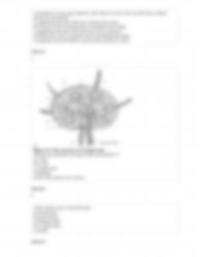
1) hundreds of years ago explorers often died of scurvy. how can this bone-related disease be prevented? a) supplement the diet with more calcium from meat. b) increase levels of testosterone to stimulate bone repair. c) supplement the diet with […]

BISC 460
1) the chin is ________ to the nose. a) anterior b) superior c) posterior d) inferior e) medial 2) stem cells that can form all types of lymphocytes are concentrated in the a) circulation. b) thymus. c) red marrow. d) […]

CAS BI 480 Quiz 3
1) the pyramids on the ventral surface of the medulla oblongata are formed by fibers of the ________ tracts. a) corticospinal b) corticobulbar c) reticulospinal d) vestibulospinal e) tectospinal 2) most sympathetic effector junctions release norepinephrine but a significant number […]

BIOL 769 Quiz 2
1) the presence of a recessive gene can be detected (seen) only if the individual is a) homozygous recessive. b) heterozygous dominant. c) heterozygous recessive. d) homozygous dominant. e) epistatic recessive. 2) cells that engulf bacteria or cell debris within […]

Biology 792 Midterm 1
1) follicle-stimulating hormone a) stimulates the thyroid follicles. b) stimulates ovulation. c) stimulates maturation of primordial follicles in the ovary. d) is important only in females. e) all of the answers are correct. 2) sensory information is processed and relayed […]
psyc 722 midterm
1) ________ is characterized by an increased airway resistance and decreased ventilation. 2) ruby is 77 years old and can no longer control her urination. what changed in the reflex pathway that used to control her urination? answer: micturition normally […]
psyc 752 midterm
1) ________ are short segments of intestine that alternately contract and relax. they are responsible for ________. 2) the enteric nervous system and the brain have several similarities. what are they? answer: see “the enteric nervous system can act independently” […]

psych 814
1) individuals with mcardle’s disease cannot break down glycogen. how would this affect substrate utilization during exercise? 2) the inferior point of the heart is called the ________. answer: apex 3) sabrina’s resting heart rate is 80 beats per minute, […]
psyc 694
1) 2) what are the po2 and pco2 in the alveoli, artery, peripheral tissue, and veins? explain why the po2 and pco2 change. answer: see figure 18.2 and the “gas exchange in the lungs and tissues” section of the chapter. […]
psych 611 test 1
1) the ________ principle states that the properties of the action potential are independent of the relative strength of the depolarizing stimulus. 2) substances that can trigger an immune response are known as ________. answer: antigens 3) explain the polar […]
psyc 536 quiz 2
1) the cellular mechanisms for renal handling of h+ and hco3- involve several membrane transporters; name three. 2) anne frank wrote a diary about the years she and a few others spent in hiding from the nazis during world war […]
psy 309
1) to maintain ________, the body uses a combination of simple diffusion across small distances; wide spread distribution of molecules through the circulatory system and rapid, specific delivery of messages by the nervous system. 2) the high ________ osmolarity allows […]
psy 815
1) what is a hypothesis? what are the steps involved in following the scientific method? how does one distinguish the dependent variable from the independent variable in an experiment? how are each of these represented on a graph? 2) kathy […]
psy 690 test
1) transcription factors are proteins whose binding to the ________ region for a gene can ________ (increase) or ________ (decrease) expression of that gene. 2) how do the following relate to nervous system development and/or healing? synaptic plasticity, neuroglia, neurotrophic […]

psy 169 midterm 2
1) ________ hearing loss occurs because of damage to the structure of the inner ear. 2) carrier proteins operating at their maximum rate are said to be ________. answer: saturated 3) by binding to the ca2+ channel proteins, drugs known […]
psyc 199 homework
1) list the following in order of increasing mass: atom, molecule, proton, neutron, electron. 2) red blood cells in the circulation live for about ________. the short life span is due to ________. answer: 120 days; increasing fragility of the […]

psy 503 midterm 2
1) cholinergic muscarinic receptors are found at the ________ in the ans. 2) list and explain the three types of substances transported by the blood. what is the source of each type? answer: nutrients, water, and gases from the external […]

psychology 407 test
1) if an axon has an absolute refractory period of 2 msec, what is the maximum frequency of action potential (ap) production in that neuron? 2) your roommate sally has just found out her mother has high cholesterol. knowing that […]