Archives: Quiz
BIO 846
1) the chloride shift occurs in order to a) force oxygen out of the blood and into tissues. b) transport bicarbonate ions into the blood plasma. c) produce salt for the cytosol of blood cells. d) produce carbonic acid. e) […]
BISC 431 Test 1
1) a drug that blocks the action of the hormone cholecystokinin would affect a) acid production by the stomach. b) the composition of pancreatic secretions. c) the delivery of bile. d) digestion of lipids and proteins. e) all of the […]
BI 541
1) an area of the retina that contains only cones and is the site of sharpest vision is the a) outer segment. b) inner segment. c) fovea. d) optic disc. e) tapetum lucidum. 2) mary is tested for the amount […]
Biology 272
1) sensory nerve cells, parasympathetic ganglia, and sympathetic postganglionic fibers can be found in the a) mucosa. b) serosa. c) adventitia. d) submucosal plexus. e) lamina propria. 2) the foramen ovale in the fetal heart is located in the a) […]
BIOL 271 Midterm
1) drugs that have effects similar to those of sympathetic activation are called sympathomimetic drugs. which of the following would you not expect to observe in a person who has taken a sympathomimetic drug? a) sweating b) increased heart rate […]
BI 109 Quiz 3
1) secondary ossification centers occur a) in the diaphysis. b) at the periosteum. c) in the epiphyses. d) in the metaphyses. e) in dermal bones. 2) the spinal cord consists of five regions and ________ segments. a) 5 b) 12 […]
BIO 641 Quiz
1) scarring of the rete testis would interfere with a man’s ability to a) secrete testosterone. b) regulate spermatogenesis. c) ejaculate. d) produce an alkaline semen. e) deliver spermatozoa to the epididymis. 2) the pituitary hormone that triggers the release […]
BIOL 865 Quiz 1
1) all of the following occur during the postabsorptive state, except that a) glycogenolysis occurs in the liver. b) levels of blood glucose are elevated. c) ketone bodies may be formed. d) fat mobilization occurs. e) gluconeogenesis occurs in the […]
BIOL 834 Final
1) damage to the pectoralis major would interfere with a person’s ability to a) extend the forearm. b) abduct the humerus. c) adduct the humerus. d) elevate the scapula. e) rotate the elbow. 2) if the sodium-potassium pumps in the […]
BISC 506 Test 1
1) in a ________ muscle, the fascicles are concentrically arranged around an opening. a) convergent b) parallel c) straight d) pennate e) circular 2) lymphocytes a) are actively phagocytic. b) destroy red blood cells. c) respond to antigens. d) are […]
CAS BI 405
1) powerful peristaltic contractions that occur a few times each day in the colon are called a) segmentation. b) pendular movements. c) haustral churning. d) defecation. e) mass movements. 2) tom stumbles and injures his hallux. what part of his […]
CAS BI 671 Homework
1) which of the following is arranged in correct order from the most complex to the simplest? a) cellular, tissue, molecular, system, organ, organism b) molecular, cellular, tissue, organ, system, organism c) tissue, cellular, molecular, organ, system, organism d) organ, […]
BI 885
1) joints in which adjacent bones are joined by a strong interosseous ligament are a) symphyses. b) synarthroses. c) syndesmoses. d) diarthroses. e) synchrondroses. 2) figure 19-1 the origins and differentiation of formed elements identify the cell labeled “3” a) […]
BISC 146 Test 1
1) which of the following is not one of the forms of fascicle organization? a) perpendicular b) parallel c) convergent d) pennate e) circular 2) the following is a list of some airways. 1. secondary bronchus 2. bronchioles 3. alveolar […]
CAS BI 577 Test
1) the ________ receive visual input from the lateral geniculates. a) substantia nigra b) red nuclei c) cerebral peduncles d) superior colliculi e) inferior colliculi 2) sandwiched between the layer of circular and longitudinal muscle in the muscularis externa is […]
Biology 114 Test
1) opening of sodium channels in the axon membrane causes a) depolarization. b) repolarization. c) hyperpolarization. d) increased negative charge inside the membrane. e) inhibition. 2) figure 15-1 spinothalamic tracts identify the structure labeled “5” a) thalamus b) cerebral cortex […]
BI 445 Test 2
1) which of the following labels best matches osteocyte? a) stem cell b) dissolves matrix c) mature bone cell d) secretes organic matrix 2) how would a molecule that mimics camp affect an olfactory receptor? a) it would increase sodium […]
BIO 862 Test
1) the hormone calcitonin functions to a) stimulate osteoclast activity. b) decrease the rate of calcium excretion. c) decrease the rate of calcium absorption. d) decrease the level of calcium ion in the blood. e) stimulate osteoblasts and inhibit osteoclasts. […]
CAS BI 827
1) which of the following is a known effect of thyroid hormone on peripheral tissues? a) increased oxygen consumption b) increased heart rate c) increased sensitivity to adrenergic stimulation d) increased body temperature e) all of the answers are correct. […]
Biology 449 Quiz 1
1) menstruation is triggered by a drop in the levels of a) fsh. b) lh. c) relaxin. d) progesterone. e) inhibin. 2) the uterine phase that develops because of a fall in progesterone levels is a) the menses. b) the […]
BIOL 308 Test 1
1) within each hemisphere, deep to the floor of the lateral ventricle, you will find the a) anterior commissures. b) basal nuclei. c) motor association areas. d) visual cortex. e) auditory cortex. 2) all of the following are true of […]
BIO 123 Quiz 1
1) which of the following descriptions best matches the term uterine tube? a) has ciliated epithelium b) has stratified squamous epithelium c) covers the glans penis or glans clitoris d) where mature sperm are stored and processed e) passes through […]
Biology 507
1) figure 13-1 the spinal cord identify the structure labeled “4” a) posterior gray column b) dorsal gray ganglion c) posterior white column d) posterior gray horn e) anterior gray horn 2) ________ generally causes a rapid increase in the […]
BIO 817 Quiz 2
1) the thoroughfare channel ends at the a) artery. b) arteriole. c) capillary. d) venule. e) vein. 2) if the disulfide bonds in igg were broken, how many protein chains would be set free? a) 2 b) 4 c) 6 […]
BIO 139 Quiz 1
1) each of the following hormones is an amino acid derivative, except a) epinephrine. b) norepinephrine. c) thyroid hormone. d) thyroid-stimulating hormone. e) melatonin. 2) opioids relieve pain by blocking the release of a) substance o. b) substance p. c) […]
BIOL 331 Test 1
1) which of the following statements is (are) true regarding human muscles? a) most have both slow and fast fibers. b) slow fibers are abundant in the calf muscles. c) eye muscles are composed entirely of fast fibers. d) slow […]
BISC 546 Test 2
1) the advantage of having many nuclei in a skeletal muscle fiber is a) the ability to contract. b) the ability to produce more atp with little oxygen. c) the ability to store extra dna for metabolism. d) the ability […]
BIO 457 Quiz 1
1) in response to hemorrhage, there is a) peripheral vasodilation. b) increased parasympathetic stimulation of the heart. c) mobilization of the venous reserve. d) constriction of elastic arteries to maintain blood pressure. e) all of the answers are correct. 2) […]
BISC 619 Test 1
1) which of these descriptions best matches the term duodenal ampulla? a) where pancreatic juice and bile enter duodenum b) carries absorbed sugars and amino acids c) stimulates pancreas to secrete bicarbonate-rich fluid d) causes gallbladder to contract e) stimulates […]
CAS BI 829 Quiz 1
1) if there were no paranasal sinuses, all of the following would be true, except a) the skull would be heavier. b) stronger neck muscles would be required. c) less mucus in the nasal cavity. d) reduced ability to trap […]
BIO 481 Midterm
1) fat is stored within the a) medullary cavity. b) metaphysis. c) spongy bone. d) epiphysis. e) diaphysis. 2) during implantation, the a) syncytial trophoblast erodes a path through the endometrium. b) inner cell mass begins to form the placenta. […]
BIOL 644 Test 2
1) the layer of the skin that contains the blood vessels and nerves that are closest to the surface of the skin is the ________ layer. a) papillary b) reticular c) epidermal d) subcutaneous e) hypodermal 2) transferrin is an […]
Biology 463 Test
1) in meningitis, a) inflammation of the meninges occurs. b) bacteria can be the cause. c) viruses can be the cause. d) csf flow can be disrupted. e) all of the answers are correct. 2) more than half the heat […]
BIOL 272 Quiz
1) secondary spermatocytes each contain a) 23 chromosomes. b) 23 pairs of chromosomes. c) twice the diploid number of chromosomes. d) 46 pairs of chromosomes. e) 46 chromosomes. 2) which of the following muscles compresses the abdomen? a) diaphragm and […]
BIO 666 Homework
1) the thin filaments of striated muscle are made primarily of which protein(s)? a) actin b) tropomyosin c) troponin d) nebulin e) all of the answers are correct. 2) as blood leaves the right ventricle it passes through the ________ […]
CAS BI 100
1) the neonatal period extends a) for the first 24 hours of life. b) for the first month of life. c) until the first birthday. d) from day 1 until day 60. e) until breast feeding stops. 2) figure 25-1 […]
Biology 666 Test 2
1) the inherited brain disorder huntington’s disease is caused by the destruction of basal nuclei that use different neurotransmitters. one neurotransmitter is ________ and the other is ________. a) acetylcholine; serotonin b) serotonin; norepinephrine c) norepinephrine; serotonin d) acetylcholine; gaba […]
BISC 306 Quiz 3
1) when atoms complete their outer electron shell by sharing electrons, they form a) ionic bonds. b) covalent bonds. c) hydrogen bonds. d) anions. e) cations. 2) puffer fish poison blocks voltage-gated sodium channels like a cork. what effect would […]
Biology 362
1) plasma composes about ________ percent of whole blood and water composes ________ percent of the plasma volume. a) 55; 92 b) 92; 7 c) 92; 55 d) 45; 55 e) 50; 50 2) when renin is released from the […]
BI 719 Test 1
1) muscles that extend the elbow attach to the a) coronoid process. b) radial tuberosity. c) olecranon process. d) medial epicondyle. e) lateral epicondyle. 2) if you bruised your gluteus maximus, you would expect to experience discomfort when a) flexing […]
BISC 425 Midterm 1
1) the majority of glomeruli are located in the ________ of the kidney. a) vasa recta b) medulla c) cortex d) pelvis e) calyces 2) a suture is an example of a(n) a) synarthrosis. b) syndesmosis. c) symphysis. d) diarthrosis. […]
BIO 183 Final
1) each of the following organ systems excretes wastes to some degree, except the ________ system. a) urinary b) integumentary c) digestive d) endocrine e) respiratory 2) the action of thyroid hormone on a target cell involves all these steps […]
BISC 753 Homework
1) as blood travels from arteries to veins, a) viscosity of blood changes. b) pressure increases. c) diameter of the blood vessels gets progressively smaller. d) pressure decreases. e) flow becomes turbulent. 2) all of the following are true of […]
BISC 102 1 the disease
1) the disease osteomalacia causes calcium loss from the skeleton, which would result in bones that are a) more resistant to compression. b) stronger and heavier. c) stronger and contain more spongy bone. d) weaker and more flexible. e) weaker […]
BI 650 Quiz 2
1) the bones that form the fingers are the a) carpals. b) tarsals. c) metacarpals. d) metatarsals. e) phalanges. 2) which of the following would you expect to see in increased numbers in a peripheral blood sample after donating a […]
BI 868 Quiz 3
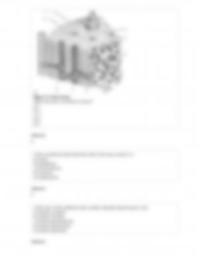
1) figure 6-1 bone tissue which structure is termed an osteon? a) 1 b) 2 c) 3 d) 4 e) 5 2) the synarthrosis that binds the teeth to the bony sockets is a a) suture. b) gomphosis. c) synchondrosis. […]
Biology 705 Midterm 1
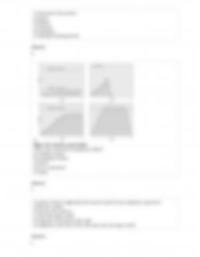
1) interstitial cells produce a) sperm. b) inhibin. c) nutrients. d) androgens. e) androgen-binding protein. 2) figure 10-2 muscle contractions what is the contraction in graph (a) called? a) complete tetanus b) incomplete tetanus c) twitch d) wave summation e) […]
CAS BI 536 Midterm 1
1) which of the following contains a remnant of the fetal umbilical vein? a) falciform ligament b) greater omentum c) mesentery proper d) lesser omentum e) diaphragm 2) antidiuretic hormone a) is released from the posterior pituitary gland. b) stimulates […]
BI 153 Midterm 2
1) which of the following can be calculated if the tidal volume and respiratory rate are known? a) minute volume b) inspiratory reserve volume c) expiratory reserve volume d) anatomical dead space e) forced vital capacity 2) charlie is badly […]
CAS BI 164 Test
1) the right pleural cavity contains: a) heart b) trachea c) left lung d) right lung e) both lungs 2) the kidneys not only remove waste products from the blood, they also assist in the regulation of a) blood volume. […]