1) the advantage of having many nuclei in a skeletal muscle fiber is
a) the ability to contract.
b) the ability to produce more atp with little oxygen.
c) the ability to store extra dna for metabolism.
d) the ability to produce large amounts of the muscle proteins needed for growth and
repair.
e) the ability to produce nutrients for muscle contraction.
2) the palatine tonsils lie in the walls of the
a) nasopharynx.
b) oropharynx.
c) laryngopharynx.
d) larynx.
e) nasal cavity.
3) the most important factor in decreasing the intracellular concentration of calcium ion
after contraction is
a) active transport of calcium across the sarcolemma.
b) active transport of calcium into the sarcoplasmic reticulum.
c) active transport of calcium into the synaptic cleft.
d) diffusion of calcium out of the cell.
e) diffusion of calcium into the sarcoplasmic reticulum.
4)
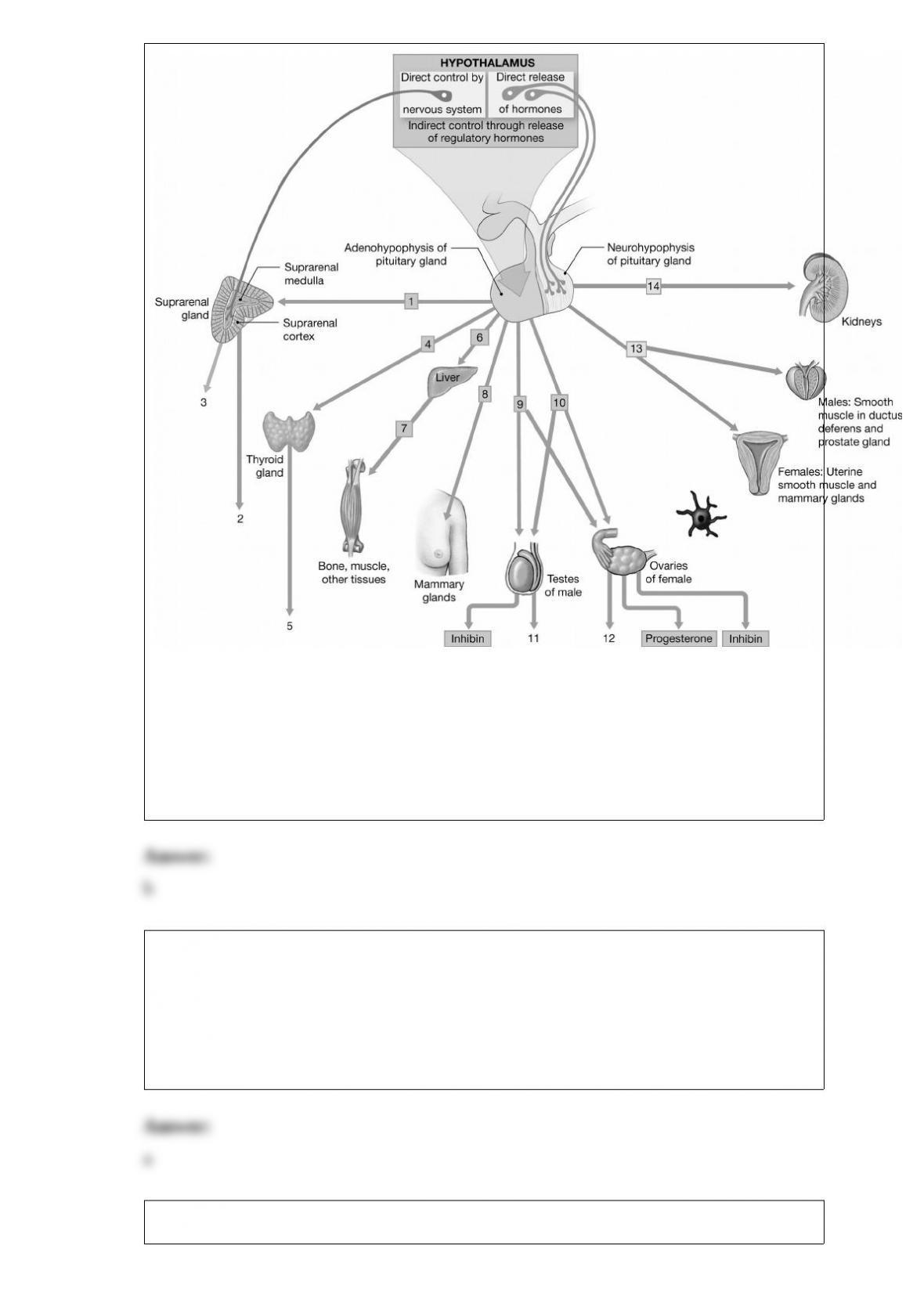
figure 18-1 pituitary hormones and their targets
identify the hormone labeled “4”
a) thyroid-releasing hormone
b) thyroid-stimulating hormone
c) thyroxin
d) thyrotropin
e) calcitonin
5) peripheral adaptation ________ the number of action potentials that reach the cns.
a) decreases
b) increases
c) stabilizes
d) neutralizes
e) amplifies
6) if a cell has 18 chromosomes and undergoes mitosis how many chromosomes would
each daughter cell have?
a) cannot be determined
b) 9
c) 36
d) 23
e) 18
7) the largest and strongest articulation at the elbow is the
a) humero-ulnar joint.
b) ulnar joint.
c) ulnaradial joint.
d) radial joint.
e) humeroradial joint.
8) the pancreas produces
a) lipases and amylase.
b) nucleases.
c) peptidases and proteinases.
d) sodium bicarbonate.
e) all of the answers are correct.
9) the u-shaped segment of the nephron is the
a) nephron loop (loop of henle).
b) proximal convoluted tubule.
c) distal convoluted tubule.
d) collecting loop.
e) minor calyx.
10) the powerful abductor muscle of the upper arm is the
a) supraspinatus.
b) subscapularis.
c) deltoid.
d) coracobrachialis.
e) teres major.
11) the cells responsible for the production of circulating immunoglobulins are
________ cells.
a) nk
b) plasma
c) helper t
d) thymus
e) liver
12) in order to maintain cellular homeostasis, an exchange pump ejects ________ ions
from the cell and imports ________ ions.
a) potassium; calcium
b) sodium; calcium
c) potassium; sodium
d) sodium; potassium
e) calcium; sodium
13) the bulk of each tooth consists of a mineralized matrix similar to that of bone called
a) enamel.
b) cementum.
c) dentin.
d) pulp.
e) periodontium.
14) the ________ is a remnant of an important fetal blood vessel that once linked the
pulmonary and systemic circuits.
15) the common term for the buccal region is the ________.
16) the branch of the common iliac artery that enters the pelvic cavity is the ________.
17) the small intestine and most of the large intestine receive blood from the ________.
18) urine is carried from the urinary bladder to the outside of the body by the ________.
19) what is the difference between neurons and neuroglia?
20) while playing lacrosse, frank took a blow to the back of his neck. this caused
swelling of the posterior spinal cord at c7, t1. what tract lies in this area? what signs
might you expect frank to show while the swelling persists?