Archives: Quiz
BISC 875
1) the food pyramid recommends many servings a day of dark-green and orange vegetables. which vitamin is particularly abundant in this food group? a) a b) c c) e d) folic acid e) all of the answers are correct. 2) […]
Biology 611 Midterm
1) parkinson’s disease is the result of a) inadequate production of gaba by neurons in the basal nuclei. b) decreased levels of acetylcholine from neurons in the substantia nigra. c) inadequate production of dopamine by substantia nigra neurons. d) hyperactivity […]
Biology 796 Quiz 3
1) which of the following regions corresponds to the buttocks? a) pelvic b) cephalic c) gluteal d) lumbar e) thoracic 2) the pituitary hormone that stimulates the interstitial cells to secrete testosterone is a) fsh. b) lh. c) acth. d) […]
Biology 490 Midterm 1
1) the partial pressure of oxygen in arterial blood is approximately a) 40 mm hg. b) 45 mm hg. c) 50 mm hg. d) 70 mm hg. e) 100 mm hg. 2) complications related to arteriosclerosis account for roughly ________ […]
BIOL 807
1) figure 7-2 typical vertebra (inferior view) identify the structure labeled “2” a) transverse process b) superior articular process c) pedicle d) inferior articular process e) lamina 2) figure 20-1 the heart identify the structure labeled “21” a) bicuspid valve […]
CAS BI 699 Test 2
1) the alveolar process of the mandible a) supports the upper teeth. b) supports the lower teeth. c) anchors the tongue. d) is part of the temporomandibular joint. e) articulates with the hyoid bone. 2) b cells are primarily activated […]
BIO 842 Quiz 3
1) blood returning to the heart from the pulmonary circuit first enters the a) right atrium. b) right ventricle. c) left atrium. d) left ventricle. e) conus arteriosus. 2) each of the following structures is associated with the sphenoid bone, […]
Biology 893 Midterm 1
1) bill contracts a viral disease that destroys cells in the posterior gray horns in his spinal cord. as a result, which of the following would you expect? a) loss of sensation in his torso b) inability to breathe c) […]
BIOL 892 Midterm 1
1) in adults, erythropoiesis exclusively takes place in a) the liver. b) yellow bone marrow. c) red bone marrow. d) the spleen. e) lymphoid tissue. 2) sensory innervation of the lower teeth and gums is by the ________ nerve. a) […]
Biology 242 Test 1
1) which of these is not one of the facial bones? a) frontal b) maxilla c) vomer d) mandible e) zygomatic 2) compounds that can be synthesized or broken down by chemical reactions inside the body are called a) inorganic […]
BIO 653
1) whole blood for testing in a clinical laboratory is usually collected from a) the heart. b) a superficial artery. c) a superficial vein. d) a capillary. e) an arteriole. 2) if an individual carries two different alleles for the […]
BIO 744
1) taste buds are monitored by cranial nerves a) ix, x, xi. b) vii, viii, ix. c) vii, ix, x. d) v, vii, ix. e) ix, xi, xii. 2) cerebrospinal fluid enters the blood circulation at the a) jugular veins. […]
BISC 325 Quiz 3
1) the ________ supports all but 25 cm of the small intestine and provides stability and limited movement. a) falciform ligament b) greater omentum c) mesentery proper d) lesser omentum e) diaphragm 2) figure 19-1 the origins and differentiation of […]
BISC 614 Final
1) the digestive tract is also referred to as the a) alimentary canal. b) esophagus. c) gi tract. d) alimentary canal and the gi tract. e) all of the answers are correct. 2) red blood cell production is regulated by […]
BIO 411 Quiz
1) the region where blood vessels enter the ovary is called the a) infundibulopelvic ligament. b) tunica albuginea. c) ovarian umbilical cord. d) ovarian hilum. e) ovarian ligament. 2) after heavy exercise, if energy reserves in a muscle are depleted, […]
BIO 247
1) many medications introduced into the bloodstream cannot directly affect the neurons of the cns because a) oligodendrocytes form a continuous myelin sheath around the axons. b) the endothelium of cns capillaries forms a blood-brain barrier. c) the neurolemma is […]
CAS BI 226 Test 2
1) ________ is an inherited abnormality that affects the development and structure of kidney tubules. a) glomerulonephritis b) polycystic kidney disease c) calculus d) renal failure e) hematuria 2) henry’s law states that a) gas volume and temperature are directly […]
BISC 405 Final
1) when cartilage is produced at the epiphyseal side of the metaphysis at the same rate as bone is deposited on the opposite side, bones a) grow longer. b) grow wider. c) become shorter. d) become more porous and weaker. […]
BIO 667 Quiz 3
1) in adults, the only site of red blood cell production, and the primary site of white blood cell formation, is the a) liver. b) spleen. c) thymus. d) red bone marrow. e) yellow bone marrow. 2) clusters of ganglionic […]
Biology 172
1) which of the following muscles has its origin on the hyoid and inserts on the tongue? a) hyoglossus b) lateral pterygoideus c) sternohyoid d) thyrohyoid e) geniohyoid 2) during gestation, contraction of the myometrium is inhibited by ________, produced […]
BIO 403 Test
1) terms of anatomical direction are used to describe a) one body part in relation to another. b) surgical procedures. c) a supine position. d) the nervous system. e) living matter. 2) steroid hormones a) are proteins. b) cannot diffuse […]
CAS BI 380 Quiz 3
1) gastric pits are a) ridges in the body of the stomach. b) involved in absorption of liquids from the stomach. c) openings into gastric glands. d) acid scars in the esophagus. e) hollows where proteins are stored. 2) the […]
CAS BI 224
1) a hormone that can lower blood levels of calcium ion is a) parathyroid hormone. b) thyroxine. c) calcitonin. d) glucagon. e) oxytocin. 2) the surface of articular cartilage is a) slick. b) flat. c) smooth. d) rough. e) both […]
BISC 732 Quiz
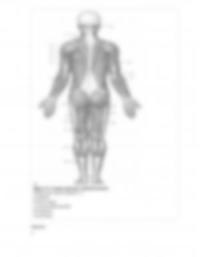
1) figure 11-2 major posterior skeletal muscles identify the muscle labeled “2” a) deltoid b) teres major c) sternocleidomastoid d) trapezius e) anconeus Answer: a 2) the layer of the meninges in direct contact with the spinal cord is the […]
BIO 879 Quiz
1) when carotid and aortic baroreceptors slow their discharge, a) heart rate increases. b) heart rate decreases. c) stroke volume increases. d) both heart rate and stroke volume increase. e) the heart rate will decrease to lower blood pressure. 2) […]
BISC 584
1) the muscle weakness of myasthenia gravis results from a) insufficient acetylcholine release from presynaptic vesicles. b) loss of acetylcholine receptors in the end-plate membrane. c) the motor neuron action potential being too small to shock the muscle fibers. d) […]
CAS BI 839 Quiz 2
1) which of the following is located closest to the jugular notch? a) medial end of scapula b) medial end of clavicle c) lateral end of scapula d) lateral end of clavicle e) xiphoid process 2) the spinal tract that […]
BI 625 Final
1) cartilage is separated from surrounding tissues by a fibrous a) perichondrium. b) lacunae. c) periosteum. d) canaliculi. e) matrix. 2) tissue factor (factor iii) is a factor in the ________ pathway. a) extrinsic b) intrinsic c) common d) retraction […]
CAS BI 672 Test
1) the reduction of friction between the parietal and visceral surfaces of an internal cavity is the function of a) cutaneous membranes. b) mucous membranes. c) serous membranes. d) synovial membranes. e) the lamina propria. 2) the regulation of awake-asleep […]
Biology 509 Quiz
1) during the cori cycle, in the liver a) glucose is released from glycogen. b) lactic acid is produced from glucose. c) glucose is produced from lactic acid. d) lactic acid is produced from pyruvic acid. e) lactic acid is […]
BIO 758 Test 1
1) chemoreceptors are located in all of the following, except a) carotid bodies. b) aortic bodies. c) in the skin. d) the organs of taste. e) the organs of smell. 2) each of the following nerves originates in the lumbar […]
CAS BI 645
1) blood leaves the right ventricle by passing through the a) aortic valve. b) pulmonary valve. c) mitral valve. d) tricuspid valve. e) bicuspid valve. 2) when cholinergic receptors are stimulated, a) sodium ions enter the postsynaptic neuron. b) sodium […]
BI 386
1) which of these phrases most aptly describes “muscle insertion”? a) broad tendon sheet b) connective tissue that surrounds a single muscle fiber c) tendon attachment that doesn’t move d) tendon attachment that moves e) connective tissue that surrounds an […]
BI 599 Test 2
1) the major cation in cytoplasm is a) sodium. b) potassium. c) calcium. d) magnesium. e) iron. 2) urine is eliminated through the a) liver. b) urinary bladder. c) kidney. d) ureter. e) urethra. Answer: e 3) the medullary cords […]
Biology 528
1) examples of sensory stimuli include a) touch. b) warmth. c) pain. d) vibration. e) all of the answers are correct. 2) wharton’s jelly is a form of a) marfan’s syndrome. b) mucous connective tissue. c) ground substance. d) collagen […]
Biology 498
1) what would the complimentary (matching) mrna and trna molecules be from a dna molecule that has the following triplets? coding strand: atg-caa template strand:tac-gtt a) mrna: aug-caa,trna: tac-gtt b) mrna: atg-caa,trna: tac-gtt c) mrna: uac-guu,trna: aug-caa d) mrna: tac-gtt,trna: […]
BIOL 377 Test 2
1) if fertilization occurs, the ________ is maintained because the embryo secretes ________. a) corpus albicans; human chorionic gonadotrophin b) corpus luteum; luteinizing hormone c) corpus cavernosum; human chorionic gonadotrophin d) corpus luteum; human chorionic gonadotrophin e) corpus albicans; placental […]
BIO 297 Homework
1) the activities of the digestive system are regulated by a) hormones. b) parasympathetic and sympathetic neurons. c) the contents of the digestive tract. d) intrinsic nerve plexuses. e) all of the answers are correct. 2) the site where fertilization […]
BIO 278 Quiz 1
1) alpha cells are to ________ as beta cells are to ________. a) glucagon; insulin b) somatostatin; insulin c) insulin; glucagon d) glucagon; somatostatin e) pancreatic polypeptide; insulin 2) which of the following is a property of the mamillary bodies? […]
BISC 768
1) the ion that triggers the release of acetylcholine into the synaptic cleft is a) sodium. b) potassium. c) calcium. d) chloride. e) magnesium. 2) reactions within ________ provide most of the energy needed by a typical cell. a) cytoplasm […]
BIO 706
1) the anterior muscle of facial expression that inserts widely on the periosteum of the mandible is the a) temporalis. b) masseter. c) lateral pterygoideus. d) medial pterygoideus. e) platysma. 2) the ________ passes through the ________. a) vagus nerve; […]
BISC 208 Midterm 2
1) branches of the thoracic aorta include all of the following, except the ________ arteries. a) basilar b) superior phrenic c) esophageal d) bronchial e) intercostal 2) the potential difference across the cell membrane is due to the separation of […]
CAS BI 769 Homework
1) figure 11-2 major posterior skeletal muscles identify the muscle labeled “12” a) soleus b) gastrocnemius c) sartorius d) tibialis posterior e) peroneus longus Answer: b 2) the urethral meatus is an opening in the a) prepuce. b) glans penis. […]
BIO 760 Midterm 2
1) hydrocephalus or “water on the brain” may result from a) deficient production of cerebrospinal fluid. b) excessive production of cerebrospinal fluid. c) blockage of circulation of csf. d) excessive water intake. e) blockage of csf circulation or excessive csf […]
BIO 888 Test 2
1) the cardiovascular reflexes are based in the a) cerebrum. b) mesencephalon. c) cerebellum. d) medulla oblongata. e) spinal cord. 2) muscles known as the pharyngeal constrictors function in a) mastication. b) moving the tongue. c) swallowing. d) esophageal peristalsis. […]
BIOL 554 Quiz
1) microtubules have which of the following functions? a) they form structural components of organelles. b) they move chromosomes during cell division. c) they provide a mechanism for changing the cell shape. d) molecular motors move along them. e) all […]
BISC 215
1) the weakest bond between two atoms is the ________ bond. a) ionic b) covalent c) polar d) nonpolar e) hydrogen 2) the odontoid process is found on the a) atlas. b) axis. c) sacrum. d) coccyx. e) ribs. Answer: […]
BIOL 762
1) indicate which of these lists contains only trace elements. a) sulfur, chlorine, oxygen b) selenium, hydrogen, calcium c) boron, oxygen, carbon d) silicon, fluorine, tin e) cobalt, calcium, sodium 2) the most abundant component of plasma is a) ions. […]
BISC 268
1) figure 10-1 skeletal muscle fiber what is released from the structure labeled “9”? a) sarcoplasm b) acetylcholine c) protein d) calcium ions e) acetylcholinesterase 2) a stimulus that changes a postsynaptic neuron’s membrane from resting potential to -85 mv […]
BIOL 350 Test
1) calcium ions serve as messengers, often in combination with the intracellular protein a) calcitonin. b) calcitriol. c) calmodulin. d) calcium-binding globulin. e) calcitropin. 2) antigens of the surface of red blood cells are also called ________ and antibodies in […]