Archives: Quiz
BIOL 548 Quiz 2
1) memories are formed by neural pathways of modified synapses. 2) the brush borders of intestinal absorptive cells contain numerous goblet cells. Answer: false 3) hydrogen, deuterium, and tritium are three isotopes of hydrogen. Answer: true 4) ascending signals in […]
Biology 217 Quiz 2
1) atrial hypertrophy would probably cause an enlarged p wave on an electrocardiogram. 2) na+-k+ atpase is a countertransport antiport carrier, which always requires energy. Answer: true 3) sustentacular cells secrete inhibin, which regulates the rate of sperm production. Answer: […]
BIO 856 Quiz 3
1) the sodium-glucose transport protein (sglt) is one example of an active transport process involving a uniport carrier. 2) the parasympathetic division stimulates digestion. Answer: true 3) cytotoxic t cells respond only to antigens bound to mhc-i proteins. Answer: true […]
BISC 386 Quiz
1) mitosis is responsible for embryonic development and tissue growth. 2) divergent sensory pathways explain the phenomenon of referred pain. Answer: false 3) inadequate liver function is the most common reason that premature infants suffer from multiple dysfunctions. Answer: true […]
BI 478 Final
1) endurance athletes commonly have a resting heart rate as low as 40 bpm, and a stroke volume as low as 50 ml/beat. 2) spermiogenesis is the last stage of meiosis. Answer: false 3) a dermatome is a nerve innervating […]
Biology 436
1) sexual reproduction entails the union of two gonads to form a zygote. 2) an individual scientific fact has more information than a theory. Answer: false 3) hormones serve as intracellular messengers. Answer: false 4) if the sa node is […]
Biology 375 Quiz 2
1) decompensated shock is normally corrected by the body’s homeostatic mechanisms. 2) aldosterone promotes potassium excretion. Answer: true 3) women with morning sickness tend to prefer spicy and pungent foods. Answer: false 4) chemical reactions in which larger molecules are […]
BISC 616 Quiz
1) at early puberty, follicle stimulating hormone (fsh) and luteinizing hormone (lh) stimulate enlargement of the testes. 2) angiotensin-converting enzyme is found only in the kidneys and converts angiotensinogen to angiotensin i. Answer: false 3) a nerve fiber is enclosed […]
BI 737
1) the amygdala, hippocampus and hypothalamus are involved in such feelings as love, anger, fear, pleasure, and pain. 2) an articulation is any point at which two bones meet. Answer: true 3) the rate of oxygen diffusion is affected by […]
BIOL 485 Quiz 2
1) oncogenes and tumor-suppressor genes have similar effects on cell division. 2) desmosomes are more effective than tight junctions in preventing substances from passing between cells. Answer: false 3) the youngest keratinocytes are found in the stratum basale. Answer: true […]
BIOL 207 Quiz 2
1) the ph of blood plasma is approximately 4, which is slightly acidic. 2) sutures are found between the cranial, facial, and sacral bones. Answer: true 3) we can see through bones with magnetic resonance imaging (mri). Answer: true 4) […]
CAS BI 684 Test
1) prolactin is secreted during pregnancy to stimulate milk synthesis so that milk will be available by the time the infant is born. 2) a sacral fracture affecting the s3 and s4 nerve roots would result in a person having […]
BIOL 171 Quiz 1
1) the enzyme rna polymerase participates in translation. 2) men have one rib fewer than women. Answer: false 3) the hypothetico-deductive method is common in physiology, whereas the inductive method is common in anatomy. Answer: true 4) mental state does […]
BISC 748 Test 2
1) closed reduction is the surgical realignment of the parts of a broken bone. 2) consumption of excess calories during adulthood causes adipocytes to multiply. Answer: false 3) teratogens usually do not cause congenital anomalies. Answer: false 4) unlike men, […]
BI 118 Quiz 3
1) breathing is controlled solely by the medulla oblongata and pons. 2) cells were first named by microscopist robert hooke. Answer: true 3) most body fat in overweight people is stored in the integumentary system. Answer: false 4) an isometric […]
BI 555
1) the most lateral and superior region of the abdomen is called the hypochondriac region. 2) a deficiency of acetylcholine receptors leads to muscle paralysis in myasthenia gravis. Answer: true 3) the digestive system processes food, extracts nutrients, and eliminates […]
BIOL 248 Quiz
1) the proliferative phase of the uterus is driven by estrogen from the ovaries. 2) circumduction is limited to ball-and-socket joints. Answer: false 3) a molecule of water is more complex than a mitochondrion (organelle). Answer: false 4) acetylcholine (ach) […]
BIOL 312 Quiz 3
1) the enteric nervous system regulates much of the digestive activity, but its action depends on the central nervous system. 2) some antibodies against foreign antigens can react to similar self-antigens, causing an autoimmune disease. Answer: true 3) transduction begins […]
CAS BI 388 Test
1) when adenyl cyclase is activated, a) atp is consumed. b) camp is formed. c) camp is broken down. d) atp is produced. e) atp is consumed and camp is formed. 2) parasympathetic stimulation a) increases heart rate. b) increases […]
BIOL 503 Quiz 3
1) the space occupied by an osteocyte is called a a) volkmann’s canal. b) lacuna. c) trabecula. d) haversian canal. e) venetian canal. 2) the nucleus gracilis and nucleus cuneatus a) are in the medulla and relay somatic sensory information […]
BISC 489 Quiz 2
1) which of the following is not true of monocytes? a) about same size as basophils b) enter tissues and wander c) become macrophages d) are long lived e) can phagocytize bacteria 2) how would the absolute refractory period be […]
BIO 346 Quiz 3
1) a joint where bones fuse together with bone tissue is called a a) synchondrosis. b) syndesmosis. c) synostosis. d) symphysis. e) suture. 2) ________ centers receive information from many association areas and direct extremely complex motor activities such as […]
BI 727 Test 2
1) which of these changes does not occur at birth when an infant takes its first breaths? a) blood flow to the lungs decreases. b) the resistance in the pulmonary arteries decreases. c) changes in blood flow cause the foramen […]
BIOL 227 Quiz
1) the basal nuclei a) plan and coordinate voluntary muscle activity. b) provide the general pattern and rhythm for movements such as walking. c) coordinate sensory information. d) control the secretions of the pituitary gland. e) control respiration and blood […]
BISC 791 Quiz 3
1) the efferent arteriole of a nephron divides to form a network of capillaries within the cortex called the ________ capillaries. a) peritubular b) glomerular c) vasa recta d) cortical e) efferent 2) figure 20-1 the heart identify the structure […]
BISC 172 Quiz 2
1) an epiphyseal line is an example of a a) gomphosis. b) synchondrosis. c) synostosis. d) symphysis. e) syndesmosis. 2) a primary spermatocyte matures into ________ spermatids having ________ chromosomes. a) millions of; 46 b) four; 23 c) one; 46 […]
CAS BI 405 Test 2
1) damage to cells of the zona fasciculata of the suprarenal cortex would result in a) the loss of axillary and pubic hair. b) increased volume of urine formation. c) decreased levels of sodium ion in the blood. d) decreased […]
BIO 873 Quiz 1
1) a scuba diver has been deep underwater and suddenly rises to the surface too fast. why does the diver get decompression sickness? a) pressure decreases and carbon dioxide rushes into cells. b) pressure changes too fast and the carbon […]
BIO 199 Homework
1) autoantibodies are a) produced by activated t cells. b) produced during an allergic reaction. c) directed against the body’s own antigens. d) the first step in immunological competence. e) important in tissue rejection reactions. 2) the circumflex branch and […]
BIOL 860
1) epsps (excitatory postsynaptic potentials) occur when a) more potassium ions than usual leak out of a cell. b) more calcium ions than usual leak out of a cell. c) chloride ions enter a cell. d) extra sodium ions enter […]
BIO 391 Test 2
1) a fatty acid that contains two or more double covalent bonds is said to be a) saturated. b) monounsaturated. c) polyunsaturated. d) hydrogenated. e) carboxylated. 2) which of these descriptions best matches the term myenteric plexus? a) component of […]
BI 641
1) the ________ interactions allow bone to be strong, somewhat flexible, and highly resistant to shattering. a) collagen-fiber b) protein-crystal c) mineral-crystal d) protein-protein e) hydroxyapatite-crystal 2) figure 21-2 veins identify the vein labeled “10” a) inferior vena cava Answer: […]
Biology 890 Test
1) vertebrae of which regions are fused in the adult? a) lumbar region b) sacral region c) coccygeal region d) thoracic e) sacral and coccygeal regions 2) which of the following cytoskeleton components moves the chromosomes during cell division? a) […]
CAS BI 548
1) which has the greater concentration of hydrogen ions, a substance with a ph of 5 or a substance with a ph of 4? a) a ph of 4 is greater. b) a ph of 5 is greater. c) they […]
CAS BI 297 Test 1
1) stimulation of the neurons in the celiac ganglion would lead to a) relaxation of the urinary sphincter. b) increased heart rate. c) hydrolysis of liver glycogen reserves. d) activation of ventral sweat glands. e) increased gastric motility. 2) the […]
BIOL 453 Midterm 1
1) the neuroglial cells that participate in maintaining the blood-brain barrier are the a) astrocytes. b) ependymal cells. c) microglia. d) oligodendrocytes. e) schwann cells. 2) contracting the gastrocnemius muscles to elevate the body on the toes involves a ________ […]
BIOL 478 Quiz 1
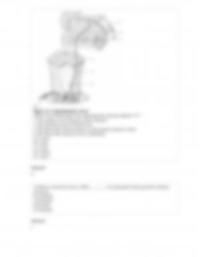
1) figure 15-1 spinothalamic tracts which of the following is true regarding the structure labeled “6”? 1. the synapse occurs between motor neurons. 2. the sensations may be filtered out. 3. the third-order neuron projects to the primary sensory cortex. […]
BI 135
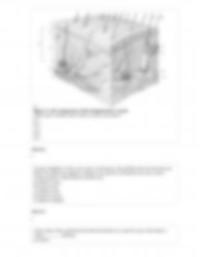
1) figure 5-1 the components of the integumentary system which layer contains most of the accessory structures? a) 1 b) 2 c) 3 d) 4 e) 5 2) pam’s daughter is born cross-eyed. as she grows, the problem does not […]
BIOL 687 Test 2
1) if the corpus callosum is surgically cut, a) the two cerebral hemispheres operate independently. b) symptoms of the “disconnection syndrome” appear. c) objects touched by the left hand can be recognized but not verbally identified. d) conscious decisions are […]
BI 111
1) superficial muscles that position or stabilize an organ are called a) internus. b) extrinsic. c) profundus. d) intrinsic. e) externus. 2) in which of the following would the blood flow be highest? a) a vessel 0.5 cm in diameter […]
BIO 151 Quiz 3
1) blood returning to the heart from the systemic circuit first enters the a) right atrium. b) right ventricle. c) left atrium. d) left ventricle. e) conus arteriosus. 2) excessive abdominopelvic pressure can cause a) inguinal hernia. b) diaphragmatic hernia. […]
BIO 215 Quiz 3
1) the term used to describe excess production of urine is a) polyuria. b) polydipsia. c) hematuria. d) glycosuria. e) diabetes insipidis 2) the muscle that elevates the tongue is the a) genioglossus. b) hyoglossus. c) palatoglossus. d) styloglossus. e) […]
Biology 211 Midterm 2
1) the citric acid cycle is an aerobic process because a) adp is phosphorylated. b) fadh2 is produced. c) citric acid molecules have oxygen atoms. d) oxygen is needed to remove carbon atoms as carbon dioxide. e) nah+ is converted […]
CAS BI 491 Test 2
1) the vertebral arch is formed by the pedicles and the a) transverse spinous processes. b) dorsal spinous processes. c) laminae. d) costal facets. e) intervertebral disc. 2) sympathetic input to the smooth muscle tissue in bronchioles causes all of […]
CAS BI 464 Quiz 3
1) filtrate first passes from the glomerular capsule to the a) nephron loop (loop of henle). b) proximal convoluted tubule. c) distal convoluted tubule. d) collecting duct. e) minor calyx. 2) what structure regulates the amount of light that passes […]
CAS BI 301
1) the gray horns of the spinal cord contain mainly a) nerve tracts. b) columns. c) meninges. d) nerve cell bodies. e) funiculi. 2) sperm production occurs in the a) ductus deferens. b) seminiferous tubules. c) epididymis. d) seminal glands […]
CAS BI 384
1) a person is confronted by a dangerous dog. his heart begins to race and beat strongly, his pupils dilate, and his hairs stand up. these signs are the result of a) sympathetic activation. b) increased levels of epinephrine in […]
BIO 523 Final
1) immunoglobulins that attach to and sensitize mast cells and basophils are a) iga. b) igd. c) ige. d) igg. e) igm. 2) reflection of the trapezius muscle exposes the a) serratus anterior and subclavian muscles. b) infraspinatus and teres […]
BISC 533 Final
1) figure 7-1 floor of the cranial cavity what is the name of the structure labeled “8”? a) sella turcica b) foramen ovale c) foramen rotundum d) carotid canal e) foramen spinosum 2) fast fibers a) have low resistance to […]
BIOL 176
1) the serous membrane that lines the peritoneal cavity a) secretes peritoneal fluid. b) decreases friction. c) lubricates the cavity. d) prevents irritation. e) all of the answers are correct. 2) the largest component of the coxal bone is the […]