1) the efferent arteriole of a nephron divides to form a network of capillaries within the
cortex called the ________ capillaries.
a) peritubular
b) glomerular
c) vasa recta
d) cortical
e) efferent
2)
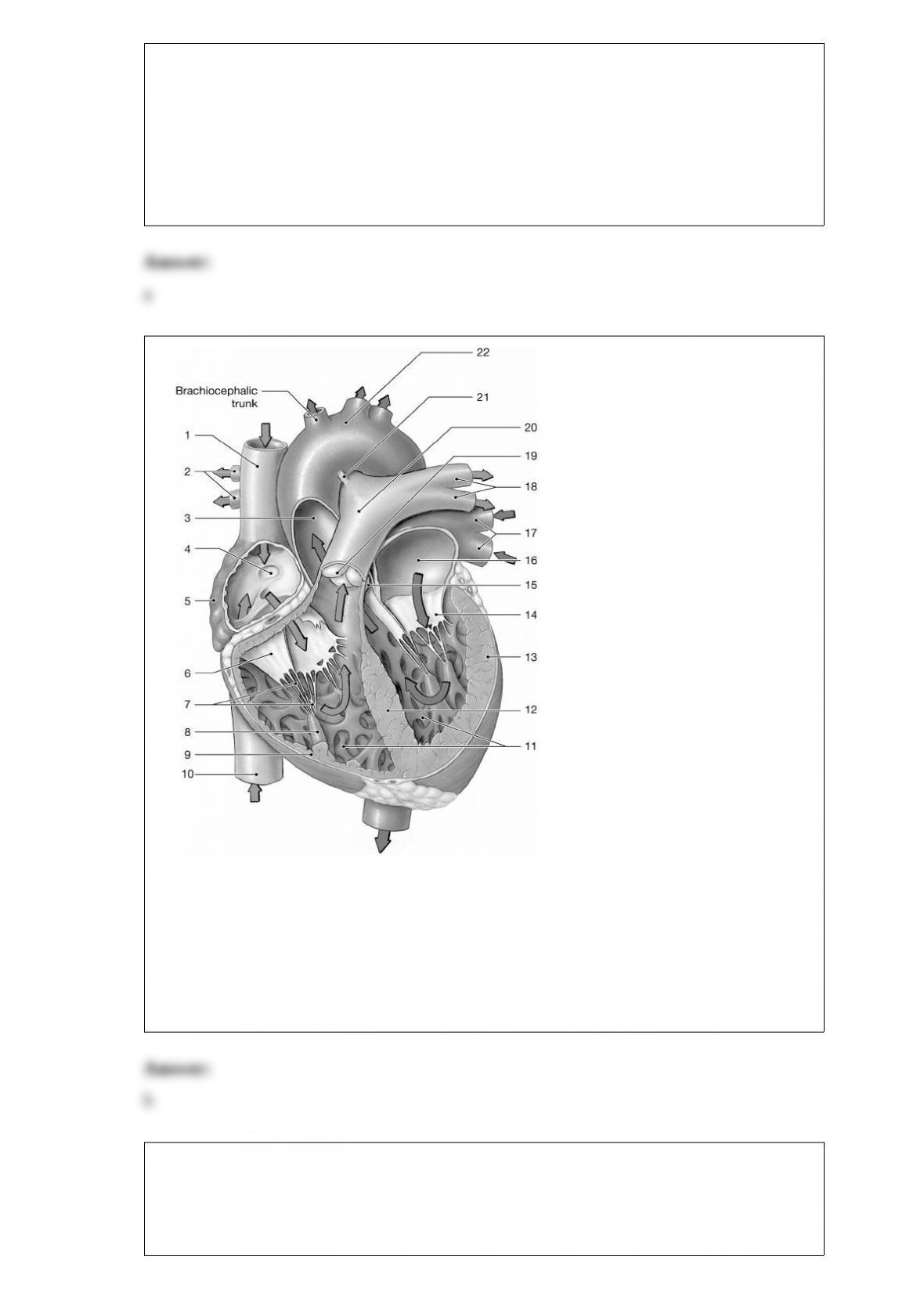
figure 20-1 the heart
identify the structure labeled “19”
a) tricuspid valve
b) pulmonary semilunar valve
c) aortic semilunar valve
d) bicuspid valve
e) ligamentum arteriosum
3) the force that moves fluid out of capillaries is ________ pressure whereas the
opposing force that moves fluid into capillaries is ________ pressure.
a) systolic; diastolic
b) hydrostatic; osmotic
c) blood; interstitial
d) osmotic; hydrostatic
e) plasma; extracellular
4) as each codon arrives at the active site of a ribosome, it attracts another molecule
containing the anticodon. this molecule is called
a) dna.
b) mrna.
c) rrna.
d) trna.
e) rer.
5)
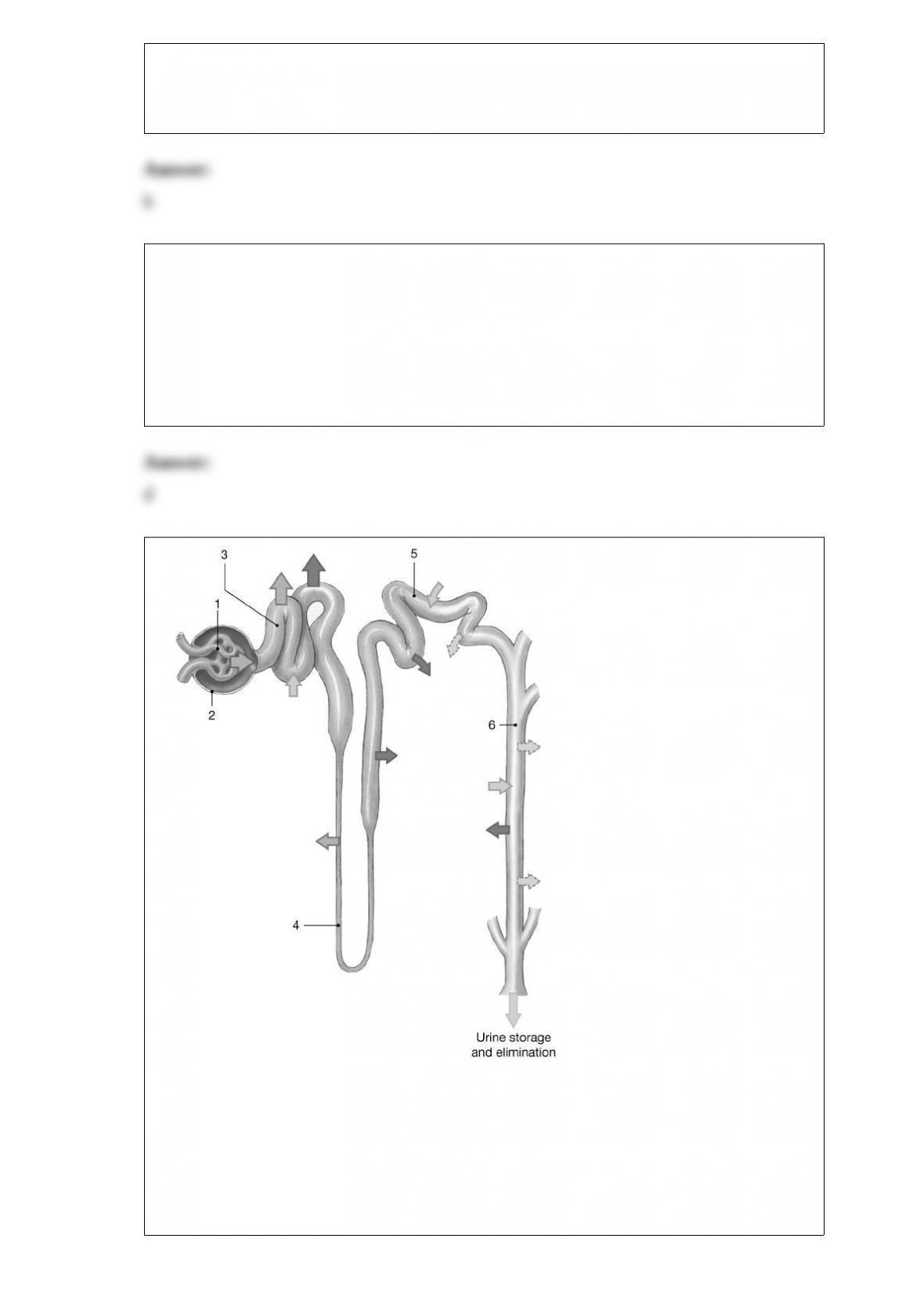
figure 26-2 the nephron
where does secretion mostly occur?
a) 5
b) 1
c) 3
d) 4
e) 2
6) muscarinic receptors
a) are normally activated by acetylcholine.
b) are found mostly in autonomic ganglia.
c) always produce an excitatory response.
d) control sodium channels in the affected membrane.
e) are blocked by norepinephrine.
7)
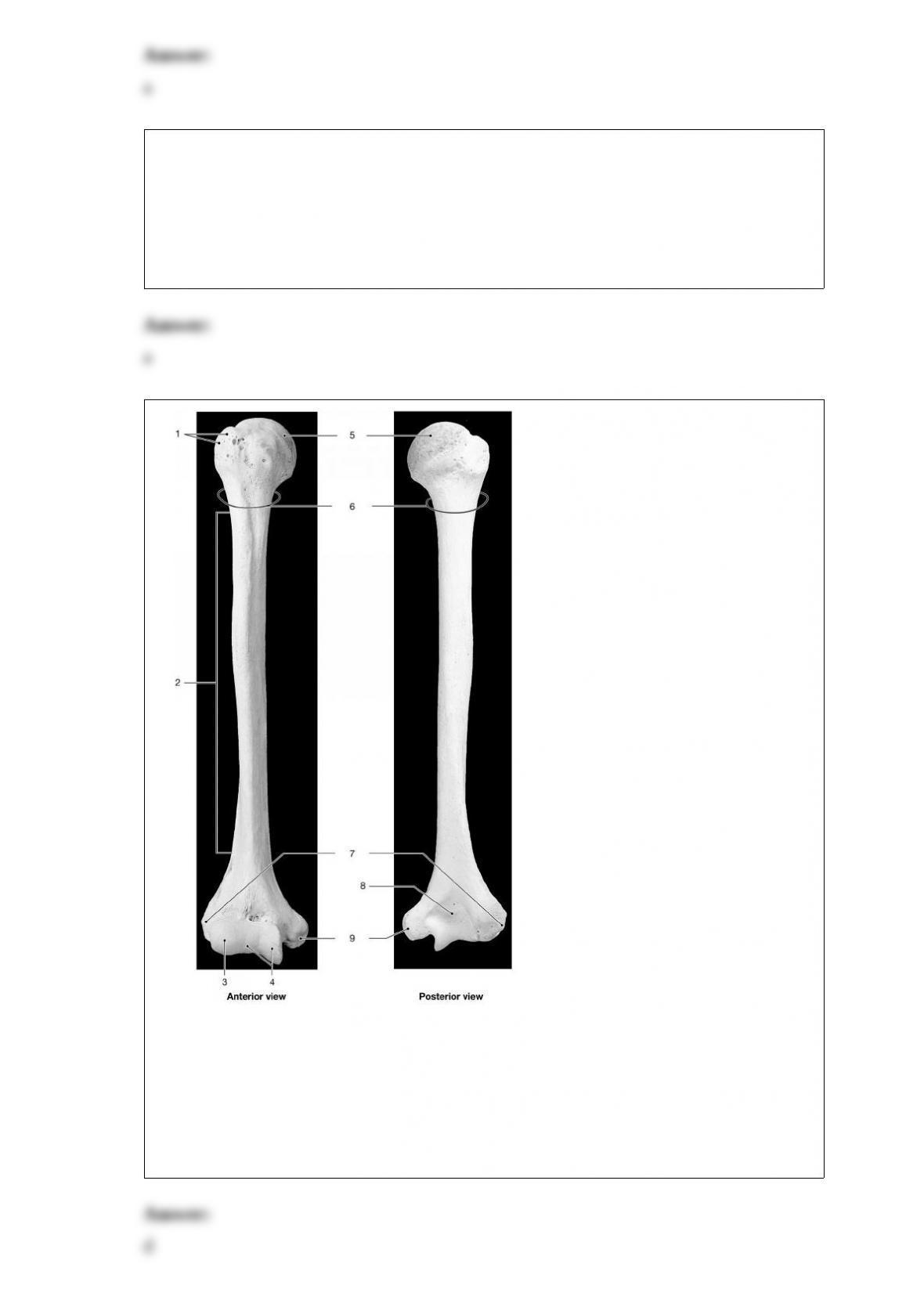
figure 8-2 the humerus
when the arm is straight, which structure accepts the olecranon?
a) 1
b) 3
c) 4
d) 8
e) 9

8) which of the following organs is not part of the lower respiratory system?
a) oropharynx
b) trachea
c) larynx
d) bronchi
e) alveoli
9) which ph of the following is the least acidic?
a) ph 2
b) ph 6
c) ph 4
d) ph 3
e) ph 1
10) jaundice is indicated by
a) a reddish skin coloration.
b) a yellowish skin coloration.
c) an orange skin coloration.
d) a bluish skin coloration.
e) a brown skin coloration.
11) in the citric acid cycle, a 2 carbon molecule and a 4 carbon molecule combine to
produce
a) fructose-1,6-bisphosphate.
b) carbon dioxide.
c) pyruvic acid.
d) nadh.
e) citric acid.
12) samples of csf for diagnostic purposes are normally obtained by placing the tip of a
needle in the
a) dura mater.
b) arachnoid mater.

c) epidural space.
d) subarachnoid space.
e) cerebral ventricles.
13) muscles with fibers that run at an angle to the long axis of the body are called
a) lateralis.
b) transversus.
c) rectus.
d) oblique.
e) medialis.
14)
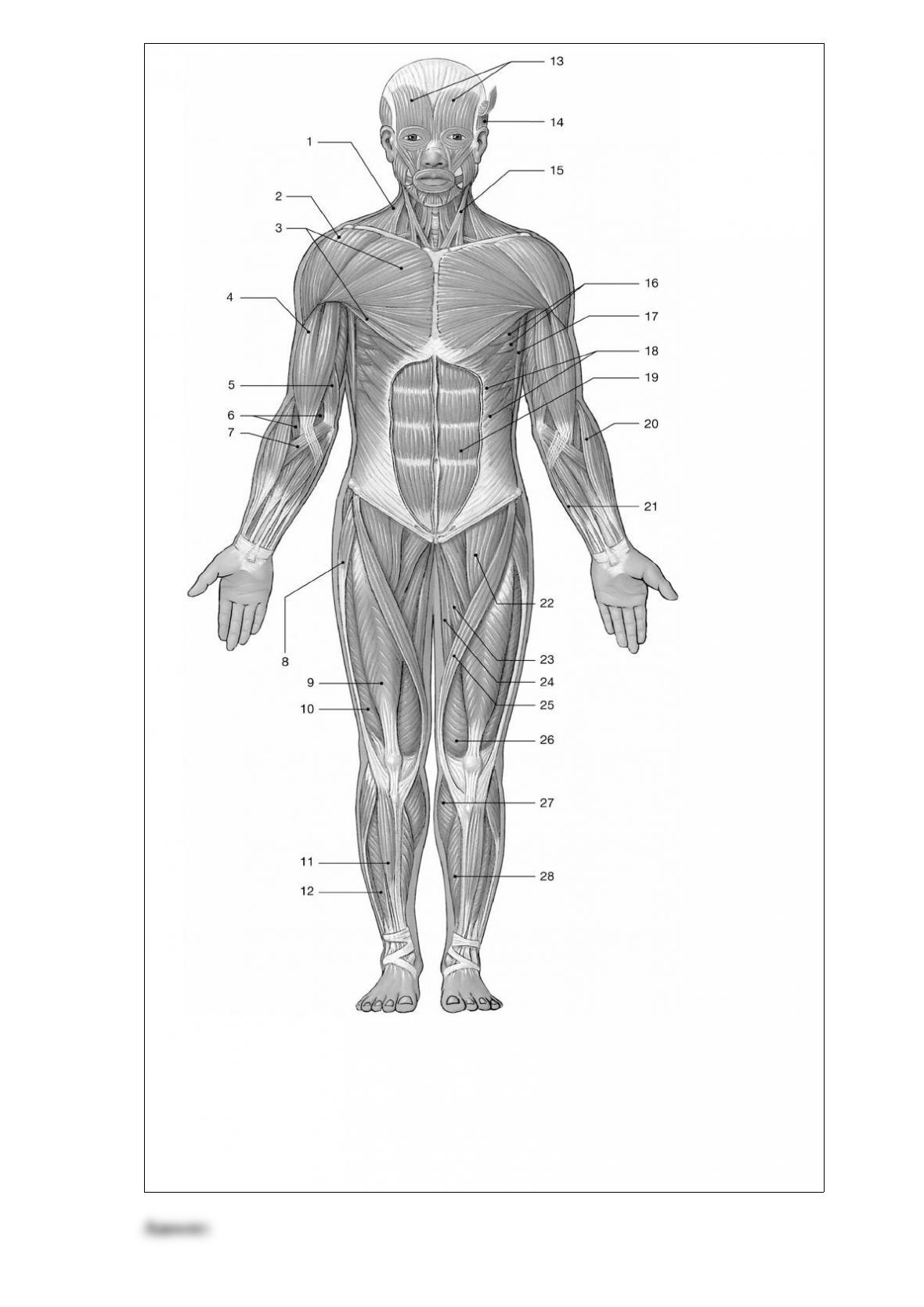
figure 11-1 major anterior skeletal muscles
identify the muscle labeled “11”
a) rectus anterior
b) vastus lateralis
c) soleus
d) serratus anterior
e) tibialis anterior

15) the effects of aging on the skin include
a) a decline in the activity of sebaceous glands.
b) increased production of vitamin d.
c) thickening of the epidermis.
d) an increased blood supply to the dermis.
e) an increased number of sweat glands.
16) the cornea is part of the
a) iris.
b) fibrous tunic.
c) neural tunic.
d) uvea.
e) choroid.
17) as you move in an inferior direction along the vertebral column,
a) the vertebral foramina become relatively larger.
b) the vertebral bodies become relatively larger.
c) the dorsal spines grow progressively longer.
d) the transverse processes move anteriorly.
e) the vertebrae get progressively smaller and thinner.