1) a person is confronted by a dangerous dog. his heart begins to race and beat strongly,
his pupils dilate, and his hairs stand up. these signs are the result of
a) sympathetic activation.
b) increased levels of epinephrine in the blood.
c) increased activity of autonomic centers in the hypothalamus.
d) the “fight or flight” response.
e) all of the answers are correct.
2) the hypothalamus controls secretion by the adenohypophysis by
a) direct neural stimulation.
b) indirect osmotic control.
c) secreting releasing and inhibiting factors into a tiny portal system.
d) altering ion concentrations and ph in the anterior pituitary.
e) gap synaptic junctions.
3) the vascular pressure that declines from roughly 35 mm hg to about 18 mm hg is the
a) venous pressure.
b) capillary hydrostatic pressure.
c) diastolic pressure.
d) peripheral pressure.
e) pulse pressure.
4) damage to the tectospinal tracts would interfere with the
a) ability to position the arms.
b) ability to monitor body position.
c) ability to make reflex responses of the head and neck in response to sudden
movements or loud noises.
d) ability to control motor units located in the leg.
e) ability to coordinate eating and swallowing movements.
5) the small paired structures at the base of the penis that secrete a thick, alkaline mucus
are the
a) seminal vesicles.
b) prostate glands.
c) preputial glands.
d) bartholin glands.
e) bulbo-urethral glands.
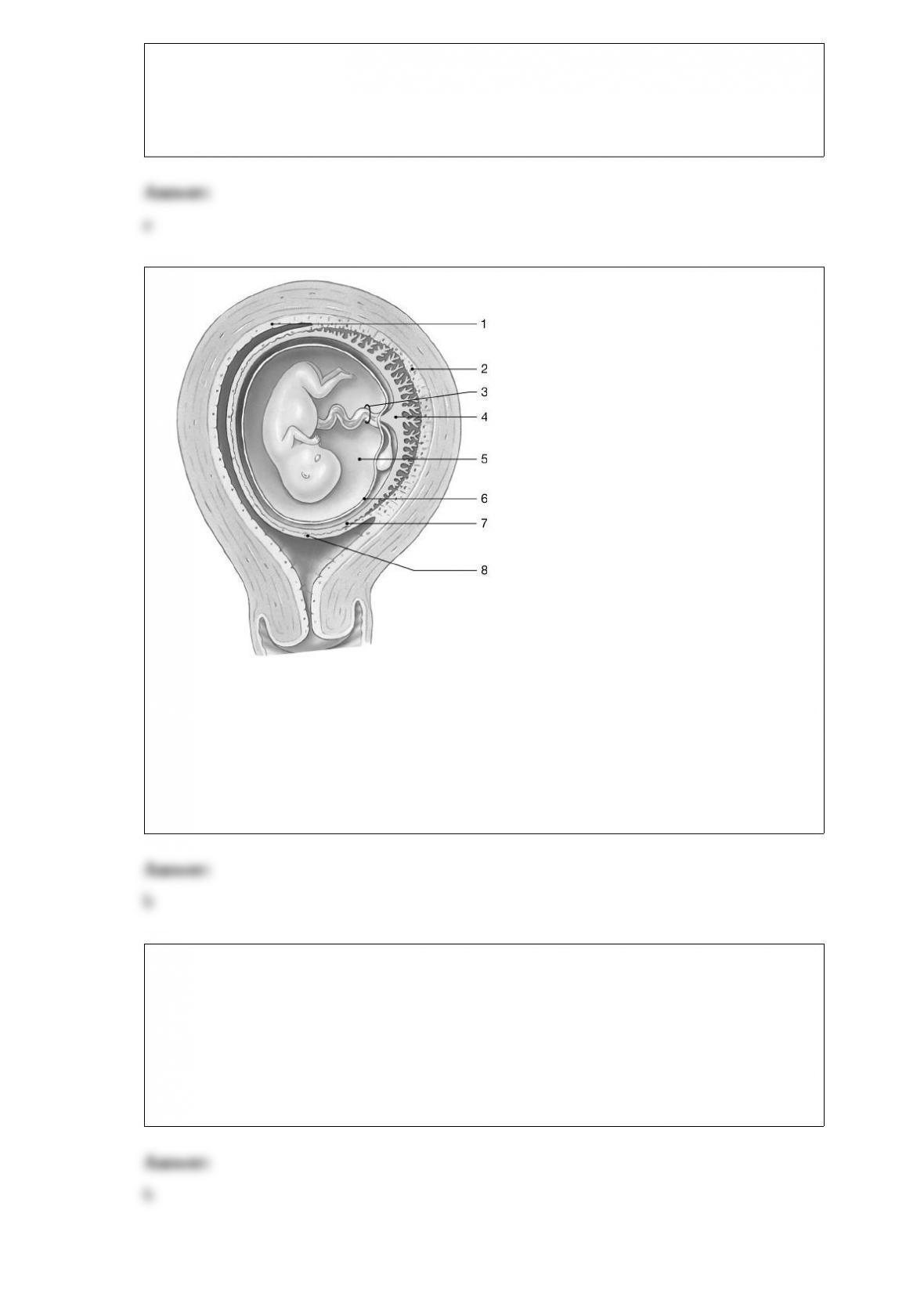
6)
figure 29-2 fetus at 10 weeks
identify the structure labeled “5”
a) umbilical cord
b) amniotic cavity
c) decidua basalis
d) decidua capsularis
e) yolk sac
7) the intestinal hormone that stimulates the pancreas to release a watery,
bicarbonate-rich fluid is
a) enterocrinin.
b) secretin.
c) cholecystokinin.
d) gip.
e) gastrin.
8) the internal acoustic meatus is located in which bone?
a) occipital
b) maxillary
c) sphenoid
d) temporal
e) parietal
9) thoracic vertebrae can be distinguished from other vertebrae by the presence of
a) transverse processes.
b) transverse foramina.
c) facets for the articulation of ribs.
d) notched spinous processes.
e) costal cartilages.
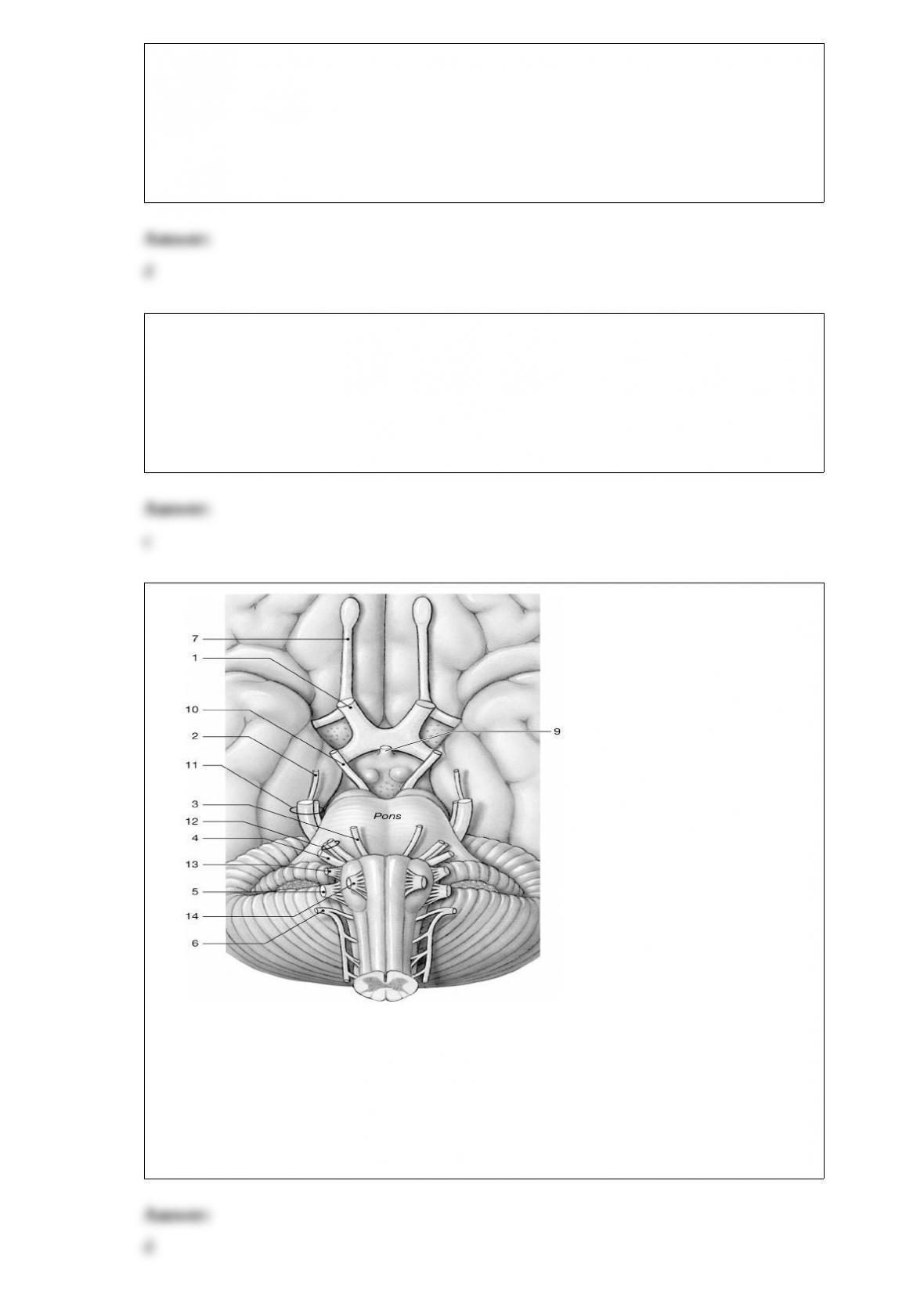
10)
figure 14-2 cranial nerves
identify the structure labeled “9”
a) olfactory bulb
b) optic chiasm
c) oculomotor nerve
d) infundibulum
e) mamillary body

11) the interventricular sulci and coronary sulcus
a) contain fat.
b) contain arteries.
c) contain veins.
d) are grooves on the surface of the heart.
e) all of the answers are correct.