Archives
978-0840028174 Chapter 1
CHAPTER 1 A FIRST LOOK AT INTERPERSONAL COMMUNICATION Objectives After studying the material in Chapter One of Looking Out/Looking In, you should understand: 1. The types of needs that communication can satisfy. Specifically, you should be able to: 1. Assess […]
978-0840028174 Chapter 10
CHAPTER 10 IMPROVING COMMUNICATION CLIMATES Objectives After studying the material in Chapter Nine of Looking Out/Looking In, you should understand: 2. Types of confirming and disconfirming messages. 3. How communication climates develop. 4. The relationship between a communicator’s self-concept and […]
978-0840028174 Chapter 11
CHAPTER 11 MANAGING INTERPERSONAL CONFLICTS Objectives After studying the material in Chapter Ten of Looking Out/Looking In, you should understand: 2. Styles of conflict. 3. Constructive conflict skills. 4. Factors to consider when deciding on an approach to handling conflict. […]
978-0840028174 Chapter 2
CHAPTER 2 COMMUNICATION AND IDENTITY Objectives After studying the material in Chapter Two of Looking Out/Looking In, you should understand: 1. How the self-concept is defined. 2. How biological and social factors influence the self-concept. 3. How the self-concept is […]
978-0840028174 Chapter 3
CHAPTER 3 PERCEPTION Objectives After studying the material in Chapter Three of Looking Out/Looking In, you should understand: 1. How the processes of selection, organization, interpretation, and negotiation operate in the perception process. 2. How physiological influences, cultural differences, social […]
978-0840028174 Chapter 4
CHAPTER 4 EMOTIONS Objectives After studying the material in Chapter Four of Looking Out/Looking In, you should understand: 1. The four components of emotions. 2. The six influences on emotional expression. Specifically, you should be able to: 1. Describe how […]
978-0840028174 Chapter 5
CHAPTER 5 LANGUAGE Objectives After studying the material in Chapter Five of Looking Out/Looking In, you should understand: 1. The symbolic nature of language. 3. That language can shape our perceptions 4. That language use contributes to understanding and misunderstanding. […]
978-0840028174 Chapter 6
CHAPTER 6 NONVERBAL COMMUNICATION Objectives After studying the material in Chapter Six of Looking Out/Looking In, you should understand: 2. The importance of nonverbal communication. 3. The six characteristics of nonverbal communication. 4. The seven categories of nonverbal communication described […]
978-0840028174 Chapter 7
CHAPTER 7 LISTENING Objectives After studying the material in Chapter Seven of Looking Out/Looking In, you should understand: 2. The difference between hearing and listening. 3. The difference between mindless and mindful listening. 4. Five elements involved in the process […]
978-0840028174 Chapter 8
CHAPTER 8 COMMUNICATION AND RELATIONAL DYNAMICS Objectives After reading the material in Chapter Eight of Looking Out/Looking In, you should understand: 2. The ten stages of interpersonal relationships. 3. Three types of dialectical tensions. 4. Strategies for managing dialectical tensions. […]
978-0840028174 Chapter 9
CHAPTER 9 COMMUNICATION IN CLOSE RELATIONSHIPS Objectives After studying the material in Chapter Nine of Looking Out/Looking In, you should understand: 2. Similarities and differences between masculine and feminine intimacy styles. 3. Cultural influences on intimacy. 4. The role of […]
978-0840028174 Test Bank Chapter 1
1 Part 3 Test Bank CHAPTER 1 A FIRST LOOK AT INTERPERSONAL COMMUNICATION 1. Chapter One indicates that effective interpersonal communication is strongly linked to good health, social happiness and career success. 2. The only way we learn who we […]
978-0840028174 Test Bank Chapter 10
CHAPTER 10 IMPROVING COMMUNICATION CLIMATES 1. Defensiveness is often a self-perpetuating cycle. Answer: T Type: T Page: 317 Synthesis 2. Once a progressive spiral has been established in a relationship, it is likely to continue indefinitely. Answer: F Type: T […]
978-0840028174 Test Bank Chapter 11
144 CHAPTER 11 MANAGING INTERPERSONAL CONFLICTS 1. Research has shown that strong marriages manage conflict in constructive ways. 2. Destructive fights often start because the initiator confronts a partner who isn’t ready for a confrontation. Answer: T Type: T Page: […]
978-0840028174 Test Bank Chapter 2
CHAPTER 2 COMMUNICATION AND IDENTITY 1. Identity management occurs only in face–to-face interactions. Answer: F Type: T Pages: 55–57 Knowledge 2. Research indicates that mediated communication offers advantages for identity management. Answer: T Type: T Page: 56 Knowledge 3. The […]
978-0840028174 Test Bank Chapter 3
CHAPTER 3 PERCEPTION 1. While culture has a great deal to do with our perception, it is understood that a person’s mood and tolerance to stress do not. Answer: F Type: T Pages: 88–89 Knowledge 2. A common perceptual tendency […]
978-0840028174 Test Bank Chapter 4
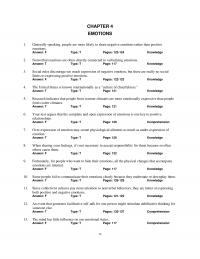
CHAPTER 4 EMOTIONS 1. Generally speaking, people are more likely to share negative emotions rather than positive emotions. Answer: F Type: T Pages: 123-124 Knowledge 2. Nonverbal reactions are often directly connected to verbalizing emotions. Answer: T Type: T Page: […]
978-0840028174 Test Bank Chapter 5
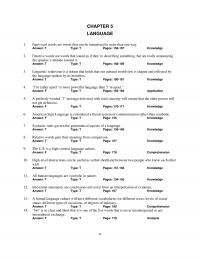
CHAPTER 5 LANGUAGE 1. Equivocal words are words that can be interpreted in more than one way. Answer: T Type: T Pages: 156-157 Knowledge 2. Emotive words are words that sound as if they’re describing something, but are really announcing […]
978-0840028174 Test Bank Chapter 6
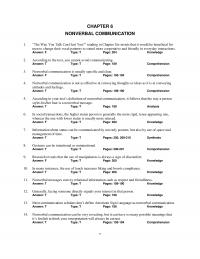
CHAPTER 6 NONVERBAL COMMUNICATION 1. “The Way You Talk Can Hurt You?” reading in Chapter Six insists that it would be beneficial for men to change their vocal patterns to sound more cooperative and friendly in everyday interactions. Answer: F […]
978-0840028174 Test Bank Chapter 7
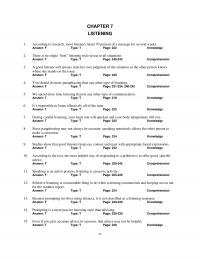
CHAPTER 7 LISTENING 1. According to research, most listeners retain 70 percent of a message for several weeks. Answer: F Type: T Page: 222 Knowledge 2. There is no single “best” listening style to use in all situations. Answer: T […]
978-0840028174 Test Bank Chapter 8
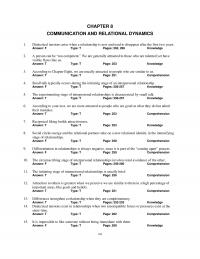
CHAPTER 8 COMMUNICATION AND RELATIONAL DYNAMICS 1. Dialectical tensions arise when a relationship is new and tend to disappear after the first two years. Answer: F Type: T Pages: 262, 266 Knowledge 2. A person can be “too competent.” We […]
978-0840028174 Test Bank Chapter 9
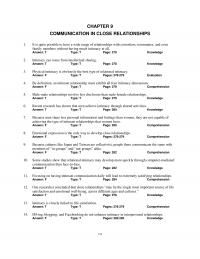
CHAPTER 9 COMMUNICATION IN CLOSE RELATIONSHIPS 1. It is quite possible to have a wide range of relationships with coworkers, roommates, and even family members without having much intimacy at all. Answer: T Type: T Page: 279 Knowledge 2. Intimacy […]