Archives
978-0534601744 Chapter 10
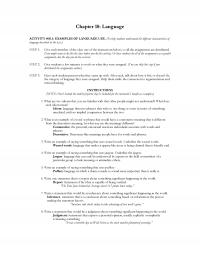
Chapter 10: Language ACTIVITY #10.1: EXAMPLES OF LANGUAGE USE. (To help students understand the different characteristics of language described in the text.) STEP 1: Give each member of the class one of the instructions below, so all the assignments are […]
978-0534601744 Chapter 11
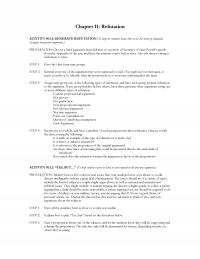
Chapter 11: Refutation ACTIVITY #11.1: GENERATE REFUTATION (To help the students know how to use the menu of refutation strategies to generate arguments.) PREPARATION: Choose a brief argument from Infotrac or a portion of Secretary of State Powell’s speech from […]
978-0534601744 Chapter 12
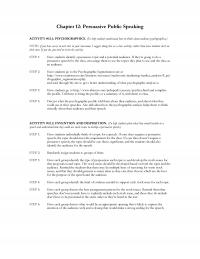
Chapter 12: Persuasive Public Speaking ACTIVITY #12.1: PSYCHOGRAPHICS. (To help students understand how to think about audience psychographics.) NOTE: if you have access to web sites in your classroom, I suggest doing this as a class activity, rather than have […]
978-0534601744 Chapter 13
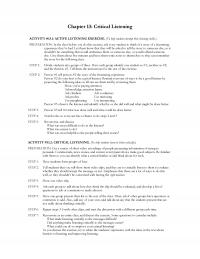
Chapter 13: Critical Listening ACTIVITY #13.1: ACTIVE LISTENING EXERCISE. (To help students develop their listening skills.) PREPARATION: In the class before you do this exercise, ask every student to think of a story of a frustrating experience they’ve had. Let […]
978-0534601744 Chapter 14
Chapter 14: Dyadic Argumentation ACTIVITY #14.1: ARGUMENTATIVENESS AND VERBAL AGGRESSIVENESS SCALES (To help students recognize their own argumentative styles.) This is best done before the students read the chapter about dyadic argumentation. STEP 1: Have students complete the Argumentativeness and […]
978-0534601744 Chapter 15
Chapter 15: Small Group Argumentation ACTIVITY #15.1: RULES AND ROLES. (To reinforce the concepts of rules and roles in small groups.) PREPARATION: Obtain an episode of a show like “Real World” or “Road Rules.” STEP 1: Tell the students you’re […]
978-0534601744 Chapter 16 Part 1
Chapter 16: Critical Thinking and the Scientific Method ACTIVITY #16.1 ELEMENTS OF THE SCIENTIFIC METHOD. (To reinforce concepts associated with the scientific method.) PREPARATION: Obtain a video that shows someone using the scientific method to reach a conclusion about STEP […]
978-0534601744 Chapter 16 Part 2
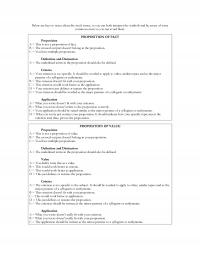
Below are keys to notes about the stock issues, so you can both interpret the symbols and be aware of some common errors so you can avoid them. PROPOSITION OF FACT Proposition Definition and Distinction A = The underlined terms […]
978-0534601744 Chapter 3
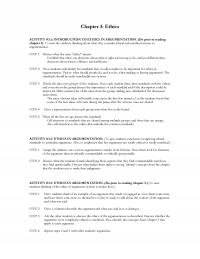
Chapter 3: Ethics ACTIVITY #3.1: INTRODUCTION TO ETHICS IN ARGUMENTATION. (Do prior to reading chapter 3). To start the students thinking about what they consider ethical and unethical actions in argumentation. STEP 1: Discuss what the term “ethics” means. Establish […]
978-0534601744 Chapter 4
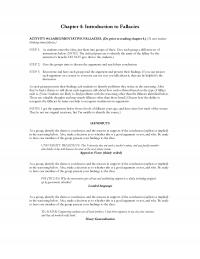
Chapter 4: Introduction to Fallacies ACTIVITY #4.1:ARGUMENTATIVE FALLACIES. (Do prior to reading chapter 4.) (To start students thinking about fallacies.) STEP 1: As students enter the class, put them into groups of three. Give each group a different set of […]
978-0534601744 Chapter 5
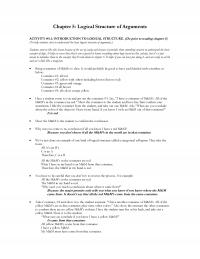
Chapter 5: Logical Structure of Arguments ACTIVITY #5.1: INTRODUCTION TO LOGICAL STRUCTURE. (Do prior to reading chapter 5) (To help students start to understand the basic logical structure of arguments.) Students seem to like this lesson because of the use […]
978-0534601744 Chapter 6
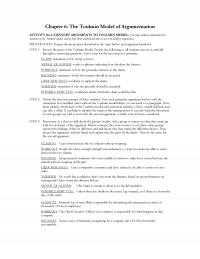
Chapter 6: The Toulmin Model of Argumentation ACTIVITY #6.1: CONVERT ARGUMENTS TO TOULMIN MODEL. (To help students understand the structure of the Toulmin model, and to help them understand how to use it to analyze arguments.) PREPARATION: Prepare the projections […]
978-0534601744 Chapter 7
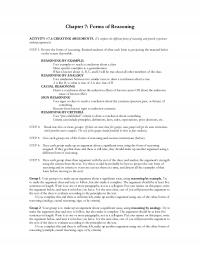
Chapter 7: Forms of Reasoning ACTIVITY #7.1: CREATING ARGUMENTS. (To reinforce the different forms of reasoning and provide experience making arguments.) STEP 1: Review the forms of reasoning. Remind students of what each form is, projecting the material below on […]
978-0534601744 Chapter 8
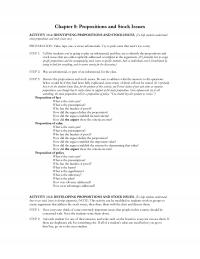
Chapter 8: Propositions and Stock Issues ACTIVITY #8.1: IDENTIFYING PROPOSITIONS AND STOCK ISSUES. (To help students understand what propositions and stock issues are.) PREPARATION: Video tape one or more infomercials. Try to pick some that aren’t too corny STEP 1: […]
978-0534601744 Chapter 9
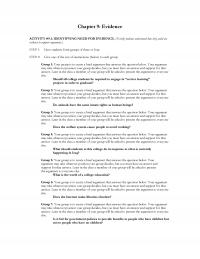
Chapter 9: Evidence ACTIVITY #9.1: IDENTIFYING NEED FOR EVIDENCE. (To help students understand how they could use evidence to support arguments.) STEP 1: Have students form groups of three or four. STEP 2: Give one of the sets of instructions […]
978-0534601744 Test Bank Chapter 1
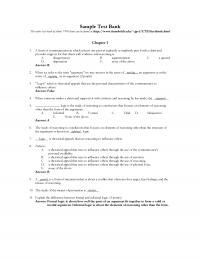
Sample Test Bank The entire test bank of about 1700 items can be found at http://www.humboldt.edu/~jgv1/CTEAtestbank.html Chapter 1 1. A form of communication in which at least one person explicitly or implicitly puts forth a claim and provides support for […]
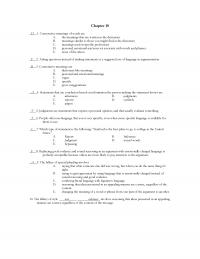
978-0534601744 Test Bank Chapter 10
Chapter 10 _D__1. Connotative meanings of words are A. the meanings that are written in the dictionary B. meanings similar to those you might find in the dictionary C. meanings used in specific professions D. personal, emotional reactions we associate […]
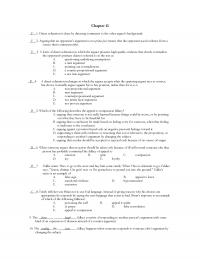
978-0534601744 Test Bank Chapter 11
Chapter 11 _F__1. Direct refutation is done by directing comments to the other arguer’s background. _F__2. Arguing that an opponent’s argument is not prima facie means that the opponent used evidence from a source that is untrustworthy. _E__3. A form […]
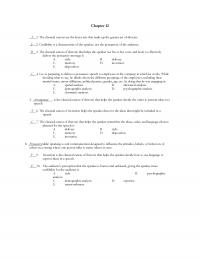
978-0534601744 Test Bank Chapter 12
Chapter 12 _T__1. The classical canons are the lesser arts that make up the greater art of rhetoric. _F__2. Credibility is a characteristic of the speaker, not the perception of the audience. _B__3. The classical canon of rhetoric that helps […]
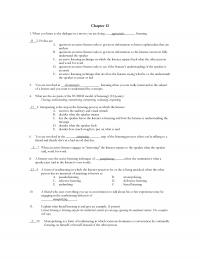
978-0534601744 Test Bank Chapter 13
Chapter 13 1. When you listen to the dialogue in a movie you are doing appreciative listening. _B__2. Probes are A. questions an active listener asks to get more information to better explain ideas that are unclear B. questions an […]
978-0534601744 Test Bank Chapter 14
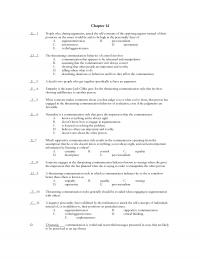
Chapter 14 _E__1. People who, during arguments, attack the self-concepts of the opposing arguers instead of their positions on the issues would be said to be high in the personality facet of A. argumentativeness B. provisionalism C. assertiveness D. spontaneity […]
978-0534601744 Test Bank Chapter 15
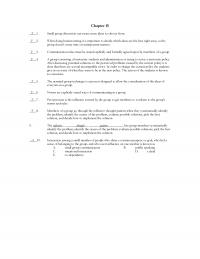
Chapter 15 _T__1. Small group discussion can create more ideas to choose from. _F__2. When doing brainstorming it is important to decide which ideas are the best right away so the group doesn’t waste time on unimportant matters. _F__3. Communication […]
978-0534601744 Test Bank Chapter 16
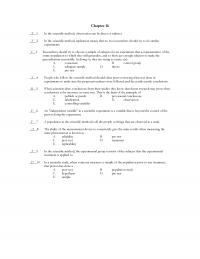
Chapter 16 _T__1. In the scientific method, observation can be direct or indirect. _T__2. In the scientific method, replication means that no two researchers should try to do similar experiments. _C _3. Researchers should try to choose a sample of […]
978-0534601744 Test Bank Chapter 2
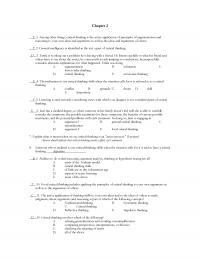
Chapter 2 __T_1. Among other things, critical thinking is the active application of principles of argumentation and reasoning to your own ideas and arguments as well as the ideas and arguments of others. __F_2. General intelligence is identified in the […]
978-0534601744 Test Bank Chapter 3
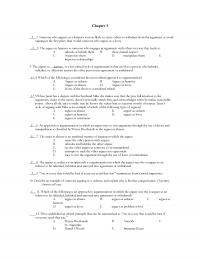
Chapter 3 _T__1. Someone who arguers as a harasser is more likely to cause others to withdraw from the argument or avoid arguing in the first place than would someone who argues as a lover. _A__2. The arguer as harasser […]
978-0534601744 Test Bank Chapter 4
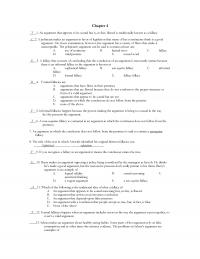
Chapter 4 _T__1. An argument that appears to be sound but is, in fact, flawed is traditionally known as a fallacy. _C_2. A politician makes an argument in favor of legislation that many of her constituents think is a good […]
978-0534601744 Test Bank Chapter 5
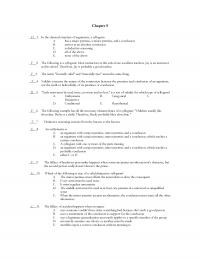
Chapter 5 _D__1. In the classical structure of arguments, a syllogism A. has a major premise, a minor premise, and a conclusion B. arrives at an absolute conclusion C. is deductive reasoning D. all of the above E. none of […]
978-0534601744 Test Bank Chapter 6
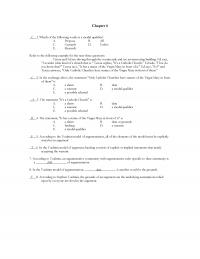
Chapter 6 _C__1. Which of the following words is a modal qualifier? A. Propose B. All C. Certainly D. Unless E. Research Refer to the following example for the next three questions: Teresa and Ed are driving through the countryside […]
978-0534601744 Test Bank Chapter 7
Chapter 7 _T__1. When an arguer reasons that a particular event happened as the result of previous events, that arguer has used causal reasoning. _F__2. A figurative analogy makes a comparison between the shapes of different people’s bodies. _T__3. When […]
978-0534601744 Test Bank Chapter 8
Chapter 8 _F__1. A prima facie argument is one that is so strong that it cannot be successfully refuted. _D__2. Which of the following is a stock issue in a value argument? A. What is the best criteria for the […]
978-0534601744 Test Bank Chapter 9
Chapter 9 MATCHING: For the next eight items, match the question with the Test of Evidence it best describes, using the following key: A = Source credibility B = Source Bias C = Recency D = Internal Consistency E = […]