PROBLEM 11.2
Depreciation Expense
2019
2020
(a)
Straight-line:
(€89,000 – €5,000) ÷ 7 = €12,000/yr.
2019: €12,000 X 7/12
€7,000
2020: €12,000
€12,000
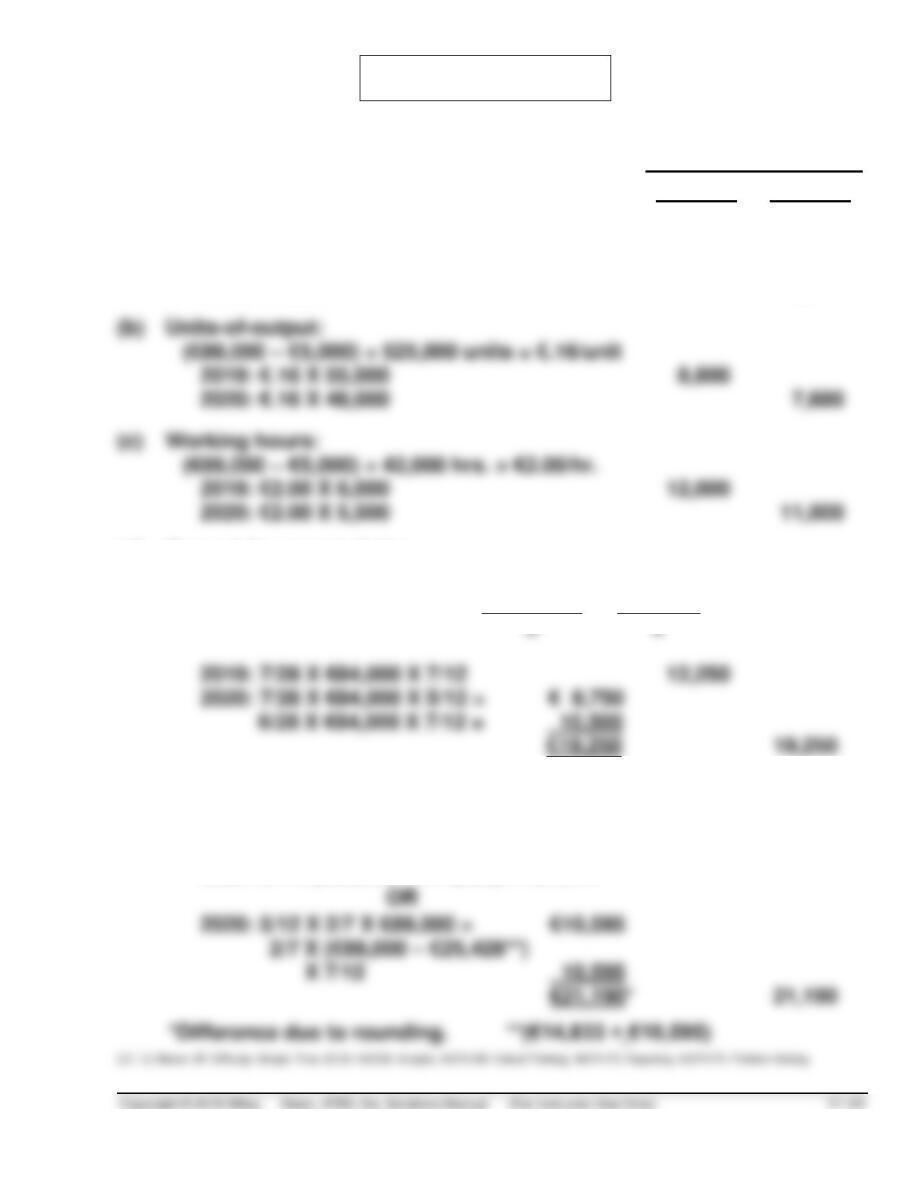
(b)
(€89,000 – €5,000) ÷ 525,000 units = €.16/unit
2019: €.16 X 55,000
2020: €.16 X 48,000
(c)
Working hours:
(€89,000 – €5,000) ÷ 42,000 hrs. = €2.00/hr.
2019: €2.00 X 6,000
2020: €2.00 X 5,500
(d)
Sum-of-the-years’-digits:
1 + 2 + 3 + 4 + 5 + 6 + 7 = 28 or
n(n + 1)
=
7 x 8
= 28
2019: 7/28 X €84,000 X 7/12
2020: 7/28 X €84,000 X 5/12 = € 8,750
6/28 X €84,000 X 7/12 = 10,500
19,250
(e)
Declining-balance:
Rate = 2/7 or (100% ÷ 7) x 2
2019: 7/12 X 2/7 X €89,000
14,833
2020: 2/7 X (€89,000 – €14,833) = €21,191
2020: 5/12 X 2/7 X €89,000 = €10,595
€21,190*
21,190
PROBLEM 11.3
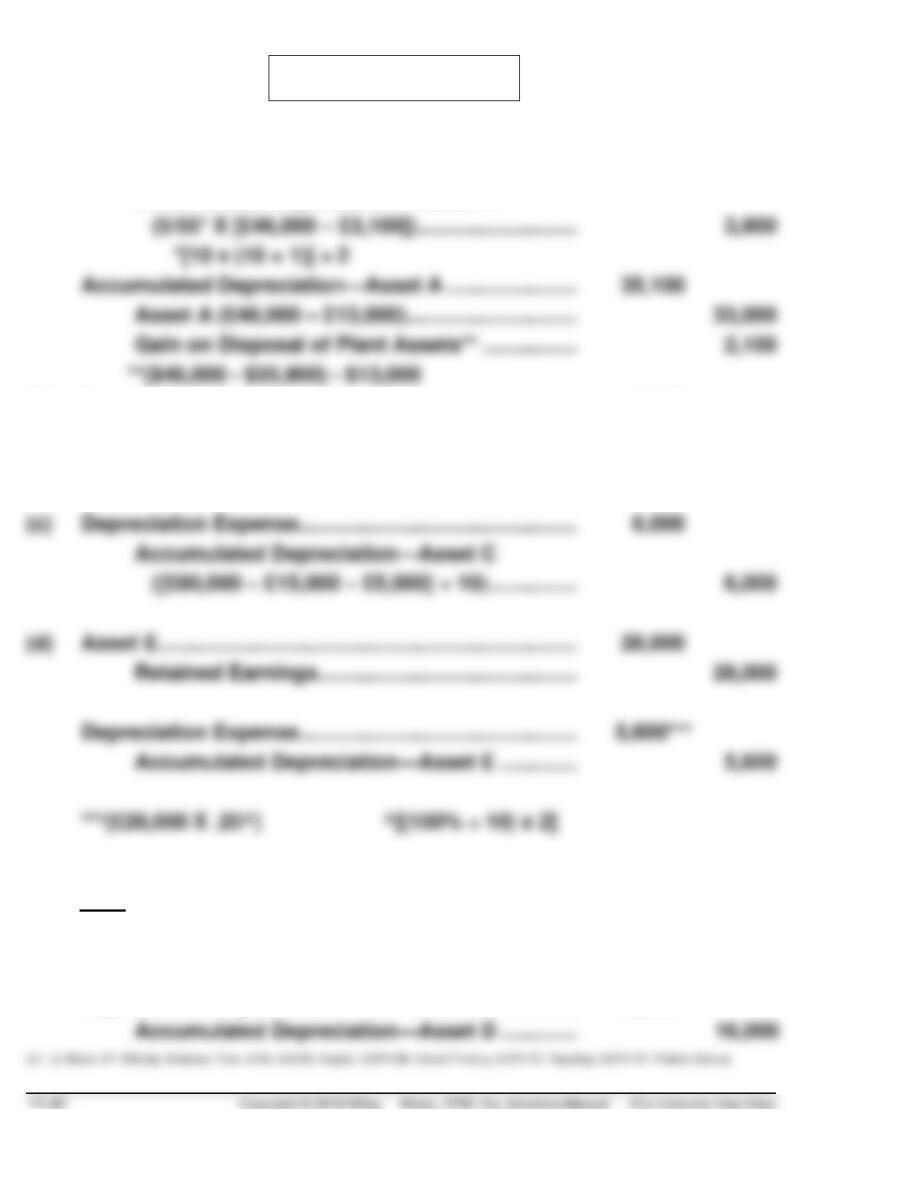
(a)
Depreciation Expense ……………………………………………..
3,900
Accumulated Depreciation—Asset A
(5/55* X [£46,000 – £3,100]) …………………………..
3,900
*[10 x (10 + 1)] ÷ 2
Accumulated Depreciation—Asset A ……………………….
Asset A (£46,000 – £13,000) …………………………..
Gain on Disposal of Plant Assets** ………………….
2,100
**($46,000 – $35,900) – $13,000
(b)
Depreciation Expense ……………………………………………..
6,720
Accumulated Depreciation—Asset B
([£51,000 – £3,000] ÷ [15,000 X 2,100]) ……………
6,720
(c)
Depreciation Expense ……………………………………………..
6,000
Accumulated Depreciation—Asset C
([£80,000 – £15,000 – £5,000] ÷ 10) …………………
6,000
(d)
Asset E …………………………..………………………………………
Retained Earnings …………………………………………..
Depreciation Expense ……………………………………………..
Accumulated Depreciation—Asset E ……………….
5,600
Note: No correcting entry is needed for asset D. In 2019, Eshkol
records depreciation expense of £80,000 X [(100% ÷ 10) X 2] =
£16,000.
Depreciation Expense ……………………………………………..
16,000
Copyright © 2018 Wiley Kieso, IFRS, 3/e, Solutions Manual (For Instructor Use Only) 11–43
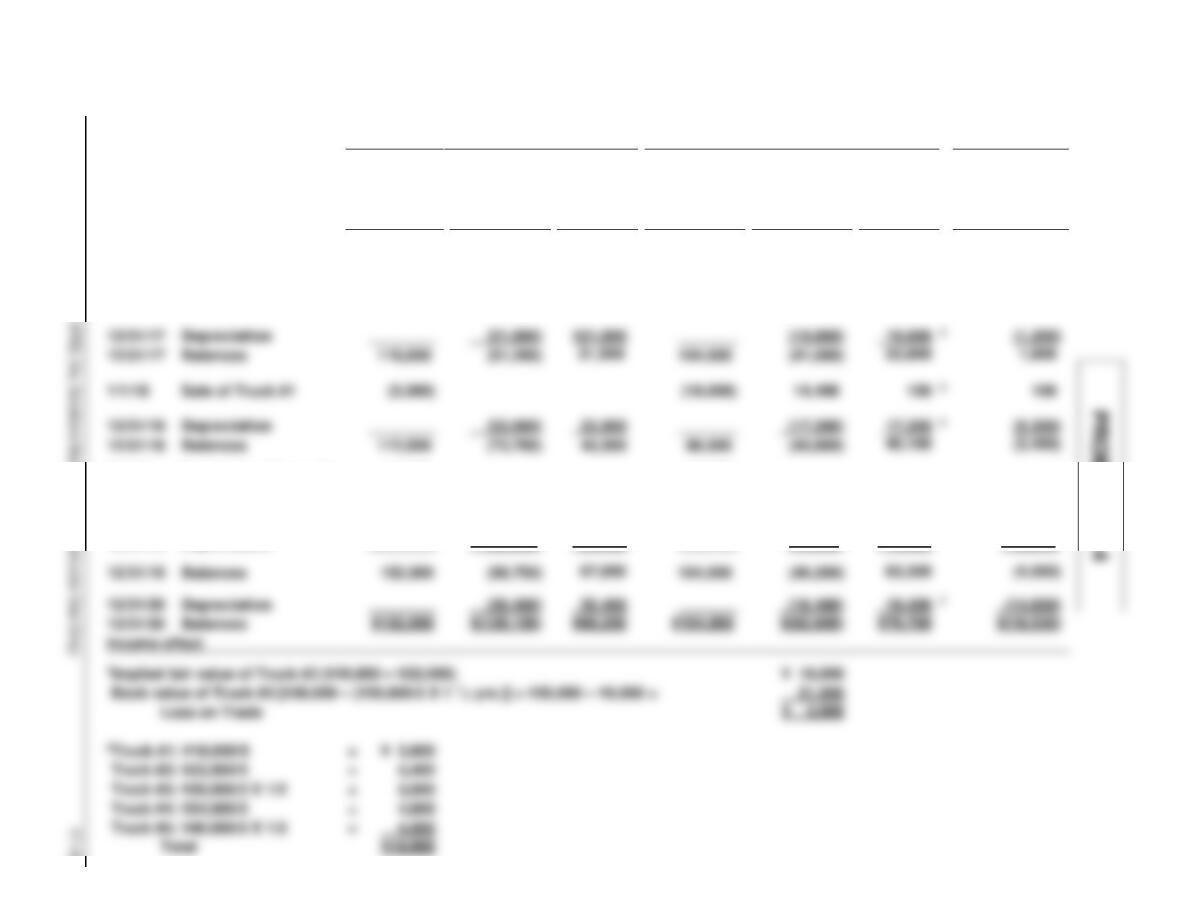
7
16,400
(46,200)
104,000
_______
30,400
(98,750)
(30,400)
________
Balances
Depreciation
Balances
Income effect
Loss on Trade
Truck #2: ¥22,000/5
Truck #5: ¥40,000/5 X 1/2
Total
12/31/19
Net
Income
Overstated
(Understated)
¥ 3,000
7,100
(8,250)
1
5
6
As Adjusted
Retained
Earnings
dr. (cr.)
¥ 3,000
6,400
16,800
Acc. Dep.,
Semitrucks
dr. (cr.)
¥(30,200)
9,000
14,400
(16,800)
Trucks
dr. (cr.)
¥94,000
40,000
(30,000)
42,000
(24,000)
_______
Per Company Books
Retained
Earnings
dr. (cr.)
(700)
25,050
Acc. Dep.
Semitrucks
dr. (cr.)
¥(30,200)
(25,050)
Trucks
dr. (cr.)
¥ 94,000
22,000
42,000
(2,500)
________
Balance
Purchase Truck #5
Trade Truck #3
Purchase of Truck #6
Disposal of Truck #4
Depreciation
(a)
1/1/17
7/1/17
7/1/19
7/1/19
12/31/19
2
3
4
19,800
(19,800)
(41,000)
14,400
_______
(18,000)
_______
¥21,000
22,500
(21,000)
(51,200)
________
Depreciation
Balances
Sale of Truck #1
Depreciation
12/31/17
12/31/17
12/31/18
PROBLEM 11.4 (Continued)
3Book value of Truck #1 [¥18,000 – (¥18,000/5 X 4 yrs.)] =
¥18,000 – ¥14,400 …………………………………………………….
= ¥3,600
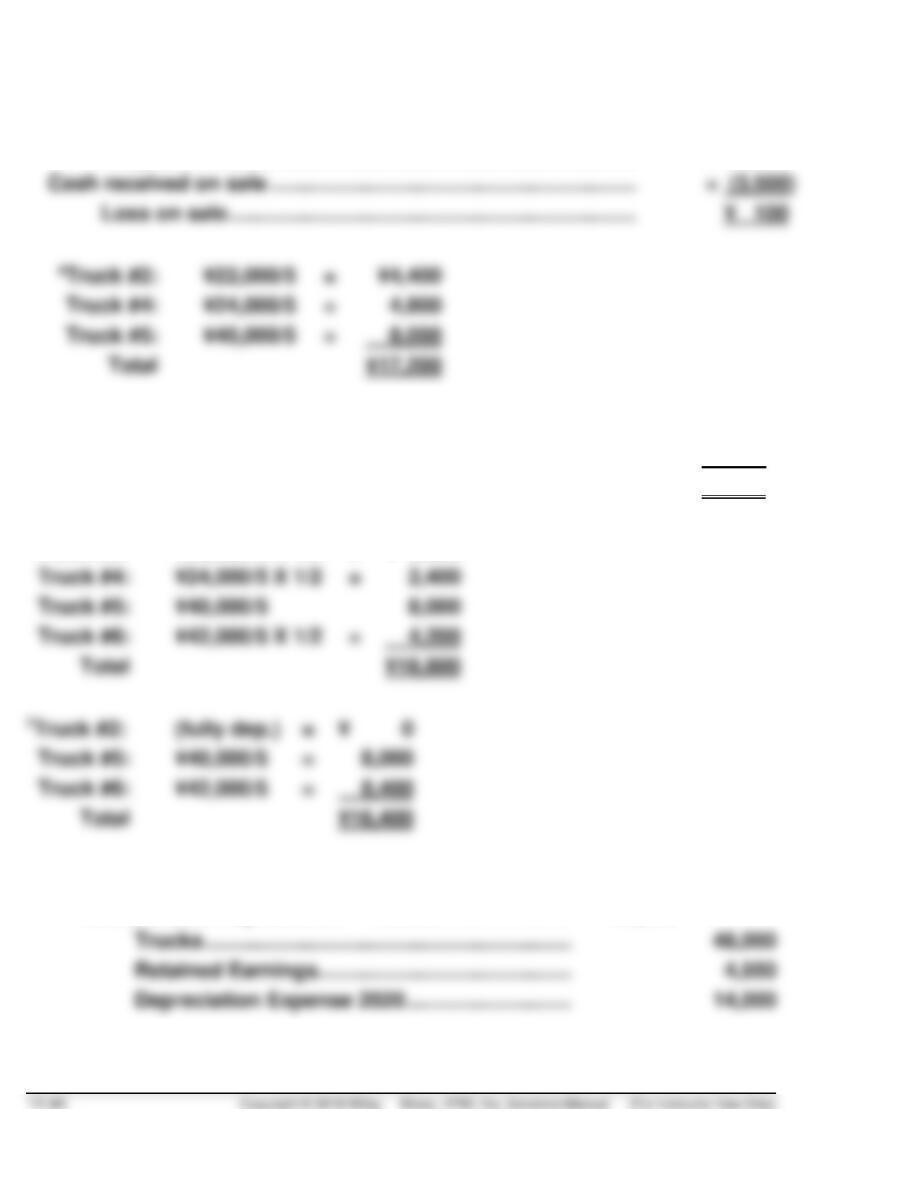
Cash received on sale ……………………………………………………..
= (3,500)
¥22,000/5
=
¥24,000/5
=
¥40,000/5
=
5Book value of Truck #4 ¥24,000 – [(¥24,000/5 X 3 yrs.)] …….
= ¥9,600
Cash received (¥700 + ¥2,500) ………………………………………….
= (3,200)
Loss on disposal …………………………………………………….
¥6,400
6Truck #2:
¥22,000/5 X 1/2
=
¥ 2,200
¥24,000/5 X 1/2
=
¥42,000/5 X 1/2
=
4,200
7Truck #2:
(fully dep.)
=
¥40,000/5
=
¥42,000/5
=
(b)
Compound journal entry December 31, 2020:
Accumulated Depreciation—Trucks …………………..
66,550
Trucks ……………………………………………………..
48,000
Retained Earnings …………………………………….
Depreciation Expense 2020 ……………………….
14,000
PROBLEM 11.4 (Continued)
Summary of Adjustments:
Per
Books
As
Adjusted
Adjustment
Dr. or (Cr.)
Trucks
¥152,000
¥104,000
¥(48,000)
Accumulated Depreciation
¥129,150
¥ 62,600
¥ 66,550
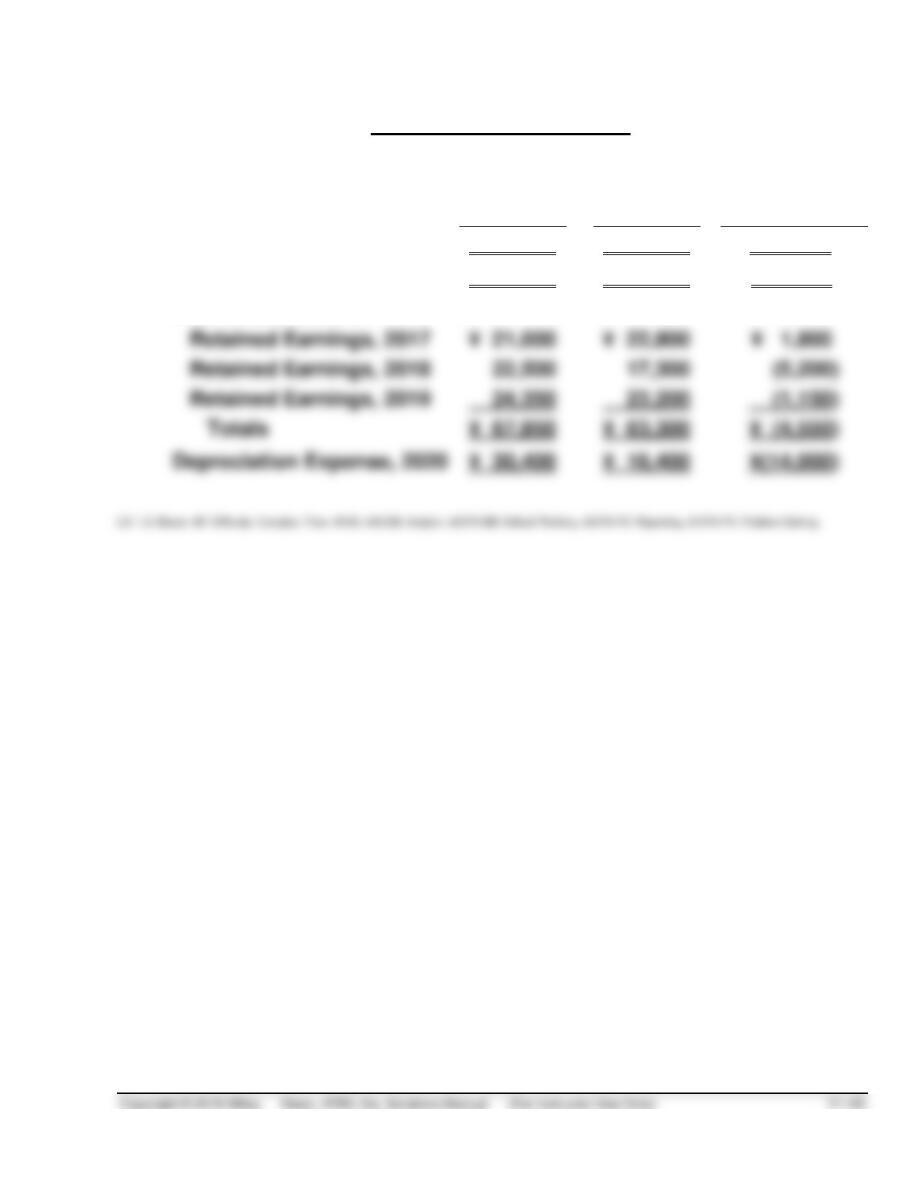
Prior Years’ Income
¥ 21,000
¥ 22,800
22,500
17,300
24,350
23,200
Totals
¥ 67,850
¥ 63,300
¥ (4,550)
PROBLEM 11.5
(a) The amounts to be recorded on the books of Darby Sporting Goods
Plc. as of December 31, 2019, for each of the properties acquired from
Quay Athletic Equipment are calculated as follows:
Cost Allocations to Acquired Properties
Appraisal
Value
Remaining
Purchase
Price
Allocations
Renovations
Capitalized
Interest
Total
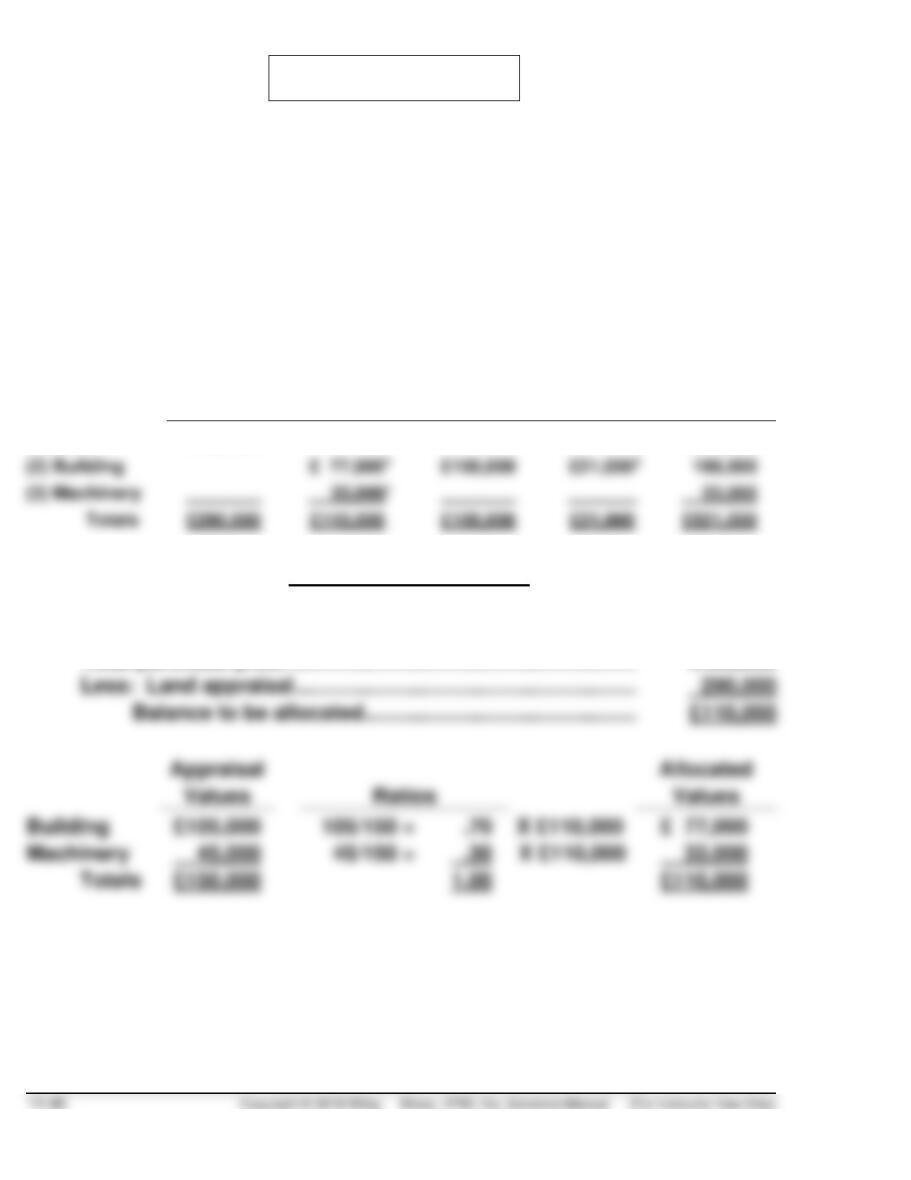
(1) Land
£290,000
£290,000
(2) Building
(3) Machinery
Supporting Calculations
1Balance of purchase price to be allocated.
Total purchase price …………………………………………………..
£400,000
Less: Land appraisal ………………………………………………….
Building
X £110,000
PROBLEM 11.5 (Continued)
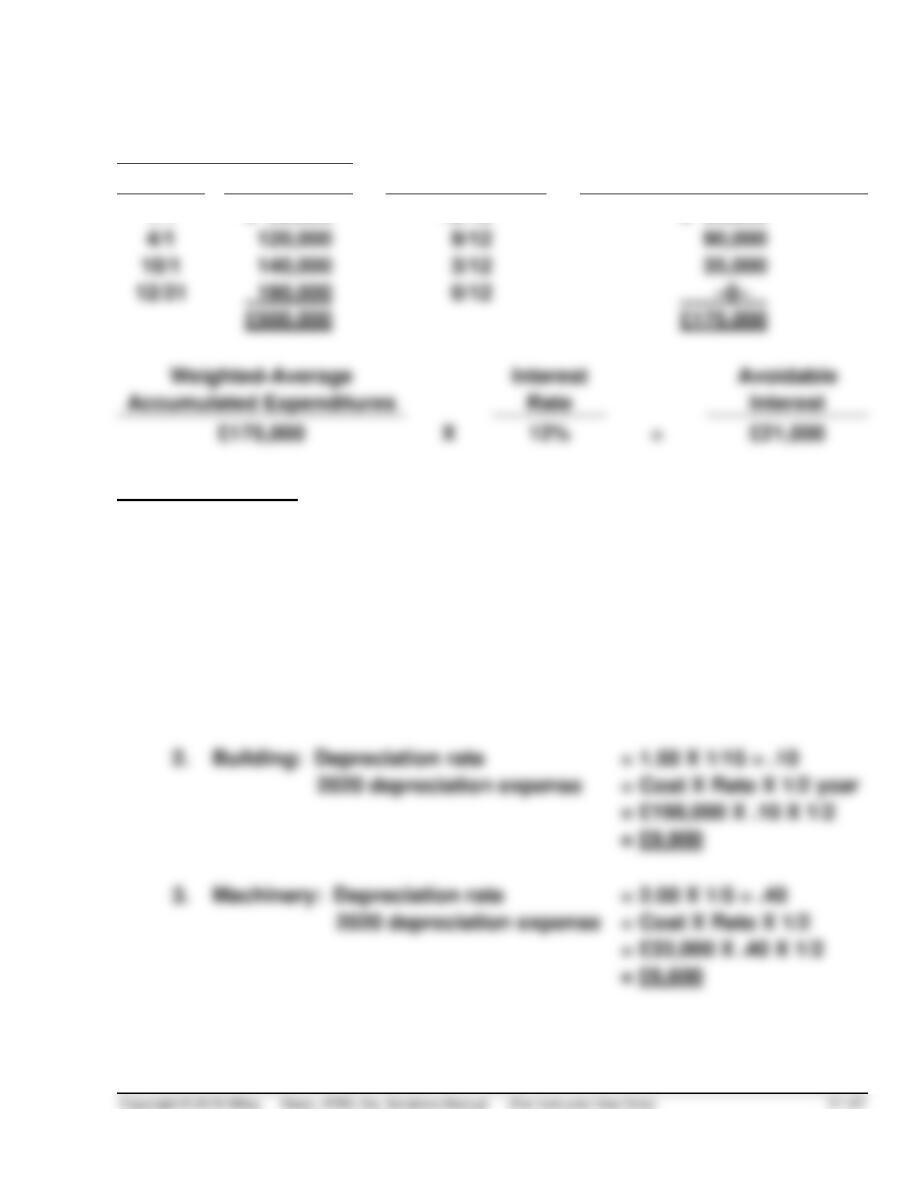
2Capitalizable interest.
Expenditures
Capitalization
Period
Weighted-Average
Accumulated Expenditures
Date
Amount
1/1
£ 50,000
12/12
£ 50,000
4/1
90,000
35,000
£175,000
Note to instructor: If the interest is allocated between the building and the
machinery, £14,700 (£21,000 X 105/150) would be allocated to the building
and £6,300 (£21,000 X 45/150) would be allocated to the machinery.
(b) Darby Sporting Goods Inc.’s 2020 depreciation expense, for book
purposes, for each of the properties acquired from Quay Athletic
Equipment Company is as follows:
1.
Land: No depreciation.
2.
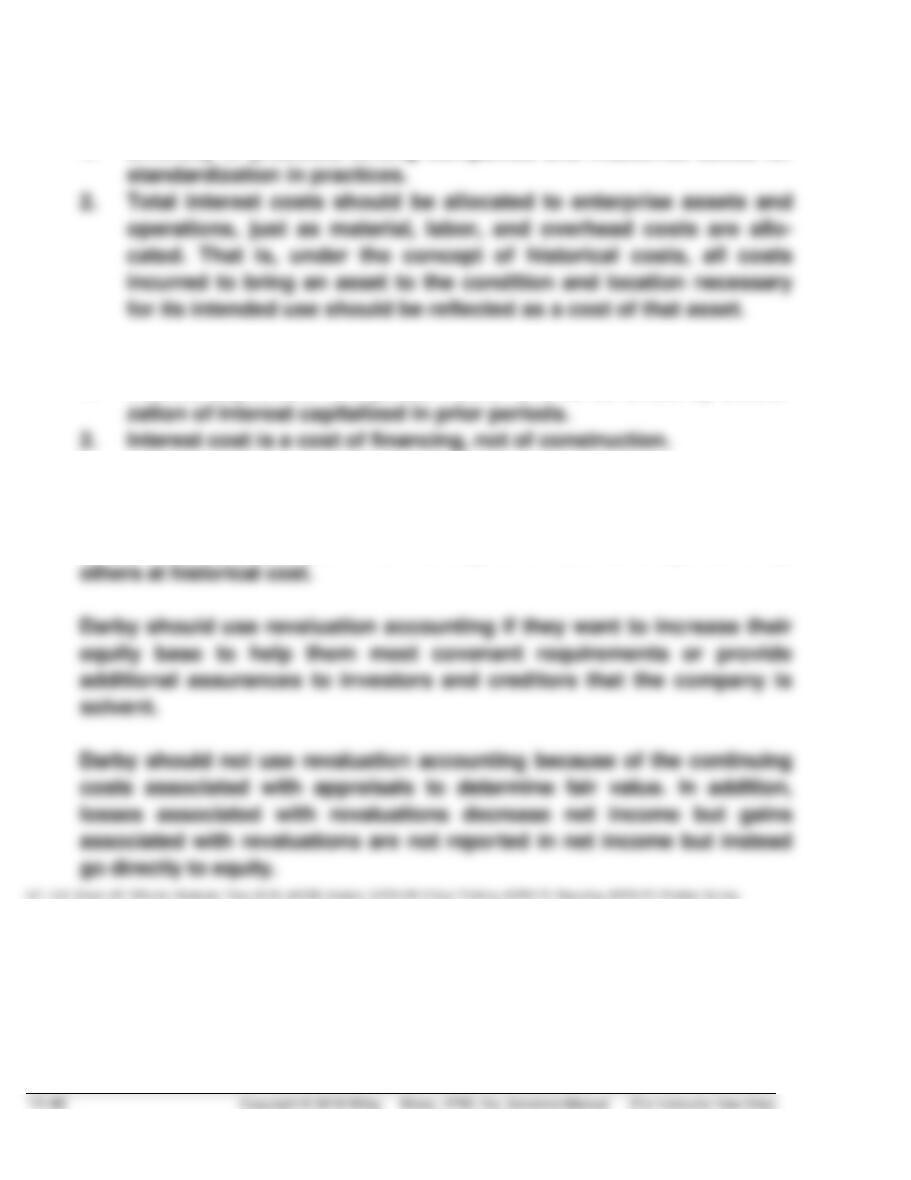
Building: Depreciation rate
= Cost X Rate X 1/2 year
= £198,000 X .10 X 1/2
3.
Machinery: Depreciation rate
= 2.00 X 1/5 = .40
= Cost X Rate X 1/2
= £33,000 X .40 X 1/2
PROBLEM 11.5 (Continued)
(c) Arguments for the capitalization of interest costs include the following.
1. Diversity of practices among companies and industries called for
Arguments against the capitalization of interest include the following:
1. Interest capitalized in a period would tend to be offset by amorti-
(d) If Darby decides to use revaluation accounting for this building, then
revaluation applies to all assets in that class of assets. Darby cannot
selectively apply revaluation accounting to certain buildings but keep
PROBLEM 11.6
(1)
$80,000
Allocated in proportion to appraised values
(*1/10 X $800,000). *[$90,000 ÷ ($810,000 + $90,000)
(2)
$720,000
Allocated in proportion to appraised values
(3)
Fifty years
Cost less residual ($720,000 – $40,000) divided by
annual depreciation ($13,600).
(4)
$13,600
Same as prior year since it is straight-line depreciation.
(5)
$91,000
[Number of shares (2,500) times fair value ($30)]
plus demolition cost of existing building ($16,000).
(6)
None
No depreciation before use.
(7)
$40,000
Fair value.
(8)
$6,000
Cost ($40,000) times percentage (1/10 X ***150%).
***[100% ÷ 10) x 150%
(9)
$5,100
equals $34,000. Multiply $34,000 times ***15%.
(10)
$168,000
Total cost ($182,900) less repairs and maintenance
($14,900).
(11)
$36,000
Cost less residual ($168,000 – $6,000) times 8/36****.
PROBLEM 11.6 (Continued)
(13)
$52,000
Annual payment ($6,000) times present value of annuity
due at 8% for 11 years (7.710) plus down payment ($5,740).
This can be found in an annuity due table since the
PROBLEM 11.7
(a)
1.
Straight-line Method:
$90,000 – $6,000
= $16,800 a year
5 years
2.
Activity Method:
$90,000 – $6,000
= $.84 per hour
100,000 hours
Year
2017
20,000 hrs. X $.84 =
$16,800
2018
25,000 hrs. X $.84 =
2019
15,000 hrs. X $.84 =
2020
30,000 hrs. X $.84 =
2021
10,000 hrs. X $.84 =
3. Sum-of-the-Years’-Digits: 5 + 4 + 3 + 2 + 1 = 15 or [5 x (5 + 1)] ÷ 2
Year
2017
5/15 X ($90,000 – $6,000) =
$28,000
2018
4/15 X $84,000 =
2019
3/15 X $84,000 =
2020
2/15 X $84,000 =
2021
1/15 X $84,000 =
4. Double-Declining-Balance Method: Each year is 20% (100 % ÷ 5) of
its total life. Double the rate to 40% (20% x 2).
Year
2017
40% X $90,000 =
$36,000
2018
40% X ($90,000 – $36,000) =
2019
40% X ($90,000 – $57,600) =
2020
40% X ($90,000 – $70,560) =
2021
Enough to reduce to salvage =
PROBLEM 11.7 (Continued)
(b) 1. Straight-line Method:
Year
2017
$90,000 – $6,000
X 9/12 =
$12,600
5 years
2018
Full year
16,800
2019
Full year
16,800
2020
Full year
16,800
2021
Full year
16,800
2022
Full year X 3/12 year =
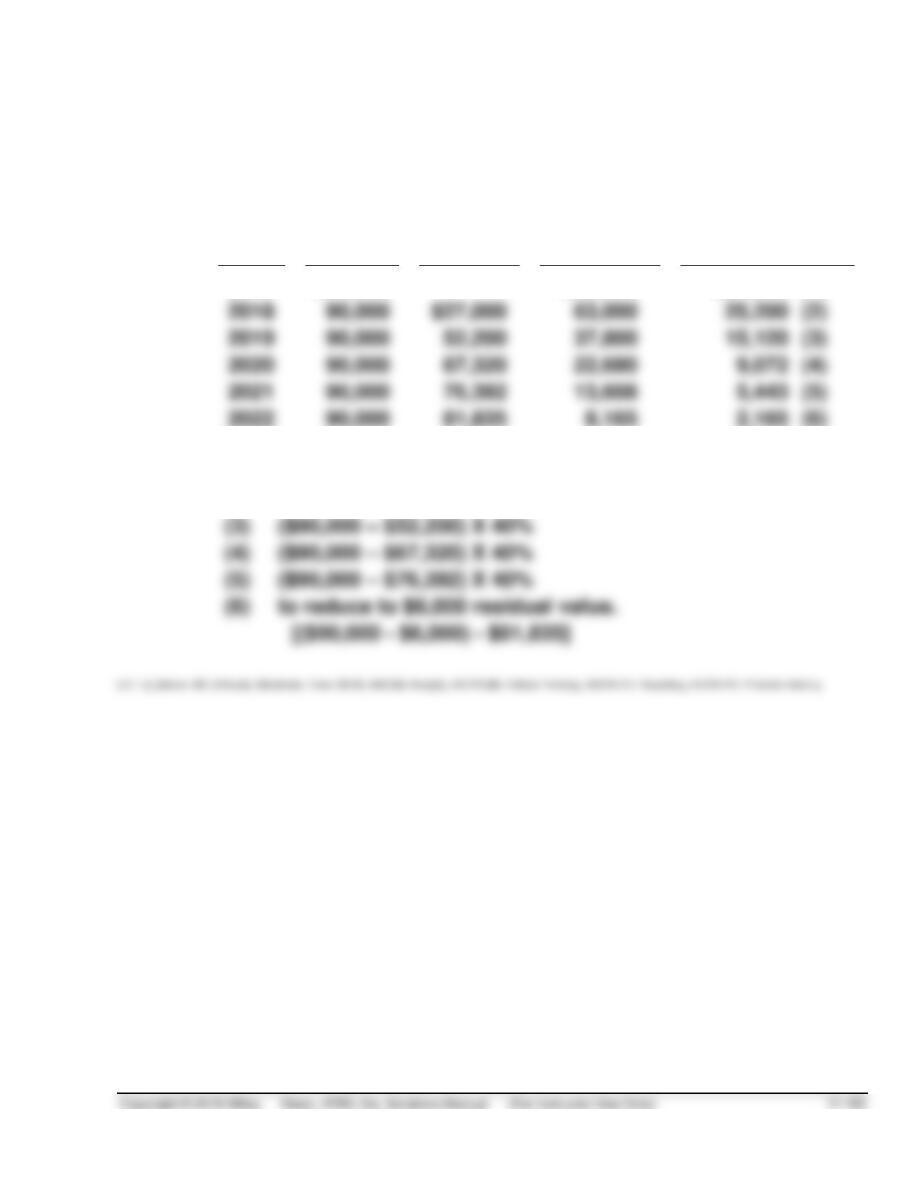
2. Sum-of-the-Years’-Digits:
2017
(5/15 X $84,000) X 9/12 =
$21,000
2018
(5/15 X $84,000) X 3/12 =
(4/15 X $84,000) X 9/12 =
2019
(4/15 X $84,000) X 3/12 =
(3/15 X $84,000) X 9/12 =
2020
(3/15 X $84,000) X 3/12 =
(2/15 X $84,000) X 9/12 =
2021
(2/15 X $84,000) X 3/12 =
(1/15 X $84,000) X 9/12 =
2022
(1/15 X $84,000) X 3/12 =
PROBLEM 11.7 (Continued)
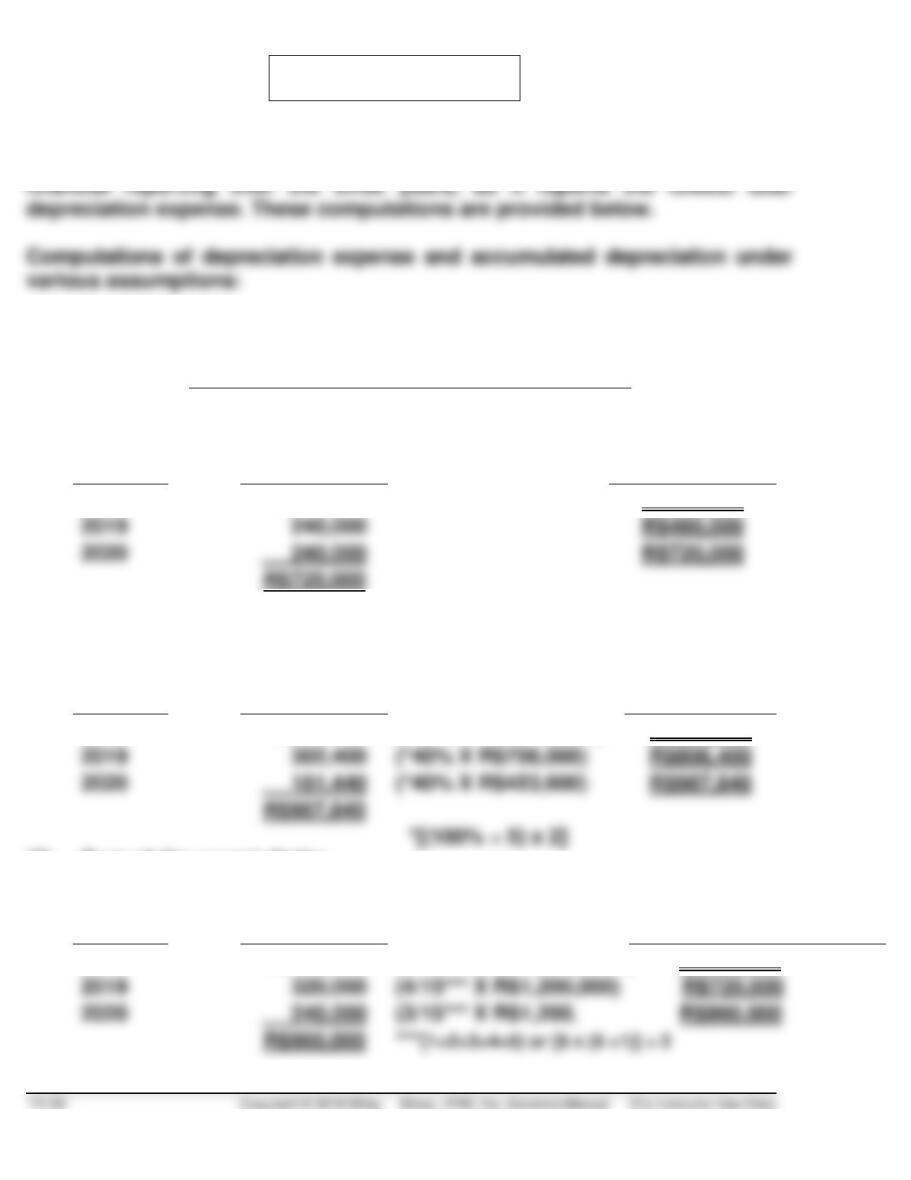
3. Double-Declining-Balance Method:
Year
Cost
Accum.
Depr. at
beg. of
Year
Book
Value at
beg. of
Year
Depr.
Expense
2017
$90,000
—
$90,000
$27,000 (1)
2018
25,200 (2)
2019
15,120 (3)
2020
9,072 (4)
2021
5,443 (5)
2022
8,165
2,165 (6)
(1) $90,000 X 40% X 9/12
(2) ($90,000 – $27,000) X 40%
PROBLEM 11.8
The straight-line method would provide the highest total net income for
(1) Straight-line:
R$1,260,000 – R$60,000 = R$1,200,000***
= R$240,000
5 years
Year
Depreciation
Expense
Accumulated
Depreciation
2018
R$240,000
R$240,000
2019
R$480,000
2020
R$720,000
R$720,000
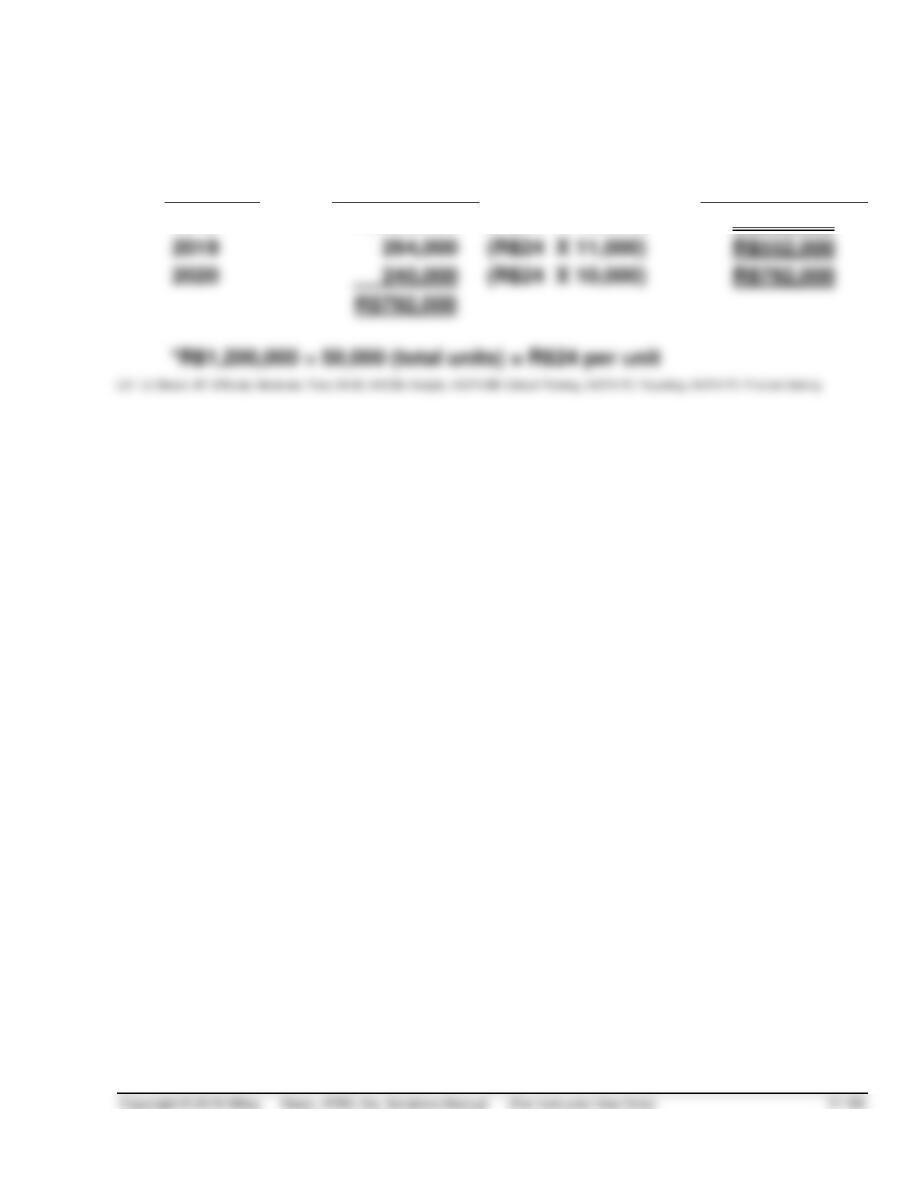
(2) Double-declining-balance:
Year
Depreciation
Expense
Accumulated
Depreciation
2018
R$504,000
(*40% X R$1,260,000)
R$504,000
2019
(*40% X R$756,000)
2020
(*40% X R$453,600)
R$987,840
(3) Sum-of-the-years’-digits:
Year
Depreciation
Expense
Accumulated
Depreciation
2018
R$400,000
(5/15*** X R$1,200,000**)
R$400,000
2019
(4/15*** X R$1,200,000)
R$720,000
2020
(3/15*** X R$1,200,
PROBLEM 11.8 (Continued)
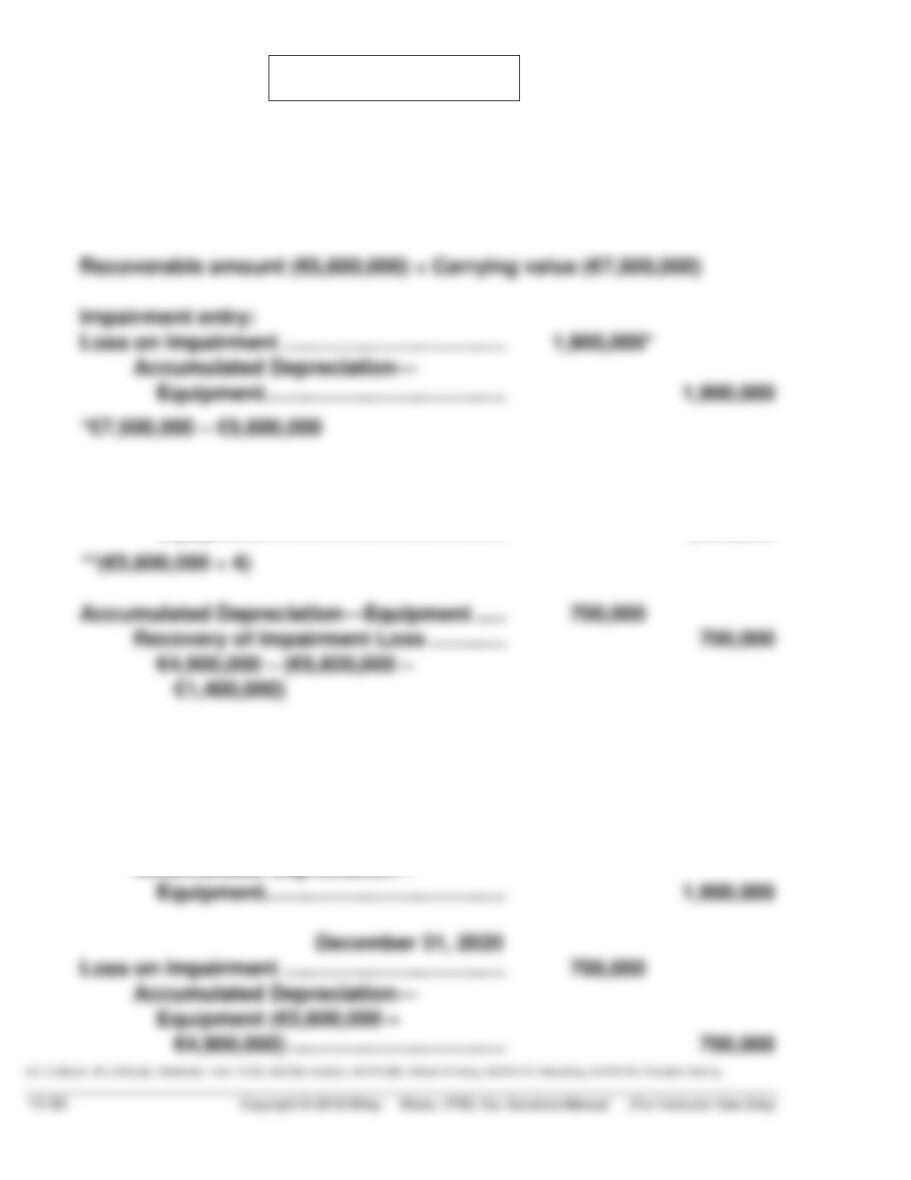
(4) Units-of-output:
Year
Depreciation
Expense
Accumulated
Depreciation
2018
R$288,000
(R$24* X 12,000)
R$288,000
2019
(R$24 X 11,000)
R$552,000
2020
(R$24 X 10,000)
R$792,000
PROBLEM 11.9
(a) Carrying value of asset: €10,000,000 – €2,500,000* = €7,500,000.
*(€10,000,000 ÷ 8) X 2
(b) Depreciation Expense …………………………….. 1,400,000**
Accumulated Depreciation—
Equipment …………………………..……… 1,400,000
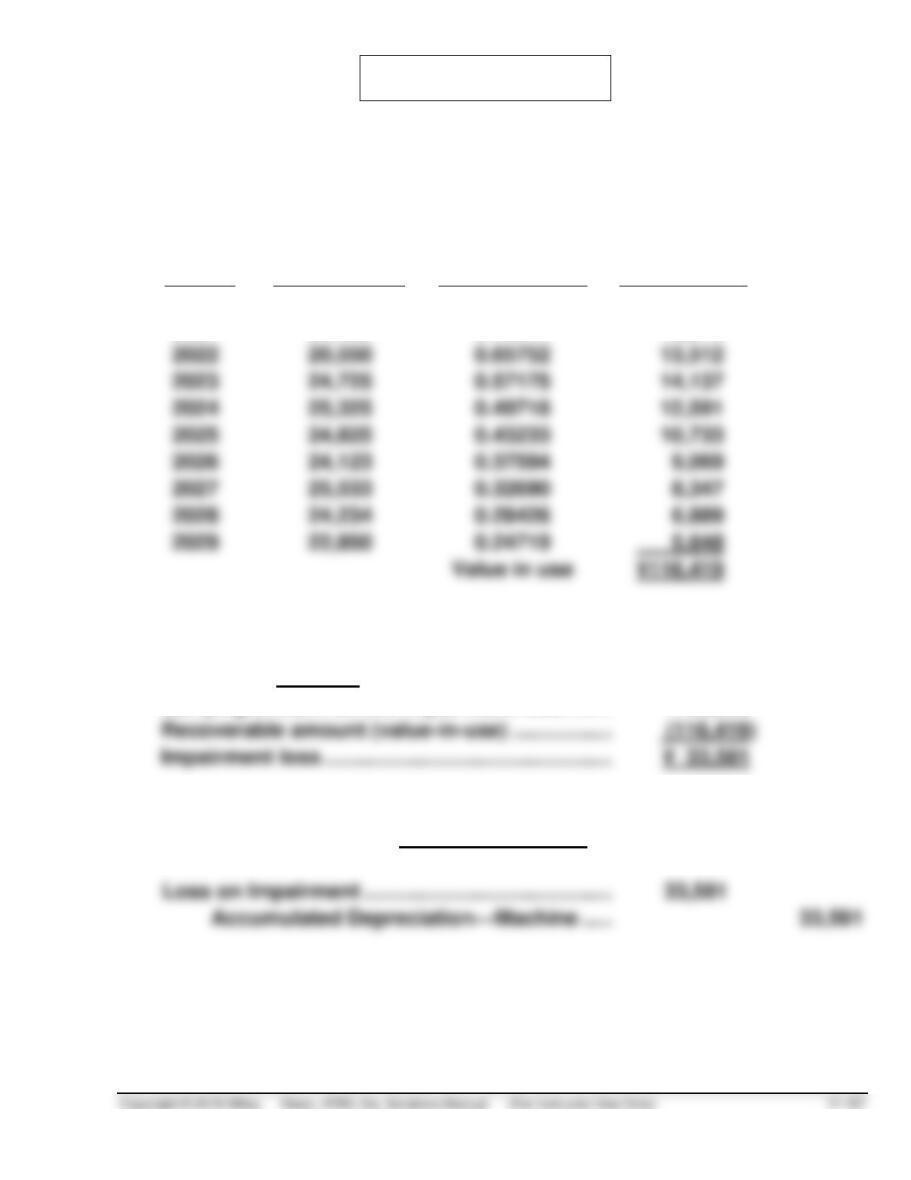
(c) No depreciation is recorded on impaired assets to be disposed of.
Recovery of impairment losses are recorded.
December 31, 2019
Loss on Impairment …………………………..…… 1,900,000
Accumulated Depreciation—
PROBLEM 11.10
Part I
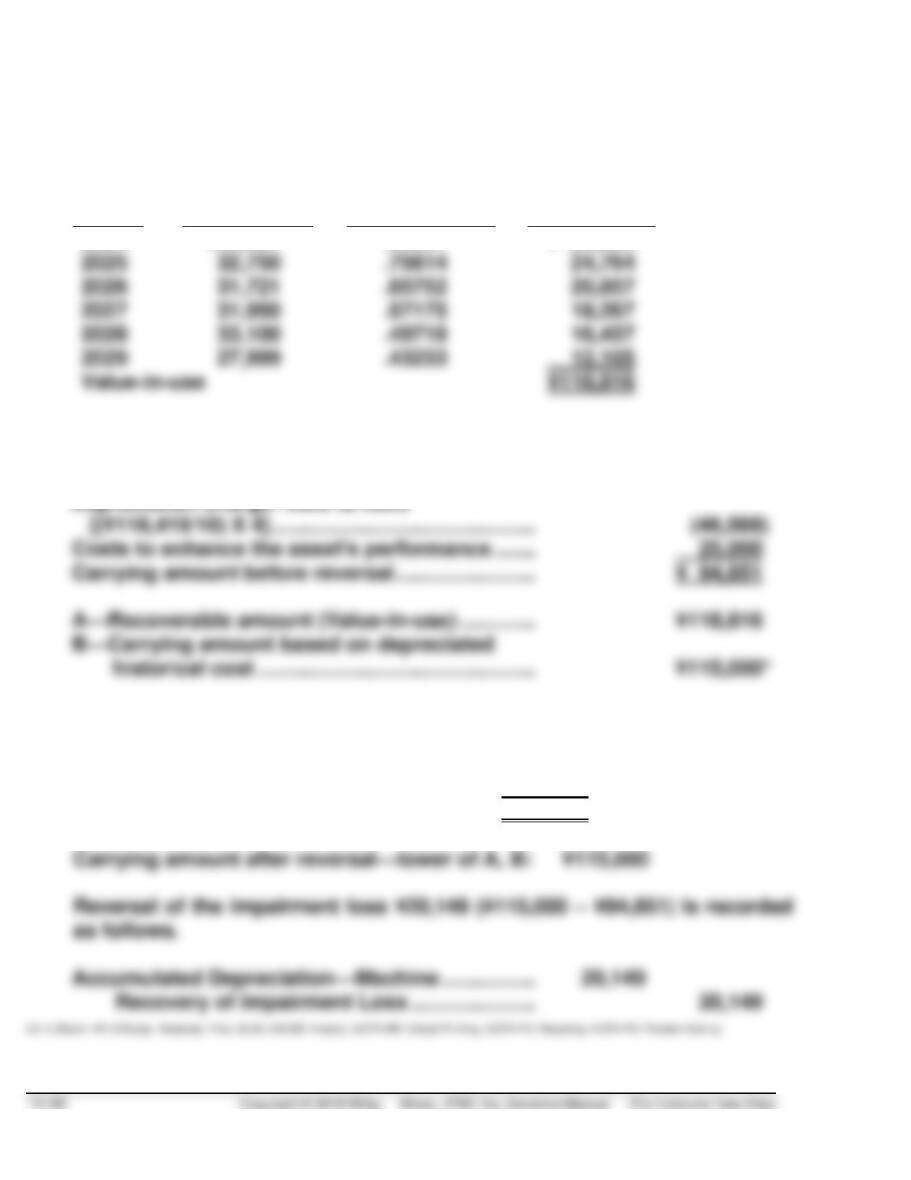
(a) Calculation of the machine’s value-in-use at the end of 2019
Year
Future Cash
Flows
Present Value
Factor
Discounted
Cash Flow
2020
¥22,165
0.86957
¥ 19,274
2021
21,450
0.75614
16,219
2023
24,725
0.57175
14,137
2024
25,325
0.49718
12,591
2025
24,825
0.43233
10,733
2026
24,123
0.37594
2027
25,533
0.32690
2028
24,234
0.28426
2029
22,850
0.24719
The calculation of the impairment loss at the end of 2019 is as follows.
Machine
Carrying amount before impairment loss …….. ¥150,000
(b) December 31, 2019
PROBLEM 11.10 (Continued)
Part II
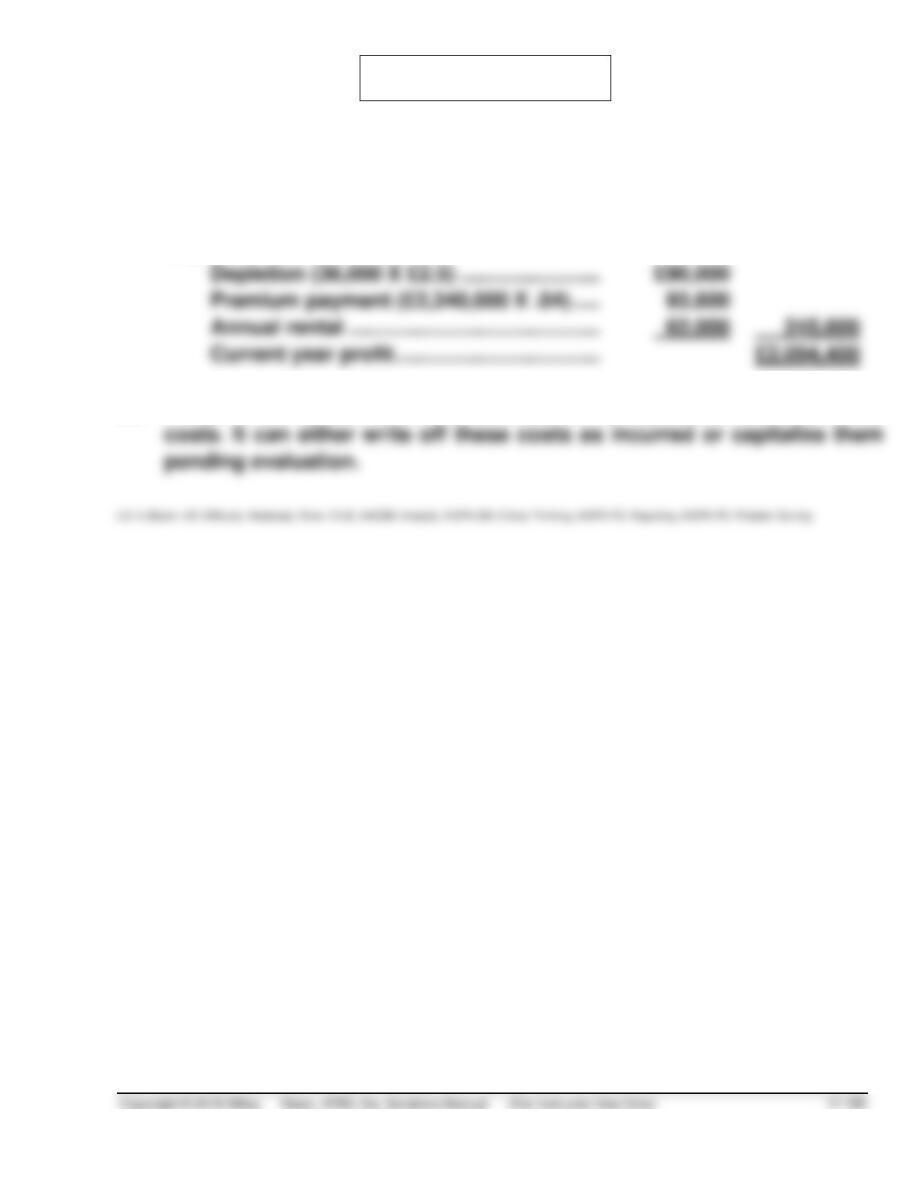
(c) Revised Cash Flows
Year
Future Cash
Flows
Present Value
Factor 15%
Discounted
Cash Flow
2024
¥30,321
.86957
¥ 26,366
2026
.65752
2027
.57175
¥118,816
Calculation of the reversal of the impairment loss at the end of 2023
Carrying amount at the end of 2019 (Part I) ……. ¥116,419
*Original cost …………………………………….. ¥150,000
Accumulated depreciation
based on historical cost (¥15,000 X 4) … (60,000)
Costs to enhance ……………………………… 25,000
¥115,000
PROBLEM 11.11
(a) Cost per barrel: (£1,200,000 + £50,000) ÷ 500,000 = £2.5/barrel
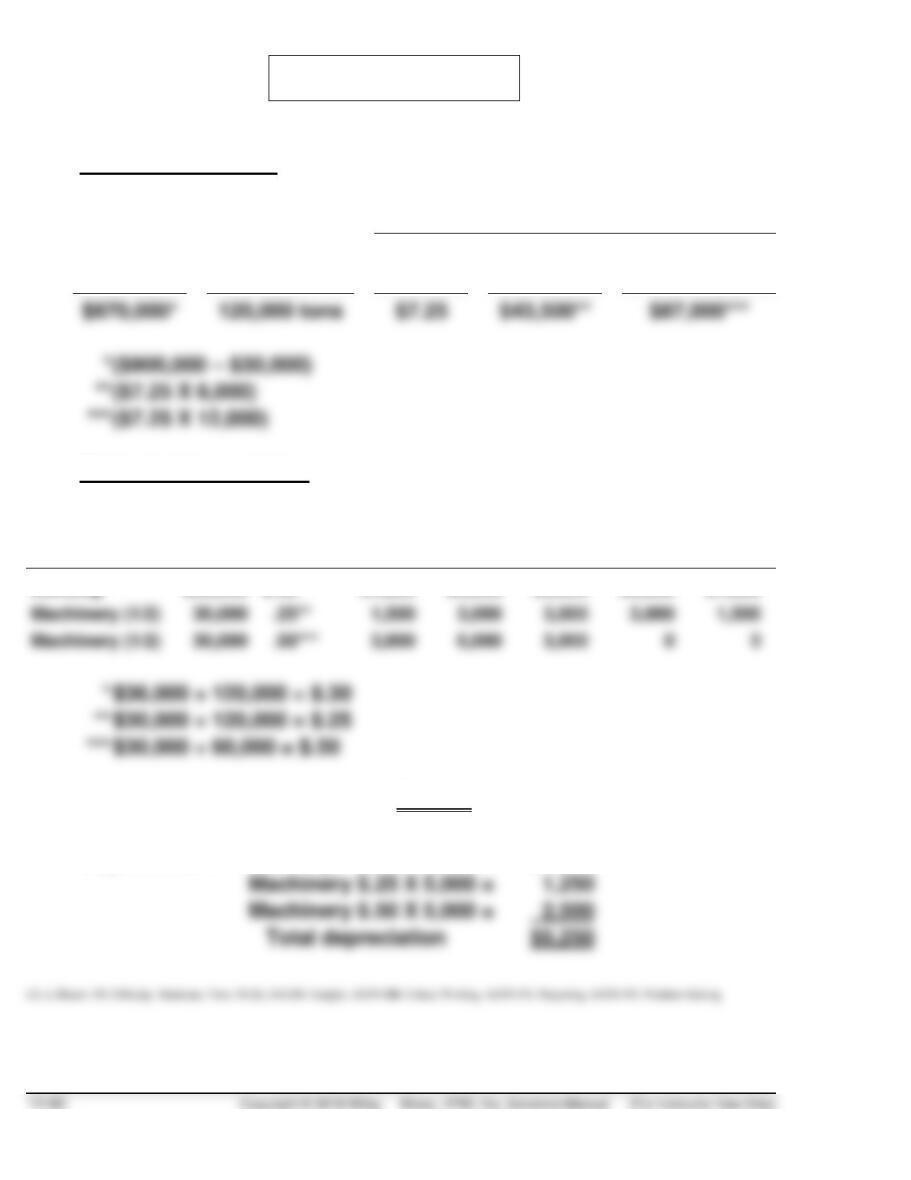
(b) Sales (36,000 X £65) …………………………………. £2,340,000
Expenses:
(c) Phelps has a choice on how to account for its exploration and evaluation
PROBLEM 11.12
(a) Estimated depletion:
Estimated Depletion
Depletion
Base
Estimated
Yield
Per
Ton
1ST & 11th
Yrs.
Each of Yrs.
2-10 Incl.
Estimated depreciation:
Asset
Cost
Per ton
Mined
1st
Yr.
Yrs.
2–5
6th
Yr.
Yrs.
7–10
11th
Yr.
Building
$36,000
$.30*
$1,800
$3,600
$3,600
$3,600
$1,800
Machinery (1/2)
Machinery (1/2)
0
0
(b) Depletion: $7.25 X 5,000 tons = $36,250
Depreciation:
Building $.30 X 5,000 =
$1,500
Total depreciation