IM – 2 | 1
Chapter 2
Two Kinds of Reasoning
Chapter Recap
The main ideas of the chapter are as follows:
• Arguments always have two parts, a premise (or premises) and a conclusion.
• The same statement can be a premise in one argument and a conclusion in a second
argument.
• The two fundamental types of reasoning are deductive demonstration and inductive
• Support is a matter of degrees: An argument supports a conclusion to the extent its premise
(or premises) makes the conclusion likely.
• An argument that offers more support for a conclusion is said to be stronger than one that
offers less support; the latter is said to be weaker than the former.
• Some instructors use the word “strong” in an absolute sense to denote inductivearguments
whose premise (or premises) makes the conclusion more likelythan not.
Answers to Text Exercises
IM – 2 | 4
10. ▲Premise: She didn’t call me.
Unstated conclusion: She is not still interested in me.
Exercise 2-4
1. ▲Deductive demonstration
2. Inductive support
Exercise 2-5
1. ▲Inductive
2. Deductive
3. Inductive
Exercise 2-6
1. ▲b
2. a
IM – 2 | 7
3. Item 3
1. Michael should just go ahead and get a new car.
4. Item 4
1. If Karper goes to Las Vegas, he’ll wind up in a casino.
5. Item 5
1. It’s going to be rainy tomorrow.
2. Serj doesn’t like to play in the rain.
2
1
1
2 3
IM – 2 | 11
Exercise 2-11
7. ▲“Because” is followed by a cause.
Exercise 2-12
1. ▲Could not possibly be false
6. Could not possibly be false
Exercise 2-13
5. Anyone who votes against gun control is not a liberal.
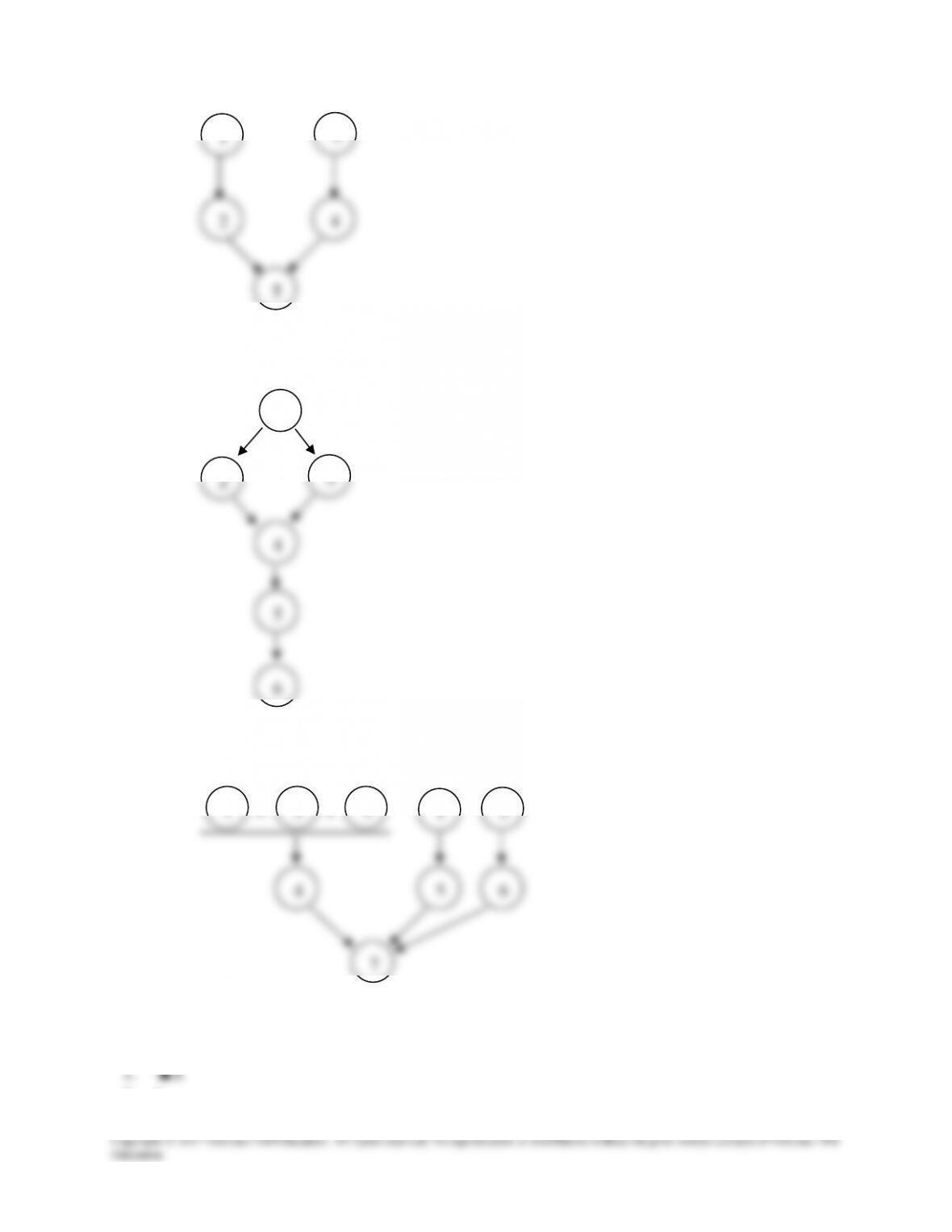
IM – 2 | 13
4.
5.
Exercise 2-16
2. b
3
1
5
2
4
1
2
3
4
5
6
7
6
5
2
1
4
3
2
1
+
+