
13–37 Solutions
Solutions 13–38
13.30 continued.
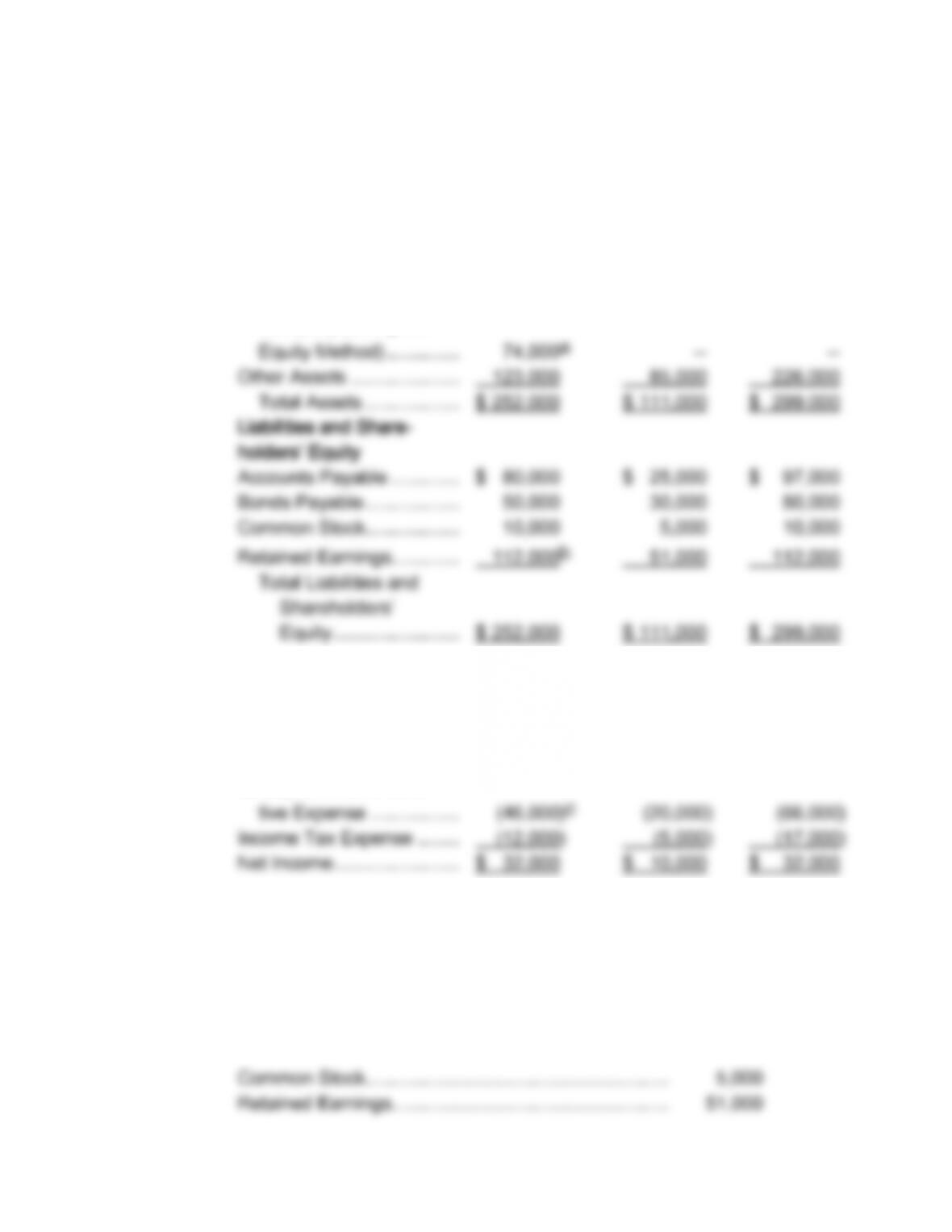
d. and e. Peak Valley
Company Company Consolidated
Assets
Cash ……………………………. $ 13,000 $ 6,000 $ 19,000
Accounts Receivable ……… 42,000 20,000 54,000
Investment in Valley
Company (Using the
Sales Revenue ……………… $ 400,000 $ 125,000 $ 525,000
Equity in Earnings of
Valley Company ………… 10,000 — —
Cost of Goods Sold ……….. (320,000) (90,000) (410,000)
Selling and Administra-
a$74,000 = $70,000 + $10,000 – $4,000 – $2,000.
b$112,000 = $114,000 – $2,000 amortization.
c$46,000 = $44,000 + $2,000 amortization.
The elimination entry (not required) is as follows:

13–39 Solutions
Solutions 13–40
13.30 d. and e. continued.
Assets
=
Liabilities
+
Shareholders’
Equity
(Class.)
+18,000
–5,000
ContriCap
–74,000
–51,000
R E
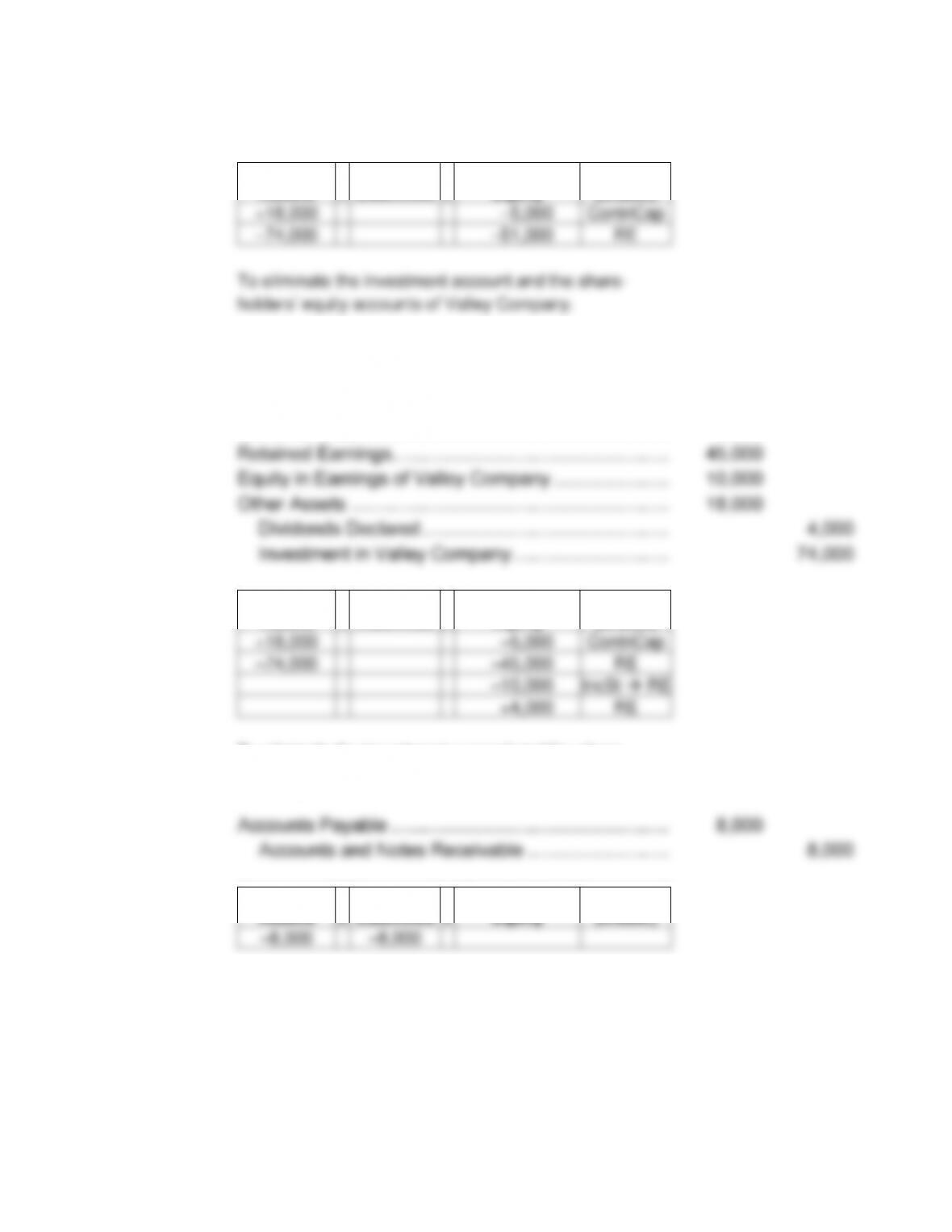
To eliminate the investment account and the share-
holders’ equity accounts of Valley Company.
Alternative elimination entries using amounts before closing entries are
as follows:
Common Stock …………………………………………………. 5,000
Assets
=
Liabilities
+
Shareholders’
Equity
(Class.)
+18,000
–5,000
ContriCap
–74,000
–45,000
R E
–10,000
IncSt → RE
+4,000
R E
To eliminate the investment account and the share–
holders’ equity accounts of Valley Company.
Assets
=
Liabilities
+
Shareholders’
Equity
(Class.)
–8,000
–8,000
To eliminate intercompany advance.
13–41 Solutions
13.31 (Parent Company and Sub Company; equity method and consolidated
financial statements with noncontrolling interest.)
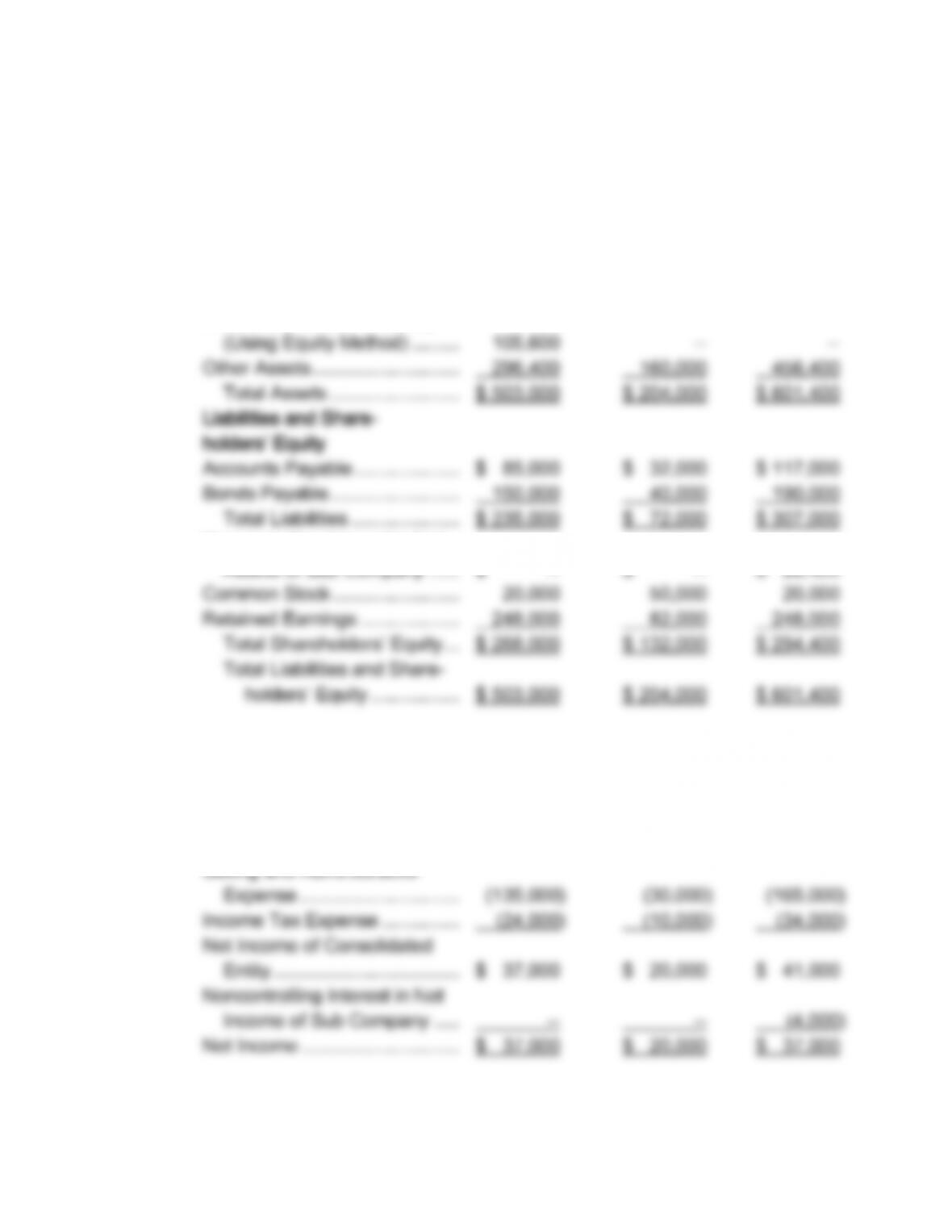
Parent Sub
Company Company Consolidated
Assets
Cash …………………………..…….. $ 38,000 $ 12,000 $ 50,000
Accounts Receivable …………… 63,000 32,000 95,000
Investment in Sub Company
Noncontrolling Interest in Net
Assets of Sub Company …… $ — $ — $ 26,400
Sales Revenue …………………… $ 800,000 $ 145,000 $ 945,000
Equity in Earnings of Sub
Company ……………………….. 16,000 — —
Cost of Goods Sold ……………… (620,000) (85,000) (705,000)
The elimination and reclassification entry (not required) is as follows:

Solutions 13–42
13–43 Solutions
13.31 continued.
Assets
=
Liabilities
+
Shareholders’
Equity
(Class.)
–105,600
–40,000
ContriCap
–65,600
R E
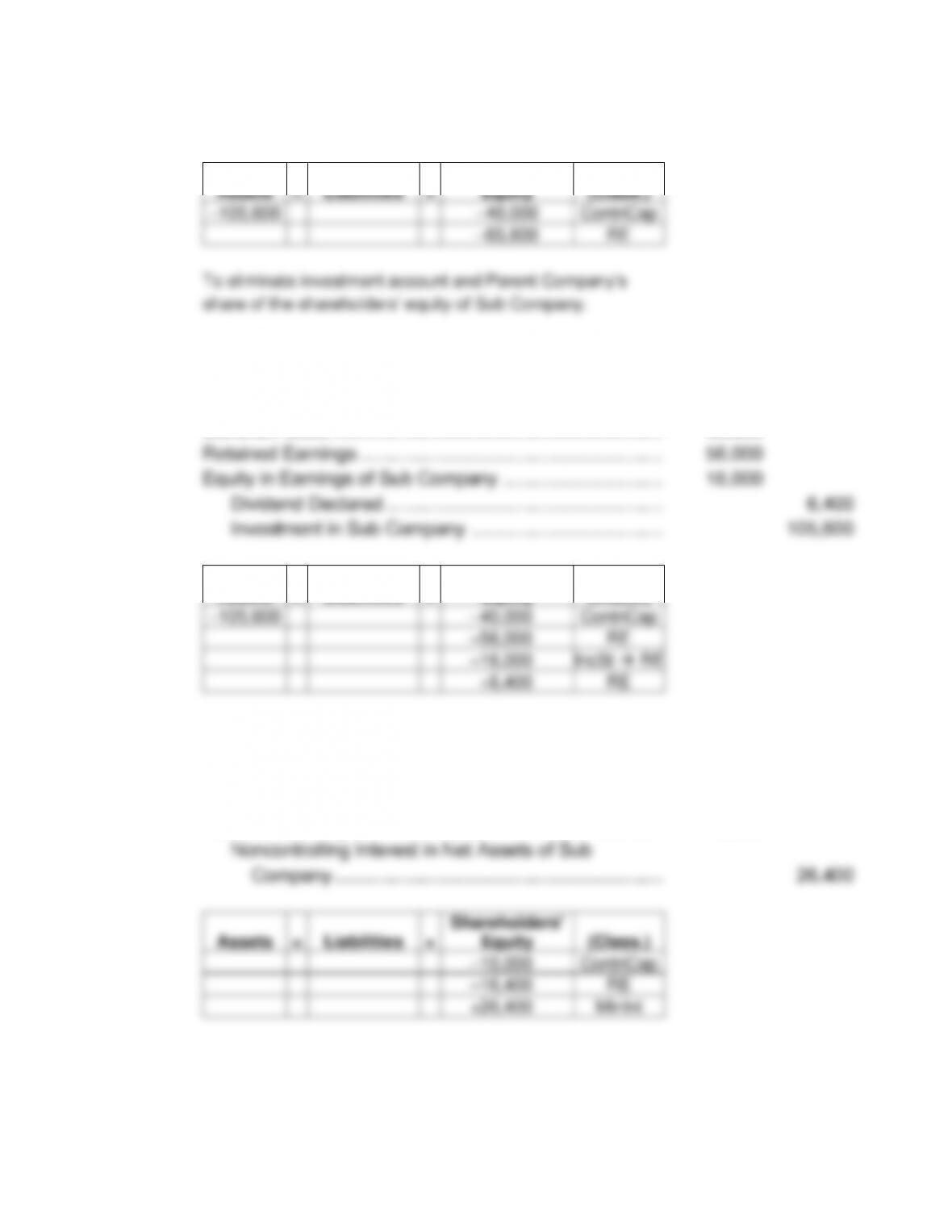
To eliminate investment account and Parent Company’s
share of the shareholders’ equity of Sub Company.
Alternative elimination entries using amounts before closing entries are as
follows:
Common Stock ……………………………………………………… 40,000
Assets
=
Liabilities
+
Shareholders’
Equity
(Class.)
–105,600
–40,000
ContriCap
–56,000
R E
–16,000
IncSt → RE
+6,400
R E
To eliminate investment account and Parent Company’s
share of the shareholders’ equity of Sub Company.
Common Stock ……………………………………………………… 10,000
Retained Earnings …………………………………………………. 16,400
Assets
=
Liabilities
+
Shareholders’
Equity
(Class.)
–10,000
ContriCap
–16,400
R E
+26,400
MinInt
To recognize the noncontrolling interest in Sub Company.
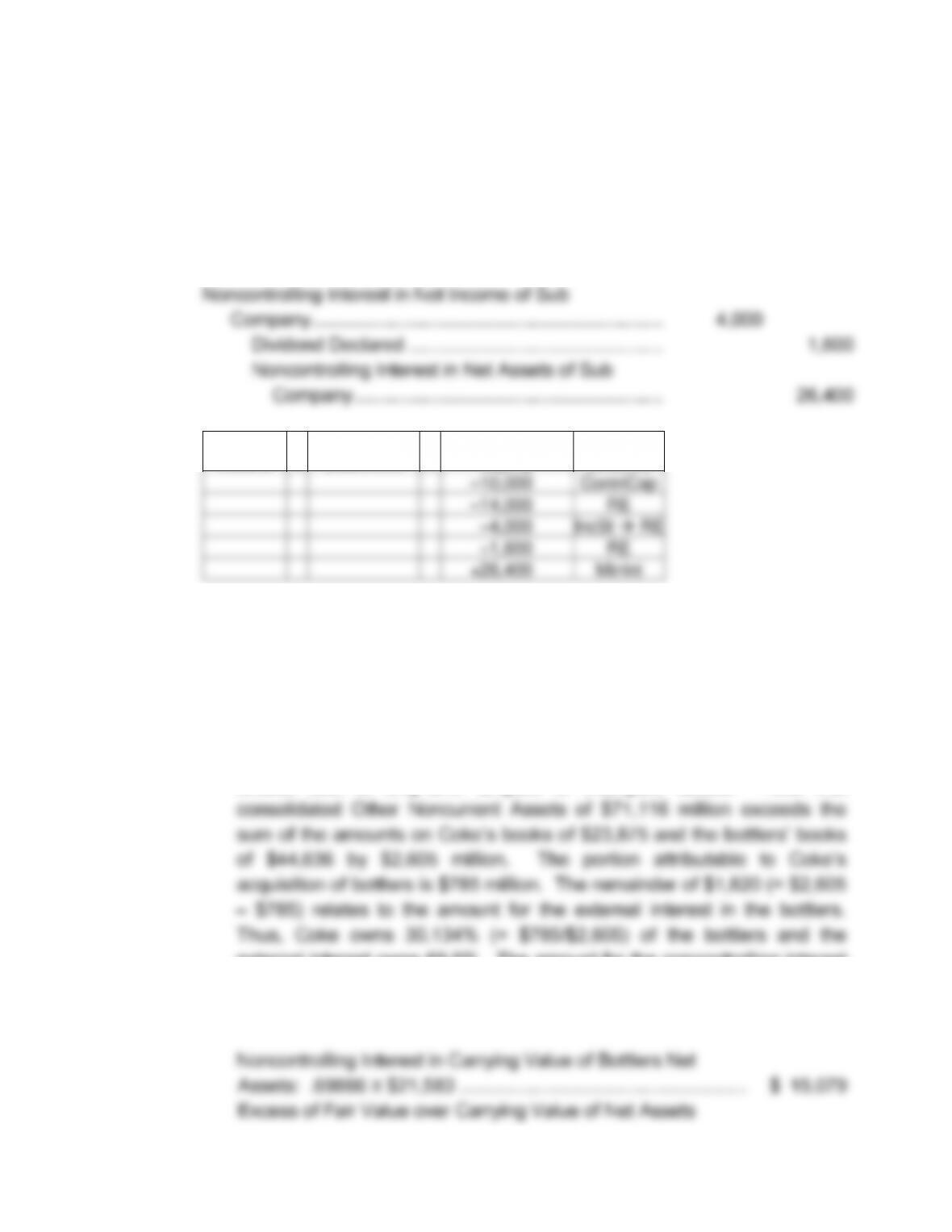
Solutions 13–44
13.31 continued.
An alternative elimination entry using amounts before closing entries is as
follows:
Common Stock ……………………………………………………… 10,000
Retained Earnings …………………………………………………. 14,000
Assets
=
Liabilities
+
Shareholders’
Equity
(Class.)
–10,000
ContriCap
–14,000
R E
–4,000
IncSt → RE
+1,600
R E
+26,400
MinInt
To recognize the noncontrolling interest in Sub Company.
13.32 (The Coca-Cola Company; effect of intercorporate investment policies on
financial statements.)
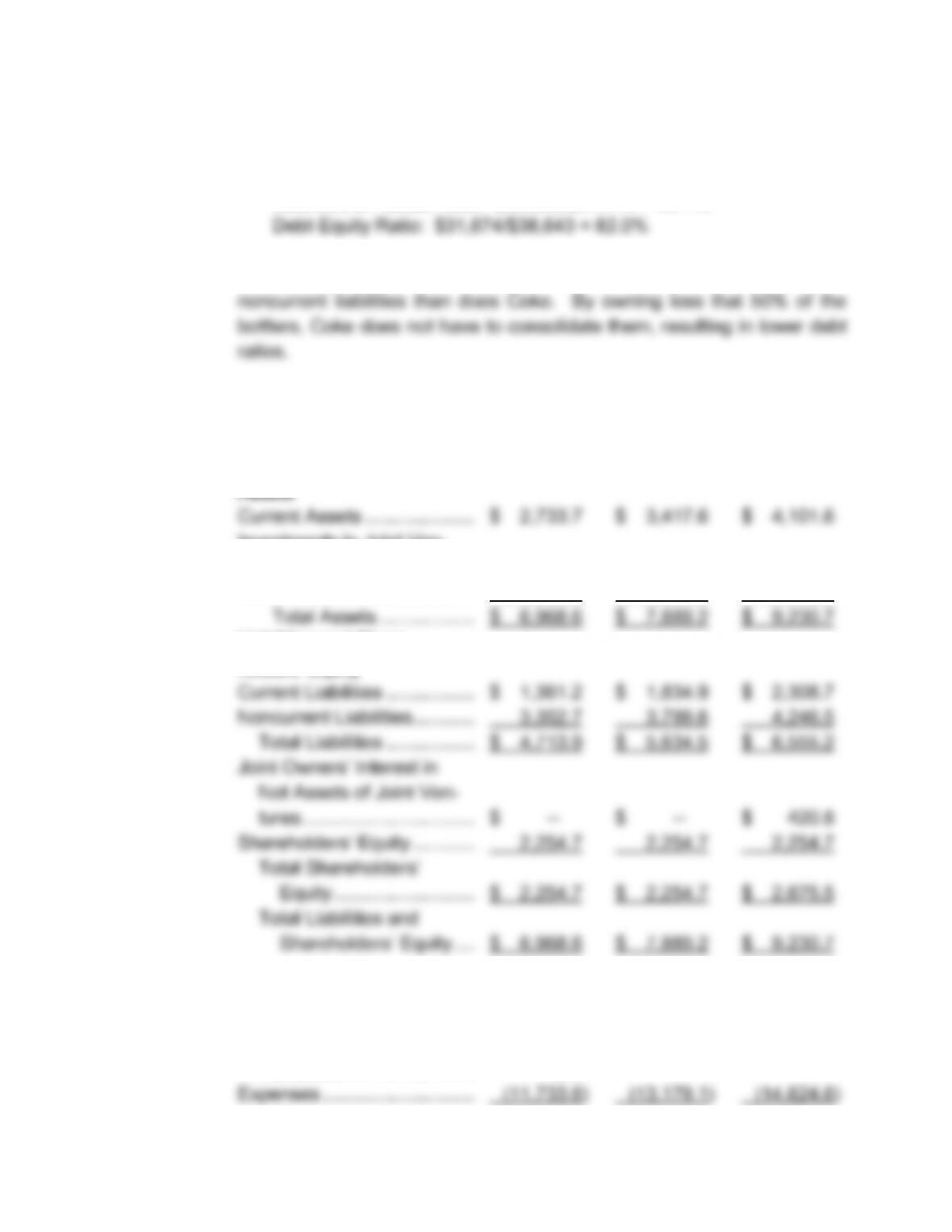
a. Coke’s acquisition cost of its investments in the bottlers exceeds the
carrying value of the net assets of the bottlers. Coke attributes the
excess cost to long-term tangible or intangible assets. Note that
external interest owns 69.9%. The amount for the noncontrolling interest
in the net assets of the bottlers of $16,899 million comprises the
following:

13–45 Solutions
b. (1) Equity Method
Solutions 13–46
13.32 b. continued.
(2) Consolidation
Liabilities to Assets Ratio: $58,829/$97,472 = 60.4%.
c. The bottlers have a heavier proportion of noncurrent assets and
13.33 (Smithfield Foods; accounting for joint ventures.)
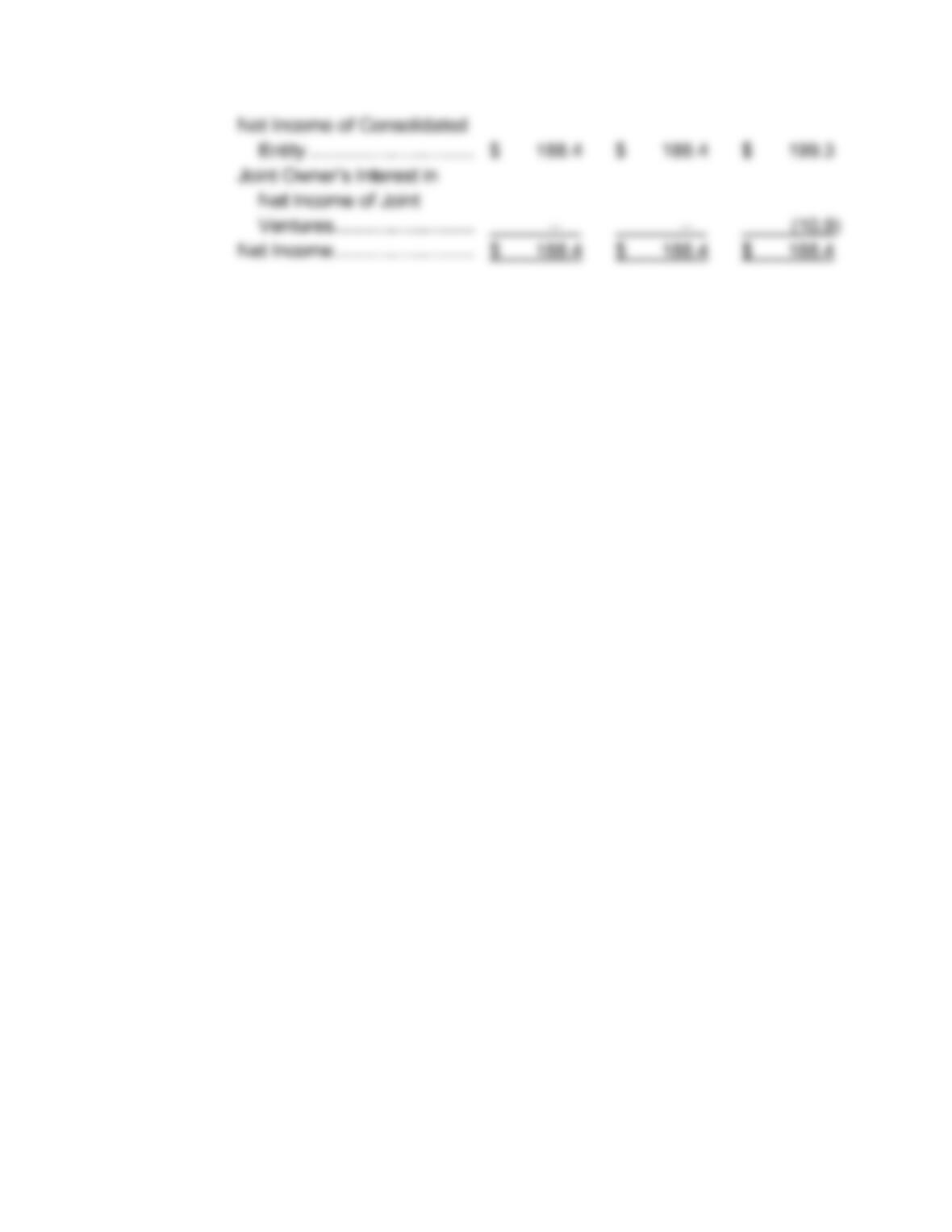
a. Equity Proportionate Full
Method Consolidation Consolidation
Assets
Investments in Joint Ven-
tures …………………………... 420.8 — —
Other Noncurrent Assets …… 3,814.1 4,471.6 5,129.1
Liabilities and Share–
holders’ Equity
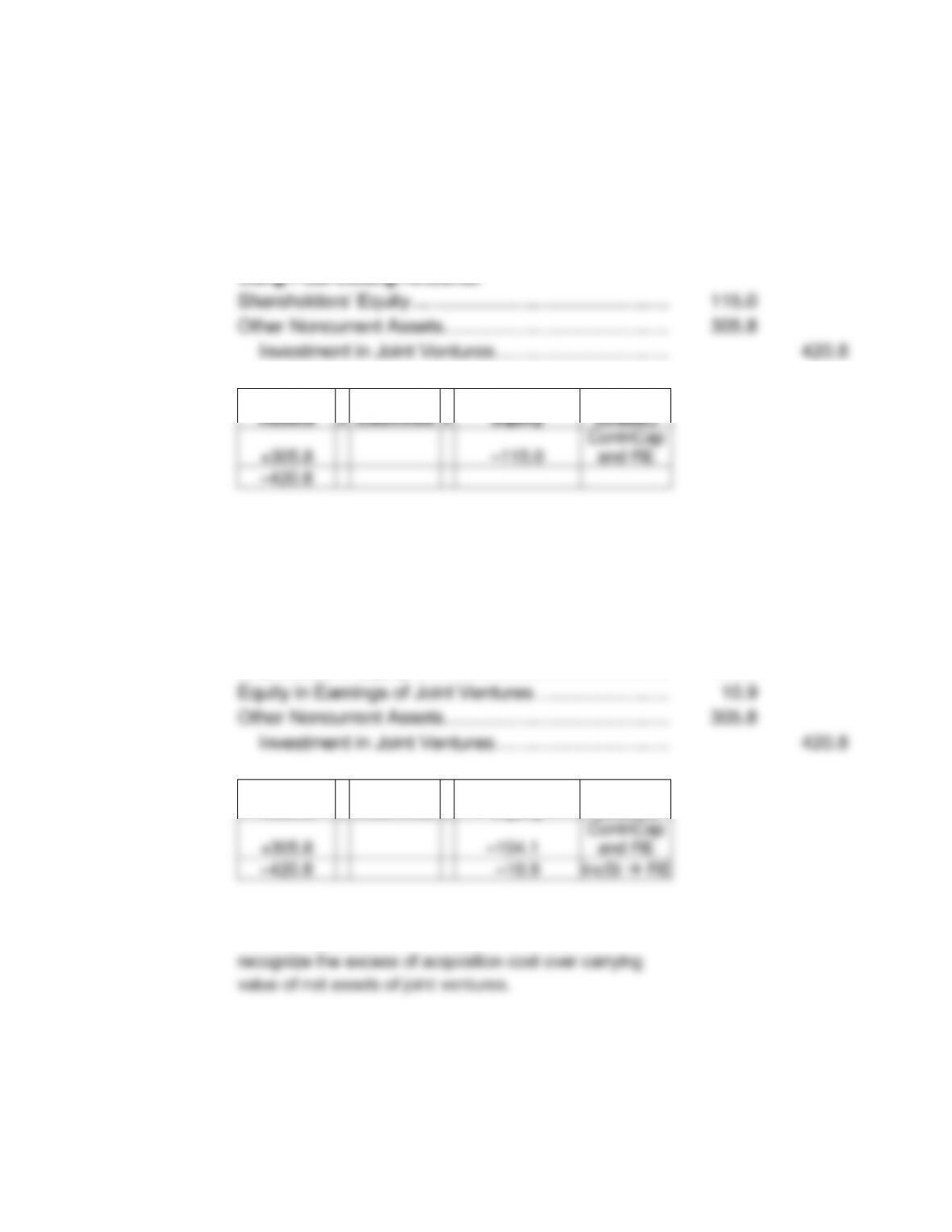
Income Statement
Sales ……………………………… $ 11,911.1 $ 13,367.5 $ 14,823.9
Equity in Earnings of Joint
Ventures ……………………… 10.9 — —
13–47 Solutions
Solutions 13–48
13.33 a. continued.
The work sheet entries for proportionate consolidation and full
consolidation (not required) are as follows:
Proportionate Consolidation
Using Post-Closing Amounts:
Assets
=
Liabilities
+
Shareholders’
Equity
(Class.)
+305.8
–115.0
ContriCap
and RE
–420.8
To eliminate the investment account, the share-
holders’ equity account of the joint ventures, and
recognize the excess of acquisition cost over carrying
value of net assets of joint ventures.
Using Pre-Closing Amounts:
Shareholders’ Equity …………………………………………. 104.1
Assets
=
Liabilities
+
Shareholders’
Equity
(Class.)
+305.8
–104.1
ContriCap
and RE
–420.8
–10.9
IncSt → RE
To eliminate the investment account, the share-
holders’ equity account of the joint ventures, and
Full Consolidation
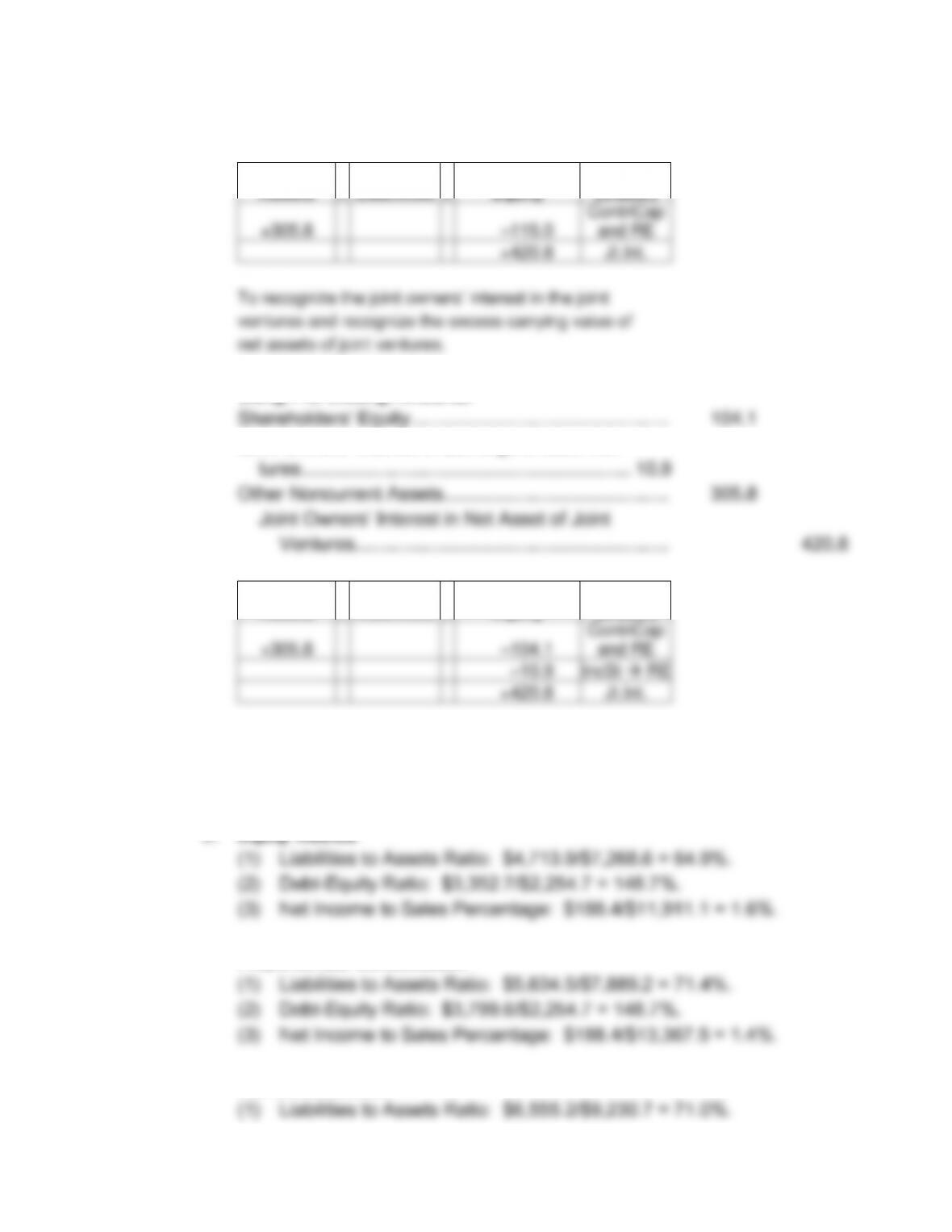
In addition to the entries above to eliminate the investment account, the
following entries recognize the interest of the other joint owners.

13–49 Solutions
Using Post-Closing Amounts:
Solutions 13–50
13.33 a. continued.
Assets
=
Liabilities
+
Shareholders’
Equity
(Class.)
+305.8
–115.0
ContriCap
and RE
+420.8
Jt.Int.
Using Pre-Closing Amounts:
Joint Owners’ Interest in Earnings of Joint Ven–
Assets
=
Liabilities
+
Shareholders’
Equity
(Class.)
+305.8
–104.1
ContriCap
and RE
–10.9
IncSt → RE
+420.8
Jt.Int.
To recognize the joint owners’ interest in the joint
ventures and recognize the excess carrying value of
net assets of joint ventures.
b. Equity Method
Proportionate Consolidation
Full Consolidation

13–51 Solutions
Solutions 13–52
13.33 continued.
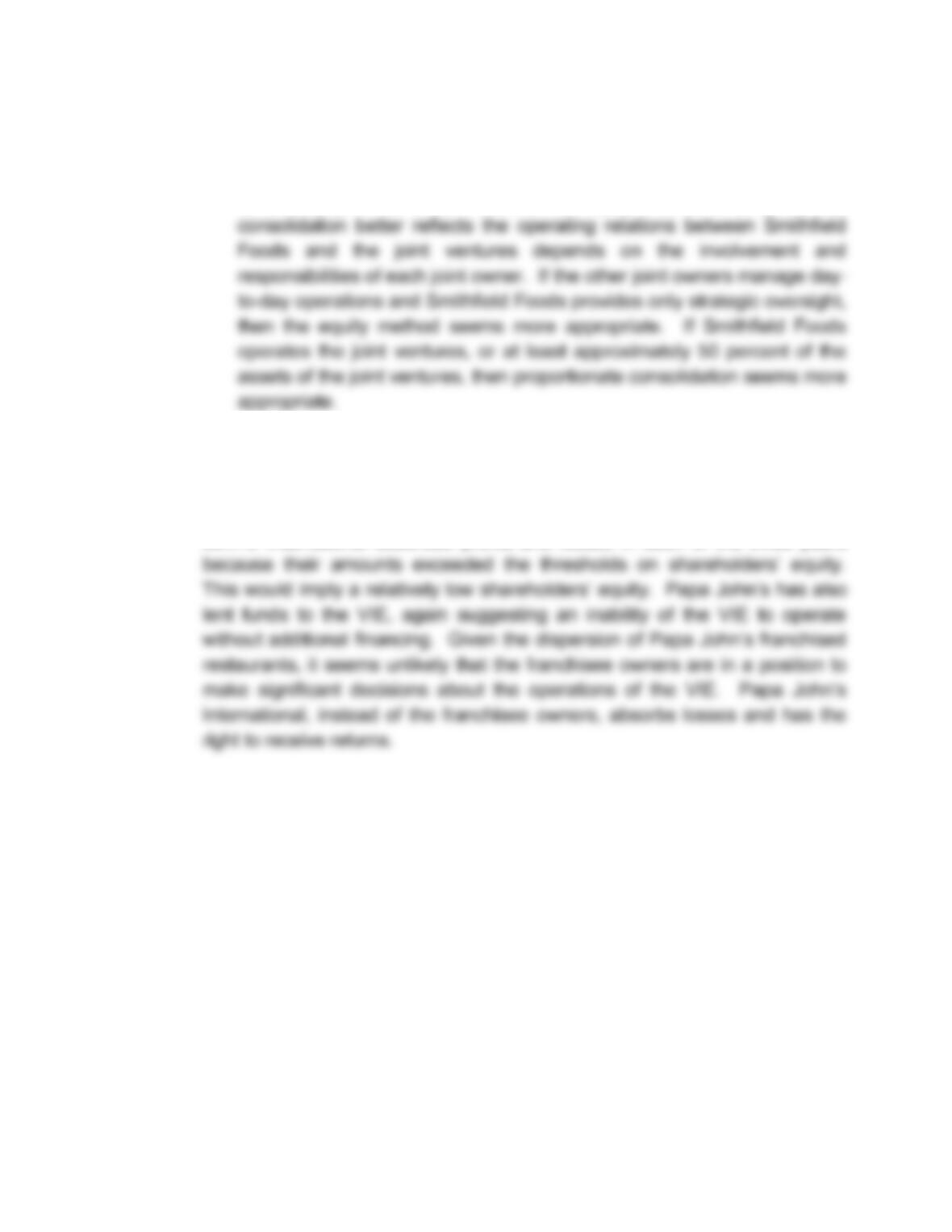
c. Full consolidation is inappropriate, because Smithfield Foods does not
control the joint ventures. Whether the equity method or proportionate
13.34 (Papa John’s International; accounting for variable interest entity.)
Papa John’s International appears to be the primary beneficiary of the VIE,
even though it has no equity ownership, and should consolidate it. Papa
John’s International absorbed profits and losses in each of the three years