BUSINESS ANALYTICS MODULE A DE C I S I O N – M A KI N G TO O L S 285
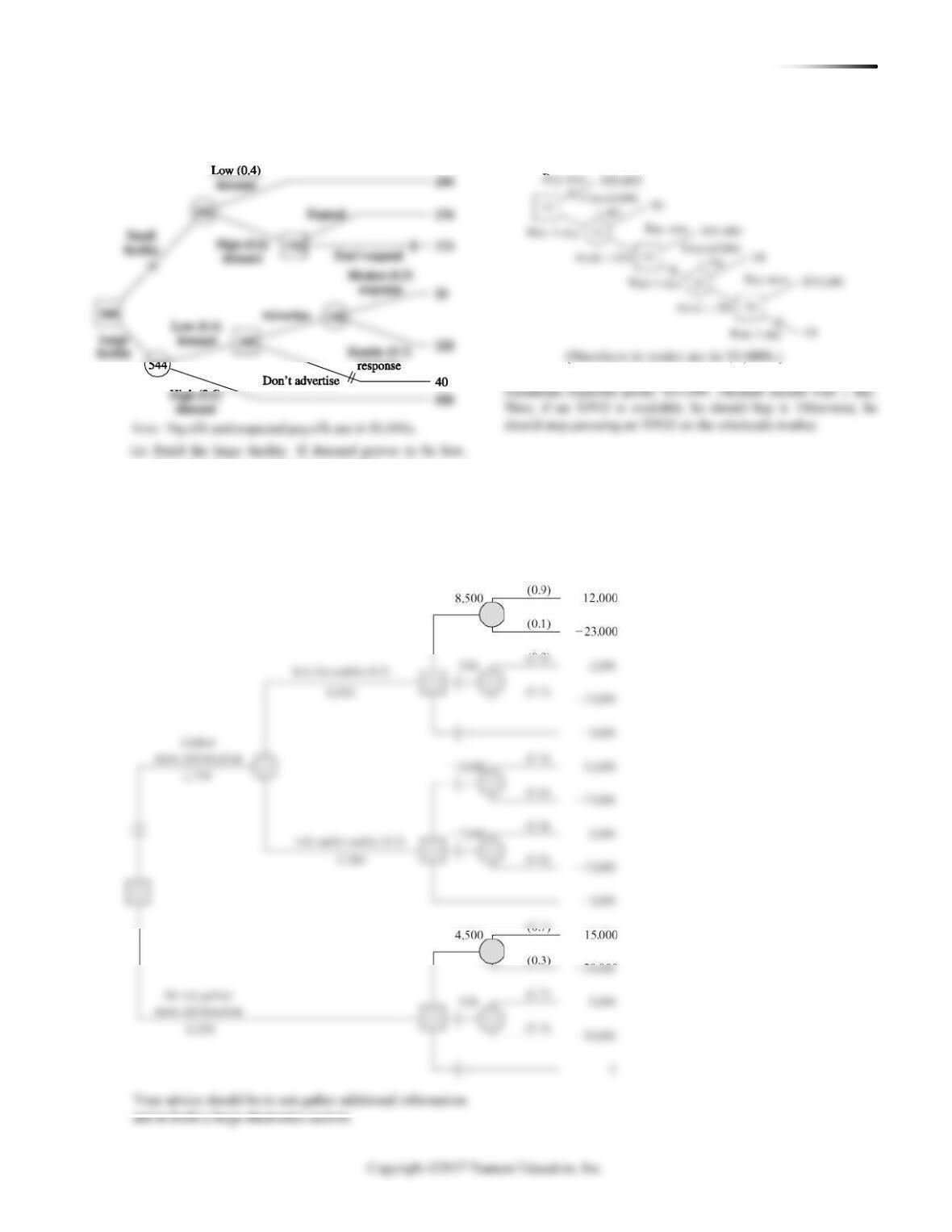
A.26 More than one decision is involved, and the problem is
under risk, so use a decision tree approach:
then advertise to stimulate demand. If demand proves to
be high, no advertising is needed (so don’t advertise).
(b) Expected payoff: $544,000.
A.28 Solution approach: Decision tree, since problem is under
risk and has more than one decision:
A.27
286 BUSINESS ANALYTICS MODULE A DE C I S I O N –MA K I N G TO O L S
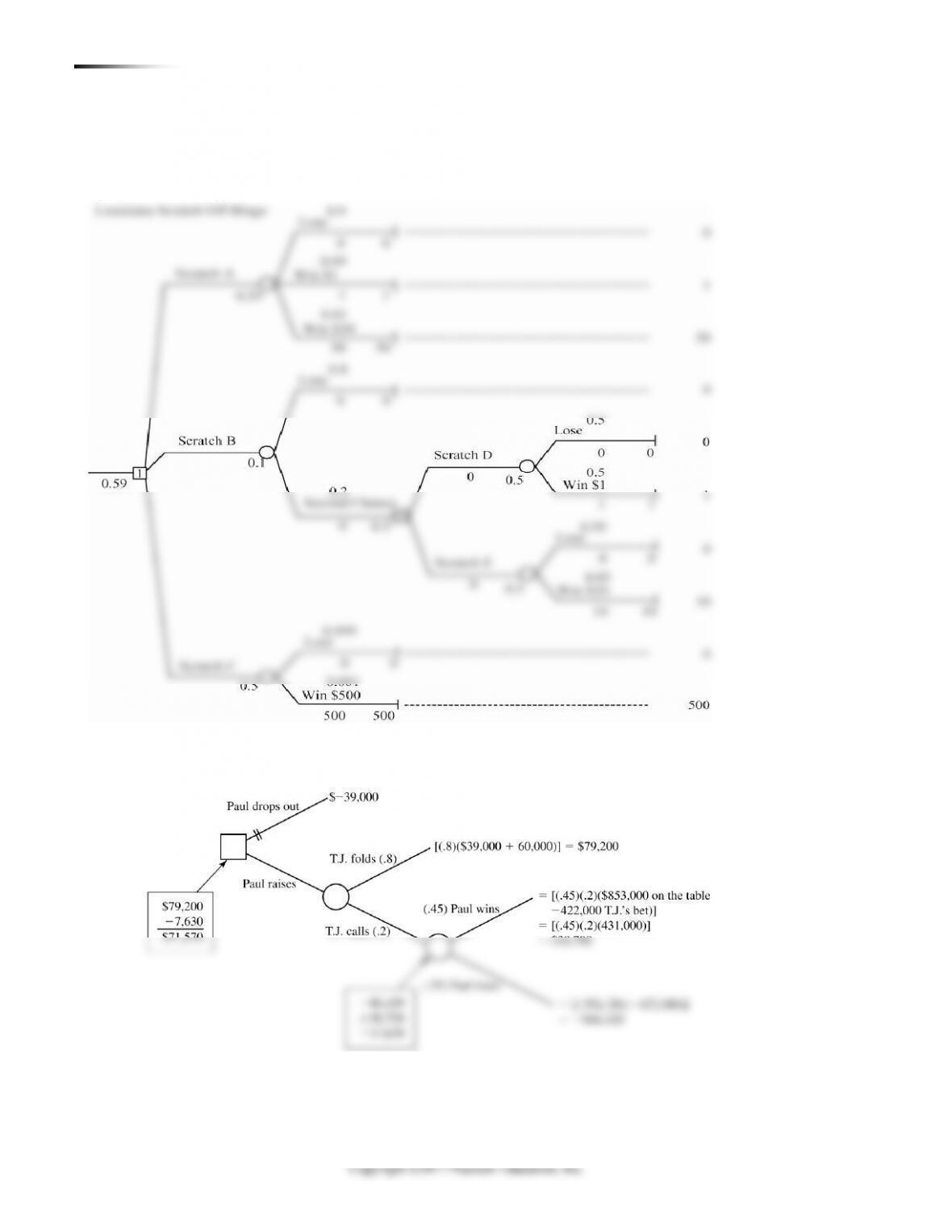
A.29 The EMV of this game is $0.59, as illustrated in the dia-
gram below:
A.30
BUSINESS ANALYTICS MODULE A DE C I S I O N – M A K I N G TO O L S 287
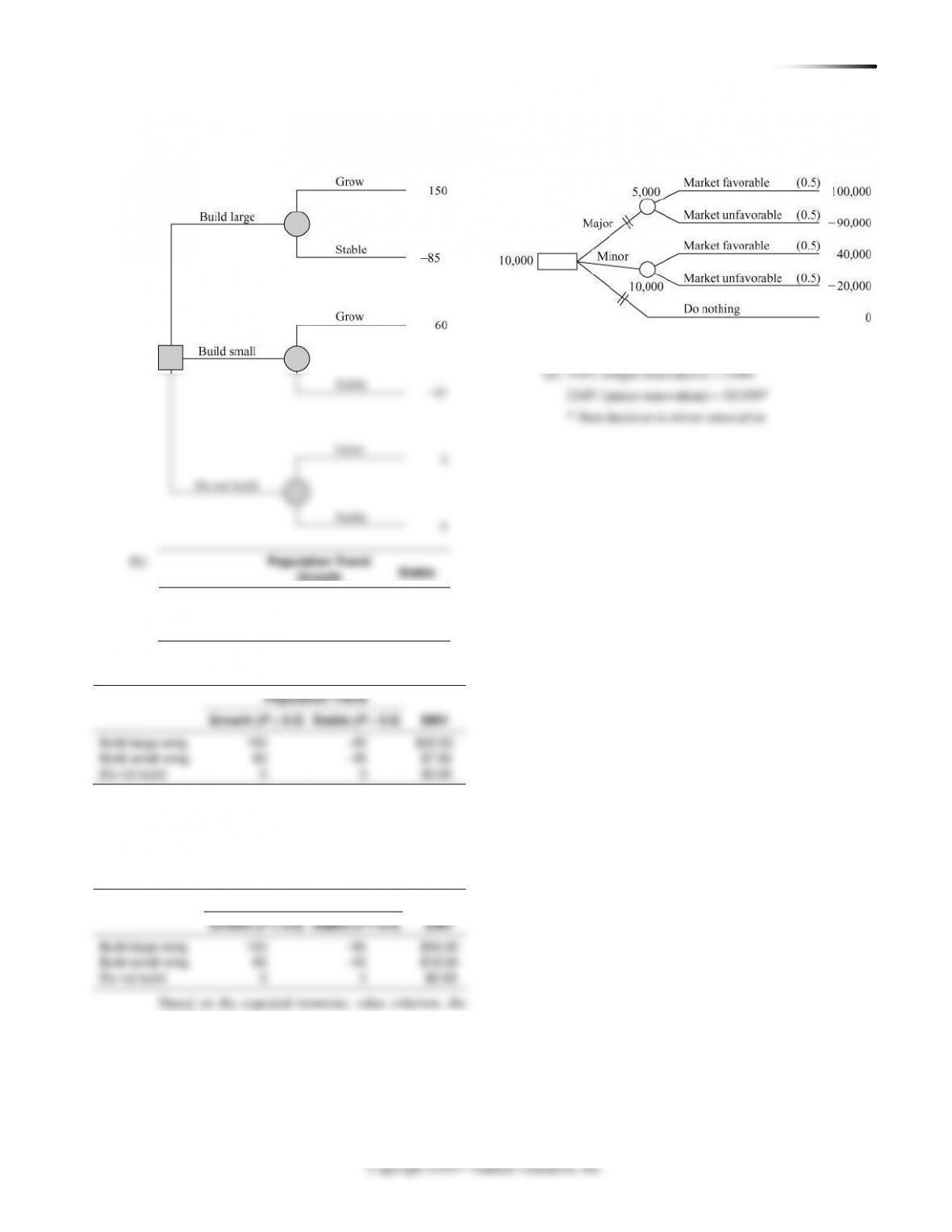
A.31* Note: All dollar values are in 1,000s.
(a)
A.32* (a)
288 BUSINESS ANALYTICS MODULE A DE C I S I O N –MA K I N G TO O L S
1
CASE STUDY
WAREHOUSE TENTING AT THE PORT OF MIAMI**
1. According to the timeline of events for this problem, the first
ized, CCI will have to pay $25,000, and it costs $150 48
= $7,200 to hire security. These events and expenses can be
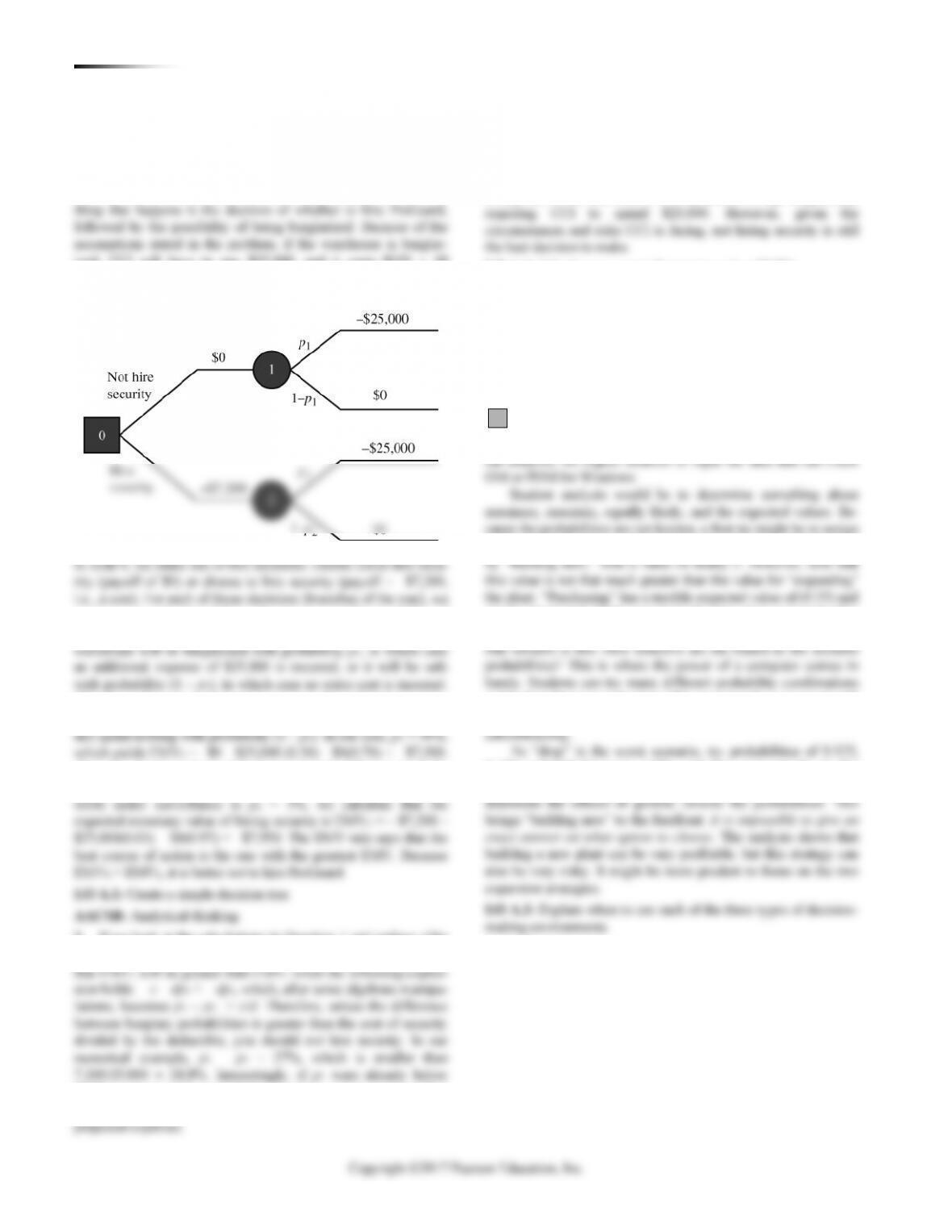
depicted in a decision tree as follows:
create event nodes (1 and 2) to take into account the possibility of
being burglarized. At the top branch of the tree (node 1), the
Therefore, the expected monetary value of not hiring security,
which we will call EMV1, is to spend $25,000 with probability p1
Through a similar analysis of the bottom branch of the tree (node 2),
and using the fact that the probability of being burglarized
2. If we look at the calculations in Question 1 and replace d for
$25,000, c for $7,200, p1 for 30%, and p2 for 3%, we conclude
28.8% to begin with, even if the security company were perfect
(i.e., p2 = 0%), it would still be better not to hire them given the
LO A.4: Calculate an expected monetary value (EMV)
AACSB: Analytical thinking
3. As usual, good decisions do not guarantee good outcomes.
It may still be the case that CCI’s warehouse will get burglarized,
LO A.4: Calculate an expected monetary value (EMV)
AACSB: Application of knowledge
**Case author is Professor Tallys Yunes, University of Miami.
ADDITIONAL CASE STUDIES
(AVAILABLE IN MYOMLAB)
ARCTIC, INC.
No probabilities have been included in this case study. As an ini-
equal probabilities—say, 0.1666. The best expected value is given
can be eliminated. “Sole sourcing” also has a low expected value
and can possibly be eliminated from consideration. The question
and look at the expected values. We are primarily concerned with
expanding, building new, subcontracting, and expanding and
0.125, and 0.25 for grow, stable, and drop, respectively. In this
case, “expand” or “expand and subcontract” are better options. To
AACSB: Application of knowledge
BUSINESS ANALYTICS MODULE A DE C I S I O N – M A K I N G TO O L S 289
2
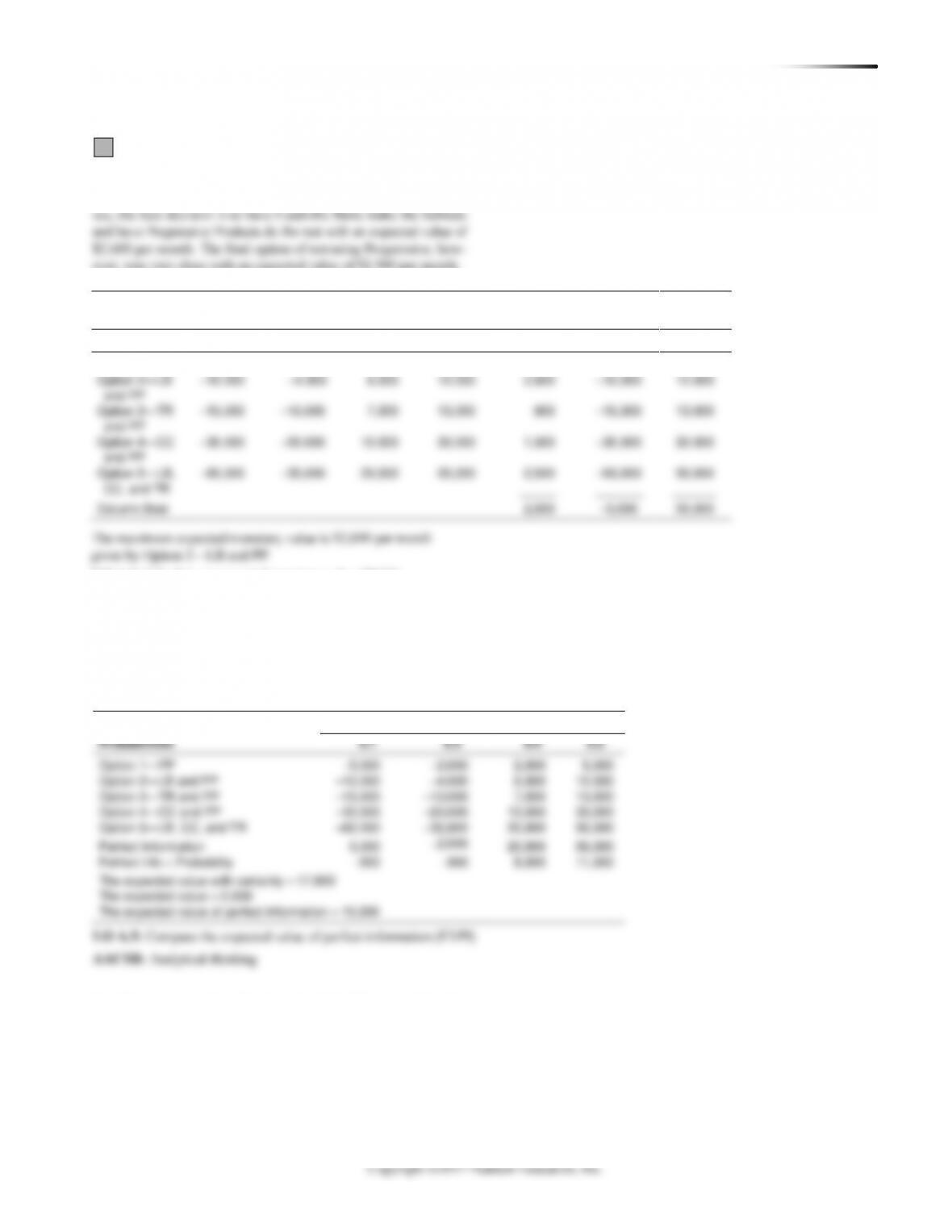
2. The expected value of perfect information is presented below.
The EVPI is $15,300.
Perfect Information
Poor Market
Average
Good
Excellent
Probabilities
0.1
0.3
0.4
0.2
Option 1—PP
–5,000
–2,000
2,000
5,000
Option 2—LB and PP
–10,000
–4,000
6,000
12,000
Option 3—TR and PP
–15,000
–10,000
7,000
13,000
Option 4—CC and PP
–30,000
–20,000
10,000
30,000
Option 5—LB, CC, and TR
–60,000
–35,000
20,000
55,000
Perfect Information
–5,000
–2,000
20,000
55,000
Perfect info Probability
–500
–600
8,000
11,000
The expected value with certainty = 17,900
The expected value = 2,600
The expected value of perfect information = 15,300
LO A.5: Compute the expected value of perfect information (EVPI)
AACSB: Analytical thinking
SKI RIGHT CORP.
1. Bob can solve this case using decision analysis. As you can
Option 2—LB
−4,000
6,000
Option 3—TR
7,000
900
Option 4—CC
Option 5—LB,
Column Best
3. There are a number of options that Bob did not consider. See
if students can list one or more of these options.
AACSB: Reflective thinking
Poor ($)
Average ($)
Good ($)
Excellent ($)
Expected
Value
Row
Minimum
Row
Maximum
Probabilities
0.1
0.3
0.4
0.2
Option 1—PP
−5,000
−2,000
2,000
5,000
700
−5,000
5,000
given by Option 2—LB and PP.
LO A.4: Calculate an expected monetary value (EMV)
AACSB: Analytical thinking
290 BUSINESS ANALYTICS MODULE A DE C I S I O N – MA K I N G TO O L S
3
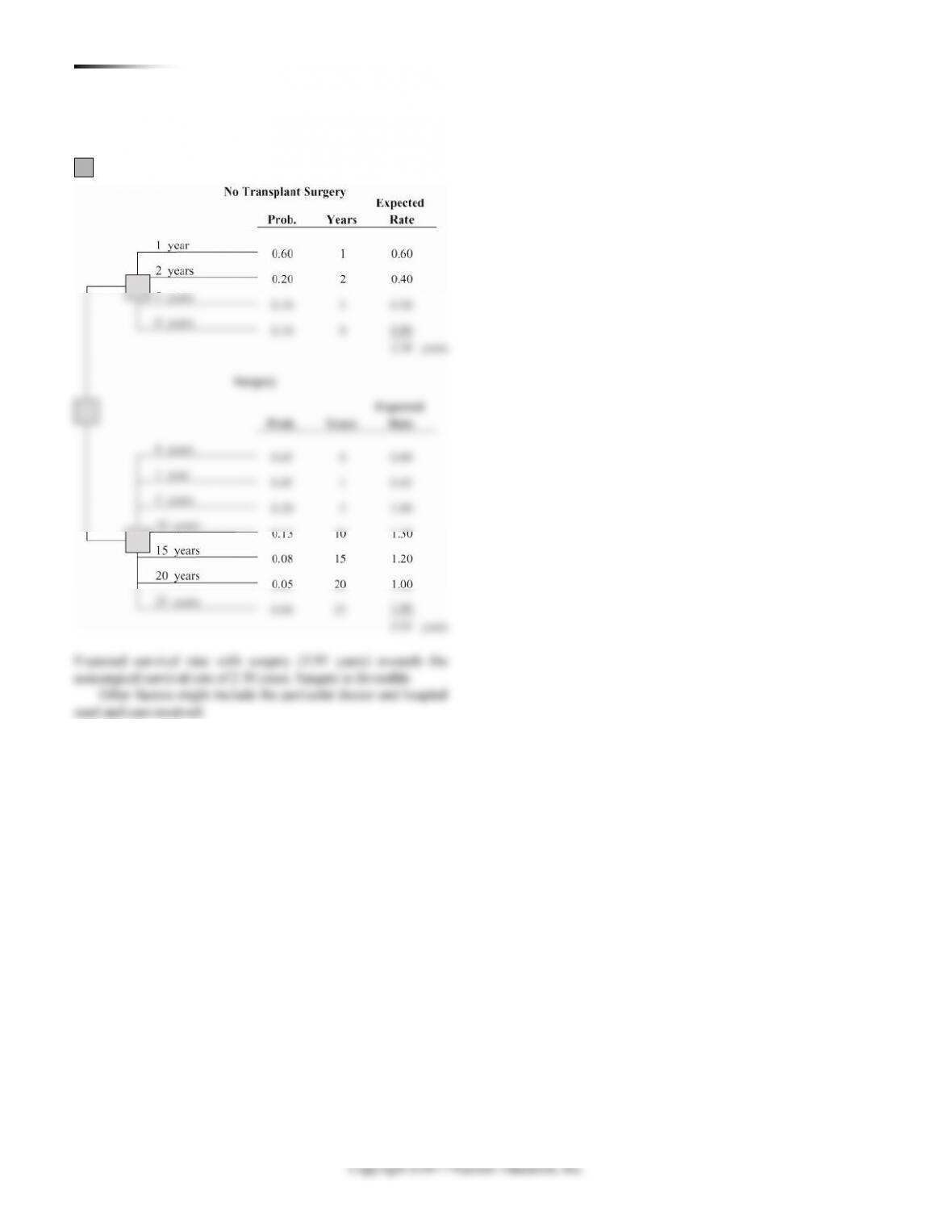
TOM TUCKER’S LIVER TRANSPLANT
LO A.1: Create a simple decision tree
AACSB: Analytical thinking