
16–28
16–36 (continued)
about unintentional errors in billing, recording sales, and cash
receipts. Relatedly, the auditor would most likely deem the risks
errors in accounts receivable and bad debts.
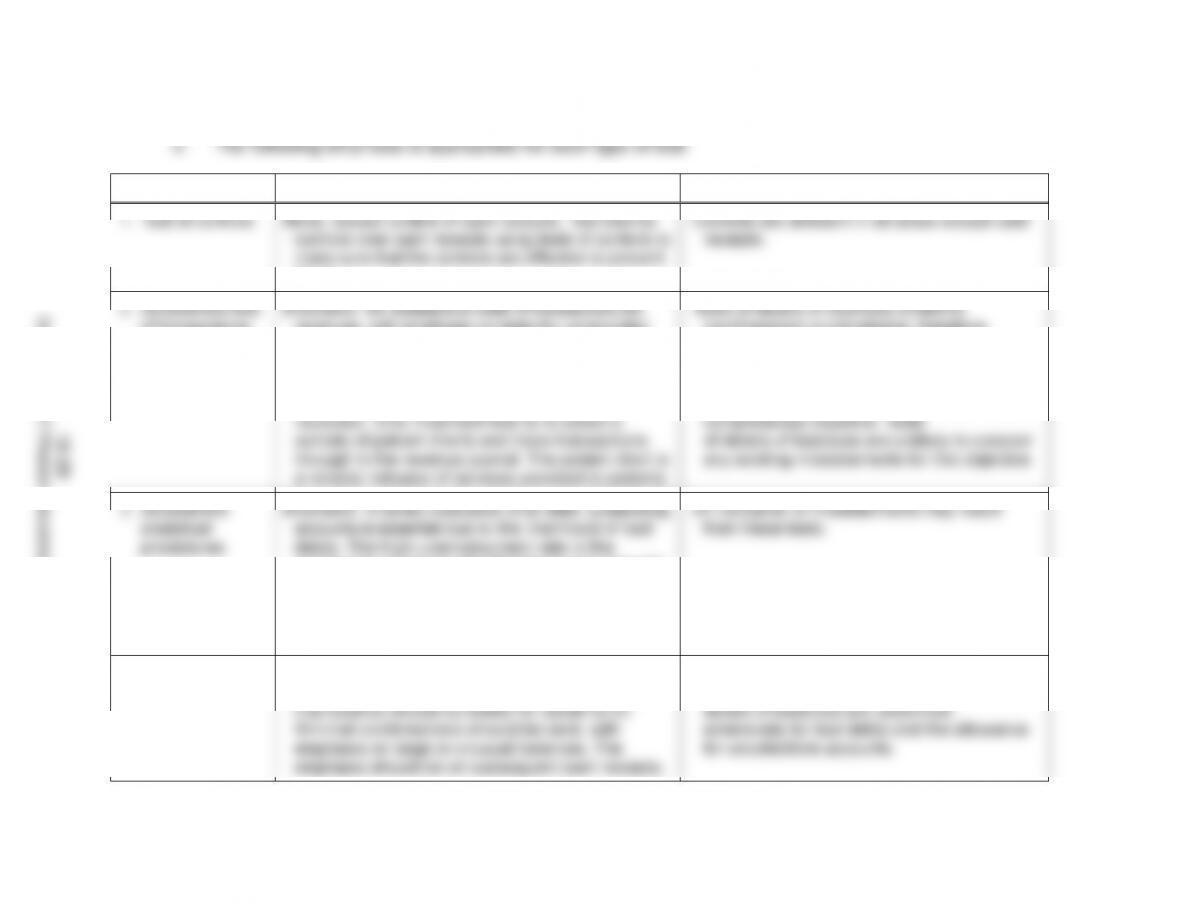
16–36 (continued)
TYPE OF TEST
EMPHASIS
REASON
1. Test of controls
None, except control of cash receipts. Test internal
controls over cash receipts using tests of controls to
make sure that the controls are effective to prevent
fraud.
Controls are deficient in all areas except cash
receipts.
2. Substantive test
of transactions
Extensive. Do substantive tests of transactions for
revenues, with emphasis on tests for unrecorded
revenues, billing misstatements, and recording
misstatements. The sample for sales should be
traced to subsequent cash receipts to test
whether each receipt has been correctly
recorded. One important test is to select a
sample of patient charts and trace transactions
through to the revenue journal. The patient chart is
a reliable indicator of services provided to patients
Tests of details of balances evidence
(confirmation) is not reliable, therefore
substantive tests of transactions are the
most important evidence. Substantive tests
of transactions are even more important
because of potential for misstatement for the
completeness objective. Tests
of details of balances are unlikely to uncover
any existing misstatements for this objective.
3. Substantive
analytical
procedures
Extensive. A careful evaluation of all older, outstanding
accounts is essential due to the likelihood of bad
debts. The high unemployment rate in the
community increases the likelihood of a material
misstatement of the allowance for uncollectible
accounts. A number of substantive analytical
procedures would be performed to analyze trends
related to collectibility.
An indication of misstatements may result
from these tests.
4. Tests of details
of balances
Reasonably extensive, except confirmations which
should be minimal. The accounts receivable aged
trial balance should be tested for detail tie–in.
Minimal confirmations should be sent, with
emphasis on large or unusual balances. The
emphasis should be on subsequent cash receipts.
Confirmations are not emphasized because of
the lack of reliability in the situation. Tests of
details of balances are used most
extensively for bad debts and the allowance
for uncollectible accounts.
16–29
Copyright © 2017 Pearson Education, Inc.
16–30
Integrated Case Application
16–37
PINNACLE MANUFACTURING – PART VII
a. Relationships, ratios, and trends:
1. Comparison of current listing of accounts payable with that
2. Ratios:
Accounts payable / purchases
Gross profit ratio
Overhead / materials cost
unit cost basis
Overhead / direct labor
3. Trends:
Purchases by month
Gross profit by month
Other recurring expenses by month
Ending balance tests
2. Select a sample of 51 vendors and request that they send a
vary.)
3. Trace from the accounts payable list to vendors’ invoices
and statements for any non–responses.
Cutoff tests
physical observation of inventory.
5. Examine subsequent cash disbursements greater than
$50,000 and examine related documentation to
determine if such disbursements were properly recorded
16–31
16–37 (continued)
6. Trace a sample of receiving reports issued just before and
invoice.
7. Examine vendor invoices for merchandise received shortly
origin basis.
Disclosure and classification tests
8. Review the list and master file for related parties, notes or
other interest–bearing liabilities, long–term payables, and
debit balances.
9. Review financial statements to make sure that material
related parties, long–term, and interest–bearing liabilities are
segregated.
c. Audit procedures would be conducted more extensively and
sample sizes would increase in a situation where assessed control
risk and inherent risk were high and analytical procedures
d,
e,
and f. See pages 16–32 and 16–33.
g. Students’ conclusion about whether accounts payable is materially
misstated will depend on their estimate of the allowance for
sampling risk in part e. The projected error in accounts payable
affecting the income statement is an overstatement of $124,915
compared to performance materiality of $250,000. The total
projected error in accounts payable is an understatement of
$171,607. Students should also recognize that some of the
16–37 (continued)
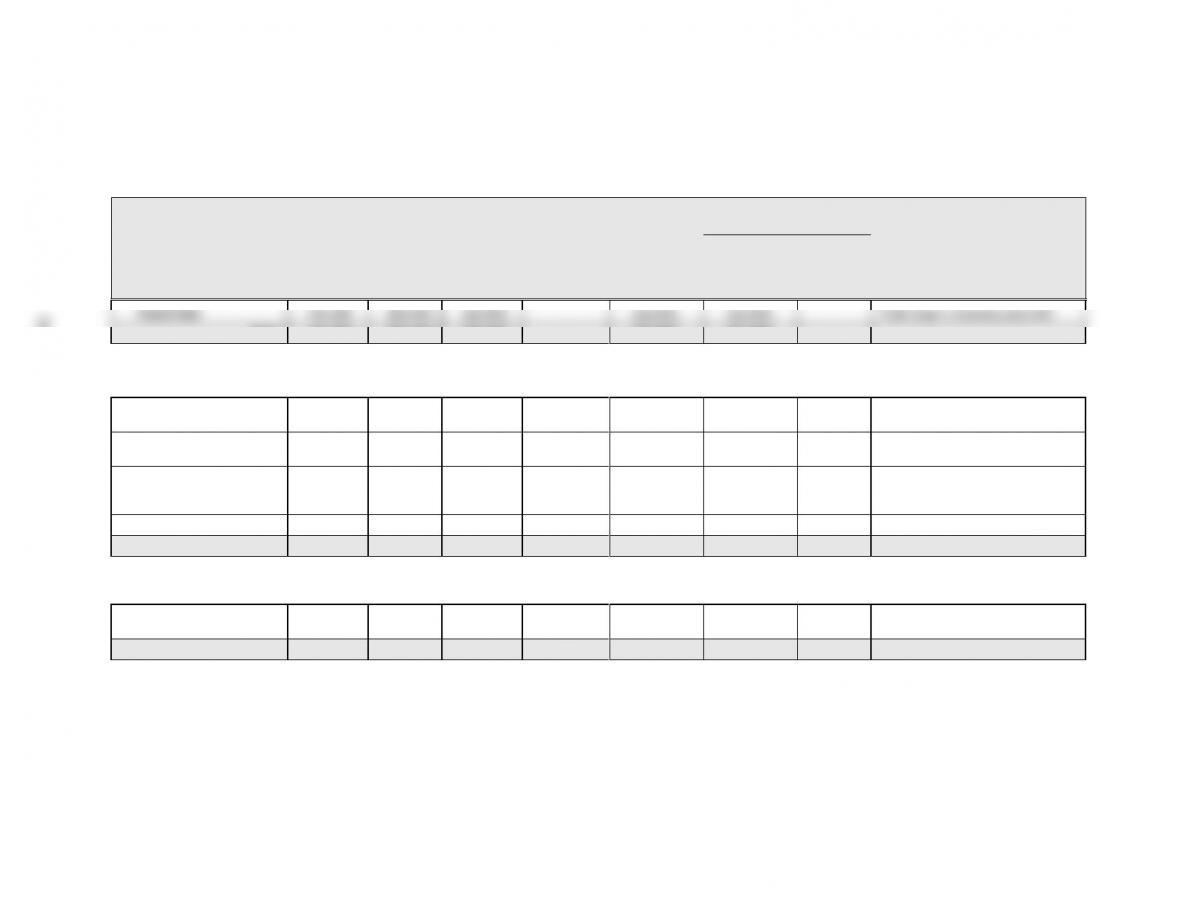
Requirements d., e., and f.
Vendor
Key Accounts
(>$250,000)
Balance
Per
Books
Amount
Confirmed
by Vendor
Difference:
Books
Over
(Under)
Amount
Confirmed
Timing
Difference:
No
Misstatement
Misstatement
in Accounts
Payable
o/s (u/s)
Misstatement in
Related Accounts
Brief
Explanation
Other Balance
Sheet
Misstatement
o/s (u/s)
Income
Stmt mis–
statement
o/s (u/s)
Total
793,050
825,550
(32,500)
—
(32,500)
(32,500)
—
Accounts in Stratum
$50,001 – $250,000
Mobil
93,210
131,022
(37,812)
(37,812)
Timing difference – shipment in
transit
Norris
88,315
205,611
(117,296)
(117,296)
117,296
Unrecorded A/P (Purchases and
A/P)
Remington
123,411
123,411
—
53,529
(53,529)
Pinnacle recorded FOB shipment
before received (Purchases and
A/P)
Advent
51,750
59,250
(7,500)
(7,500)
(7,500)
B/S fixed asset error
Total
356,686
431,137
(162,608)
(37,812)
(71,267)
(7,500)
63,767
Accts in Stratum
less than or equal to
$50000
Fuller
32,470
39,570
(7,100)
(7,100)
Timing difference – payment in
transit
Total
32,470
39,570
(7,100)
(7,100)
—
—
—
16–30
16–32
Copyright © 2017 Pearson Education, Inc.
16–37 (continued)
Estimate of m/s
in the income statement
Misstatements in sample–Stratum
$50,000–$250,000
63,767
Dollars sampled–Stratum
$50,001–$250,000
2,660,879
Dollars in Pop–Stratum
$50,001–$250,000
5,212,467
Income statement m/s –
Point estimate
124,915
(63,767/2,660,879*5,212,467)
Total Estimate
224,915
Estimate of m/s
in accounts payable
Misstatements in key
items
(32,500)
Misstatements in stratum
$50,001–$250,000:
Misstatements in sample
(71,267)
Dollars sampled
2,660,879
Dollars in Pop–Stratum
$50,001–$250,000
5,212,467
Point estimate
(139,607)
(–71,267/2,660,879*5,212,467)
Accounts payable
m/s–Point estimate
(171,607)
Estimate of sampling
error
(150,000)
Highly judgmental
Total Estimate
(321,607)
16–33
Copyright © 2017 Pearson Education, Inc.
16–34
16–38 ACL Problem
b. When using the Summarize command under Analyze to determine
the amount of accounts receivable outstanding from each
customer, the total amount due is $893,619.03, which equals the
amount determined in part a. There are 90 customers with
outstanding from Customer Number 0252620. Customer Number
0249158 has the largest balance due of $28,821.31. (Use the
Summarize Command under Analyze and then use Quick Sort to
arrange the Invoice Amount column in descending order.)
c. The largest balance due is $28,821.31 from Customer Number
column in descending order.)
d. There are 26 invoices that are more than 90 days outstanding,
comprising 27.62% of the total outstanding invoices. The auditor
would use this information to assess the collectibility of accounts
receivable as part of the examination of the realizable value
Age command under Analyze).
Days
Count
Percent of Count
Percent of Field
Invoice Amount
0 – 29
32
35.16%
42.22%
377,291.82
30 – 59
18
19.78%
13.06%
116,703.48
60 – 90
15
16.48%
17.1%
152,771.32
>90
26
28.57%
27.62%
246,852.41
Totals
91
100%
100%
893,619.03