
11–97
11–98
PROBLEM 11-19B (cont.)
b. Partnership
Best Auto Parts Company
Financial Statements
For the Year Ended December 31, 2016
Income Statement
Revenues
$80,000
Expenses
(56,000)
Net Income
$24,000
Capital Statement
Beginning Capital Balance
$ -0-
Plus: Capital Acquired from Owners
120,000
Plus: Net Income
24,000
Less: Withdrawals by Owners
(5,000)
Ending Capital Balance
$139,000
Prepared for the instructor’s use:
Analysis of Capital Accounts:
Song
Smart
Total
Beginning Capital Balance
$ -0-
$ -0-
$ -0-
Investments
72,000
48,000
120,000
Net Income*
9,600
14,400
24,000
Withdrawals
(3,500)
(1,500)
(5,000)
Ending Capital Balances
$78,100
$60,900
$139,000
*Song: $24,000 x 40% = $9,600
Smart: $24,000 x 60% = $14,400
11–99
PROBLEM 11-19B b. (cont.)
Best Auto Parts Company
Financial Statements
Balance Sheet
As of December 31, 2016
Assets
Cash
$139,000
Total Assets
$139,000
Liabilities
$ -0-
Equity
Beth Song, Capital
78,100
J. Smart, Capital
60,900
Total Liabilities and Equity
$139,000
Statement of Cash Flows
For the Year Ended December 31, 2016
Cash Flows From Operating Activities:
Receipts from Revenues
$ 80,000
Paid for Expenses
(56,000)
Net Cash Flow from Operating Activities
$ 24,000
Cash Flows From Investing Activities
-0-
Cash Flows From Financing Activities:
Proceeds from Partners
$120,000
Paid for Partners’ Withdrawals
(5,000)
Net Cash Flow from Financing Activities
115,000
Net Change in Cash
139,000
Plus: Beginning Cash Balance
-0-
Ending Cash Balance
$139,000

11-100
11-101
PROBLEM 11-19B (cont.)
c. Corporation
Best Auto Parts Company
Financial Statements
For the Year Ended December 31, 2016
Income Statement
Revenues
$80,000
Expenses
(56,000)
Net Income
$24,000
Statement of Changes in Stockholders’ Equity
Beginning Common Stock
$ -0-
Plus: Issuance of Common Stock
120,000
Ending Common Stock
$120,000
Beginning Retained Earnings
-0-
Plus: Net Income
24,000
Less: Dividends
(5,000)
Ending Retained Earnings
19,000
Total Stockholders’ Equity
$139,000
11-102
PROBLEM 11-19B c. (cont.)
Best Auto Parts Company
Financial Statements
Balance Sheet
As of December 31, 2016
Assets
Cash
$139,000
Total Assets
$139,000
Liabilities
$ -0-
Stockholders’ Equity
Common Stock, $10 par value,
10,000 shares issued and outstanding
$100,000
Paid-In Capital in Excess of Par
20,000
Total Paid-In Capital
120,000
Retained Earnings
19,000
Total Liabilities and Stockholders’ Equity
$139,000
Statement of Cash Flows
For the Year Ended December 31, 2016
Cash Flows From Operating Activities:
Receipts from Revenues
$80,000
Paid for Expenses
(56,000)
Net Cash Flow from Operating Activities
$ 24,000
Cash Flows From Investing Activities
-0-
Cash Flows From Financing Activities:
Proceeds from Issue of Stock
120,000
Paid for Dividends
(5,000)
Net Cash Flow from Financing Activities
115,000
Net Change in Cash
139,000
Plus: Beginning Cash Balance
-0-

11-103
Ending Cash Balance
$139,000
11-104
PROBLEM 11-20B
Note: This exercise can be used to assess writing skills. If a more
comprehensive answer is desired, this exercise can be assigned as a short
research project.
11-105
PROBLEM 11-21B
a.
Date
Account Titles
Debit
Credit
1.
Treasury Stock (2,000 x $15)
30,000
Cash
30,000
2.
Cash (1,200 x $18)
21,600
Treasury Stock (1,200 x $15)
18,000
PIC in Excess of Cost, TS
3,600
3.
Cash
72,000
Service Revenue
72,000
4.
Operating Expenses
41,000
Cash
41,000
b.
Stockholders’ Equity
Common Stock, $10 par value, 100,000 shares
authorized, 50,000 shares issued, and 49,200
shares outstanding
$500,000
Paid-In Capital in Excess of Par−Common Stock
150,000
Paid-In Capital in Excess of Cost−Treasury Stock
3,600
Total Paid-In Capital
$653,600
Retained Earnings1
151,000
Less: Treasury Stock (800 shares)
(12,000)
Total Stockholders’ Equity
$792,600
1 Beginning Retained Earnings $120,000
2016 Revenues 72,000
2016 Expenses (41,000)
Ending Retained Earnings $151,000
11-106
PROBLEM 11-22B
a. NC = Net Change in Cash
Burk Corp.
Statements Model For 2016
Balance Sheet
Income Statement
Statement of
Event
Assets
=
Stockholders’ Equity
Rev.
−
Exp.
=
Net Inc.
Cash Flow
Pfd. Stk.
+
Com.
Stk.
+
PIC in
Exc. PS
+
PIC in
Exc. CS
+
Ret. Earn
1.
450,000
NA
300,000
NA
150,000
NA
NA
NA
NA
450,000 FA
2.
606,000
600,000
NA
6,000
NA
NA
NA
NA
NA
606,000 FA
3.
(30,000)1
NA
NA
NA
NA
(30,000)
NA
NA
NA
(30,000) FA
4.
NA
NA
15,000
NA
13,500
(28,500)2
NA
NA
NA
NA
5. memo
no entry3
NA
NA
NA
NA
NA
NA
NA
NA
NA
6a.
165,000
NA
NA
NA
NA
165,000
165,000
NA
165,000
165,000 OA
6b.
(98,000)
NA
NA
NA
NA
(98,000)
NA
98,000
(98,000)
(98,000) OA
Totals
1,093,000
=
600,000
+
315,000
+
6,000
+
163,500
+
8,500
165,000
−
98,000
=
67,000
1,093,000 NC
1$100 x 5% = $5; $5 x 6,000 = $30,000
230,000 x 5%=1,500 shares; 1,500 shares x $19 = $28,500
3Memo: 2:1 stock split reduces common’s par to $5 and increases number of shares outstanding to 63,000
Note: Entry 7, the closing entry does not affect the horizontal statements model.
11-107
PROBLEM 11-22B (cont.)
b.
General Journal for 2016
Date
Account Titles
Debit
Credit
1.
Cash (30,000 x $15)
450,000
Common Stock, $10 par
300,000
Paid-in Capital in Excess of Par, CS
150,000
2.
Cash (6,000 x $101)
606,000
Preferred Stock, $100 par
600,000
Paid-in Capital in Excess of Par, PS
6,000
3.
Dividends ($100 x 5% x 6,000)
30,000
Cash
30,000
4.
Retained Earnings
28,500*
Common Stock, $10 Par
15,000
Paid-in Capital in Excess of Par, CS
13,500
5.
Concord’s declaration of a 2-for-1 stock
split will replace the 31,500 shares of
$10 par common stock with 63,000
shares of $5 par common stock.
6a.
Cash
165,000
Service Revenue
165,000
6b.
Operating Expenses
98,000
Cash
98,000
7.
Service Revenue
165,000
Operating Expenses
98,000
Dividends
30,000
Retained Earnings
37,000
11-108
PROBLEM 11-22B b. (cont.)
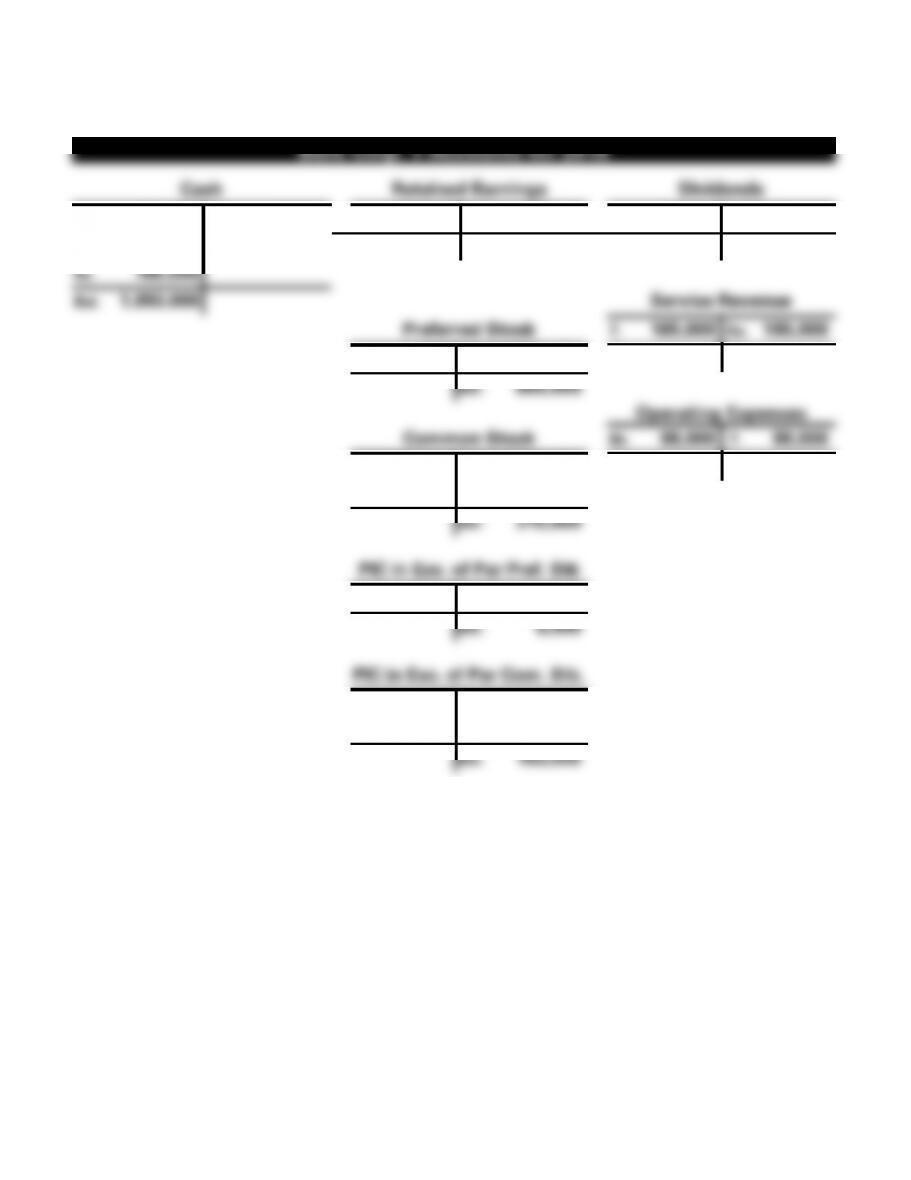
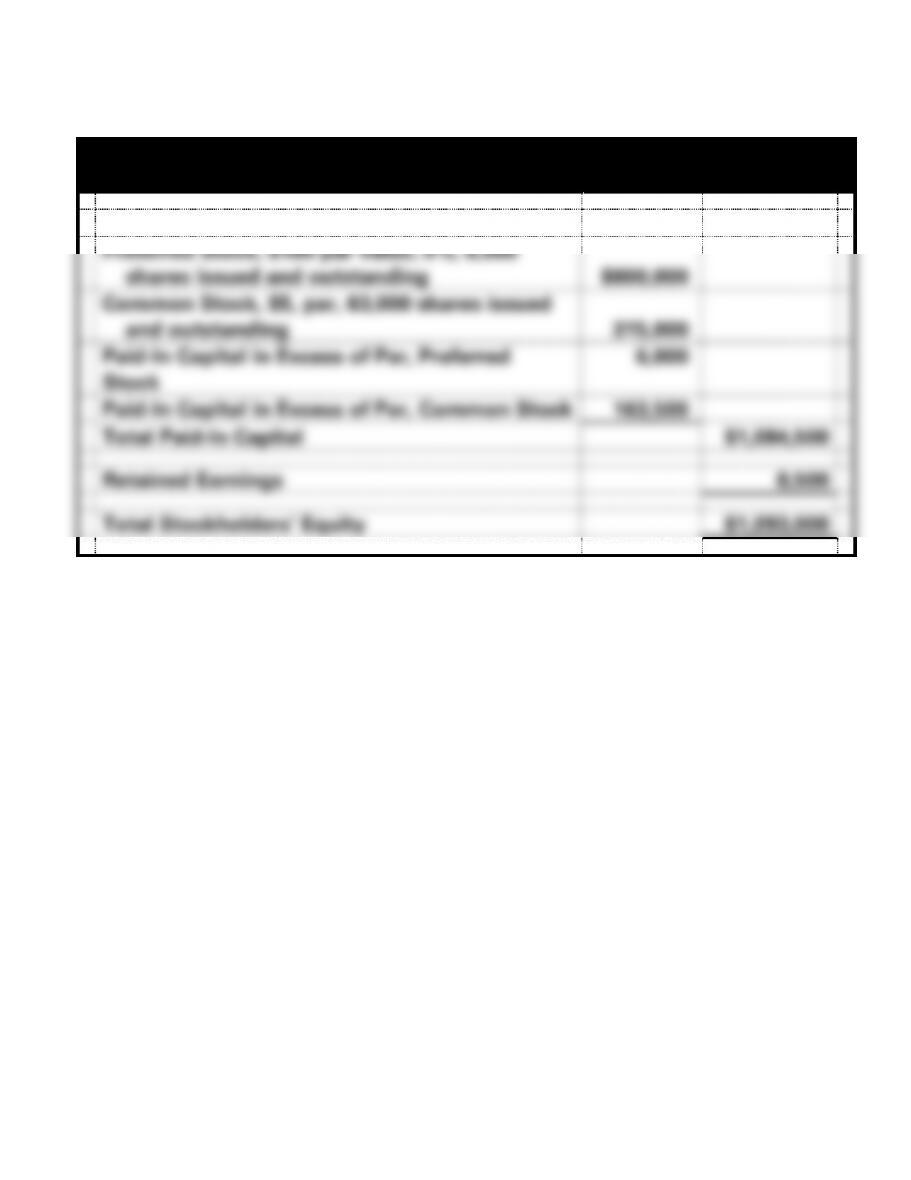
Burk Corp. T-Accounts for 2016
Cash
Retained Earnings
Dividends
1. 450,000
3. 30,000
4. 28,500
7. 37,000
3. 30,000
7. 30,000
2. 606,000
6b. 98,000
Bal. 8,500
Bal. -0-
6a. 165,000
Bal. 1,093,000
Service Revenue
Preferred Stock
7. 165,000
6a. 165,000
2. 600,000
Bal. -0-
Bal. 600,000
Operating Expenses
Common Stock
6b. 98,000
7. 98,000
1. 300,000
Bal. -0-
4. 15,000
Bal. 315,000
PIC in Exc. of Par Pref. Stk
2. 6,000
Bal. 6,000
PIC in Exc. of Par Com. Stk.
1. 150,000
4. 13,500
Bal. 163,500
11-109
PROBLEM 11-22B (cont.)
c.
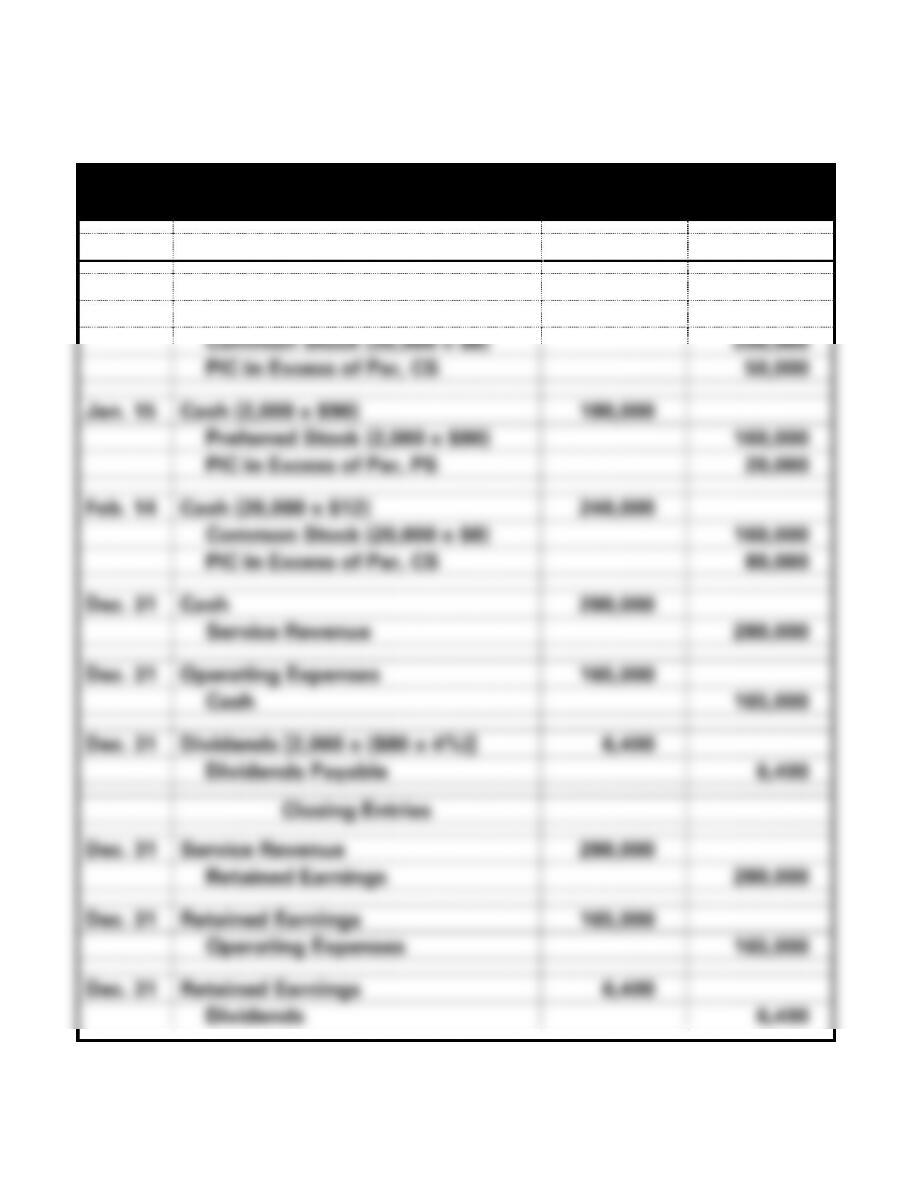
Burk Corp.
December 31, 2016
Stockholders’ Equity
Preferred Stock, $100 par value, 5%, 6,000
shares issued and outstanding
$600,000
Common Stock, $5, par, 63,000 shares issued
and outstanding
315,000
Paid-In Capital in Excess of Par, Preferred
Stock
6,000
Paid-In Capital in Excess of Par, Common Stock
163,500
Total Paid-In Capital
$1,084,500
Retained Earnings
8,500
Total Stockholders’ Equity
$1,093,000
11-110
PROBEM 11-23B
a.
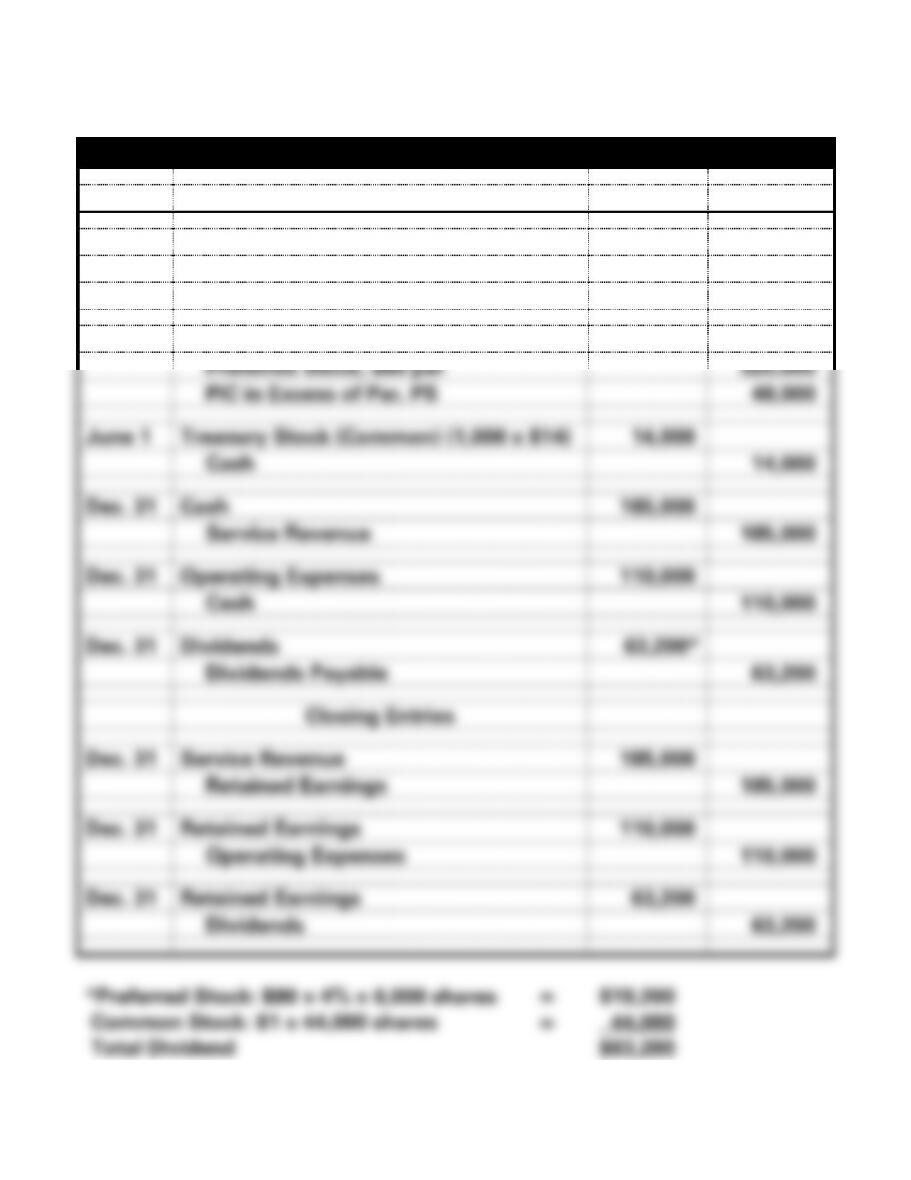
Edgar Corporation
General Journal
Date
Account Titles
Debit
Credit
2016
Jan. 2
Cash (25,000 x $10)
250,000
Common Stock (25,000 x $8)
200,000
PIC in Excess of Par, CS
50,000
Jan. 15
Cash (2,000 x $90)
180,000
Preferred Stock (2,000 x $80)
160,000
PIC in Excess of Par, PS
20,000
Feb. 14
Cash (20,000 x $12)
240,000
Common Stock (20,000 x $8)
160,000
PIC in Excess of Par, CS
80,000
Dec. 31
Cash
280,000
Service Revenue
280,000
Dec. 31
Operating Expenses
165,000
Cash
165,000
Dec. 31
Dividends [2,000 x ($80 x 4%)]
6,400
Dividends Payable
6,400
Closing Entries
Dec. 31
Service Revenue
280,000
Retained Earnings
280,000
Dec. 31
Retained Earnings
165,000
Operating Expenses
165,000
Dec. 31
Retained Earnings
6,400
Dividends
6,400
11-111
PROBLEM 11-23B a. (cont.)
Edgar Corporation General Journal
Date
Account Titles
Debit
Credit
2017
Jan. 31
Dividends Payable
6,400
Cash
6,400
Mar. 1
Cash (4,000 x $92)
368,000
Preferred Stock, $80 par
320,000
PIC in Excess of Par, PS
48,000
June 1
Treasury Stock (Common) (1,000 x $14)
14,000
Cash
14,000
Dec. 31
Cash
185,000
Service Revenue
185,000
Dec. 31
Operating Expenses
110,000
Cash
110,000
Dec. 31
Dividends
63,200*
Dividends Payable
63,200
Closing Entries
Dec. 31
Service Revenue
185,000
Retained Earnings
185,000
Dec. 31
Retained Earnings
110,000
Operating Expenses
110,000
Dec. 31
Retained Earnings
63,200
Dividends
63,200
11-112
PROBLEM 11-23B a. (cont.)
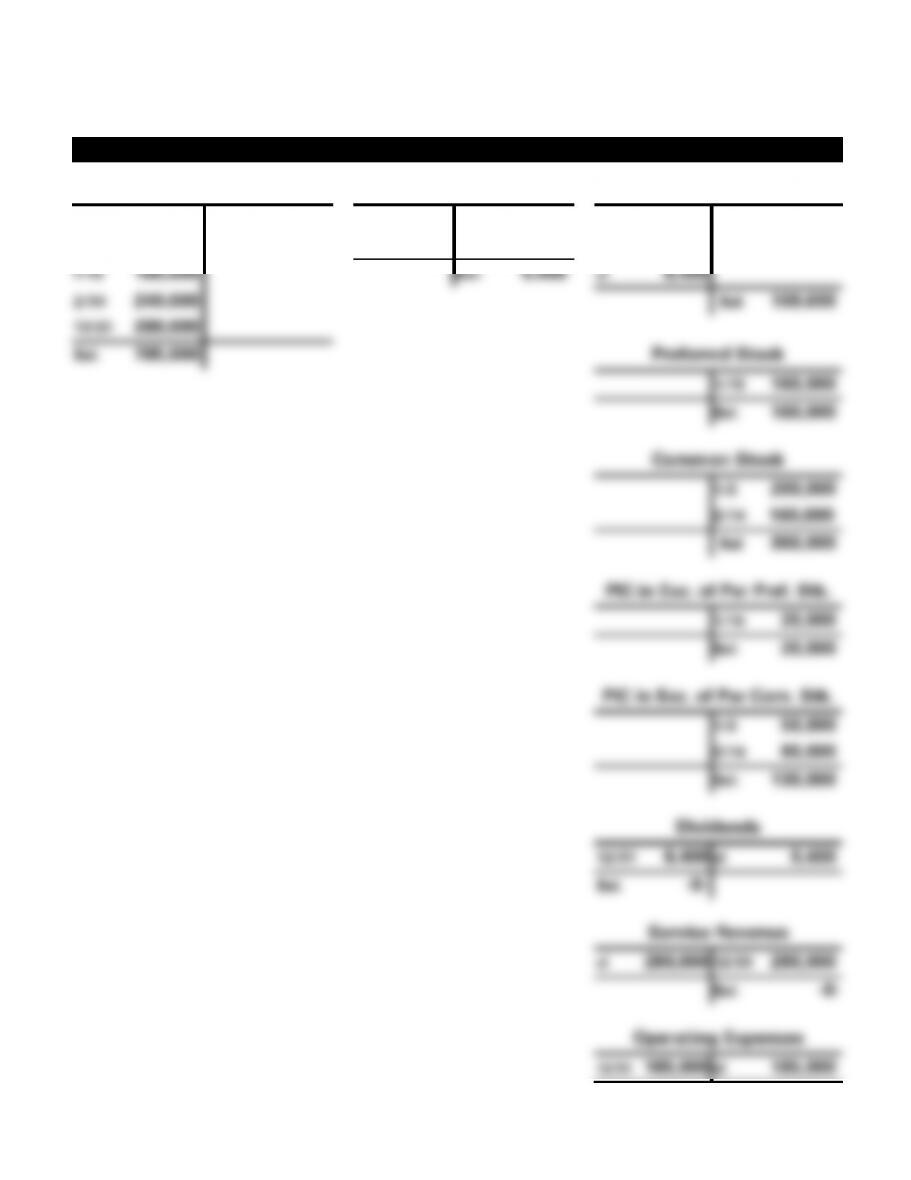
Edgar Corporation T-Accounts for 2016
Cash
Dividends Payable
Retained Earnings
2016
2016
2016
1/2 250,000
12/31 165,000
12/31 6,400
cl 165,000
cl 280,000
1/15 180,000
Bal. 6,400
cl 6,400
2/14 240,000
Bal. 108,600
12/31 280,000
Bal. 785,000
Preferred Stock
1/15 160,000
Bal. 160,000
Common Stock
1/2 200,000
2/14 160,000
Bal. 360,000
PIC in Exc. of Par Pref. Stk.
1/15 20,000
Bal. 20,000
PIC in Exc. of Par Com. Stk.
1/2 50,000
2/14 80,000
Bal. 130,000
Dividends
12/31 6,400
cl 6,400
Bal. -0-
Service Revenue
cl 280,000
12/31 280,000
Bal. -0-
Operating Expenses
12/31 165,000
cl 165,000

11-113
Bal. -0-
11-114
PROBLEM 11-23B a. (cont.)
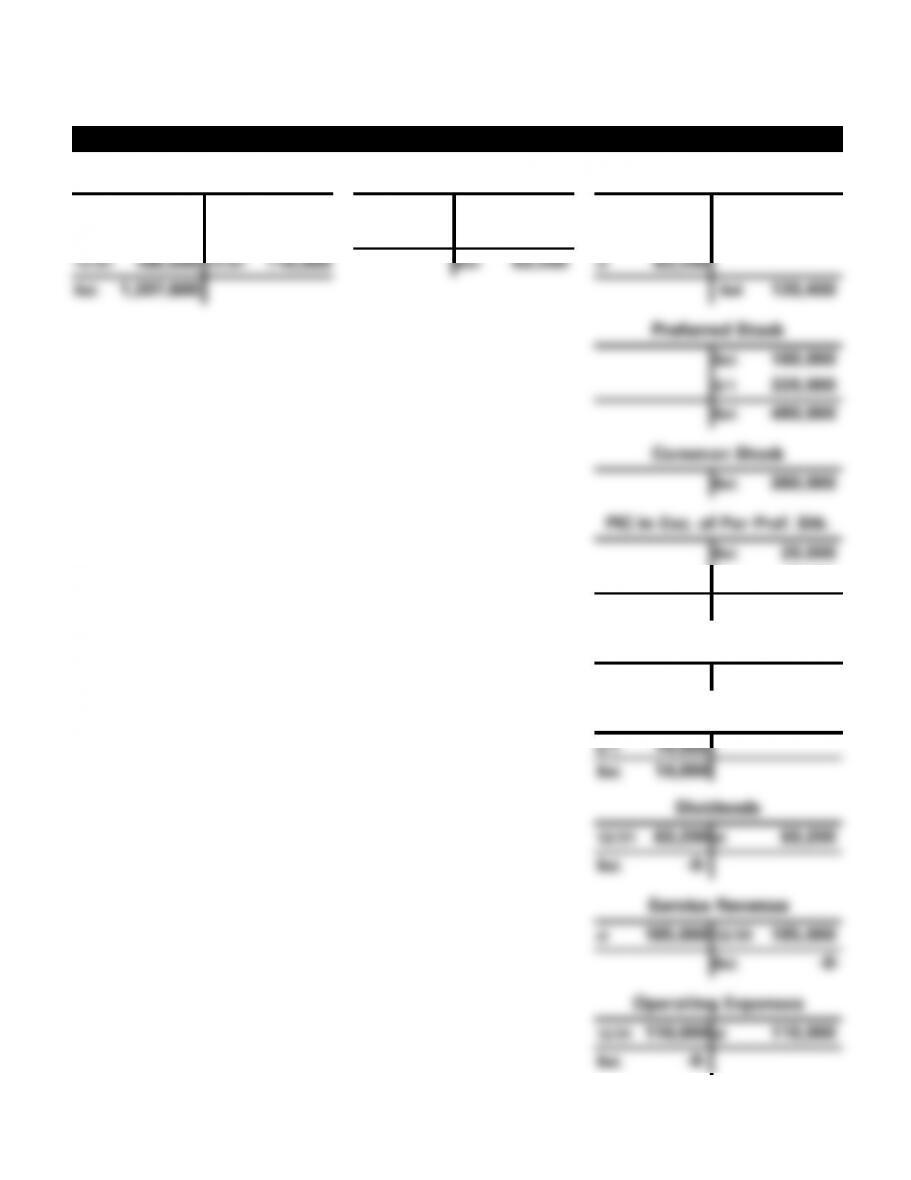
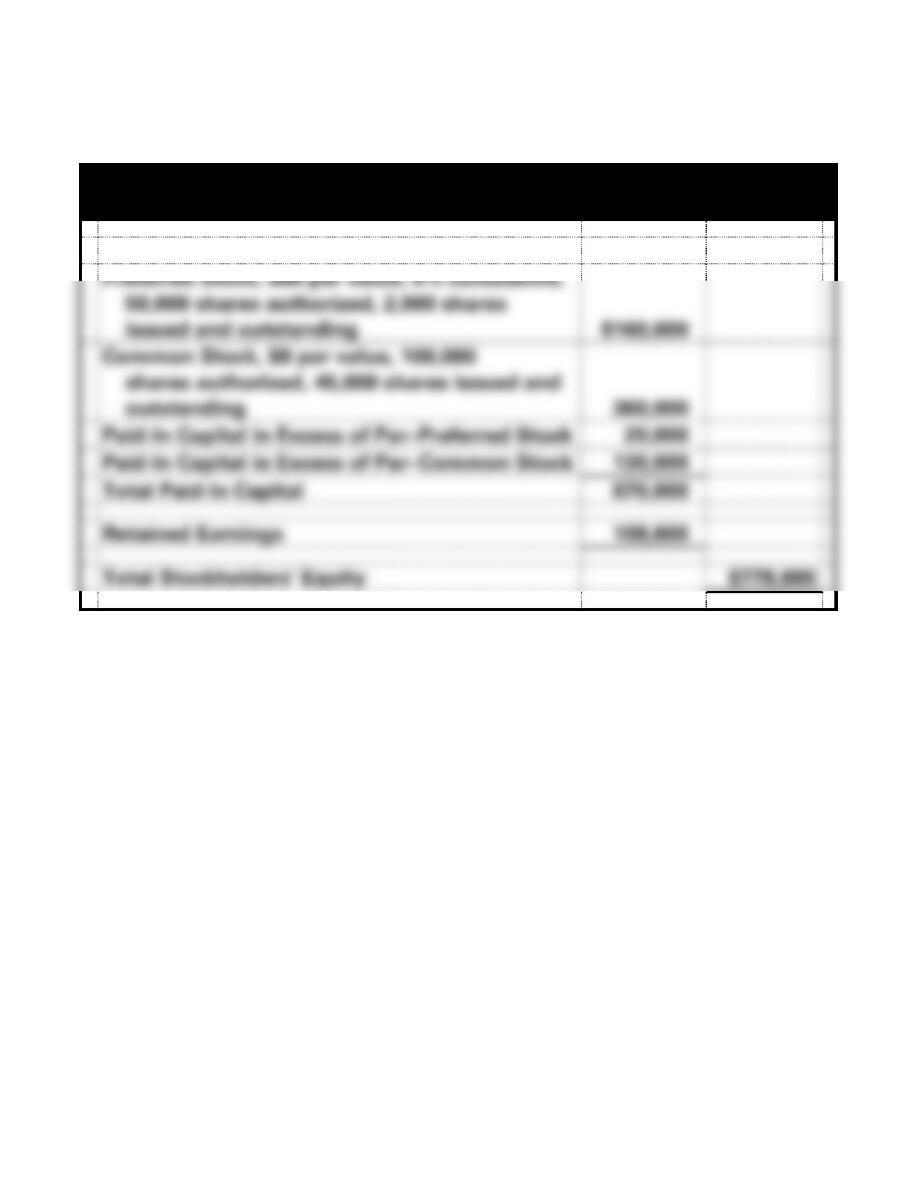
Edgar Corporation T-Accounts for 2017
Cash
Dividends Payable
Retained Earnings
Bal. 785,000
1/31 6,400
Bal. 6,400
Bal. 108,600
3/1 368,000
6/1 14,000
1/31 6,400
12/31 63,200
cl 110,000
cl 185,000
12/31 185,000
12/31 110,000
Bal. 63,200
cl 63,200
Bal. 1,207,600
Bal. 120,400
Preferred Stock
Bal. 160,000
3/1 320,000
Bal. 480,000
Common Stock
Bal. 360,000
PIC in Exc. of Par Pref. Stk.
Bal. 20,000
3/1 48,000
Bal. 68,000
PIC in Exc. of Par Com. Stk.
Bal. 130,000
Treasury Stock
6/1 14,000
Bal. 14,000
Dividends
12/31 63,200
cl 63,200
Bal. -0-
Service Revenue
cl 185,000
12/31 185,000
Bal. -0-
Operating Expenses
12/31 110,000
cl 110,000
Bal. -0-
PROBLEM 11-23B (cont.)
b.
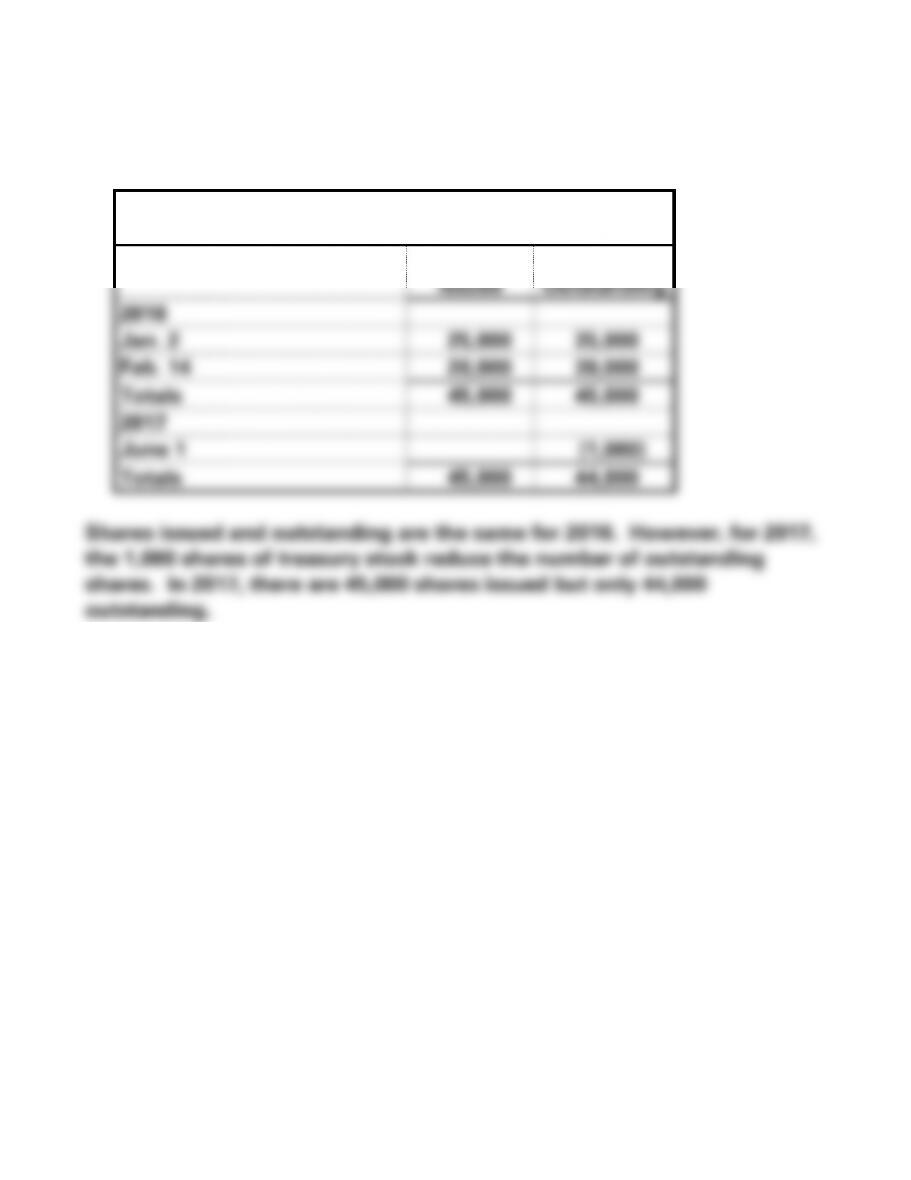
2016
Edgar Coproration
December 31, 3016
Stockholders’ Equity
Preferred Stock, $80 par value, 4% cumulative,
50,000 shares authorized, 2,000 shares
issued and outstanding
$160,000
Common Stock, $8 par value, 100,000
shares authorized, 45,000 shares issued and
outstanding
360,000
Paid-In Capital in Excess of Par−Preferred Stock
20,000
Paid-In Capital in Excess of Par−Common Stock
130,000
Total Paid-In Capital
670,000
Retained Earnings
108,600
Total Stockholders’ Equity
$778,600
11-116
PROBLEM 11-23B (cont.)
c.
Schedule provided for use of instructor.
Schedule of Number of
Shares of Common Stock
Shares
Issued
Shares
Outstanding
2016
Jan. 2
25,000
25,000
Feb. 14
20,000
20,000
Totals
45,000
45,000
2017
June 1
(1,000)
Totals
45,000
44,000
Shares issued and outstanding are the same for 2016. However, for 2017,
the 1,000 shares of treasury stock reduce the number of outstanding
shares. In 2017, there are 45,000 shares issued but only 44,000
outstanding.