Chapter 5
INTRODUCTION TO VALUATION: THE TIME VALUE OF
MONEY
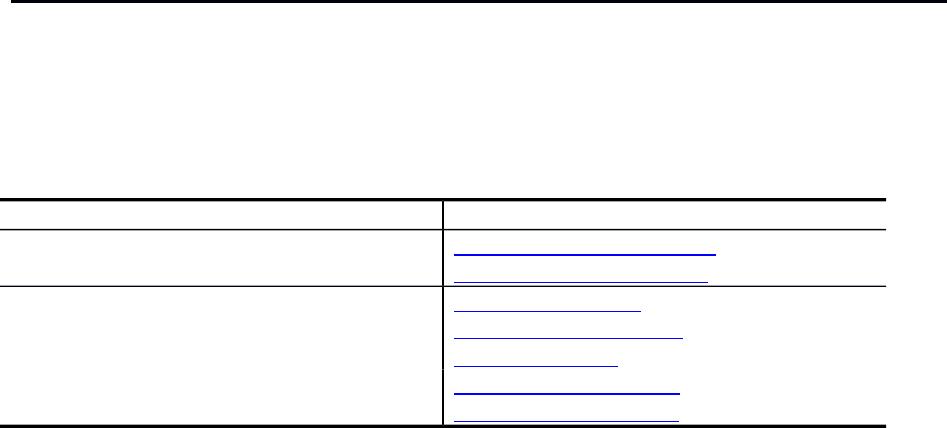
CHAPTER WEB SITES
Section Web Address
5.1 www.financeprofessor.com
www.teachmefinance.com
5.3 www.calculator.org
www.moneychimp.com
www.about.com/
www.studyfinance.com
www.investopedia.com
CHAPTER ORGANIZATION
5.1 Future Value and Compounding
Investing for a Single Period
Investing for More Than One Period
A Note about Compound Growth
5.2 Present Value and Discounting
The Single-Period Case
Present Values for Multiple Periods
5.3 More about Present and Future Values
Present versus Future Value
Determining the Discount Rate
Finding the Number of Periods
5.4 Summary and Conclusions
ANNOTATED CHAPTER OUTLINE
Lecture Tip: Many students find the phrases “time value of money” and
“a dollar today is worth more than a dollar later” a bit confusing. In
some ways it might be better to say the “money value of time.”
Indeed, much of the terminology surrounding exchanges of money now
for money later is confusing to students. For example, present value as the
name for money paid or received earlier in time and future value as the
name for money paid or received later in time are a constant source of
confusion. How, students ask, can money to be paid next year be a
“present” value; how can money received today be a “future” value?
They must be made aware that we mean earlier money and later money.
Many students never fully comprehend that present value, future value,
interest rates, and interest rate factors are simply a convenient means for
communicating the terms of exchange for what are essentially different
kinds of money.
One way to emphasize both the exchange aspect of the time value of
money and that present dollars and future dollars are different kinds of
money is to compare them to U.S. dollars and Canadian dollars. Both are
called dollars, but they’re not the same thing. And just as U.S. dollars
rarely trade 1 for 1 for Canadian dollars, neither do present dollars trade
1 for 1 for future dollars. Just as there are exchange rates for U.S. dollars
into Canadian dollars and vice-versa, so present value factors and future
value factors represent exchange rates between earlier money and later
money. Also, the same reciprocity that exists between the foreign exchange
rates exists between future value and present value interest factors.
1. Future Value and Compounding
A. Investing for a single period
If you invest $X today at an interest rate of r, you will have $X + $X(r) =
$X(1 + r) in one period.
Example: $100 at 10% interest gives $100(1.1) = $110
B. Investing for more than one period
Reinvesting the interest, we earn interest on interest, i.e., compounding
FV = $X(1 + r)(1 + r) = $X(1 + r)2
Example: $100 at 10% for 2 periods gives $100(1.1)(1.1) = $100(1.1)2 =
$121
In general, for t periods, FV = $X(1 + r)t, where (1 + r)t is the future value
interest factor, FVIF(r,t)
Example: $100 at 10% for 10 periods gives $100(1.1)10 = $259.37
Lecture Tip: It is important that students understand the impact of
compounding now, or they will have more difficulty distinguishing when it
is appropriate to use the APR and when it is appropriate to use the
effective annual rate.
Real-World Tip: Students are often helped by concrete examples tied to
real life. For example, you can illustrate the effect of compound growth by
asking the following question in class: “Assume you just started a new job
and your current annual salary is $25,000. Suppose the rate of inflation is
about 4% annually for
the next 40 years, and you receive annual cost-of-living increases tied to
the inflation rate. What will your salary be in 40 years?
Most students are happy to hear that their final annual salary will be
25,000(1.04)40 = $120,025. They are often less happy, however, when they
find that today’s $20,000 automobile will cost $96,020 under the same
assumptions.
This example can be extended in many directions. For example, you
might ask how much their final salary will be should they receive average
raises of 5% annually. The difference is striking: 25,000(1.05)40 =
$176,000; or approximately $56,000 in additional purchasing power in
that year alone!
C. A Note about Compound Growth
The interest rate is really just the “growth” rate of money, and the future
value formula can be used more generally to find the future amount of
anything that is expected to grow at a constant rate over a set number of
periods. The book illustrates this with employees and sales.
Lecture Tip: You may wish to take this opportunity to remind students
that, since compound growth rates are found using only the beginning and
ending values of a series, they convey nothing about the values in
between. For example, a firm may state that “EPS has grown at a 10%
annually compounded rate over the last decade” in an attempt to impress
investors of the quality of earnings. However, this just depends on EPS in
year 1 and year 11. For example, if EPS in year 1 = $1, then a “10%
annually compounded rate” implies that EPS in year 11 is (1.10)10 = 2.59.
So, the firm could have earned $1 per share 10 years ago, suffered a
string of losses, and then earned $2.59 per share this year. Clearly, this is
not what is implied by management’s statement above.
2. Present Value and Discounting
A. The Single-Period Case
Given r, what amount today (Present Value or PV) will produce a given
future amount? Remember that FV = $X(1 + r). Rearrange and solve for
$X, which is the present value. Therefore,
PV = FV / (1 + r).
Example: $110 in 1 period with an interest rate of 10% has a PV = 110 /
(1.1) = $100
Discounting – the process of finding the present value.
Lecture Tip: It may be helpful to utilize the example of $100 compounded
at 10 percent to emphasize the present value concept. Start with the basic
formula: FV = PV(1 + r)t and rearrange to find PV = FV / (1 + r)t.
Students should recognize that the discount factor is the inverse of the
compounding factor. Ask the class to determine the present value of $110
and $121 if the amounts are received in one year and two years,
respectively, and the interest rate is 10%. Then demonstrate the
mechanics:
$100 = $110 (1 / 1.1) = 110 (.9091)
$100 = $121 (1 / 1.12) = 121(.8264)
The students should recognize that it was an initial investment of $100
invested at 10% that created these two future values.
B. Present Values for Multiple Periods
PV of future amount in t periods at r is:
PV = FV [1 / (1 + r)t], where [1 / (1 + r)t] is the discount factor, or the
present value interest factor, PVIF(r,t)
Example: If you have $259.37 in 10 periods and the interest rate was 10%,
how much did you deposit initially?
PV = 259.37 [1/(1.1)10] = 259.37(.3855) = $100
Discounted Cash Flow (DCF) – the process of valuation by finding the
present value
Lecture Tip: The present value decreases as interest rates increase. Since
there is a reciprocal relationship between PVIFs and FVIFs, you should
also point out that future values increase as the interest rate increases.
You can illustrate this by
starting with a present value of $100 and computing the future value
under different interest rate scenarios.
Example: Future Value of $100 at 10% for 5 years = 100(1.1)5 = $161.05
Future Value of $100 at 12% for 5 years = 100(1.12)5 = 176.23
Future Value of $100 at 14% for 5 years = 100(1.14)5 = 192.54
3. More about Present and Future Values
A. Present versus Future Value
Present Value factors are reciprocals of Future Value factors:
PVIF(r,t) = 1 / (1 + r)t and FVIF(r,t) = (1 + r)t
Example: FVIF(10%,4) = 1.14 = 1.464
PVIF(10%,4) = 1 / 1.14 = .683
Basic present value equation: PV = FV [1 / (1 + r)t]
Lecture Tip: Students who fail to grasp the concept of time value often do
so because it is never really clear to them that given a 10% opportunity
rate, $110 to be received in one year is equivalent to having $100 today
(or $90.90 one year ago, or $82.64 two years ago, etc.). At its most
fundamental level, compounding and discounting are nothing more than
using a set of formulas to find equivalent values at any two points in time.
In economic terms, one might stress that equivalence just means that a
rational person will be indifferent between $100 today and $110 in one
year, given a 10% opportunity. This is true because she could (a) take the
$100 today and invest it to have $110 in one year or (b) she could borrow
$100 today and repay the loan with $110 in one year. A corollary to this
concept is that one can’t (or shouldn’t) add, subtract, multiply or divide
money values in different time periods unless those values are expressed in
equivalent terms, i.e., at a single point in time.
Lecture Tip: It is important to emphasize that there are four variables in
the basic time value equation. If we know three of the four, we can always
solve for the fourth. You can reinforce this concept by asking the class
“what must be known if we are attempting to determine the discount rate
of an investment?”
B. Determining the Discount Rate
Start with the basic time value of money equation and rearrange to solve
for r:
FV = PV(1 + r)t
r = (FV / PV)1/t – 1
Or, you can use a financial calculator to solve for r (I/Y on the calculator).
It is important to remember the sign convention on most calculators and
enter either the PV or the FV as negative.
Example: What interest rate makes a PV of $100 become a FV of $150 in
6 periods?
r = (150 / 100)1/6 – 1 = 7%
or PV = -100; FV = 150; N = 6; CPT I/Y = 7%
Lecture Tip: The following example can be used to demonstrate the
effects of compounding over long periods.
Vincent Van Gogh’s “Sunflowers” was sold at auction in 1987 for
approximately $36 million. It had been sold in 1889 for $125. At what
discount rate is $125 the present value of $36 million, given a 98-year
time span.
125 = 36,000,000 [1 / (1 + r)98]
(36,000,000 / 125)1/98 – 1 = r = .13686 = 13.686%
or use a financial calculator N = 98; PV = -125; FV = 36,000,000; CPT
I/Y = 13.686%.
Of course, the example can be turned around. “If your great-
grandfather had purchased the painting in 1889 and your family sold it
for $36 million, the average annually compounded rate of return on the
$125 investment was ____?” Stating the problem this way and working it
as a compounding problem helps students to see the relationship between
discounting and compounding.
C. Finding the Number of Periods
FV = PV(1 + r)t – rearrange and solve for t. Remember your logs!
t = ln(FV / PV) / ln(1 + r)
Or use the financial calculator, just remember the sign convention. If you
compute a negative N, you have forgotten the sign convention!
Example: How many periods before $100 today grows to $150 at 7%?
t = ln(150 / 100) / ln(1.07) = 6 periods
Rule of 72 – the time to double your money, (FV / PV) = 2.00, is
approximately (72 / r%) periods. The rate needed to double your money is
approximately (72 / t)%.
Example: To double your money at 10% takes approximately (72/10) =
7.2 periods.
4. Summary and Conclusions