Chapter 27 – Leasing
CHAPTER 27
LEASING
CHAPTER WEB SITES
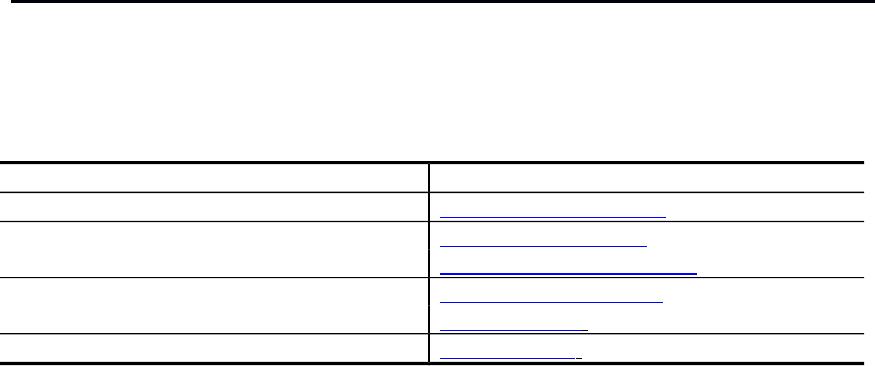
Section Web Address
Introduction www.monitordaily.com
27.1 www.bloomberg.com
www.keystoneleasing.com
27.5 www.lease-vs-buy.com
www.cars.com
27.7 www.ilfc.com
CHAPTER ORGANIZATION
27.1 Leases and Lease Types
Leasing versus Buying
Operating Leases
Financial Leases
27.2 Accounting and Leasing
27.3 Taxes, the IRS, and Leases
27.4 The Cash Flows from Leasing
The Incremental Cash Flows
A Note about Taxes
27.5 Lease or Buy?
A Preliminary Analysis
Three Potential Pitfalls
NPV Analysis
A Misconception
27.6 A Leasing Paradox
27.7 Reasons for Leasing
Good Reasons for Leasing
Dubious Reasons for Leasing
Other Reasons for Leasing
27.8 Summary and Conclusions
27-1
Chapter 27 – Leasing
ANNOTATED CHAPTER OUTLINE
27.1 Leases and Lease Types
Basic Terminology:
Lease – a contractual agreement between two parties: the lessee
and the lessor
Lessee – the party that has the right to use an asset and makes
period payments to the asset’s owner
Lessor – owner of the asset
A. Leasing versus Buying
The decision involves a comparison of the alternative financing
methods employed to secure the use of the asset. In both cases, the
company ends up using the asset.
B. Operating Leases
Also called a service lease.
Characteristics:
1. Payments are not high enough for the lessor to recover the full
cost of the asset
2. Life of the lease is often less than the economic life of the asset
3. The lessor often provides the routine maintenance for the asset
4. It is often cancelable
C. Financial Leases
Also called capital leases.
Characteristics:
1. Payments are typically sufficient to cover the lessor’s cost of
purchasing the asset and to provide the lessor a fair return
(therefore, also called a fully amortized lease)
2. The lessee is responsible for insurance, maintenance, and taxes
3. There is generally no cancellation clause without severe penalty
The three financial lease types are:
1. Tax-oriented leases – the lessor is the owner for tax purposes
27-2

Chapter 27 – Leasing
2. Leveraged leases – lessor borrows a substantial portion of the
purchase price on a non-recourse basis
3. Sale and leaseback agreements – lessee sells the asset to the
lessor and leases it back
Real-World Tip: As described by Professor James Johnson in his
article, “Predatory Leasing: The Curse of the No-Exit Lease”
(Corporate Finance Review, January/February 1999) some
lessors make it extremely difficult for lessees to escape the lease at
expiration. Typically lessees have the right to purchase the
equipment, extend the lease, or “walk away.” In a “predatory”
lease, the end-of-lease language traps the lessee. Consider the
following end-of-lease language provided in the article:
“At the expiration of the lease term …or at the
expiration of an extention [sic] term … lessee must (1)
purchase the leased property at a reasonable price; (2)
return the leased property …and lease replacement
property which has a cost at least equal to the original
cost of the returned property; or (3) extend the lease for
an additional year at the lease rate prevailing in the
expiring lease. Regarding options (1) and (2), lessor
and lessee shall agree to terms or not agree to terms in
their sole discretion.”
Notice that: the first option does not say “fair market value” –
thus, the lessor can insist on an exorbitant price, effectively taking
this option off the table. The second option does not specify the
terms of the subsequent lease, which allows the lessor to specify
exorbitant terms, taking the second option off the table. And, the
third option results in the lessee paying the same lease rate for
equipment that is worth a fraction of its original value. As
Professor Johnson points out, the “reasonable exit – simply
returning the equipment when the lease ends – has been ruled out”
by the wording of the document.
Real-World Tip: Traditionally, sale and leaseback arrangements
have involved expensive assets (e.g., buildings, airliners, railroad
cars); however, “employee leasing” has grown from almost zero in
1984 and many millions today. Unlike traditional “temps,” these
people are employed by the lessor, provided with health and other
benefits, and then leased to a client firm. The development of this
industry is perhaps a natural outgrowth of the downsizing and
outsourcing of the 1990s.
27-3

Chapter 27 – Leasing
27.2 Accounting and Leasing
Statement of Financial Accounting Standards No. 13, “Accounting
for Leases.”
Financial leases – capitalized and reported on the balance sheet (a
debit to the asset for the present value of the lease payments and a
credit recognizing the financial obligation of the lease).
Operating leases – not disclosed on the balance sheet, but
discussed in the footnotes.
A lease is declared a capital lease if one or more of the following
criteria is met:
1. Property ownership is transferred to the lessee by the end of the
lease term
2. Lessee can purchase the asset for below market value at the
lease’s expiration
3. Lease term is 75 percent of the asset’s economic life
4. Present value of payments is at least 90 percent of the market
value of the asset at inception
Note: Often there is an arbitrary distinction between financial and
operating leases. An advantage of operating lease classification is
that the balance sheet may appear stronger (such as a lower total
debt to total asset ratio).
27.3 Taxes, the IRS and Leases
A valid lease from the IRS’s perspective will meet these standards:
1. Lease term is less than 80 percent of the asset’s economic life
2. The contract should not have an option to buy at a price below
fair market value when the lease contract expires
3. The lease contract should not have a payment schedule that is
initially very high and lower thereafter; it suggests that tax
avoidance is the motive for the lease
4. The lease payment plan should provide the lessor a fair rate of
return
5. Renewal options must be reasonable, reflecting market value
27-4
Chapter 27 – Leasing
27.4 The Cash Flows From Leasing
A. The Incremental Cash Flows
Three important cash flow differences between leasing and buying:
1. The lessee’s lease payments are fully tax deductible. The after–
tax lease payment is equal to the pre-tax payment times (1 – tax
rate).
2. The lessee does not own and may not depreciate the asset. The
lost depreciation tax shield is depreciation expense times tax rate.
3. The lessee does not have the upfront cost of purchasing the
asset.
B. A Note on Taxes
The size of the lease advantage is often a question of who can best
utilize the tax shelters associated with the lease arrangement.
27.5 Lease or Buy?
A. A Preliminary Analysis
Leasing is advantageous if the implied after-tax interest rate on the
lease is less than the company’s after-tax cost of borrowing.
Lecture Tip: Here is another example of the lease versus buy
decision. A florist can purchase a delivery truck from her local GM
dealer for $25,000. The GM dealer will also lease the truck for
$6,100 per year over five years. The truck has an expected life of
seven years. The truck is expected to be worth $2,500 in five years
and the florist has the option to buy it at fair market value at that
time. If the florist wants to purchase the truck, she must borrow the
money from Boone National Bank at a current rate of 10%. Which
financing option is better? First, if we ignore taxes, the implied
interest rate of these payments is (assuming lease payments are
end of year) 9.5%. This implies that the GM dealer is willing to
loan money to the florist at 9.5% instead of the conventional 10%
loan being offered by the bank. The decision appears clear – lease
the truck.
27-5

Chapter 27 – Leasing
Unfortunately, lease versus buy decisions are not this simple.
Taxes are very important. In this lease, the entire lease payment is
tax deductible since the lease term is less than 80 percent of the
asset’s life and the option to purchase at the end is for fair market
value. If she purchases the truck, the purchase price is deductible
only through depreciation. Lease contracts also often include
maintenance, insurance, etc. Consider the following after-tax cash
flows when making the decision. The florist’s tax rate is 34%. For
simplicity, assume straight-line depreciation.
Year 0 1 2 3 4 5
Purchase Savings 25,00
0
After-tax lease payment
6100(1-.34)
–
4,026
–
4,026
–
4,026
–
4,026
–
4,026
Lost depreciation tax
shield
(25,000/5)(.34)
–
1,700
–
1,700
–
1,700
–
1,700
–
1,700
Purchase truck –
2,500
Incremental Cash Flows 25,00
0
–
5,726
–
5,726
–
5,726
–
5,726
–
8,226
After-tax discount rate = 10%(1-.34) = 6.6%
NPV = -547.50, she should purchase now instead of leasing. The
savings of 25,000 today is not supported by the future after-tax
costs.
The after-tax loan rate (compute the IRR) would have to be 7.37%
to be indifferent between the two options. This corresponds to a
pre-tax loan rate of 11.16%.
B. Three Potential Pitfalls
Potential pitfalls to using the implied rate of interest on the lease
instead of the NPV:
1. Since the cash flows are positive, then negative, you have to
adjust the interpretation of the IRR rule. The IRR represents the
rate paid in this instance, and you should choose the lower number.
27-6
Chapter 27 – Leasing
2. Normally, you determine the advantage to leasing over
borrowing – as was done above – so you lease if the IRR is lower
than the after-tax cost of borrowing. If you determine the
advantage of borrowing over leasing (reverse all the signs), then
you are back to “conventional cash flows,” and you would lease if
the IRR is higher than the after-tax cost of borrowing.
3. The implied rate is based on the net cash flows of leasing instead
of borrowing – you have to use incremental cash flows.
C. NPV Analysis
The net advantage to leasing can be determined by discounting the
cash flows back at the lessee’s after-tax cost of borrowing. This is
the same as the NPV computed in the example above.
D. A Misconception
The present value of the loan payments, if we borrow and buy, is
the cost of the equipment regardless of the loan repayment
schedule. So, it doesn’t really matter if we pay cash to purchase the
asset or we borrow and buy the asset; the initial cost is the same
either way.
27.6 A Leasing Paradox
It is important to recognize that the cash flows to the lessee are
exactly the opposite of the cash flows to the lessor when they have
the same tax rate and cost of debt. As a result, a lease arrangement
is often a zero-sum game. Since, in this situation, either one party
wins and one party loses, or both parties break even, why would
leasing take place?
27.7 Reasons For Leasing
A. Good Reasons for Leasing
1. Taxes may be reduced by leasing. A potential tax shield that
cannot be used effectively by one firm can be transferred to
another firm through a leasing arrangement. The firm in the higher
tax bracket would act as the lessor and then utilize the majority of
the tax shields. (The loser is the IRS.)
2. Leasing may reduce uncertainty regarding the asset’s residual
value. This uncertainty may reduce firm value.
3. Transaction costs may be lower for leasing than buying.
4. Leasing may require fewer restrictive covenants than borrowing.
27-7
Chapter 27 – Leasing
5. Leasing may encumber fewer assets than secured borrowing.
B. Dubious Reasons for Leasing
1. The balance sheet may appear stronger when operating leases
are used (since they are considered off-balance sheet financing).
2. A firm may secure a lease arrangement when additional debt
would violate existing loan agreements.
3. Basing the lease decision on the interest rate implied by the
lease payments and not on the incremental after-tax cash flows.
C. Other Reasons for Leasing
Many government agencies use leasing to circumvent bureaucratic
capital expenditure controls.
27.8 Summary and Conclusions
27-8