Chapter 02 – Financial Statements, Taxes, and Cash Flow
Chapter 2
FINANCIAL STATEMENTS, TAXES, AND CASH FLOW
CHAPTER WEB SITES
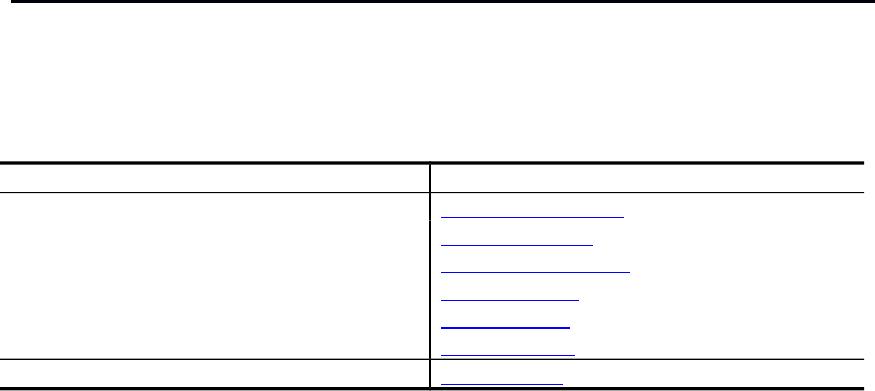
Section Web Address
2.1 finance.yahoo.com
money.cnn.com
finance.google.com
disney.go.com
www.sec.gov
www.fasb.org
2.3 www.irs.gov
CHAPTER ORGANIZATION
2.1 The Balance Sheet
Assets: The Left Side
Liabilities and Owners’ Equity: The Right Side
Net Working Capital
Liquidity
Debt versus Equity
Market Value versus Book Value
2.2 The Income Statement
GAAP and the Income Statement
Noncash Items
Time and Costs
2.3 Taxes
Corporate Tax Rates
Average versus Marginal Tax Rates
2.4 Cash Flow
Cash Flow from Assets
Cash Flow to Creditors and Stockholders
An Example: Cash Flows for Dole Cola
2.5 Summary and Conclusions
2-1
Chapter 02 – Financial Statements, Taxes, and Cash Flow
ANNOTATED CHAPTER OUTLINE
1. The Balance Sheet
A. Assets: The Left Side
Assets are divided into several categories. Make sure that students
recall the difference between current and fixed assets, as well as
tangible and intangible assets.
B. Liabilities and Owners’ Equity: The Right Side
The right-hand side is categorized by the firm’s debt and
ownership. Make sure that students recall the difference between
current and long-term liabilities.
Recall the balance sheet identity:
assets = liabilities + owners’ equity
Lecture Tip: Students sometimes find it difficult to see the
relationship between the decisions made by financial managers
and the values that subsequently appear on the firm’s balance
sheet. One way to help them see the “big picture” is to emphasize
that all finance decisions are either investment decisions or
financing decisions. Investment decisions involve the purchase
and sale of any assets (not just financial assets). Investment
decisions show up on the left-hand side of the balance sheet.
Financing decisions involve the choice of whether to borrow
money to buy the assets or to issue new ownership shares.
Financing decisions show up on the right-hand side of the balance
sheet.
Lecture Tip: You may find it useful at this point to spend a few
minutes reinforcing the concepts of owners’ equity and retained
earnings. The students should recall that owners’ equity consists of
the common stock account, paid-in surplus, and treasury stock. It
is important to remind students that the firm’s net income belongs
to the owners. It can either be paid out in dividends or reinvested
in the firm. When it is reinvested in the firm, it becomes additional
equity investment and shows up in the retained earnings account.
C. Net Working Capital
The difference between a firm’s current assets and its current
liabilities.
2-2

Chapter 02 – Financial Statements, Taxes, and Cash Flow
Assets are listed on a balance sheet in order of how long it takes to
convert them to cash. Liability order reflects time to maturity.
D. Liquidity
It is important to point out to students that liquidity has two
components: how long it takes to convert to cash and the value that
must be relinquished to convert to cash quickly. Any asset can be
converted to cash quickly if you are willing to lower the price
enough.
It is also important to point out that more-liquid assets also provide
lower returns. Consequently, too much liquidity can be just as
detrimental to shareholder wealth maximization as too little
liquidity.
Lecture Tip: Some students get a little confused when they try to
understand that excessive cash holdings can be undesirable.
Occasionally, they leave an accounting principles class with the
belief that a large current ratio is, in and of itself, a good thing.
Short-term creditors like a company to have a large current ratio,
but that doesn’t mean that excess cash is good for the firm.
You may wish to mention that a cash balance is a use of funds and,
therefore, has an opportunity cost. Ask what a company could do
with cash if it were not sitting idle. It could be paid to
stockholders, invested in productive assets, or used to reduce debt.
Students need to understand that a change in a firm’s cash account
is not the same as cash flow, regardless of what the “Statement of
Cash Flows” may imply.
E. Debt versus Equity
Interest and principal payments on debt have to be paid before cash
may be paid to stockholders. The company’s gains and losses are
magnified as the company increases the amount of debt in the
capital structure. This is why we call the use of debt “financial
leverage.”
The balance sheet identity can be rewritten to illustrate that
owners’ equity is just what’s left after all debts are paid.
owners’ equity = assets – liabilities
2-3
Chapter 02 – Financial Statements, Taxes, and Cash Flow
F. Market Value versus Book Value
Book values are generally not all that useful for making decisions
about the future because of the historical nature of the numbers.
Also, some of the most important assets and liabilities don’t show
up on the balance sheet. For example, the people that work for a
firm can be very valuable assets, but they aren’t included on the
balance sheet. This is especially true in service industries.
Lecture Tip: Accounting, or historical costs, are not very
important to financial managers, while market values are. Some
students have difficulty recognizing that the passage of time and
changing circumstances will almost always mean that the price an
asset would fetch if sold today is quite different from its book
value. Sometimes an example or two of familiar instances are
enough to make the point. For example, pointing out the
differences between market values and historical costs of used cars
and houses may help.
Some students recognize the difference between book values and
market values, but do not understand why market values are the
more important numbers for decision-making. The simplest answer
is that market value represents the cash price people are willing
and able to pay. After all, it is cash that must ultimately be paid or
received for investments, interest, principal, dividends, and so
forth.
Lecture Tip: The above example also provides a rationale for the
accounting practice of “marking-to-market.” Firm value is better
reflected in the financial statements. However, students should be
reminded that this occurs with only a portion of the firm’s assets –
primarily marketable securities, inventory, and derivatives
positions. As such, it is unlikely that the aggregate balance sheet
values provided by the firm will accurately reflect market values,
even when prepared by the most scrupulous of accountants.
Lecture Tip: Finance practitioners (and professors) throw around
terms like “mid-cap,” “small-cap,” etc. But what is the generally
accepted definition of a “mid-cap” firm? According to CFO
magazine, “small-caps” are firms with market capitalization less
than $1 billion, “mid-caps” fall in the $1 billion to $5 billion
range, and “large-caps” have total market value of equity in
excess of $5 billion.
2-4

Chapter 02 – Financial Statements, Taxes, and Cash Flow
2. The Income Statement
Lecture Tip: Previously, it was noted that investment decisions are
reflected on the left-hand side of the balance sheet and financing
decisions are reflected on the right-hand side of the balance sheet.
You could also point out that the income statement reflects
investment decisions in the “top half,” from sales to EBIT.
Financing decisions are reflected in the “bottom half,” from EBIT
to net income and earnings per share.
A. GAAP and the Income Statement
Remember that GAAP requires that we recognize revenue when it
is earned, not when the cash is received and we match costs to
revenues. This introduces noncash deductions such as depreciation
and amortization. Consequently, net income is NOT the same as
cash flow.
Lecture Tip: In March 2004, Global Crossing reported record
quarterly earnings of $24.88 billion on revenues of $719 million.
These earnings came about because of GAAP rules regarding non-
cash items related to the firm’s emergence from bankruptcy.
According to The Wall Street Journal Online (Global Crossing
Scores A Bankruptcy Bonanza, March 11, 2004), $8 billion of the
profit came from the ability to eliminate the liabilities associated
with contracts with equipment vendors that were renegotiated
during bankruptcy. Another $16 billion came from eliminating
common and preferred shares that previously existed. The
remainder of the “profit” came from the liabilities associated with
contracts between Global Crossing and other phone companies
that were eliminated during the bankruptcy proceedings. If these
non-cash “revenues” were eliminated from the calculations, then
the firm would have had a net loss of approximately $3 million.
Clearly, GAAP will not always provide a clear view of a firm’s
earnings.
Ethics Note: Publicly traded firms have to file audited annual
reports, but that doesn’t mean that “accounting irregularities”
never slip by the auditors. Companies that deliberately
manipulate financial statements may benefit in the short run, but it
eventually comes back to haunt them. Cendant Corporation is a
good example. Cendant was created when CUC International and
HFS, Inc. merged in late 1997. The combined company owns
businesses in the real estate and travel industries. In April 1998,
the combined company announced that accounting irregularities
had been found in the CUC financial statements and earnings
2-5
Chapter 02 – Financial Statements, Taxes, and Cash Flow
would need to be restated for 1997 and possibly 1995 and 1996 as
well. Cendant’s stock price dropped 47 percent the day after the
announcement was made (it was announced after the market
closed). The problems haunted Cendant throughout 1998. In July,
it was announced that the problem was much worse than originally
expected and the stock price plummeted again. By the end of July
1998, the stock price had dropped more than 60 percent below the
price before the original announcement. The company also had to
take a $76.4 million charge in the third quarter of 1998 for the
costs of investigating the accounting irregularities. Criminal
charges were filed against several former executives of CUC
International and several class action lawsuits were filed against
Cendant. The stock was trading around $41 per share prior to the
announcement and dropped to as low as $7.50 per share in
October 1998. The price finally started to rebound toward the end
of 2003, but the price as of November 4, 2004 ($22.10) was still
only about 54% of what it had been prior to the announcement.
Other companies, such as Enron, WorldCom, etc., and their
investors have fared much worse. There were a string of
accounting problems at the start of this century, and these, along
with the terrorist attacks, aided the market decline during the early
2000s.
B. Noncash Items
The largest noncash deduction for most firms is depreciation. It
reduces a firm’s taxes and its net income. Noncash deductions are
part of the reason that net income is not equivalent to cash flow.
Lecture Tip: Students sometimes fail to grasp the distinction
between the economic life of an asset, the useful life of an asset for
accounting purposes, and the useful life of an asset for tax
purposes. “Economic life” refers to the period of time that the
asset is expected to generate cash flows and must be considered
when capital budgeting decisions are made. “Useful life” for
accounting purposes is largely determined by the firm’s
accountants, with guidance from GAAP, and it affects the
depreciation expense on the balance sheets and income statements
that are used for business purposes. Useful life for tax purposes is
determined by the Internal Revenue Service and is based on
different asset categories. This is also important for capital
budgeting because it determines the tax consequences of
depreciation, which affects cash flow.
2-6
Chapter 02 – Financial Statements, Taxes, and Cash Flow
C. Time and Costs
We need to plan for both short-run cash flows and long-run cash
flows. In the short-run, some costs are fixed regardless of output
and other costs are variable. In the long run, all costs are variable.
It is important to identify these costs when doing a capital
budgeting analysis.
Lecture Tip: Distinguishing between fixed and variable costs can
have important implications for estimating cash flows. It is
sometimes helpful to remind students that variable costs are cash
outflows that vary with the level of output, while fixed costs do not.
Another important thing to point out is that the definition of short
run and long run varies for different types of businesses.
3. Taxes
Lecture Tip: The text notes the ever-changing nature of the tax
code. This can be illustrated by the changes in the Investment Tax
Credit (ITC) between 1962 and 1986.
1962 – Seven percent ITC created to stimulate capital investment
1966 – ITC suspended
1967 – Seven percent ITC reinstated
1969 – ITC eliminated
1971 – Seven percent ITC reinstated
1975 – Credit increased to 10 percent
1986 – ITC eliminated
A. Corporate Tax Rates
It’s important to point out to students that corporations (and
individuals) do not pay a flat rate on their income, but corporate
rates are not strictly increasing either.
B. Average versus Marginal Tax Rates
The average rate rises to the marginal rate at $50 million of taxable
income. The “surcharges” at 39% and 38% offset the initial lower
marginal rates.
Lecture Tip: It is useful to stress the situations in which marginal
tax rates are relevant and those in which average tax rates are
relevant. For purposes of computing a company’s total tax
liability, the average tax rate is the correct rate to apply to before
tax profits. However, in evaluating the cash flows that would be
generated from a new investment, the marginal tax rate is the
2-7

Chapter 02 – Financial Statements, Taxes, and Cash Flow
appropriate rate to use. This is because the new investment will
generate cash flows that will be taxed above the company’s
existing profit.
Lecture Tip: The op-ed page of the March 11, 1998, issue of The
Wall Street Journal contains an article guaranteed to generate
class discussion. In “Abolish the Corporate Income Tax,” the
author provides a quick overview of the situation that brought the
current income tax into being in the early 1900s, and contends that
the corporate and personal income tax systems began life as “two
separate and completely uncoordinated tax systems.” With the
passage of time, the tax code has, of course, become extremely
complex and the author illustrates this by noting that “Chrysler
Corporation’s tax returns comprise stacks of paper six feet high,
prepared by more than 50 accountants who do nothing else.” And,
he points out, “the Internal Revenue Service, meanwhile, has a
team of auditors who do nothing but monitor Chrysler’s returns.”
Given the complexity and wasted effort, the author suggests that
the rational thing to do is to abolish the corporate income tax. Do
you agree?
4. Cash Flow
A. Cash Flow from Assets (CFFA)
The cash flow identity is similar to the balance sheet identity:
Cash Flow from Assets = Cash Flow to Creditors + Cash Flow to
Stockholders
CFFA = Operating cash flow – net capital spending – changes in
net working capital
Operating cash flow (OCF) = EBIT + depreciation – taxes
Net capital spending (NCS) = ending fixed assets – beginning
fixed assets + depreciation
Changes in NWC = ending NWC – beginning NWC
B. Cash Flow to Creditors and Stockholders
Cash flow to creditors = interest paid – net new borrowing =
interest paid – (ending long-term debt – beginning long-term debt)
2-8

Chapter 02 – Financial Statements, Taxes, and Cash Flow
Cash flow to stockholders = dividends paid – net new equity raised
= dividends paid – (ending common stock, APIC, & Treasury stock
– beginning common stock, APIC, & Treasury stock)
It is important to point out that changes in retained earnings are not
included in “net new equity raised.” The effect of this increase is
captured in changes in net working capital and net capital
spending.
C. An Example: Cash Flows for Dole Cola
Lecture Tip: Textbooks make financial statement analysis seem
reasonably straightforward. However, it is not always as easy to
classify the numbers that appear on the consolidated financial
statements of an actual corporation. Consider the 2010 McGraw-
Hill Annual Report.
You can go to the McGraw-Hill web site (http://www.mcgraw-
hill.com) and look under investor relations to get the most recent
annual report available.
The following questions may arise from looking at the financial
statements:
1. How do you account for “prepublication costs,” “investments
and other assets” and “goodwill and other intangible assets?” Are
they included in net capital spending or are they accounting
numbers with no real impact on cash flows?
2. How should the “other liabilities” be accounted for? Again,
which accounts truly provide changes in cash flows and which
accounts are just used for accounting purposes without an actual
change in cash flows.
3. How do “accumulated other comprehensive income” and
“unearned compensation on restricted stock” affect cash flows?
The cash flow identity does not appear to hold when applied in a
reasonable fashion based on the information provided. It is
important to point out that financial managers have a lot more
information available to them than what is provided in the
consolidated statements of an annual report. The manager will
have the information available to compute cash flow from assets
and, if it is done carefully, the cash flow identity will hold.
5. Summary and Conclusions
2-9