CHAPTER 14
COST OF CAPITAL
Answers to Concepts Review and Critical Thinking Questions
1. It is the minimum rate of return the firm must earn overall on its existing assets. If it earns more than
this, value is created.
5. The primary advantage of the DCF model is its simplicity. The method is disadvantaged in that (a)
the model is applicable only to firms that actually pay dividends; many do not; (b) even if a firm
does pay dividends, the DCF model requires a constant dividend growth rate forever; (c) the
6. Two primary advantages of the SML approach are that the model explicitly incorporates the relevant
risk of the stock and the method is more widely applicable than is the dividend discount model, since
the SML doesn’t make any assumptions about the firm’s dividends. The primary disadvantages of
7. The appropriate aftertax cost of debt to the company is the interest rate it would have to pay if it
were to issue new debt today. Hence, if the YTM on outstanding bonds of the company is observed,
the company has an accurate estimate of its cost of debt. If the debt is privately placed, the firm
8. a. This only considers the dividend yield component of the required return on equity.
b. This is the current yield only, not the promised yield to maturity. In addition, it is based on the
c. Equity is inherently more risky than debt (except, perhaps, in the unusual case where a firm’s
Both should proceed. The appropriate discount rate does not depend on which company is investing;
10. If the different operating divisions were in much different risk classes, then separate cost of capital
figures should be used for the different divisions; the use of a single, overall cost of capital would be
Solutions to Questions and Problems
NOTE: All end of chapter problems were solved using a spreadsheet. Many problems require multiple
steps. Due to space and readability constraints, when these intermediate steps are included in this
solutions manual, rounding may appear to have occurred. However, the final answer for each problem is
found without rounding during any step in the problem.
Basic
1. With the information given, we can find the cost of equity using the dividend growth model. Using
this model, the cost of equity is:
2. Here we have information to calculate the cost of equity using the CAPM. The cost of equity is:
3. We have the information available to calculate the cost of equity using the CAPM and the dividend
growth model. Using the CAPM, we find:
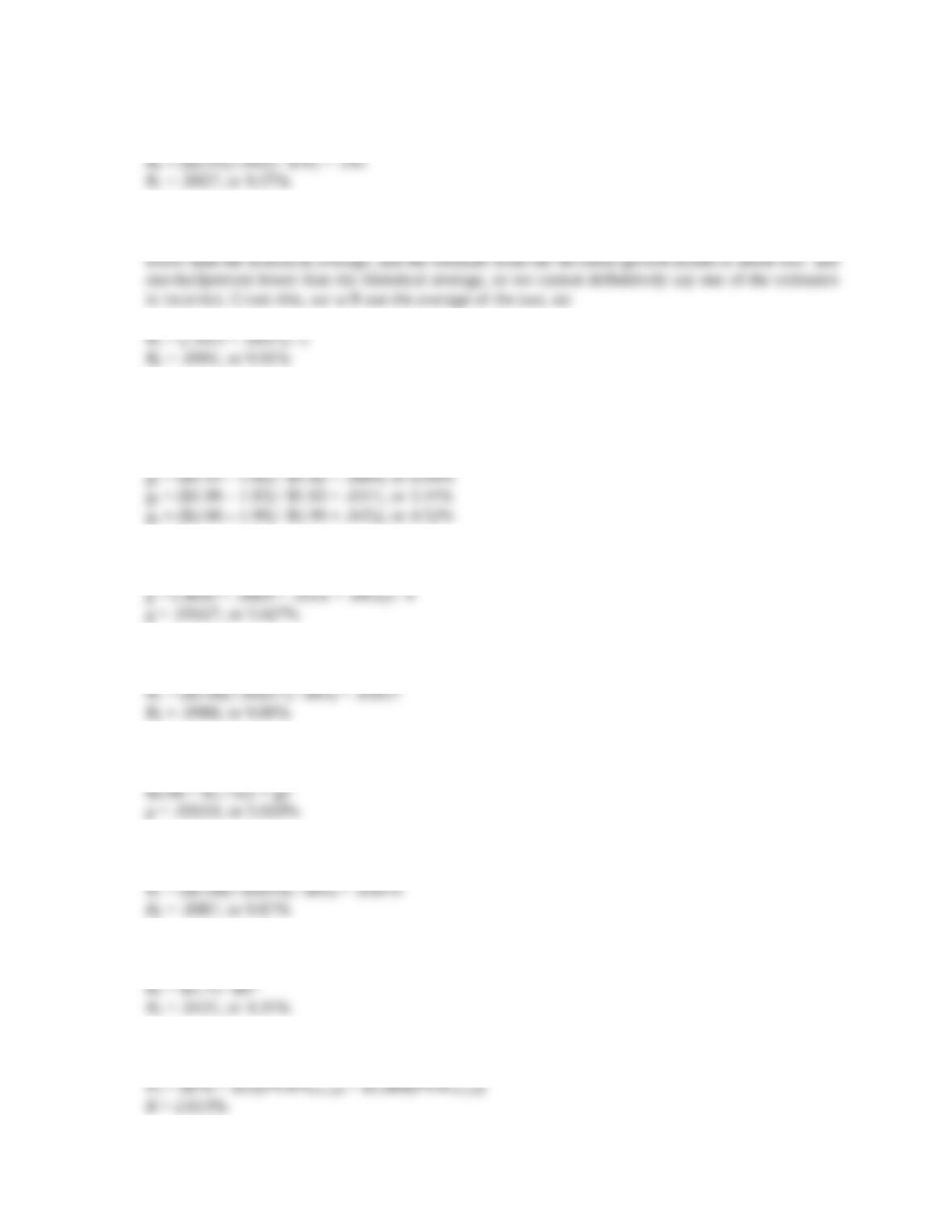
And using the dividend growth model, the cost of equity is
Both estimates of the cost of equity seem reasonable. If we remember the historical return on large
capitalization stocks, the estimate from the CAPM model is about one and three-fourths percent
4. To use the dividend growth model, we first need to find the growth rate in dividends. So, the increase
in dividends each year was:
g1 = ($1.82 – 1.71) / $1.71 = .0643, or 6.43%
So, the average arithmetic growth rate in dividends was:
Using this growth rate in the dividend growth model, we find the cost of equity is:
Calculating the geometric growth rate in dividends, we find:
The cost of equity using the geometric dividend growth rate is:
5. The cost of preferred stock is the dividend payment divided by the price, so:
6. The pretax cost of debt is the YTM of the company’s bonds, so:
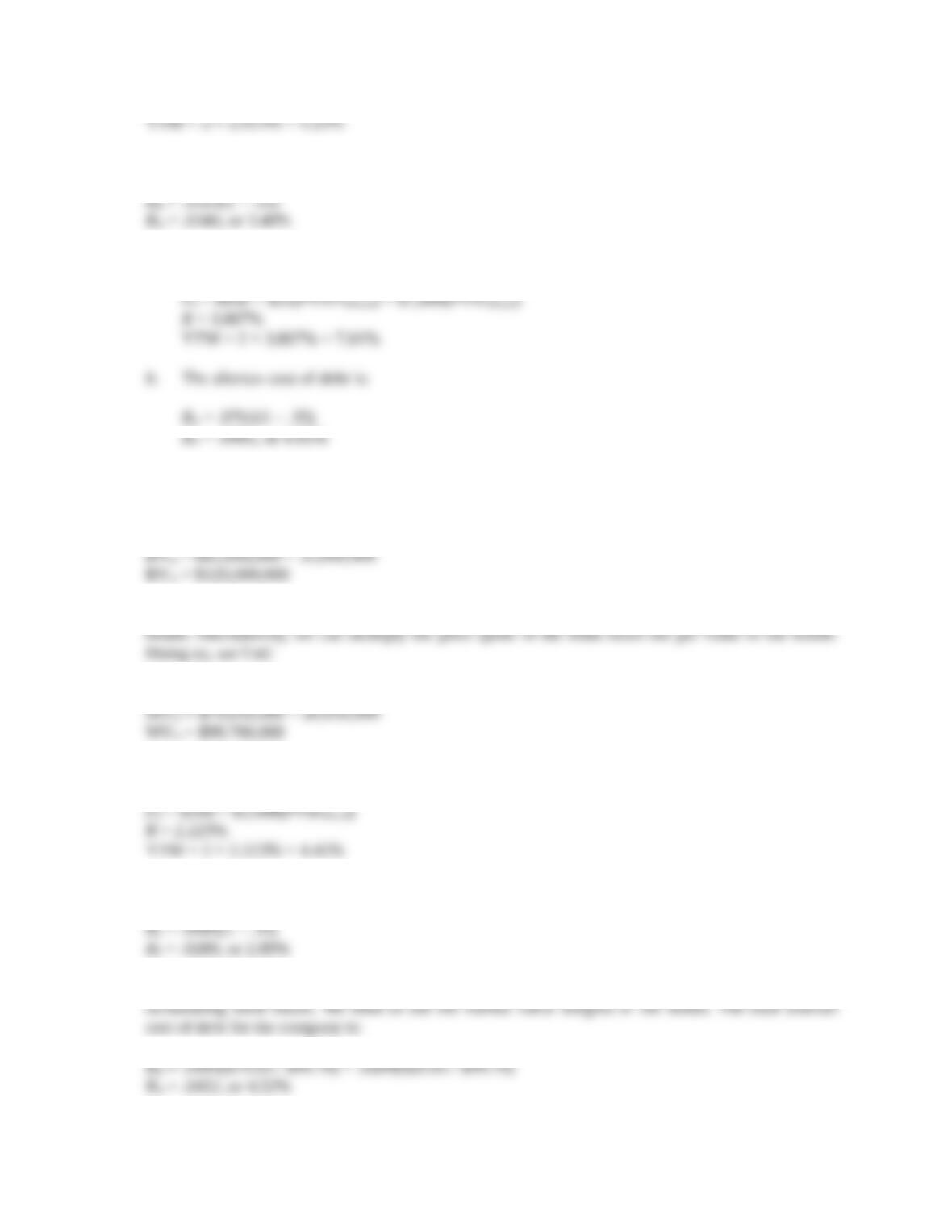
And the aftertax cost of debt is:
7. a. The pretax cost of debt is the YTM of the company’s bonds, so:
b. The aftertax cost of debt is:
c. The aftertax rate is more relevant because that is the actual cost to the company.
8. The book value of debt is the total par value of all outstanding debt, so:
To find the market value of debt, we find the price of the bonds and multiply by the number of
MVD = .93($85,000,000) + .59($35,000,000)
The YTM of the zero coupon bonds is:
So, the aftertax cost of the zero coupon bonds is:
The aftertax cost of debt for the company is the weighted average of the aftertax cost of debt for all

9. a. Using the equation to calculate the WACC, we find:
b. Since interest is tax deductible and dividends are not, we must look at the aftertax cost of debt,
which is:
Hence, on an aftertax basis, debt is cheaper than the preferred stock.
10. Here we need to use the debt-equity ratio to calculate the WACC. Doing so, we find:
11. Here we have the WACC and need to find the debt-equity ratio of the company. Setting up the
WACC equation, we find:
Rearranging the equation, we find:
Now we must realize that the V/E is just the equity multiplier, which is equal to:
V/E = 1 + D/E
Now we can solve for D/E as:
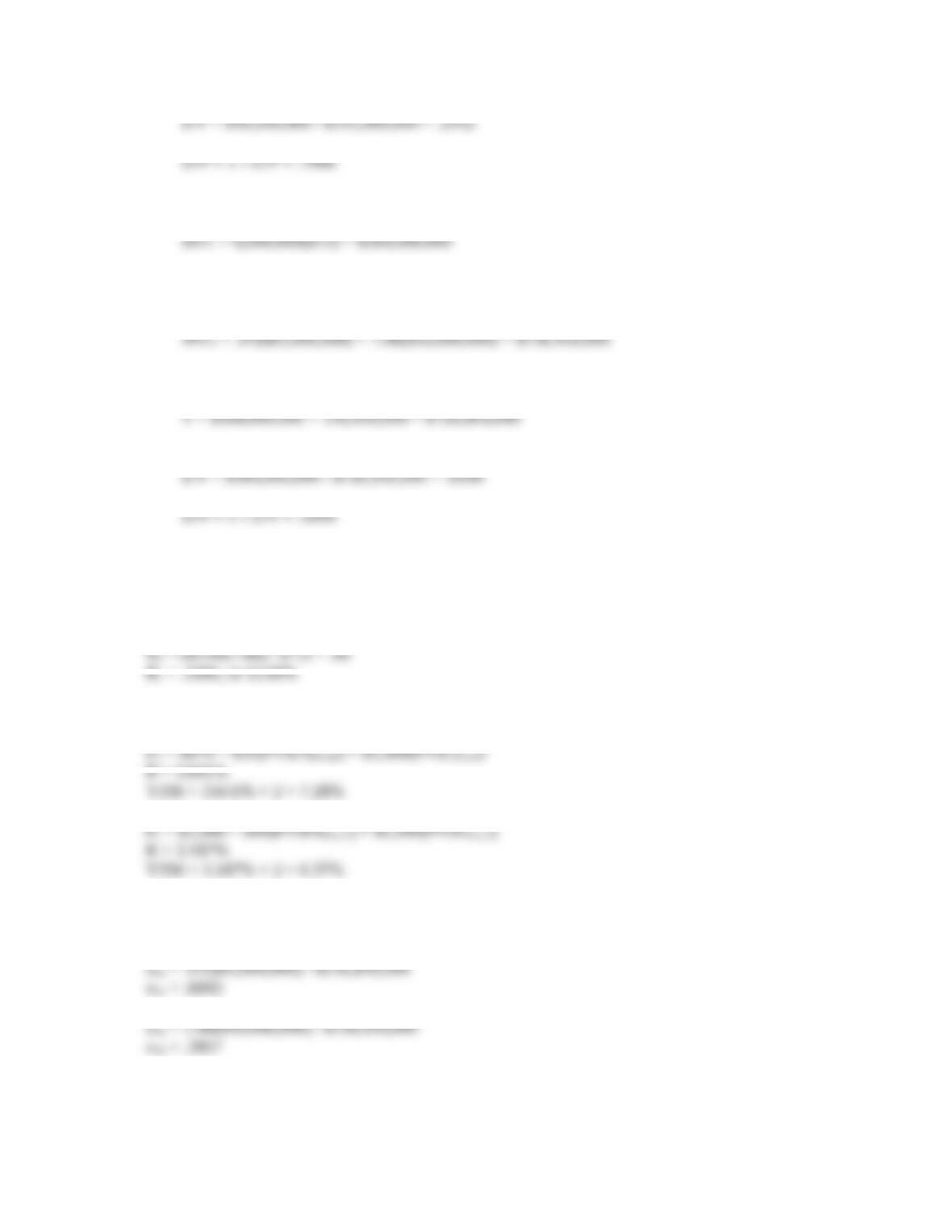
12. a. The book value of equity is the book value per share times the number of shares, and the book
value of debt is the face value of the company’s debt, so:
So, the total value of the company is:
And the book value weights of equity and debt are:
b. The market value of equity is the share price times the number of shares, so:
Using the relationship that the total market value of debt is the price quote times the par value
of the bond, we find the market value of debt is:
This makes the total market value of the company:
And the market value weights of equity and debt are:
c. The market value weights are more relevant.
13. First, we will find the cost of equity for the company. The information provided allows us to solve
for the cost of equity using the dividend growth model, so:
Next, we need to find the YTM on both bond issues. Doing so, we find:
To find the weighted average aftertax cost of debt, we need the weight of each bond as a percentage
of the total debt. We find:
Now we can multiply the weighted average cost of debt times one minus the tax rate to find the
weighted average aftertax cost of debt. This gives us:

Using these costs we have found and the weight of debt we calculated earlier, the WACC is:
14. a. Using the equation to calculate WACC, we find:
b. Using the equation to calculate WACC, we find:
15. We will begin by finding the market value of each type of financing. We find:
MVD = 10,000($1,000)(1.08) = $10,800,000
And the total market value of the firm is:
Now, we can find the cost of equity using the CAPM. The cost of equity is:
The cost of debt is the YTM of the bonds, so:
P0 = $1,080 = $32(PVIFAR%,50) + $1,000(PVIFR%,50)
And the aftertax cost of debt is:
The cost of preferred stock is:
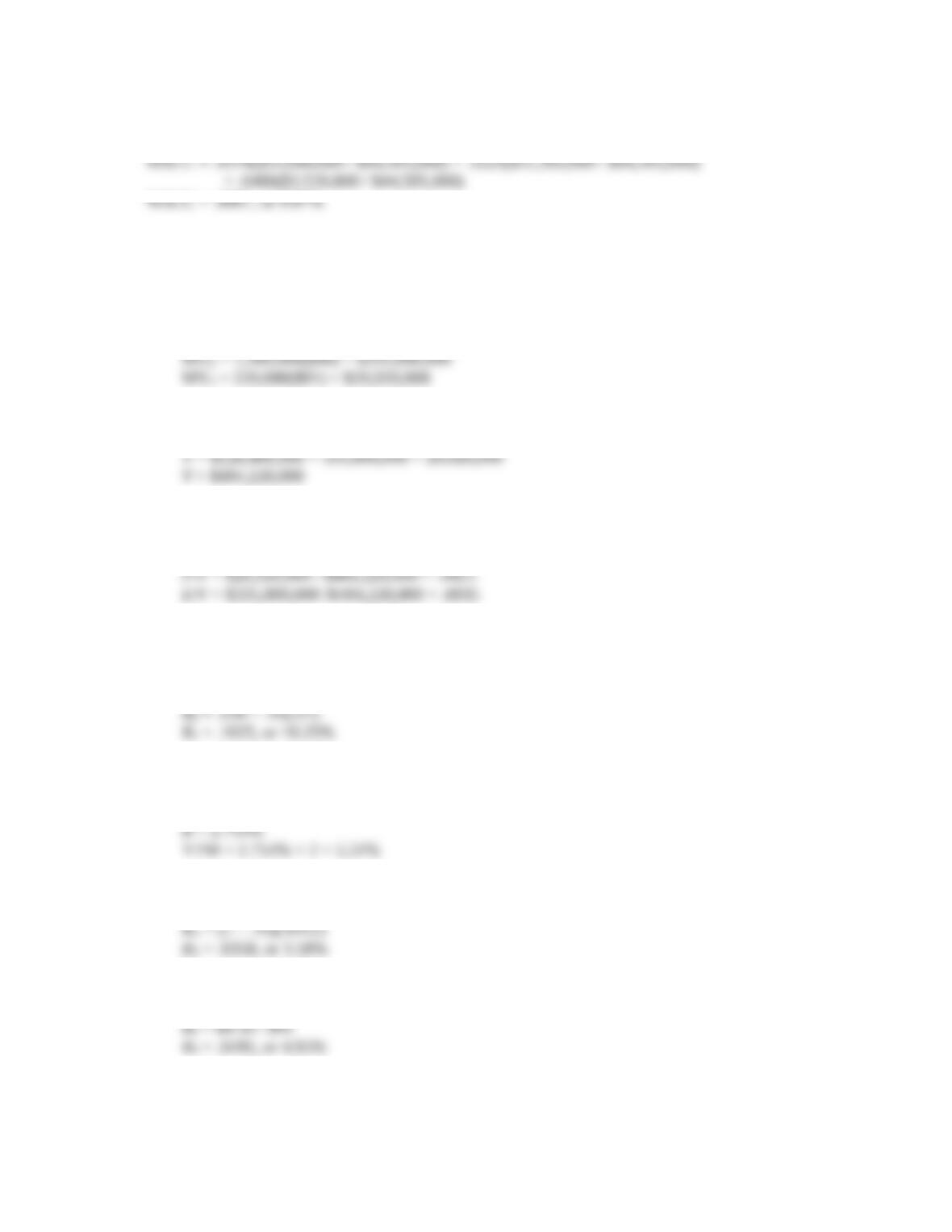
Now we have all of the components to calculate the WACC. The WACC is:
Notice that we didn’t include the (1 – TC) term in the WACC equation. We used the aftertax cost of
debt in the equation, so the term is not needed here.
16. a. We will begin by finding the market value of each type of financing. We find:
MVD = 120,000($1,000)(1.07) = $128,400,000
And the total market value of the firm is:
So, the market value weights of the company’s financing are:
D/V = $128,400,000 / $484,220,000 = .2652
b. For projects equally as risky as the firm itself, the WACC should be used as the discount rate.
First we can find the cost of equity using the CAPM. The cost of equity is:
The cost of debt is the YTM of the bonds, so:
P0 = $1,070 = $31(PVIFAR%,30) + $1,000(PVIFR%,30)
And the aftertax cost of debt is:
The cost of preferred stock is:
Now we can calculate the WACC as:
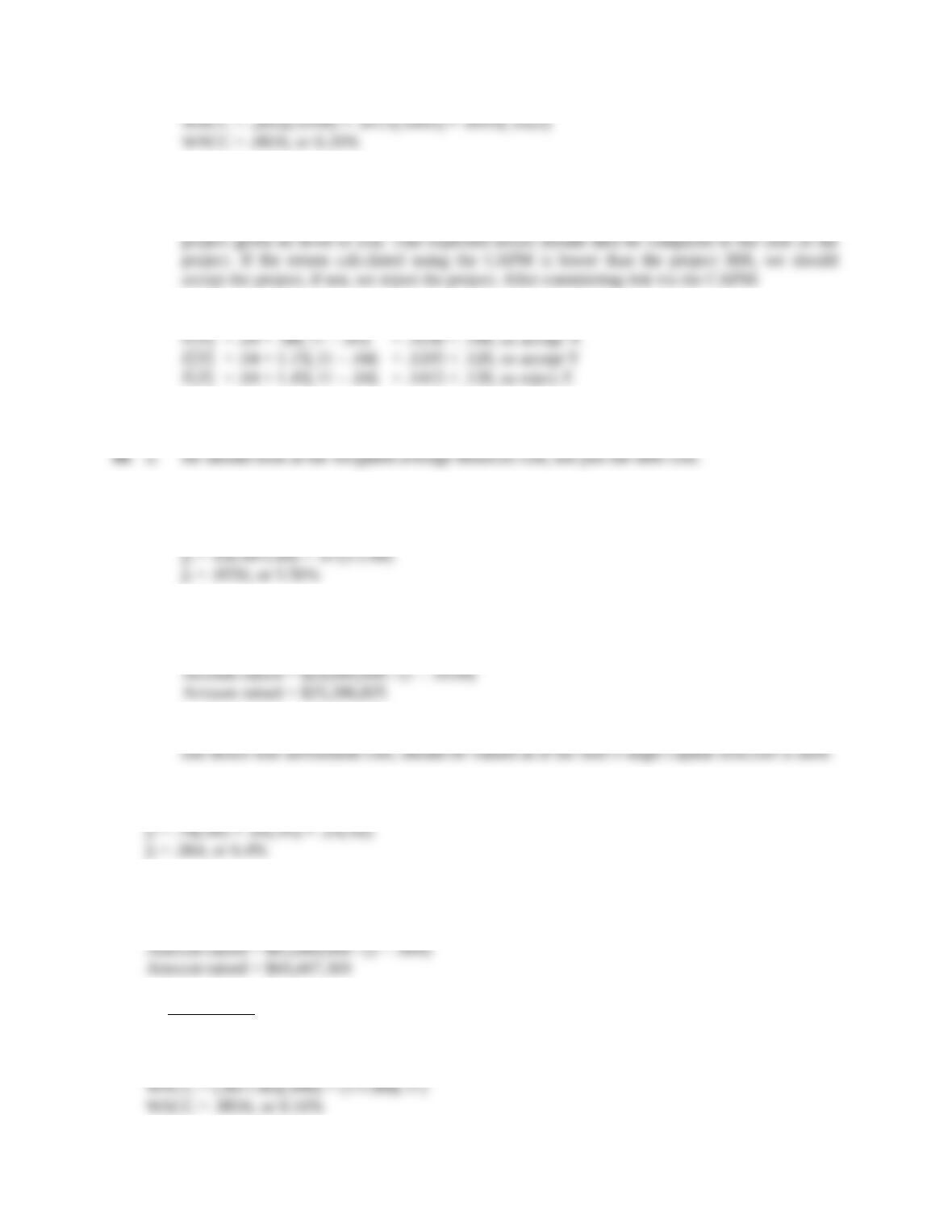
17. a. Projects Y and Z.
b. Using the CAPM to consider the projects, we need to calculate the expected return of the
E[W] = .04 + .75(.11 – .04) = .0925 > .089, so reject W
c. Project X would be incorrectly rejected; Project Z would be incorrectly accepted.
b. The weighted average flotation cost is the weighted average of the flotation costs for debt and
equity, so:
c. The total cost of the equipment including flotation costs is:
Amount raised(1 – .0550) = $24,000,000
Even if the specific funds are actually being raised completely from debt, the flotation costs,
19. We first need to find the weighted average flotation cost. Doing so, we find:
And the total cost of the equipment including flotation costs is:
Amount raised(1 – .064) = $65,000,000
Intermediate
20. Using the debt-equity ratio to calculate the WACC, we find:
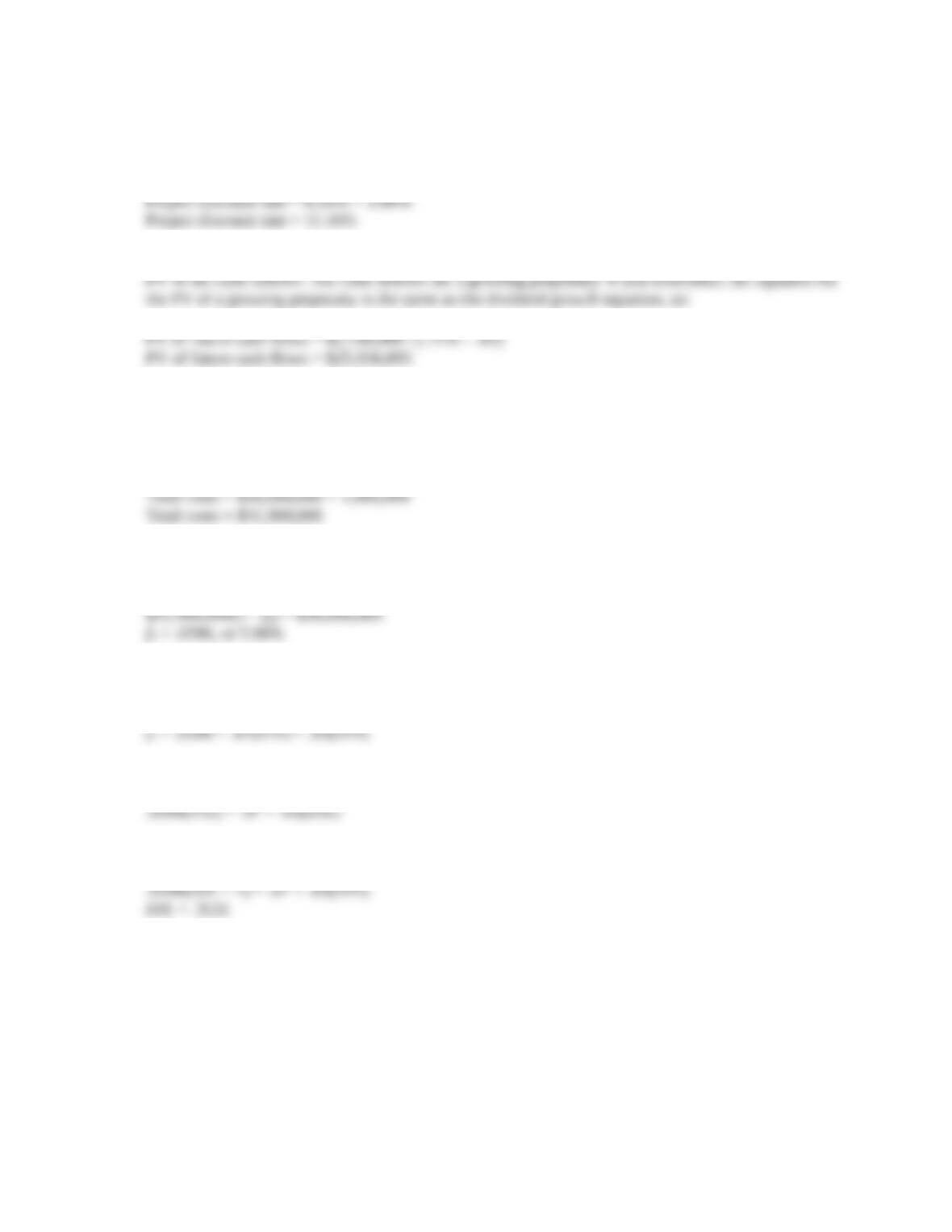
Since the project is riskier than the company, we need to adjust the project discount rate for the
additional risk. Using the subjective risk factor given, we find:
We would accept the project if the NPV is positive. The NPV is the PV of the cash outflows plus the
The project should only be undertaken if its cost is less than $25,936,893 since costs less than this
amount will result in a positive NPV.
21. The total cost including flotation costs was:
Using the equation to calculate the total cost including flotation costs, we get:
Amount raised(1 – fT) = Amount needed after flotation costs
Now, we know the weighted average flotation cost. The equation to calculate the percentage flotation
costs is:
We can solve this equation to find the debt-equity ratio as follows:
We must recognize that the V/E term is the equity multiplier, which is (1 + D/E), so: