Chapter 18 Global Logistics
18-1
Chapter 18
Global Logistics
Teaching Notes
To give the students some orientation to logistics this chapter begins with an example of
a logistics park in Zaragoza, Spain. This is followed by defining the scope and purpose of
logistics. There are five decision topics in the chapter; transportation, warehousing, networks,
3PL and strategy. The modes of transportation are discussed along with their typical uses and
the advantages and disadvantages or each of them. Calculation of the costs and comparison of
alternative modes is presented. Different types of warehouses and distribution centers are
described along with when each is appropriate. An example of a logistics network is given
leading to location decisions using the weighted center of gravity method. Third party logistics
providers are treated as a type of outsourcing decision. Logistics strategy completes the chapter
by showing how the various decisions in logistics (transportation, storage, network and 3PL) all
depend on the chosen goals and objectives.
We teach this chapter by telling students that logistics is more than driving trucks and
forklifts, although that is part of it. Logistics is very strategic to the frim and can be a type of
business (e.g., FedEx and UPS). This can lead to a discussion of the importance of logistics,
definition of logistics and goals. Some excitement needs to be introduced rather than just
discussing one mode of transportation after another. Perhaps, a typical product imported from
China can be traced out as an example of the various modes of transportation used. For example,
storage at the factory location, then transportation by truck to the sea port, offloading the truck
and loading into a container, loading on a ship, moving to the U.S., offloading the container,
repacking into a truckload, moving by truck to a distribution warehouse, storage or cross–
docking and moving to a retail store. The retail supply chain is heavily dependent on logistics
and distribution centers that can be described using examples of Amazon, Target, Walmart, etc.
We also do a costing example of different modes of transportation to illustrate the tradeoffs
between cost and speed of delivery. We then launch into the whole idea of 3PLs and the services
they can provide. The session can end with networks, location and how strategy starting with
objectives leads to different types of logistics decisions.
Answers to Questions
1. Logistics has been around as long as oceans, rivers, railroads and highways were used for
transportation in the U.S. and other countries. In the original thirteen colonies in the U.S.
Chapter 18 Global Logistics
2. Trucking is the most used mode of transportation because of its flexibility, speed and, in
most cases, low cost. Roads connect any two locations and trucks have the advantage of
3. The effect of deregulation of transportation has been to lower prices for consumers. This
occurred since competition is the most effective means of controlling prices through the
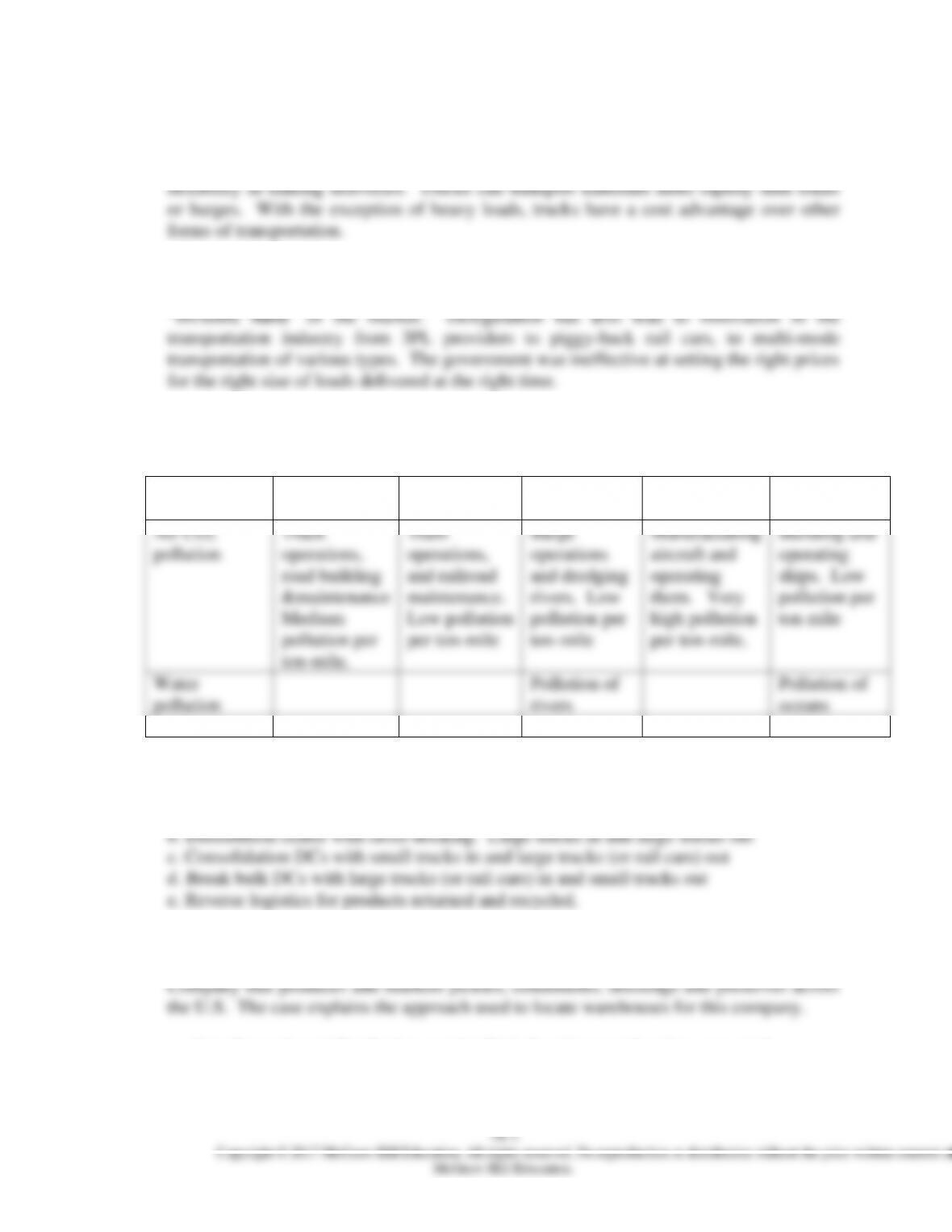
4. The environmental impact of the five modes of transportation:
Environmental
Effects
Trucks
Railroads
Barges
Aircraft
Ocean
Air CO2
pollution
Truck
operations,
road building
&maintenance
Medium
pollution per
ton-mile.
Train
operations,
and railroad
maintenance.
Low pollution
per ton-mile
Barge
operations
and dredging
rivers. Low
pollution per
ton-mile
Manufacturing
aircraft and
operating
them. Very
high pollution
per ton-mile.
Building and
operating
ships. Low
pollution per
ton mile
Water
pollution
Pollution of
rivers
Pollution of
oceans
5. Answers will vary. Examples of functions served could include
a. Seasonal goods for storage of products such as toys or lawnmowers
6. Answers will vary. A case example was found on the Internet for the M.A. Gedney
18-3
7. Some examples were found on the Internet
In 2013 Best Buy had 23 D.C.s for 1500 U.S. stores a ratio of 65 stores per D.C.
In 2016 Target had 38 D.C.s for 1793 stores a ratio of 47 stores per D.C.
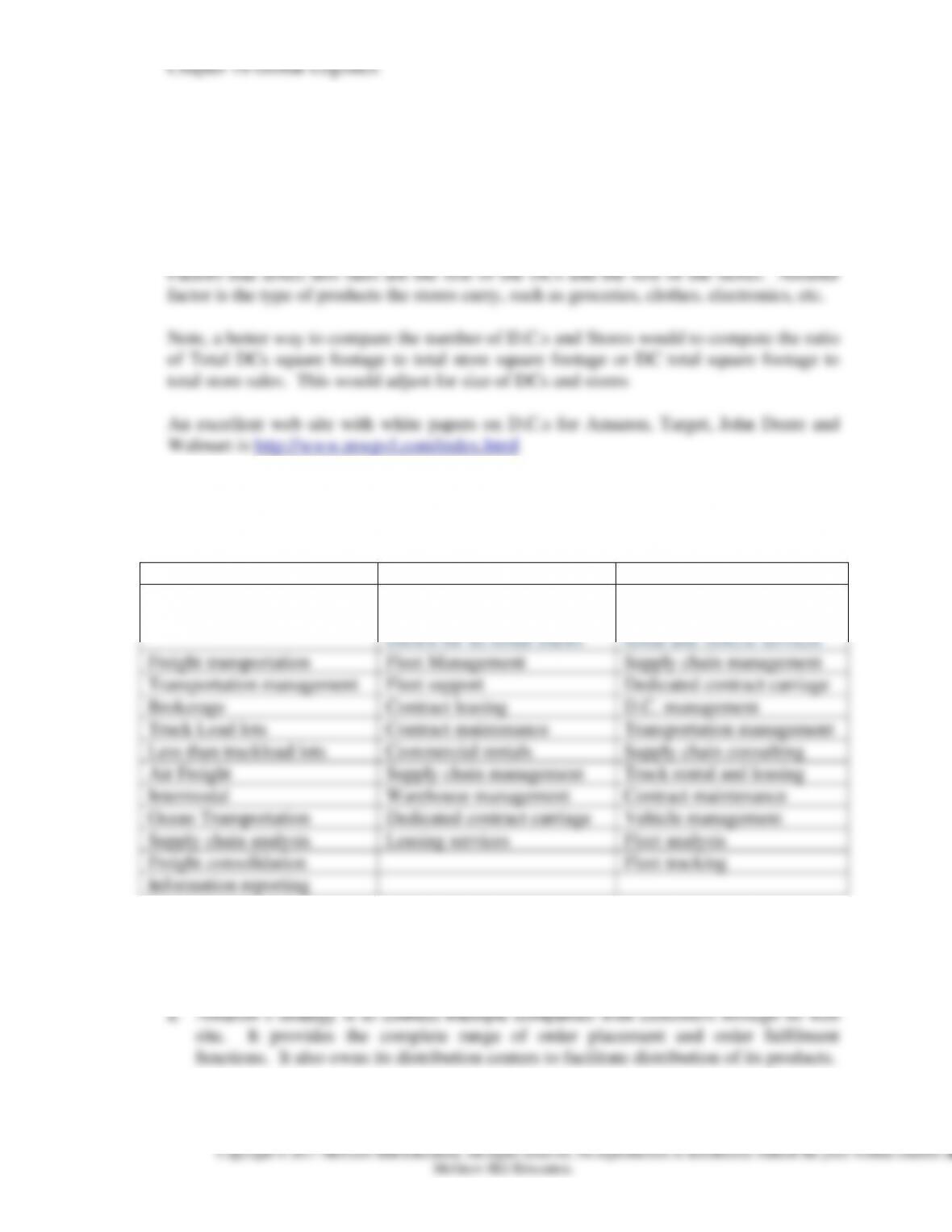
8. Services provided by the 3PL providers.
C. H. Robinson
Ryder
Penske
Provides comprehensive 3PL
services including
A supply chain and
transportation company
known for its rental trucks
A collection of companies
including logistics, truck
rental and vehicle services
Freight transportation
Fleet Management
Supply chain management
Transportation management
Fleet support
Dedicated contract carriage
Brokerage
Contract leasing
D.C. management
Truck Load lots
Contract maintenance
Transportation management
Less than truckload lots
Commercial rentals
Supply chain consulting
Air Freight
Supply chain management
Truck rental and leasing
Intermodal
Warehouse management
Contract maintenance
Ocean Transportation
Dedicated contract carriage
Vehicle management
Supply chain analysis
Leasing services
Fleet analysis
Freight consolidation
Fleet tracking
Information reporting
9. What is the logistics strategy of firms such as Amazon, Target and Best Buy?
Chapter 18 Global Logistics
18-4
b. Target’s logistics strategy is to provide customers with the products they want though
Answers to Problems
1. The cost of two separate shipments is
C = $10(10,000/100) + $10(15,000/100) = $1000 + $1500 = $2500
2. The cost of two separate shipments is
C = 409($2.00) + 409($2.00) = $1636
3. The least cost way to make the shipment is to use rail for $1,007 if you have 3 days. If
you only have 2 days, you should use the LTL option for $2,100, and the handling
4. The lowest cost way to make the shipment is to use LTL for $1,034 if you have 3 days.
Rail is dominated since it takes 4 days and costs more. If you have only 24 hours to
Chapter 18 Global Logistics
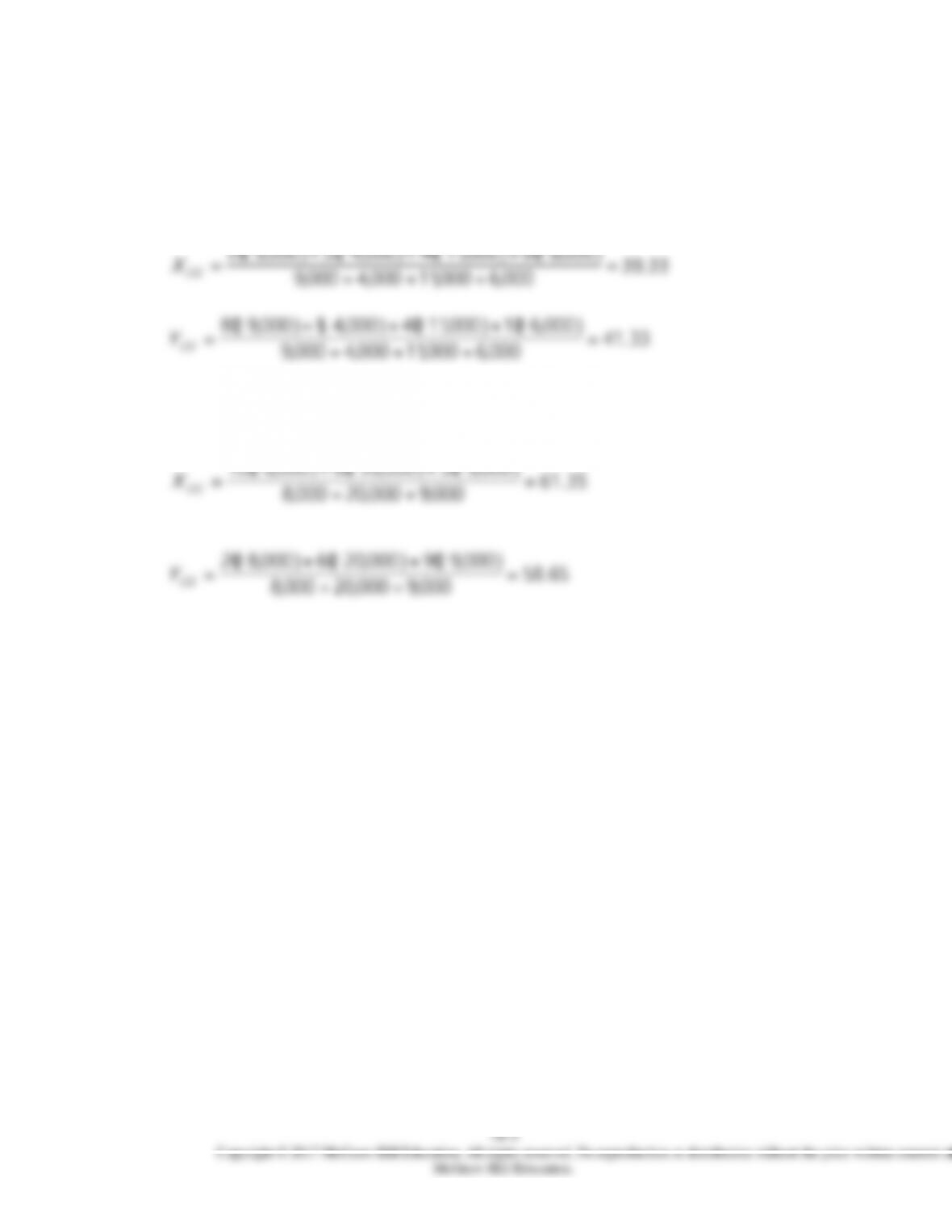
5.
33.39
000,6000,11000,4000,9
)000,6(60)000,11(40)000,4(50)000,9(20 =
+++
+++
=
CG
X
33.41
000,6000,11000,4000,9
)000,6(10)000,11(40)000,4(5)000,9(80 =
+++
+++
=
CG
Y
6.
35.61
000,9000,20000,8
)000,9(30)000,20(60)000,8(100 =
++
++
=
CG
X
65.58
000,9000,20000,8
)000,9(90)000,20(60)000,8(20 =
++
++
=
CG
Y