Chapter 15 – Materials Requirements Planning and ERP
15-1
Chapter 15
Materials Requirements Planning and ERP
Teaching Notes
This chapter describes MRP and ERP, one of the standard topics in operations and supply
chain management today. The basic elements of any MRP system are described and the
evolution to ERP. Parts explosion examples are covered in detail. The chapter also explains why
MRP systems are needed and why they are difficult to implement in practice. After reading the
chapter the student should have a grasp of not only what MRP and ERP are, but also how they
can be successfully used.
When we teach this chapter we start by describing the different parts of an MRP system.
In this connection, we find Figure 15.1, or something like it, to be a useful aid. Then we put a
parts explosion example on the overhead PowerPoint like Table 15.3. This example brings out
computational questions and also helps to illustrate some of the concepts behind MRP. The ERP
section is particularly useful for non-OM/SCM majors as they can see how ERP affects all
functions in business. We finish by discussing issues related to MRP and ERP implementation
and its impact on manufacturing and service companies. We also work a few of the quantitative
problem solutions to answer questions where students are not getting the correct answers.
Answers to Questions
1. Independent demand inventories exist to provide customer service. These inventories
should be managed by a replenishment philosophy to constantly keep a supply of the
2. Raw materials and work–in-process inventories should be based on the master schedule
3. A replenishment philosophy is reflected by an order point or target inventory system
which replenishes the stock when it runs low. This approach is necessary since the
15-2
4. ABC principles should not be applied to manufacturing component inventories, because
no component is of lesser importance than any other. For example, an expensive
5. Enough safety stock should be carried to cover uncertainties in demand and lead times
and still meet service level goals. Some safety stock of finished goods may be carried to
act as a buffer between the customer and the master production schedule. Safety stock of
6. The advantages of cycle counting over an annual physical inventory are:
– more accurate inventory records
7. The best financial control system stems from control of the physical flow of materials,
people, and capacity in manufacturing. Financial control is the same as physical control
8. The company president may be right. The company should use MRP only if the potential
benefits exceed the costs of installation and operation. In many cases, however, very
9. The loop should be closed unless the company has excess capacity or capacity can be
10. a. Hotel. MRP could be used to explode the requirements for rooms into labor and
Chapter 15 – Materials Requirements Planning and ERP
Copyright © 2017 McGraw-Hill Education. All rights reserved. No reproduction or distribution without the prior written consent of
McGraw-Hill Education.
15-3
b. Legal Office. The demand for various types of legal services could be exploded
into labor needed including lawyers’ time, secretarial time, research time, etc.
These requirements could be time phased based on the actual times required for
delivery of services.
11. MRP only handles materials planning, inventories and scheduling functions. ERP builds
on MRP as a core process and then links the plans, schedules and inventories from MRP
to accounting, finance, human resources and all other functions. This is done through a
Answers to Problems
1.
Week
1
2
3
4
5
On hand = 80
Gross Requirement
100
400
300
LT = 2 wk
Scheduled Receipts
50
Lot size = L4L
Projected Ending Inventory
80
130
30
Safety Stock = 0
Net Requirement
0
370
300
Planned order receipts
370
300
Planned order releases
370
300
15-4
2.
a.
NAME:
*****************
SECT:
********
*
DATE:
27-Apr-16
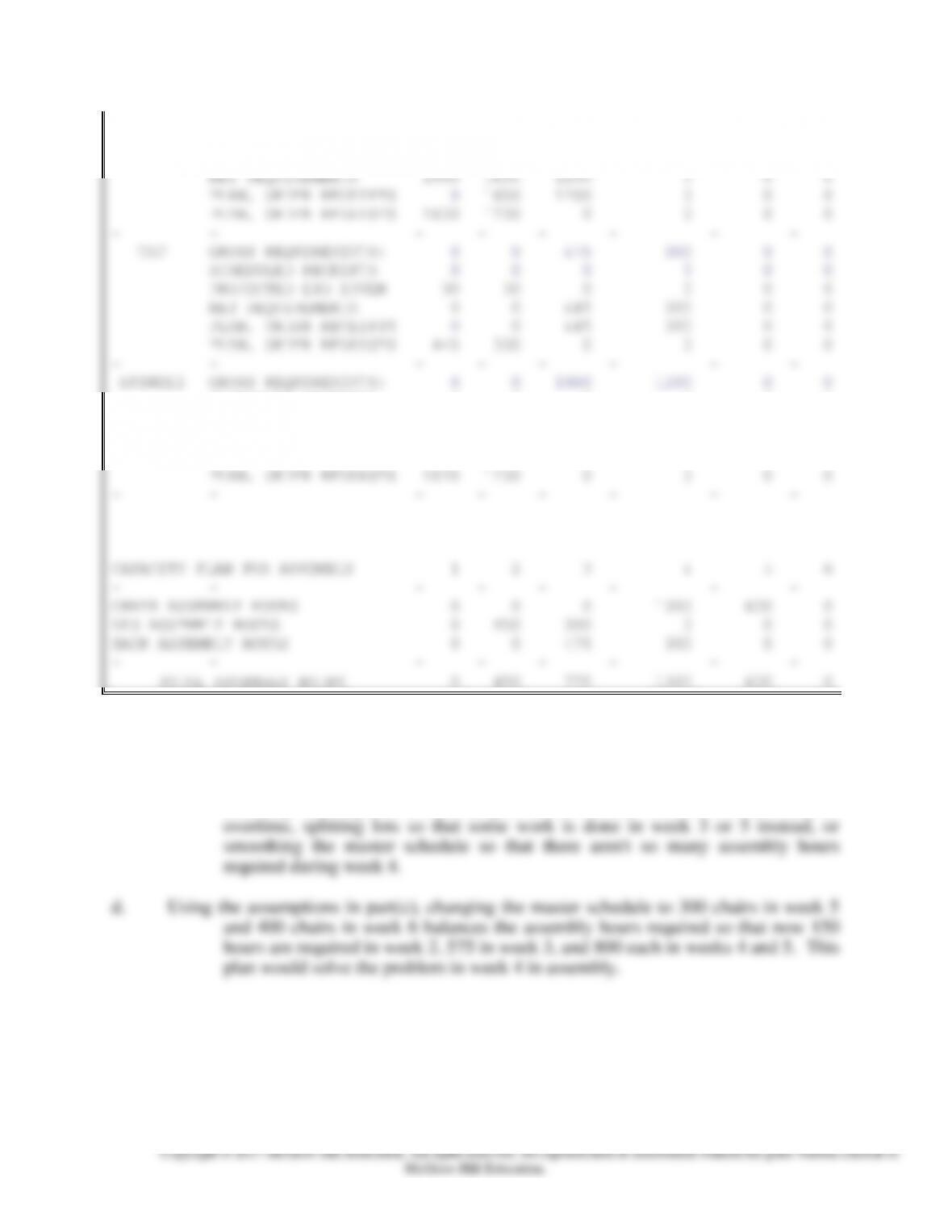
CHAPTER 15, PROBLEM 2
MATERIALS
PLAN
OLD HICKORY FURNITURE
COMPANY
WEEK
*****PART*****
1
2
3
4
5
6
–
–
–
–
–
–
–
–
CHAIR
GROSS REQUIREMENTS:
0
0
0
0
600
300
SCHEDULED RECEIPTS
0
0
0
0
0
0
PROJECTED END INVEN
100
100
100
100
0
0
NET REQUIREMENTS
0
0
0
0
500
300
PLAN. ORDER RECEIPTS
0
0
0
0
500
300
PLAN. ORDER RELEASES
0
0
0
500
300
0
–
–
–
–
–
–
–
–
LEG
GROSS REQUIREMENTS:
0
0
0
500
300
0
ASSEMBLY
SCHEDULED RECEIPTS
0
0
0
0
0
0
PROJECTED END INVEN
50
50
50
0
0
0
NET REQUIREMENTS
0
0
0
450
300
0
PLAN. ORDER RECEIPTS
0
0
0
450
300
0
PLAN. ORDER RELEASES
0
450
300
0
0
0
–
–
–
–
–
–
–
–
BACK
GROSS REQUIREMENTS:
0
0
0
500
300
0
ASSEMBLY
SCHEDULED RECEIPTS
0
0
0
0
0
0
PROJECTED END INVEN
25
25
25
0
0
0
NET REQUIREMENTS
0
0
0
475
300
0
PLAN. ORDER RECEIPTS
0
0
0
475
300
0
PLAN. ORDER RELEASES
0
0
475
300
0
0
–
–
–
–
–
–
–
–
SEAT
GROSS REQUIREMENTS:
0
0
0
500
300
0
SCHEDULED RECEIPTS
0
0
0
0
0
0
PROJECTED END INVEN
40
40
40
0
0
0
NET REQUIREMENTS
0
0
0
460
300
0
PLAN. ORDER RECEIPTS
0
0
0
460
300
0
PLAN. ORDER RELEASES
460
300
0
0
0
0
–
–
–
–
–
–
–
–
RAILS
GROSS REQUIREMENTS:
0
1800
1200
0
0
0
SCHEDULED RECEIPTS
0
0
0
0
0
0
PROJECTED END INVEN
100
0
0
0
0
0
NET REQUIREMENTS
0
1700
1200
0
0
0
PLAN. ORDER RECEIPTS
0
1700
1200
0
0
0
PLAN. ORDER RELEASES
1700
1200
0
0
0
0
–
–
–
–
–
–
–
–
Chapter 15 – Materials Requirements Planning and ERP
15-5
LEGS
GROSS REQUIREMENTS:
0
1800
1200
0
0
0
SCHEDULED RECEIPTS
0
0
0
0
0
0
PROJECTED END INVEN
150
0
0
0
0
0
NET REQUIREMENTS
1800
1650
1200
0
0
0
PLAN. ORDER RECEIPTS
0
1650
1200
0
0
0
PLAN. ORDER RELEASES
1650
1200
0
0
0
0
–
–
–
–
–
–
–
–
TOP
GROSS REQUIREMENTS:
0
0
475
300
0
0
SCHEDULED RECEIPTS
0
0
0
0
0
0
PROJECTED END INVEN
30
30
0
0
0
0
NET REQUIREMENTS
0
0
445
300
0
0
PLAN. ORDER RECEIPTS
0
0
445
300
0
0
PLAN. ORDER RELEASES
445
300
0
0
0
0
–
–
–
–
–
–
–
–
SPINDLE
GROSS REQUIREMENTS:
0
0
1900
1200
0
0
SCHEDULED RECEIPTS
0
0
0
0
0
0
PROJECTED END INVEN
80
80
0
0
0
0
NET REQUIREMENTS
0
0
1820
1200
0
0
PLAN. ORDER RECEIPTS
0
0
1820
1200
0
0
PLAN. ORDER RELEASES
1820
1200
0
0
0
0
–
–
–
–
–
–
–
–
CAPACITY PLAN FOR ASSEMBLY
1
2
3
4
5
6
–
–
–
–
–
–
–
–
CHAIR ASSEMBLY HOURS
0
0
0
1000
600
0
LEG ASSEMBLY HOURS
0
450
300
0
0
0
BACK ASSEMBLY HOURS
0
0
475
300
0
0
–
–
–
–
–
–
–
–
TOTAL ASSEMBLY HOURS
0
450
775
1300
600
0
b. Seats, rails, legs, tops, and spindles should be ordered immediately.
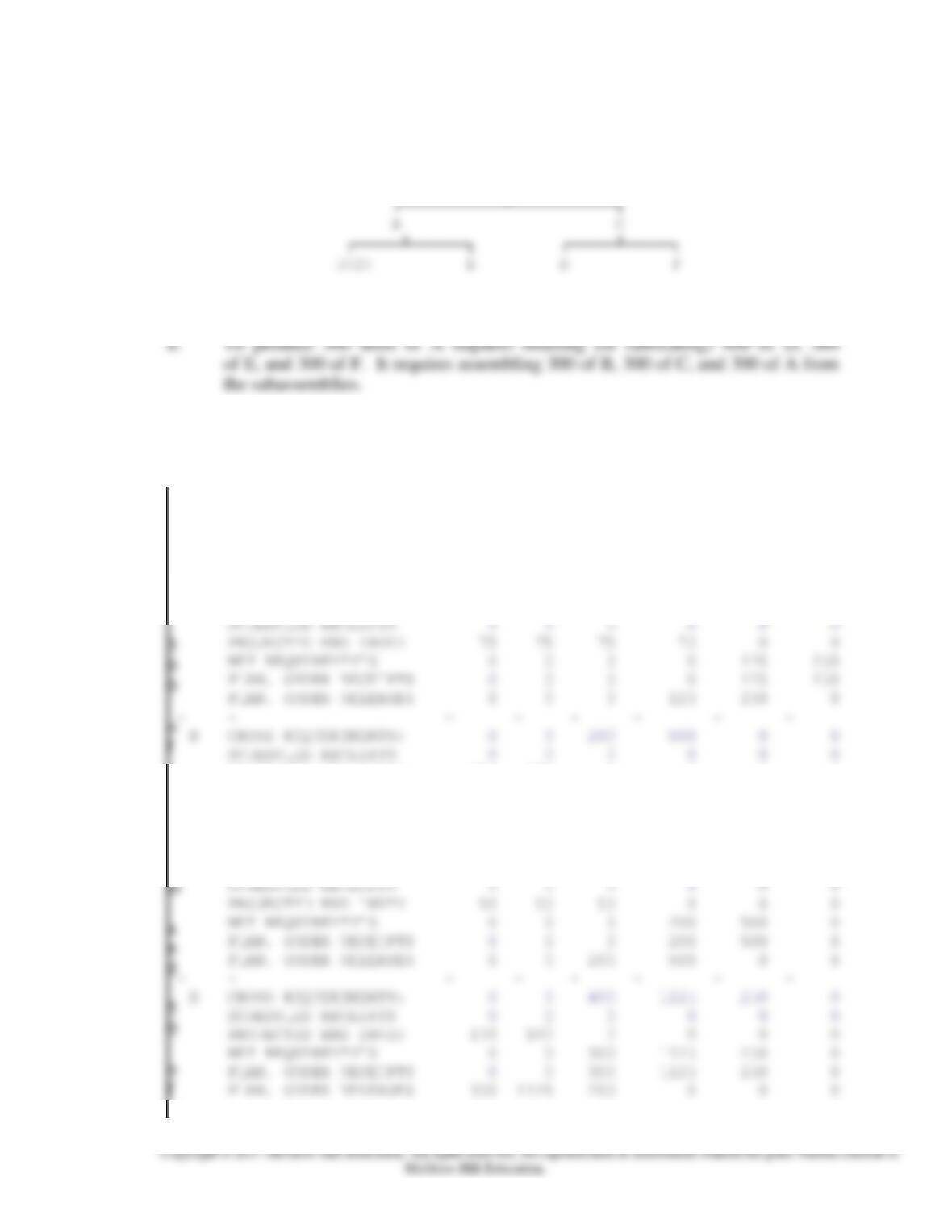
c. The 1000 hour capacity limit in assembly will cause problems in week 4, since the
assembly time required to meet the plan is 1300 hours. Possible solutions include
Chapter 15 – Materials Requirements Planning and ERP
15-6
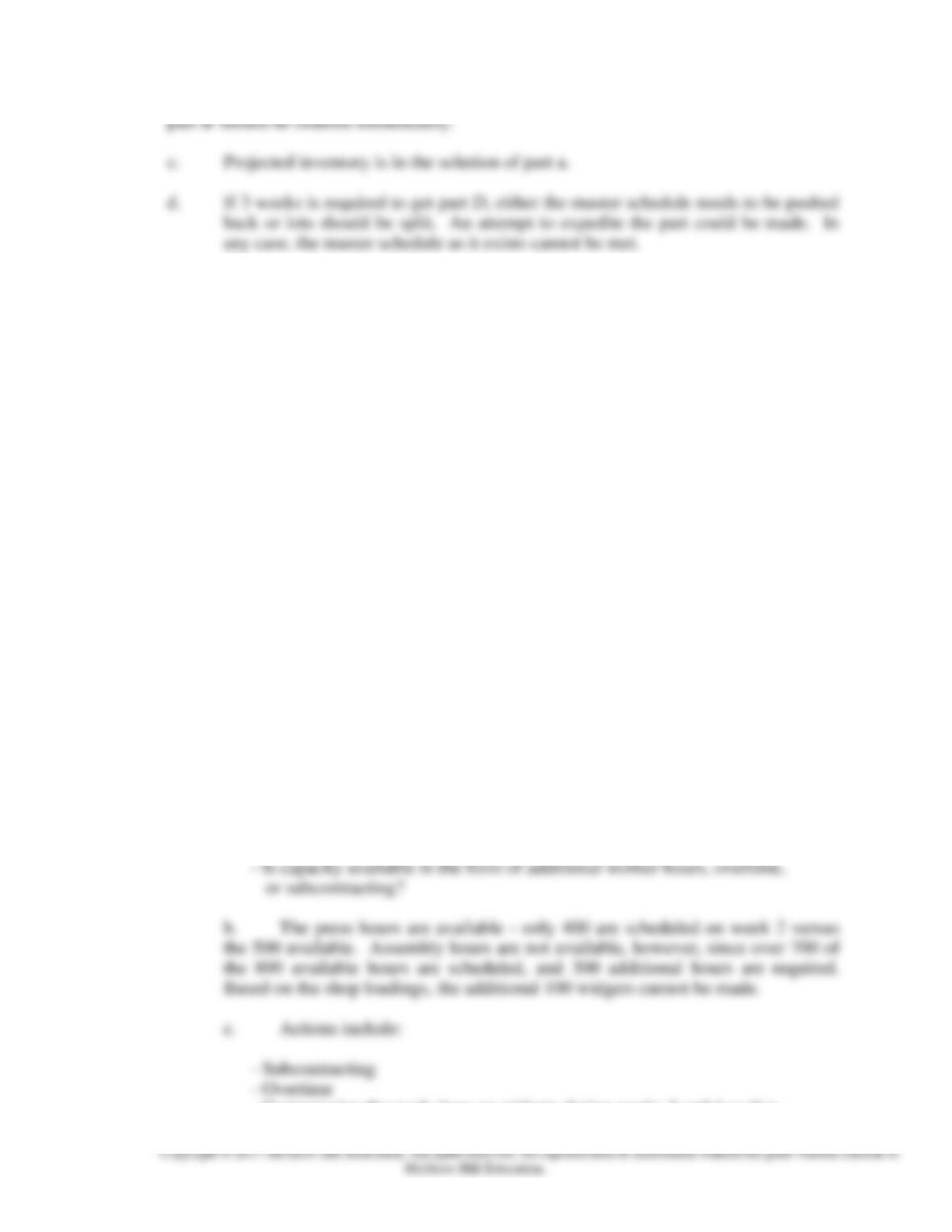
3. a. Product Structure
A
4. a.
b
.
NET REQUIREMENTS
0
0
0
0
125
250
PLAN. ORDER RECEIPTS
0
0
0
0
125
250
PLAN. ORDER RELEASES
0
0
0
125
250
0
–
–
–
–
–
–
–
–
B
GROSS REQUIREMENTS:
0
0
500
0
0
p
a
r
t
SCHEDULED RECEIPTS
0
0
0
0
0
0
PROJECTED END INVEN
50
50
50
0
0
0
NET REQUIREMENTS
0
0
0
200
500
0
PLAN. ORDER RECEIPTS
0
0
0
200
500
0
PLAN. ORDER RELEASES
0
0
500
0
0
–
–
–
–
–
–
–
–
D
GROSS REQUIREMENTS:
0
0
1125
250
0
SCHEDULED RECEIPTS
0
0
0
0
0
0
PROJECTED END INVEN
100
100
0
0
0
0
NET REQUIREMENTS
0
0
1125
250
0
PLAN. ORDER RECEIPTS
0
0
1125
250
0
PLAN. ORDER RELEASES
300
0
0
0
MATERIALS PLAN FOR PRODUCT
A
WEEK
*****PART*****
1
2
3
4
5
6
–
–
–
–
–
–
–
–
A
GROSS REQUIREMENTS:
0
0
0
0
200
250
SCHEDULED RECEIPTS
0
0
0
0
0
0
PROJECTED END INVEN
75
75
75
75
0
0
SCHEDULED RECEIPTS
0
0
0
0
0
0
PROJECTED END INVEN
150
150
0
0
0
0
NET REQUIREMENTS
0
0
50
500
0
0
PLAN. ORDER RECEIPTS
0
0
50
500
0
0
PLAN. ORDER RELEASES
50
500
0
0
0
0
–
–
–
–
–
–
–
–
C
GROSS REQUIREMENTS:
0
0
0
250
500
0
–
–
–
–
–
–
–
–
Chapter 15 – Materials Requirements Planning and ERP
15-7
5. a. He would need to know the following:
– Are the parts available, either from inventory or from the supplier,
within the lead time required?
– Can the present work be expedited or the master production schedule
changed to allow for the additional work?
– Compressing the work done on widgets during weeks 3 and 4 so that
Chapter 15 – Materials Requirements Planning and ERP
15-8
6. a.
Scissors 1 2 3 4 5
Gross Requirements 200 500
Scheduled Receipts
Projected Ending Inventory 100 100 100
Right Side 1 2 3 4 5
Gross Requirements 100 500
Scheduled Receipts 200
Projected Ending Inventory 75 275 175
Net Requirements 325
Planned Order Release 100
additional unplanned demand occurred.
Chapter 15 – Materials Requirements Planning and ERP
15-9
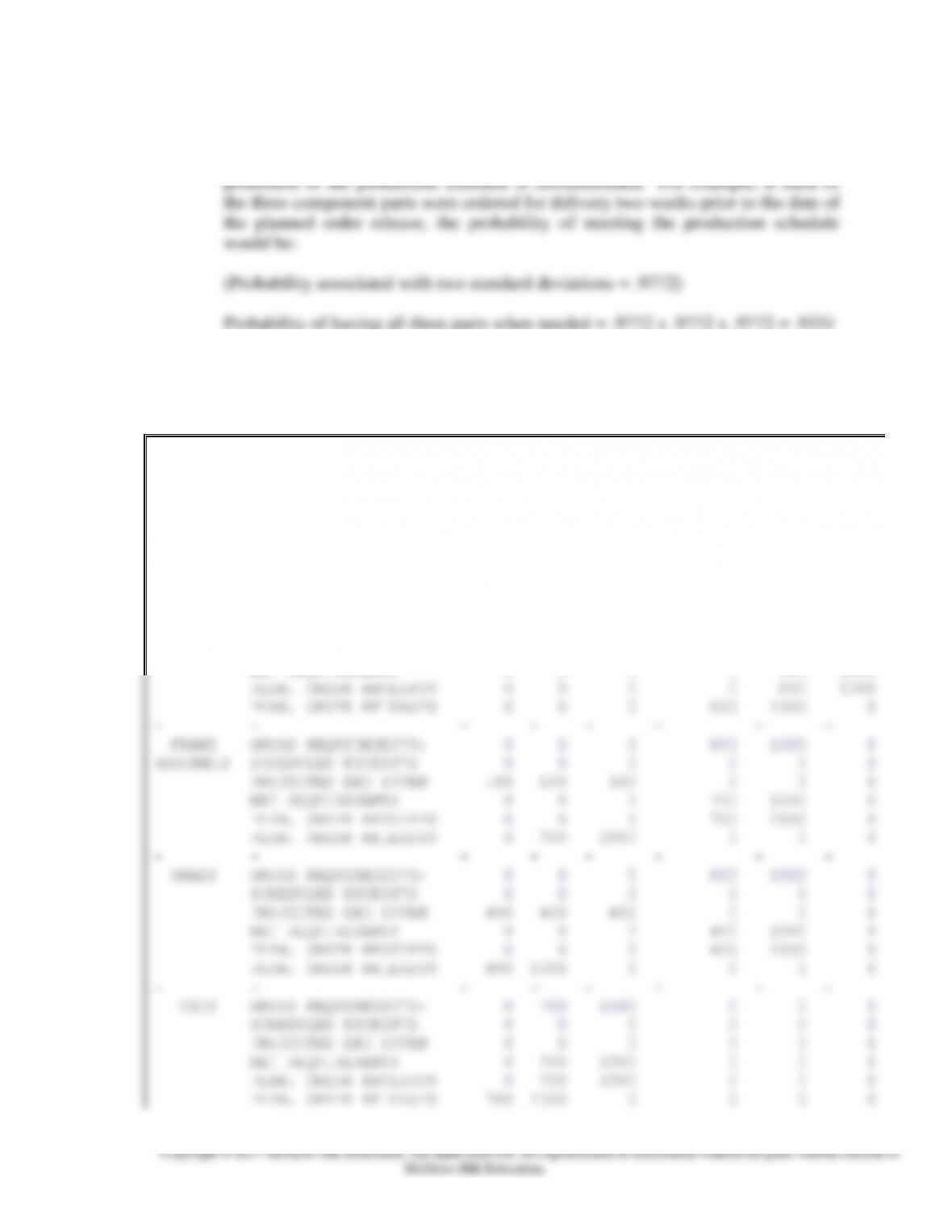
d. The preferred course of action is to ask the suppliers to reduce the variability of
delivery lead time. If that is not possible, a safety lead time that gives the desired
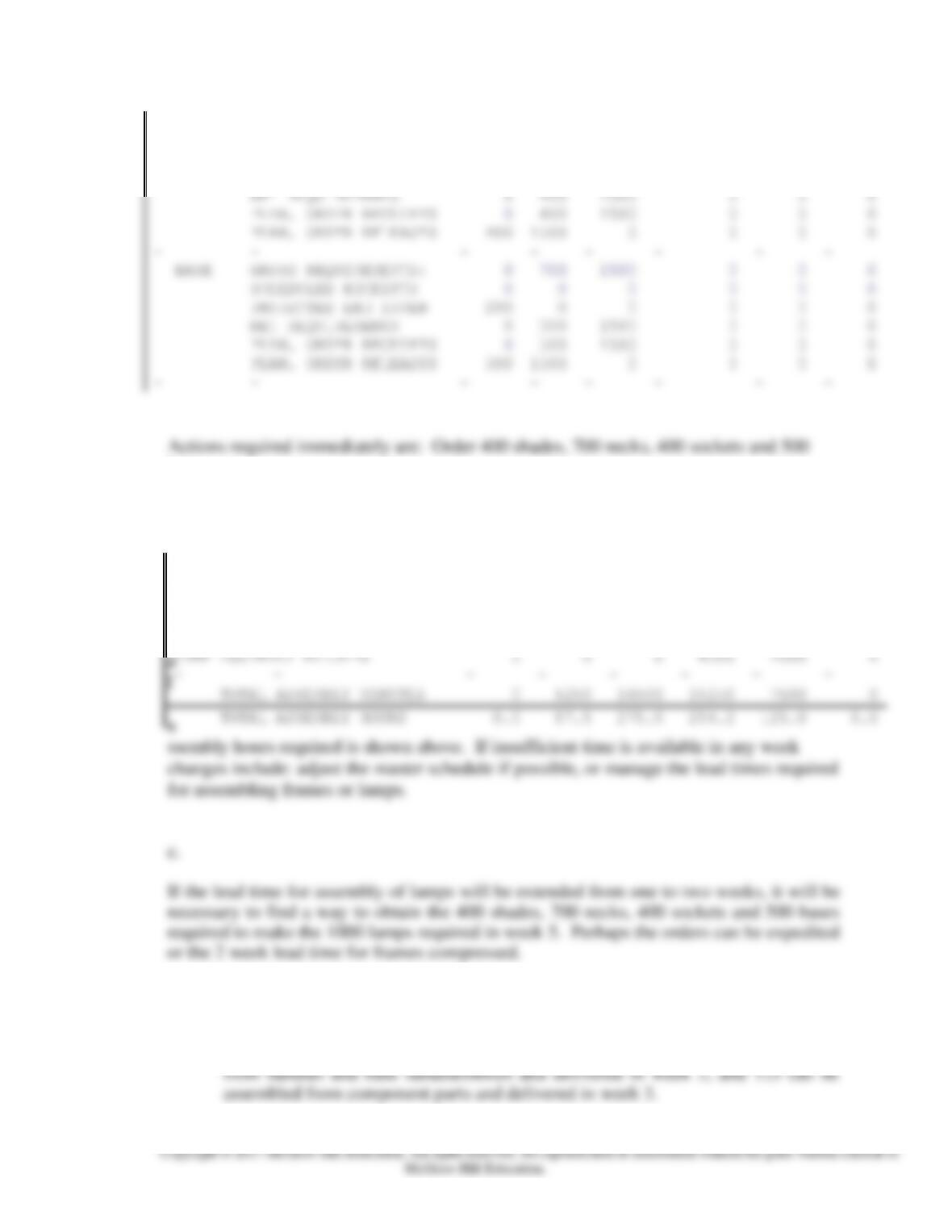
7. a. Material Plan is as follows:
NAME:
*****************
SECT:
*********
DATE:
28-Apr-16
CHAPTER 15, PROBLEM 7
LAMP MATERIALS
PLAN
WEEK
*****PART*****
1
2
3
4
5
6
–
–
–
–
–
–
–
–
LAMP
GROSS REQUIREMENTS:
0
0
0
0
1000
1500
SCHEDULED RECEIPTS
0
0
0
0
0
0
PROJECTED END INVEN
200
200
200
200
0
0
NET REQUIREMENTS
0
0
0
0
800
1500
PLAN. ORDER RECEIPTS
0
0
0
0
800
1500
PLAN. ORDER RELEASES
0
0
0
800
1500
0
–
–
–
–
–
–
–
–
FRAME
GROSS REQUIREMENTS:
0
0
0
800
1500
0
ASSEMBLY
SCHEDULED RECEIPTS
0
0
0
0
0
0
PROJECTED END INVEN
100
100
100
0
0
0
NET REQUIREMENTS
0
0
0
700
1500
0
PLAN. ORDER RECEIPTS
0
0
0
700
1500
0
PLAN. ORDER RELEASES
0
700
1500
0
0
0
–
–
–
–
–
–
–
–
SHADE
GROSS REQUIREMENTS:
0
0
0
800
1500
0
SCHEDULED RECEIPTS
0
0
0
0
0
0
PROJECTED END INVEN
400
400
400
0
0
0
NET REQUIREMENTS
0
0
0
400
1500
0
PLAN. ORDER RECEIPTS
0
0
0
400
1500
0
PLAN. ORDER RELEASES
400
1500
0
0
0
0
–
–
–
–
–
–
–
–
NECK
GROSS REQUIREMENTS:
0
700
1500
0
0
0
SCHEDULED RECEIPTS
0
0
0
0
0
0
PROJECTED END INVEN
0
0
0
0
0
0
NET REQUIREMENTS
0
700
1500
0
0
0
PLAN. ORDER RECEIPTS
0
700
1500
0
0
0
PLAN. ORDER RELEASES
700
1500
0
0
0
0
Chapter 15 – Materials Requirements Planning and ERP
15-10
–
–
–
–
–
–
–
–
SOCKET
GROSS REQUIREMENTS:
0
700
1500
0
0
0
SCHEDULED RECEIPTS
0
0
0
0
0
0
PROJECTED END INVEN
300
0
0
0
0
0
NET REQUIREMENTS
0
400
1500
0
0
0
PLAN. ORDER RECEIPTS
0
400
1500
0
0
0
PLAN. ORDER RELEASES
400
1500
0
0
0
0
–
–
–
–
–
–
–
–
BASE
GROSS REQUIREMENTS:
0
700
1500
0
0
0
SCHEDULED RECEIPTS
0
0
0
0
0
0
PROJECTED END INVEN
200
0
0
0
0
0
NET REQUIREMENTS
0
500
1500
0
0
0
PLAN. ORDER RECEIPTS
0
500
1500
0
0
0
PLAN. ORDER RELEASES
500
1500
0
0
0
0
–
–
–
–
–
–
–
–
bases.
b.
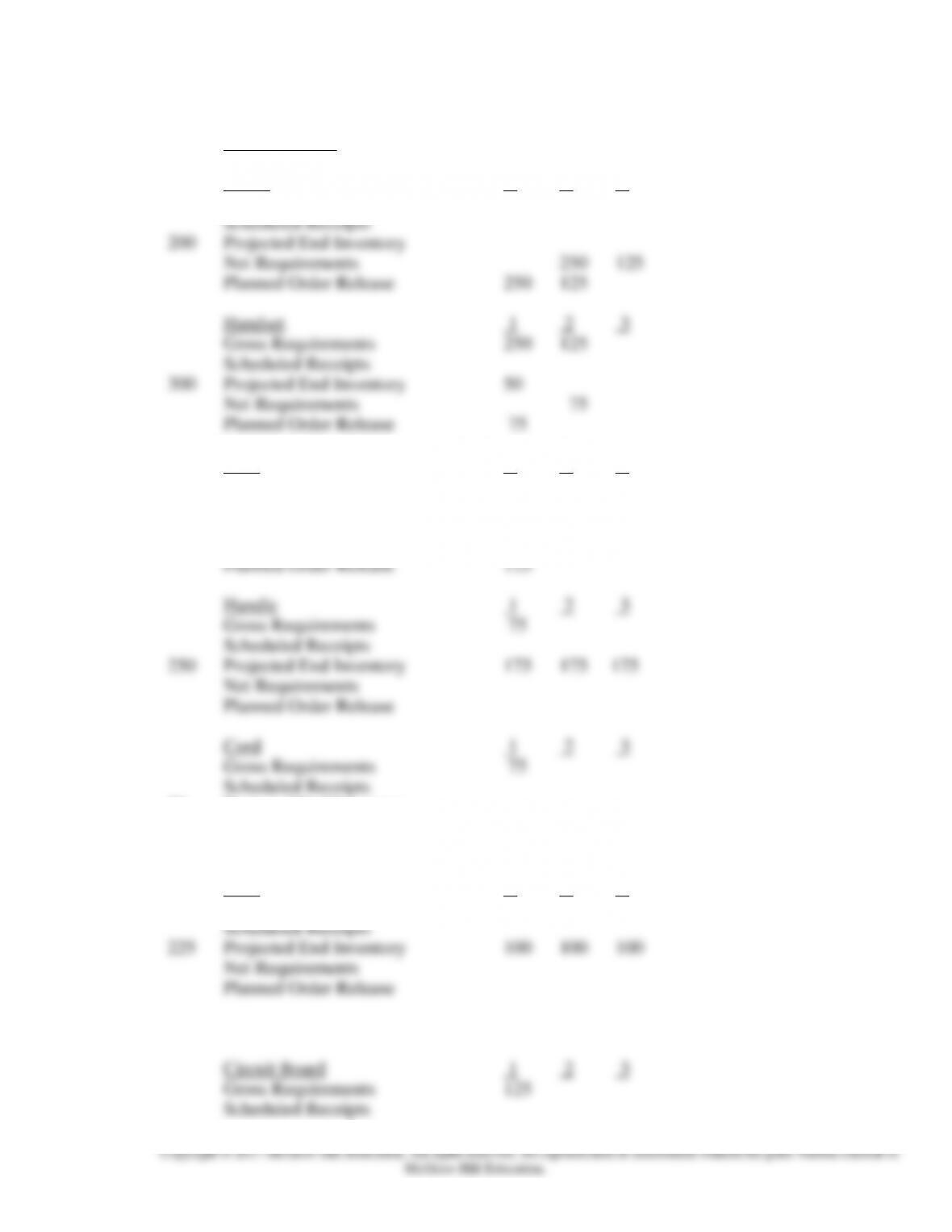
Note: Assembly hours for the frames are spread out over the two-week lead time.
T
o
t
–
–
–
–
–
–
–
–
8. a. 200 phones can be delivered from inventory in week 1, 250 can be assembled
CAPACITY PLAN FOR ASSEMBLY
1
2
3
4
5
6
–
–
–
–
–
–
–
–
FRAME ASSEMBLY MINUTES
0
5250
16500
11250
0
0
LAMP ASSEMBLY MINUTES
0
0
0
4000
7500
0
Chapter 15 – Materials Requirements Planning and ERP
15-11
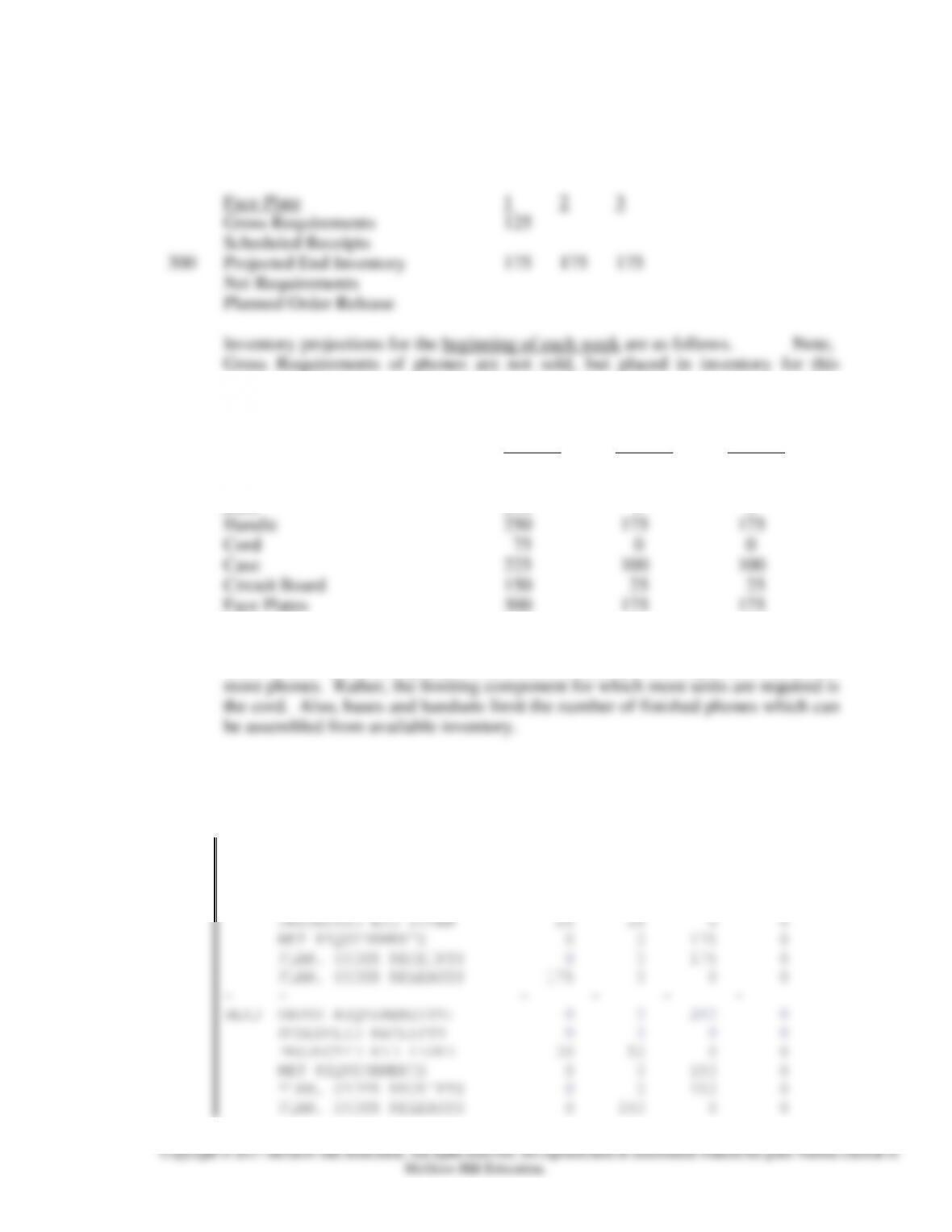
Materials Plan:
Phone 1 2 3
Gross Requirements 200 250 125
Base 1 2 3
Gross Requirements 250 125
Scheduled Receipts
250 Projected End Inventory
Net Requirements 125
75 Projected End Inventory
Net Requirements
Planned Order Release
Case 1 2 3
Gross Requirements 125
Chapter 15 – Materials Requirements Planning and ERP
15-12
150 Projected End Inventory 25 25 25
Net Requirements
Planned Order Release
problem. The parts are assembled into handsets and bases as soon as possible.
Then, Bases and Handsets are assembled into finished phones.
b. Week 1 Week 2 Week 3
Phones 200 250 125
Handset 300 50 0
Base 250 0 0
c. This will not change the Materials Plan. The inventory of circuit boards is 25 in
week 2 and 3, indicating that more circuit boards are not required to assemble
9. a.
*****PART*****
1
2
3
4
–
–
–
–
–
–
BODY
GROSS REQUIREMENTS:
0
0
200
0
SCHEDULED RECEIPTS
0
0
0
0
PROJECTED END INVEN
25
25
0
0
NET REQUIREMENTS
0
0
175
0
PLAN. ORDER RECEIPTS
0
0
175
0
PLAN. ORDER RELEASES
175
0
0
0
–
–
–
–
–
–
HEAD
GROSS REQUIREMENTS:
0
0
200
0
SCHEDULED RECEIPTS
0
0
0
0
PROJECTED END INVEN
50
50
0
0
NET REQUIREMENTS
0
0
150
0
PLAN. ORDER RECEIPTS
0
0
150
0
PLAN. ORDER RELEASES
0
150
0
0
Chapter 15 – Materials Requirements Planning and ERP
15-13
–
–
–
–
–
ARM
GROSS REQUIREMENTS:
0
0
400
0
SCHEDULED RECEIPTS
0
0
0
0
PROJECTED END INVEN
60
60
0
0
NET REQUIREMENTS
0
0
340
0
PLAN. ORDER RECEIPTS
0
0
340
0
PLAN. ORDER RELEASES
340
0
0
0
–
–
–
–
–
–
LEGS
GROSS REQUIREMENTS:
0
0
400
0
SCHEDULED RECEIPTS
0
0
0
0
PROJECTED END INVEN
80
80
0
0
NET REQUIREMENTS
0
0
320
0
PLAN. ORDER RECEIPTS
0
0
320
0
PLAN. ORDER RELEASES
0
320
0
0
–
–
–
–
–
–
b. 25 robots can be assembled in one week and delivered to the customer at the end
of one week. The implication from this is we can only deliver ASAP based on the