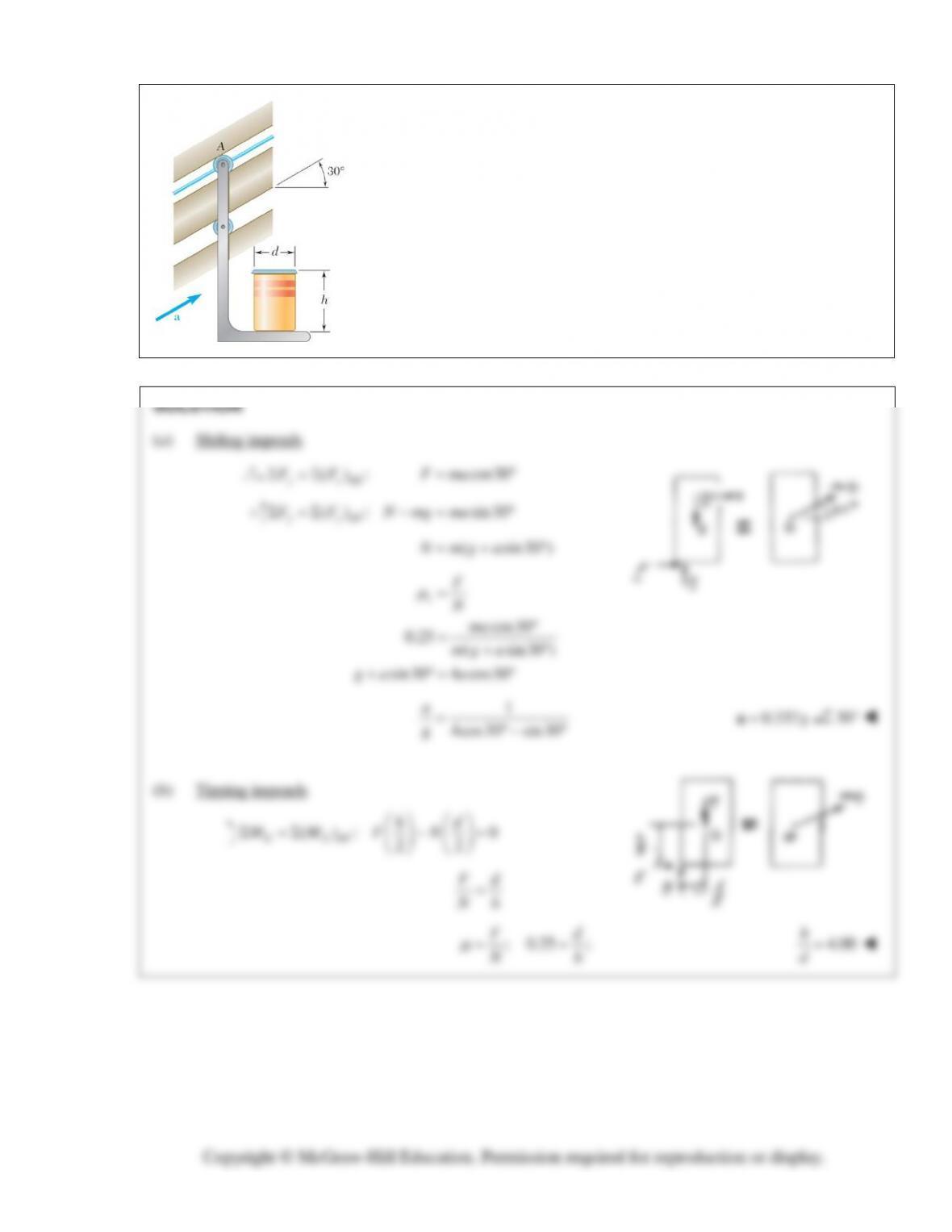
PROBLEM 16.7
The support bracket shown is used to transport a cylindrical can from one
elevation to another. Knowing that
0.25
s
µ
=
between the can and the
bracket, determine (a) the magnitude of the upward acceleration a for which
the can will slide on the bracket, (b) the smallest ratio h/d for which the can
will tip before it slides.
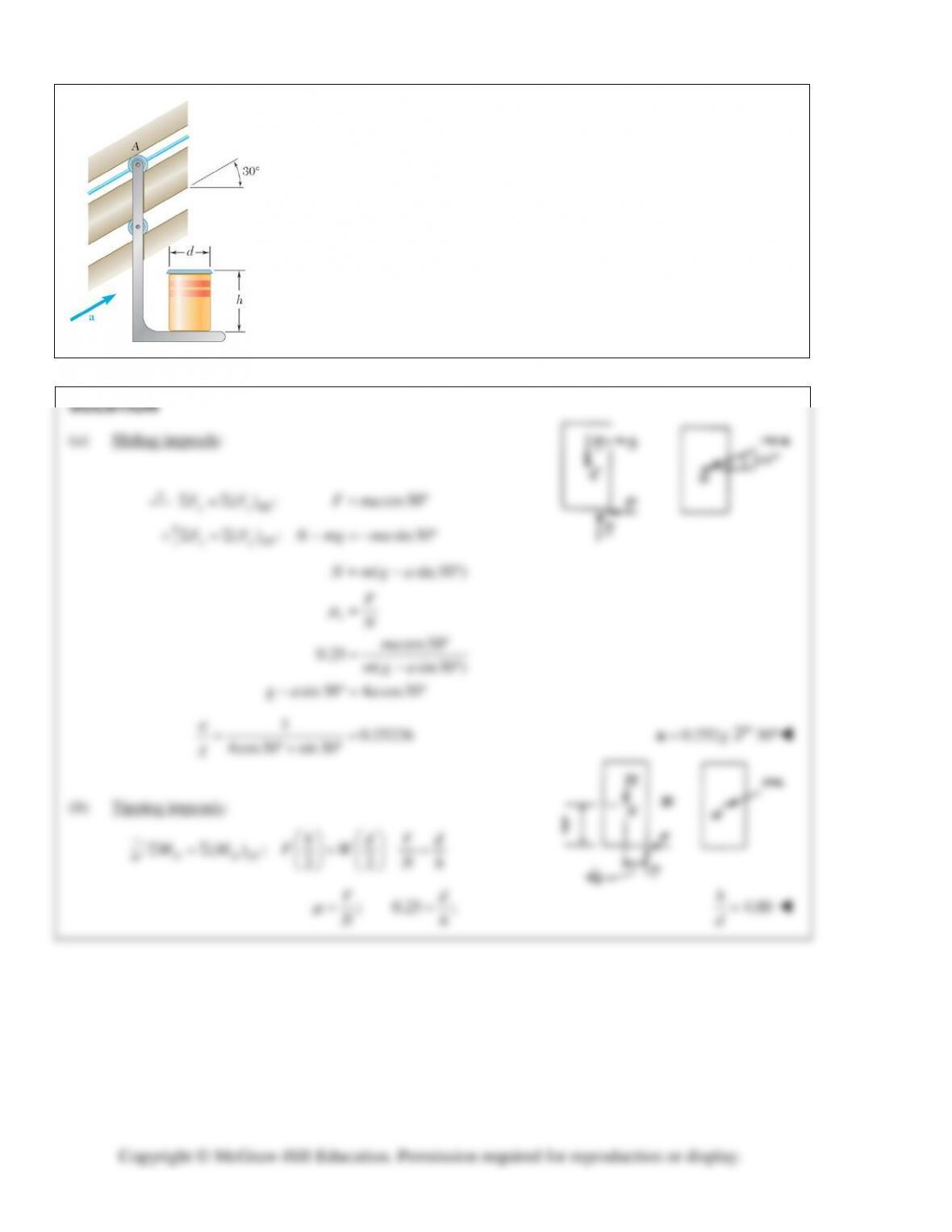
PROBLEM 16.8
Solve Problem 16.7, assuming that the acceleration a of the bracket is directed
downward.
PROBLEM 16.7 The support bracket shown is used to transport a
cylindrical can from one elevation to another. Knowing that
0.25
s
µ
=
between the can and the bracket, determine (a) the magnitude of the upward
acceleration a for which the can will slide on the bracket, (b) the smallest
ratio h/d for which the can will tip before it slides.
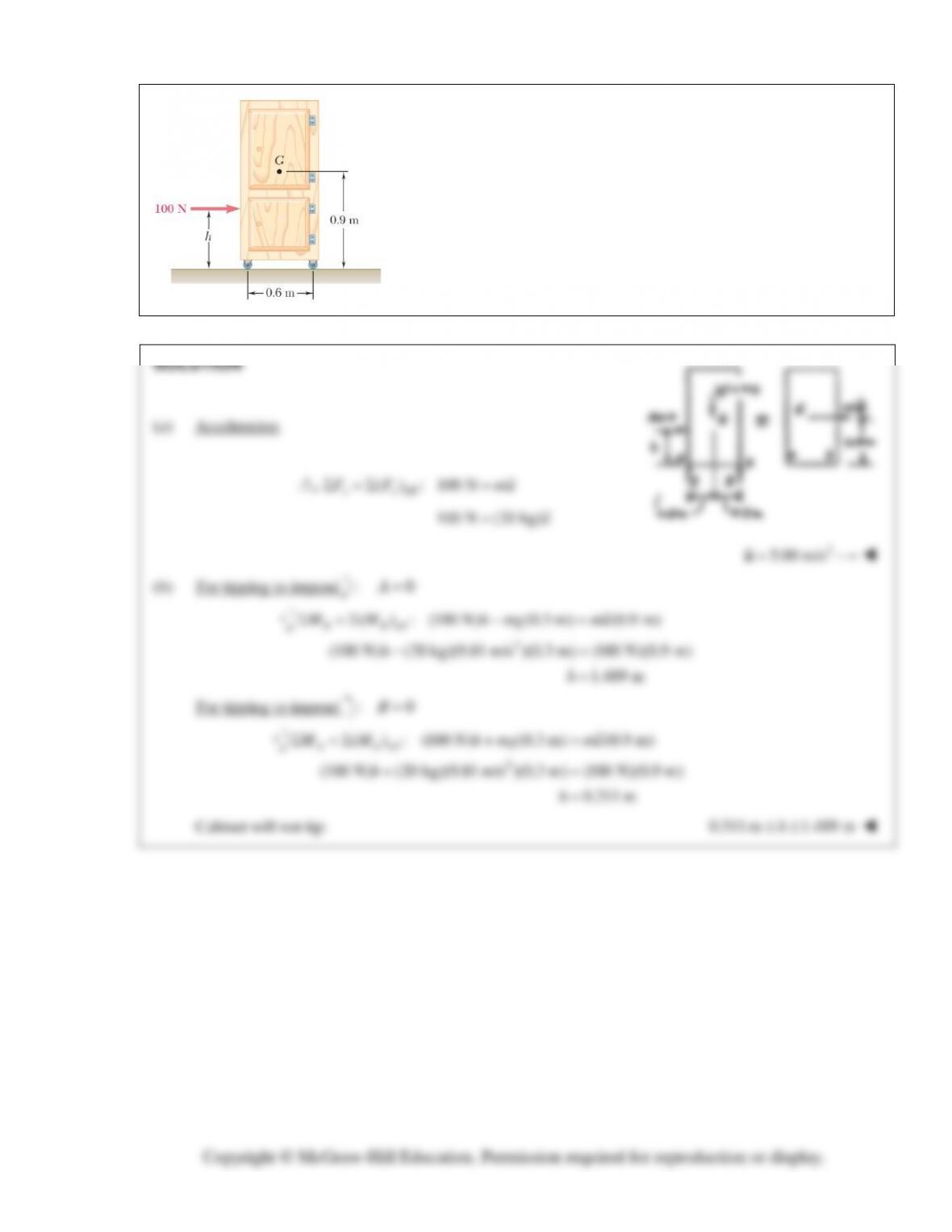
PROBLEM 16.9
A 20–kg cabinet is mounted on casters that allow it to move freely
( 0)
µ
=
on the floor. If a 100–N force is applied as shown, determine
(a) the acceleration of the cabinet, (b) the range of values of h for which
the cabinet will not tip.
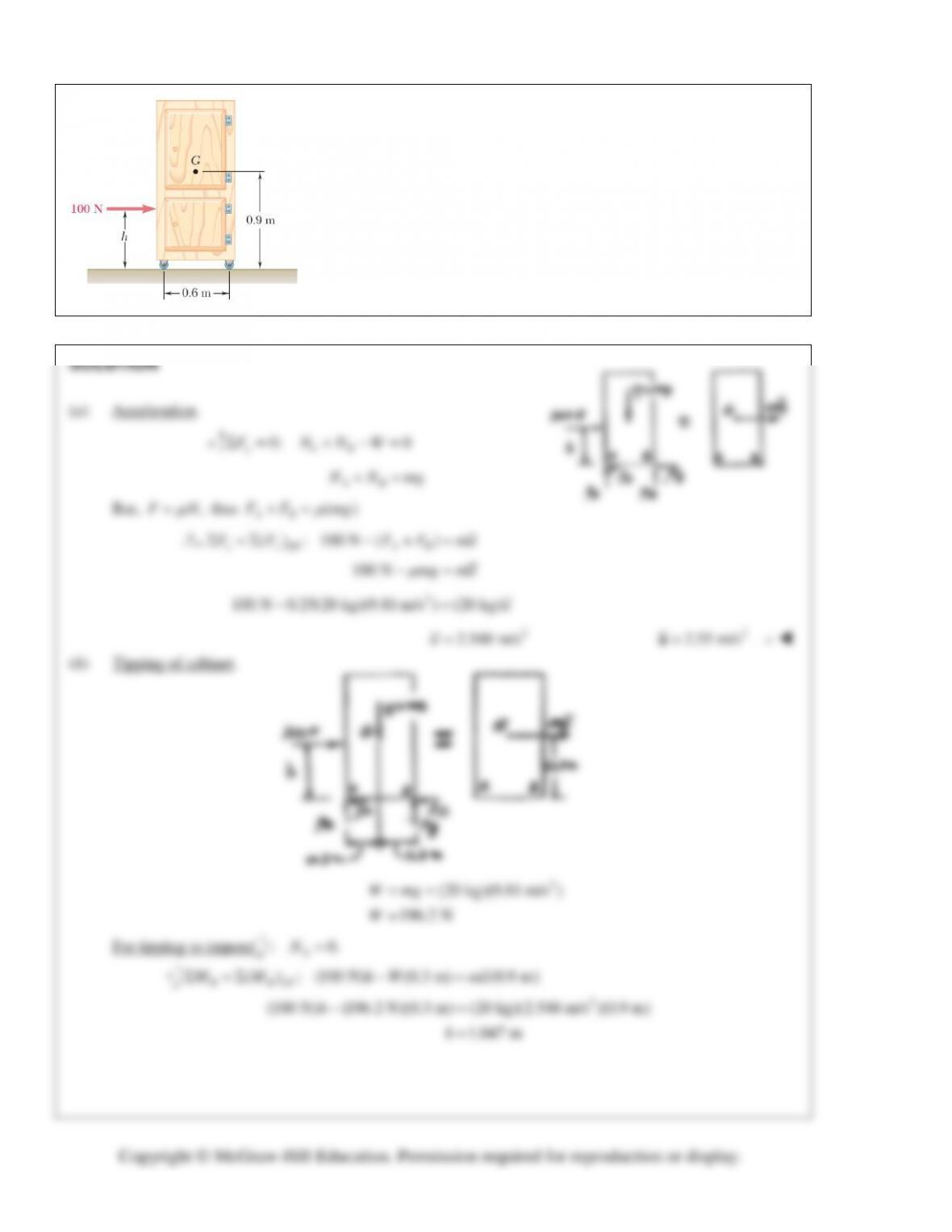
PROBLEM 16.10
Solve Problem 16.9, assuming that the casters are locked and slide on
the rough floor
( 0.25).
k
µ
=
PROBLEM 16.9 A 20-kg cabinet is mounted on casters that allow it to
move freely
( 0)
µ
=
on the floor. If a 100–N force is applied as shown,
determine (a) the acceleration of the cabinet, (b) the range of values of
h for which the cabinet will not tip.
PROBLEM 16.10 (Continued)
PROBLEM 16.11
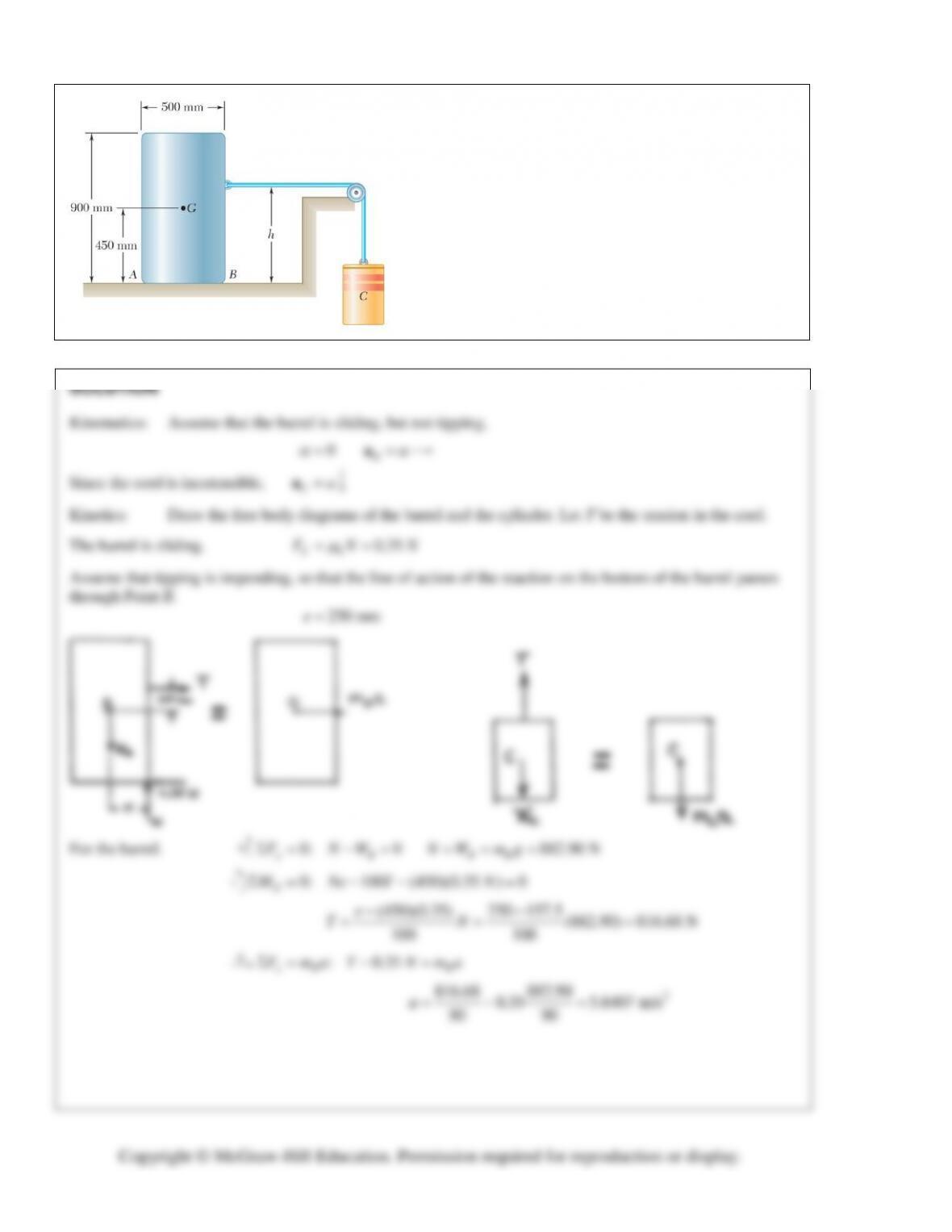
A completely filled barrel and its contents have a combined
mass of 90 kg. A cylinder C is connected to the barrel at a
height h = 550 mm as shown. Knowing
0.40
s
µ
=
and
0.35,
k
µ
=
determine the maximum mass of C so the barrel
will not tip.
PROBLEM 16.11 (Continued)
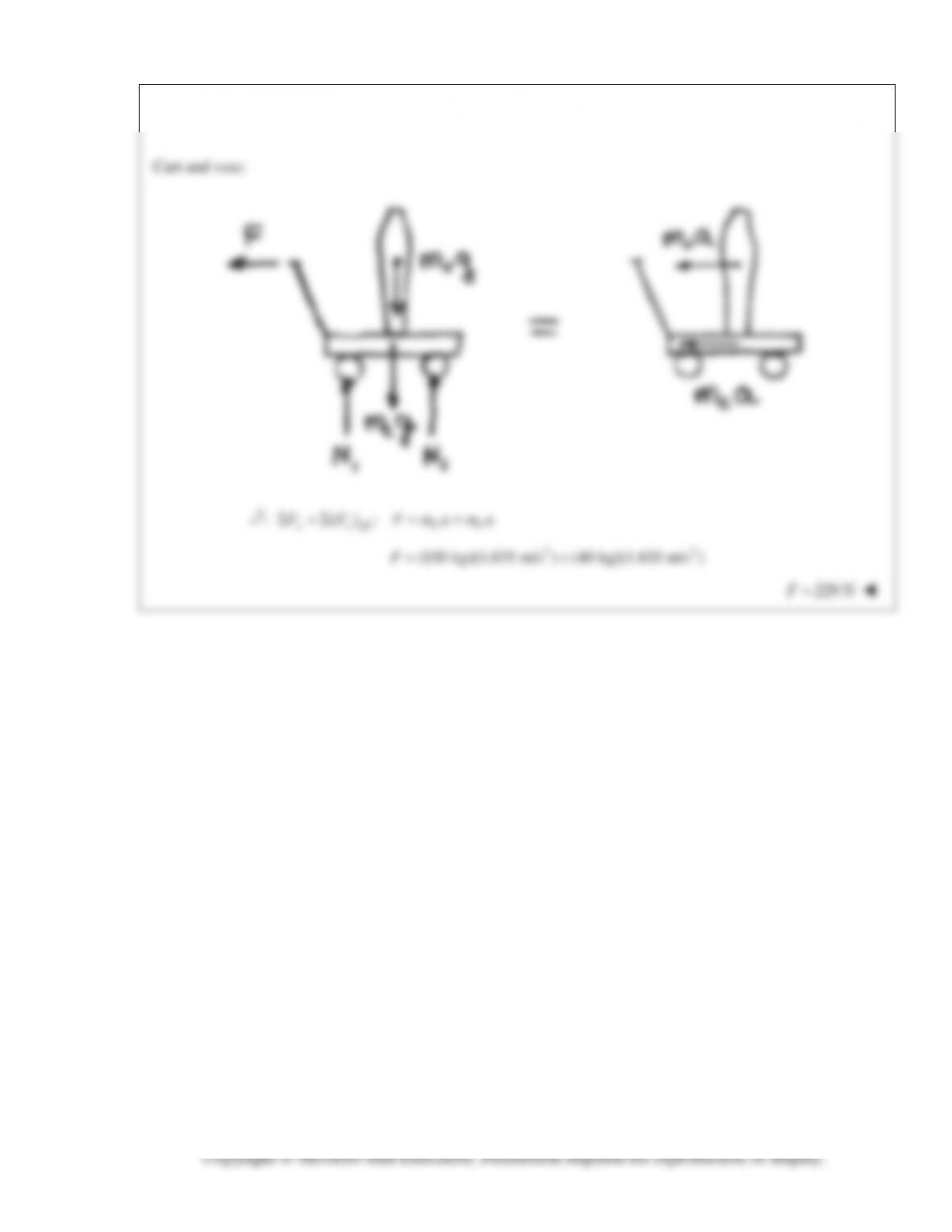
PROBLEM 16.12
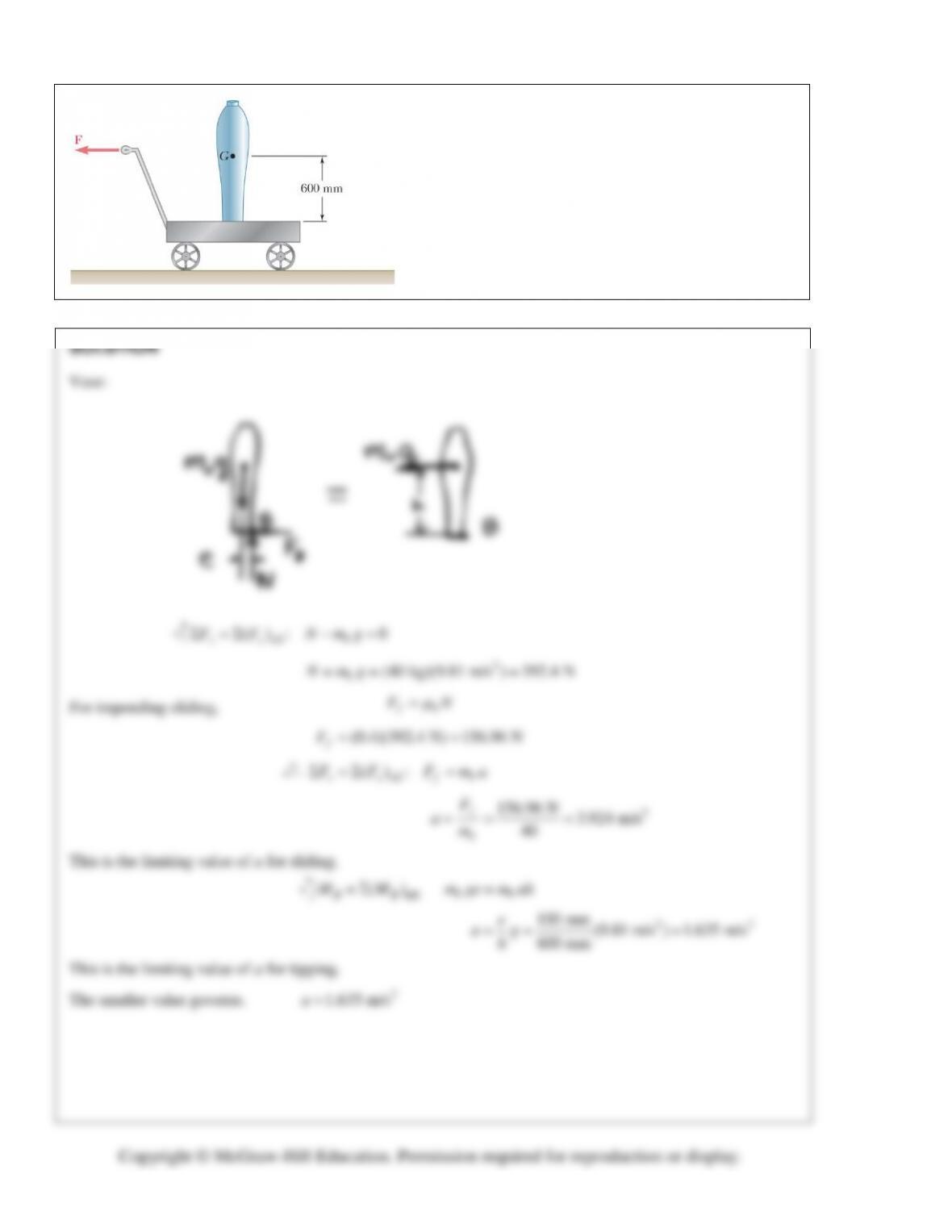
A 40–kg vase has a 200–mm–diameter base and is being
moved using a 100–kg utility cart as shown. The cart
moves freely (
µ
= 0) on the ground. Knowing the
coefficient of static friction between the vase and the
cart is
µ
s = 0.4, determine the maximum force F that can
be applied if the vase is not to slide or tip.
PROBLEM 16.12 (Continued)
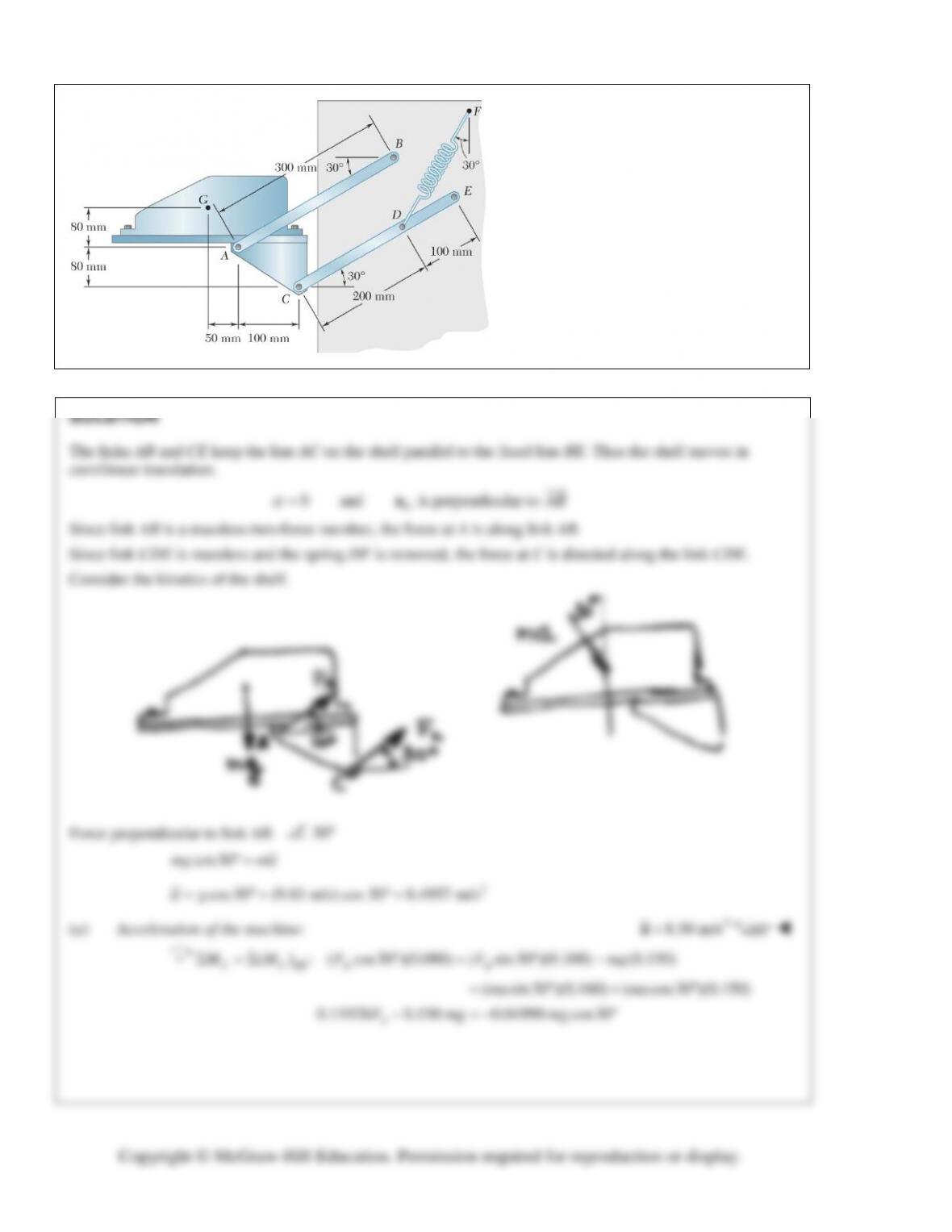
PROBLEM 16.13
The retractable shelf shown is supported
by two identical linkage–and–spring
systems; only one of the systems is
shown. A 20–kg machine is placed on the
shelf so that half of its weight is supported
by the system shown. If the springs are
removed and the system is released from
rest, determine (a) the acceleration of the
machine, (b) the tension in link AB.
Neglect the weight of the shelf and links.