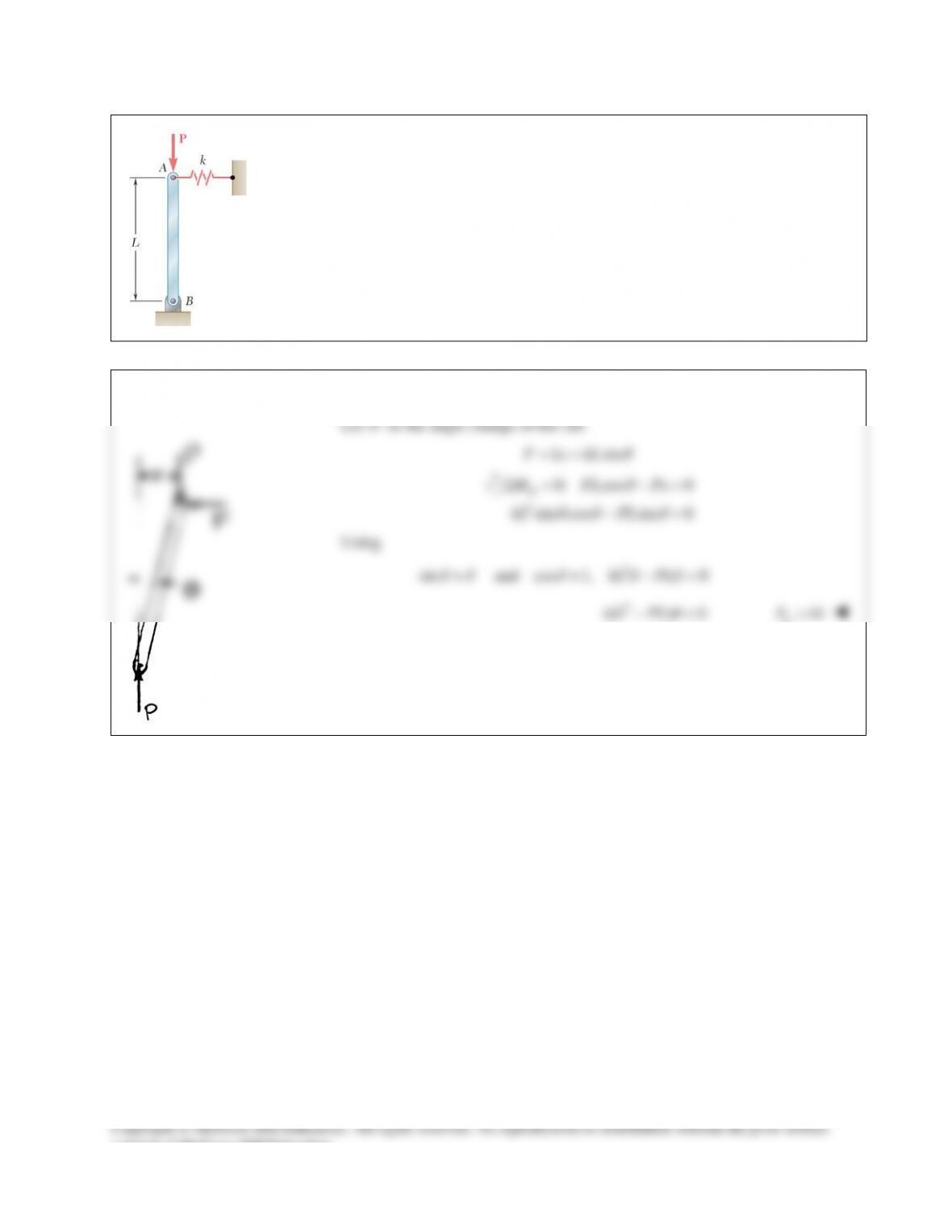
PROBLEM 16.2
Knowing that the torsional spring at B is of constant K and that the bar AB is rigid,
determine the critical load
cr.P
SOLUTION
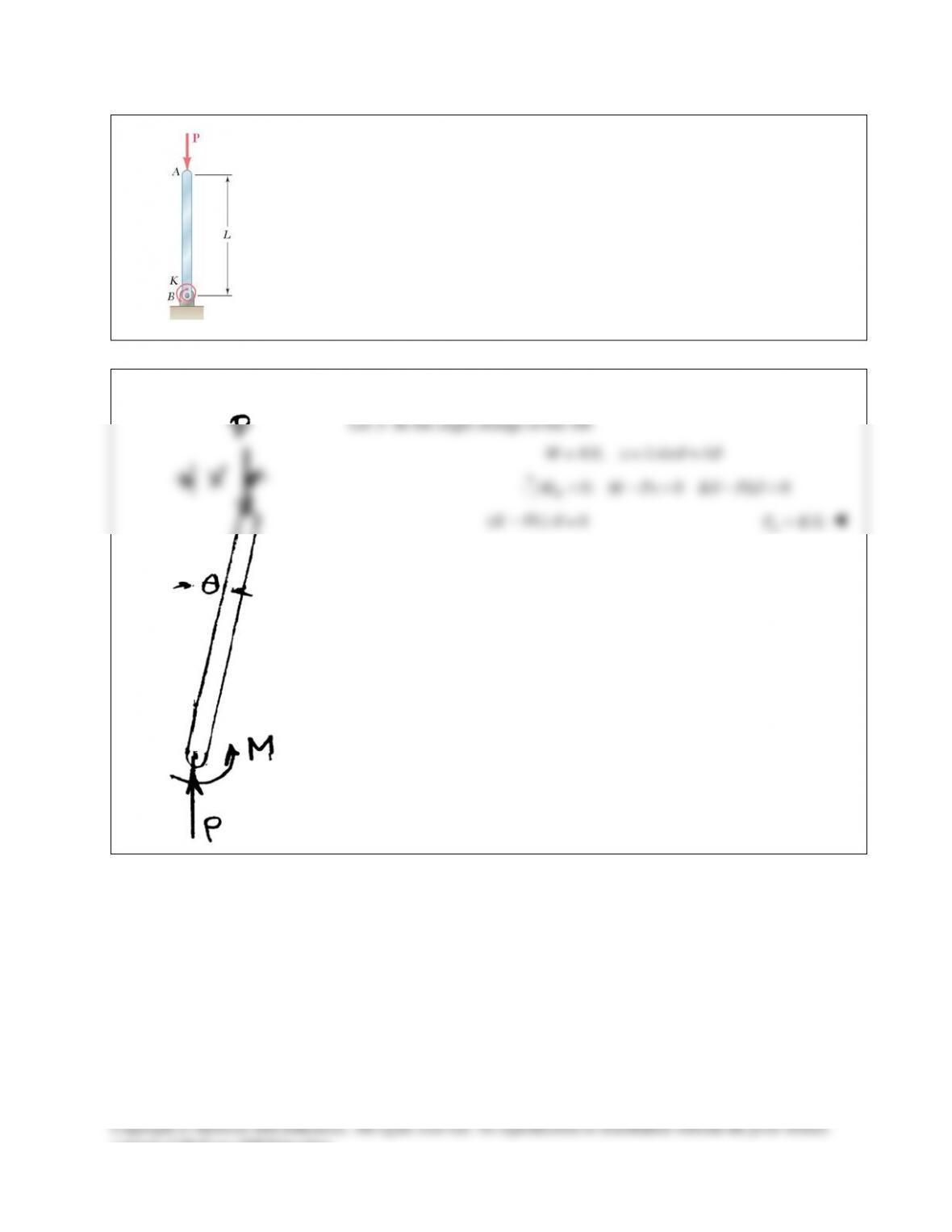
PROBLEM 16.3
Two rigid bars AC and BC are connected as shown to a spring of constant k.
Knowing that the spring can act in either tension or compression, determine the
critical load
cr
P
for the system.
SOLUTION
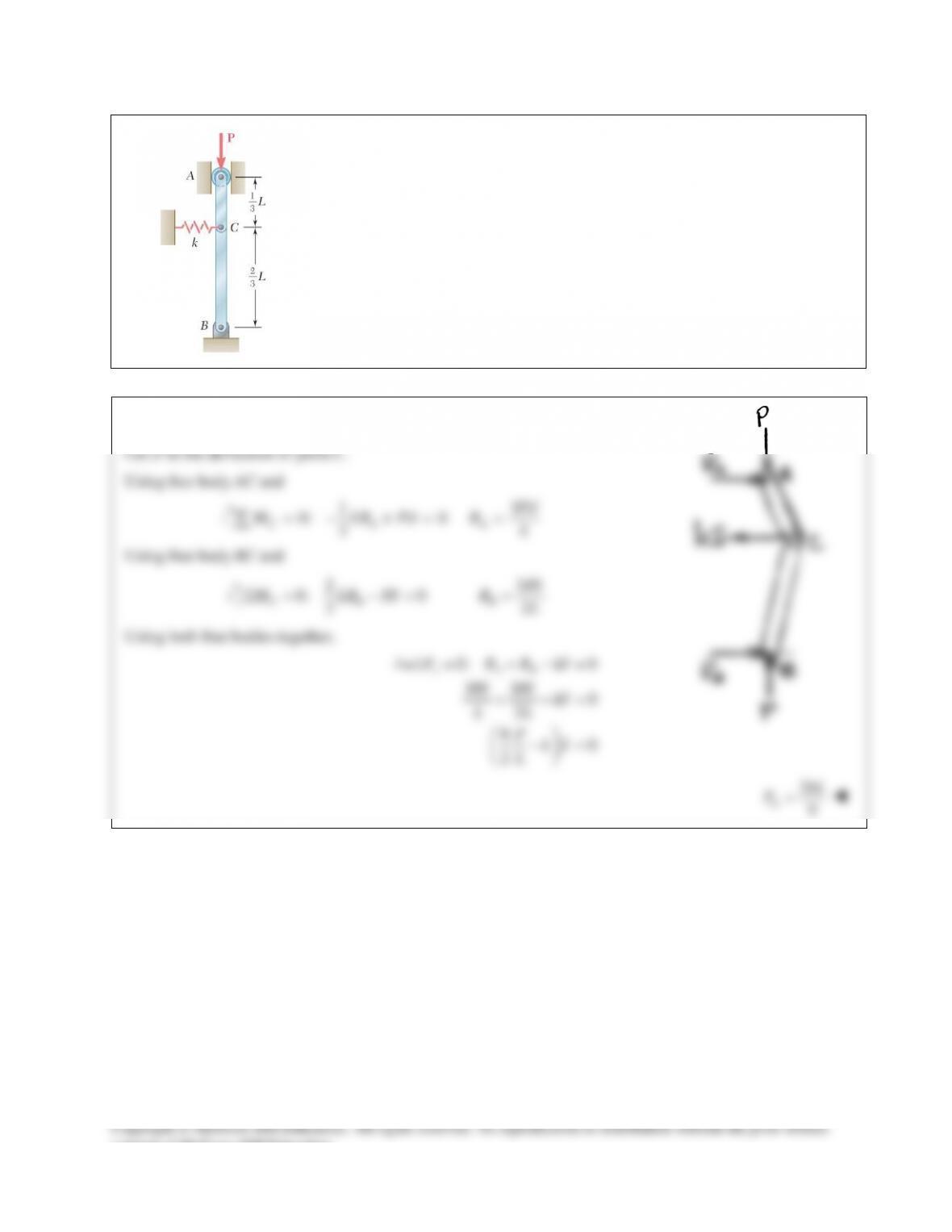
PROBLEM 16.4
Two rigid bars AC and BC are connected by a pin at C as shown. Knowing that
the torsional spring at B is of constant K, determine the critical load
cr
P
for the
system.
SOLUTION
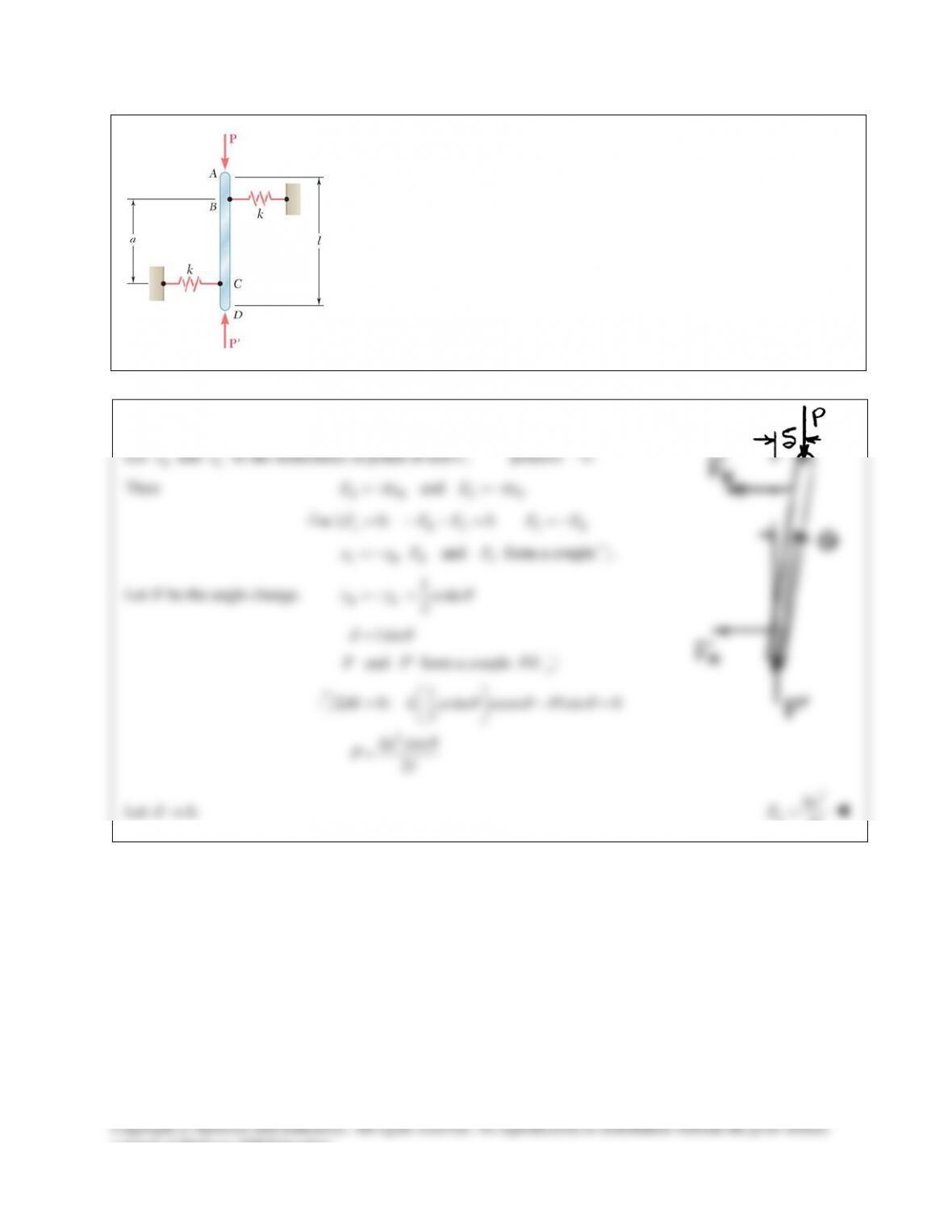
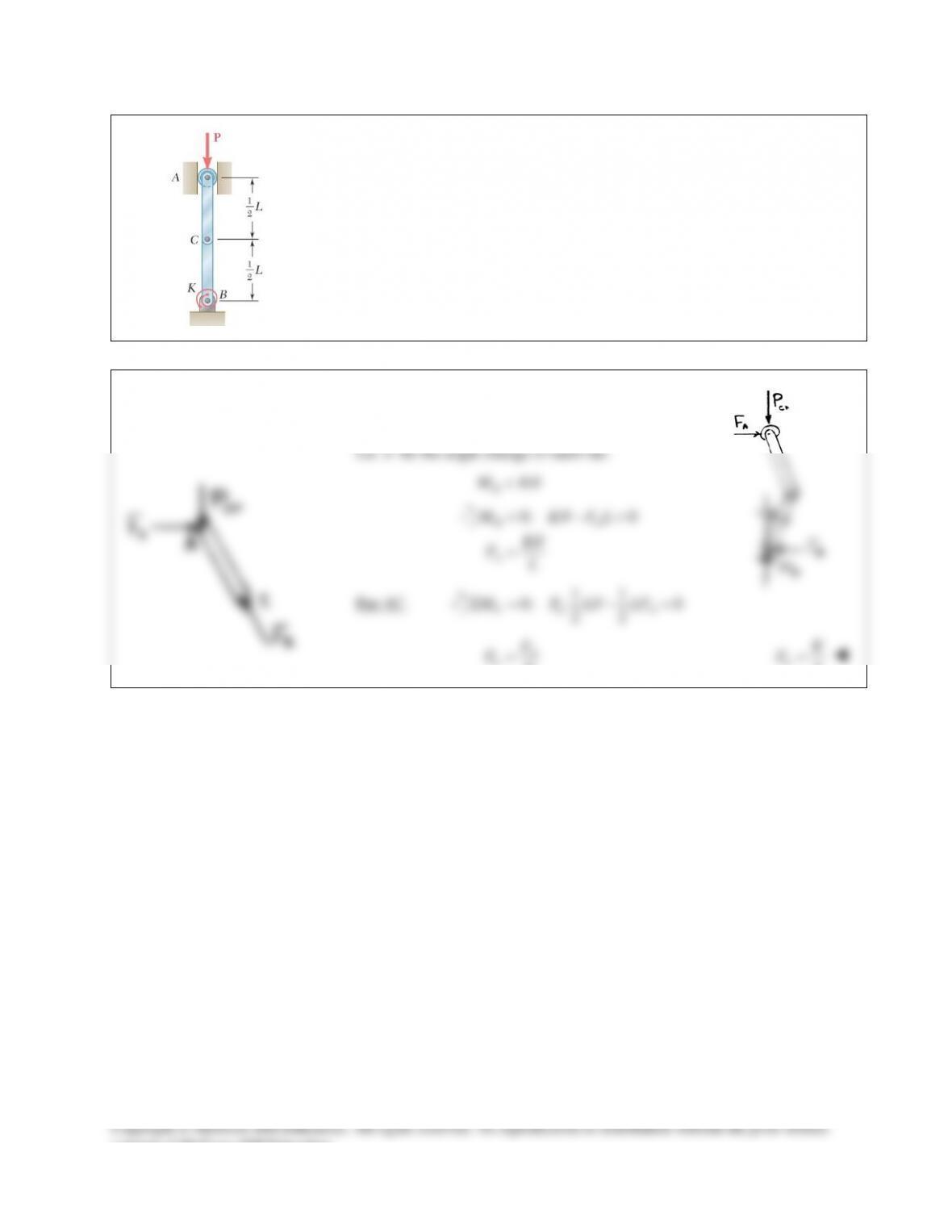
PROBLEM 16.5
The rigid bar AD is attached to two springs of constant k and is in
equilibrium in the position shown. Knowing that the equal and opposite
loads P and P
′
remain vertical, determine the magnitude
cr
P
of the critical
load for the system. Each spring can act in either tension or compression.
SOLUTION
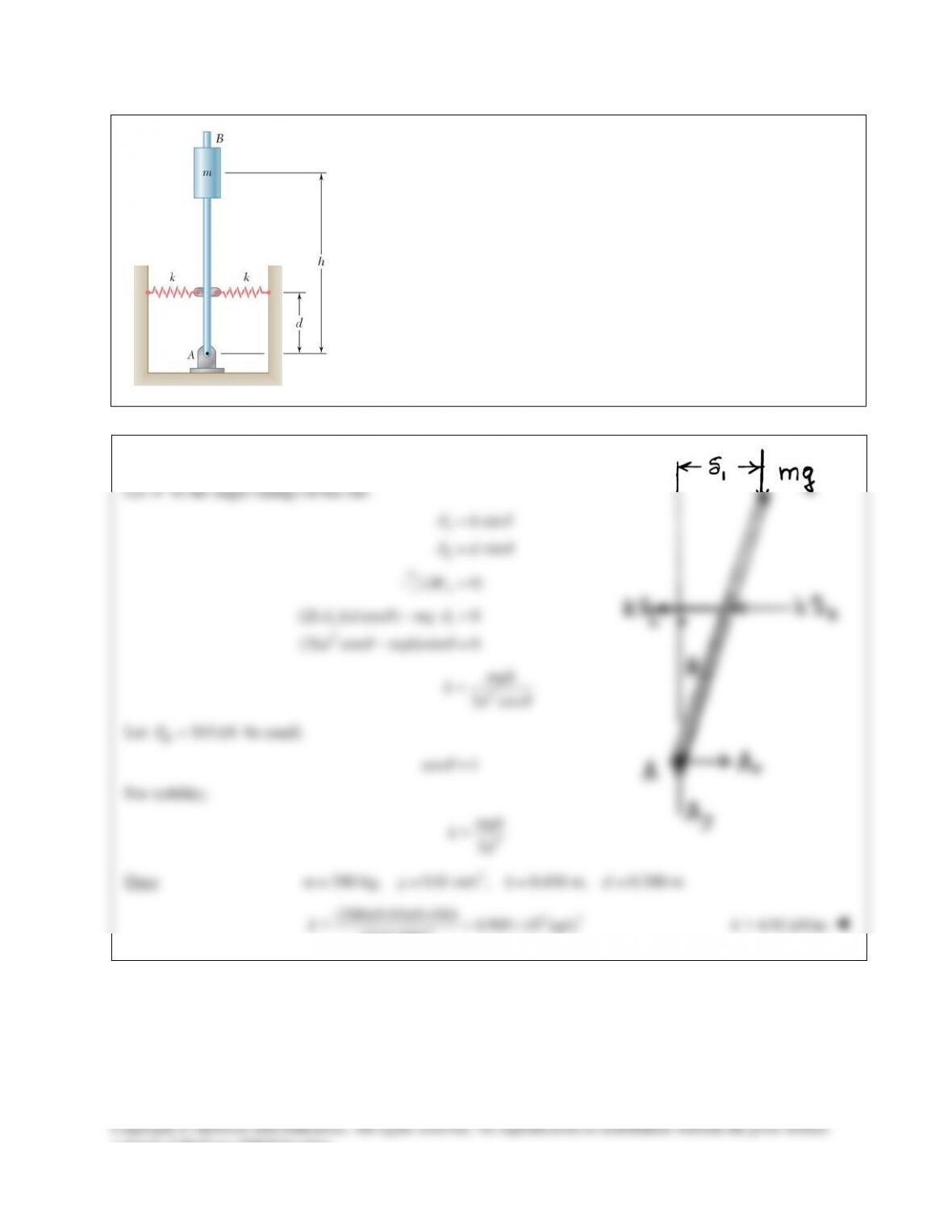
PROBLEM 16.6
The rigid rod AB is attached to a hinge at A and to two springs, each of
constant k. If
450 mm,h=
300 mm,d=
and
200 kg,m=
determine the
range of values of k for which the equilibrium of rod AB is stable in the
position shown. Each spring can act in either tension or compression.
SOLUTION
PROBLEM 16.7
Determine the critical load of a round wooden dowel that is 48 in. long and has a diameter of (a) 0.375 in.,
(b) 0.5 in. Use
6
1.6 10 psi.E= ×
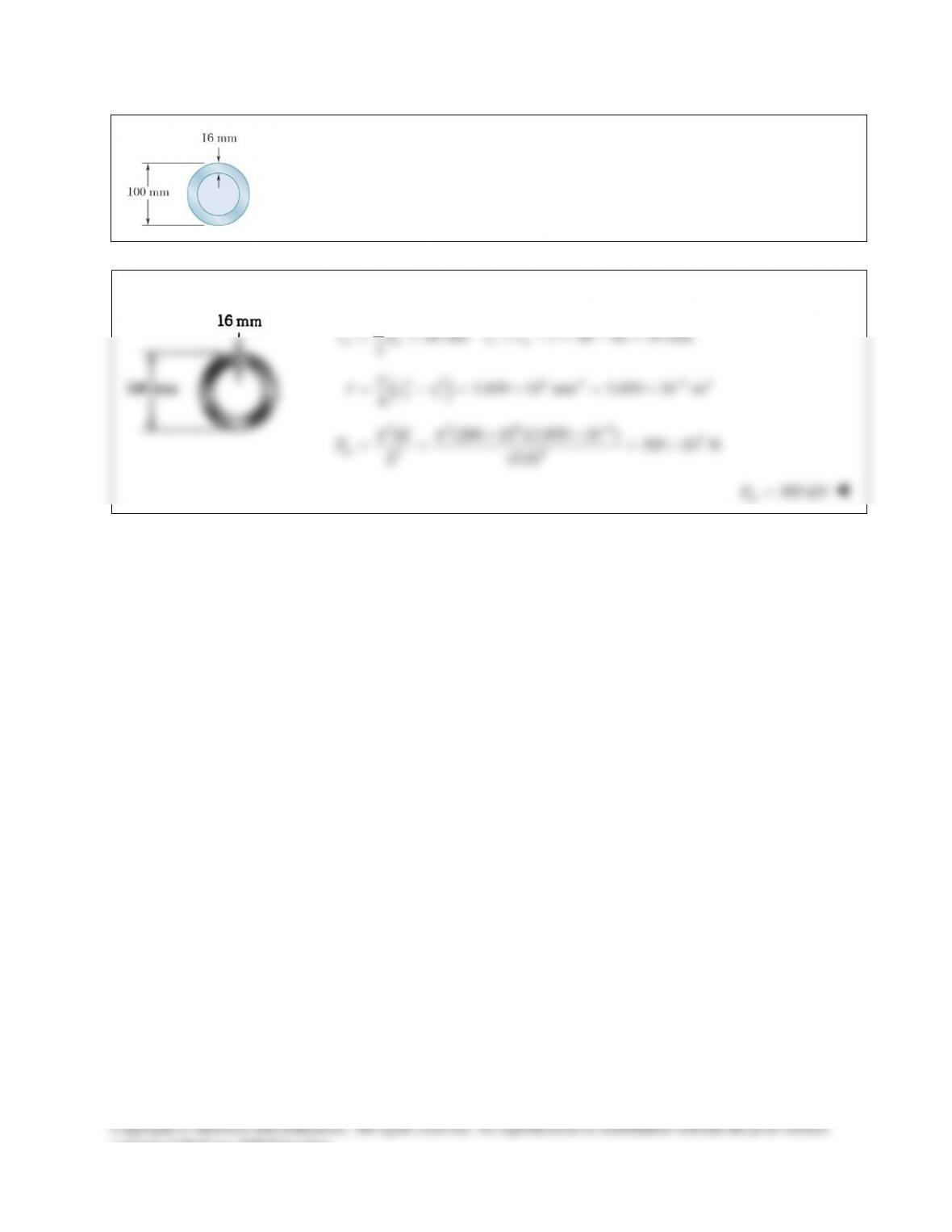
PROBLEM 16.8
Determine the critical load of a pin–ended steel tube that is 5 m long and has a 100–mm
outer diameter and a 16–mm wall thickness. Use
200 GPa.E=
SOLUTION
150 mm 50 16 34 mm
2
o o io
c d cct= = = −= − =
( )
4 4 6 4 64
3.859 10 mm 3.859 10 m
4
oi
I cc
π
−
= −= × = ×
22 9 6 3
cr 22
(200 10 )(3.859 10 ) 305 10 N
(5.0)
EI
PL
ππ
−
××
= = = ×
cr 305 kNP=
consent of McGraw–Hill Education.
PROBLEM 16.9
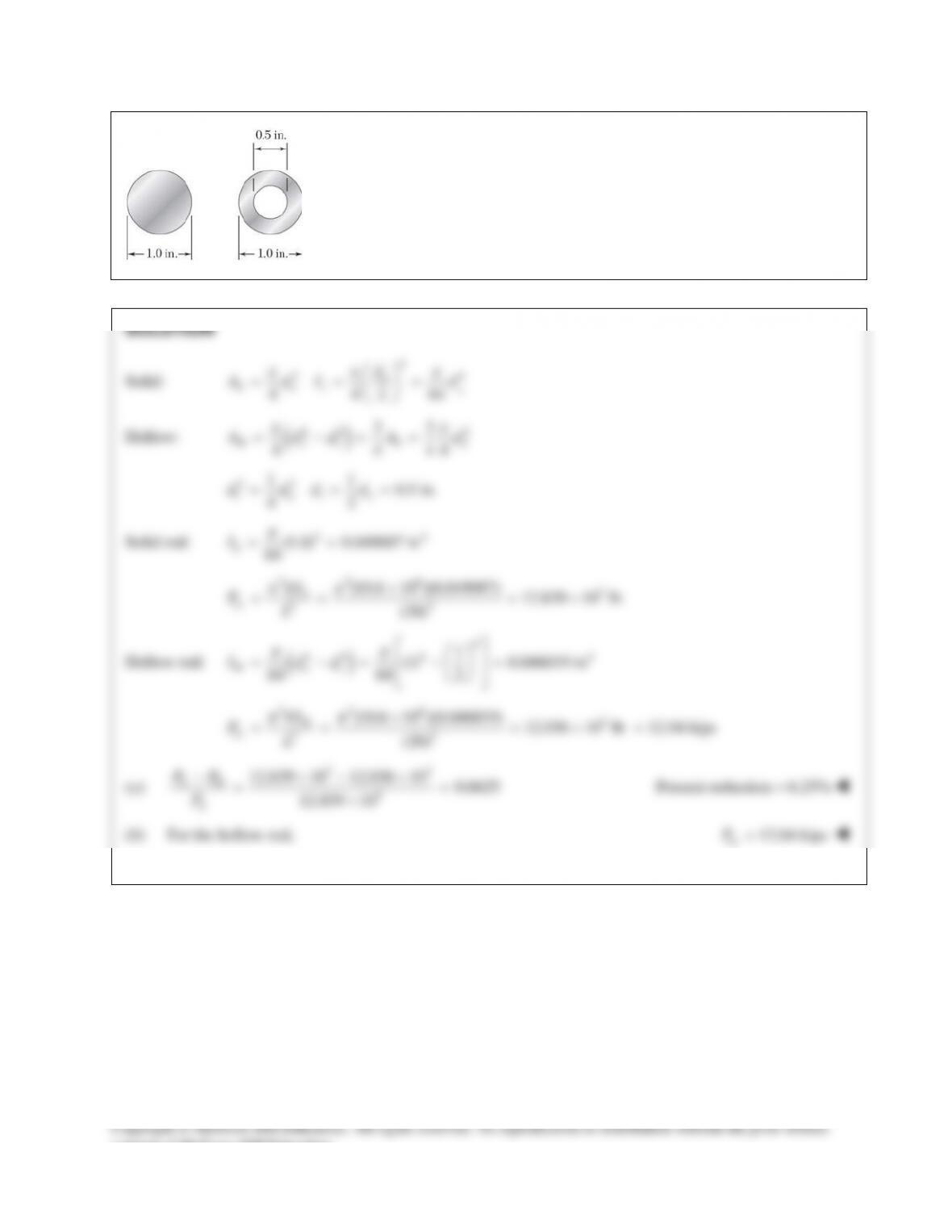
A compression member of 20–in. effective length consists of a solid 1–in.–
diameter aluminum rod. In order to reduce the weight of the member
by 25%, the solid rod is replaced by a hollow rod of the cross section shown.
Determine (a) the percent reduction in the critical load, (b) the value of the
critical load for the hollow rod. Use
6
10.6 10 psiE= ×
.
PROBLEM 16.10
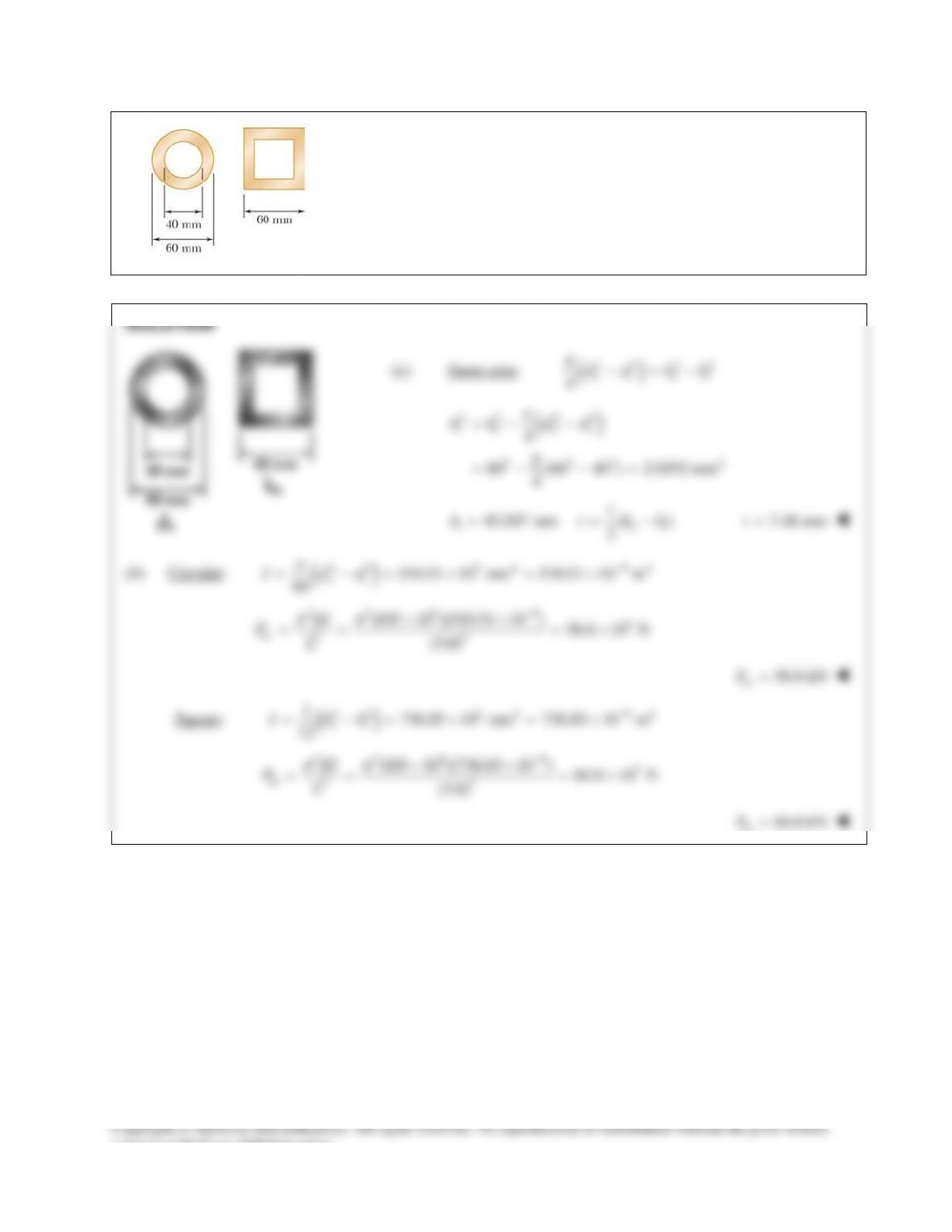
Two brass rods used as compression members, each of 3–m effective length,
have the cross sections shown. (a) Determine the wall thickness of the
hollow square rod for which the rods have the same cross–sectional area.
(b) Using
105 GPa
E=
, determine the critical load of each rod.
PROBLEM 16.2
Knowing that the torsional spring at B is of constant K and that the bar AB is rigid,
determine the critical load
cr.P
SOLUTION
PROBLEM 16.3
Two rigid bars AC and BC are connected as shown to a spring of constant k.
Knowing that the spring can act in either tension or compression, determine the
critical load
cr
P
for the system.
SOLUTION
PROBLEM 16.4
Two rigid bars AC and BC are connected by a pin at C as shown. Knowing that
the torsional spring at B is of constant K, determine the critical load
cr
P
for the
system.
SOLUTION
PROBLEM 16.5
The rigid bar AD is attached to two springs of constant k and is in
equilibrium in the position shown. Knowing that the equal and opposite
loads P and P
′
remain vertical, determine the magnitude
cr
P
of the critical
load for the system. Each spring can act in either tension or compression.
SOLUTION
PROBLEM 16.6
The rigid rod AB is attached to a hinge at A and to two springs, each of
constant k. If
450 mm,h=
300 mm,d=
and
200 kg,m=
determine the
range of values of k for which the equilibrium of rod AB is stable in the
position shown. Each spring can act in either tension or compression.
SOLUTION
PROBLEM 16.7
Determine the critical load of a round wooden dowel that is 48 in. long and has a diameter of (a) 0.375 in.,
(b) 0.5 in. Use
6
1.6 10 psi.E= ×
PROBLEM 16.8
Determine the critical load of a pin–ended steel tube that is 5 m long and has a 100–mm
outer diameter and a 16–mm wall thickness. Use
200 GPa.E=
SOLUTION
150 mm 50 16 34 mm
2
o o io
c d cct= = = −= − =
( )
4 4 6 4 64
3.859 10 mm 3.859 10 m
4
oi
I cc
π
−
= −= × = ×
22 9 6 3
cr 22
(200 10 )(3.859 10 ) 305 10 N
(5.0)
EI
PL
ππ
−
××
= = = ×
cr 305 kNP=
consent of McGraw–Hill Education.
PROBLEM 16.9
A compression member of 20–in. effective length consists of a solid 1–in.–
diameter aluminum rod. In order to reduce the weight of the member
by 25%, the solid rod is replaced by a hollow rod of the cross section shown.
Determine (a) the percent reduction in the critical load, (b) the value of the
critical load for the hollow rod. Use
6
10.6 10 psiE= ×
.
PROBLEM 16.10
Two brass rods used as compression members, each of 3–m effective length,
have the cross sections shown. (a) Determine the wall thickness of the
hollow square rod for which the rods have the same cross–sectional area.
(b) Using
105 GPa
E=
, determine the critical load of each rod.