Archives: Quiz
978-0393602517 Test Bank Chapter 43
Chapter 43: Mythical Impressions: Program Music at the End of the Nineteenth Century MULTIPLE CHOICE 1. The earliest harbingers of modernism were artists and writers from: a. Russia. c. France. b. Spain. d. Germany. 2. Impressionism: Sun Rising, the painting […]
978-0393602517 Test Bank Chapter 42
Chapter 42: Poetry in Motion: Tchaikovsky and the Ballet MULTIPLE CHOICE 1. ______ is a choreographed dance that began in the Renaissance and was central to lavish festivals and theatrical entertainments presented at the courts of kings and dukes. a. […]
978-0393602517 Test Bank Chapter 41
Chapter 41: Total Art: Wagner and German Romantic Opera MULTIPLE CHOICE 1. Which of the following characterizes Singspiel? a. It was preceded by the German Romantic opera. b. It featured elaborate recitatives and arias. c. The plots were generally dark. […]
978-0393602517 Test Bank Chapter 40
Chapter 40: Multimedia Hits: Verdi and Italian Romantic Opera MULTIPLE CHOICE 1. Which nineteenth-century opera singer made a great impression in America by performing both opera excerpts and parlor songs? a. Fanny Hensel c. Giuseppina Stepponi b. Jenny Lind d. […]
978-0393602517 Test Bank Chapter 39
Chapter 39: Absolutely Classic: Brahms and the Nineteenth-Century Symphony MULTIPLE CHOICE 1. Which of the following is a type of absolute music? a. incidental music c. the concert overture b. the symphony d. the symphonic poem 2. The most important […]
978-0393602517 Test Bank Chapter 38
Chapter 38: Sounding a Nation: Grieg and Orchestral Nationalism MULTIPLE CHOICE 1. Music written for plays, generally consisting of an overture and a series of pieces to be performed between acts, is called: a. incidental music. c. a program symphony. […]
978-0393602517 Test Bank Chapter 37
Chapter 37: Personal Soundtracks: Berlioz and the Program Symphony MULTIPLE CHOICE 1. Instrumental music endowed with literary, philosophical, or pictorial associations is called: a. absolute music. c. background music. b. program music. d. pure music. 2. Which of the following […]
978-0393602517 Test Bank Chapter 36
Chapter 36: Musical Diaries: Hensel and Programmatic Piano Music MULTIPLE CHOICE 1. Which of the following best describes the role of women in nineteenth-century music? a. None pursued careers in music. b. Women were leaders in innovative changes of style. […]
978-0393602517 Test Bank Chapter 35
Chapter 35: Dancing at the Keyboard: Chopin and Romantic Piano Music MULTIPLE CHOICE 1. The most important keyboard instrument of the Romantic period was the: a. harpsichord. c. organ. b. piano. d. clavichord. 2. Which of the following instruments is […]
978-0393602517 Test Bank Chapter 34
Chapter 34: Marketing Music: Foster and Early “Popular” Song MULTIPLE CHOICE 1. Which of the following describes music in America during the early nineteenth century? a. The difficulty of life in the New World essentially eliminated music-making. b. Music was […]
978-0393602517 Test Bank Chapter 33
Chapter 33: Musical Reading: Schubert and the Early Romantic Lied MULTIPLE CHOICE 1. The German term for the art song is: a. Gesang. c. durchkomponiert. b. Lied. d. chorale. 2. A song whose text is a short lyric poem in […]
978-0393602517 Test Bank Chapter 32
Chapter 32: Mourning a Hero: Mozart and the Requiem MULTIPLE CHOICE 1. During the Classical era, the principal genre(s) of sacred choral music was/were: a. the oratorio. c. the Requiem. b. the Mass. d. all of the answers shown here […]
978-0393602517 Test Bank Chapter 31
Chapter 31: Making It Real: Mozart and Classical Opera MULTIPLE CHOICE 1. During the Classical era, the prevalent form of opera, which contained many recitatives and arias designed to display virtuosity, was called: a. opera seria. c. opéra comique. b. […]
978-0393602517 Test Bank Chapter 30
Chapter 30: Disrupting the Conversation: Beethoven and the Symphony in Transition MULTIPLE CHOICE 1. Which composer both maintained and disrupted the balance of the Classical style? a. Beethoven c. Haydn b. Mozart d. Bach 2. With which symphony did Beethoven […]
978-0393602517 Test Bank Chapter 29
Chapter 29: Personalizing the Conversation: Beethoven and the Classical Sonata MULTIPLE CHOICE 1. During the Classical era, the sonata was for piano alone, piano and violin, or: a. piano and trumpet. c. piano and voice. b. piano and flute. d. […]
978-0393602517 Test Bank Chapter 28
Chapter 28: Conversation with a Leader: Haydn and the Classical Concerto MULTIPLE CHOICE 1. How many movements are in a Classical concerto? a. two c. four b. three d. six 2. A/An _______, a free solo passage without orchestral accompaniment, […]
978-0393602517 Test Bank Chapter 27
Chapter 27: Expanding the Conversation: Mozart, Chamber Music, and Larger Forms MULTIPLE CHOICE 1. Mozart’s Eine kleine Nachtmusik is an example of a: a. symphony. c. sonata. b. serenade. d. concerto. 2. Eine kleine Nachtmusik is: a. German for A […]
978-0393602517 Test Bank Chapter 26
Chapter 26: The Ultimate Instrument: Haydn and the Symphony MULTIPLE CHOICE 1. The Classical symphony had its roots in the: a. concerto. c. opera overture. b. sonata. d. ballet. 2. How many movements are typical of pre-Classical symphonies? a. two […]
978-0393602517 Test Bank Chapter 25
Chapter 25: Musical Conversations: Haydn and Classical Chamber Music MULTIPLE CHOICE 1. In musical compositions, a theme is: a. the composition’s underlying meaning. b. the composition’s overall mood. c. a musical idea that is used as a building block. d. […]
978-0393602517 Test Bank Chapter 24
Chapter 24: Process as Meaning: Bach and the Fugue MULTIPLE CHOICE 1. Which of the following keyboard instruments were important during the Baroque? a. the harpsichord c. the harpsichord and the organ b. the piano d. the piano and the […]
978-0393602517 Test Bank Chapter 23
Chapter 23: Sounding Spring: Vivaldi and the Baroque Concerto MULTIPLE CHOICE 1. The instrumental form based on the contrast of two dissimilar bodies of sound is called a: a. symphony. c. suite. b. sonata. d. concerto. 2. The typical solo […]
978-0393602517 Test Bank Chapter 22
Chapter 22: Grace and Grandeur: The Baroque Dance Suite MULTIPLE CHOICE 1. The first era of Western music history in which instrumental music was a major focus for composers was the: a. Middle Ages. c. Baroque. b. Renaissance. d. Classical. […]
978-0393602517 Test Bank Chapter 21
Chapter 21: Independent Study: Billings and the North American Sacred Tradition MULTIPLE CHOICE 1. The system where a leader sings each line of a psalm and the congregation repeats it in turn is called: a. a psalm tune. c. the […]
978-0393602517 Test Bank Chapter 20
Chapter 20: Textures of Worship: Handel and the English Oratorio MULTIPLE CHOICE 1. Handel’s Messiah is an example of: a. an opera. c. an oratorio. b. a cantata. d. a masque. 2. Which of the following is Handel’s most famous […]
978-0393602517 Test Bank Chapter 19
Chapter 19: Musical Sermons: Bach and the Lutheran Cantata MULTIPLE CHOICE 1. The sacred cantata was an integral part of the: a. Catholic church service. c. Lutheran church service. b. Anglican church service. d. Pilgrims’ church service in America. 2. […]
978-0393602517 Test Bank Chapter 18
Chapter 18: Performing Grief: Purcell and Early Opera MULTIPLE CHOICE 1. A drama that is sung is called: a. a madrigal. c. a cantata. b. an opera. d. a motet. 2. The vocal style in opera that imitates the natural […]
978-0393602517 Test Bank Chapter 17
Chapter 17: Glory Be: Music for the Renaissance Mass MULTIPLE CHOICE 1. The Roman Catholic service that symbolically reenacts Christ’s Last Supper is: a. Vespers. c. the Mass. b. Matins. d. the Divine Office. 2. The portion of the Mass […]
978-0393602517 Test Bank Chapter 16
Chapter 16: Remember Me: Personalizing the Motet in the Renaissance MULTIPLE CHOICE 1. Why is Renaissance painting considered more realistic than medieval painting? a. Renaissance painters used more vivid colors. b. The subjects of Renaissance paintings were often ordinary people […]
978-0393602517 Test Bank Chapter 15
Chapter 15: Singing in Friendship: The Renaissance Madrigal MULTIPLE CHOICE 1. Which culture developed a complex tradition of social part song, in which separate musical lines are combined into a harmonious whole? a. Islamic c. Chinese b. Western d. Indian […]
978-0393602517 Test Bank Chapter 14
Chapter 14: Symbols and Puzzles: Machaut and the Medieval Mind MULTIPLE CHOICE 1. How long has music been linked with mathematics and geometry? a. since the 1750s c. since the Renaissance b. since antiquity d. since the late 1900s 2. […]
978-0393602517 Test Bank Chapter 13
Chapter 13: Voice and Worship: Tradition and Individuality in Medieval Chant MULTIPLE CHOICE 1. Which of the following religions use(s) music extensively in its worship? a. Christianity c. Judaism b. Islam d. all of the answers shown here 2. During […]
978-0393602517 Test Bank Chapter 12
Chapter 12: Style and Function of Music in Society MULTIPLE CHOICE 1. Which general term suggests something of the overall character of a work as well as its function? a. form c. medium b. genre d. opus 2. Which of […]
978-0393602517 Test Bank Chapter 11
Chapter 11: Musical Ensembles MULTIPLE CHOICE 1. A fairly large body of singers who perform together is called a(n): a. orchestra. c. chorus. b. chamber ensemble. d. band. 2. The term a cappella refers to choral music performed: a. with […]
978-0393602517 Test Bank Chapter 10
Chapter 10: Western Musical Instruments MULTIPLE CHOICE 1. The instruments of the Western orchestra are categorized in four groups: strings, brass, percussion, and _____. a. flutes c. woodwinds b. chordophones d. idiophones 2. Which is the correct order of bowed […]
978-0393602517 Test Bank Prelude 7
Prelude 7: Beyond Modernism? MULTIPLE CHOICE 1. Which artist is associated with abstract expressionism? a. Robert Rauschenberg c. Andy Warhol b. Jackson Pollock d. Jasper Johns 2. Which art movement drew themes from modern urban life, including machines, comic strips, […]
978-0393602517 Test Bank Prelude 6
Prelude 6: Making Music Modern MULTIPLE CHOICE 1. The artistic trends of the early twentieth century can best be characterized as: a. a reaction against Romanticism. c. influenced by Romanticism. b. influenced by an earlier era. d. an extension of […]
978-0393602517 Test Bank Prelude 5
Prelude 5: Music as Passion and Individualism MULTIPLE CHOICE 1. The Romantic movement really comes into its own through music in: a. the middle of the eighteenth century. b. the last few decades of the 1700s. c. the early decades […]
978-0393602517 Test Bank Prelude 4
Prelude 4: Music as Order and Logic MULTIPLE CHOICE 1. Which of the following best characterize(s) artists of the Classical era? a. Classical artists were more subjective. b. Classical artists emphasized clarity and regularity of structure. c. Classical artists used […]
978-0393602517 Test Bank Prelude 3
Prelude 3: Music as Exploration and Drama MULTIPLE CHOICE 1. Which of the following characterizes music after 1600? a. Music performers developed virtuosic skills. b. Opera was developed. c. Musicians explored intense emotions. d. all of the answers shown here […]
978-0393602517 Test Bank Prelude 2
Prelude 2: Music as Commodity and Social Activity MULTIPLE CHOICE 1. The core of music-making today is largely based on the traditions from: a. China. c. Europe. b. Africa. d. Mesopotamia. 2. Which of the following is a role for […]
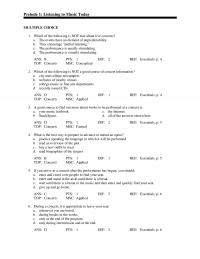
978-0393602517 Test Bank Prelude 1
Prelude 1: Listening to Music Today MULTIPLE CHOICE 1. Which of the following is NOT true about live concerts? a. The events have an element of unpredictability. b. They encourage “partial listening.” c. The performance is aurally stimulating. d. The […]
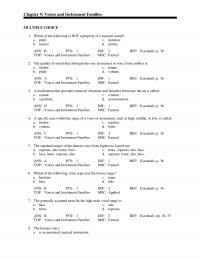
978-0393602517 Test Bank Chapter 9
Chapter 9: Voices and Instrument Families MULTIPLE CHOICE 1. Which of the following is NOT a property of a musical sound? a. pitch c. duration b. texture d. timbre 2. The quality of sound that distinguishes one instrument or voice […]
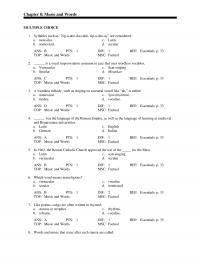
978-0393602517 Test Bank Chapter 8
Chapter 8: Music and Words MULTIPLE CHOICE 1. Syllables such as “Zip-a-dee-doo-dah, zip-a-dee-ay” are considered: a. mousikas. c. Latin. b. nonlexical. d. secular. 2. ______ is a vocal improvisation common to jazz that uses wordless vocables. a. Vernacular c. Scat-singing […]
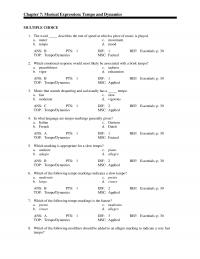
978-0393602517 Test Bank Chapter 7
Chapter 7: Musical Expression: Tempo and Dynamics MULTIPLE CHOICE 1. The word _____ describes the rate of speed at which a piece of music is played. a. meter c. movement b. tempo d. mood 2. Which emotional response would most […]
978-0393602517 Test Bank Chapter 6
Chapter 6: Musical Form MULTIPLE CHOICE 1. What quality of a work of art describes its structure or shape? a. theme c. form b. melody d. harmony 2. The basic structural concepts in the element of form are: a. repetition […]
978-0393602517 Test Bank Chapter 5
Chapter 5: Musical Texture MULTIPLE CHOICE 1. The interweaving of the melodic lines, or the relationship of musical lines, within a work is called: a. harmony. c. texture. b. meter. d. timbre. 2. A texture consisting of a single, unaccompanied […]
978-0393602517 Test Bank Chapter 4
Chapter 4: The Organization of Musical Sounds MULTIPLE CHOICE 1. What are the pitch names used in Western music? a. A, C, E , G, J, and P c. A, E, I, O, and U b. A, B, C, D, […]
978-0393602517 Test Bank Chapter 3
Chapter 3: Harmony: Musical Depth MULTIPLE CHOICE 1. Which term describes the simultaneous combination of sounds? a. texture c. dissonance b. harmony d. melody 2. Harmony is to music as __________ is to painting. a. the frame c. perspective b. […]
978-0393602517 Test Bank Chapter 2
Chapter 2: Rhythm and Meter: Musical Time MULTIPLE CHOICE 1. Music is propelled forward in time by: a. harmony. c. texture. b. rhythm. d. timbre. 2. The element of music that organizes movement in time is: a. rhythm. c. harmony. […]
978-0393602517 Test Bank Chapter 1
Chapter 1: Melody: Musical Line MULTIPLE CHOICE 1. A succession of single tones or pitches perceived as a unit is called: a. an interval. c. a harmony. b. a melody. d. a chord. 2. The distance between the highest and […]