
Under adaptive expectations theory, a decrease in the short-run aggregate demand curve
____ the inflation rate and ____ the unemployment rate.
a. increases; increases
b. increases; decreases
c. decreases; increases
d. decreases; decreases
If a person is concerned that an additional $1,000 income will move him/her into a new
tax bracket, that person is worried about the:
a. proportional rate.
b. regressive tax rate.
c. marginal tax rate.
d. flat tax rate.
An increase in aggregate supply will cause the price level to:
a. rise and GDP to rise
b. rise and GDP to fall.
c. rise and the unemployment rate to fall.
d. fall and GDP to rise.
e. fall and the unemployment rate to rise.
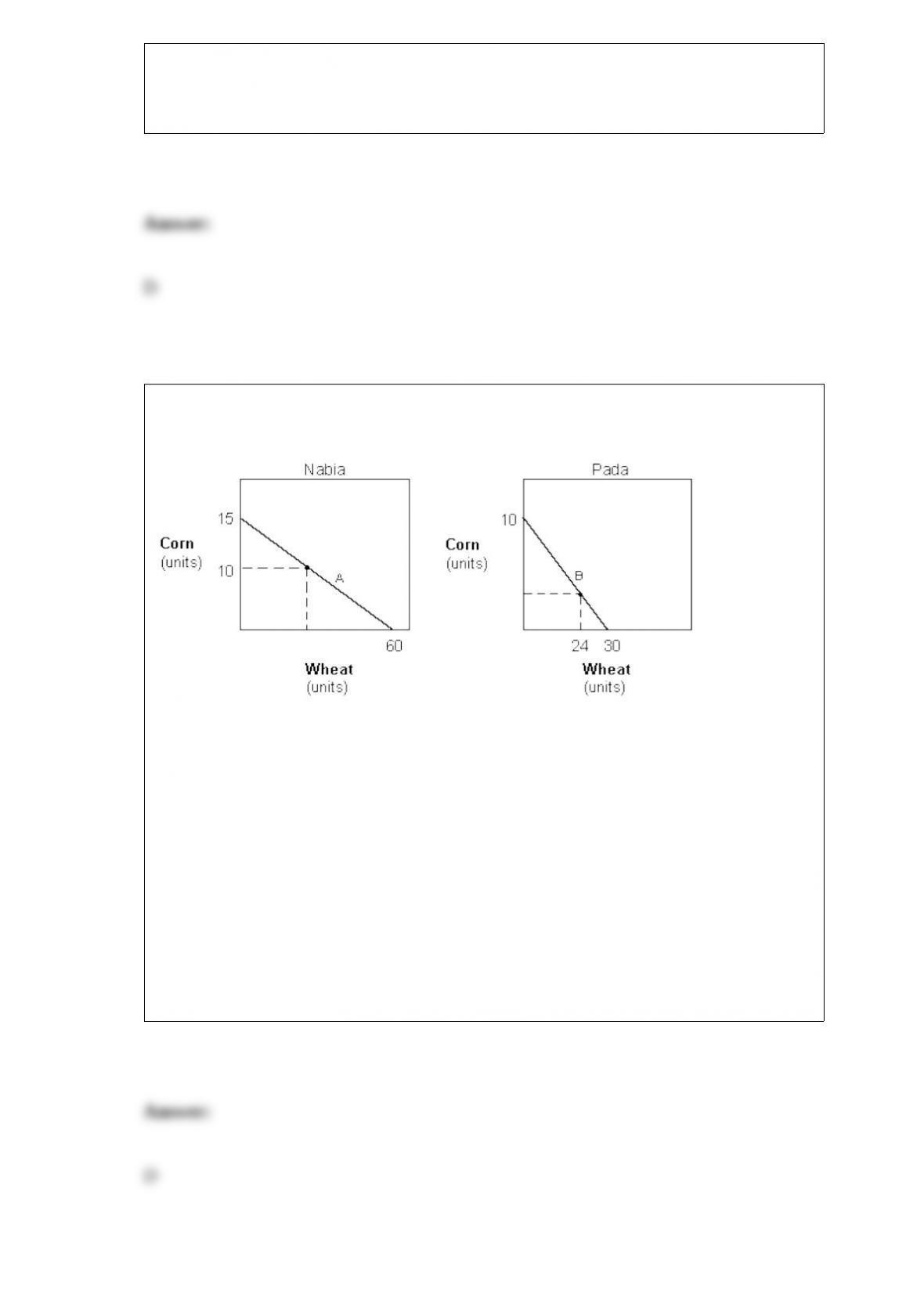
Exhibit 18-1 Production possibilities curves
In Exhibit
18-1, the production possibilities curves of wheat and corn for Nabia and Pada are
presented. Suppose Nabia produces at point A on its PPC. How many units of wheat is
the country able to produce?
a. 15.
b. 60.
c. 5.
d. 20.
e. 40.

When deciding whether to buy a second car, marginal analysis indicates that the
purchaser should compare the:
a. benefits expected from two cars with the cost of both.
b. additional benefits expected from a second car with the cost of the two cars.
c. dollar cost of the two cars with the potential income that the cars will generate.
d. additional benefits of the second car with the additional cost of the second car.
Whom does the Bureau of Labor Statistics include in the “discouraged workers” group?
a. All those between 16 and 65 who are neither disabled nor in an institution and are
also neither employed nor seeking employment.
b. Civilian labor force members who have chosen early retirement because they dislike
their work or think the pay is too low.
c. Members of the noninstitutional population who say they want to be employed but
aren’t searching for a job.
d. Members of the civilian labor force who are looking for a job but cannot find one.
e. Anyone in the population who is not working.
Suppose the market for ‘soda X” is in equilibrium. If the FDA announced today that this
soda has been proven to cause a fatal disease, what would be most likely to happen to
the equilibrium price and equilibrium quantity of soda X?

a. Price increases and quantity increases
b. Price decreases and quantity increases
c. Price increases and quantity increases
d. Price decreases and quantity decreases
e. No change in price and quantity
In economic terms, to say that there has been an increase in demand for a product
means that:
a. the demand curve has shifted to the left.
b. the product’s price has fallen and as a result consumers are buying a larger quantity of
the product.
c. the product has become scarce for some reason.
d. consumers are now willing to purchase more of the product at each possible price.
If the marginal propensity to consume (MPC) is 0.90, a $100 increase in investment
spending, other things being equal, will cause an increase in equilibrium real GDP of:
a. $90.
b. $100.
c. $900.

d. $1,000.
Stagflation is a period of time when the economy is experiencing:
a. inflation and low unemployment.
b. high unemployment and low levels of inflation at the same time.
c. high inflation and high unemployment at the same time.
d. low inflation and low unemployment at the same time.