
Assume the marginal propensity to consume (MPC) is 0.75 and the government cuts
taxes by $250 billion. The aggregate demand curve will shift to the:
a. right by $1,000 billion.
b. right by $750 billion.
c. left by $1,000 billion.
d. left by $750 billion.
The amount of a good that is given up to produce another good is:
a. its dollar cost.
b. its opportunity cost.
c. its relative cost.
d. its absolute cost.
e. all of these.
Exhibit 4-10 Supply and demand data for apricots Bushels demanded
per monthPrice per
bushelBushels supplied
per month
50 $5 80

55 4 75
60 3 70
65 2 65
70 1 55 Which of the following would occur if the government sets a price floor of $4
in the market shown in Exhibit 4-10?
a. There would be a shortage of apricots.
b. Buyers would not purchase all of the apricots that are grown.
c. Buyers would purchase more apricots than are currently being supplied.
d. Farmers would reduce the number of acres allocated to the growing of apricots.
Which of the following statements is true?
a. Demand-pull inflation is caused by excess total spending.
b. Cost-push inflation is caused by an increase in resource costs.
c. If nominal interest rates remain the same and the inflation rate falls, real interest rates
increase.
d. If real interest rates are negative, lenders incur losses.
e. All of these.
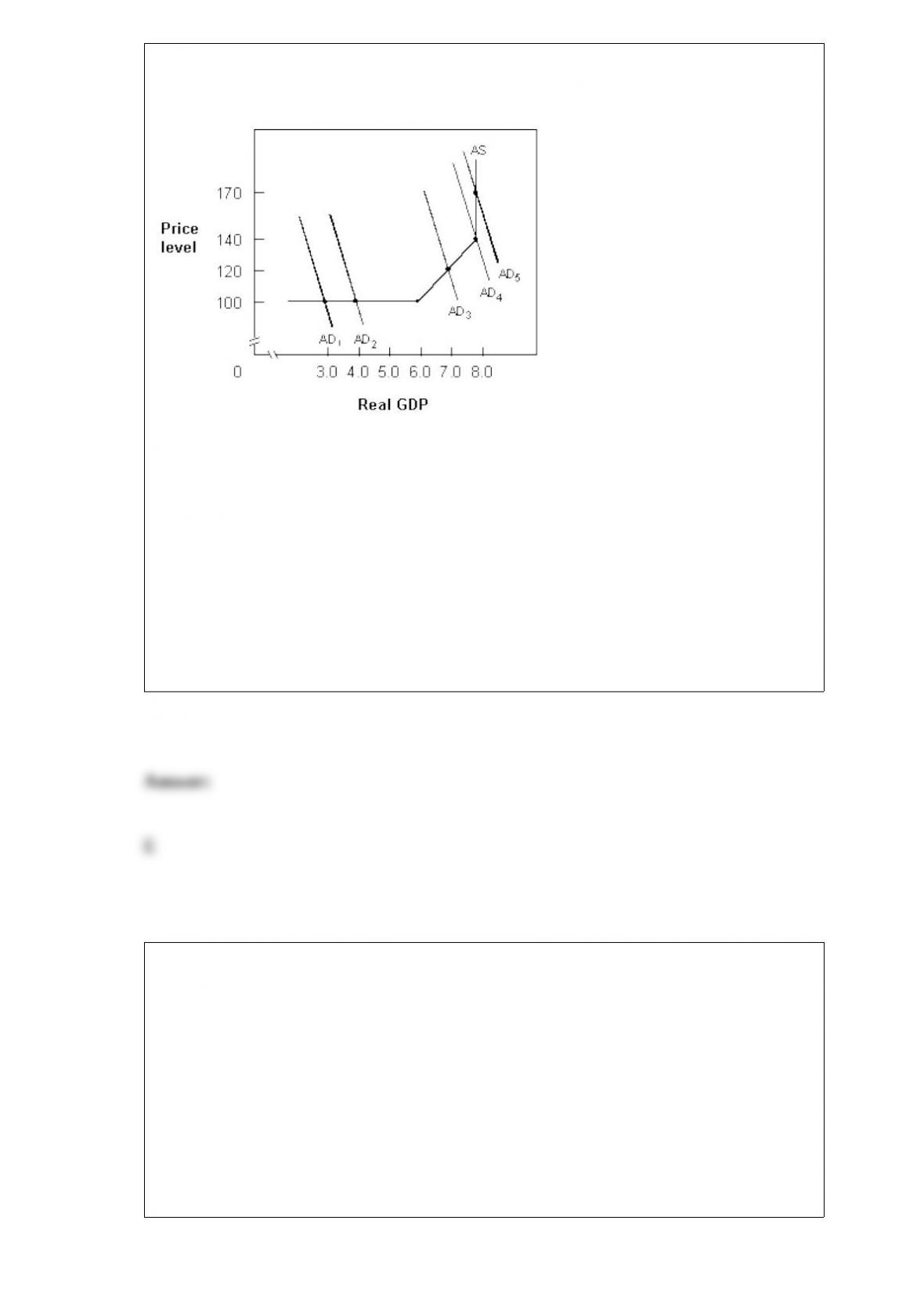
Exhibit 10-8 Aggregate demand and supply
In Exhibit 10-8, if aggregate
demand shifts from AD5 to AD4, real GDP will:
a. not change, and the price level will fall from 170 to 100.
b. not change, and the price level will fall from 140 to 100.
c. fall from $8.0 to $6.0, and the price level will not change.
d. fall from $8.0 to $6.0, and the price level will fall from 140 to 120.
e. not change, and the price level will fall from 170 to 140.
For barter exchange to take place,
a. there has to be a coincidence of wants.
b. the products in question have to be divisible.
c. money has to be used to put a value on the transaction.
d. there has to be a single coincidence of wants.
e. gold has to be one of the goods traded.
QUESTION BLANK
a. choice blank
b. choice blank
c. choice blank
d. choice blank
If a hotel room priced at 120,000 Venezuela bolivar per night can be purchased for 80
U.S. dollars, the exchange rate is:
a. 9,600 bolivar per dollar.
b. 1,500 dollars per lira.
c. 1,500 bolivar per dollar.
d. .00066 bolivar per dollar.

The hands-off view of the classical school rests on which of the following two simple
propositions about markets?
a. Demand creates its own supply and markets are basically competitive.
b. Industrial policy is inevitable and all prices are flexible.
c. Market failure occurs and prices are rigid.
d. Wages are sticky downward and market failure is inevitable.
e. Markets are basically competitive and prices are flexible.
When the economy is at full employment and inflation is present, the government could
create a surplus budget by cutting its own spending and raising taxes. The Fed would be
expected to:
a. reduce the required reserve ratio, increase the discount rate, and buy securities on the
open market.
b. reduce the required reserve ratio, reduce the discount rate, and sell securities on the
open market.
c. reduce the required reserve ratio, reduce the discount rate, and buy securities on the
open market.
d. increase the required reserve ratio, reduce the discount rate, and sell securities on the
open market.
e. increase the required reserve ratio, increase the discount rate, and sell securities on
the open market.
Which of the following is an example of an automatic stabilizer?
a. Congress legislates lower tax rates to increase consumption and investment.
b. Tax rates are increased during a recession to maintain a balanced budget.
c. A regressive income tax system reduces tax revenues (as a share of income) as
income expands.
d. Revenues from the corporate income tax increase sharply during a business boom but
decline substantially during a recession, even though no new tax legislation has been
enacted.
The Space Corporation began 2015 with $390,000 in assets, $140,000 in liabilities, and
$170,000 of retained earnings the year was $120,000, and dividends of $110,000 were
declared and paid. A) Prepare a statement of retained earnings for 2015. B) What is the
nature or purpose of the statement of retained earnings? C) What was the amount of
capital stock for Space Corporation at the beginning of 2015? D) Identify what business
events might occur in Space Corp.’s business operations that would cause the two
stockholders’ equity items to increase. E) How do you identify whether Space was
profitable during 2015 by examining the statement of retained earnings?
External users of accounting information include present and potential stockholders,
bankers and other creditors, and management.
a. True
b. False
Suppose Gizmo Inc. is willing to sell one gizmo for $10, a second gizmo for $12, a
third for $14, and a fourth for $20, and the market price is $20. What is Gizmo Inc.’s
producer surplus?
a. $56
b. $24
c. $20
d. $10
The price of a good will fall when:
a. there is a shortage of the good.
b. there is a surplus of the good.
c. demand for the good increases.
d. the supply of the good decreases.
Cost-benefit principles can be applied to the decision of:
a. profit-maximizing firms.
b. majority-rule voting.
c. which project receives the most votes.
d. rational ignorance.
e. all of these.

The Latin expression Ceteris paribus means:
a. everything else being equal.
b. economic model.
c. economists are partly right.
d. partial scarcity is certain.
An increase in the supply of money will lead to ____ in equilibrium real GDP and ____
in equilibrium price level.
a. an increase; an increase
b. an increase; a decrease
c. a decreases; an increase
d. a decrease; a decrease