
Money functions as a store of value if it allows you to:
A. measure the value of goods in a reliable way.
B. make exchanges in a more efficient manner.
C. delay purchases until you want the goods.
D. increase your confidence in money.
If a firm is unable to influence the price of a variable productive resource by buying
more or less of it, then the marginal cost of the resource is equal to the:
A. price of the resource.
B. marginal product of the resource.
C. price of a unit of the firm’s output.
D. minimum average cost of producing the product.
Rising per-unit production costs are most directly associated with:
A. frictional unemployment.
B. structural unemployment.
C. demand-pull inflation.
D. cost-push inflation.

Which statement is correct?
A. In a market system, buyers and sellers must be in face-to-face contact with each
other.
B. Prices affect the distribution of goods in a market system but not the allocation of
resources.
C. In a market system, prices serve to ration goods and services to consumers.
D. The operation of a market system has little, if any, effect on the distribution of
income in the economy.
A government budget deficit occurs when government expenditures are:
A. greater than government revenues.
B. less than government revenues.
C. increasing and government revenues are increasing.
D. decreasing and government revenues are decreasing.
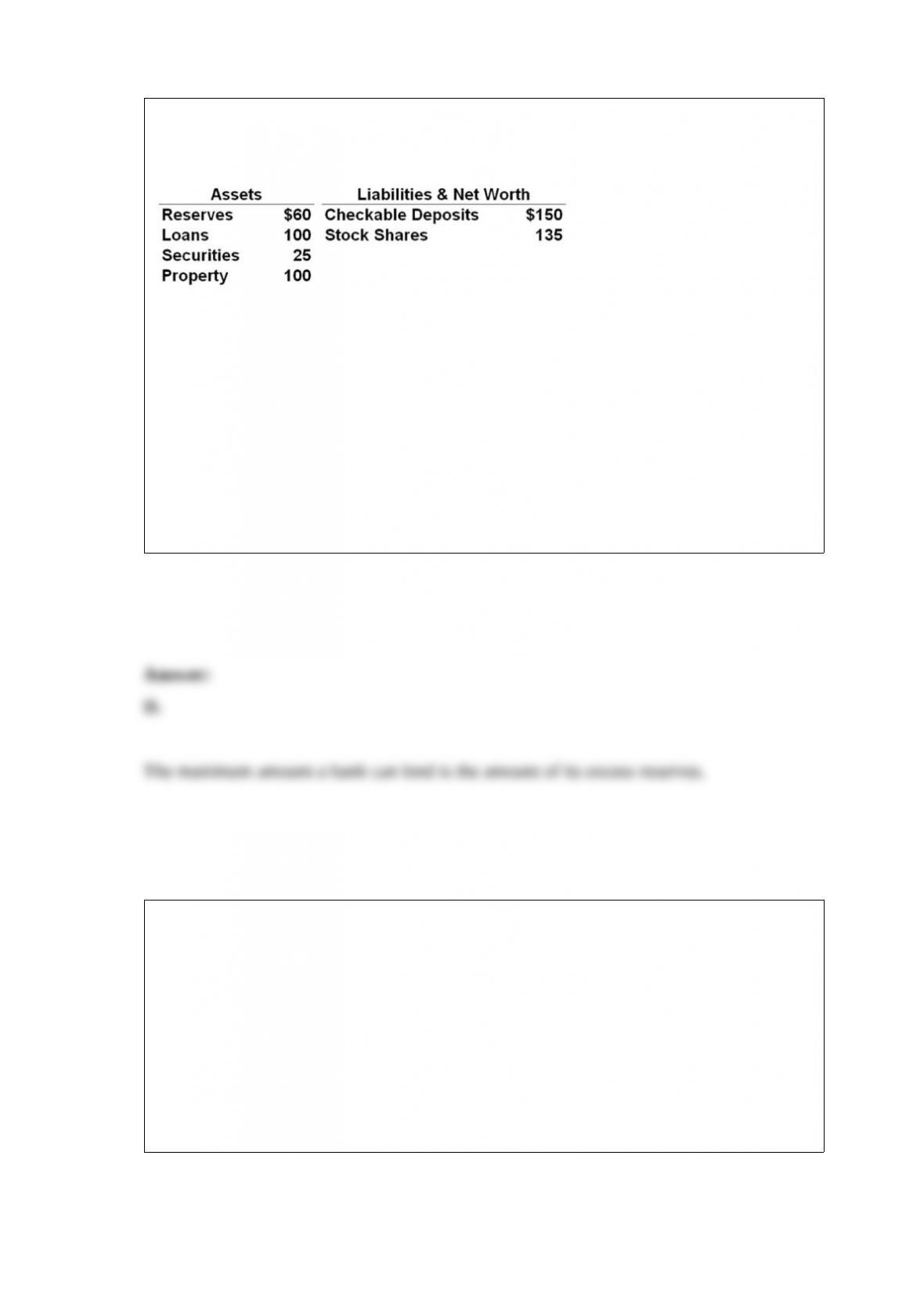
Answer the next question based on the following consolidated balance sheet for the
commercial banking system. Assume the required reserve ratio is 12 percent. All figures
are in billions of dollars.
Refer to the above data. If the commercial banking system actually loans the maximum
amount it is able to lend, excess reserves will fall:
A. by $28 billion.
B. by $22 billion.
C. by $20 billion.
D. to zero.
The difference between the maximum price a consumer is willing to pay for a product
and the actual price the consumer pays is:
A. allocative efficiency.
B. productive efficiency.
C. consumer surplus.
D. producer surplus.
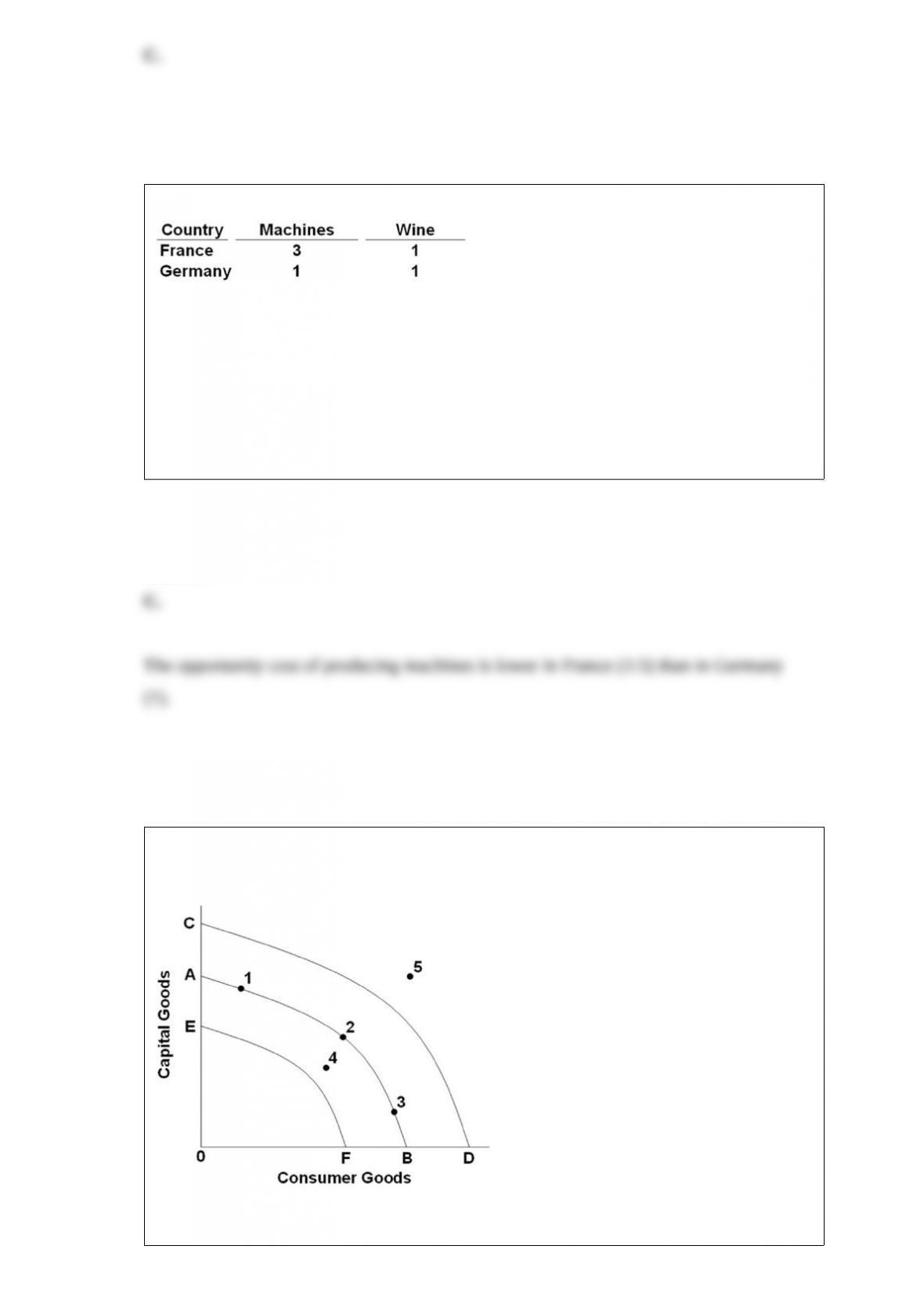
Given the following production possibilities schedules, it can be seen that:
A. France has a comparative advantage in producing wine.
B. Germany can produce more machines than France.
C. France has a comparative advantage in producing machines.
D. Germany can produce more of both goods than France.
Refer to the above diagram. If the production possibilities curve of an economy shifts
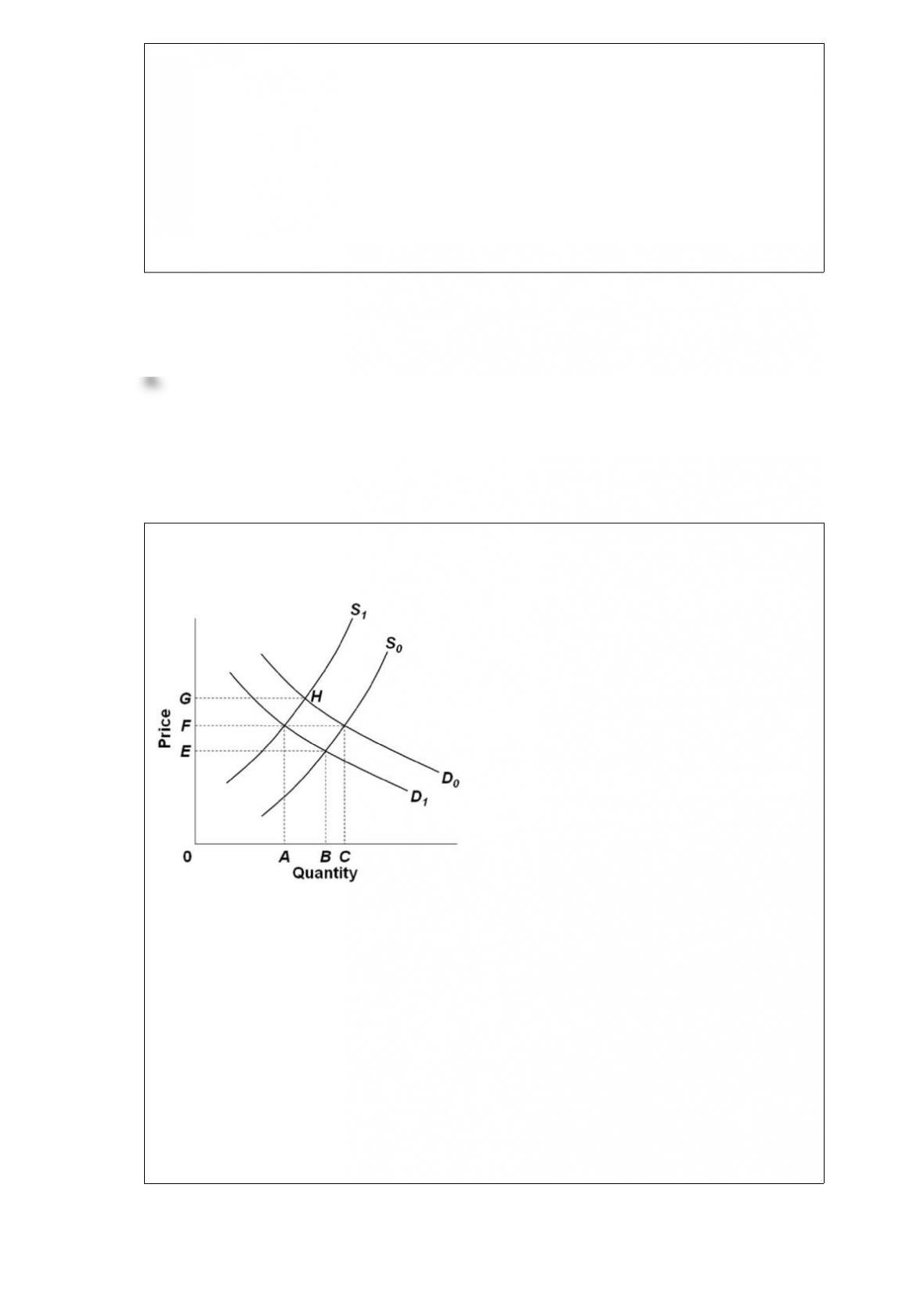
from AB to CD, it is most likely the result of what factor affecting economic growth?
A. A supply factor.
B. A demand factor.
C. An efficiency factor.
D. An allocation factor.
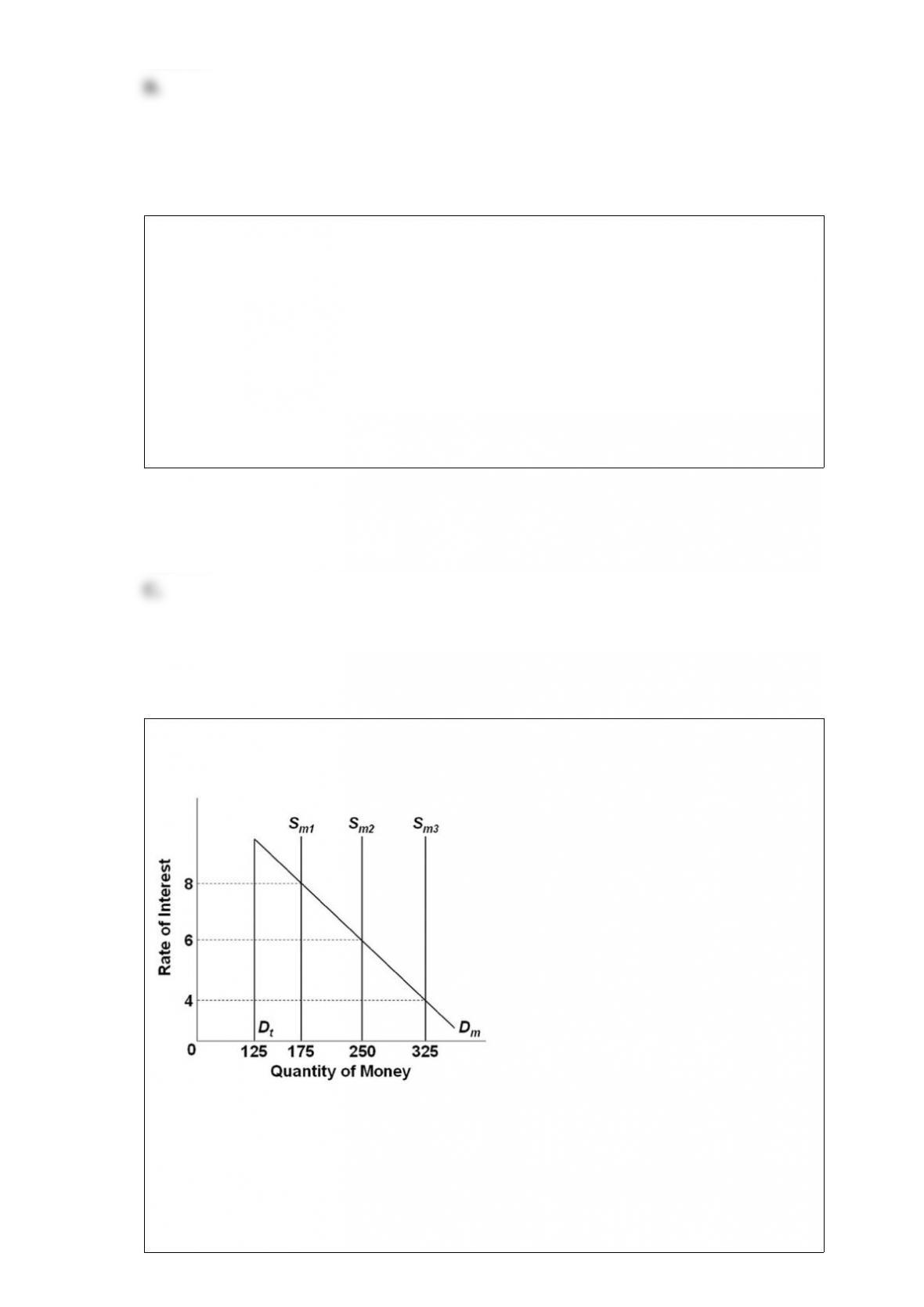
Refer to the above diagram, which shows demand and supply conditions in the
competitive market for product X. Given D0, if the supply curve moved from S0 to S1,
then:
A. supply has increased and equilibrium quantity has decreased.
B. supply has decreased and equilibrium quantity has decreased.
C. there has been an increase in the quantity supplied.
D. supply has increased and price has risen to 0G.
The magnification of small changes in spending into larger changes in output and
income is produced by:
A. the average propensity to consume.
B. the average propensity to save.
C. the multiplier effect.
D. saving.
Refer to the above graph, in which Dt is the transactions demand for money, Dm is the
total demand for money, and Sm is the supply of money. If the money market is in
equilibrium at the 6 percent rate of interest and the money supply decreases to Sm1, the
transactions demand for money will be:

A. $50.
B. $100.
C. $125.
D. $175.
An example of U.S. public investment in infrastructure would be:
A. a construction company.
B. an oil and gas pipeline.
C. a manufacturing plant.
D. a wastewater treatment system.
The Federal Reserve System:
A. has the same status as the Supreme Court.
B. is basically an independent agency.
C. has the status of a congressional committee.
D. is an agency of the executive branch of the federal government.

If the GDP gap is positive, then:
A. the inflation rate is falling.
B. the unemployment rate is rising.
C. potential GDP is greater than actual GDP.
D. actual GDP is greater than potential GDP.
Which of the above shows the correct relationship between demand and marginal
revenue?
A. A
B. B
C. C
D. D
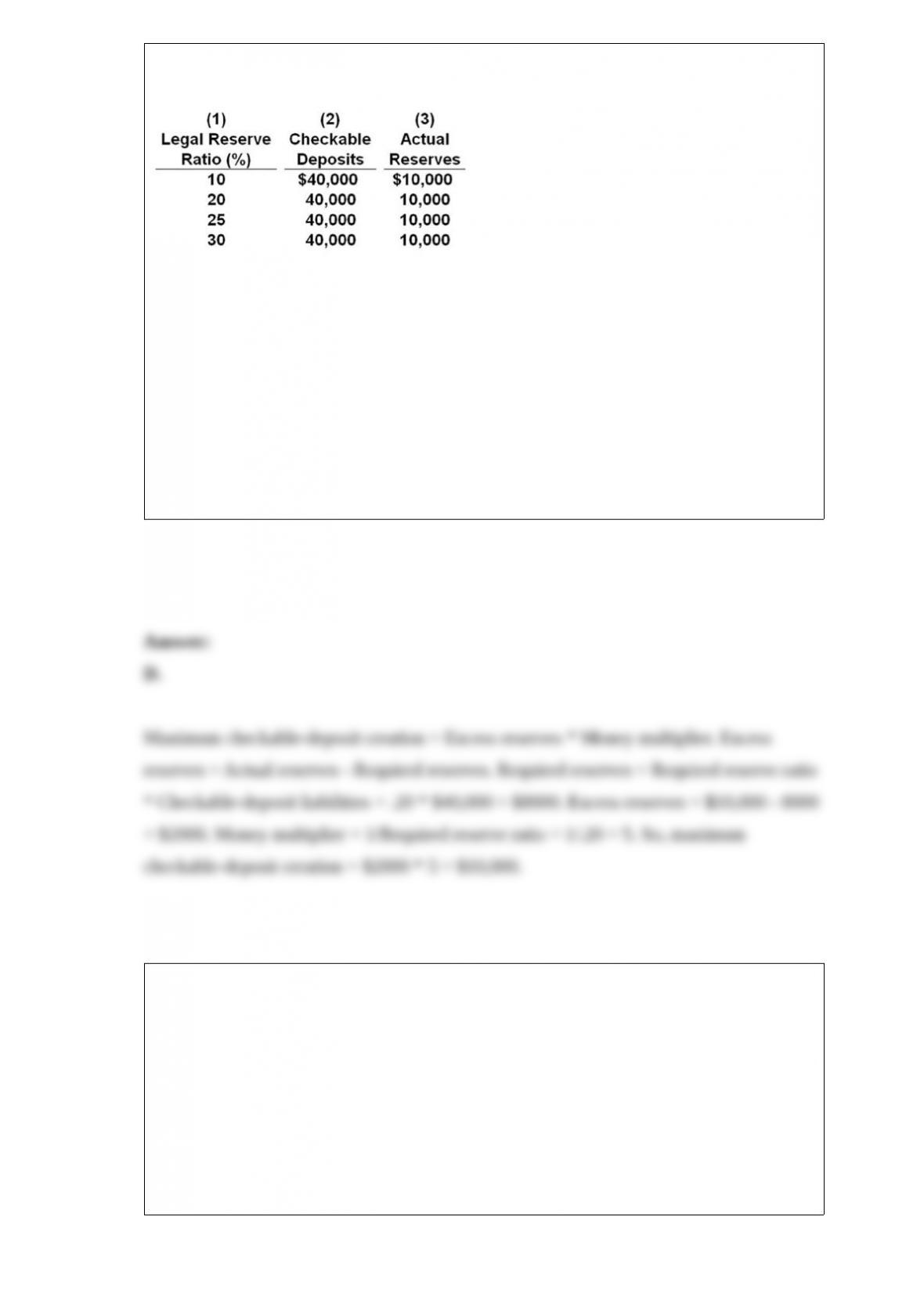
Answer the next question on the basis of the following table for a commercial bank or
thrift:
Refer to the above table. When the legal reserve ratio is 20 percent, the money-creating
potential of the entire banking system is:
A. $4000.
B. $6000.
C. $8000.
D. $10,000.
Assume that the stock of money is determined by the Federal Reserve and does not
change when the interest rate changes. This situation means that the:
A. supply of money curve is vertical.
B. supply of money curve is horizontal.
C. demand for money curve is directly related to the interest rate.
D. supply of money curve is inversely related to the interest rate.
If the Consumer Price Index was 170 in one year and 180 in the next year, then the rate
of inflation from one year to the next was approximately:
A. 5.5 percent.
B. 5.9 percent.
C. 6.3 percent.
D. 7.2 percent.
An increase in the price of product A will:
A. reduce the demand for resources used in the production of A.
B. increase the demand for complementary product C.
C. increase the demand for substitute product B.
D. reduce the demand for substitute product B.

If a technological advance increases a firm’s labor productivity, we would expect the
firm’s:
A. average total cost to rise.
B. average total cost to fall.
C. total cost to rise.
D. average total cost to be unaffected.
In an economy experiencing growing production capacity:
A. depreciation is greater than gross private domestic investment.
B. gross private domestic investment is greater than depreciation.
C. nominal GDP is rising and real GDP is falling.
D. nominal GDP is rising and real GDP is constant.
Sam owns a firm that produces tomatoes in a purely competitive market. The firm’s
demand curve is:
A. a vertical line.
B. a horizontal line.
C. upsloping to the right.

D. downsloping to the right.
The practice of clipping coins by feudal lords was a subtle form of:
A. specialization.
B. investment.
C. taxation.
D. barter.
From an economic perspective, when a consumer decides to buy more life insurance,
the consumer has most likely concluded that the:
A. marginal costs of more insurance coverage have increased.
B. marginal benefits of more insurance coverage have decreased.
C. marginal benefits of more insurance coverage are greater than the marginal costs.
D. opportunity costs of more insurance coverage are greater than the payment for more
insurance coverage.

An example of a final good in national income accounts would be new:
A. lawn mowers purchased by Cut-rite Mowers.
B. flowers purchased by homeowner Lenny Davis.
C. chemicals purchased by Green Grass Lawn Care.
D. trees purchased by Wendy Lee’s Garden Center.
The basic economic argument for the market system is that it promotes:
A. an efficient allocation of resources.
B. equality in the distribution of income.
C. personal freedom.
D. the use of money.
Unlike demand-pull inflation, cost-push inflation:
A. is self-limiting.
B. drives up the price level.
C. increases nominal income.

D. increases real income.
When a state government chooses to build more roads, the required resources are no
longer available for spending on public education. This dilemma illustrates the concept
of:
A. marginal analysis.
B. full employment.
C. full production.
D. opportunity cost.
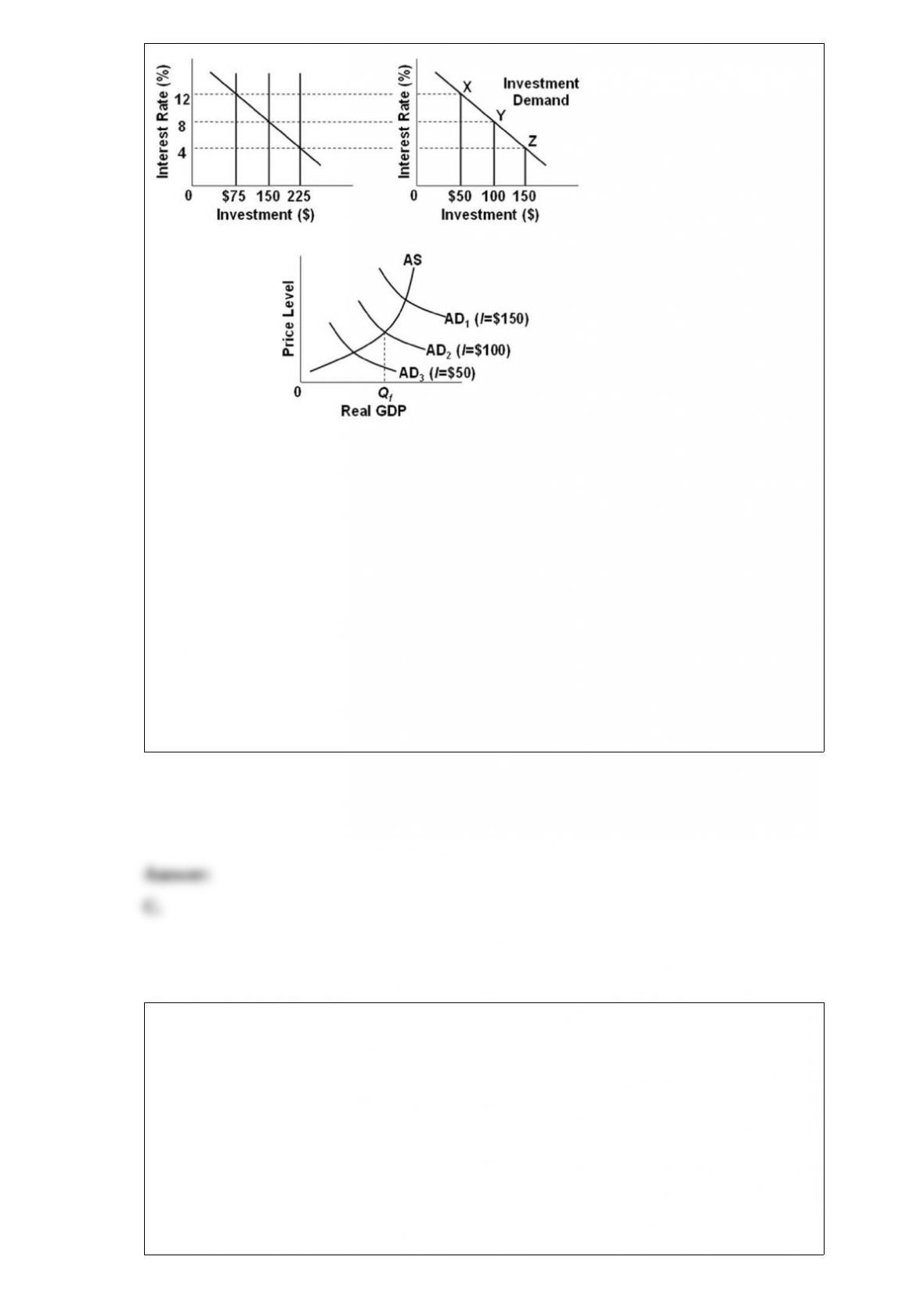
Refer to the above diagrams, in which the numbers in parentheses near the AD1, AD2,
and AD3 labels indicate the levels of investment spending associated with each curve.
All figures are in billions. A shift in the aggregate demand curve from AD3 to AD2 can
be achieved by Federal Reserve action to:
A. increase the reserve ratio.
B. increase the discount rate.
C. buy government securities in the open market.
D. sell government securities in the open market.
There is a fall in the relative prices of Japanese goods to American goods when the:
A. yen appreciates.
B. dollar appreciates.
C. inflation rate in the United States is higher than the inflation rate in Japan, and there
are flexible exchange rates.
D. inflation rate in Japan is higher than the inflation rate in the United States and there
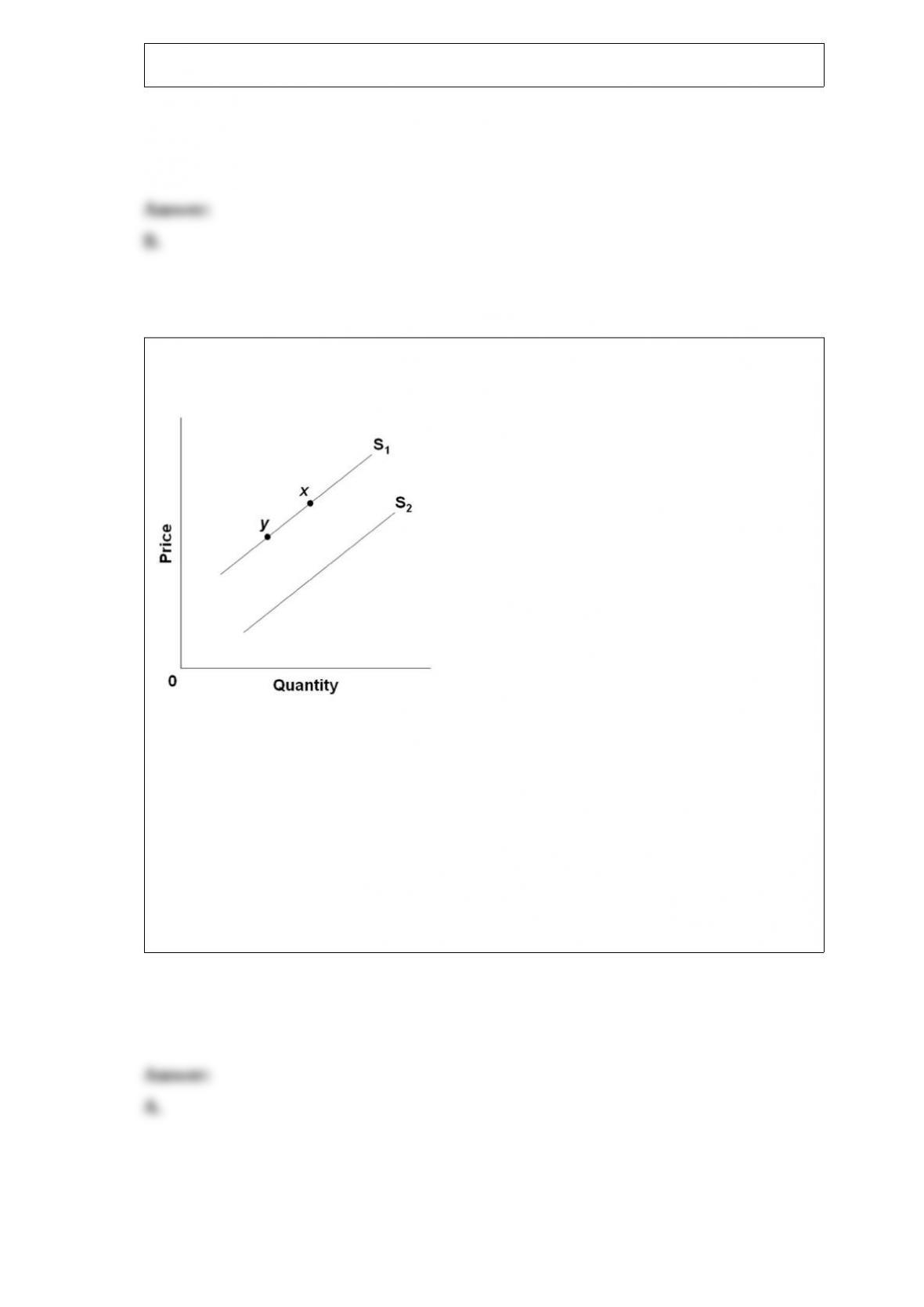
are fixed exchange rates.
Refer to the above diagram. An increase in quantity supplied is depicted by a:
A. move from point y to point x.
B. shift from S1 to S2.
C. shift from S2 to S1.
D. move from point x to point y.