
Advantages of specialization do not include:
A. increased production of economic goods with no increase in resources.
B. the more efficient use of scarce resources.
C. increased ability to utilize the division of labor.
D. less interdependence.
What “backs” the money supply?
A. The U.S. government’s ability to keep the value of money relatively stable.
B. The amount of gold the U.S. government has on deposit at its banks.
C. The fact that currency is issued as Federal Reserve Notes.
D. The fact that the intrinsic value of coins in circulation is greater than their face value.
The average household income in the United States in 2009 was:
A. $27,876.
B. $34,231.
C. $52,025.
D. $67,570.

The demand curve shows the relationship between:
A. money income and quantity demanded.
B. price and production costs.
C. price and quantity demanded.
D. consumer tastes and the quantity demanded.
Which is an important consequence of the public debt of the United States?
A. It will threaten to bankrupt the federal government.
B. It transfers a portion of output from foreign nations to the United States.
C. It decreases the inequality in the distribution of income in the United States.
D. It leads to fewer incentives to bear risk and innovate.
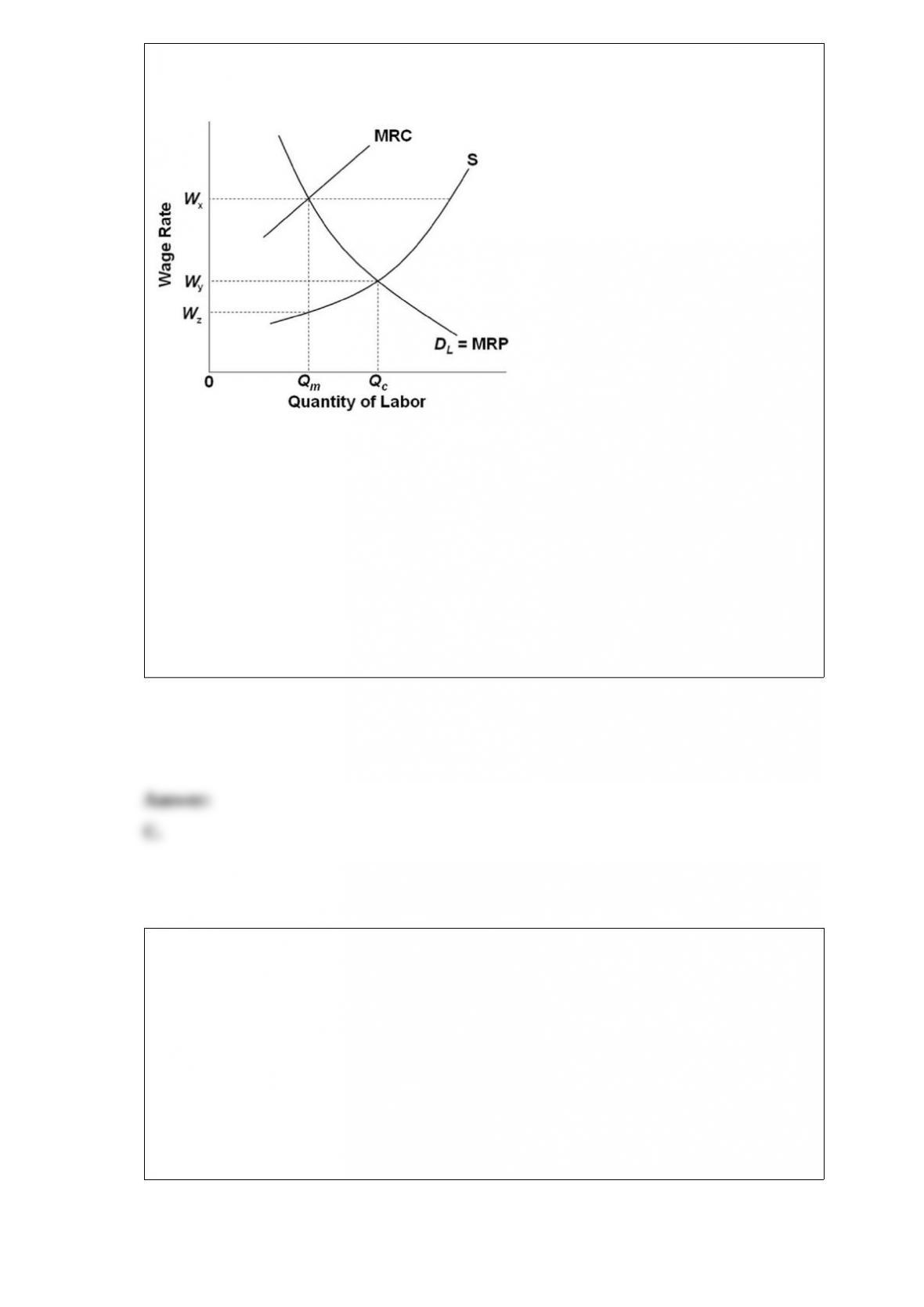
Refer to the above graph. A monopsonist will set the wage at:
A. Wy.
B. Wx.
C. Wz.
D. Cannot be determined.
Computation of gross domestic product by the expenditure method would include the
purchase of:
A. fertilizer by a farmer.
B. cement by a construction company.
C. land by the U.S. Department of the Interior.
D. government bonds by a commercial bank.
Which of the following terms describes a system of subsidized health insurance
available to those 65 and older?
A. Medicare
B. Supplemental Security Income (SSI)
C. Medicaid
D. TANF
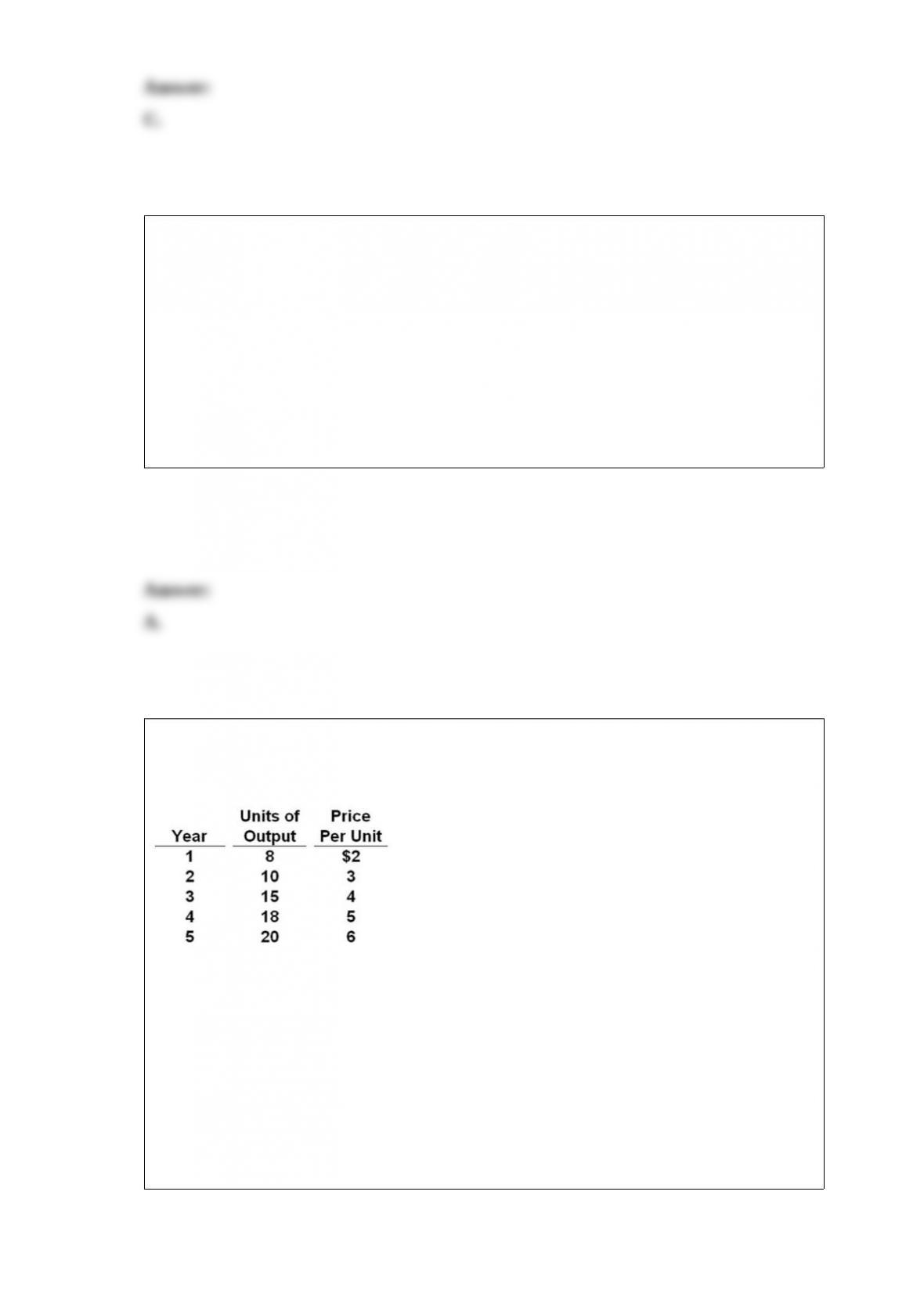
Answer the question based on the following price and output data over a five-year
period for an economy that produces only one good. Assume that year 2 is the base
year.
If year 2 is the base year, real GDP in year 5 is:
A. $120.
B. $90.
C. $60.
D. $30.
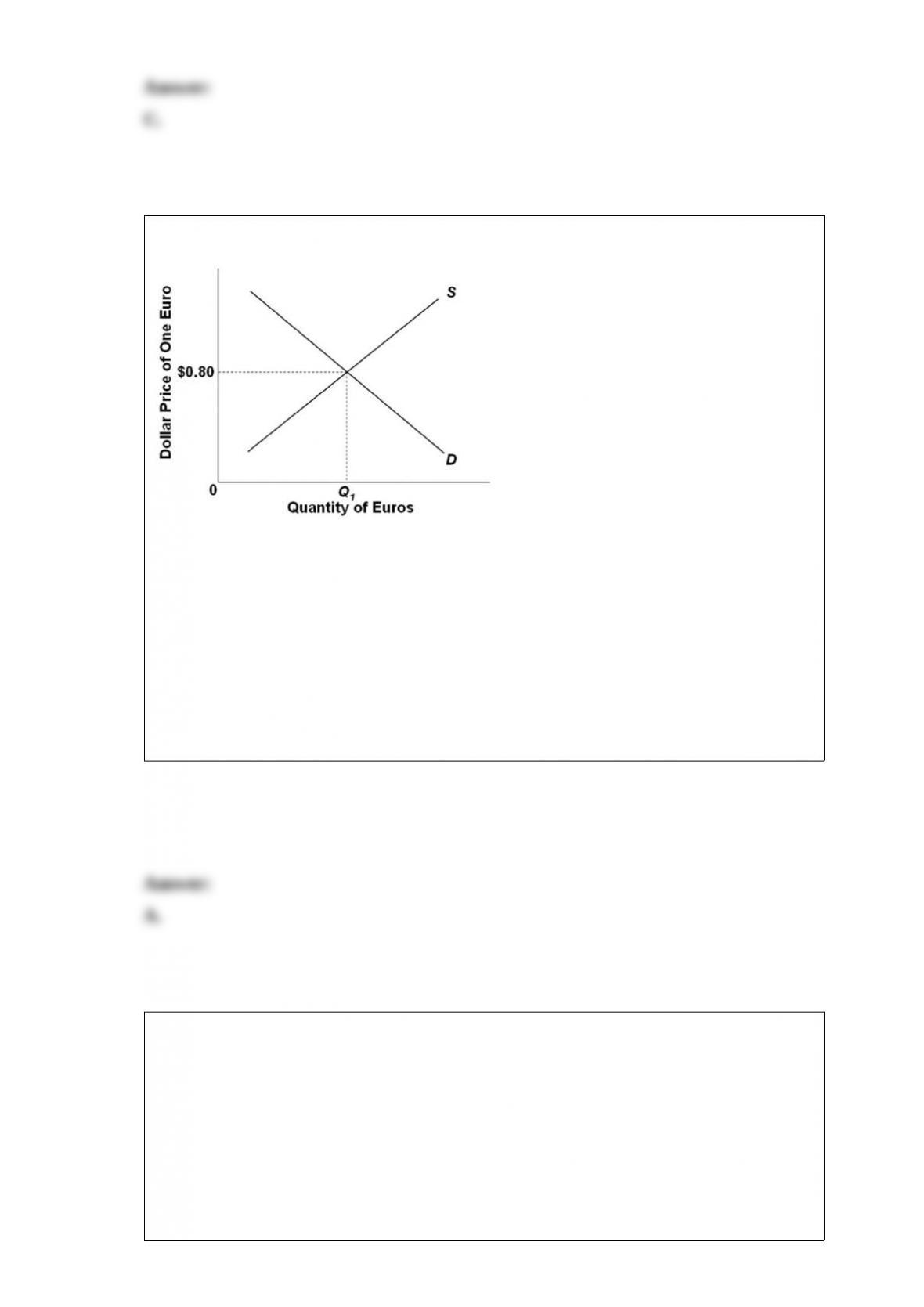
The following diagram is a flexible exchange market for foreign currency:
Other things equal, a leftward shift of the supply curve would:
A. appreciate the euro.
B. cause a shortage of euros.
C. increase the equilibrium quantity of euros.
D. appreciate the dollar.
If at a particular price level real domestic output from producers is greater than real
domestic output desired by purchasers, there will be a:
A. surplus and the price level will rise.
B. surplus and the price level will fall.
C. shortage and the price level will rise.

D. shortage and the price level will fall.
If consumers are willing to pay a higher price than previously for each level of output,
we can say that the following has occurred:
A. a decrease in demand.
B. an increase in demand.
C. a decrease in supply.
D. an increase in supply.
Adding the market value of all final and intermediate goods and services in an economy
in a given year would result in:
A. the calculation of GDP for that year.
B. the calculation of NDP for that year.
C. an amount less than GDP for that year.
D. an amount greater than GDP for that year.

A competitive economy assumes each industry consists of a:
A. large number of small firms facing a large number of small buyers.
B. few large firms facing a large number of small buyers.
C. large number of small firms facing a few large buyers.
D. few small firms facing a few small buyers.
A distinguishing characteristic of public transfer payments is that:
A. they are used to subsidize the major transportation carriers to reduce transportation
costs.
B. they are counted as part of government purchases in the calculation of the gross
domestic product.
C. there is a tax on the amount of the subsidy above a certain income level.
D. the recipients make no contribution to current production in return for them.
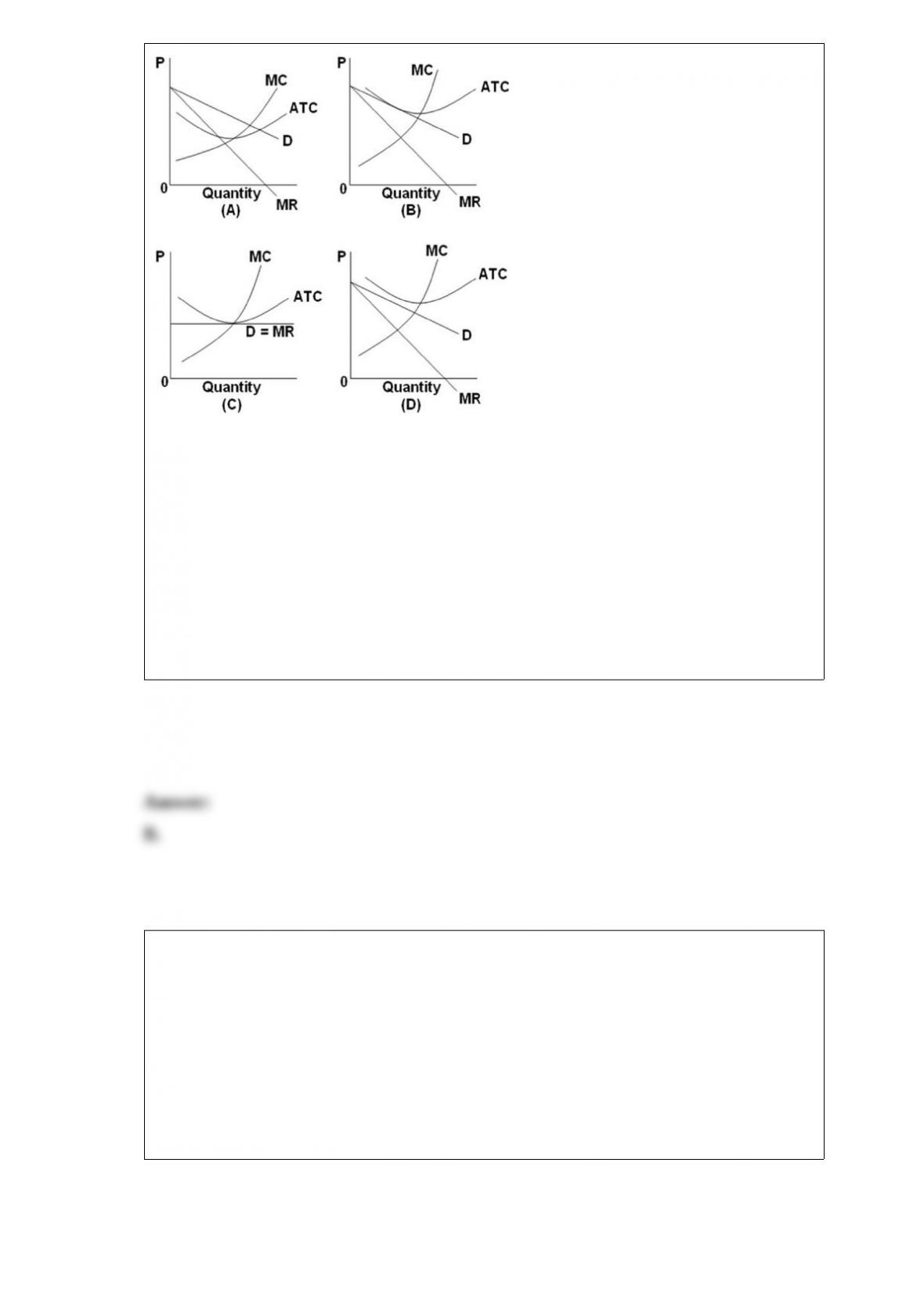
Refer to the above graphs. The long-run equilibrium for a monopolistically competitive
firm is represented by graph:
A. A.
B. B.
C. C.
D. D.
Fixed costs are associated with:
A. highly adjustable inputs such as labor.
B. both the short run and the long run.
C. the short run only.
D. the long run only.

The amount of calendar time associated with the long run:
A. is less than that associated with the immediate market period.
B. varies from industry to industry.
C. is the same for all firms.
D. is one year by definition.
At a price of $20 per unit, 140 units of good W are demanded and 100 units are
supplied. When the price is raised to $30 per unit, 100 units are demanded and 140 units
are supplied. The price elasticity of supply in this range is:
A. 1.0.
B. 0.835.
C. 0.417.
D. 1.20.
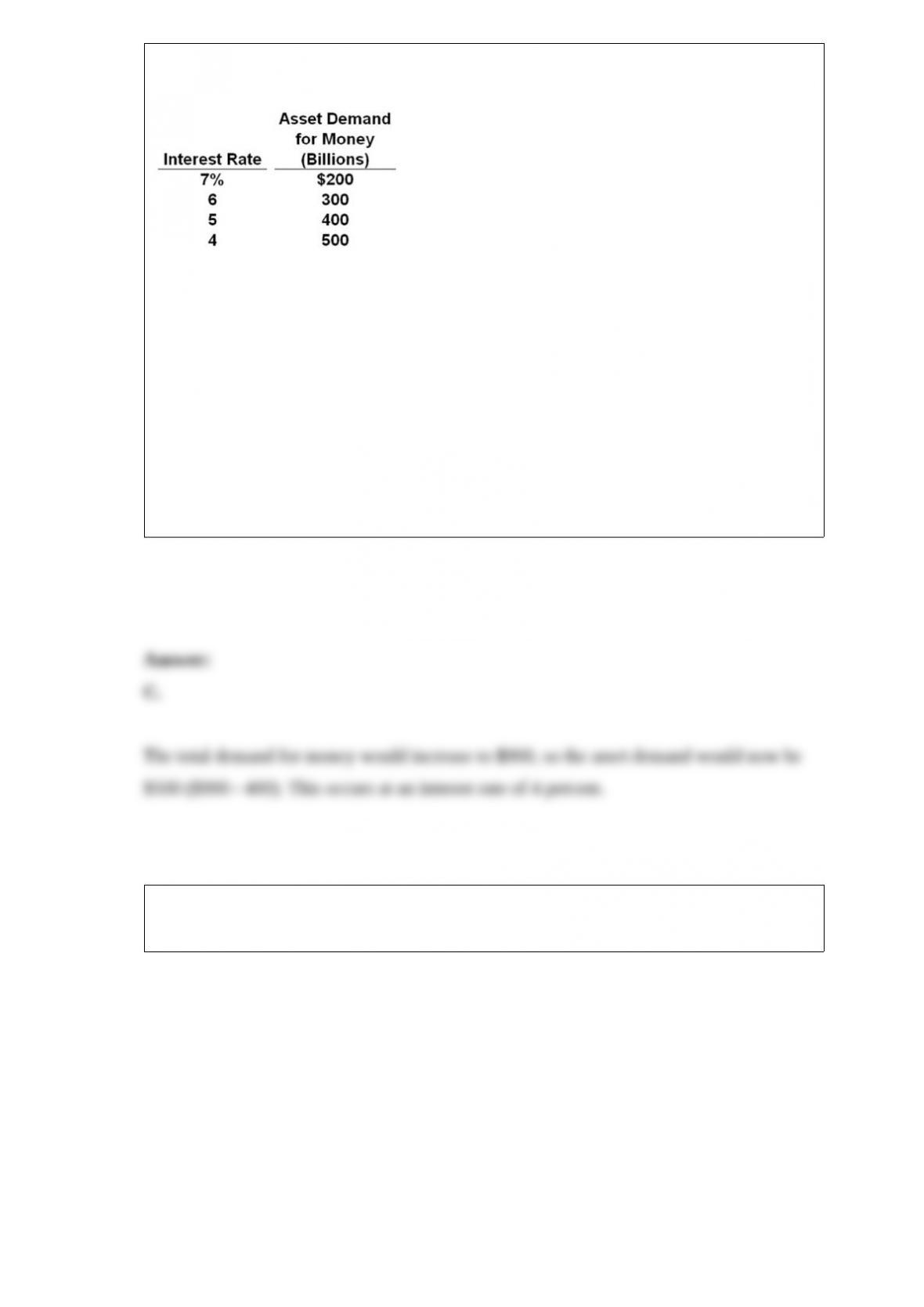
Refer to the above table. If the transactions demand for money is $400 billion, an
increase in the money supply from $800 billion to $900 billion would cause the
equilibrium interest rate to:
A. rise to 7 percent.
B. rise to 6 percent.
C. fall to 4 percent.
D. remain at 5 percent.
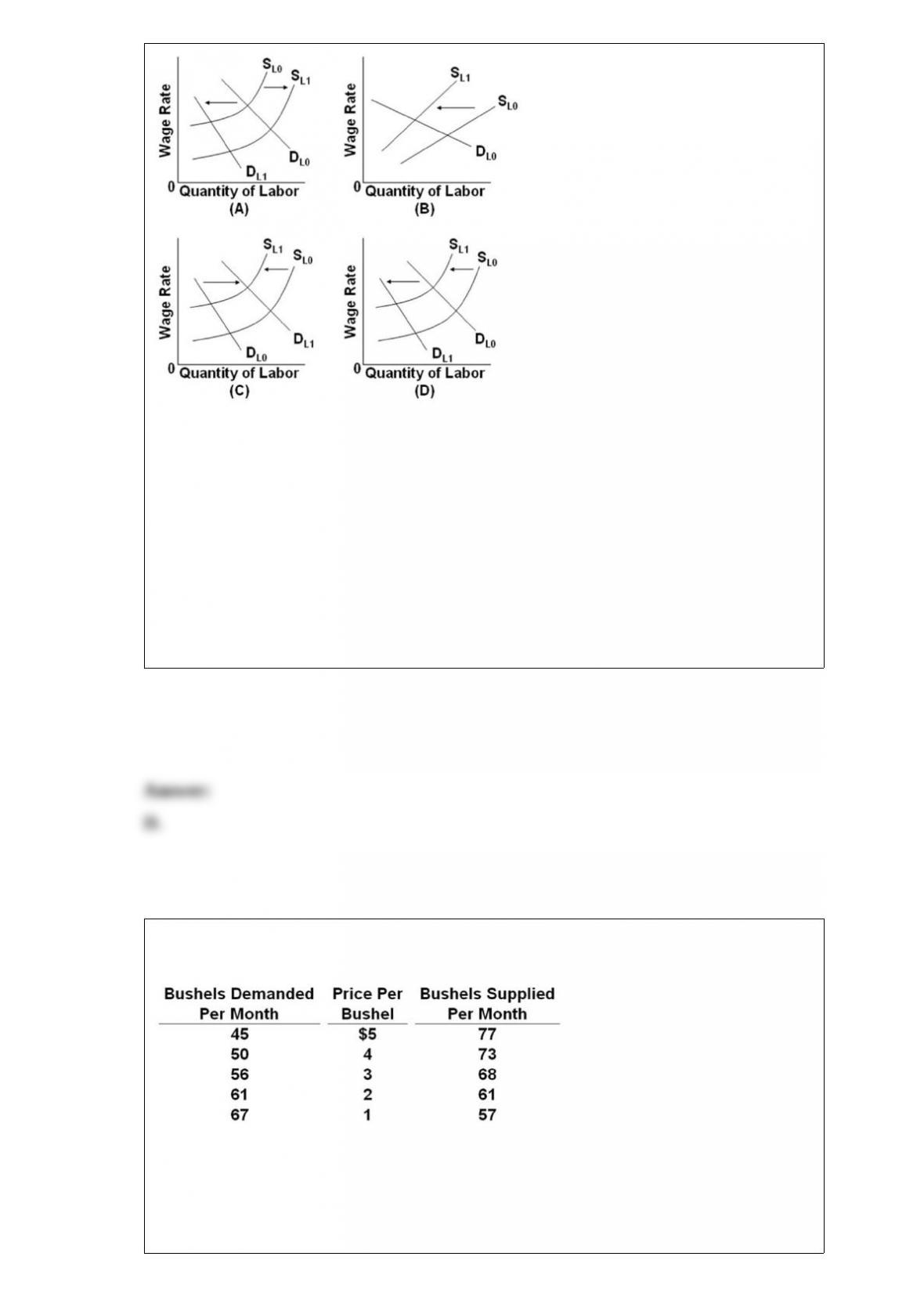
Refer to the above graphs. If union workers decide to take more leisure, while the prices
of the products produced by union workers decrease, this situation is depicted in graph:
A. A.
B. B.
C. C.
D. D.
Refer to the above data. Equilibrium price is:
A. $4.

B. $3.
C. $2.
D. $1.
In many large U.S. cities, taxicabs operate as near monopolies because of:
A. patents.
B. licenses.
C. economies of scale.
D. control of essential resources.
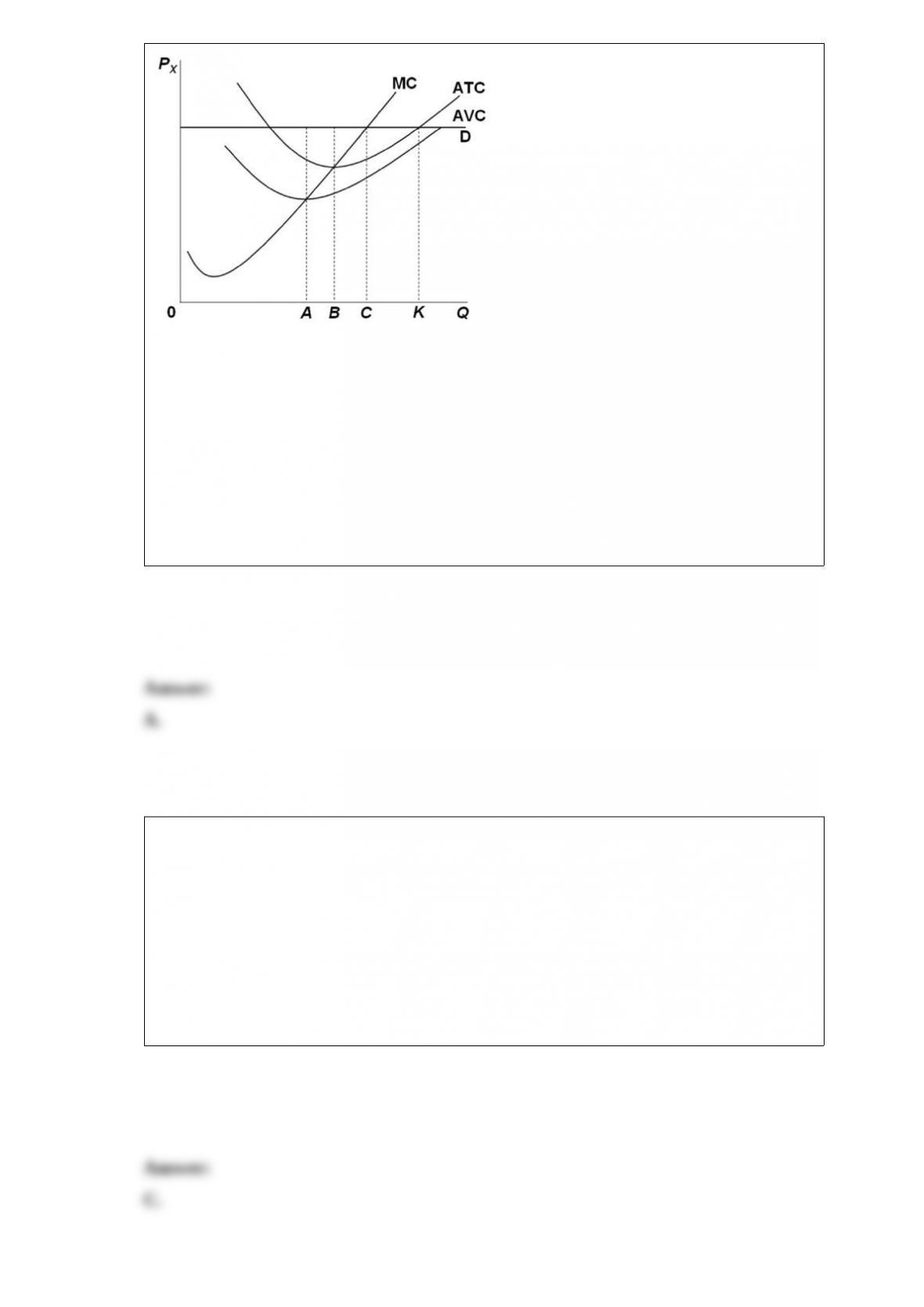
Refer to the above graph. The level of output at which this firm will shut down is:
A. 0A.
B. 0B.
C. 0C.
D. 0K.
Craft unions have typically been most effective in raising wage rates by:
A. increasing the supply of labor.
B. increasing the demand for labor.
C. decreasing the supply of labor.
D. decreasing the demand for labor.

If the Congress passes legislation to raise taxes to control demand-pull inflation, then
this would be an example of a(n):
A. political business cycle.
B. expansionary fiscal policy.
C. contractionary fiscal policy.
D. nondiscretionary fiscal policy.
Which of the following best reflects the ability-to-pay philosophy of taxation?
A. Taxes on residential property
B. Progressive income taxes
C. Excise taxes on gasoline
D. Excise taxes on coffee
A government payment in the form of goods and services rather than money is a(n):
A. earned income tax credit.
B. benefit reduction.

C. noncash transfer.
D. work incentive.
In the following question you are asked to determine, other things equal, the effects of a
given change in a determinant of demand or supply for product X upon (1) the demand
(D) for, or supply (S) of, X; (2) the equilibrium price (P) of X; and (3) the equilibrium
quantity (Q) of X.
An increase in the price of a product that is a close substitute for X will:
A. decrease D, increase P, and decrease Q.
B. increase D, increase P, and decrease Q.
C. increase D, increase P, and increase Q.
D. increase D, decrease P, and increase Q.
A binding price floor means that:
A. inflation is severe in this particular market.
B. sellers are artificially restricting supply to raise price.
C. government is imposing a maximum legal price that is typically below the
equilibrium price.
D. government is imposing a minimum legal price that is typically above the

equilibrium price.
Clipping coins created inflation because:
A. it decreased the stock of capital goods.
B. it increased the stock of capital goods.
C. it decreased the money supply.
D. it increased the money supply.