Which of the following was derived from an ancestral cyanobacterium?
A) chloroplast
B) mitochondrion
C) flagella
D) mitosome
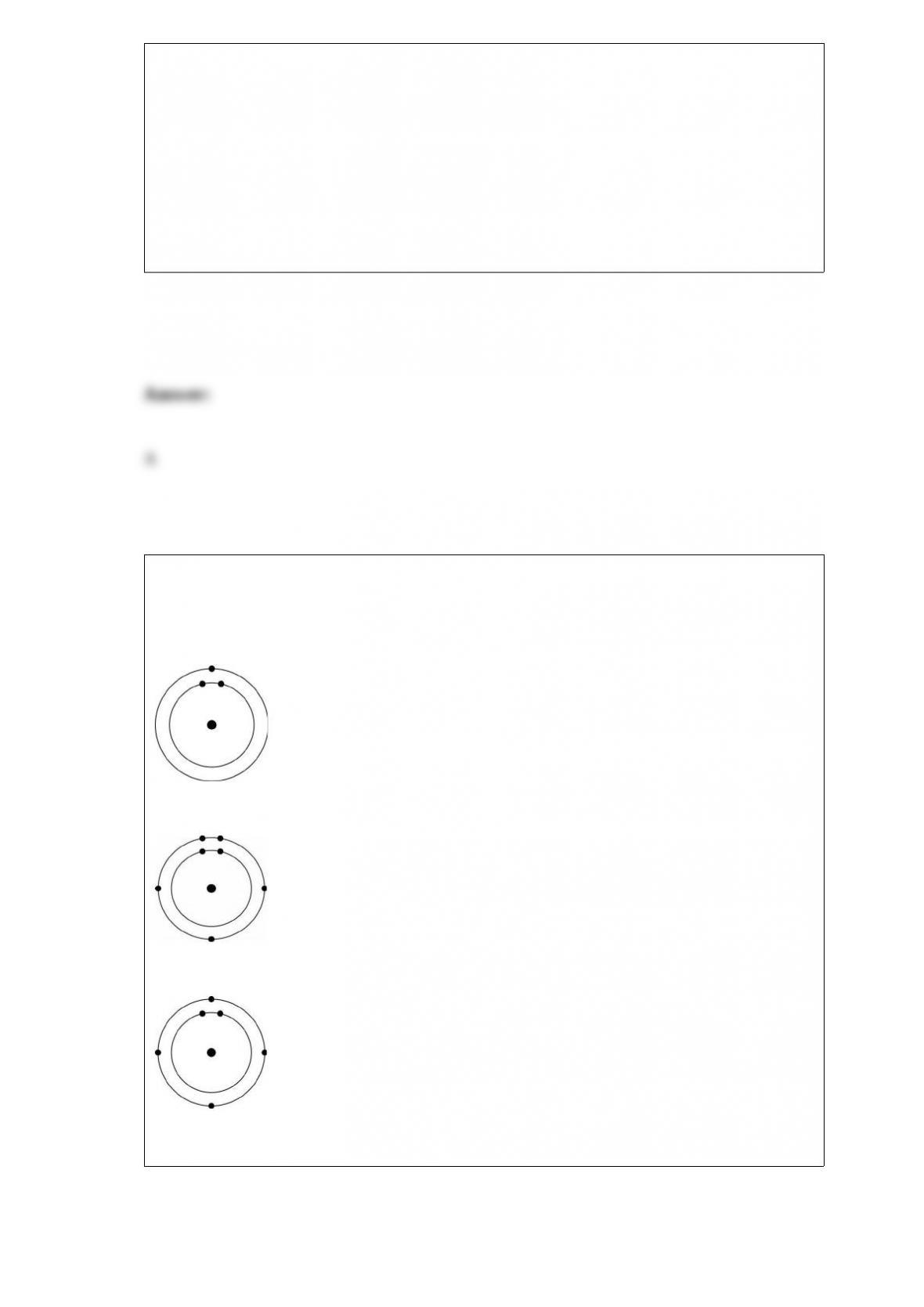
Which one of the atoms shown would be most likely to form an anion with a charge of
-1?
A)
B)
C)
D)

Which of the following is generally true about the current research regarding forest
fragmentation?
A) Fragmented forests promote biodiversity because they result in the combination of
forest-edge species and forest-interior species.
B) In fragmented forests, the number of forested-adapted species tend to decline and the
number of edge species tend to increase.
C) Fragmented forests are the goal of conservation biologists who design wildlife
preserves.
D) The disturbance of timber extraction causes the species diversity to increase because
of the new habitats created.
Which of the following evidence most strongly supports the common origin of all life
on Earth? All organisms _____.
A) require energy
B) use essentially the same genetic code

C) reproduce
D) show heritable variation
Spores and seeds have basically the same functiondispersalbut are vastly different
because _____.
A) spores have a protective outer covering; seeds do not
B) spores have an embryo; seeds do not
C) spores have stored nutrition; seeds do not
D) spores are unicellular; seeds are not
Use the following information to answer the questions below.
In the presence of oxygen, the three-carbon compound pyruvate can be catabolized in
the citric acid cycle. First, however, the pyruvate (1) loses a carbon, which is given off
as a molecule of CO2, (2) is oxidized to form a two-carbon compound called acetate,
and (3) is bonded to coenzyme A.
The three listed steps result in the formation of _____.

A) acetyl CoA, O2, and ATP
B) acetyl CoA, FADH2, and CO2
C) acetyl CoA, NADH, and CO2
D) acetyl CoA, NAD+, ATP, and CO2
Use the following information to answer the questions below.
A series of enzymes catalyze the reaction X → Y → Z → A. Product A binds to the
enzyme that converts X to Y at a position remote from its active site. This binding
decreases the activity of the enzyme.
With respect to the enzyme that converts X to Y, substance A functions as _____.
A) an allosteric inhibitor
B) the substrate
C) an intermediate
D) a competitive inhibitor
Why do histones bind tightly to DNA?

A) Histones are positively charged, and DNA is negatively charged.
B) Histones are negatively charged, and DNA is positively charged.
C) Both histones and DNA are strongly hydrophobic.
D) Histones are covalently linked to the DNA.
The restriction enzymes of bacteria protect the bacteria from successful attack by
bacteriophages, whose genomes can be degraded by the restriction enzymes. The
bacterial genomes are not vulnerable to these restriction enzymes because bacterial
DNA is methylated. This situation selects for bacteriophages whose genomes are also
methylated. As new strains of resistant bacteriophages become more prevalent, this in
turn selects for bacteria whose genomes are not methylated and whose restriction
enzymes instead degrade methylated DNA. Over the course of evolutionary time, what
should occur?
A) Methylated DNA should become fixed in the gene pools of bacterial species.
B) Nonmethylated DNA should become fixed in the gene pools of bacteriophages.
C) Methylated DNA should become fixed in the gene pools of bacteriophages.
D) Methylated and nonmethylated strains should be maintained among both bacteria
and bacteriophages, with ratios that vary over time.
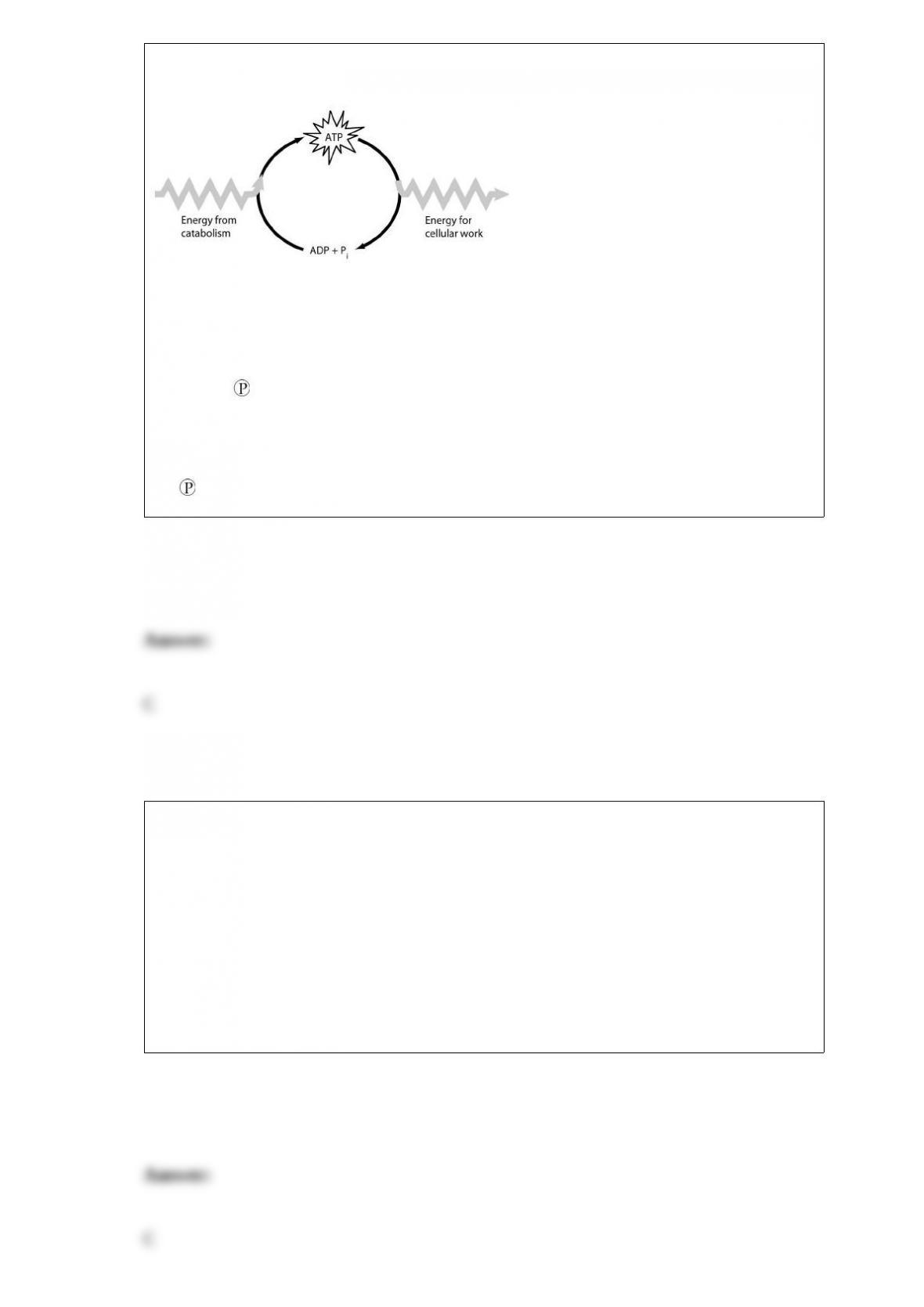
Which of the following is the most correct interpretation of the figure?
A) Energy from catabolism can be used directly for performing cellular work.
B) ADP + i are a set of molecules that store energy for catabolism.
C) ATP is a molecule that acts as an intermediary to store energy for cellular work.
D) i acts as a shuttle molecule to move energy from ATP to ADP.
Some human infants, especially those born prematurely, suffer serious respiratory
failure because of _____.
A) the sudden change from the uterine environment to the air
B) the overproduction of surfactants
C) lung collapse due to inadequate production of surfactant
D) mutations in the genes involved in lung formation
The largest unit within which gene flow can readily occur is _____.
A) a population
B) a species
C) the entire range of a genus
D) the hybrid zone
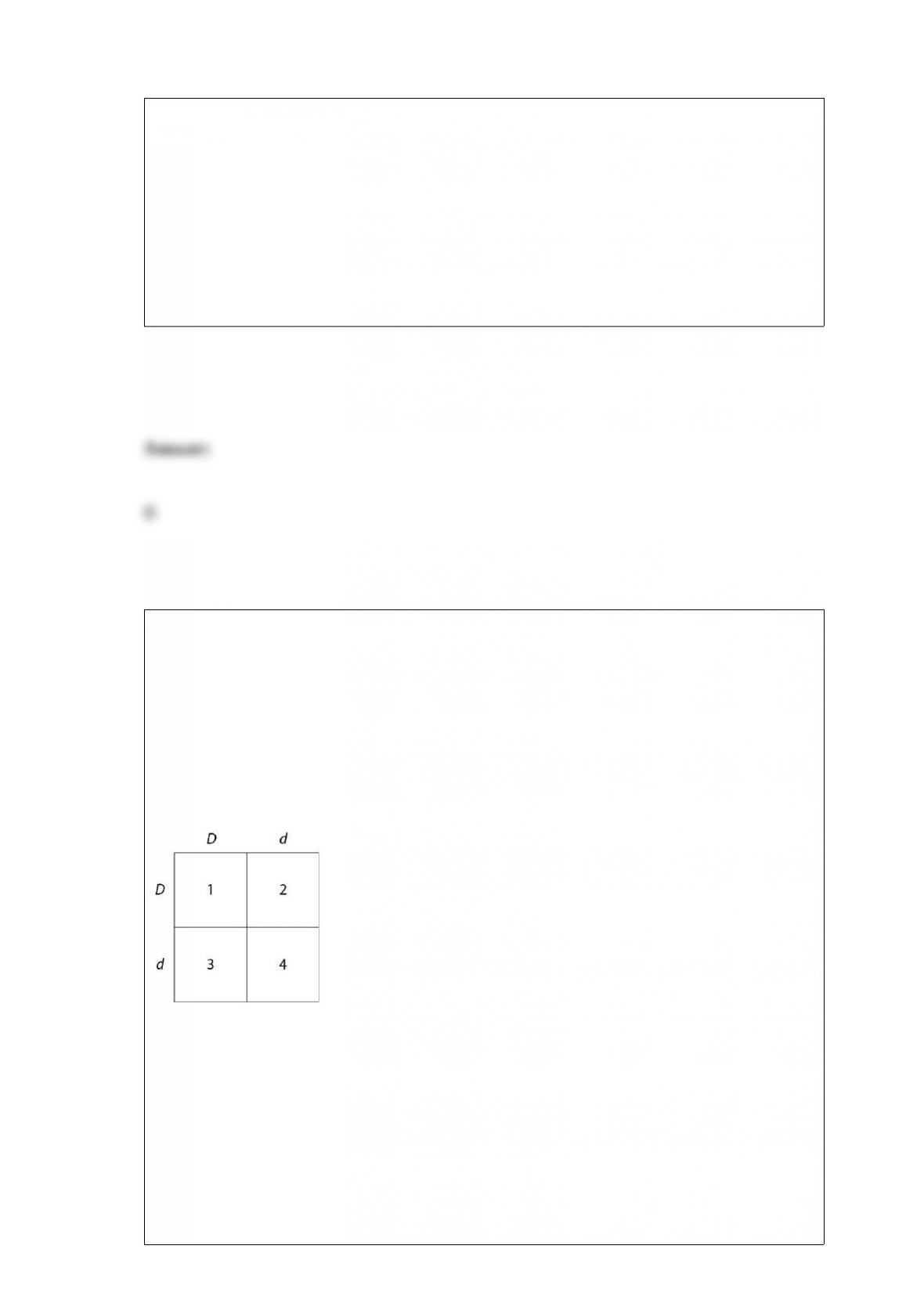
Use the figure and the following description to answer the question(s) below.
In a particular plant, leaf color is controlled by gene locus D. Plants with at least one
allele D have dark green leaves, and plants with the homozygous recessive dd genotype
have light green leaves. A true-breeding, dark-leaved plant is crossed with a
light-leaved one, and the F1 offspring is allowed to self-pollinate. The predicted
outcome of the F2 is diagrammed in the Punnett square shown in the figure, where 1, 2,
3, and 4 represent the genotypes corresponding to each box within the square.
Which of the boxes marked 1-4 correspond to plants with a heterozygous genotype?
A) 1
B) 1, 2, and 3
C) 2 and 3
D) 2, 3, and 4

The water lost during transpiration is a side effect of the plant’s exchange of gases.
However, the plant derives some benefit from this water loss in the form of _____.
A) increased turgor and increased growth
B) mineral transport and increased growth
C) evaporative cooling and increased turgor
D) evaporative cooling and mineral transport
The middle ear converts _____.
A) air pressure waves to fluid pressure waves
B) fluid pressure waves to air pressure waves
C) air pressure waves to nerve impulses
D) fluid pressure waves to nerve impulses
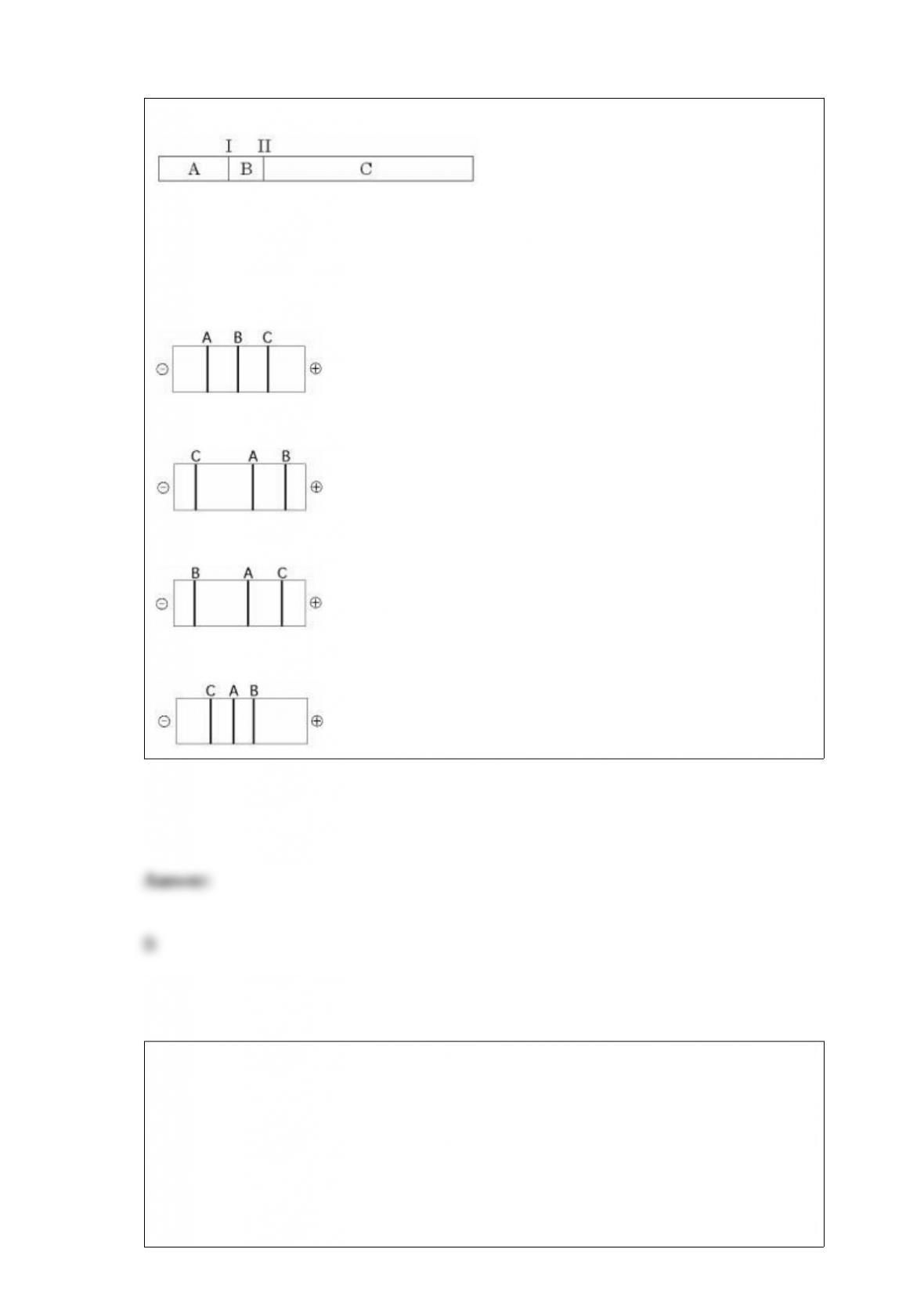
Use the figure below to answer the following question.
The segment of DNA shown in the figure above has restriction sites I and II, which
create restriction fragments A, B, and C. Which of the gels produced by electrophoresis
shown below best represents the separation and identity of these fragments?
A)
B)
C)
D)
If you were to view a sample of animal tissue under a light microscope and notice an
extensive extracellular matrix surrounding a tissue, which tissue type would you most
suspect?
A) connective
B) epithelial

C) nervous
D) striated muscle
Which type of mutant would be most likely to produce a bushier phenotype?
A) auxin overproducer
B) strigolactone overproducer
C) cytokinin underproducer
D) strigolactone underproducer
The following figure depicts the outline of a large fairy ring that has appeared overnight
in an open meadow, as viewed from above. The fairy ring represents the furthest
advance of this mycelium through the soil. Locations A-D are all 0.5 meters below the
soil surface.

Assume that all four locations are 0.5 meters above the surface. On a breezy day with
prevailing winds blowing from left to right, where should one expect to find the highest
concentration of free basidiospores in an air sample?
A) A
B) B
C) C
D) D
Use the following diagram showing the spread of the cattle egret, Bubulcus ibis, since
its arrival in the New World, to answer the question below.
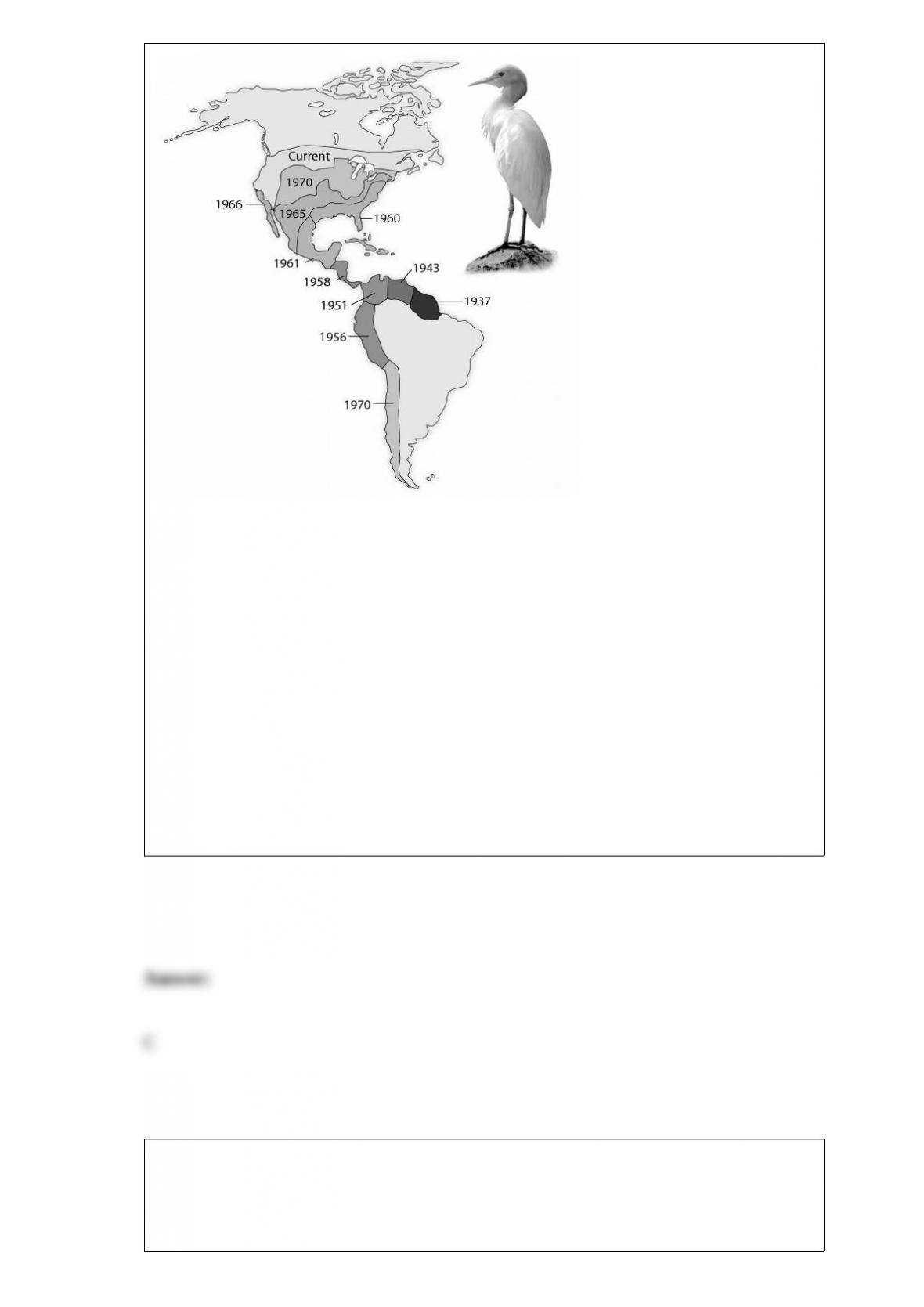
The range of cattle egrets has expanded between 1937 and today. How would an
ecologist likely explain the expansion of the cattle egret?
A) Climatic factors, such as temperature and precipitation, provide a suitable habitat for
cattle egrets.
B) There are no predators for cattle egrets in the New World, so they continue to expand
their range.
C) A habitat left unoccupied by native herons and egrets met the biotic and abiotic
requirements of the cattle egret transplants and their descendants.
D) The first egrets to colonize South America evolved into a new species capable of
competing with the native species of herons and egrets.
If ATP production in a human kidney was suddenly halted, urine production would
_____.
A) decrease, and the urine would be hypoosmotic compared to plasma

B) increase, and the urine would be isoosmotic compared to plasma
C) increase, and the urine would be hyperosmotic compared to plasma
D) decrease, and the urine would be isoosmotic compared to plasma
Over human history, which process has been most important in improving the features
of plants that have long been used by humans as staple foods?
A) genetic engineering
B) artificial selection
C) sexual selection
D) pesticide and herbicide application
Countercurrent exchange is evident in the flow of _____.
A) water across the gills of a fish and the blood within those gills
B) blood in the dorsal vessel of an insect and that of air within its tracheae
C) air within the primary bronchi of a human and the blood within the pulmonary veins
D) water across the skin of a frog and the blood flow within the ventricle of its heart

According to the concept of punctuated equilibrium, the ‘sudden” appearance of a new
species in the fossil record means that _____.
A) the species is now extinct
B) speciation occurred in one generation
C) speciation occurred rapidly in geologic time
D) the species will consequently have a relatively short existence, compared with other
species
A salamander relies on hydrogen bonding to stick to various surfaces. Therefore, a
salamander would have the greatest difficulty clinging to a _____.
A) slightly damp surface
B) surface of hydrocarbons
C) surface of mostly carbon-oxygen bonds
D) surface of mostly carbon-nitrogen bonds

In human and many other eukaryotic species’ cells, the nuclear membrane has to
disappear to permit _____.
A) cytokinesis
B) the attachment of microtubules to kinetochores
C) the splitting of the centrosomes
D) the disassembly of the nucleolus
Which of the following are products of the light reactions of photosynthesis that are
utilized in the Calvin cycle?
A) CO2 and glucose
B) H2O and O2
C) ADP, i, and NADP+
D) ATP and NADPH

The R-group, or side chain, of the amino acid serine is -CH2-OH. The R-group, or side
chain, of the amino acid leucine is -CH2-CH-(CH3)2. Where would you expect to find
these amino acids in a globular protein in aqueous solution?
A) Serine would be in the interior, and leucine would be on the exterior of the globular
protein.
B) Leucine would be in the interior, and serine would be on the exterior of the globular
protein.
C) Serine and leucine would both be in the interior of the globular protein.
D) Serine and leucine would both be on the exterior of the globular protein.
A region of the canary forebrain shrinks during the nonbreeding season and enlarges
when breeding season begins. This change is probably associated with the annual
_____.
A) addition of new syllables to a canary’s song repertoire
B) crystallization of subsong into adult songs
C) renewal of mating and nest-building behaviors
D) elimination of the memorized template for songs sung the previous year
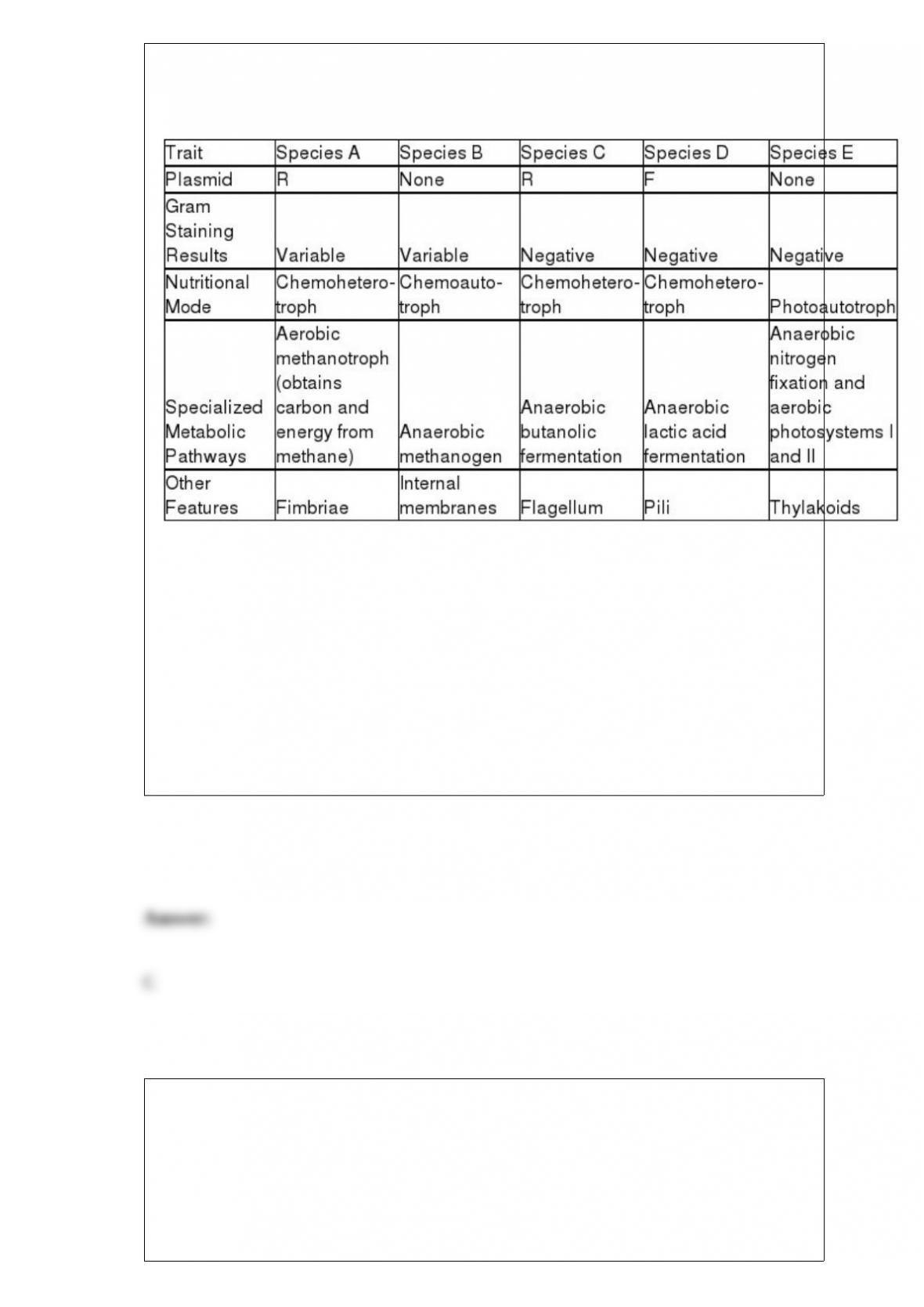
The following table depicts characteristics of five prokaryotic species (A-E). Use the
information in the table to answer the question(s) below
How many of these species probably have a cell wall that consists partly of an outer
membrane of lipopolysaccharide?
A) only one species
B) two species
C) three species
D) four species
Use the following information to answer the question(s) below.
The Brazil nut tree, Bertholletia excels (n = 17), is native to tropical rain forests of
South America. It is a hardwood tree that can grow to over 50 meters tall, is a source of
high-quality lumber, and is a favorite nesting site for harpy eagles. As the rainy season
ends, tough-walled fruits, each containing 8-25 seeds (Brazil nuts), fall to the forest
floor. Brazil nuts are composed primarily of endosperm. About $50 million worth of

nuts are harvested each year. Scientists have discovered that the pale yellow flowers of
Brazil nut trees cannot fertilize themselves and admit only female orchid bees as
pollinators. The agouti (Dasyprocta spp.), a cat-sized rodent, is the only animal with
teeth strong enough to crack the hard wall of Brazil nut fruits. It typically eats some of
the seeds, buries others, and leaves still others inside the fruit, which moisture can now
enter. The uneaten seeds may subsequently germinate.
Animals that consume Brazil nuts derive nutrition mostly from tissue whose nuclei
have how many chromosomes?
A) 17
B) 34
C) 51
D) 68
An earthquake decimates a ground-squirrel population, killing 98% of the squirrels. The
surviving population happens to have broader stripes, on average, than the initial
population. If broadness of stripes is genetically determined, what effect has the
ground-squirrel population experienced during the earthquake?
A) directional selection
B) disruptive selection
C) a founder event
D) a genetic bottleneck
Why is terrestrial productivity higher in equatorial climates?
A) Productivity increases with temperature.
B) Productivity increases with water availability.
C) Productivity increases with available sunlight.
D) The answer is most likely a combination of the other responses.
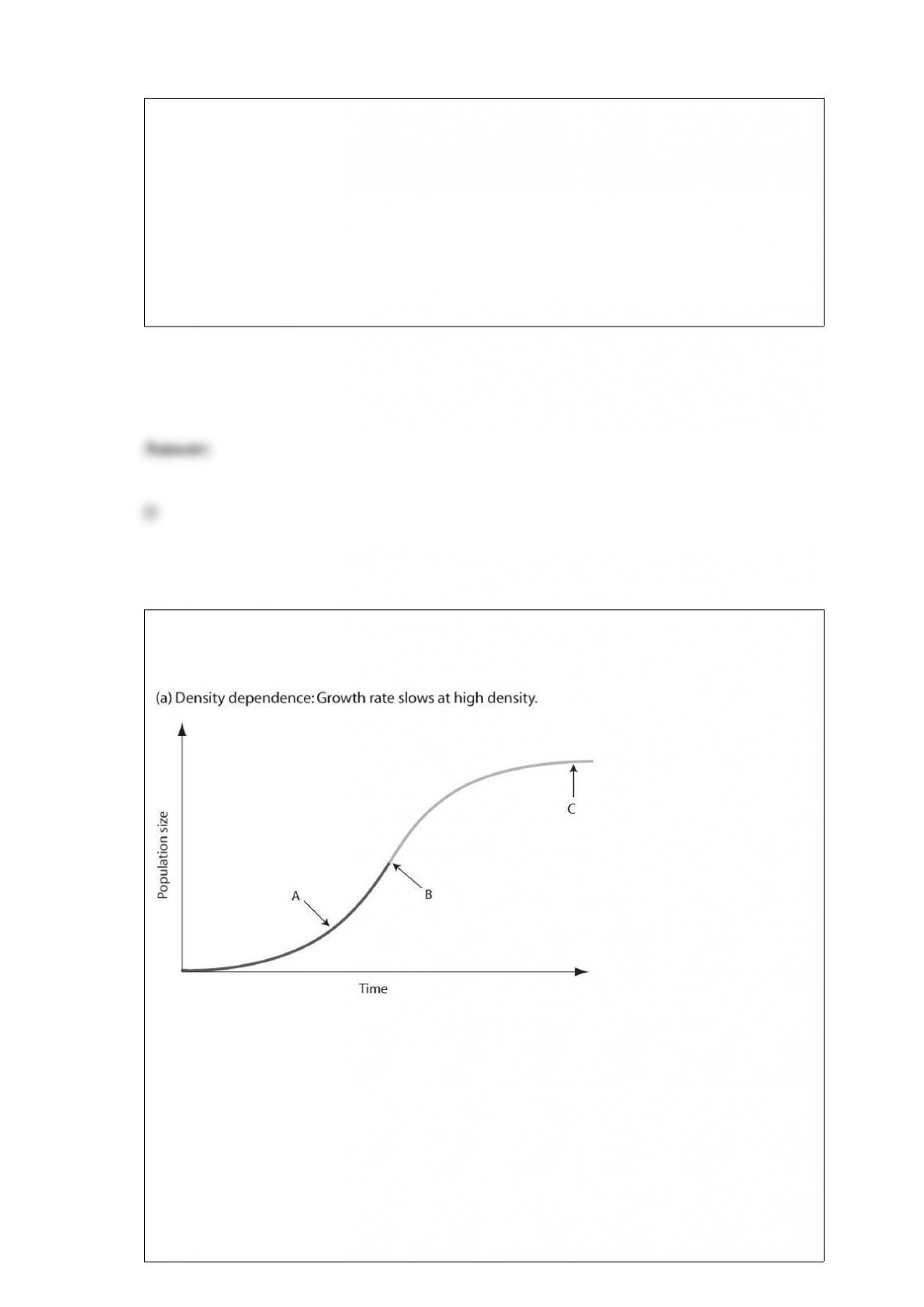
In the figure above, which of the arrows represents the carrying capacity?
A) arrow A
B) arrow B
C) arrow C
D) Carrying capacity cannot be found in the figure because species under
density-dependent control never reach carrying capacity.

Which of the following best summarizes the relationship between dehydration reactions
and hydrolysis?
A) Dehydration reactions assemble polymers; hydrolysis reactions break polymers
apart.
B) Dehydration reactions eliminate water from membranes; hydrolysis reactions add
water to membranes.
C) Dehydration reactions and hydrolysis reactions assemble polymers from monomers.
D) Hydrolysis reactions create polymers and dehydration reactions create monomers.