Formin nucleates the growth of parallel actin bundles in the cell. Additionally, myosin
motor activity is positively regulated by phosphorylation. The monomeric G protein
RhoA is important in cytokinesis, because it directly or indirectly …
A.activates formins and inactivates myosin light-chain phosphatase.
B.inactivates formins and activates myosin light-chain kinases.
C.activates formins as well as myosin light-chain phosphatases.
D.inactivates formins as well as myosin light-chain kinases.
E.None of the above.
Which of the following is NOT correct regarding long and short interspersed nuclear
elements?
A.Each of them encodes a reverse transcriptase.
B.They rely on the cellular transcription machinery to produce their RNA transcript.
C.They use one of the strands in the target DNA as a primer to synthesize their DNA.
D.Together, they make up about 40% of our genome.
E.They can move into new regions of genome that do not have any homology with their
DNA.
A cellular enzyme catalyzes the catabolic reaction shown below. Its coenzyme is shown
in the box. Which of the following is correct regarding this reaction?
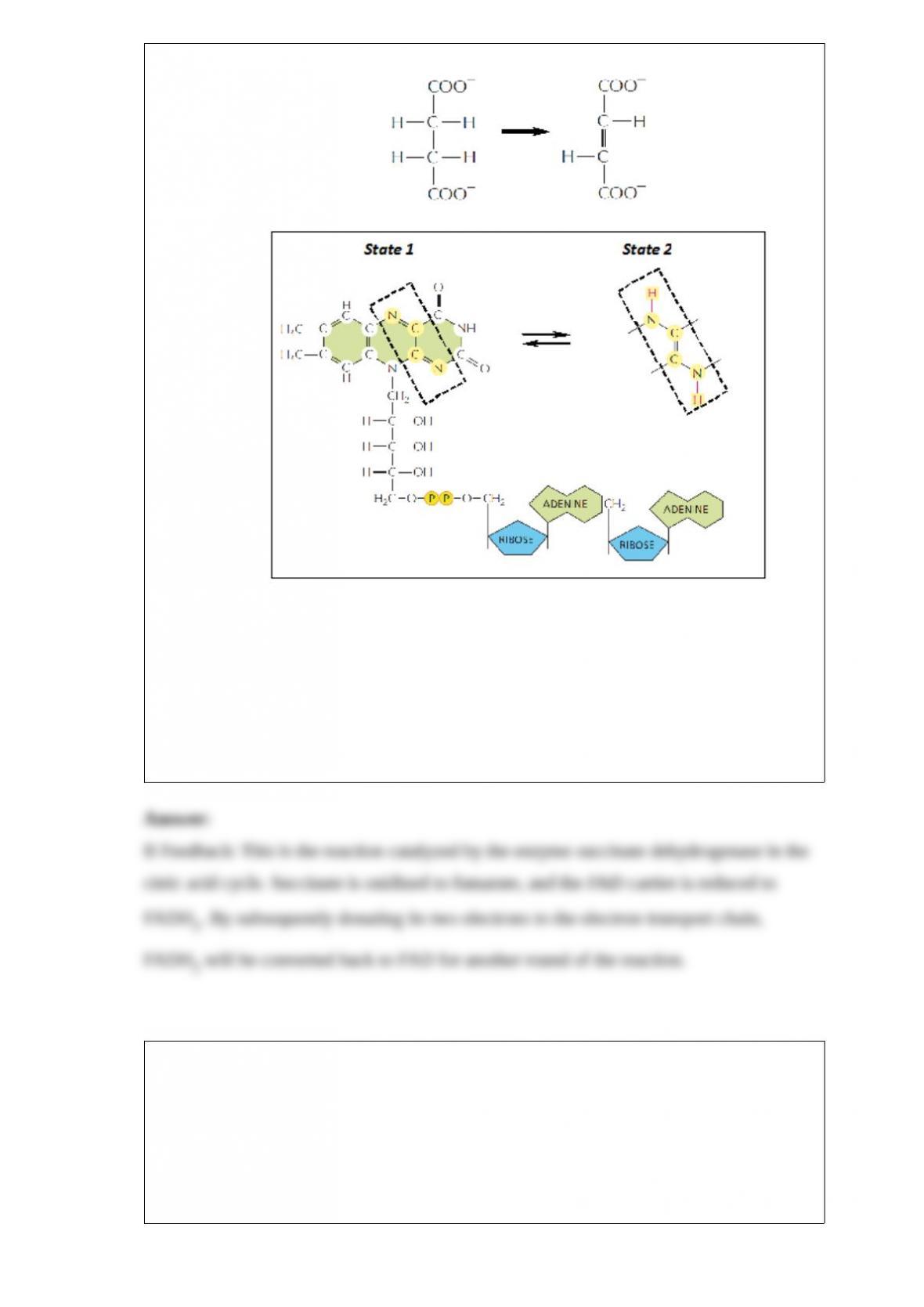
A.The substrate is reduced in this reaction and the coenzyme is converted from state 1
to state 2
B.The substrate is oxidized in this reaction and the coenzyme is converted from state 1
to state 2
C.The substrate is reduced in this reaction and the coenzyme is converted from state 2
to state 1
D.The substrate is oxidized in this reaction and the coenzyme is converted from state 2
to state 1
Sort the following events to reflect the order in which they occur for formation of new
blood capillaries in conditions of insufficient oxygen supply. Your answer would be a
four-letter string composed of letters A to D only, e.g. DACB.
(A)New tip cells are formed on the sides of nearby capillaries.
(B)Stalk cells divide and hollow out to form tubes.
(C)VEGF is secreted by the cell.
(D)The level of intracellular HIF1± increases.
The position effect variegation (PEV) phenotype described in this chapter can be used
to identify new genes that regulate heterochromatin formation. For instance, strains of
Drosophila melanogaster with the White variegation phenotype have been subjected to
mutagenesis to screen for dominant mutations (in other genes) that either enhance or
suppress PEV, meaning the mutations result in either lower or higher red pigment
production, respectively. Which of the following mutations is expected to be an
enhancer of variegation?
A.A mutation that results in the loss of function of the fly’s HP1 (heterochromatin
protein 1) gene.
B.A loss-of-function mutation in a gene encoding a histone deacetylase that
deacetylates lysine 9 on histone H3.
C.A gain-of-function mutation in a gene encoding a histone methyl transferase that
trimethylates lysine 9 on histone H3, resulting in a hyperactive form of the enzyme.
D.A gain-of-function mutation in a gene encoding a histone acetyl transferase that
normally acetylates lysine 9 on histone H3, resulting in higher expression of the protein.
Cactus is a maternal-effect gene coding for an inhibitory protein in the Drosophila Toll
signaling pathway that binds to Dorsal in the cytosol and keeps it from nuclear entry.
Would you expect maternal loss-of-function mutations in Cactus to give rise to
dorsalized or ventralized embryos? What about loss-of-function mutations in
Decapentaplegic (Dpp)?
A.Dorsalized; dorsalized
B.Dorsalized; ventralized
C.Ventralized; dorsalized
D.Ventralized; ventralized
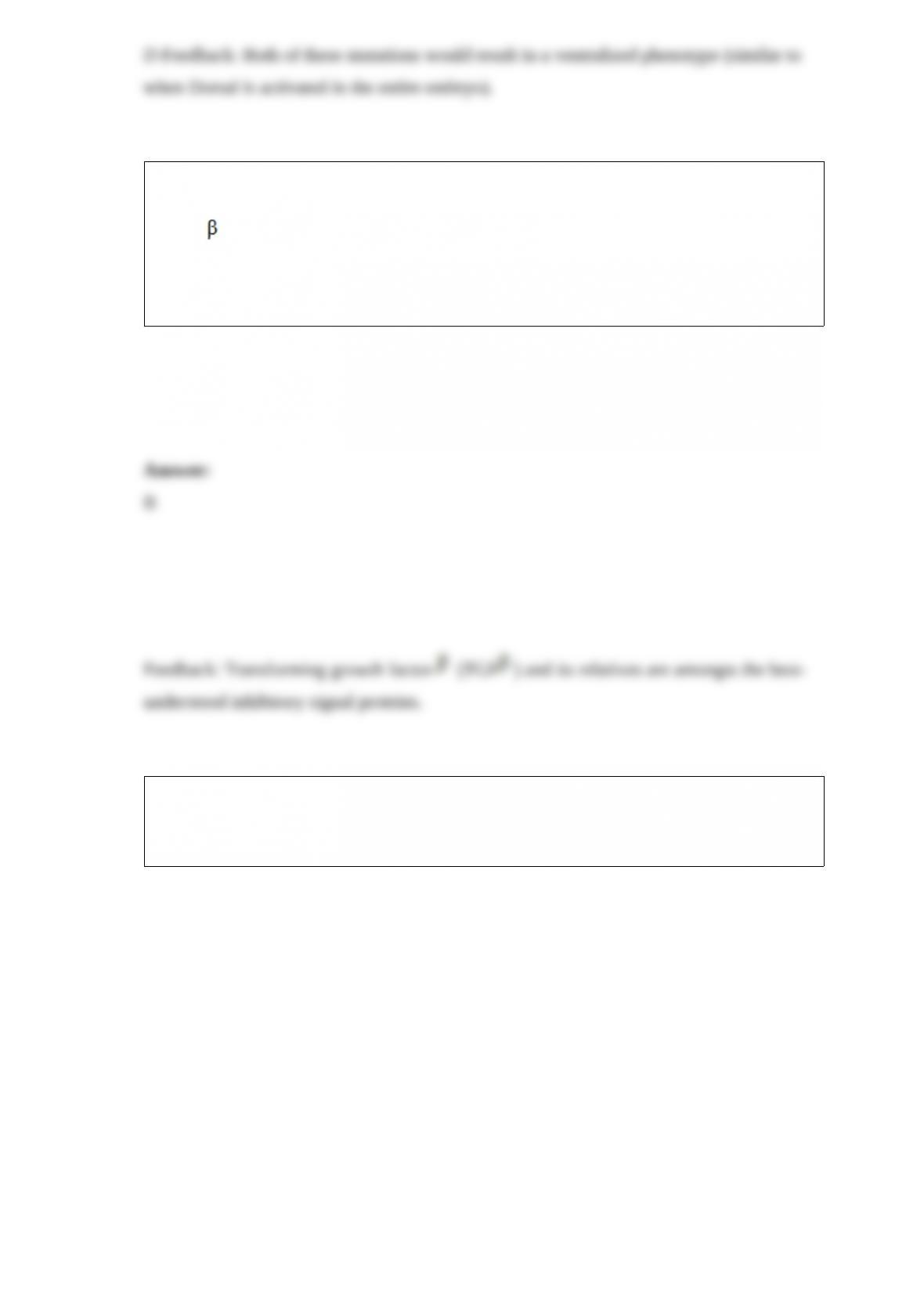
Which of the following is an inhibitory extracellular signal for cell proliferation?
A.EGF
B.TGF
C.Erythropoietin
D.IGF
E.PDGF
In the following schematic diagram of a simple signaling pathway, protein Z regulates
the activity of protein X, which is an upstream protein kinase, through a negative
feedback loop. Which of the following better describes protein Z?
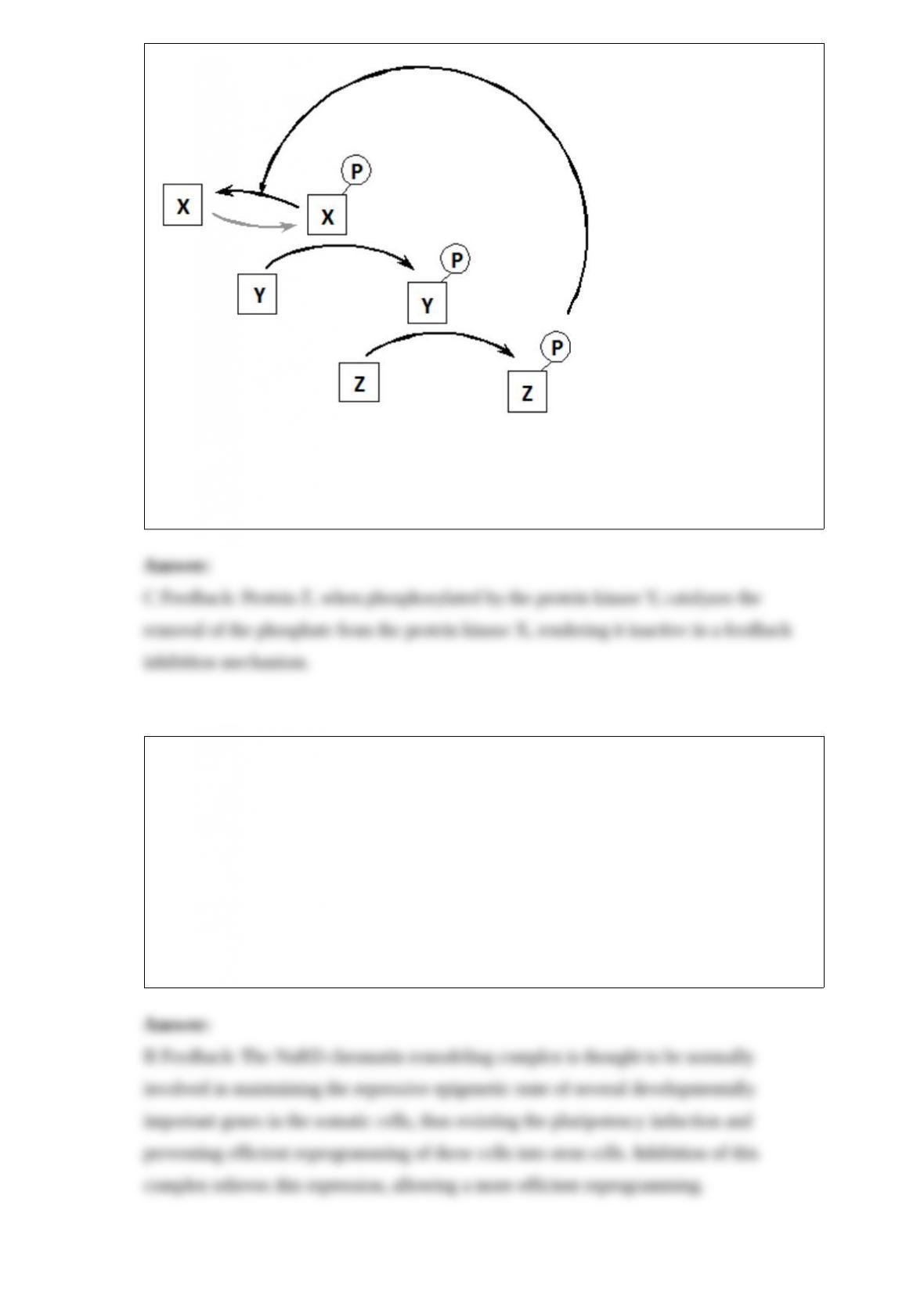
A.It is a protein kinase that is activated by phosphorylation.
B.It is a protein kinase that is inactivated by phosphorylation.
C.It is a protein phosphatase that is activated by phosphorylation.
D.It is a protein phosphatase that is inactivated by phosphorylation.
It has been shown that inhibition of a key chromatin remodeling complex known as
NuRD, by deleting one of its subunits, can result in a significant increase in the
efficiency of reprogramming of somatic cells into pluripotent stem cells. The
reprogramming is normally done by the induced expression of a battery of transcription
factors in the somatic cells, but is typically not very efficient. Such an observation
suggests that the NuRD complex is normally involved in ___
A.erasing the epigenetic memory in somatic cells.
B.maintaining the epigenetic memory in somatic cells.
C.preventing DNA replication.
D.formation of extended loops from chromosome territories.
Many amino acids in our diet are absorbed via the transcellular transport pathway by
the intestinal epithelial cells. This process requires ATP hydrolysis by ___
A.the Na+-amino acid symporters in the apical domain of the plasma membrane.
B.the Na+-amino acid antiporters in the apical domain of the plasma membrane.
C.the Na+-K+ pumps in the basal and lateral domains of the plasma membrane.
D.the amino acid carriers in the basal domain of the plasma membrane.
E.F-type ATPases in the apical domain of the plasma membrane.
Consider the binding of a transcription regulatory protein (A) to a promoter DNA (p)
according to the following scheme.
At steady state, which of the following formulae correctly yields the bound promoter
fraction, i.e. [A:p]/([A:p] + [p])? The association constant is designated as K.
A.[A]/(K + [A])
B.K[A]/(1 + K[A])
C.K[A]/(K + [A])
D.[A]/(1 + K[A])
At the replication fork, the template for the lagging strand is thought to loop around.
This looping would allow the lagging-strand polymerase to move along with the rest of
the replication fork instead of in the opposite direction. The single-strand part of the
loop is bound by the single-strand DNA-binding (SSB) proteins. As each Okazaki
fragment is synthesized toward completion, how does the size of the loop change? What
about the size of the SSB-bound part of the loop?
A.Increases; increases.
B.Increases; decreases.
C.Decreases; increases.
D.Decreases; decreases.
E.Decreases; does not change.
Plants and animals use different developmental strategies and have very different ways
of life. In which of the following fundamental cellular processes during development
are plants most different to animals?
A.Cell proliferation
B.Cell-cell interactions
C.Cell specialization
D.Cell movement
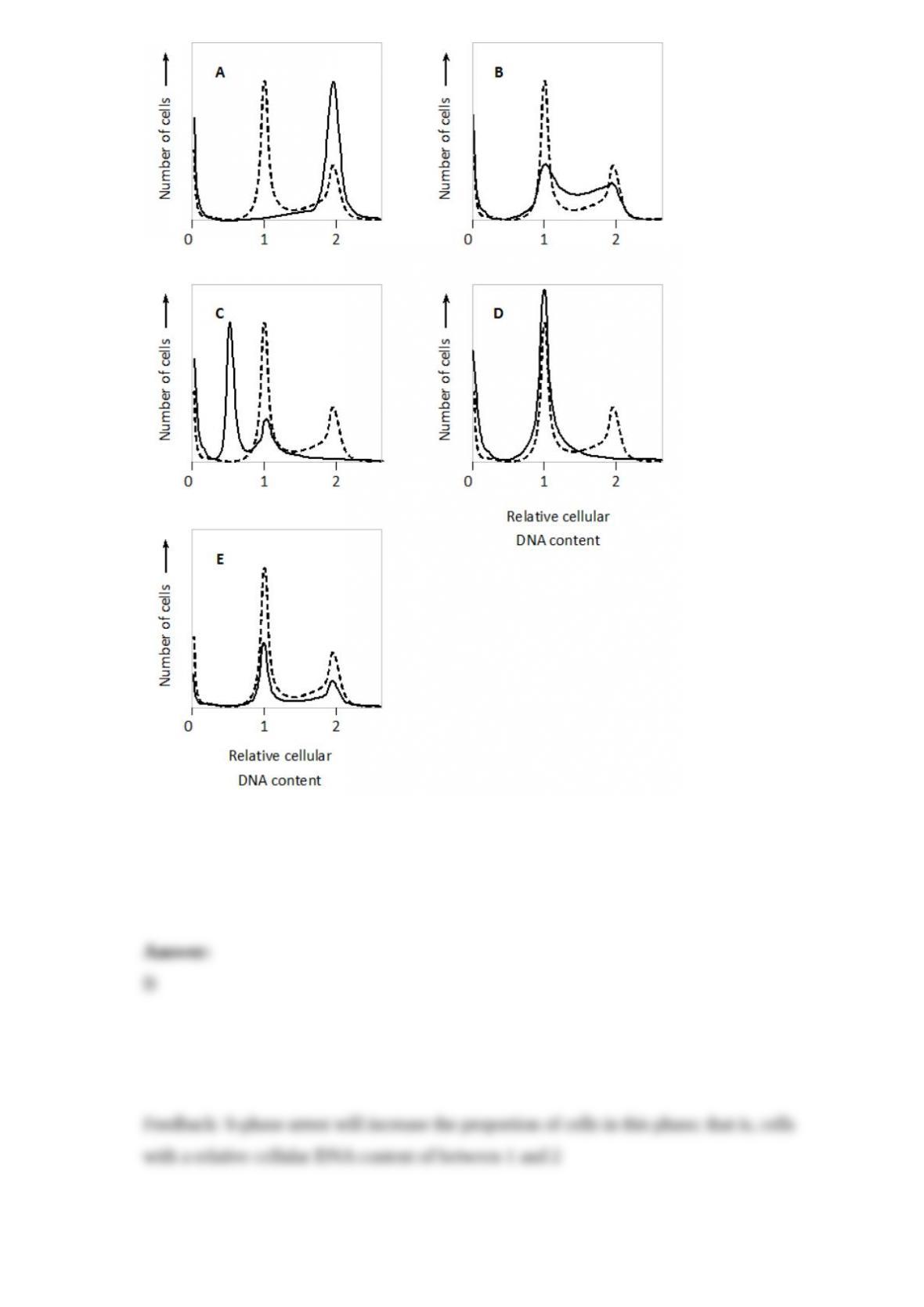
Resveratrol is a natural compound found in red grapes (and red wine) and is thought to
have beneficial effects in mammals, such as preventing tumor growth and delaying
age-related diseases. In vitro, resveratrol and its derivatives have been shown to cause
cell-cycle arrest in S phase and induce apoptosis. You have analyzed the DNA content
of cultured cells in the presence and absence of these drugs using
fluorescence-activated cell sorting. Compared with control cells (dashed line), which of
the following curves do you think better represents the DNA content of cells treated
with these compounds?
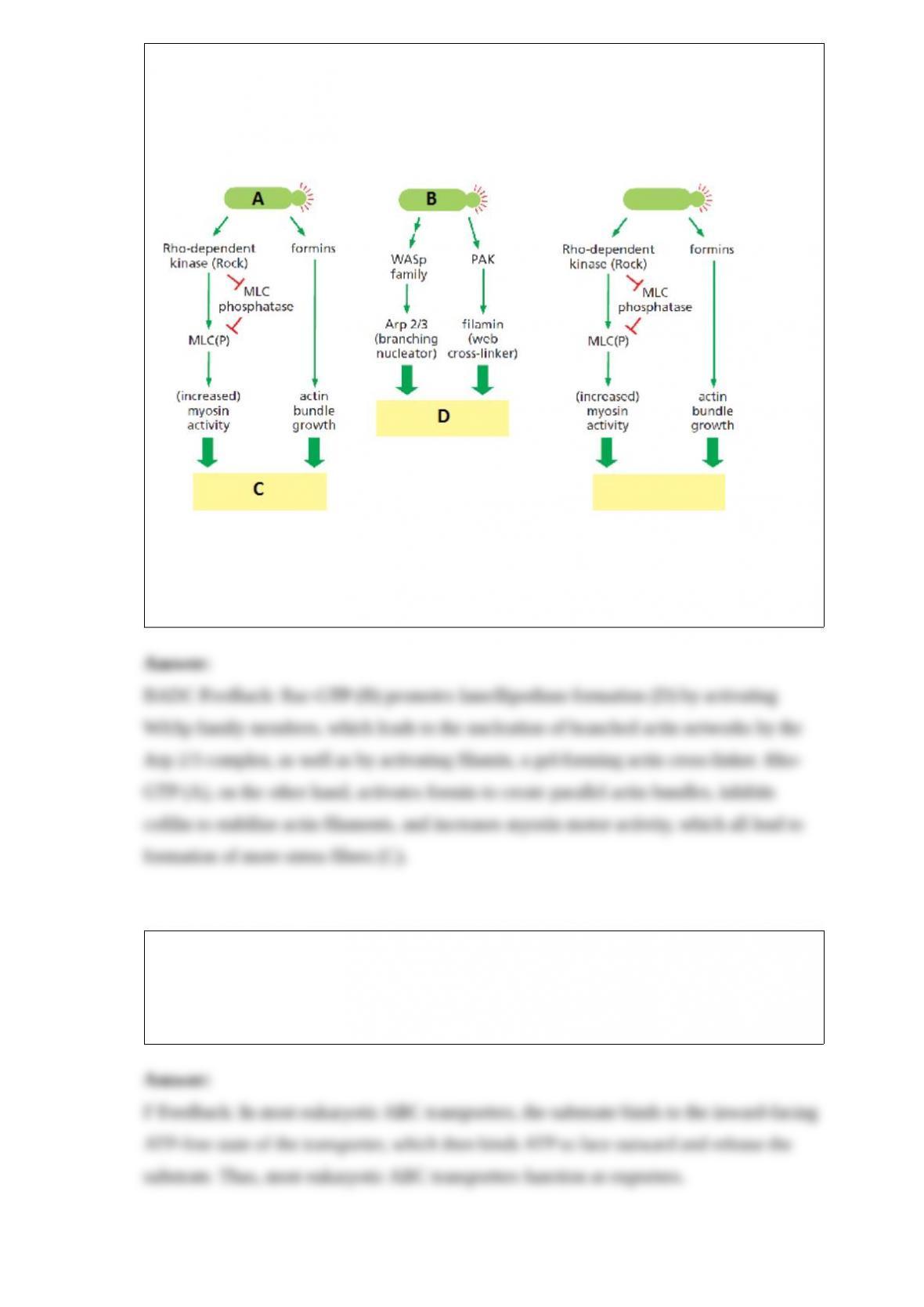
Considering the diagram below, which summarizes two signaling pathways initiated by
activated GTPases of the Rho family, what letter (A to D) corresponds to each of the
following? Your answer would be a four-letter string composed of letters A to D only,
e.g. ABCD.
( )Rac-GTP
( )Rho-GTP
( )Lamellipodia formation
( )Stress-fiber formation
Most eukaryotic ABC transporters are involved in exporting small molecules from the
cytosol. In this subset of the ABC transporters, does the small molecule bind better to
the ATP-bound (B) or the ATP-free (F) transporter? Write down your answer as B or F.
Hint: The ATP-bound transporter “faces outward.”
Indicate true (T) and false (F) statements below regarding cytokinesis in animal cells.
Your answer would be a four-letter string composed of letters T and F only, e.g. TFFF.
( )The force for cytokinesis is generated by kinesin motors on microtubule bundles that
form the contractile ring.
( )As the contractile ring constricts, its thickness increases to keep a constant volume.
( )The midbody forms from bundles of actin and myosin II.
( )Local activation of Ran GTPase triggers the assembly and contraction of the
contractile ring.
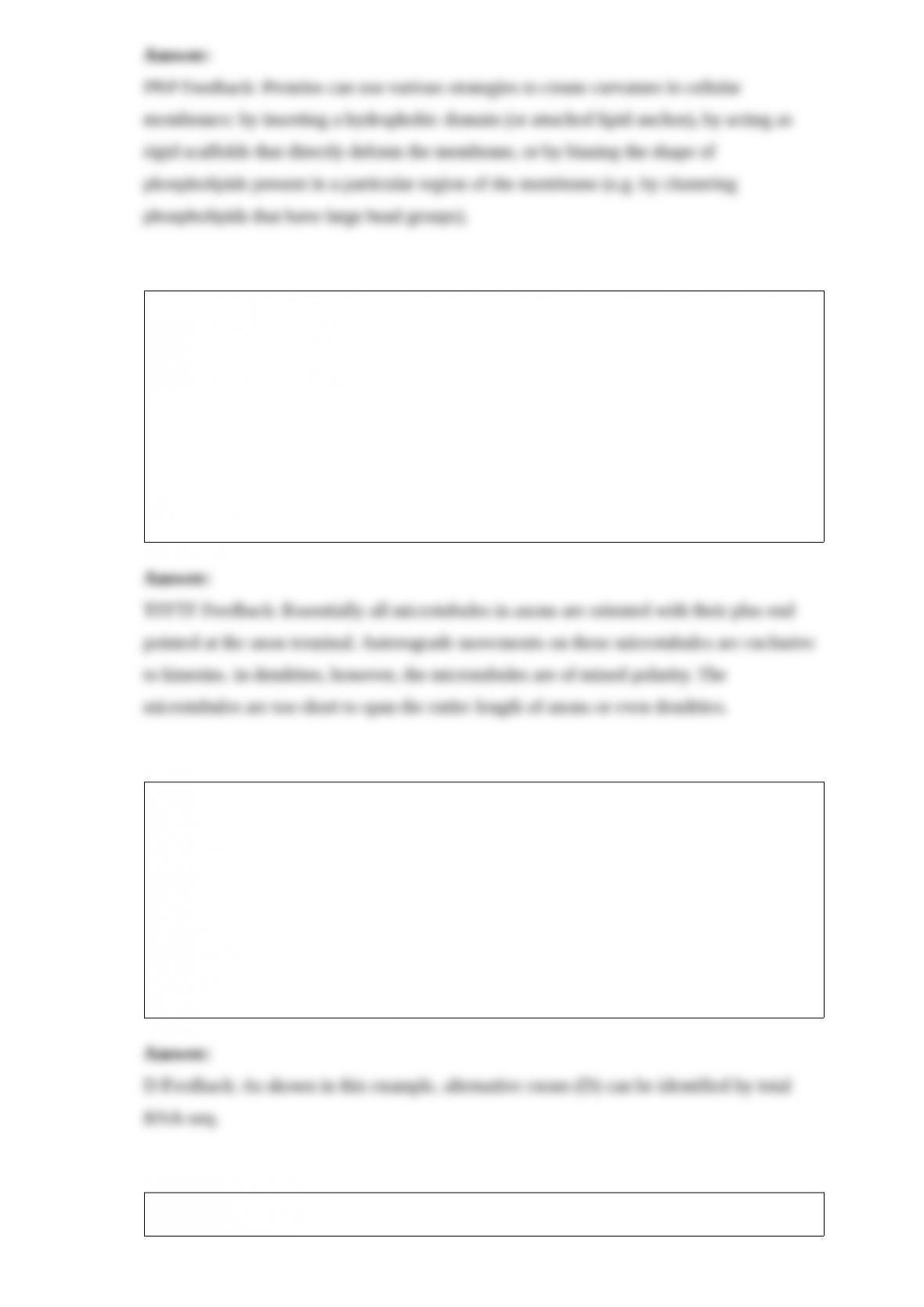
In the schematic drawing below, a protein is present on one side of a membrane in a
high-enough quantity to induce curvature in this region of the membrane. In each of the
following scenarios, indicate whether the protein would induce positive (P) or negative
(N) curvature in the membrane. Your answer would be a three-letter string composed of
letters P and N only, e.g. PPP.
( )The protein inserts a hydrophobic domain into the membrane leaflet that is facing it.
( )The protein is a phospholipase that cleaves the head group in specific phospholipids.
( )The protein binds cooperatively to multiple phospholipids with very large head
groups.
Indicate true (T) and false (F) statements below regarding the microtubule cytoskeleton
in neurons. Your answer would be a five-letter string composed of letters T and F only,
e.g. TTFFF.
( )All microtubules in an axon are normally oriented in the same direction.
( )All microtubules in a dendrite are normally oriented in the same direction.
( )Each microtubule in an axon has one end at the cell body and its other end at the axon
terminal.
( )Anterograde transport in axons is exclusively carried out by kinesins.
( )Anterograde transport (toward the tip) in dendrites is exclusively carried out by
kinesins.
A protein made from an expression vector can be so plentiful as to account for about
10% of total cell protein. You would like to produce a protein of interest that can be
expressed at such a level in Escherichia coli. You plan to induce the expression and
collect the cells when cell density in the culture medium reaches about 109 cells/mL.
Proteins make up about 15% of total cell weight, and each E. coli cell typically has a
mass of about 1 picogram (i.e. 10-12 g). Assuming that almost 50% of the protein is lost
during purification, how many liters of culture should you prepare in order to obtain 15
milligrams of pure protein? Write down your answer in liters, with two decimal places
and without units, e.g. 15.00.
Sort the following schematic diagrams (A to F) to reflect the order of events in a typical
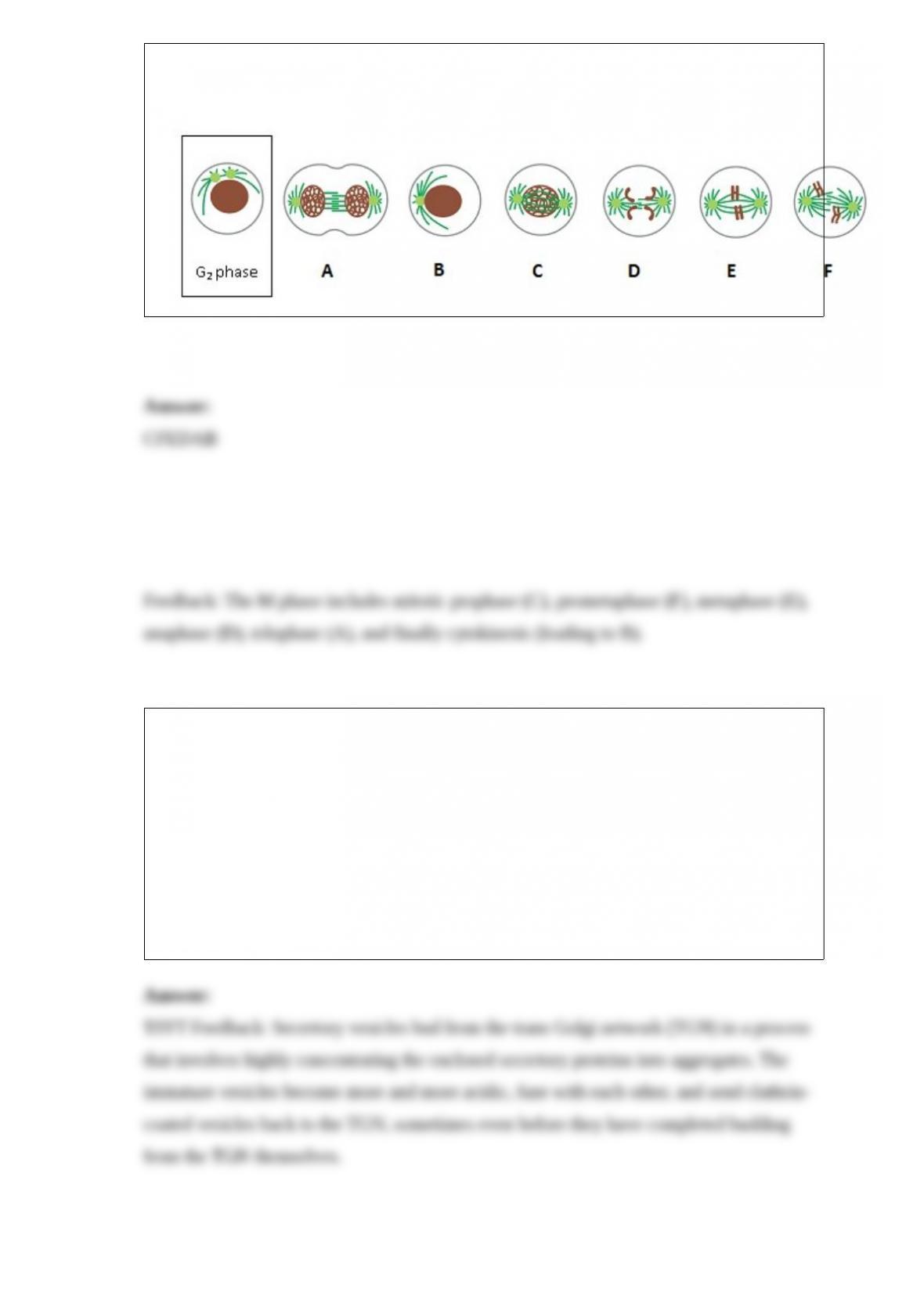
eukaryotic M phase. An interphase cell in G2 phase is drawn on the left for comparison.
Your answer would be a six-letter string composed of letters A to F only, e.g. BCEADF.
Indicate true (T) and false (F) statements below regarding secretory vesicles. Your
answer would be a four-letter string composed of letters T and F only, e.g. TTTF.
( )Proteins destined for secretory vesicles (for regulated secretion) often aggregate in
the lumen of the TGN.
( )The lumen of secretory vesicles is generally less acidic than the lumen of the TGN
from which they originate.
( )A secretory vesicle starts recycling Golgi components only after it has budded from
the TGN and its coat proteins have disassembled.
( )Secretory vesicles recycle Golgi components to the TGN in small clathrin-coated
vesicles.