1) which is not true about the electrical charges in chemistry?
a. protons carry a positive charge.
b. in an atom, the number of protons and neutrons must be equal.
c. an atom is neutral when the positive and negative charges balance.
d. an ion contains one or more positive or negative charges.
incorrect
2) which of the following features are found in the lobe-finned fish but are not present
in the cartilaginous fish?
a. bony skeletons and lungs
b. paired fins and a bony skeleton
c. jaws and lungs
d. vertebrae and amniotic eggs
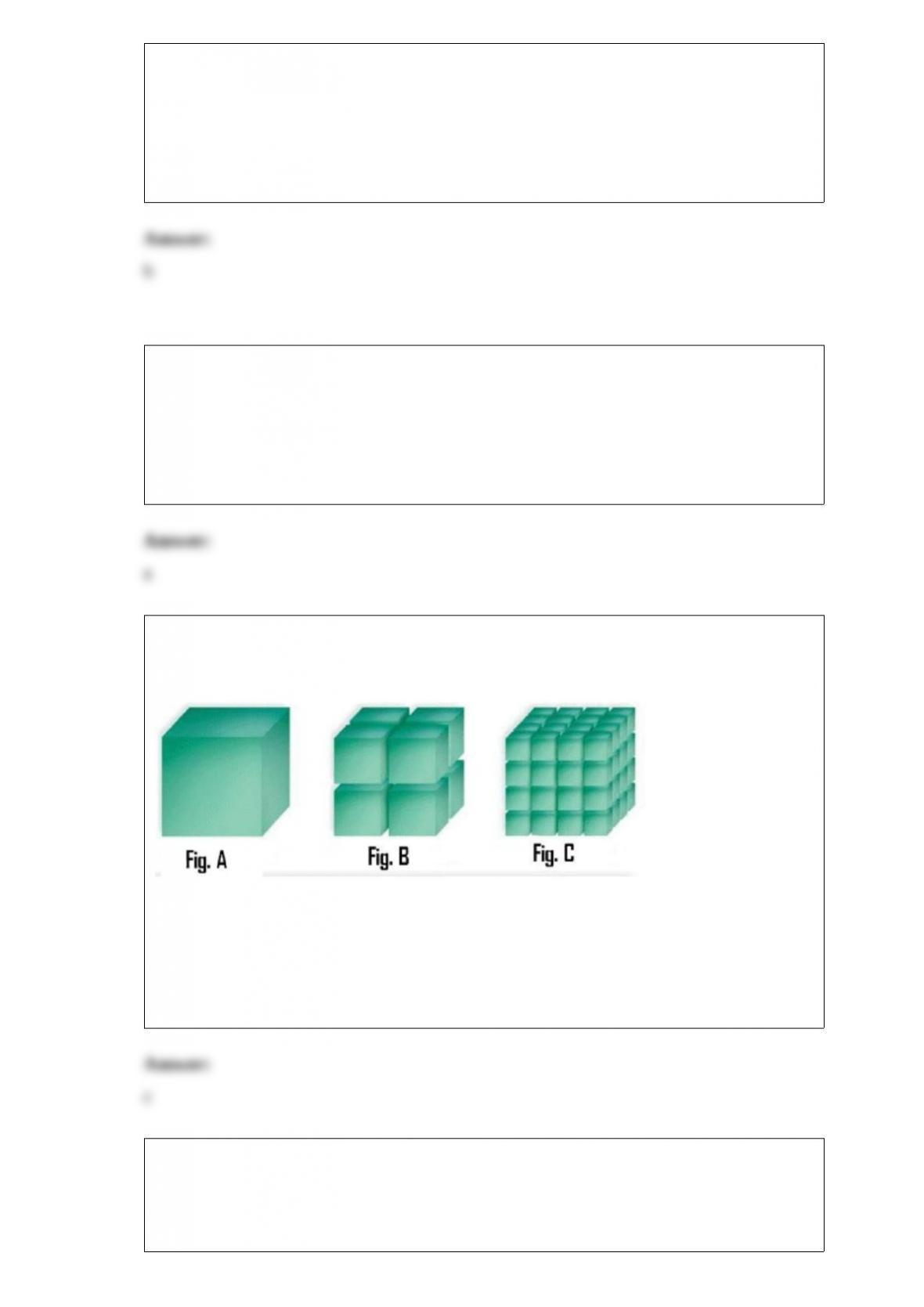
3) figure a is an 8-cm. cube. figure b is eight, 4-cm cubes. figure c is sixty-four, 2-cm
cubes.
if the figures represented cells, what size cell has the greatest potential to bring nutrients
in and rid itself of waste.
a. the cell in figure a, one 4-cm cube.
b. the individual cells in figure b.
c. the individual cells in figure c.
d. all cells have the same potential.
4) nonscientists often use the words name,” identify,” and classify” interchangeably.
when they want to know what an organism is, they may ask “can you name this?” or
“can you identify this?” or “can you classify this?” which of the following is/are correct
usage(s) of the term(s)?
a. only the scientist who first describes a new species actually names it.
b. classifying is grouping, and to classify something requires several organisms so you
can group one as closer to a second and distant from a third.
c. a farmer is using a key to detect pest insect species in his fields is identifying insects
but not naming or necessarily
classifying them.
d. a scientist who publishes the name and description of a new species must necessarily
also know both how to identify and classify the species.
e. all of the choices are correct.
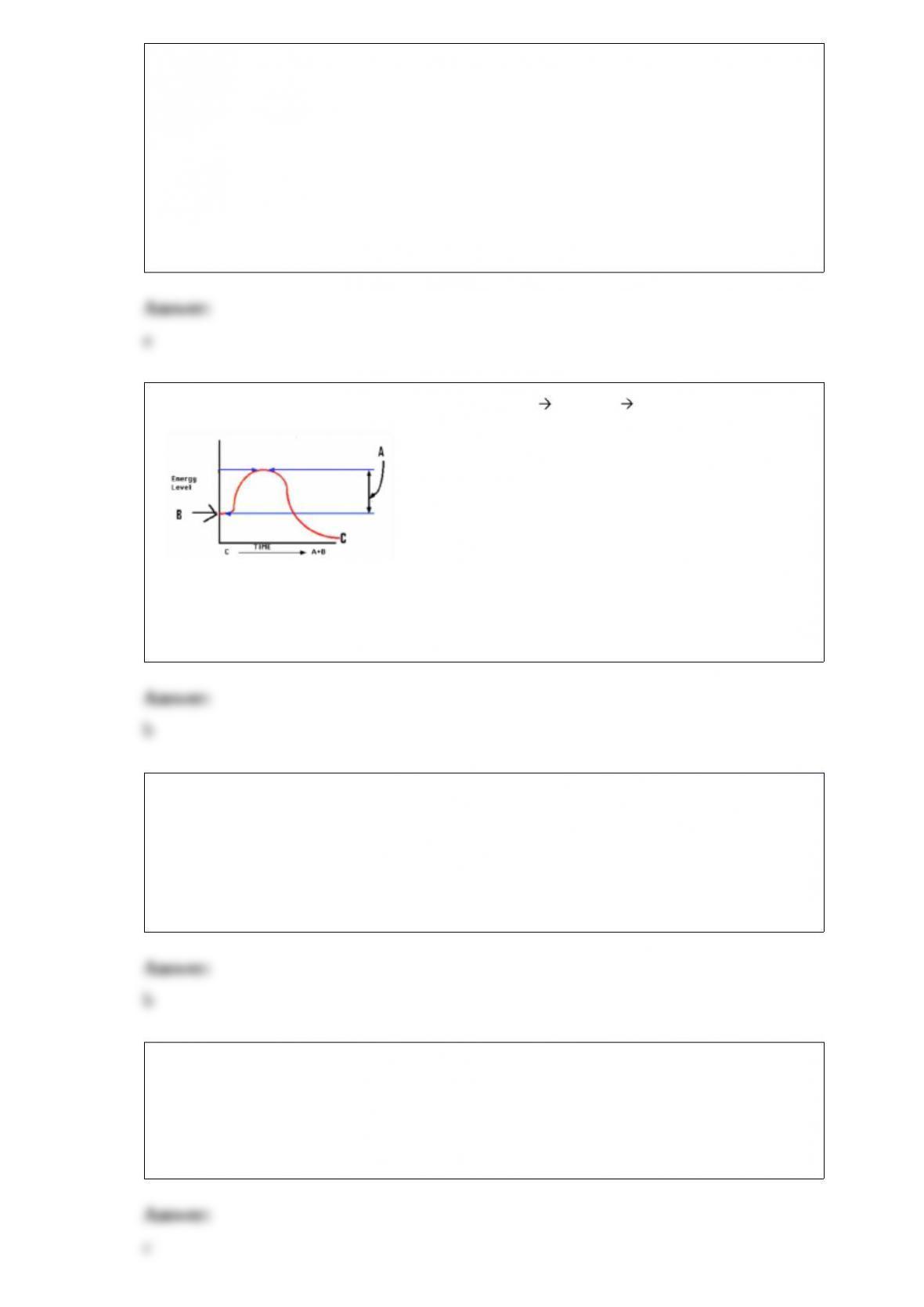
5) if the reaction graphed at right is coupled with d e, then d e is:
a. exergonic
b. endergonic
c. spontaneous
d. none of the above
6) which statement is true about rna?
a. it contains adenine paired to thymine.
b. one of the bases from dna is replaced by uracil.
c. it contains the sugar deoxyribose.
d. its nucleotides contain twice as many phosphate groups as dna’s nucleotides.
e. it is a double-stranded molecule.
7) the function of sunlight in photosynthesis is to:
a. reduce nadph to nadp
b. fix o2 in the calvin cycle
c. excite electrons in chlorophyll
d. combine carbon dioxide and water to form atp and nadph

8) wetlands are generally classified by their vegetation. wetlands dominated by trees
and shrubs are _______ and wetlands dominated by grasses and sedges are _____.
a. marshes; swamps
b. swamps; marshes
c. marshes; pine savannas
d. bogs; swamps
9) the preprogrammed theory of aging supports all of the following except
a. there is a genetic influence on aging.
b. mutations that decrease the activity of a hormone receptor contribute to a longer
lifespan.
c. the accumulation of harmful dna mutants builds up over time.
d. longevity tends to run in families.
e. identical twins have a similar life span.
10) thymine dimers
a. form when dna is exposed to carcinogens such as tobacco smoke.
b. are rarely removed by dna repair enzymes.
c. form when dna is exposed to uv radiation.
d. result in abnormal protein structure which causes red blood cells to sickle.
incorrect