
In receptor-mediated endocytosis, receptor molecules initially project to the outside of
the cell. Where do they end up after endocytosis?
A) on the outside of vesicles
B) on the inside surface of the cell membrane
C) on the inside surface of the vesicle
D) on the outer surface of the nucleus
Which of the following is most likely to be aquatic?
A) suspension feeder
B) mass feeder
C) deposit feeder
D) fluid feeder
Which of these processes can be included among those responsible for the horizontal
components of the figure above?
A) endosymbiosis
B) mitosis

C) binary fission
D) point mutations
Even though plants cells photosynthesize, they still use their mitochondria for oxidation
of pyruvate. This will occur in _____.
A) photosynthetic cells in the light, while photosynthesis occurs concurrently
B) cells that are storing glucose only
C) all cells all the time
D) photosynthesizing cells in the light and in other tissues in the dark
Which of the following flower parts develops into the pulp of a fleshy fruit?
A) stigma
B) style
C) ovule
D) ovary
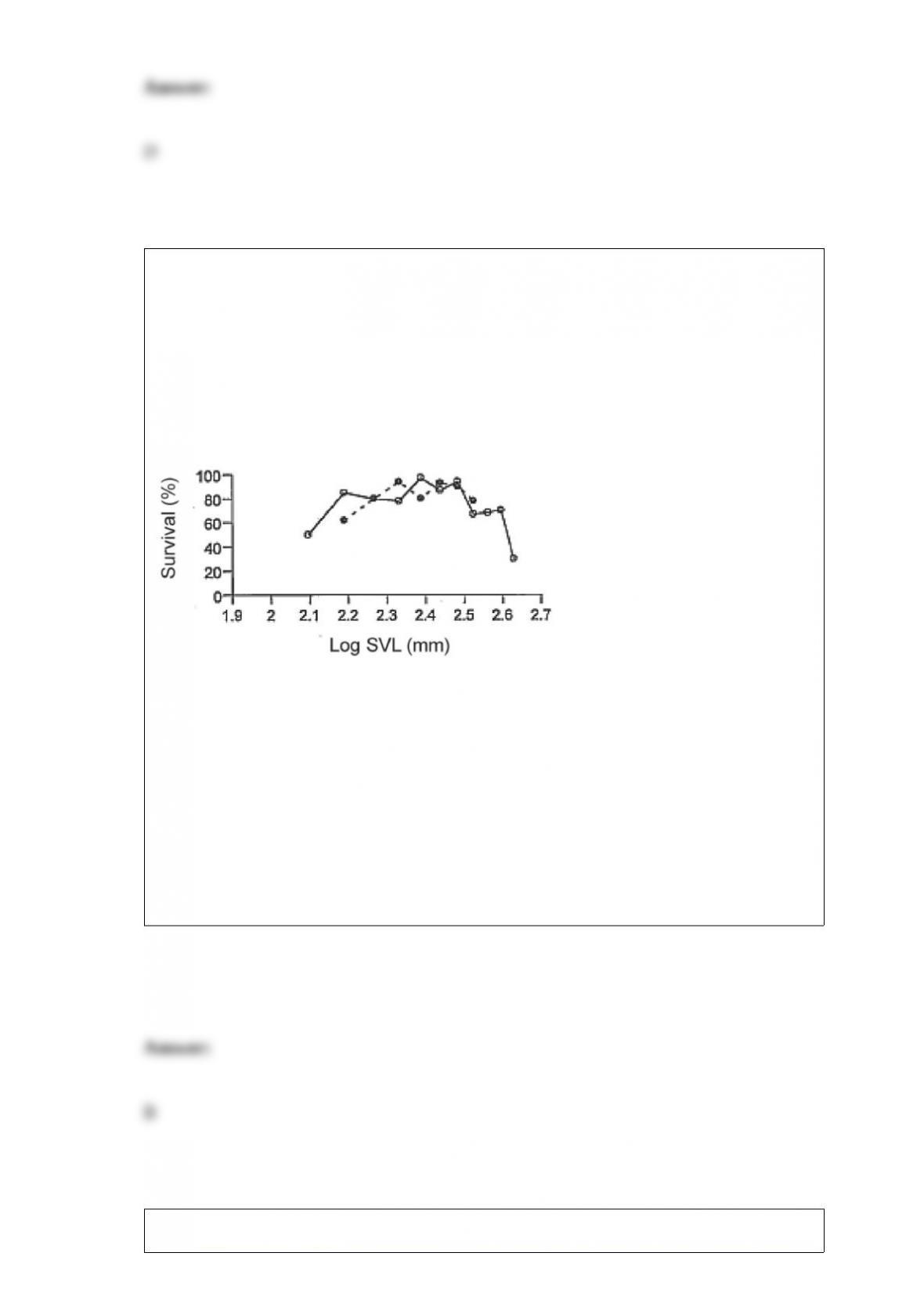
Use the following information to answer the question(s) below.
Martin Wikelski and L. Michael Romero (Body size, performance and fitness in
Galpagos marine iguanas, Integrative and Comparative Biology 43 [2003]:376-86)
measured the snout-to-vent (anus) length of Galpagos marine iguanas and observed the
percent survival of different-sized animals, all of the same age. The graph shows the log
snout-vent length (SVL, a measure of overall body size) plotted against the percent
survival of these different size classes for males and females.
Examine the figure above. What type of selection for body size appears to be occurring
in these marine iguanas?
A) directional selection
B) stabilizing selection
C) disruptive selection
D) You cannot determine the type of selection from the above information.
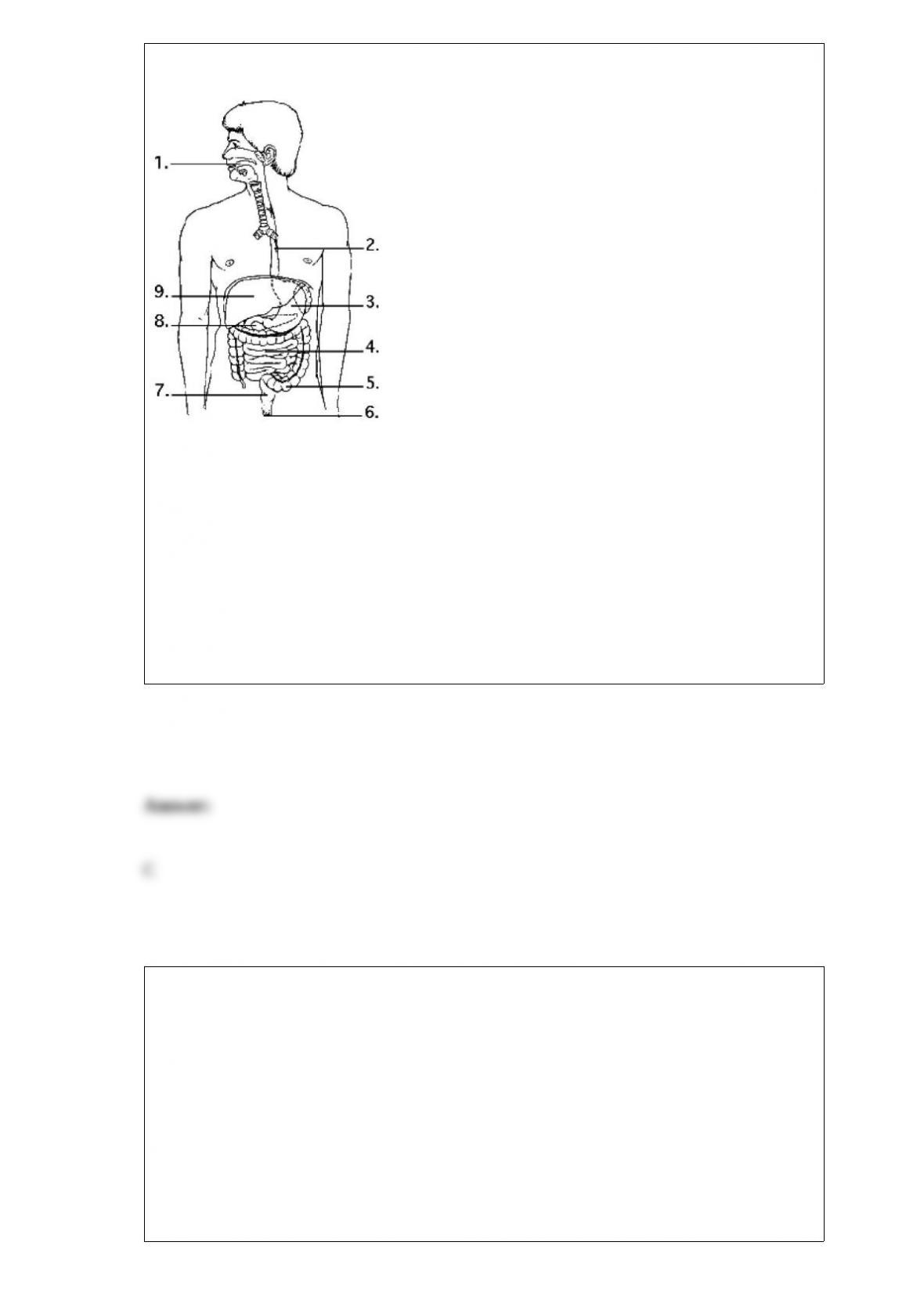
Examine the digestive system structures in the figure above. Bacteria that produce
vitamins are found in the greatest concentration in location _____.
A) 3
B) 4
C) 5
D) 8
Humans can digest starch but not cellulose because _____.
A) humans have enzymes that can hydrolyze the α-glycosidic linkages of starch but not
the β-glycosidic linkages of cellulose
B) starch monomers are joined by covalent bonds and cellulose monomers are joined by
ionic bonds
C) the monomer of starch is glucose, while the monomer of cellulose is galactose
D) the monomer of starch is fructose, while the monomer of cellulose is glucose
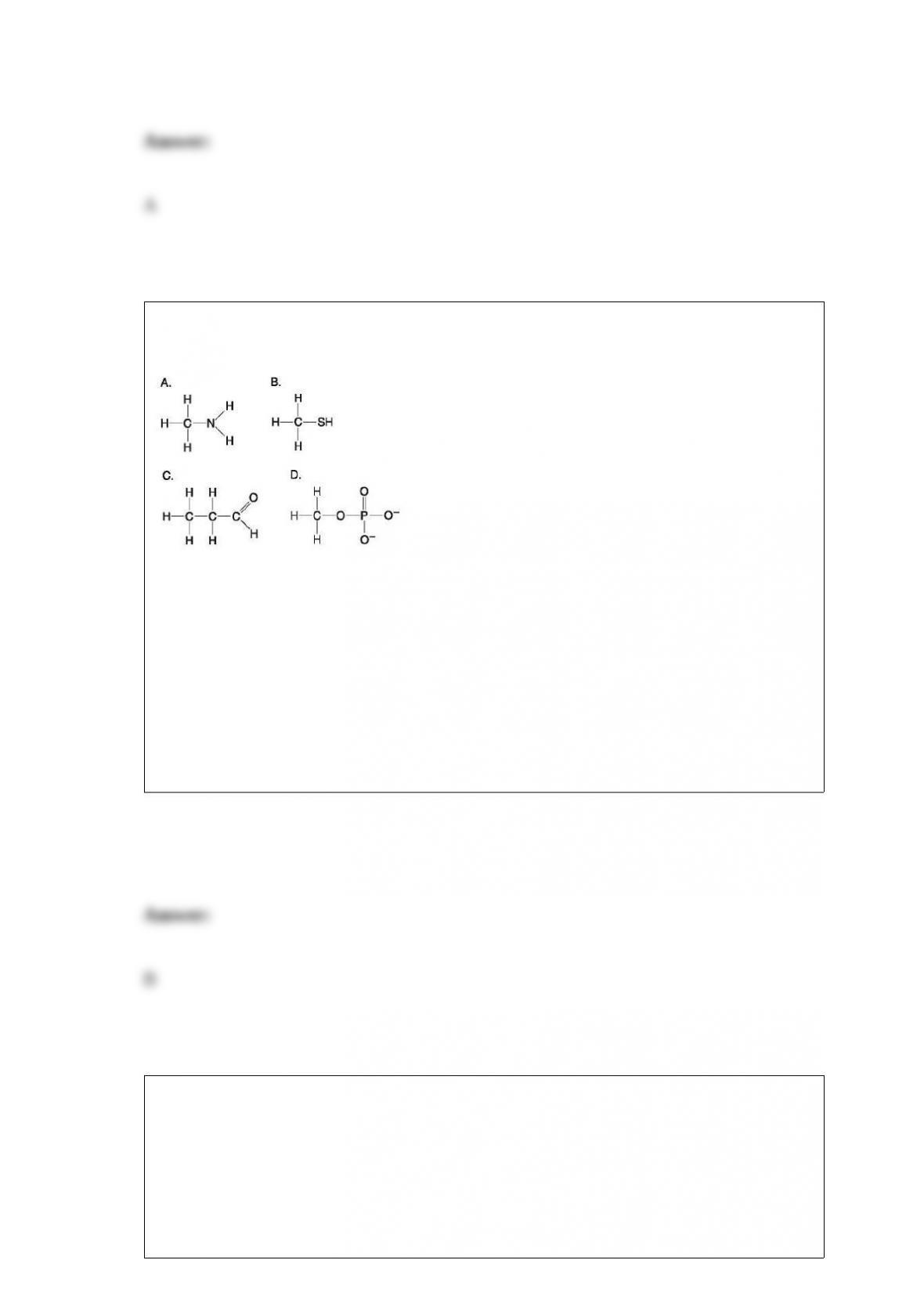
Which molecule shown above is a thiol?
A) A
B) B
C) C
D) D
All of the following events can trigger an adaptive radiation EXCEPT _____.
A) an unusual event splitting a habitat, such as a severe hurricane
B) the evolution of a new morphological feature
C) the extinction of competitors

D) Hox gene duplication events
The central nervous system is lacking in animals that have _____.
A) a complete gut
B) bilateral symmetry
C) radial symmetry
D) a closed circulatory system
White blood cells engulf bacteria using _____.
A) phagocytosis
B) pinocytosis
C) osmosis
D) receptor-mediated exocytosis

Which of the following is the most likely explanation for the lack of a filter blocking
the passage of alcohol between the maternal and fetal circulations in humans?
A) There has not been enough time to evolve such a barrier.
B) Such a barrier would probably also block important molecules that need to be passed
to the fetus.
C) The maternal and fetal blood mix directly together in an area with many villi, so a
barrier is impossible.
D) Alcohol has some positive effects on the fetus, so evolution has resulted in an
intermediate level of filtering that blocks all but the worst abuses of alcohol.
The crown-of-thorns sea star, Acanthaster planci, preys on the flesh of live coral. If
coral animals are attacked by these sea stars, then what actually provides nutrition to the
sea star, and which chemical (besides the toxin within their nematocysts) do the corals
rely on for protection?
A) medusae; silica
B) exoskeleton; calcium carbonate
C) polyps; calcium carbonate
D) polyps; silica

An organism that exhibits cephalization probably also _____.
A) is bilaterally symmetrical
B) has a coelom
C) is segmented
D) is diploblastic
Action potentials are normally carried in only one direction: from the axon hillock
toward the axon terminals. If you experimentally depolarize the middle of the axon to
threshold, using an electronic probe, then _____.
A) no action potential will be initiated
B) an action potential will be initiated and proceed only in the normal direction toward
the axon terminal
C) an action potential will be initiated and proceed only back toward the axon hillock
D) two action potentials will be initiated, one going toward the axon terminal and one
going back toward the hillock
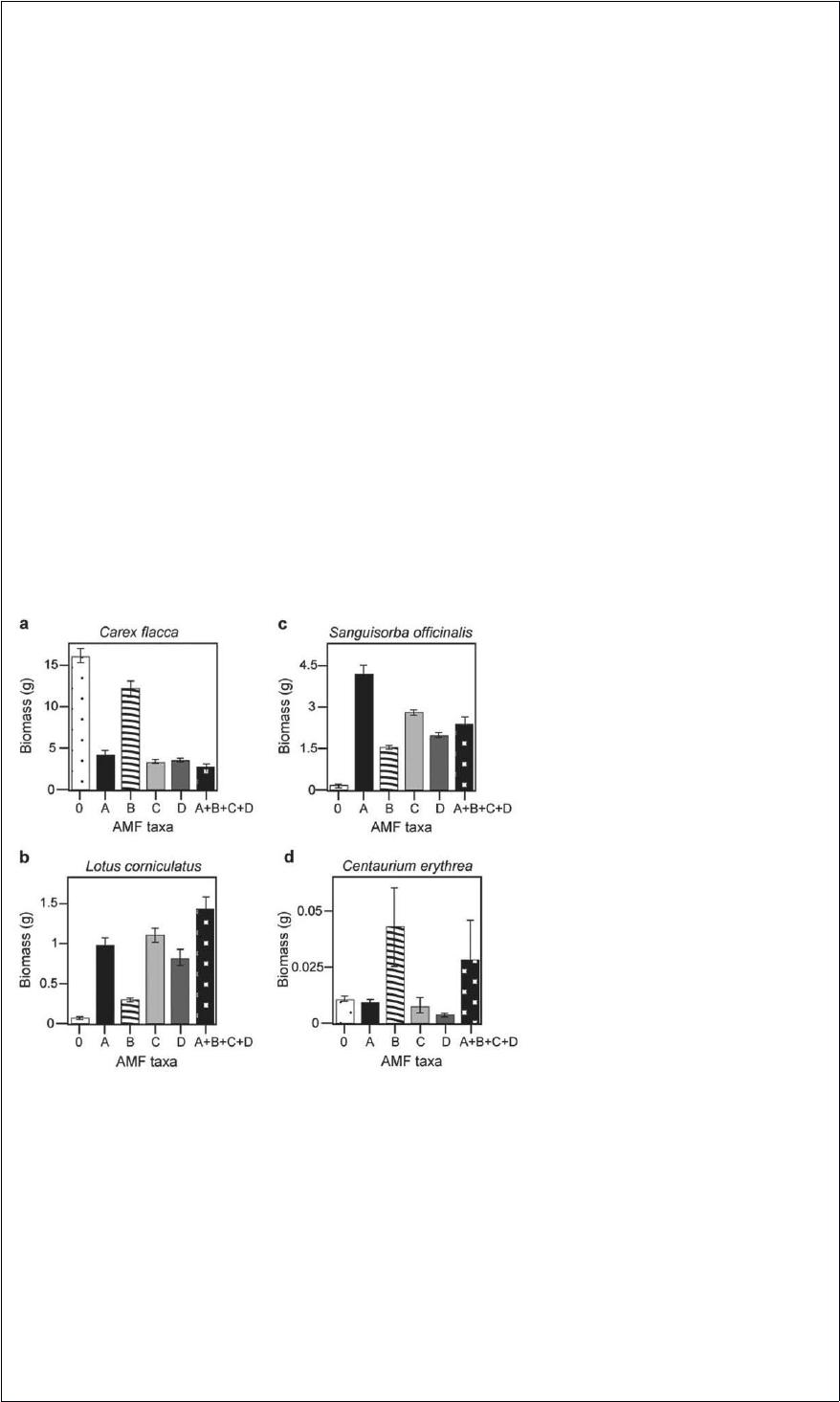
Use the following information to answer the question(s) below.
There is much discussion in the media about protecting biodiversity. But does
biodiversity really matter? Canadian and Swiss researchers wanted to know if the
diversity of arbuscular mycorrhizal fungi (AMF) was important to the productivity of
grasslands (M.G.A. van der Heijden, J. N. Klironomos, M. Ursic, P. Moutoglis, R.
Streitwolf-Engel, T. Boler, A. Wiemken, and I. R. Sanders. 1998. Mycorrhizal fungal
diversity determines plant biodiversity, ecosystem variability and productivity. Nature
396:69-72). Specifically, they wanted to know if it mattered which specific AMF
species were present, or just that some type of AMF was present. They grew various
plants in combination with one of four AMF species (A, B, C, and D), no AMF species
(O), or all four AMF species together (A+B+C+D); and they measured plant growth
under each set of conditions. All plant species were grown in each plot, so they always
competed with each other with the only difference being which AMF species were
present.
On the graphs below, the x-axis labels indicate the number and identity of AMF species
(bar 0 = no fungi; bars A-D = individual AMF species; bar A+B+C+D = all AMF
species together). The y-axis indicates the amount (grams) of plant biomass for the
species shown in italics above each graph.
Based on the graphs in the figure above, which of the following plant species is most
likely NOT to form mycorrhizal associations?
A) Carex flacca (graph a)
B) Lotus corniculatus (graph b)
C) Sanguisorba officinalis (graph c)
D) Centaurium erythrea (graph d)
About 450 million years ago, the terrestrial landscape on Earth would have _____.
A) looked very similar to that of today, with flowers, grasses, shrubs, and trees
B) been completely bare rock, with little pools that contained bacteria and
cyanobacteria
C) been covered with tall forests in swamps that became today’s coal
D) had non-vascular green plants similar to liverworts forming green mats on rock
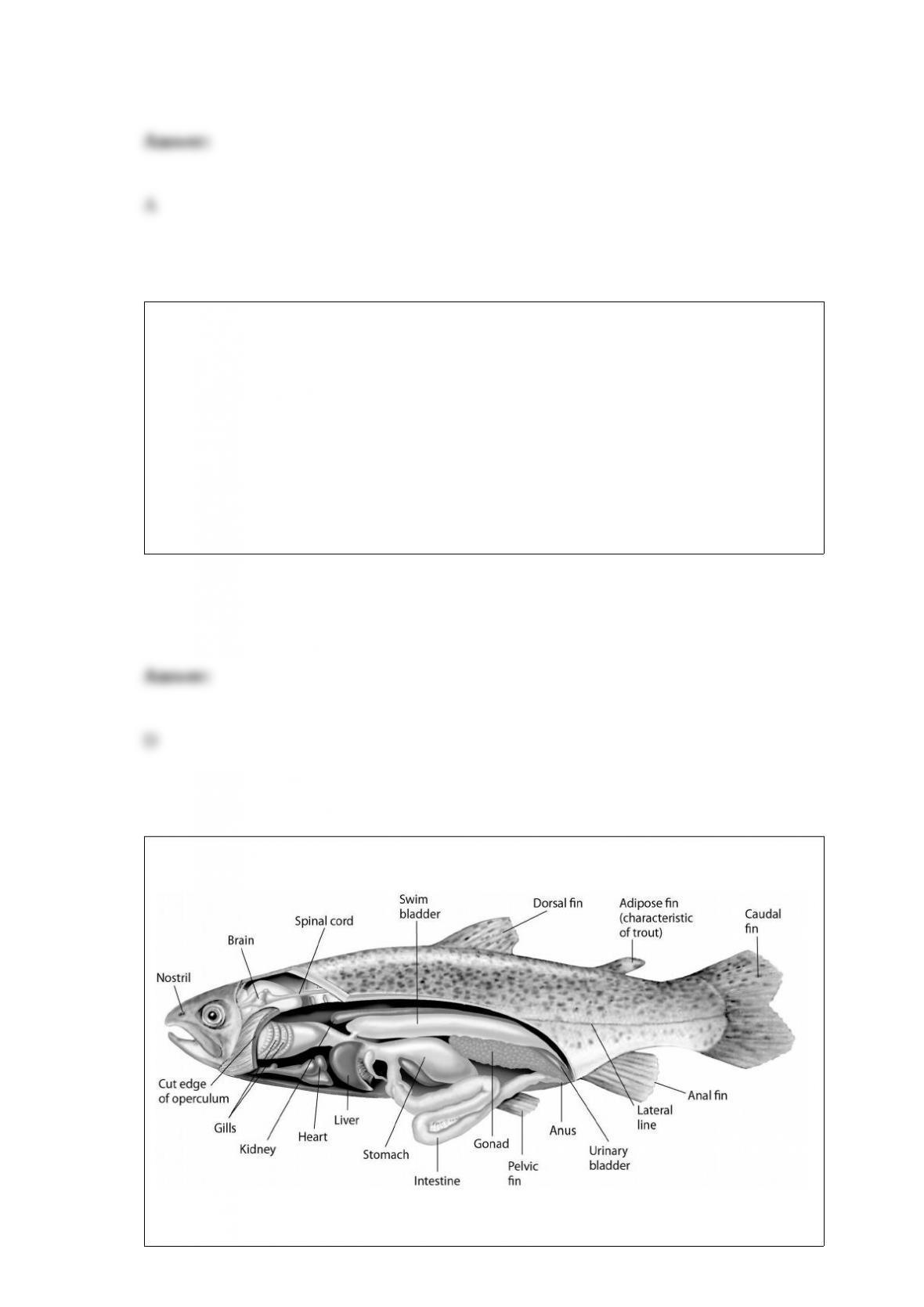
Use the following figure and information to answer the question(s) below.
Fishes that have swim bladders can regulate their density and, thus, their buoyancy.

There are two types of swim bladder: physostomous and physoclistous. The ancestral
version is the physostomous version, in which the swim bladder is connected to the
esophagus via a short tube (see the figure above). The fish fills this version by
swimming to the surface, taking gulps of air, and directing them into the swim bladder.
Air is removed from this version by “belching.” The physoclistous version is more
derived, and has lost its connection to the esophagus. Instead, gas enters and leaves the
swim bladder via special circulatory mechanisms within the wall of the swim bladder.
We should expect the inner wall of the swim bladder to be lined with tissue that is
derived from _____.
A) ectoderm
B) endoderm
C) mesoderm
D) mesoglea
What structures would neurobiologists look for if they are interested in determining if
an animal can see in color?
A) opsins
B) electroreceptors
C) pupil
D) lens
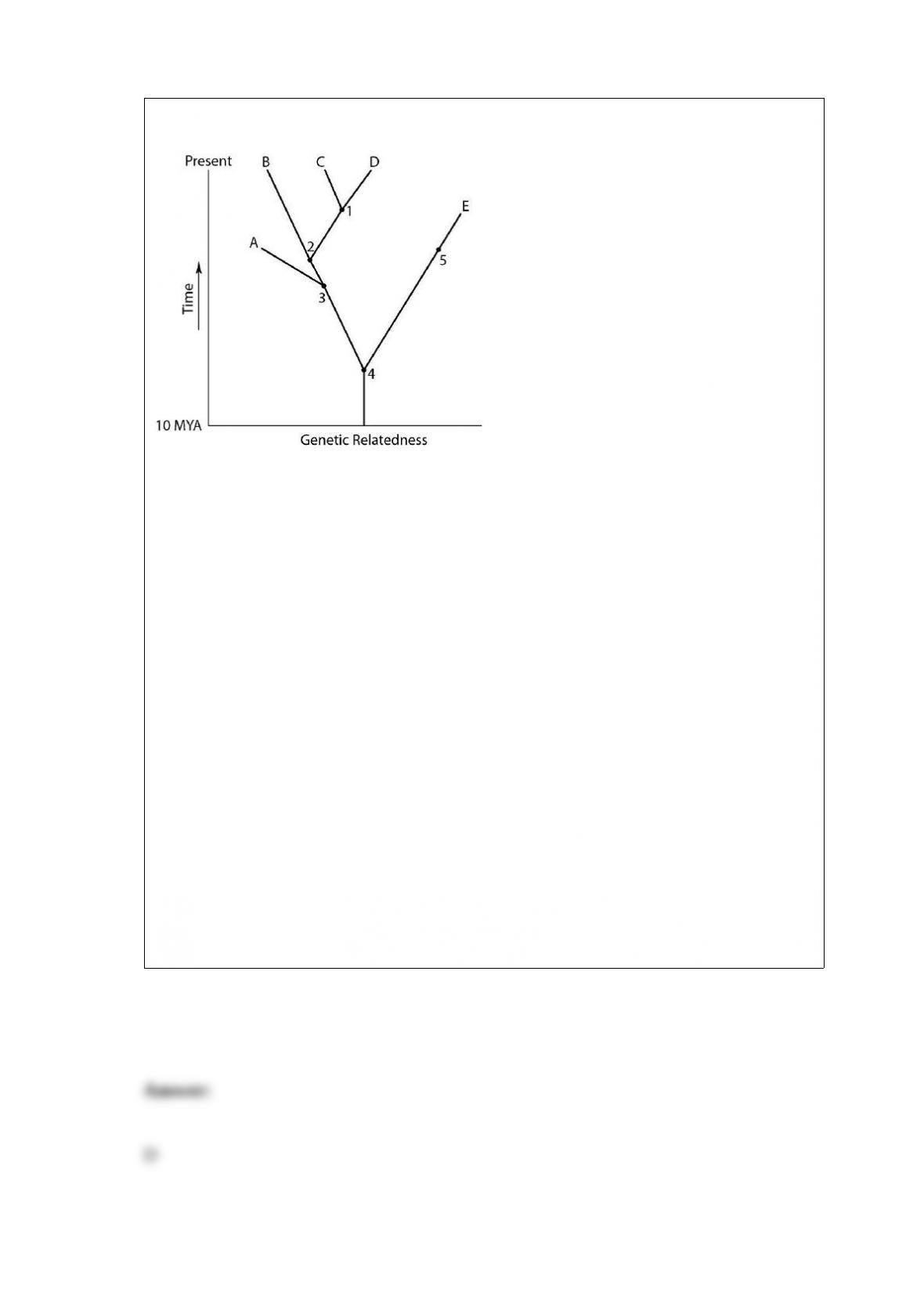
Use the figure below to answer the following question(s).
If the figure above is an accurate depiction of relatedness, then which of the following
should be correct?
1. The entire tree is based on maximum parsimony.
2. If all species depicted here make up a taxon, this taxon is monophyletic.
3. The last common ancestor of species B and C occurred more recently than the last
common ancestor of species D and E.
4. Species A is the direct ancestor of both species B and species C.
5. The species present at position 3 is ancestral to C, D, and E.
A) 1 and 3
B) 3 and 4
C) 2, 3, and 4
D) 1, 2, and 3
Compared with the interstitial fluid that bathes active muscle cells, blood reaching these
muscle cells in arteries has a _____.
A) higher
B) greater bicarbonate concentration
C) lower pH
D) lower osmotic pressure
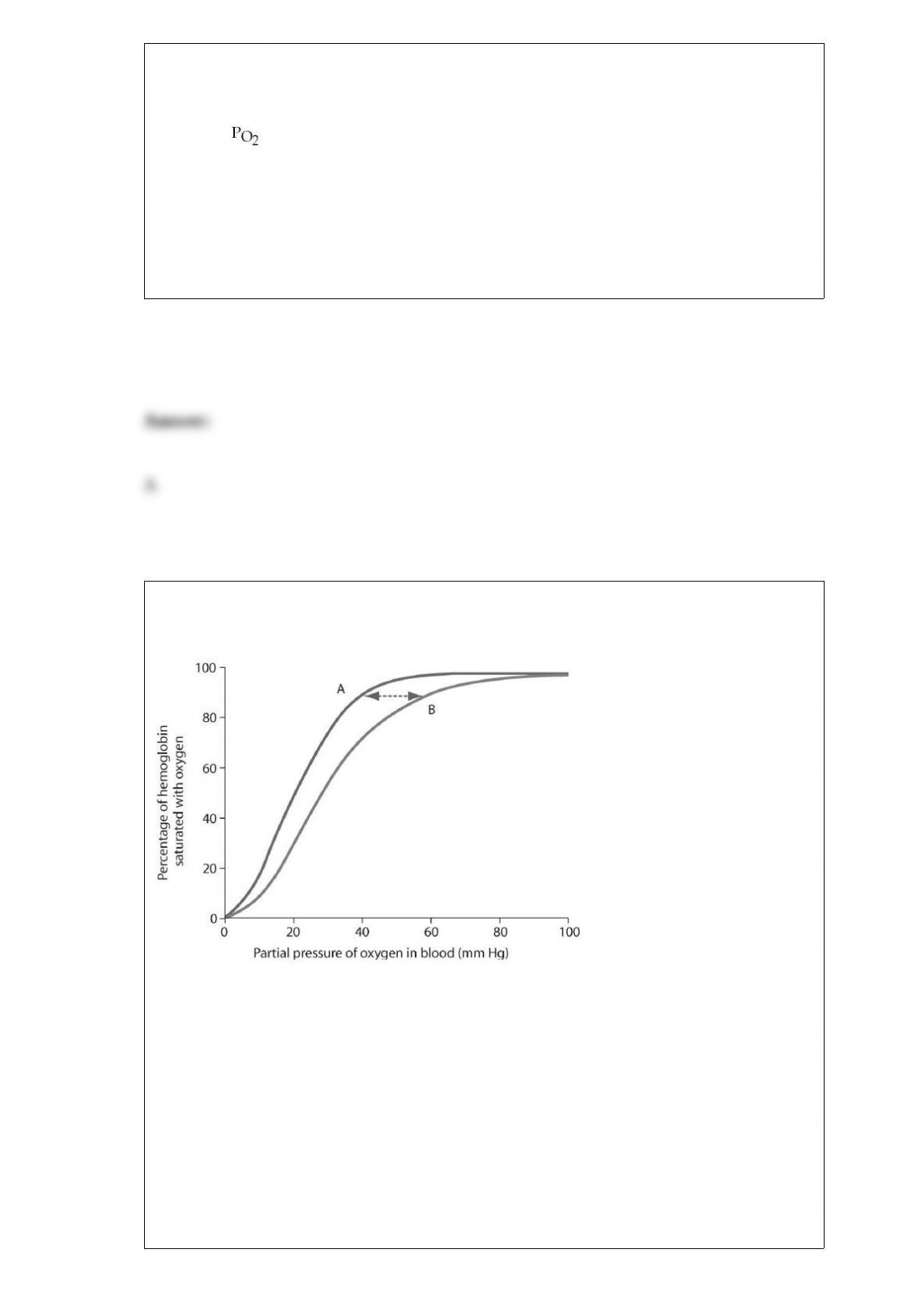
Based on the figure above, showing fetal (A) and adult (B) oxygen-hemoglobin
saturation curves, which of the following conclusions is true?
A) The mother binds oxygen with greater affinity than the fetus.
B) Adult saturation occurs at lower partial pressures of oxygen than fetal saturation
does.
C) At 50 percent saturation, fetal blood will have a higher affinity for oxygen than adult
blood will.

D) As the partial pressure of oxygen increases, adult hemoglobin approaches saturation
faster than fetal hemoglobin does.
Which of the following groups would be most likely to exhibit uniform dispersion?
A) red squirrels, who actively defend territories
B) cattails, which grow primarily at edges of lakes and streams
C) dwarf mistletoes, which parasitize particular species of forest tree
D) lake trout, which seek out cold, deep water high in dissolved oxygen
Which of the following is an example of polygenic inheritance?
A) pink flowers in snapdragons
B) the ABO blood group in humans
C) white and purple flower color in peas
D) skin pigmentation in humans

Use the following information to answer the question(s) below.
A large population of laboratory animals has been allowed to breed randomly for a
number of generations. After several generations, 25% of the animals display a
recessive trait (aa), the same percentage as at the beginning of the breeding program.
The rest of the animals show the dominant phenotype, with heterozygotes
indistinguishable from the homozygous dominants.
What is the most reasonable conclusion that can be drawn from the fact that the
frequency of the recessive trait (aa) has not changed over time?
A) The two phenotypes are about equally adaptive under laboratory conditions.
B) The genotype AA is lethal.
C) There has been a high rate of mutation of allele A to allele a.
D) There has been sexual selection favoring allele a.
In the structural organization of many eukaryotic genes, individual exons may be
related to which of the following?
A) the sequence of the intron that immediately precedes each exon
B) the number of polypeptides making up the functional protein
C) the various domains of the polypeptide product
D) the number of start sites for transcription

Use the following description to answer the question(s) below.
On the volcanic, equatorial West African island of Sao Tom, two species of fruit fly
exist. Drosophila yakuba inhabits the island’s lowlands, and is also found on the African
mainland, located about two hundred miles away. At higher elevations, and only on Sao
Tom, is found the very closely related Drosophila santomea. The two species can
hybridize, though male hybrids are sterile. A hybrid zone exists at middle elevations,
though hybrids there are greatly outnumbered by D. santomea. Studies of the two
species’ nuclear genomes reveal that D. yakuba on the island is more closely related to
mainland D. yakuba than to D. santomea (2n = 4 in both species). Sao Tom rose from
the Atlantic Ocean about fourteen million years ago.
Using only the information provided in the paragraph, which of the following is the best
initial hypothesis for how D. santomea descended from D. yakuba?
A) allopolyploidy
B) autopolyploidy
C) habitat differentiation
D) sexual selection
A woman standing and watching the stars on a cool, calm night will lose most of her
body heat by _____.
A) radiation
B) convection

C) conduction
D) evaporation
Which characteristic is shared by cnidarians and flatworms?
A) dorsoventrally flattened bodies
B) radial symmetry
C) a digestive system with a single opening
D) a distinct head
The difference in lipid and protein composition between the membranes of the
endomembrane system is largely determined by the _____.
A) transportation of membrane lipids among the membranes of the endomembrane
system by small membrane vesicles
B) function of the Golgi apparatus in sorting and directing membrane components
C) modification of the membrane components once they reach their final destination
D) synthesis of different lipids and proteins in each of the organelles of the
endomembrane system

In meiosis, homologous chromosomes are separated during _____.
A) anaphase II
B) prophase I
C) mitosis
D) anaphase I