Chapter 39: Animal Behavior
1. Animals learn behaviors from their mothers, other animals, and from people.
They also have behaviors that are instinctive and genetically acquired.
2. Conditioning is the process of teaching an animal an action in response to another
3. Instinctive behaviors are behaviors that occur naturally to an animal in reaction to
a stimulus. Many behaviors in the early life of companion animals are instinctual.
4. Normal animal behaviors occur differently with each species of animal. Some
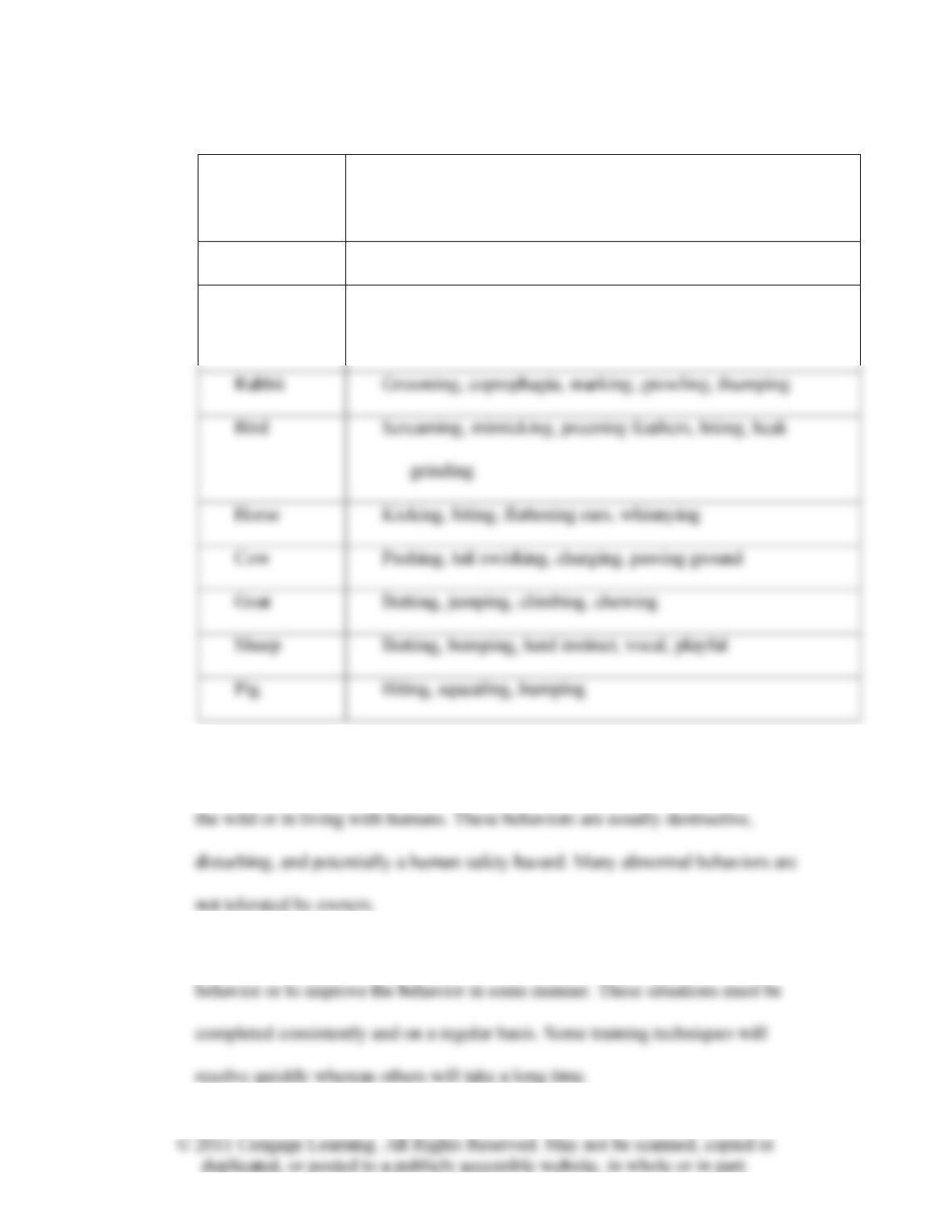
5. Examples of normal animal behaviors may include:
Animal
Species
Normal Behaviors
Dog
Barking, marking, coprophagia, chewing, digging, jumping
Cat
Chasing, pouncing, jumping, stalking, purring, hissing,
hunting, grooming, scratching
Rabbit
Grooming, coprophagia, marking, growling, thumping
Bird
Screaming, mimicking, preening feathers, biting, beak
grinding
Horse
Kicking, biting, flattening ears, whinnying
Cow
Pushing, tail swishing, charging, pawing ground
Goat
Butting, jumping, climbing, chewing
Sheep
Butting, bumping, herd instinct, vocal, playful
Pig
Biting, squealing, bumping
6. Abnormal animal behaviors are behaviors that animals do not typically possess in
7. Modification techniques are re-training situations in order to stop an animal’s
8. Veterinary animal behaviorists are specialized veterinarians that have a special
interest and experience in animal behavior problems. Veterinary behaviorists are
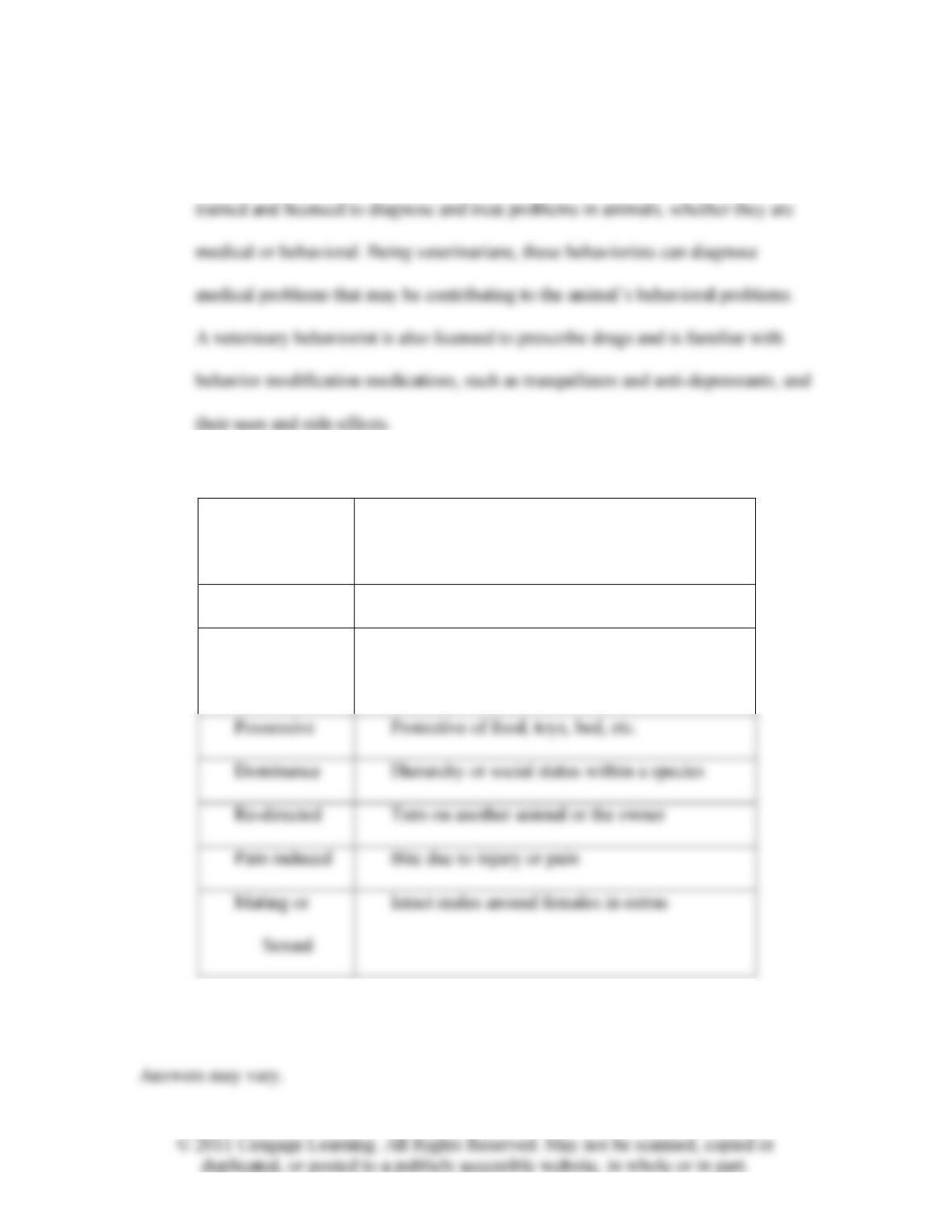
9. Types of aggression in animals include:
Aggression
Signs or causes
Fear
Fear biters, reaction to fear or being scared
Territorial
Protective of property, yard, people, other
animals
Possessive
Protective of food, toys, bed, etc.
Dominance
Hierarchy or social status within a species
Turn on another animal or the owner
Pain induced
Bite due to injury or pain
Mating or
Sexual
Intact males around females in estrus
Clinical Situation