Chapter 19: Equine Breed Identification and Production Management
1. A horse’s size is measured in hands. A hand equals four inches. Horses are
measured from the ground to the highest point of their shoulder.
2. Horses are classed according to their body type, size, and purpose of use. Horses
that are used as riding horses are ridden for pleasure and showing purposes.
Gaited horses are classified by the way they move in their gaits, or the
way they walk and run. Gaited horses have a rhythm to their movement
that is easy to sit and provides the rider with little movement or rough
rides. These horses are popular with older riders and those that may have
A stock horse is a type of horse that was once used on ranches for herding
and working cattle. They are very hardy, athletic, able to serve many
Hunters and jumpers are horses that were bred for fox hunting and cross
country riding. They tend to be tall, athletic and muscular and have speed
Racehorses are a type of horse that were bred for speed and are used for
racing. This includes horses raced under saddle and in harnesses. They
often have the ability to be used for other sports related activities. Horse
Draft horses are large and muscular and are bred to pull heavy loads.
They are also known as work horses, as many are used today in helping to
3. Normal Behavior Signs of Horses:
• Herd animals
• Hierarchy system
4. Horses have a specialized digestive system called non-ruminant. A non-ruminant
digestive system is similar in appearance to that of humans but requires small
5. A horse can be restrained with a halter, lead rope, slip knot, cross ties, twitch,
chain shank, hobbles, or with the use of a sedative.
6. Breeding methods for horses include in-hand breeding, pasture breeding, and
teeth between 2 and 3 years of age and should have all of their adult teeth in place
by 5 years of age. The shape and wear of the adult teeth will change as the horse
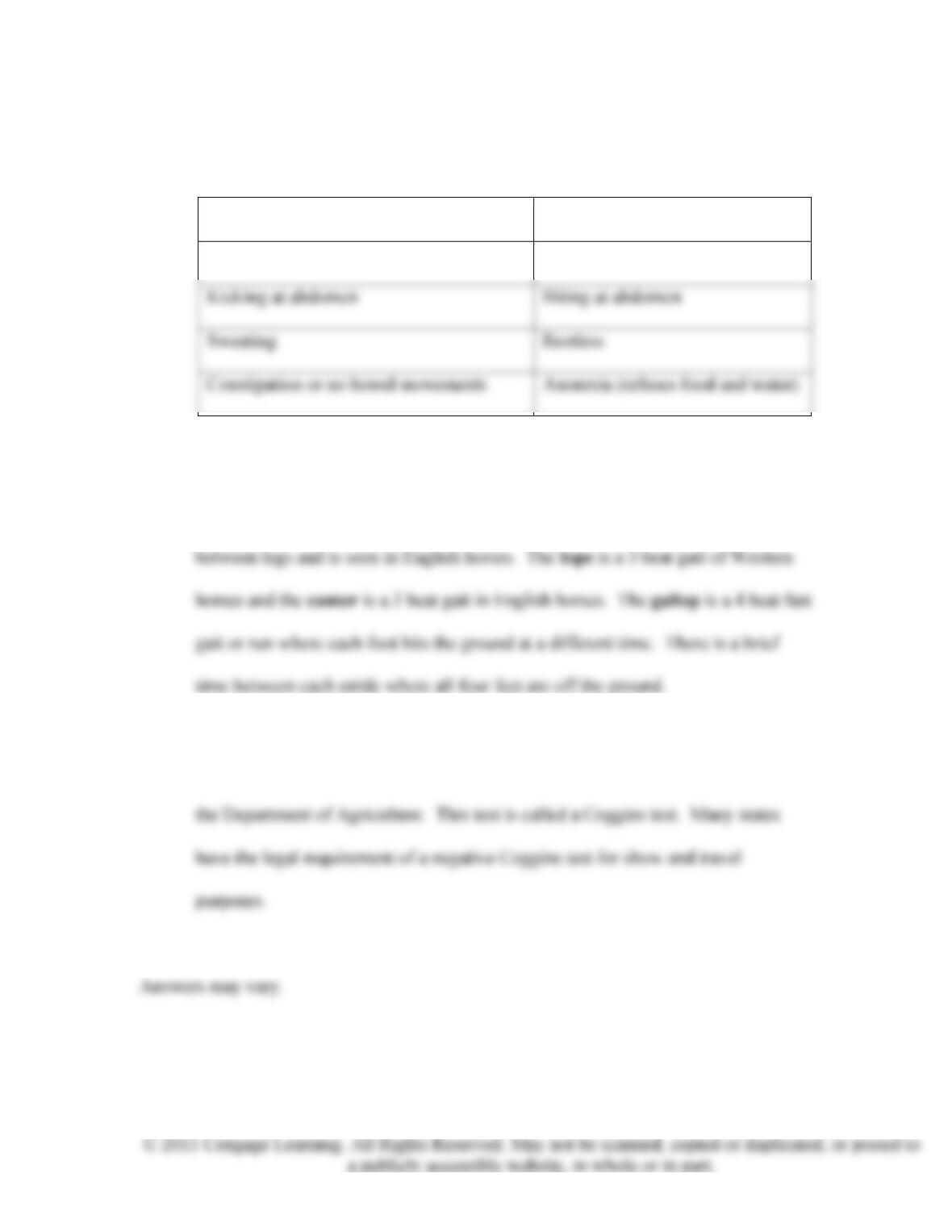
8. Signs of colic in horses
Flanking or looking at the abdomen
Bloated or distended abdomen
Frequent lying down and standing
Rolling
Kicking at abdomen
Biting at abdomen
Sweating
Restless
Constipation or no bowel movements
Anorexia (refuses food and water)
9. The walk is a relaxed and slow 4 beat gait. The jog is a slow 2 beat gait of
Western horses. The trot is also a 2 beat gait with a longer stride or distance
10. EIA is equine infectious anemia. All horses should be tested yearly by a licensed
veterinarian with a blood sample being submitted to the state veterinary lab and
Clinical Situation