Chapter 14: Ornamental Fish Identification and Production Management
1. Most ornamental fish are not native to North America. Many species are
found in South America, Asia, and the Pacific Islands. In the United States,
2. Goldfish are freshwater species and lay eggs. Koi are freshwater fish and lay
eggs. Labyrinth fish are freshwater species and lay eggs in nests. Gouramis
are freshwater species and lay eggs. Barbs are freshwater species and lay
3. Equipment that is necessary for an ornamental tank includes the tank, cover,
4. Oxygenation is the process of providing air and oxygen to the water for fish to
5. Filter types include canister filters, undergravel filters, outside filters, and
nitrifier and dentrifier filters.
7. Water quality includes ideal temperature, pH levels, nitrogen cycles, dissolved
oxygen levels, and salinity.
8. Sign of diseases in fish:
• Not Eating
• Increase gill movement or respiration
• Gasping at the water surface
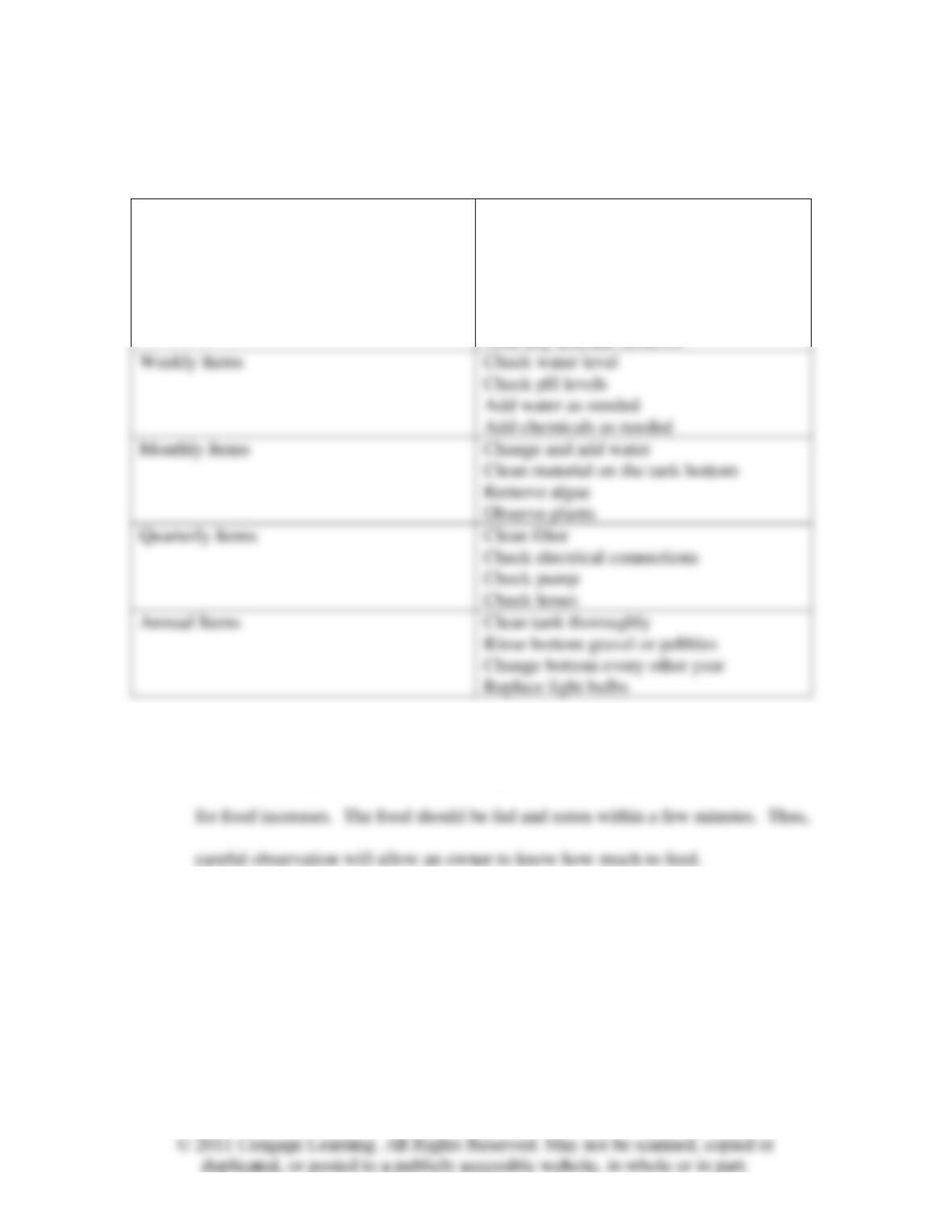
• Material hanging from anus
9. Regular maintenance schedule for fish tanks:
Daily Items
Provide food
Check water temperature
Monitor aeration
Monitor filtration
Remove any dead fish
Observe fish behavior
Note any unusual behavior
Check pH levels
Add water as needed
Add chemicals as needed
Observe plants
Quarterly Items
Clean filter
Check electrical connections
Check pump
Check hoses
Rinse bottom gravel or pebbles
Change bottom every other year
Replace light bulbs
10. The amount of food a fish eats in a day is directly related to the water temperature
as well as the type of fish and the life stage. As water temperatures rise, the need
Clinical Situation
Answers may vary.